A COMPARATIVE ANALYSIS OF DESARDA PROCEDURE AND LICHTENSTEIN MESH HERNIOPLASTY FOR INGUINAL HERNIA REPAIR IN A TERTIARY CARE HOSPITAL.
- PARVEJ SULTAN , ASSISTANT PROFESSOR, DEPARTMENT OF GENERAL SURGERY , NIL RATAN SIRCAR MEDICAL COLLEGE AND HOSPITAL, KOLKATA-700014.
- SOMDEV SIL , RMO CUM CLINICAL TUTOR, DEPARTMENT OF GENERAL SURGERY , NIL RATAN SIRCAR MEDICAL COLLEGE AND HOSPITAL, KOLKATA-700014.
- ANIRBAN DAS , ASSISTANT PROFESSOR, MBBS, MS, MCH, DEPARTMENT OF GENERAL SURGERY, NIL RATAN SIRCAR MEDICAL COLLEGE AND HOSPITAL, KOLKATA, WEST BENGAL 700014.
Article Information:
Abstract:
Introduction: Inguinal hernia is commonly treated with Lichtenstein mesh hernioplasty, while Desarda is a mesh-free alternative. This study compares both techniques regarding operative time, pain, complications, hospital stay, and recovery outcomes at a tertiary care centre. Aims: To compare and analyze the outcomes of Desarda procedure and Lichtenstein mesh repair in patients with inguinal hernia at a tertiary care centre, with respect to operative parameters, postoperative pain, complications, duration of hospital stay, and time taken to return to normal work. Materials and methods: The present study was a Prospective comparative observational study. This Study was conducted for a period of 18 months during January 2024 to June, 2025 in the Department of General Surgery, Nil Ratan Sircar Medical College And Hospital, Kolkata-700014. Study population was 100. Result: In our study of 100 patients, 50 patients were operated by Lichtenstein mesh repair (MR) and 50 patients were operated by Desarda repair (DR). Mean age was 50.51 ± 15.95 years in MR and 53.62 ± 15.26 years in DR. Indirect hernia was predominant (MR 80%, DR 72%). Most surgeries lasted 40–60 minutes (MR 50%, DR 60%). Post-op pain was similar on POD1 (4.62 ± 0.68 vs 4.55 ± 0.63), POD3 (2.35 ± 0.79 vs 2.42 ± 0.74), and POD5 (1.08 ± 0.86 vs 1.15 ± 0.80). Recovery was faster in DR (11.48 ± 4.12 vs 15.82 ± 6.95 days), with fewer complications. Conclusion: Both Desarda and Lichtenstein repairs are safe and effective for inguinal hernia. Desarda shows faster recovery and fewer complications, while Lichtenstein remains standard with comparable overall outcomes.
Keywords:
Article :
INTRODUCTION:
Inguinal hernia is one of the most common surgical conditions encountered in general surgical practice worldwide. It is defined as a protrusion of abdominal contents through a weakness in the abdominal wall in the inguinal region. The lifetime risk of developing an inguinal hernia is estimated to be approximately 27% in males and 3% in females, making it a significant global surgical burden [1]. Surgical repair remains the definitive treatment, as spontaneous resolution does not occur and untreated hernias may lead to complications such as incarceration, obstruction, and strangulation, which can be life-threatening [2].
Over the past century, numerous operative techniques have been developed for inguinal hernia repair, reflecting continuous attempts to reduce recurrence, postoperative pain, and complications. Traditional tissue-based repairs such as Bassini and Shouldice techniques have largely been replaced in modern practice by tension-free mesh repairs, particularly the Lichtenstein technique, which has become the gold standard in many guidelines due to its low recurrence rates and reproducibility [3]. The Lichtenstein repair involves reinforcement of the posterior wall of the inguinal canal using a synthetic mesh, thereby providing a tension-free repair that reduces recurrence rates significantly compared to older tissue-based methods [4].
However, despite its widespread acceptance, mesh-based repair is associated with certain complications. These include foreign body sensation, chronic groin pain, infection, seroma formation, and, in rare cases, mesh migration or erosion into surrounding structures [5]. Chronic postoperative inguinal pain has emerged as a particularly important long-term morbidity, affecting quality of life and daily activities in a subset of patients [6].
Additionally, the cost of mesh and concerns regarding prosthetic implantation in resource-limited settings have prompted renewed interest in tissue-based alternatives. In this context, the Desarda technique has gained attention as a relatively newer tissue-based repair method described by Desarda in 2001. Unlike mesh-based repairs, the Desarda technique utilizes a strip of the external oblique aponeurosis to create a dynamic posterior wall reinforcement without introducing foreign material [7]. This physiological repair aims to restore the normal anatomy and biomechanics of the inguinal canal while avoiding mesh-related complications. It is considered simple, cost-effective, and suitable for a wide range of patients, especially in low-resource settings.
Several studies and meta-analyses comparing the Desarda technique with the Lichtenstein repair have reported comparable outcomes in terms of recurrence rates, while showing potential advantages of the Desarda method in reducing postoperative pain and other mesh-related complications [8]. Some randomized and prospective studies have demonstrated similar recurrence rates between the two techniques, with no statistically significant difference in long-term outcomes, suggesting that Desarda repair may be a viable alternative to mesh-based techniques in selected patients [9].
However, other authors emphasize that long-term evidence and larger multicentric trials are still required before it can replace mesh repair as a standard approach. Despite the increasing body of literature, the choice between Desarda and Lichtenstein techniques continues to be debated, particularly in terms of postoperative outcomes such as pain, wound complications, recovery time, and recurrence. Moreover, variability in surgical expertise, patient selection, and follow-up duration further complicates direct comparison. In many tertiary care centres, both techniques are practiced depending on surgeon preference, patient factors, and resource availability [10]. Given this background, it becomes important to evaluate and compare the outcomes of Desarda and Lichtenstein repairs in real-world clinical settings. Such comparative analyses help in understanding the practical effectiveness of both procedures and guide surgical decision-making, particularly in developing healthcare systems where cost-effectiveness and complication reduction are crucial considerations.
MATERIALS AND METHODS:
Study design: Prospective comparative observational study
Place of study: Department of General Surgery , Nil Ratan Sircar Medical College And Hospital, Kolkata-700014.
Period of study: 18 months period from January, 2024 to June, 2025
Sample size: 100 patients.
Inclusion Criteria:
• Patients diagnosed with primary unilateral or bilateral inguinal hernia.
• Patients aged 18 years and above.
• Patients fit for elective surgery under spinal or general anaesthesia.
• Patients consenting to undergo either Desarda procedure or Lichtenstein mesh repair.
• Patients willing to participate in follow-up visits.
Exclusion criteria:
• Patients with complicated inguinal hernia.
• Recurrent inguinal hernia cases.
• Patients with coexisting abdominal wall hernias.
• Patients with severe comorbidities unfit for elective surgery.
• Patients with local infection at the surgical site.
• Patients unwilling or unable to provide informed consent or comply with follow-up.
Study Variable:
• Type of surgical procedure (Desarda repair or Lichtenstein mesh hernioplasty)
• Patient demographic factors such as age and sex
• Operative parameters including duration of surgery
• Postoperative outcomes such as pain score, complications, and hospital stay
• Long-term outcome assessed in terms of recurrence and return to normal activity
Statistical Analysis: For statistical analysis, data were initially entered into a Microsoft Excel spreadsheet and then analyzed using SPSS (version 27.0; SPSS Inc., Chicago, IL, USA) and GraphPad Prism (version 5). Numerical variables were summarized using means and standard deviations, while Data were entered into Excel and analyzed using SPSS and GraphPad Prism. Numerical variables were summarized using means and standard deviations, while categorical variables were described with counts and percentages. Two-sample t-tests were used to compare independent groups, while paired t-tests accounted for correlations in paired data. Chi-square tests (including Fisher’s exact test for small sample sizes) were used for categorical data comparisons. P-values ≤ 0.05 were considered statistically significant.
RESULTS:
Table 1: Distribution of Age
|
Age (in years) |
Group A (MR) |
Group B (DR) |
|
<20 |
1 |
1 |
|
21–30 |
3 |
2 |
|
31–40 |
6 |
7 |
|
41–50 |
4 |
3 |
|
51–60 |
14 |
15 |
|
61–70 |
15 |
18 |
|
71–80 |
7 |
4 |
|
Mean ± SD |
50.51 ± 15.95 |
53.62 ± 15.26 |
Table 2: Distribution of type of inguinal hernia
|
Types |
Group A (MR) |
Group B (DR) |
|
Direct |
10 (20%) |
14 (28%) |
|
Indirect |
40 (80%) |
36 (72%) |
|
Total |
50 |
50 |
Table3: Comparison of duration of surgery
|
Duration of surgery |
Group A (MR) |
Group B (DR) |
|
< 40 minutes |
18 (36%) |
10 (20%) |
|
40–60 minutes |
25 (50%) |
30 (60%) |
|
> 60 minutes |
7 (14%) |
10 (20%) |
|
Total |
50 |
50 |
Table 4: Post-operative pain
|
Day |
Group A (MR) Mean ± SD |
Group B (DR) Mean ± SD |
P value |
|
POD1 |
4.62 ± 0.68 |
4.55 ± 0.63 |
0.18 |
|
POD3 |
2.35 ± 0.79 |
2.42 ± 0.74 |
0.31 |
|
POD5 |
1.08 ± 0.86 |
1.15 ± 0.80 |
0.42 |
Table 5: Comparison of postoperative complications
|
Complication |
Group A (MR) |
Group B (DR) |
P value |
|
Wound infection |
4 (8%) |
2 (4%) |
0.03 |
|
Seroma |
6 (12%) |
1 (2%) |
0.02 |
|
Hematoma |
5 (10%) |
1 (2%) |
0.04 |
|
Orchitis |
1 (2%) |
0 (0%) |
0.31 |
|
Recurrence |
0 (0%) |
0 (0%) |
— |
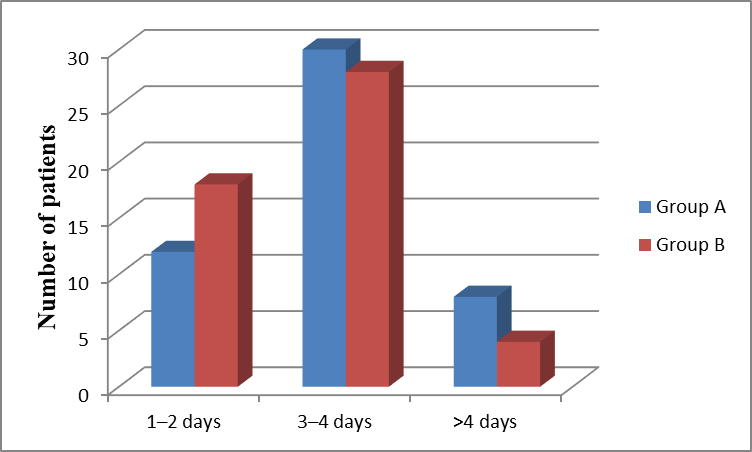
Figure 1: Distribution and comparison of duration of hospital stay
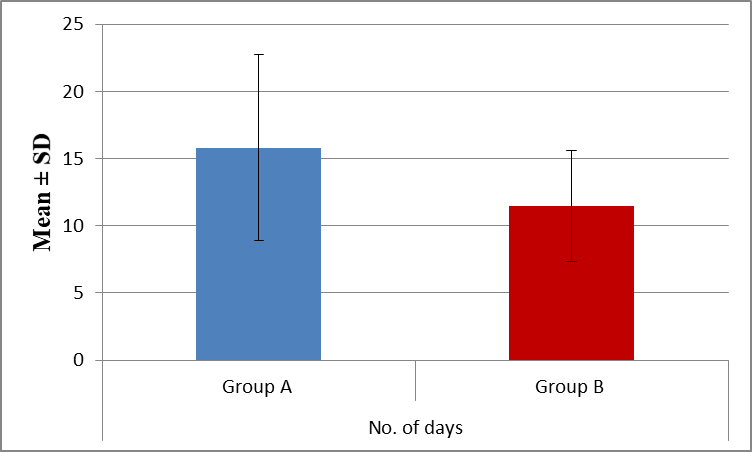
Figure 2: Distribution and comparison of time taken for return to normal work
In our study, the age distribution showed that in the <20 years group there was 1 patient in Group A (MR) and 1 in Group B (DR), in the 21–30 years group there were 3 and 2 patients respectively, in the 31–40 years group there were 6 in Group A and 7 in Group B, in the 41–50 years group there were 4 and 3 patients respectively, in the 51–60 years group there were 14 in Group A and 15 in Group B, in the 61–70 years group there were 15 in Group A and 18 in Group B, and in the 71–80 years group there were 7 in Group A and 4 in Group B. The mean age was 50.51 ± 15.95 years in Group A (MR) and 53.62 ± 15.26 years in Group B (DR) (Table 1).
In our study, the type of hernia distribution showed that in Group A (MR), 10 patients (20%) had direct hernia and 40 patients (80%) had indirect hernia, while in Group B (DR), 14 patients (28%) had direct hernia and 36 patients (72%) had indirect hernia, with a total of 50 patients in each group (Table 2).
In our study, the duration of surgery showed that in Group A (MR), 18 patients (36%) had surgery lasting less than 40 minutes, 25 patients (50%) had a duration of 40–60 minutes, and 7 patients (14%) had more than 60 minutes. In Group B (DR), 10 patients (20%) had surgery lasting less than 40 minutes, 30 patients (60%) had a duration of 40–60 minutes, and 10 patients (20%) had more than 60 minutes, with a total of 50 patients in each group (Table 3).
In our study, postoperative pain score on POD1 was 4.62 ± 0.68 in Group A (MR) and 4.55 ± 0.63 in Group B (DR) with a p value of 0.18. On POD3, the score was 2.35 ± 0.79 in Group A and 2.42 ± 0.74 in Group B with a p value of 0.31. On POD5, the score was 1.08 ± 0.86 in Group A and 1.15 ± 0.80 in Group B with a p value of 0.42, showing no statistically significant difference between the two groups at all time points (Table 4).
In our study, wound infection was seen in 4 patients (8%) in Group A (MR) and 2 patients (4%) in Group B (DR) with a p value of 0.03. Seroma occurred in 6 patients (12%) in Group A and 1 patient (2%) in Group B with a p value of 0.02. Hematoma was observed in 5 patients (10%) in Group A and 1 patient (2%) in Group B with a p value of 0.04. Orchitis was seen in 1 patient (2%) in Group A and none in Group B with a p value of 0.31 (Table 5).
In our study, the duration of hospital stay showed that in Group A (MR), 12 patients (24%) stayed for 1–2 days, 30 patients (60%) stayed for 3–4 days, and 8 patients (16%) stayed for more than 4 days. In Group B (DR), 18 patients (36%) stayed for 1–2 days, 28 patients (56%) stayed for 3–4 days, and 4 patients (8%) stayed for more than 4 days. The p values were 0.12, 0.48, and 0.09 respectively, showing no statistically significant difference between the two groups (Figure 1).
In our study, the number of days required for recovery showed that in Group A (MR), 3 patients (6%) recovered within 1–7 days, 14 patients (28%) recovered in 8–15 days, and 33 patients (66%) recovered in 16–30 days. In Group B (DR), 7 patients (14%) recovered within 1–7 days, 25 patients (50%) recovered in 8–15 days, and 18 patients (36%) recovered in 16–30 days. The mean duration was 15.82 ± 6.95 days in Group A (MR) and 11.48 ± 4.12 days in Group B (DR) (Figure 2).
DISCUSSION:
In the present study, we compared the outcomes of Desarda procedure and Lichtenstein mesh repair for inguinal hernia at a tertiary care centre. A total of 100 patients were included, with 50 patients in Group A (MR) and 50 patients in Group B (DR). The study evaluated demographic distribution, type of hernia, operative characteristics, postoperative pain, complications, hospital stay, and time to return to normal work.
The age distribution showed that in Group A (MR), 1 patient was in the <20 years group, 3 in 21–30 years, 6 in 31–40 years, 4 in 41–50 years, 14 in 51–60 years, 15 in 61–70 years, and 7 in 71–80 years. In Group B (DR), 1 patient was in <20 years, 2 in 21–30 years, 7 in 31–40 years, 3 in 41–50 years, 15 in 51–60 years, 18 in 61–70 years, and 4 in 71–80 years. The mean age was 50.51 ± 15.95 years in Group A and 53.62 ± 15.26 years in Group B, indicating comparable baseline characteristics. Similar observations regarding the predominance of inguinal hernia in middle-aged and elderly populations have been reported by Jensen et al. [12] and Bragais and Faylona et al. [11].
Regarding the type of hernia, in Group A (MR), 10 patients (20%) had direct hernia and 40 patients (80%) had indirect hernia. In Group B (DR), 14 patients (28%) had direct hernia and 36 patients (72%) had indirect hernia. The predominance of indirect inguinal hernia observed in our study is consistent with the findings of Neogi et al. [13], who reported indirect hernia as the most common presentation. Similar trends were also noted by Ehlers et al. [14] in their analysis of groin hernia repair outcomes.
The duration of surgery showed that in Group A (MR), 18 patients (36%) had surgery duration <40 minutes, 25 patients (50%) had 40–60 minutes, and 7 patients (14%) had >60 minutes. In Group B (DR), 10 patients (20%) had surgery duration <40 minutes, 30 patients (60%) had 40–60 minutes, and 10 patients (20%) had >60 minutes. These findings are comparable to those reported by Gedam et al. [15], who observed that both Desarda and Lichtenstein techniques can be performed within acceptable operative durations, with only minor differences between the procedures.
Postoperative pain scores showed that on POD1, the mean pain score was 4.62 ± 0.68 in Group A and 4.55 ± 0.63 in Group B (p = 0.18). On POD3, it was 2.35 ± 0.79 and 2.42 ± 0.74 (p = 0.31), and on POD5, 1.08 ± 0.86 and 1.15 ± 0.80 (p = 0.42), respectively. These results indicate comparable short-term postoperative pain outcomes between the two groups. Haxhirexha et al. [16] highlighted postoperative pain as an important determinant of patient recovery following inguinal hernia repair. Similarly, Modi and Nerlekar et al. [17] reported no significant difference in early postoperative pain between Desarda and Lichtenstein repairs.
Postoperative complications showed wound infection in 4 patients (8%) in Group A and 2 patients (4%) in Group B (p = 0.03). Seroma occurred in 6 patients (12%) and 1 patient (2%) (p = 0.02). Hematoma occurred in 5 patients (10%) and 1 patient (2%) (p = 0.04). Orchitis was seen in 1 patient (2%) and none in Group B (p = 0.31). No recurrence was observed in either group during the study period. Robinson et al. [18] reported that postoperative complications remain an important consideration in hernia surgery, particularly in relation to mesh use and wound-related events. Our findings demonstrate low overall complication rates in both groups.
The duration of hospital stay showed that in Group A, 12 patients (24%) stayed for 1–2 days, 30 patients (60%) for 3–4 days, and 8 patients (16%) for more than 4 days. In Group B, 18 patients (36%) stayed for 1–2 days, 28 patients (56%) for 3–4 days, and 4 patients (8%) for more than 4 days. Although the differences were not statistically significant, shorter hospital stay has been reported with tissue-based repairs in certain studies. Lockhart et al. [19] also emphasized that both mesh and non-mesh repairs are associated with satisfactory postoperative recovery and hospitalization outcomes.
The time required for return to normal work was 15.82 ± 6.95 days in Group A compared to 11.48 ± 4.12 days in Group B, indicating faster recovery in the Desarda group. In Group A, 3 patients (6%) returned to work within 1–7 days, 14 patients (28%) within 8–15 days, and 33 patients (66%) within 16–30 days. In Group B, 7 patients (14%) returned within 1–7 days, 25 patients (50%) within 8–15 days, and 18 patients (36%) within 16–30 days. Similar findings were reported by Modi and Nerlekar et al. [17], who observed earlier functional recovery following Desarda repair. Sasmal et al. [20] also demonstrated favorable recovery profiles and early return to normal activities among patients undergoing Desarda hernioplasty.
CONCLUSION:
In the present study, both Desarda procedure and Lichtenstein mesh repair were found to be safe and effective techniques for the treatment of inguinal hernia at a tertiary care centre. The two groups showed comparable outcomes in terms of postoperative pain, operative characteristics, and duration of hospital stay, with no significant difference in most parameters. However, the Desarda group demonstrated fewer postoperative complications and earlier return to normal work compared to the Lichtenstein group. While Lichtenstein mesh repair remains the standard and widely accepted technique, the Desarda procedure appears to be a reliable, cost-effective, and mesh-free alternative with comparable results and better early functional recovery in selected patients.
REFERENCES:
1. Manahil A, Khatoon S, Katyar IR, Katyar SH, Jabbar A, Khan AS. Comparative study between Desarda and Lichtenstein repair of inguinal hernia. Professional Medical Journal. 2026 Apr 1;33(4):674.
2. Miserez M, Peeters E, Aufenacker T, Bouillot JL, Campanelli G, Conze J, Fortelny R, Heikkinen T, Jorgensen LN, Kukleta J, Morales-Conde S. Update with level 1 studies of the European Hernia Society guidelines on the treatment of inguinal hernia in adult patients. Hernia. 2014 Apr;18(2):151-63.
3. Mekala P, Nelson AA, Kunche SR. AN ANALYSIS COMPARING THE MODIFIED LICHTENSTEIN APPROACH WITH THE LICHTENSTEIN PROCEDURE FOR THE TREATMENT OF THE INGUINAL HERNIAS. Int J Acad Med Pharm. 2026;8(2):791-5.
4. Gedam BS, Bansod PY, Kale VB, Shah Y, Akhtar M. A comparative study of Desarda's technique with Lichtenstein mesh repair in treatment of inguinal hernia: A prospective cohort study. International Journal of Surgery. 2017 Mar 1;39:150-5.
5. Robinson TN, Clarke JH, Schoen J, Walsh MD. Major mesh-related complications following hernia repair: events reported to the Food and Drug Administration. Surgical Endoscopy and Other Interventional Techniques. 2005 Dec;19(12):1556-60.
6. Dickinson KJ, Thomas M, Fawole AS, Lyndon PJ, White CM. Predicting chronic post-operative pain following laparoscopic inguinal hernia repair. Hernia. 2008 Dec;12(6):597-601.
7. Desarda MP. Physiological repair of inguinal hernia: a new technique (study of 860 patients). Hernia. 2006 Apr;10(2):143-6.
8. Youssef T, El-Alfy K, Farid M. Randomized clinical trial of Desarda versus Lichtenstein repair for treatment of primary inguinal hernia. International journal of surgery. 2015 Aug 1;20:28-34.
9. Gedam BS, Bansod PY, Kale VB, Shah Y, Akhtar M. A comparative study of Desarda's technique with Lichtenstein mesh repair in treatment of inguinal hernia: A prospective cohort study. International Journal of Surgery. 2017 Mar 1;39:150-5.
10. Stabilini C, Van Veenendaal N, Aasvang E, Agresta F, Aufenacker T, Berrevoet F, Burgmans I, Chen D, De Beaux A, East B, Garcia-Alamino J. Update of the international HerniaSurge guidelines for groin hernia management. BJS open. 2023 Oct;7(5):zrad080.
11. Bragais LC, Faylona JM. Adherence to international guidelines for Groin Hernia Management: a retrospective cross-sectional study in a tertiary government training hospital. Hernia. 2020 Oct;24(5):969-75.
12. Jensen KK, Henriksen NA, Jorgensen LN. Inguinal hernia epidemiology. InTextbook of hernia 2017 Apr 12 (pp. 23-27). Cham: Springer International Publishing.
13. Neogi P, Gupta V, Tripathi N. A comparative study of outcomes of Lichtenstein repair and Desarda tissue repair in patients of inguinal hernia. International Surgery Journal. 2017 Jul 24;4(8):2693-9.
14. Ehlers AP, Lai YL, Hu HM, Howard R, Davidson GH, Waljee JF, Dimick JB, Telem DA. Five year trends in surgical technique and outcomes of groin hernia repair in the United States. Surgical Endoscopy. 2023 Jun;37(6):4818-23.
15. Gedam BS, Bansod PY, Kale VB, Shah Y, Akhtar M. A comparative study of Desarda's technique with Lichtenstein mesh repair in treatment of inguinal hernia: A prospective cohort study. International Journal of Surgery. 2017 Mar 1;39:150-5.
16. Haxhirexha K, Dogjani A, Dika-Haxhirexha F, Elezi X, Alili R. CHRONIC PAIN AFTER INGUINAL HERNIA REPAIR. Acta Medica Balkanica: International Journal of Medical Sciences. 2019 Jan 1;4.
17. Modi PJ, Nerlekar HV. Comparison of Pure Tissue Repair (Desarda) and Prosthetic Repair (Lichtenstein) Methods for Inguinal Hernia Repair. International Journal of Health Sciences. 2022(II):2996-3007.
18. Robinson TN, Clarke JH, Schoen J, Walsh MD. Major mesh-related complications following hernia repair: events reported to the Food and Drug Administration. Surgical Endoscopy and Other Interventional Techniques. 2005 Dec;19(12):1556-60.
19. Lockhart K, Dunn D, Teo S, Ng JY, Dhillon M, Teo E, van Driel ML. Mesh versus non‐mesh for inguinal and femoral hernia repair. Cochrane Database of Systematic Reviews. 2018(9).
20. Sasmal PK, Sahoo A, Mishra TS, Das Poddar KK, Ali SM, Singh PK, Kumar P. Feasibility and outcomes of Desarda vs Lichtenstein hernioplasty by local anesthesia for inguinal hernia: a noninferiority randomized clinical trial. Hernia. 2023 Oct;27(5):1155-63.