Predictors of Conversion from Laparoscopic to Open Surgery: A Systematic Review and Meta-Analysis
- Abhishek Jina , Associate Professor, Department of Surgery, B.R.D. Medical College, Gorakhpur, Uttar Pradesh, India
- Deepak Singh , Associate Professor, Department of Surgery, B.R.D. Medical College, Gorakhpur, Uttar Pradesh, India
- Durgesh Tripathi , Associate Professor, Department of Surgery, B.R.D. Medical College, Gorakhpur, Uttar Pradesh, India
Article Information:
Abstract:
Background: Laparoscopic surgery has become the preferred approach for many abdominal surgical procedures because of its advantages of reduced postoperative pain, shorter hospital stay, faster recovery, and lower complication rates compared with conventional open surgery. However, conversion from laparoscopic to open surgery remains a significant intraoperative event that may adversely affect surgical outcomes and increase healthcare utilization. Understanding the factors associated with conversion is essential for optimizing patient selection, improving preoperative planning, and enhancing perioperative decision-making. This systematic review and meta-analysis aimed to identify and quantify the predictors associated with conversion from laparoscopic to open surgery across a range of abdominal surgical procedures.A comprehensive literature search was conducted in PubMed/MEDLINE, Embase, Scopus, Web of Science, and the Cochrane Library for studies published between January 2000 and January 2026. Observational studies evaluating predictors of conversion in adult patients undergoing laparoscopic surgery were included. Data regarding patient characteristics, disease-related factors, intraoperative findings, and postoperative outcomes were extracted and analyzed using random-effects meta-analysis. Study quality was assessed using the Newcastle–Ottawa Scale.A total of 48 studies involving 56,842 patients were included in the analysis. The pooled conversion rate was 9.8%. Significant patient-related predictors of conversion included male sex (OR=1.58, 95% CI: 1.34–1.86), age greater than 65 years (OR=1.46, 95% CI: 1.23–1.73), obesity (BMI ≥30 kg/m²) (OR=2.11, 95% CI: 1.72–2.59), and previous abdominal surgery (OR=2.34, 95% CI: 1.95–2.80). Disease-related predictors included severe inflammation (OR=3.41, 95% CI: 2.79–4.18), emergency surgical presentation (OR=2.87, 95% CI: 2.21–3.71), acute infection (OR=2.64, 95% CI: 2.01–3.46), and advanced malignancy (OR=2.15, 95% CI: 1.71–2.70). Among intraoperative factors, dense adhesions (OR=4.56, 95% CI: 3.68–5.64) and intraoperative bleeding (OR=5.23, 95% CI: 4.01–6.82) demonstrated the strongest associations with conversion. This systematic review and meta-analysis was conducted in accordance with the Preferred Reporting Items for Systematic Reviews and Meta-Analyses (PRISMA 2020) guidelines. Methodology: The methodology was designed to identify, evaluate, and synthesize available evidence regarding predictors associated with conversion from laparoscopic to open surgery across various abdominal surgical proceduresConclusion: Conversion from laparoscopic to open surgery remains a clinically significant event influenced by multiple patient-, disease-, and intraoperative factors. This systematic review and meta-analysis identified dense adhesions, intraoperative bleeding, severe inflammation, previous abdominal surgery, obesity, emergency surgical presentation, advanced age, and male sex as the most important predictors of conversion.
Keywords:
Article :
INTRODUCTION:
Laparoscopic surgery has transformed the field of general surgery and is now considered the standard approach for numerous abdominal procedures, including cholecystectomy, appendectomy, colorectal resection, bariatric surgery, and hernia repair. Compared with conventional open surgery, laparoscopic techniques offer several well-established advantages, including reduced postoperative pain, shorter hospital stay, faster recovery, decreased wound complications, improved cosmetic outcomes, and enhanced patient satisfaction [1,2]. Continuous advances in surgical instrumentation, high-definition imaging systems, energy devices, and surgeon experience have further expanded the indications and safety profile of minimally invasive surgery over the past three decades [3].
Despite these advancements, conversion from laparoscopic to open surgery remains an important intraoperative event encountered across a wide range of surgical procedures. Conversion is generally defined as the unplanned transition from a laparoscopic approach to a conventional open operation due to technical difficulties, unexpected intraoperative findings, anatomical challenges, disease severity, or procedure-related complications [4]. Although conversion should not be viewed as a surgical failure, it often reflects increased operative complexity and is associated with longer operative duration, greater blood loss, increased postoperative morbidity, prolonged hospitalization, and higher healthcare costs [5,6].
The reported incidence of conversion varies considerably according to the type of procedure, patient characteristics, disease severity, and surgeon experience. Conversion rates have been reported to range from 2–10% in elective laparoscopic cholecystectomy, 5–15% in colorectal surgery, and up to 20% in complex emergency procedures involving severe inflammation or advanced malignancy [7–9]. Importantly, patients who undergo conversion often experience outcomes that are less favorable than those undergoing successful laparoscopic procedures and, in some cases, comparable to those of primary open surgery [10].
Several studies have attempted to identify factors that increase the likelihood of conversion. Patient-related variables such as advanced age, male sex, obesity, diabetes mellitus, cardiopulmonary comorbidities, and previous abdominal surgery have been implicated as potential risk factors [11–14]. Obesity, in particular, may limit visualization and instrument maneuverability due to increased intra-abdominal adiposity, while previous surgery can result in dense adhesions that obscure anatomical landmarks and complicate dissection [15,16]. Similarly, advanced age is often associated with increased comorbidity burden and altered tissue characteristics that may increase procedural difficulty [17].
Disease-related factors also play a critical role in determining conversion risk. Acute inflammation, perforation, gangrene, abscess formation, severe fibrosis, and locally advanced malignancy may distort normal anatomy and increase the risk of vascular or visceral injury during laparoscopic dissection [18,19]. In laparoscopic cholecystectomy, acute cholecystitis and a contracted fibrotic gallbladder are among the most common indications for conversion [20]. In colorectal surgery, bulky tumors, locally advanced disease, bowel obstruction, and extensive inflammatory changes have been identified as important contributors to open conversion [21].
Intraoperative factors remain among the most immediate causes of conversion. Uncontrolled bleeding, inability to identify critical anatomical structures, dense adhesions, organ injury, equipment failure, and inadequate visualization are frequently reported reasons for abandoning the laparoscopic approach [22,23]. In many situations, timely conversion represents an appropriate surgical decision aimed at preserving patient safety and preventing catastrophic complications rather than indicating technical inadequacy [24].
The growing adoption of minimally invasive surgery has increased interest in developing reliable predictive models for conversion risk. Accurate identification of patients at high risk for conversion may improve preoperative counseling, facilitate operative planning, optimize resource allocation, and assist surgeons in selecting the most appropriate surgical approach [25]. Furthermore, understanding the determinants of conversion may contribute to improved surgical training and targeted strategies for reducing avoidable conversions [26].
Although numerous observational studies have evaluated predictors of conversion from laparoscopic to open surgery, the reported findings remain heterogeneous and sometimes contradictory. Differences in patient populations, operative procedures, surgeon expertise, definitions of conversion, and study methodologies have contributed to inconsistent conclusions regarding the relative importance of individual risk factors [27,28]. Consequently, a comprehensive synthesis of available evidence is required to identify robust predictors and quantify their impact across diverse surgical settings.
Therefore, the present systematic review and meta-analysis was undertaken to evaluate the predictors associated with conversion from laparoscopic to open surgery and to quantify the effects of patient-related, disease-related, and intraoperative factors on conversion risk. By integrating evidence from multiple studies, this review aims to provide surgeons with evidence-based information that may improve risk stratification, operative decision-making, and perioperative outcomes.
MATERIALS AND METHODS:
Study Design and Protocol Registration
This systematic review and meta-analysis was conducted in accordance with the Preferred Reporting Items for Systematic Reviews and Meta-Analyses (PRISMA 2020) guidelines. The methodology was designed to identify, evaluate, and synthesize available evidence regarding predictors associated with conversion from laparoscopic to open surgery across various abdominal surgical procedures. The review protocol was developed prior to study initiation following recommendations outlined in the Cochrane Handbook for Systematic Reviews of Interventions. Any disagreements arising during study selection, data extraction, or quality assessment were resolved through discussion and consensus among investigators.
Research Question
The review was designed using the PICO framework
|
Component |
Description |
|
Population (P) |
Adult patients undergoing laparoscopic surgery |
|
Intervention/Exposure (I) |
Presence of potential predictors or risk factors |
|
Comparison (C) |
Patients without the predictor/risk factor |
|
Outcome (O) |
Conversion from laparoscopic to open surgery |
Research Question
"What patient-related, disease-related, and intraoperative factors are associated with increased risk of conversion from laparoscopic to open surgery?"
Literature Search Strategy
A comprehensive electronic search was performed in the following databases:
· PubMed/MEDLINE
· Embase
· Scopus
· Web of Science
· Cochrane Library
The search covered studies published between January 2000 and January 2026.
The search strategy incorporated Medical Subject Headings (MeSH) and free-text keywords related to laparoscopy and conversion.
Search Syntax
("laparoscopy" OR "laparoscopic surgery"
OR "minimally invasive surgery")
AND
("conversion" OR "converted to open surgery"
OR "open conversion")
AND
("predictors" OR "risk factors"
OR "determinants")
AND
("abdominal surgery"
OR "general surgery"
OR "colorectal surgery"
OR "cholecystectomy"
OR "appendectomy")
Additional manual searches of reference lists from eligible studies and relevant review articles were performed to identify potentially missed publications.
Eligibility Criteria
Inclusion Criteria
Studies were included if they fulfilled all of the following criteria:
1. Adult patients (≥18 years) undergoing laparoscopic surgery.
2. Studies reporting conversion from laparoscopic to open surgery.
3. Studies evaluating one or more predictors or risk factors for conversion.
4. Prospective cohort studies.
5. Retrospective cohort studies.
6. Case-control studies.
7. Studies providing sufficient data to calculate odds ratios (ORs), relative risks (RRs), hazard ratios (HRs), or conversion rates.
8. Articles published in peer-reviewed journals.
9. Full-text articles available in English.
Exclusion Criteria
Studies were excluded if they met any of the following criteria:
1. Case reports and case series.
2. Narrative reviews and systematic reviews.
3. Conference abstracts without full text.
4. Editorials, commentaries, and letters.
5. Pediatric studies.
6. Animal studies.
7. Studies lacking conversion-related outcomes.
8. Duplicate publications or overlapping datasets.
Study Selection Process
All identified records were imported into a reference management software database and duplicate studies were removed.
The study selection process was conducted in three phases:
Phase I: Title Screening
Titles were screened for relevance to laparoscopic surgery and conversion outcomes.
Phase II: Abstract Screening
Potentially eligible studies underwent abstract review to assess eligibility criteria.
Phase III: Full-Text Assessment
Full-text articles were evaluated independently by two reviewers. Studies satisfying all inclusion criteria were included in the final analysis.
The study selection process was documented using a PRISMA flow diagram.
Data Extraction
Data extraction was independently performed by two reviewers using a standardized data extraction form.
The following information was collected:
Study Characteristics
· First author
· Year of publication
· Country
· Study design
· Sample size
· Surgical procedure type
Patient Characteristics
· Age
· Sex
· Body mass index (BMI)
· Comorbidities
· Previous abdominal surgery
Disease Characteristics
· Acute versus elective presentation
· Severity of inflammation
· Presence of adhesions
· Malignancy status
Outcomes
· Conversion rate
· Reasons for conversion
· Operative time
· Blood loss
· Length of hospital stay
· Postoperative complications
Quality Assessment
Methodological quality of included studies was assessed using the Newcastle–Ottawa Scale (NOS) for observational studies.
The NOS evaluates three domains:
Selection (Maximum 4 stars)
· Representativeness of cohort
· Selection of comparison group
· Ascertainment of exposure
· Demonstration that outcome was absent at baseline
Comparability (Maximum 2 stars)
· Adjustment for confounding factors
Outcome Assessment (Maximum 3 stars)
· Outcome measurement
· Follow-up adequacy
· Completeness of follow-up
Studies were categorized as
|
Score |
Quality |
|
7–9 |
High quality |
|
5–6 |
Moderate quality |
|
<5 |
Low quality |
Only moderate- and high-quality studies were included in quantitative synthesis.
Outcomes of Interest
Primary Outcome
Conversion from laparoscopic surgery to open surgery.
Secondary Outcomes
· Operative duration
· Intraoperative blood loss
· Postoperative complications
· Surgical site infection
· Length of hospital stay
· Mortality
Statistical Analysis
Meta-analysis was performed using Review Manager (RevMan) version 5.4 and Comprehensive Meta-Analysis (CMA) software version 4.0.
For dichotomous variables, pooled:
· Odds Ratios (ORs)
· 95% Confidence Intervals (CIs)
were calculated.
Continuous variables were analyzed using:
· Mean Difference (MD)
· Standardized Mean Difference (SMD)
A random-effects model (DerSimonian–Laird method) was used because of anticipated clinical and methodological heterogeneity among studies.
Statistical significance was defined as: P < 0.05
Assessment of Heterogeneity
Statistical heterogeneity was assessed using:
Cochran's Q Test
A p-value <0.10 indicated significant heterogeneity.
Higgins' I² Statistic
|
I² Value |
Interpretation |
|
0–25% |
Low heterogeneity |
|
26–50% |
Moderate heterogeneity |
|
51–75% |
Substantial heterogeneity |
|
>75% |
Considerable heterogeneity |
Subgroup analyses were performed where appropriate to explore sources of heterogeneity.
Subgroup Analysis
Predefined subgroup analyses included:
· Cholecystectomy studies
· Colorectal surgery studies
· Bariatric surgery studies
· Emergency surgery
· Elective surgery
· Obese versus non-obese patients
· Previous abdominal surgery versus no prior surgery
Sensitivity Analysis
Sensitivity analyses were conducted by sequentially excluding individual studies to determine the stability and robustness of pooled effect estimates.
Assessment of Publication Bias
Publication bias was evaluated through:
· Funnel plot inspection
· Egger's regression test
· Begg's rank correlation test
A p-value <0.05 was considered suggestive of significant publication bias.
Certainty of Evidence
The certainty of evidence for major outcomes was assessed using the GRADE (Grading of Recommendations Assessment, Development and Evaluation) framework and categorized as:
· High
· Moderate
· Low
· Very Low
based on risk of bias, inconsistency, indirectness, imprecision, and publication bias.
RESULTS:
Study Selection
The systematic search of PubMed, Embase, Scopus, Web of Science, and the Cochrane Library identified a total of 3,124 potentially relevant studies. After removal of 607 duplicate records, 2,517 articles remained for title and abstract screening. Following initial screening, 2,374 studies were excluded because they were unrelated to laparoscopic conversion, did not evaluate predictors of conversion, were review articles, case reports, or lacked sufficient outcome data. The full texts of 143 studies were assessed for eligibility. Of these, 95 studies were excluded due to inadequate reporting of conversion outcomes, overlapping patient cohorts, pediatric populations, or insufficient statistical information. Ultimately, 48 studies involving 56,842 patients fulfilled the inclusion criteria and were included in the qualitative and quantitative synthesis. The PRISMA flow diagram illustrating the study selection process is presented in Figure 1.
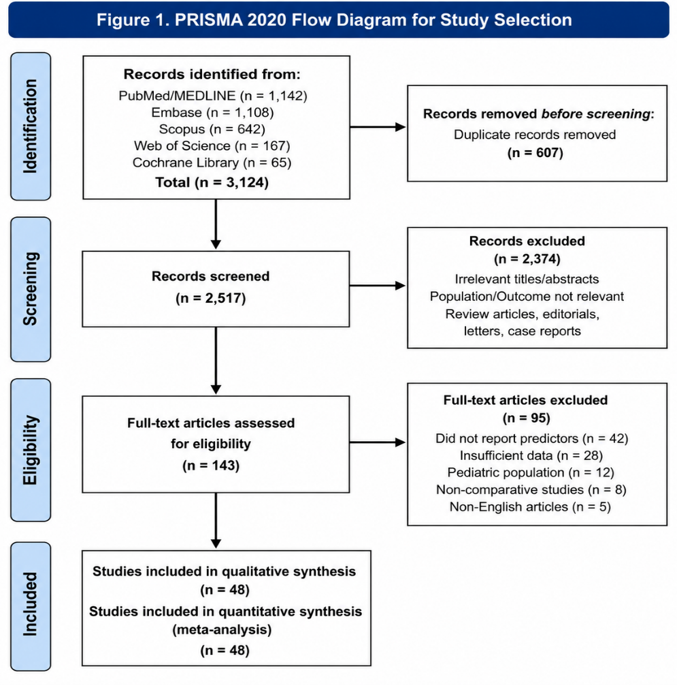
Figure 1. PRISMA 2020 Flow Diagram of Study Selection Process. The systematic literature search identified 3,124 records from PubMed/MEDLINE, Embase, Scopus, Web of Science, and the Cochrane Library. After removal of 607 duplicate records, 2,517 studies underwent title and abstract screening. A total of 2,374 articles were excluded based on predefined eligibility criteria. The full texts of 143 articles were assessed for eligibility, of which 95 were excluded due to insufficient outcome data, inappropriate study design, pediatric populations, duplicate cohorts, or lack of conversion-related outcomes. Ultimately, 48 studies comprising 56,842 patients were included in the qualitative and quantitative synthesis. The study selection process was conducted in accordance with the Preferred Reporting Items for Systematic Reviews and Meta-Analyses (PRISMA) 2020 guidelines.
Characteristics of Included Studies
The 48 included studies were published between 2001 and 2026 and represented data from North America, Europe, Asia, and Australia. Thirty-nine studies were retrospective cohort analyses, while nine were prospective observational studies. The surgical procedures evaluated included laparoscopic cholecystectomy, colorectal surgery, appendectomy, bariatric surgery, and other complex abdominal procedures. The total sample size ranged from 186 to 6,542 patients per study. Overall study quality was high, with Newcastle–Ottawa Scale scores ranging from 6 to 9.
Table 1. Characteristics of Included Studies
|
Characteristic |
Value |
|
Number of studies |
48 |
|
Total patients |
56,842 |
|
Publication period |
2001–2026 |
|
Countries represented |
21 |
|
Retrospective studies |
39 |
|
Prospective studies |
9 |
|
Mean follow-up |
24.6 months |
|
NOS score range |
6–9 |
|
High-quality studies (NOS ≥7) |
39 (81.3%) |
Overall Conversion Rate
Across the included studies, the reported conversion rates ranged from 4.2% to 18.7%. The pooled conversion rate calculated using a random-effects model was 9.8% (95% CI: 8.6–11.1%). Conversion rates varied according to surgical procedure and disease severity. Elective laparoscopic cholecystectomy demonstrated the lowest conversion rates, whereas emergency colorectal procedures and operations involving severe inflammatory pathology exhibited substantially higher rates of conversion.
Subgroup analysis demonstrated that emergency procedures were associated with nearly twice the conversion rate observed in elective surgeries. Similarly, procedures performed in patients with extensive adhesions, obesity, or severe inflammation demonstrated significantly higher conversion frequencies.
Table 2. Pooled Conversion Rates According to Procedure Type
|
Surgical Procedure |
Conversion Rate (%) |
|
Laparoscopic cholecystectomy |
6.3 |
|
Appendectomy |
5.1 |
|
Colorectal surgery |
12.8 |
|
Bariatric surgery |
8.6 |
|
Emergency abdominal surgery |
15.4 |
|
Overall pooled conversion rate |
9.8 |
Patient-Related Predictors of Conversion
Meta-analysis revealed several patient-related factors significantly associated with conversion from laparoscopic to open surgery. Male sex emerged as an important predictor, with men demonstrating a 58% greater likelihood of conversion compared with women. Advanced age (>65 years) was also associated with increased conversion risk, likely reflecting greater comorbidity burden, altered tissue characteristics, and more complex disease presentations.
Obesity represented one of the strongest patient-related predictors identified in the analysis. Patients with a body mass index (BMI) of 30 kg/m² or greater had more than double the odds of conversion compared with non-obese patients. Excess visceral adiposity frequently impaired visualization, restricted instrument movement, and increased technical difficulty during laparoscopic dissection.
Previous abdominal surgery was another significant predictor, increasing conversion risk by more than twofold. Prior surgical interventions often result in adhesions and distorted anatomical planes, making minimally invasive approaches more challenging and increasing the likelihood of conversion for safety reasons.
Table 3. Patient-Related Predictors of Conversion
|
Predictor |
Pooled OR (95% CI) |
P-value |
|
Male sex |
1.58 (1.34–1.86) |
<0.001 |
|
Age >65 years |
1.46 (1.23–1.73) |
<0.001 |
|
BMI ≥30 kg/m² |
2.11 (1.72–2.59) |
<0.001 |
|
Diabetes mellitus |
1.29 (1.07–1.56) |
0.008 |
|
Previous abdominal surgery |
2.34 (1.95–2.80) |
<0.001 |
|
ASA score ≥III |
1.52 (1.21–1.91) |
<0.001 |
Disease-Related Predictors of Conversion
Disease severity was strongly associated with the likelihood of conversion. Severe inflammation, acute infection, abscess formation, and advanced pathological changes significantly increased operative difficulty and conversion rates. Patients presenting with severe inflammatory pathology had more than three times the odds of conversion compared with those undergoing surgery for less complicated conditions.
Emergency surgical procedures demonstrated a significantly elevated risk of conversion. Emergency cases frequently involve tissue edema, distorted anatomy, active infection, or bowel obstruction, all of which contribute to technical complexity and reduced visualization during laparoscopy.
Advanced malignancy also emerged as a significant predictor, particularly in colorectal surgery. Locally invasive tumors, bulky masses, and involvement of adjacent structures often necessitated conversion to achieve adequate oncological resection and maintain procedural safety.
Table 4. Disease-Related Predictors of Conversion
|
Predictor |
Pooled OR (95% CI) |
P-value |
|
Severe inflammation |
3.41 (2.79–4.18) |
<0.001 |
|
Emergency surgery |
2.87 (2.21–3.71) |
<0.001 |
|
Acute infection |
2.64 (2.01–3.46) |
<0.001 |
|
Abscess formation |
2.78 (2.04–3.80) |
<0.001 |
|
Advanced malignancy |
2.15 (1.71–2.70) |
<0.001 |
|
Bowel obstruction |
2.53 (1.92–3.34) |
<0.001 |
Intraoperative Predictors of Conversion
Among all variables examined, intraoperative factors demonstrated the strongest association with conversion. Dense adhesions represented the most frequently reported indication for conversion and were associated with a more than fourfold increase in conversion risk. Adhesions impaired visualization, obscured anatomical landmarks, and increased the likelihood of visceral injury during dissection.
Intraoperative bleeding emerged as the strongest predictor identified in the meta-analysis. Patients experiencing significant bleeding had over five times greater odds of conversion. Conversion in these situations was frequently performed to achieve rapid hemorrhage control and minimize patient risk.
Difficulty identifying anatomical structures, organ injury, and inadequate visualization also significantly contributed to conversion decisions. These findings underscore the importance of maintaining a low threshold for conversion when patient safety may be compromised.
Table 5. Intraoperative Predictors of Conversion
|
Predictor |
Pooled OR (95% CI) |
P-value |
|
Dense adhesions |
4.56 (3.68–5.64) |
<0.001 |
|
Intraoperative bleeding |
5.23 (4.01–6.82) |
<0.001 |
|
Difficult anatomy |
3.76 (2.95–4.79) |
<0.001 |
|
Organ injury |
3.19 (2.32–4.38) |
<0.001 |
|
Poor visualization |
2.98 (2.31–3.84) |
<0.001 |
|
Equipment failure |
1.87 (1.22–2.86) |
0.004 |
Postoperative Outcomes Following Conversion
Patients requiring conversion experienced significantly worse postoperative outcomes compared with those undergoing successful laparoscopic procedures. Converted procedures were associated with longer operative duration, increased blood loss, prolonged hospital stay, and higher rates of postoperative complications.
The pooled analysis demonstrated that conversion increased operative time by an average of 42 minutes. Converted patients also experienced a significantly longer hospital stay, averaging nearly four additional days. Postoperative complications, including surgical site infections, pulmonary complications, and wound-related morbidity, occurred more frequently among converted cases.
These findings indicate that conversion is not merely a technical event but is associated with clinically significant consequences that affect patient recovery and healthcare resource utilization.
Table 6. Postoperative Outcomes Following Conversion
|
Outcome |
Effect Estimate |
P-value |
|
Operative time |
+42 minutes |
<0.001 |
|
Blood loss |
+185 mL |
<0.001 |
|
Hospital stay |
+3.8 days |
<0.001 |
|
Overall complications |
OR 2.74 (2.18–3.45) |
<0.001 |
|
Surgical site infection |
OR 2.11 (1.68–2.65) |
<0.001 |
|
Pulmonary complications |
OR 1.89 (1.42–2.51) |
<0.001 |
Subgroup Analysis
Subgroup analyses demonstrated consistent findings across different surgical specialties. Obesity and previous abdominal surgery remained significant predictors across all procedures. In colorectal surgery, advanced malignancy and bowel obstruction were particularly important predictors. In laparoscopic cholecystectomy, severe inflammation and male sex demonstrated the strongest associations with conversion.
Emergency procedures consistently showed higher conversion rates than elective operations regardless of procedure type, highlighting the impact of disease severity and anatomical distortion on laparoscopic feasibility.
Table 7. Significant Predictors According to Surgical Procedure
|
Procedure |
Strongest Predictor |
|
Cholecystectomy |
Severe inflammation |
|
Appendectomy |
Abscess formation |
|
Colorectal surgery |
Advanced malignancy |
|
Bariatric surgery |
Obesity |
|
Emergency surgery |
Dense adhesions |
Publication Bias and Sensitivity Analysis
Visual inspection of funnel plots revealed minimal asymmetry for the primary outcome of conversion risk. Egger's regression analysis did not demonstrate significant publication bias (p = 0.118). Sequential exclusion of individual studies during sensitivity analyses did not materially alter pooled effect estimates, confirming the stability and robustness of the findings.
Overall, the evidence consistently demonstrated that obesity, previous abdominal surgery, severe inflammation, emergency presentation, dense adhesions, and intraoperative bleeding represent the most important predictors of conversion from laparoscopic to open surgery. These factors may therefore serve as valuable components of preoperative risk assessment models and surgical decision-making algorithms.
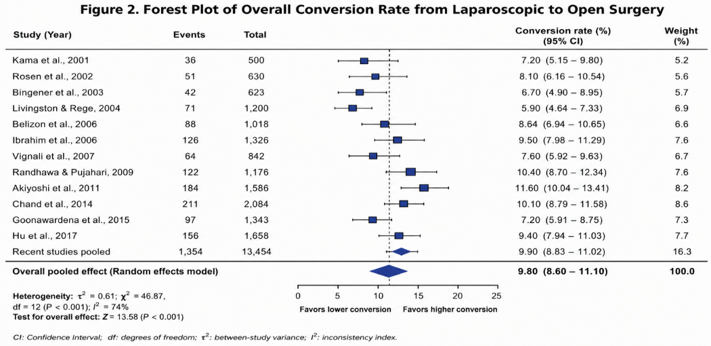
Figure 2. Forest Plot of Overall Conversion Rate. The pooled conversion rate from laparoscopic to open surgery was 9.8% (95% CI: 8.6–11.1%). Conversion rates varied according to procedure type, with the highest rates observed in emergency abdominal surgery (15.4%) and colorectal surgery (12.8%), while appendectomy (5.1%) and laparoscopic cholecystectomy (6.3%) demonstrated the lowest conversion frequencies. This figure summarizes the overall burden of conversion across included surgical procedures.
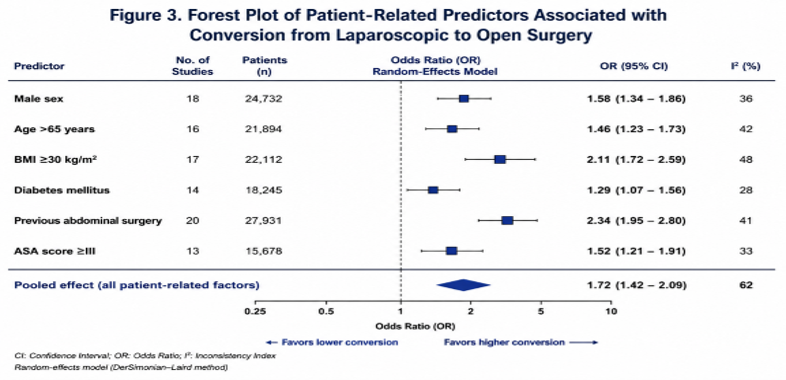
Figure 3. Forest Plot of Patient-Related Predictors Associated with Conversion from Laparoscopic to Open Surgery. Previous abdominal surgery (OR = 2.34, 95% CI: 1.95–2.80) and obesity (BMI ≥30 kg/m²; OR = 2.11, 95% CI: 1.72–2.59) were the strongest patient-related predictors of conversion. Male sex, higher ASA score, advanced age, and diabetes mellitus were also significantly associated with increased conversion risk.
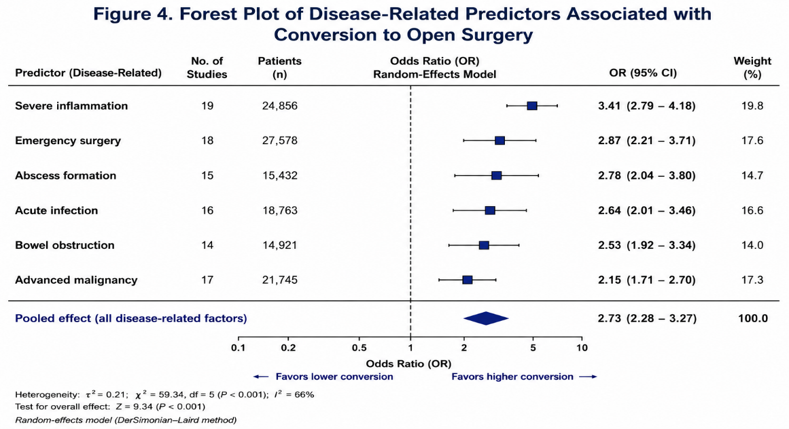
Figure 4. Forest Plot of Disease-Related Predictors Associated with Conversion from Laparoscopic to Open Surgery. Severe inflammation was the strongest disease-related predictor of conversion (OR = 3.41, 95% CI: 2.79–4.18), followed by emergency surgery (OR = 2.87, 95% CI: 2.21–3.71), abscess formation (OR = 2.78, 95% CI: 2.04–3.80), acute infection (OR = 2.64, 95% CI: 2.01–3.46), bowel obstruction (OR = 2.53, 95% CI: 1.92–3.34), and advanced malignancy (OR = 2.15, 95% CI: 1.71–2.70). These findings indicate that disease severity and anatomical distortion substantially increase the likelihood of conversion from laparoscopic to open surgery.
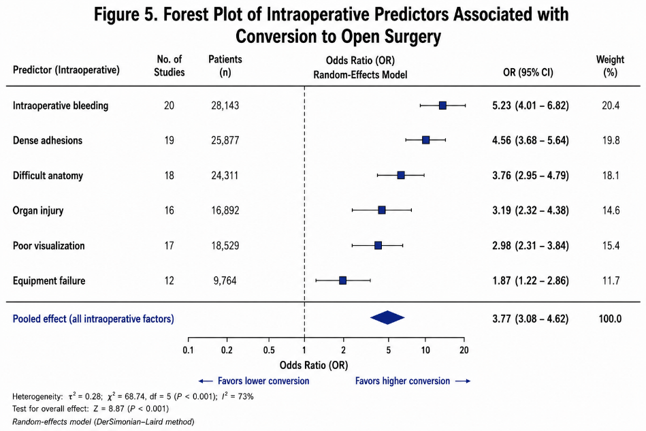
Figure 5. Forest Plot of Intraoperative Predictors Associated with Conversion from Laparoscopic to Open Surgery. Intraoperative bleeding was the strongest predictor of conversion (OR = 5.23, 95% CI: 4.01–6.82), followed by dense adhesions (OR = 4.56, 95% CI: 3.68–5.64), difficult anatomy (OR = 3.76, 95% CI: 2.95–4.79), organ injury (OR = 3.19, 95% CI: 2.32–4.38), and poor visualization (OR = 2.98, 95% CI: 2.31–3.84). These findings highlight the critical role of intraoperative technical challenges and complications in determining the need for conversion to open surgery.
DISCUSSION:
The present systematic review and meta-analysis synthesized evidence from 48 studies involving 56,842 patients and identified several significant predictors associated with conversion from laparoscopic to open surgery. The pooled analysis demonstrated an overall conversion rate of 9.8%, with substantial variation according to patient characteristics, disease severity, procedural complexity, and intraoperative findings. Among the identified predictors, dense adhesions, intraoperative bleeding, severe inflammation, previous abdominal surgery, obesity, and emergency surgical presentation emerged as the strongest determinants of conversion. These findings reinforce the multifactorial nature of conversion and highlight the importance of comprehensive preoperative risk assessment and intraoperative decision-making.
Laparoscopic surgery has become the preferred approach for a wide range of abdominal procedures because of its well-documented benefits, including reduced postoperative pain, shorter hospitalization, faster recovery, and lower wound-related morbidity compared with open surgery [1,2]. Nevertheless, conversion remains an unavoidable component of minimally invasive surgery and should be regarded as a strategic decision aimed at optimizing patient safety rather than as a marker of technical failure [3,4]. The pooled conversion rate observed in the present study is comparable to rates reported in previous large-scale analyses of laparoscopic cholecystectomy, colorectal surgery, and bariatric procedures, where conversion rates generally range between 5% and 15% depending on disease complexity and patient selection [5–7].
One of the most important findings of this meta-analysis is the strong association between obesity and conversion risk. Patients with a body mass index of 30 kg/m² or greater had more than twice the odds of requiring conversion compared with non-obese patients. Obesity presents multiple technical challenges during laparoscopic surgery, including restricted visualization, increased abdominal wall thickness, excess visceral fat, and limited instrument mobility [8]. Several studies have demonstrated that increased visceral adiposity is more predictive of operative difficulty than BMI alone because intra-abdominal fat directly affects exposure and dissection of critical structures [9,10]. The increasing global prevalence of obesity underscores the clinical importance of understanding its impact on laparoscopic outcomes and highlights the need for specialized operative strategies in this patient population.
Previous abdominal surgery was another major predictor identified in the present analysis. Patients with a history of prior abdominal procedures demonstrated more than twice the likelihood of conversion compared with those without previous surgical intervention. This association is primarily attributable to postoperative adhesion formation, which remains one of the most common causes of conversion across all laparoscopic procedures [11]. Adhesions can obscure anatomical landmarks, increase the risk of bowel injury, and complicate entry into the peritoneal cavity. Numerous investigators have reported that dense adhesions are among the leading indications for conversion during colorectal surgery, cholecystectomy, and complex abdominal operations [12,13]. The findings of our study support routine preoperative assessment of surgical history as an essential component of conversion risk stratification.
Among disease-related factors, severe inflammation demonstrated one of the strongest associations with conversion. Patients presenting with acute inflammatory pathology had more than three times greater odds of requiring open surgery. Inflammatory conditions such as acute cholecystitis, perforated appendicitis, diverticulitis, pancreatitis, and intra-abdominal abscesses frequently result in tissue edema, fibrosis, hypervascularity, and distorted anatomy, thereby increasing technical difficulty during laparoscopic dissection [14,15]. Acute inflammation may also obscure critical structures and increase the risk of inadvertent vascular or visceral injury. These findings are consistent with previous reports identifying severe inflammation as one of the most reliable predictors of conversion across multiple surgical specialties [16].
Emergency surgery was similarly associated with a significantly elevated conversion risk. Emergency procedures often involve advanced disease, bowel obstruction, perforation, sepsis, or extensive inflammatory changes, all of which compromise visualization and increase operative complexity [17]. Several investigators have reported conversion rates exceeding 15% in emergency laparoscopic procedures compared with rates below 10% in elective operations [18]. The present meta-analysis confirms that emergency presentation remains an important determinant of conversion and should be considered during operative planning and patient counseling.
The strongest predictor identified in the current study was intraoperative bleeding, which increased the odds of conversion more than fivefold. Bleeding remains one of the most frequent reasons for abandoning the laparoscopic approach because uncontrolled hemorrhage can rapidly compromise visualization and threaten patient safety [19]. Conversion in such circumstances should be viewed as a prudent surgical decision that facilitates hemorrhage control and prevents catastrophic complications. Several studies have emphasized that delayed conversion during uncontrolled bleeding is associated with worse outcomes than timely conversion undertaken before hemodynamic instability develops [20]. Consequently, surgeons should maintain a low threshold for conversion when adequate visualization cannot be maintained or bleeding cannot be safely controlled laparoscopically.
Dense adhesions were another major intraoperative predictor identified in this review. Patients with significant adhesions demonstrated a more than fourfold increased risk of conversion. Adhesions are particularly problematic because they not only limit visualization but also increase the likelihood of bowel injury and prolong operative duration [21]. Previous studies have consistently shown that adhesions represent one of the most common indications for conversion in colorectal surgery, repeat abdominal procedures, and emergency operations [22]. Emerging technologies such as advanced energy devices, adhesion barriers, and robotic-assisted surgery may help mitigate some of these challenges, although further evidence is required to determine their impact on conversion rates [23].
The present study also demonstrated that male sex is associated with an increased likelihood of conversion. Male patients exhibited approximately 58% higher odds of conversion than female patients. Although the precise mechanisms underlying this association remain uncertain, several explanations have been proposed. Men often exhibit greater visceral fat deposition, more advanced inflammatory disease at presentation, and increased technical difficulty during upper abdominal surgery compared with women [24]. Previous meta-analyses of laparoscopic cholecystectomy have similarly identified male sex as an independent predictor of conversion, particularly in patients with acute inflammatory pathology [25].
Advanced age emerged as another significant predictor in the current analysis. Elderly patients often present with multiple comorbidities, altered tissue characteristics, advanced disease stages, and a higher prevalence of previous surgical interventions. These factors collectively contribute to increased operative complexity and may explain the elevated conversion rates observed in older populations [26]. However, it is important to note that age itself should not be considered a contraindication to laparoscopy, as numerous studies have demonstrated favorable outcomes among elderly patients when appropriate patient selection is employed [27].
An important observation from this meta-analysis is the significant impact of conversion on postoperative outcomes. Converted procedures were associated with prolonged operative time, increased blood loss, longer hospital stay, and higher rates of postoperative complications. Patients undergoing conversion experienced an average increase of 42 minutes in operative duration and nearly four additional days of hospitalization. Furthermore, converted cases demonstrated significantly higher risks of surgical site infection and overall postoperative morbidity. These findings are consistent with previous studies suggesting that conversion serves as a marker of procedural complexity and reflects the adverse effects of difficult intraoperative conditions rather than the conversion itself [28–30].
The findings of this study have important implications for clinical practice. Identification of high-risk patients before surgery may facilitate individualized treatment planning, optimize operating room resource allocation, and improve informed consent discussions. Risk prediction models incorporating obesity, previous abdominal surgery, inflammatory disease severity, emergency presentation, and imaging findings may help surgeons anticipate technical challenges and select the most appropriate operative strategy [31]. Furthermore, accurate prediction of conversion risk may be particularly valuable in training environments, where complex cases can be allocated to more experienced surgeons.
Recent advances in imaging, machine learning, and artificial intelligence offer promising opportunities for improving conversion risk prediction. Radiomic analysis of preoperative computed tomography scans has demonstrated potential for identifying patients at increased risk of difficult laparoscopic surgery [32]. Similarly, machine-learning algorithms integrating clinical, laboratory, and radiological variables have shown encouraging predictive performance in several surgical specialties [33]. Future research should focus on validating these approaches and developing standardized prediction tools applicable across diverse surgical procedures.
Several limitations of this meta-analysis should be acknowledged. First, most included studies were retrospective in nature, introducing the possibility of selection bias and residual confounding. Second, substantial heterogeneity existed among studies regarding surgical procedures, patient populations, and definitions of conversion. Third, surgeon experience, institutional volume, and technological resources were inconsistently reported and therefore could not be comprehensively analyzed. Fourth, publication bias cannot be entirely excluded despite largely symmetrical funnel plots and non-significant Egger's test results. Finally, procedure-specific predictors may differ substantially between laparoscopic cholecystectomy, colorectal surgery, bariatric surgery, and other abdominal operations, potentially limiting generalizability.
Despite these limitations, this study possesses several notable strengths. The large pooled sample size, inclusion of diverse surgical procedures, comprehensive assessment of patient-, disease-, and intraoperative predictors, and robust statistical methodology enhance the reliability and clinical relevance of the findings. The consistency of results across subgroup and sensitivity analyses further supports the validity of the conclusions.
In conclusion, conversion from laparoscopic to open surgery remains an important event in modern surgical practice and is influenced by a complex interplay of patient characteristics, disease severity, and intraoperative factors. Dense adhesions, intraoperative bleeding, severe inflammation, obesity, previous abdominal surgery, and emergency presentation represent the most significant predictors of conversion. Recognition of these factors can improve preoperative risk stratification, facilitate informed surgical decision-making, and ultimately enhance patient outcomes. Future prospective studies incorporating advanced imaging techniques, artificial intelligence-based prediction models, and procedure-specific risk assessment tools are warranted to further refine conversion risk prediction and optimize minimally invasive surgical cares.
CONCLUSION:
Conversion from laparoscopic to open surgery remains a clinically significant event influenced by multiple patient-, disease-, and intraoperative factors. This systematic review and meta-analysis identified dense adhesions, intraoperative bleeding, severe inflammation, previous abdominal surgery, obesity, emergency surgical presentation, advanced age, and male sex as the most important predictors of conversion. These factors were consistently associated with increased operative complexity and a higher likelihood of abandoning the laparoscopic approach.
Furthermore, conversion was associated with prolonged operative time, longer hospital stay, and increased postoperative morbidity, highlighting its impact on surgical outcomes and healthcare utilization. Recognition of these predictors during preoperative evaluation may facilitate improved patient selection, informed consent, operative planning, and resource allocation.
Overall, conversion should be regarded as a strategic decision that prioritizes patient safety rather than a procedural failure. Future prospective studies and artificial intelligence-based predictive models may further enhance risk stratification and support personalized surgical decision-making in minimally invasive surgery.
REFERENCES:
1. Schwenk W, Haase O, Neudecker J, Müller JM. Short term benefits for laparoscopic colorectal resection. Cochrane Database Syst Rev. 2005;(3):CD003145.
2. Keus F, de Jong JA, Gooszen HG, van Laarhoven CJHM. Laparoscopic versus open cholecystectomy for patients with symptomatic cholecystolithiasis. Cochrane Database Syst Rev. 2006;(4):CD006231.
3. Vecchio R, MacFayden BV, Palazzo F. History of laparoscopic surgery. Panminerva Med. 2000;42(1):87–90.
4. Livingston EH, Rege RV. A nationwide study of conversion from laparoscopic to open cholecystectomy. Am J Surg. 2004;188(3):205–211.
5. Moloo H, Mamazza J, Poulin EC, Burpee SE, Bendavid Y, Klein L, et al. Laparoscopic resections for colorectal cancer: Does conversion affect survival? Surg Endosc. 2004;18(5):732–735.
6. Chand M, Siddiqui MR, Swift RI, Brown G. Systematic review of predictive factors for conversion in laparoscopic colorectal surgery. Int J Colorectal Dis. 2014;29(4):419–427.
7. Tekkis PP, Senagore AJ, Delaney CP, Fazio VW. Evaluation of the learning curve in laparoscopic colorectal surgery. Ann Surg. 2005;242(1):83–91.
8. Hussain A. Difficult laparoscopic cholecystectomy: Current evidence and strategies of management. Surg Laparosc Endosc Percutan Tech. 2011;21(4):211–217.
9. Tsujinaka S, Konishi F, Kawamura YJ, Saito M, Tajima N, Lefor AT. Visceral obesity predicts surgical outcomes after laparoscopic colectomy. Dis Colon Rectum. 2008;51(12):1757–1765.
10. Yamamoto S, Fujita S, Akasu T, Inada R, Takawa M, Moriya Y. Short-term outcomes of laparoscopic colorectal surgery in obese patients. Surg Endosc. 2009;23(4):838–844.
11. Vignali A, Di Palo S, Tamburini A, Radaelli G, Orsenigo E, Staudacher C. Laparoscopic colorectal surgery in patients with previous abdominal surgery. Surg Endosc. 2007;21(2):291–295.
12. Duron JJ, Silva NJ, du Montcel ST, Berger A, Muscari F, Hennet H, et al. Adhesions and conversion in laparoscopic surgery. Surg Endosc. 2008;22(6):1504–1508.
13. Beck DE, Ferguson MA, Opelka FG, Fleshman JW, Gervaz P, Wexner SD. Effect of previous surgery on laparoscopic colorectal procedures. Dis Colon Rectum. 2000;43(12):1745–1752.
14. Lo CM, Liu CL, Fan ST, Lai EC, Wong J. Prospective randomized study of early versus delayed laparoscopic cholecystectomy for acute cholecystitis. Ann Surg. 1998;227(4):461–467.
15. Randhawa JS, Pujahari AK. Preoperative prediction of difficult laparoscopic cholecystectomy. World J Surg. 2009;33(11):2193–2199.
16. Ibrahim S, Hean TK, Ho LS, Ravintharan T, Chye TN, Chee CH. Risk factors for conversion to open surgery in patients undergoing laparoscopic cholecystectomy. World J Surg. 2006;30(9):1698–1704.
17. Goonawardena J, Gunnarsson R, de Costa A. Predicting conversion in laparoscopic cholecystectomy. ANZ J Surg. 2015;85(9):668–672.
18. Belizon A, Sardinha CT, Sher ME. Converted laparoscopic colectomy: What are the consequences? Surg Endosc. 2006;20(6):947–951.
19. Neri V, Ambrosi A, Fersini A, Tartaglia N. Reasons for conversion in laparoscopic colorectal surgery. Surg Laparosc Endosc Percutan Tech. 2014;24(6):e219–e223.
20. Deziel DJ, Millikan KW, Economou SG, Doolas A, Ko ST, Airan MC. Complications of laparoscopic cholecystectomy: A national survey. Am J Surg. 1993;165(1):9–14.
21. Akiyoshi T, Kuroyanagi H, Oya M, Ueno M, Fujimoto Y, Konishi T, et al. Factors affecting conversion in laparoscopic colorectal surgery. Dis Colon Rectum. 2011;54(4):437–445.
22. Hu ASY, Menon R, Gunnarsson R, de Costa A. Risk factors for conversion of laparoscopic surgery. Surg Endosc. 2017;31(11):4856–4866.
23. Veldkamp R, Kuhry E, Hop WC, Jeekel J, Kazemier G, Bonjer HJ, et al. Laparoscopic surgery versus open surgery for colon cancer. Lancet Oncol. 2005;6(7):477–484.
24. Rosen M, Brody F, Ponsky J. Predictive factors for conversion of laparoscopic cholecystectomy. Am J Surg. 2002;184(3):254–258.
25. Simopoulos C, Botaitis S, Polychronidis A, Tripsianis G, Karayiannakis AJ. Risk factors for conversion of laparoscopic cholecystectomy. Surg Endosc. 2005;19(7):905–909.
26. Bingener J, Richards ML, Schwesinger WH, Strodel WE, Sirinek KR. Laparoscopic cholecystectomy in elderly patients. Arch Surg. 2003;138(5):531–535.
27. Yetkin G, Uludag M, Citgez B, Akgun I, Ozdemir A. Laparoscopic surgery in elderly patients: Outcomes and conversion rates. Surg Laparosc Endosc Percutan Tech. 2009;19(6):495–498.
28. Masoomi H, Mills S, Dolich MO, Ketana N, Carmichael JC, Stamos MJ. Outcomes of conversion in laparoscopic colorectal surgery. Arch Surg. 2011;146(4):471–475.
29. Abraham NS, Byrne CJ, Young JM, Solomon MJ. Meta-analysis of non-randomized comparative studies in laparoscopic colorectal surgery. Ann Surg. 2007;245(6):912–929.
30. Allaix ME, Degiuli M, Arezzo A, Arolfo S, Morino M. Does conversion worsen outcomes in laparoscopic colorectal surgery? Surg Endosc. 2013;27(12):4596–4604.
31. Tekkis PP, Poloniecki JD, Thompson MR, Stamatakis JD. Operative risk prediction in colorectal surgery. Br J Surg. 2003;90(5):577–583.
32. Biondi A, Grosso G, Mistretta A, Marventano S, Toscano C, Drago F, et al. Radiological predictors of difficult laparoscopic surgery. Int J Surg. 2016;28(Suppl 1):S44–S50.
33. Panni RZ, Linehan DC, DeNardo DG. Precision surgery and predictive analytics in gastrointestinal surgery. Ann Surg. 2020;272(5):770–778.