Serum Uric Acid and Its Association with Lipid Parameters in Acute Myocardial Infarction: Evidence from a Tertiary Care Hospital-Based Study
- Mehraj A Junedi , Associate Professor, Department of Biochemistry, Ashwini Rural medical college, Hospital & research centre, Kumbhari, Maharashtra, India
- Abdulazim A Junaidi , Assistant Professor, Department of Biochemistry, Ashwini Rural medical college, Hospital & research centre, Kumbhari, Maharashtra, India
- Anjali Waghmode , Assistant Professor, Department of Biochemistry, B J medical College & Sassoon General Hospital, Pune, Maharashtra, India.
Article Information:
Abstract:
Background: Myocardial infarction is a common presentation of coronary artery disease or ischemic heart disease. The connection between hyperuricemia and various diseases like metabolic syndrome, coronary artery disease and stroke had been recognized still data on the relationship of serum uric acid (SUA) with dyslipidemia in patients with acute myocardial infarction (AMI) are limited. This study was carried out to evaluate the association of serum uric acid with lipid profile in patients with first episodes of acute myocardial infarction (AMI) at ARMCH & RC, Kumbhari, Solapur. Materials & Methods: This was a hospital based cross-sectional analytical study involving 104 AMI patients admitted in intensive care unit and 100 were healthy controls in ARMCH & RC, Kumbhari, Solapur between Dec 2023 to Nov 2025. Important determinants in this study were serum uric acid, serum LDL-C, HDL-C, total cholesterol, triglycerides, Body mass index, waist circumference, age and gender. Pearson’s correlation coefficient test was used to analyse the association between SUA and lipid levels. Results: Out of 104 patients with AMI, 64 (61.5%) were males and 40 (38.5%) were females. The mean age of the participants was 54.76 ± 12.81 years, with an age ranging from 30–80 years. The mean SUA levels were significantly higher in males (7.68 ± 1.42 mg/dl) compared with females (6.37 ± 1.26 mg/dl) (p < 0.01). Significantly elevated SUA levels and lipid parameters were observed in AMI patients compared to healthy controls (P<0.01). Pearson’s correlation demonstrated a significant positive correlation between SUA and TG and LDL-C levels (p < 0.01), while a weaker but statistically significant positive association was observed with TC levels (p = 0.01). In contrast, SUA levels showed a significant inverse relationship with HDL-C levels (p < 0.01). Furthermore, a significant association (p < 0.001) was found between SUA and individual lipid components in the regression models. Conclusion: The present study demonstrated Dyslipidemia and its components were more prevalent in individuals with hyperuricemia than in those without. This strengthens the association between hyperuricemia and an atherogenic lipid profile in AMI patients. Early identification and management of hyperuricemia and dyslipidemia may contribute to reducing the burden of cardiovascular diseases associated with AMI
Keywords:
Article :
Abstract:
Background: Myocardial infarction is a common presentation of coronary artery disease or ischemic heart disease. The connection between hyperuricemia and various diseases like metabolic syndrome, coronary artery disease and stroke had been recognized still data on the relationship of serum uric acid (SUA) with dyslipidemia in patients with acute myocardial infarction (AMI) are limited. This study was carried out to evaluate the association of serum uric acid with lipid profile in patients with first episodes of acute myocardial infarction (AMI) at ARMCH & RC, Kumbhari, Solapur. Materials & Methods: This was a hospital based cross-sectional analytical study involving 104 AMI patients admitted in intensive care unit and 100 were healthy controls in ARMCH & RC, Kumbhari, Solapur between Dec 2023 to Nov 2025. Important determinants in this study were serum uric acid, serum LDL-C, HDL-C, total cholesterol, triglycerides, Body mass index, waist circumference, age and gender. Pearson’s correlation coefficient test was used to analyse the association between SUA and lipid levels. Results: Out of 104 patients with AMI, 64 (61.5%) were males and 40 (38.5%) were females. The mean age of the participants was 54.76 ± 12.81 years, with an age ranging from 30–80 years. The mean SUA levels were significantly higher in males (7.68 ± 1.42 mg/dl) compared with females (6.37 ± 1.26 mg/dl) (p < 0.01). Significantly elevated SUA levels and lipid parameters were observed in AMI patients compared to healthy controls (P<0.01). Pearson’s correlation demonstrated a significant positive correlation between SUA and TG and LDL-C levels (p < 0.01), while a weaker but statistically significant positive association was observed with TC levels (p = 0.01). In contrast, SUA levels showed a significant inverse relationship with HDL-C levels (p < 0.01). Furthermore, a significant association (p < 0.001) was found between SUA and individual lipid components in the regression models. Conclusion: The present study demonstrated Dyslipidemia and its components were more prevalent in individuals with hyperuricemia than in those without. This strengthens the association between hyperuricemia and an atherogenic lipid profile in AMI patients. Early identification and management of hyperuricemia and dyslipidemia may contribute to reducing the burden of cardiovascular diseases associated with AMI
Keywords:
Acute myocardial infarction, Hyperuricemia, Dyslipidemia, Serum uric acid, Lipid profile, Adults
INTRODUCTION:
The coronary artery disease is one of the main cause of death worldwide, particularly in Asian countries, where morbidity and mortality rates exceed from those in Western countries (1, 2). Inspite of numerous efforts we still observe residual cardiovascular risk that we need to addressed (3).Over the past several decades, various risk factors have been evaluated according to international guidelines, which have allowed to develop clinical strategies for dealing with cardiovascular diseases and thereby resulting in reducing mortality rates(4). Serum uric acid is implicated as one of the potential risk factor underlying the development of cardiovascular disease (5). Of the various identified risk factors, the status of uric acid (UA) and lipid indices are gaining momentum.
Serum uric acid (SUA) is an end product in the degradation of the purine nucleotides adenine and guanine, and its levels in plasma have been shown to be increased in CAD and is also found to be associated with hypercholesterolemia (6). As previously documented, it was found that elevated SUA is associated with demonstrable antioxidant activity (7-9). Importantly, in acute myocardial infarction acute oxidative stress has been observed, in which the subsequent rise of SUA concentration reaches maximal concentrations within a short interval of time (10). This indicates that there is ongoing controversy as to whether the acute increase in UA itself is sufficient to incriminate a potential protective benefit during acute coronary syndrome (ACS) or the effect of such an acute rise of UA can be influenced by the lipid status of the patients during ACS. These pathophysiological mechanism link the elevated SUA with not only to gout but also with various health conditions, including diabetes, hypertension, cardiovascular disease (CVD), metabolic syndrome, liver dysfunction and renal dysfunction.(11).
SUA also been shown to stimulate hepatic lipogenesis , increasing VLDL secretion and plasma triglyceride levels, while reducing HDL cholesterol (12).Consequently, hyperuricemia contributes to dyslipidemia resulting in atherosclerotic changes leading to cardiovascular disease (ASCVD). Among the various forms of dyslipidemia, hypercholesterolemia is the most common and is associated with a higher risk of CVD (13). Hyperuricemia increases the risk for developing high LDL-C and hypertryglyceridemia was found in a retrospective cohort analysis (14).
Desirable level of lipid profile is required to prevent atherosclerotic cardiovascular disease or its associated complication, especially in patients with myocardial infarction. Therefore, it becomes crucial to identify the predominant risk factors attributed to dyslipidemia is clinically relevance. While the predominant risk factors for metabolic syndrome and CVD are being extensively studied, few studies have examined the association between SUA and dyslipidemia in the adult population (13), Henceforth the present study was designed to explore the association of serum uric acid with dyslipidemia in patients with AMI
MATERIALS AND METHODS:
Study Design and Study Population
This cross-sectional analytical study was conducted in the Department of Biochemistry at Ashwini Rural Medical College, Hospital and Research Centre, Kumbhari, Solapur. The study population consisted of patients diagnosed with acute myocardial infarction and admitted to the intensive care unit (ICU) of Ashwini Rural Medical College, Hospital & RC, Solapur.
Sample Selection
A total of 104 patients with AMI and 100 healthy controls were recruited using non-probability purposive sampling over a two-year period from Dec 2023 to Nov 2025. The inclusion criteria comprised patients diagnosed with first episodes of AMI ranging from 30 to 80 years age groups. Patients with gout, chronic kidney disease, or those receiving medications known to affect uric acid levels, including salicylates, thiazide diuretics, and pyrazinamide were excluded from the study. Exclusion criteria were determined through detailed medical history, review of clinical records, and physical examination.
Ethical Considerations
Ethical approval for the study was obtained from the Institutional Ethical Review Committee of Ashwini Rural Medical College and Research Centre, Kumbhari, Solapur. Written informed consent was obtained from all patients prior to enrolment in the study.
Data Collection and Study Variables
Sociodemographic information, including age and gender was collected using a predesigned data collection form. Anthropometric parameters such as body weight, height, and waist circumference were measured using standardized procedures and calibrated instruments. Blood pressure was measured using the auscultatory method with a mercury sphygmomanometer.
Following overnight fasting, venous blood samples were collected using standard phlebotomy techniques. Biochemical analyses were performed in the Department of Biochemistry laboratory using standardized protocols. Serum uric acid levels were measured by the uricase method using an automated analyzer (Dimension EM 360). Fasting lipid profile parameters were estimated using the enzymatic kinetic method on the same analyzer.
Observable Definition
Acute myocardial infarction was defined according to established diagnostic criteria as evidence of rise in cardiac troponin values accompanied by at least one of the following: symptoms of myocardial ischemia, new ischemic electrocardiographic changes on ECG, evidence of new loss of viable myocardium, or new regional wall motion abnormalities concordant with ischemic aetiology on echocardiography (15).
Hyperuricemia was defined as serum uric acid levels > 7 mg/dl in males and >6 mg/dl in females (16).Desirable fasting lipid profile values were defined as follows: total cholesterol < 200 mg/dl , triglycerides < 150 mg/dl, HDL-C > 40 mg/dl in males and > 50 mg/dl in females, and LDL-C < 100 mg/dl (17).
Statistical Analysis
Data were processed and analyzed using Statistical Package for the Social Sciences (SPSS) version 20.0 for Windows. The data obtained from study where Continuous variables were expressed as mean ± standard deviation (SD), while categorical variables were presented as frequencies and percentages. A p-value < 0.01 was considered statistically significant. Statistical analyses included the Chi-square (χ²) test and Pearson’s correlation coefficient to evaluate associations between variables
RESULTS:
The present study included 104 patients with acute myocardial infarction (AMI) and 100 healthy controls. The baseline demographic and clinical characteristics of the study population are presented in Table I.
Out of 104 patients with AMI, 64 (61.5%) were males and 40 (38.5%) were females. The mean age of the study population was 54.76 ± 12.81 years, with an age range of 30–80 years. The overall mean body mass index (BMI) was 27.85± 3.12 kg/m², with highly significant difference between cases and controls. The mean waist circumference (WC) was 87.66±10.04 cm with no significant difference between cases and controls participants was statistically significant.
The mean serum level of uric acid (SUA) among AMI patients was 7.28 ± 1.50 mg/dl, ranging from 3.00 to 9.84 mg/dl. The mean serum levels of LDL cholesterol, HDL cholesterol, total cholesterol, and triglycerides in the patient group were 130.29 ± 36.20 mg/dl, 36.99 ± 4.58 mg/dl, 204.15 ± 22.15 mg/dl, and 182.97 ± 41.86 mg/dl, respectively (Table II).
Hyperuricemia was identified in 64 (61.5%) patients, whereas 40 (38.5%) participants had normal serum uric acid levels (Table III). Elevated SUA levels were significantly associated with increased triglyceride, total cholesterol, and LDL cholesterol levels, along with reduced HDL cholesterol levels (p < 0.01) (Table IV).
Pearson’s correlation analysis demonstrated a significant positive correlation between SUA and LDL cholesterol (r = +0.326), total cholesterol (r = +0.273), and triglyceride levels (r = +0.409). In contradiction, a significant negative correlation was observed between SUA and HDL cholesterol levels (r = −0.510) (Table V, Figure 1).
The present study included 104 patients with acute myocardial infarction (AMI) and 100 healthy controls. The baseline demographic and clinical characteristics of the study population are presented in Table I.
Out of 104 patients with AMI, 64 (61.5%) were males and 40 (38.5%) were females. The mean age of the study population was 54.76 ± 12.81 years, with an age range of 30–80 years. The overall mean body mass index (BMI) was 27.85± 3.12 kg/m², with highly significant difference between cases and controls. The mean waist circumference (WC) was 87.66±10.04 cm with no significant difference between cases and controls participants was statistically significant.
The mean serum level of uric acid (SUA) among AMI patients was 7.28 ± 1.50 mg/dl, ranging from 3.00 to 9.84 mg/dl. The mean serum levels of LDL cholesterol, HDL cholesterol, total cholesterol, and triglycerides in the patient group were 130.29 ± 36.20 mg/dl, 36.99 ± 4.58 mg/dl, 204.15 ± 22.15 mg/dl, and 182.97 ± 41.86 mg/dl, respectively (Table II).
Hyperuricemia was identified in 64 (61.5%) patients, whereas 40 (38.5%) participants had normal serum uric acid levels (Table III). Elevated SUA levels were significantly associated with increased triglyceride, total cholesterol, and LDL cholesterol levels, along with reduced HDL cholesterol levels (p < 0.01) (Table IV).
Pearson’s correlation analysis demonstrated a significant positive correlation between SUA and LDL cholesterol (r = +0.326), total cholesterol (r = +0.273), and triglyceride levels (r = +0.409). In contradiction, a significant negative correlation was observed between SUA and HDL cholesterol levels (r = −0.510) (Table V, Figure 1).
Table I: Baseline characteristics of study population
|
Variables |
Cases (n=104) |
Control (n=100) |
|
|
Age |
54.76 ± 12.81 |
52.83±11.85
|
|
|
Gender (Male/Female) |
64/40
|
55/45 |
|
|
Systolic blood pressure (mmHg) |
134.61± 7.9 |
115.30±8.01 |
|
|
Diastolic blood pressure (mmHg) |
84.27 ± 5.72 |
79.00±4.97 |
|
|
BMI (kg/m2) |
27.85± 3.12 |
25.52 ±5.13 |
|
|
Waist Circumference (cm) |
87.66± 10.04 |
84.61±10.45 |
Table II: Serum uric acid and serum lipid profile values of study population
|
Variables |
Cases (n=104) |
Control (n=100) |
P value |
|
SerumUric acid (mg/dl) |
7.28±1.50 |
4.69±1.51 |
<0.01 |
|
Serum LDL-C (mg/dl) |
130.29±36.20 |
100.16±10.95 |
<0.01 |
|
Serum HDL-C (mg/dl) |
36.99±4.58 |
47.01±5.10 |
<0.01 |
|
Serum total cholesterol (mg/dl) |
204.15±22.15 |
175.90±16.69 |
<0.01 |
|
Serum triglyceride (mg/dl) |
182.97±41.86 |
119.14±15.66 |
<0.01 |
Table III: Distribution of cases according to serum uric acid
|
Uric acid status |
Cases (n=104) |
Control (n=100) |
|
Hyperuricemia |
64 (61.5%) |
26(26%) |
|
Normal |
40 (38.5%) |
74(74%) |
Table IV: Association between serum uric acid status and serum lipid profile among cases
|
Serum lipid profile |
Increased/ Decreased/Normal |
Serum uric acid status among cases (n=104) |
Total (n=104) |
P value |
|
|
Hyperuri-cemia (n=64) |
Normal (n=40) |
||||
|
Serum LDL-C (mg/dl) |
Increased |
50 |
08 |
58 |
<0.01 |
|
Normal |
14 |
32 |
46 |
||
|
Serum HDL-C (mg/dl) |
Decreased |
14 |
23 |
37 |
<0.01 |
|
Normal |
50 |
17 |
67 |
||
|
Serum total cholesterol (mg/dl) |
Increased |
36 |
17 |
53 |
>0.05 |
|
Normal |
28 |
23 |
51 |
||
|
Serum Triglycerides (mg/dl) |
Increased |
47 |
10 |
57 |
<0.01 |
|
Normal |
17 |
30 |
47 |
||
Table V: Correlation between serum uric acid and serum lipid profiles among the cases (n =104)
|
Variables |
Pearson’s correlation coefficient (r) |
P value |
|
SUA in mg/dl and Serum LDL in mg/dl |
+0.326 |
<0.01 |
|
SUA in mg/dl and Serum HDL in mg/dl |
-0.510 |
<0.01 |
|
SUA in mg/dl and TC in mg/dl |
+0.273 |
=0.01 |
|
SUA in mg/dl and Serum TG in mg/dl |
+0.409 |
<0.01 |
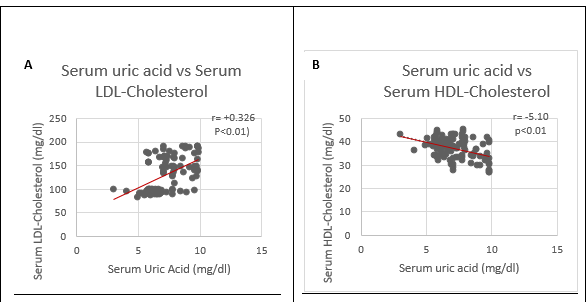
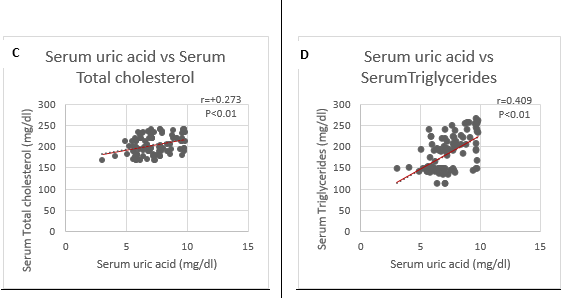
Figure1: Correlation of serum uric acid with LDL-C (A), HDL-C(B), TC (C) and TG (D). The scale range in the Y-axis is not the same for all figures
DISCUSSION:
The present study was undertaken to analyse the association between serum uric acid (SUA) levels and lipid profile abnormalities in patients presenting with first acute myocardial infarction (AMI).At present there is limited information regarding this relationship.
A total of 104 patient diagnosed with AMI and 100 healthy controls were included in the analysis. In this study, the mean age of study population was 54.76±12.81 years. In a similar study by Behera et al, the mean age was 50.4±13.1 years in STEMI patients (15). In addition, in another study the mean age of first acute myocardial infarction reported was 53.0±11.4 years in South Asian data (16).
In our study the majority of the participants were males (62%) aligning with prior research by Harris et al, (17) and Gosar et al(18).This emphasizes that acute MI occurs primarily within the male demographic due to higher stress and social life among males. An Italian epidemiological survey found that several lipid variables independently associated with serum uric acid (SUA) levels in women, but not in men after adjusting for covariates (19). Conversely, Chen et al. also reported that the SUA-dyslipidemia association varied by sex and age, noting no significant correlation in women aged ≤ 50 years (20).
We found the male subjects had a higher prevalence of both hyperuricemia and dyslipidemia than in female subjects, indicating a gender influence on SUA and lipid levels. Our results are consistent with the finding reported in other studies (21, 22). Several factors may contribute to the differences in hyperuricemia between genders. First, consumption of high-level purine containing food and alcohol typically by men are known risk factors causing hyperuricemia (23). Additionally, in men testosterone regulates the expression of urate transporter-1 in the kidney that promotes uric acid reabsorption in males (24). Furthermore, testosterone increases hepatic xanthine oxidase activity, the key enzyme responsible for production of uric acid (25).On the contrary, in females, estrogen inhibits post-secretory tubular reabsorption of uric acid, thereby lowering the uric acid levels (26). Therefore, it is hypothesised that the prevalence of hyperuricemia is higher in men than in women.
Serum uric acid level were significantly higher in patients with AMI when compared with healthy control group (P<0.01). Furthermore, the prevalence of dyslipidemia and its individual components was higher in the group with hyperuricemia compared to those without it. Comparable results were reported in other studies (27, 28) The prevalence of dyslipidemia and its components was significantly higher in individuals with hyperuricemia than in those without hyperuricemia. Two other important implications can be drawn from the present study. First, SUA levels were positively associated with serum LDL, TC, TG cholesterol. Second, there was an inverse association between SUA and HDL cholesterol level regardless of adjustment for gender and several potential confounders, indicating a crucial role of uric acid in the regulation of dyslipidemia. These findings are in line with previous studies that showed a pathogenesis overlap among hyperuricemia and dyslipidemia (11).
Various clinical and biochemical findings indicate that hyperuricemia may induce metabolic changes. The metabolic changes promote post-prandial hypertryglyceridemia, accumulation of TG in hepatic tissue, and impaired insulin response in the liver, adipose tissue and muscles. Zheng et al, reported that elevated SUA may suppress the breakdown of triglycerides, thereby increasing the prevalence of hypertrygleridemia (29). This understanding sheds light on the link between hyperuricemia and lipid hypertryglyceridemia that we observed in our study.
In present study we found LDL cholesterol was linearly tied with SUA even upon controlling the effect of co-variables. Whereas there was a significant negative correlation between SUA and HDL-C (r =-0.510, p <0.01) in AMI patients, suggesting a vital role of uric acid in the regulation of dyslipidemia. The lower levels of HDL cholesterol may be linked to disruptions in lipid homeostasis and favour the formation of atherosclerosis eventually predisposing to CVD, although the direct evidence of the positive role of HDL in reducing CVD has not clearly understood (11). These results strengthened the previous studies that showed a pathogenesis overlap between hyperuricemia and dyslipidemia and CVD (26,28). Therefore, SUA levels could potentially serve as a biomarker to predict the future incidence of dyslipidemia in healthy individuals. Conversely, in a study by Qi et al. observed minimal variations in LDL-C, HDL-C and TC after adjusting for confounding factors, suggesting that the association between SUA and lipid parameters may not be uniform across different fractions (30). These findings are suggestive of an intricate relationship exist between SUA and lipid profile, which is still poorly understood.
Significant associations between SUA and lipid profiles have been documented in adult populations within India (31), Italy (32), and the USA (33). Recent epidemiological findings indicate an increase in the prevalence of hyperuricemia, may result from the increased prevalence of metabolic risk factors such as obesity and hypertension. (34). These observed associations may interact through multiple mechanism and may be precipitated by a number of factors.Hence, further investigation is required to optimize evidence-based management strategies like diet monitoring, lifestyle intervention, and pharmacologic measures to control hyperuricemia and its associated complications. Furthermore, the reduction of SUA should be considered, as it may result in synergistic impact with lipid-lowering therapies in reducing cardiovascular events and its complications (35). Such measures may play an important role in preventing AMI or retarding the progression of AMI associated complications.
This study presents several positive aspects firstly; it effectively demonstrates the accompanying risk factors at a single point in time improving its scientific relevance. Secondly, the study has used small sample size of 104 participants making it attainable, economical. Thirdly, it provides a strong basis for future research helping to generate hypothesis such as SUA to be adjuvant marker for assessing cardiovascular event during AMI event.
The limitations of present study; firstly, the study was conducted on a small number of participants so difficult to generalize it. Second, it do not address the personal dietary habits, which may have lipid levels. Third, this study also did not assessed important indicators of CAD like Apo lipoprotein B, ratio of Apo lipoprotein B to A1. Despite these limitations, the results of this study may serve as a valuable reference for future research.
CONCLUSION:
This study supports the view of clear association between SUA and lipid profile within the adult population of Solapur. Early identification and prophylactic management of hyperuricemia and dyslipidemia may reduce the incidence of associated cardiovascular disease. More research is needed to establish its relationship with high blood pressure, diabetes, and lifestyle
REFERENCES:
1. Hata J, Kiyohara Y. Epidemiology of stroke and coronary artery disease in Asia. Circ J. 2013;77:1923-32.
2. Vaisi-Raygani A, Ghaneialvar H, Rahimi Z, Nomani H, Saidi M, Bahrehmand F, et al. The angiotensin converting enzyme D allele is an independent risk factor for early onset coronary artery disease. Clin Biochem. 2010;43:1189-94.
3. Kones R. Molecular sources of residual cardiovascular risk, clinical signals and innovative solutions. Vasc Health Risk Manag. 2013;9:617-70.
4. Modig K, Anderson T, Drefahl S. Age specific trends in mortality and case fatality from cardiovascular disease. PLoS One. 2013;8:e64928.
5. Patil S, Pratima K, Mohapatra PC. Role of uric acid in cardiovascular disease and its clinical implications. J Med Biochem. 2004;39-43.
6. Lin Y, Hidru TH, Fan R, Gao J, Li H, Yang X, et al. The relationship between serum uric acid at different concentrations of lipid indices and the risk of myocardial revascularization in patients with acute coronary syndrome: a retrospective analysis. Front Cardiovasc Med. 2021 Aug 23;8:7327-15.
7. Davies KJ, Sevanian A, Muakkassah-Kelly SF, Hochstein P. Uric acid-iron ion complexes. A new aspect of the antioxidant functions of uric acid. Biochem J. 1986;235:747-54.
8. Glantzounis GK, Tsimoyiannis EC, Kappas AM, Galaris DA. Uric acid and oxidative stress. Curr Pharm Des. 2005;11:4145-51.
9. Hink HU, Santanam N, Dikalov S, McCann L, Nguyen AD, Parthasarathy S, et al. Peroxidase properties of extracellular superoxide dismutase: role of uric acid in modulating in vivo activity. ArteriosclerThrombVasc Biol. 2002;22:1402-8.
10. Werns SW, Lucchesi BR. Myocardial ischemia and reperfusion: the role of oxygen radicals in tissue injury. Cardiovasc Drugs Ther. 1989;2:761-9.
11. Ali N, Rahman S, Islam S, Haque T, Molla NH, Sumon AH, et al. The relationship between serum uric acid and lipid profile in Bangladeshi adults. BMC Cardiovasc Disord. 2019 Feb 21;19(1):42.
12. Singh A, Rahi R, Kumar C, Singh PK,Kumar S. Correlation of serum uric acid with lipid profile and Glycemic control in type2 diabetes mellitus. Int J Curr Pharm Res 2025;18(1):19-96.
13. Taher, A., Trisha, A.D., Ahmed, S., Begum, J., Sinha, F., Sarna, N.Z. and Ali, N. (2025), Investigating the Relationship Between Serum Uric Acid and Dyslipidemia in Young Adults in Bangladesh. Endocrinol Diab Metab, 8: e70063.
14. Kuwabara M, Borghi C, Cicero AFG, Hisatome I, Niwa K, Ohno M, et al. Elevated serum uric acid increases risks for developing high LDL cholesterol and hypertriglyceridemia: a five-year cohort study in Japan. Int J Cardiol. 2018;261:183-8.
15. Behera SK, Samal AK. Study of serum uric acid level as a prognostic marker in acute ST elevation myocardial infarction patients. Int J Adv Med. 2018;5:592-6.
16. Bickel C, Rupprecht HJ, Blankenberg S, Rippin G, Hafner G, Daunhauer A, et al. Serum uric acid as an independent predictor of mortality in patients with angiographically proven coronary artery disease. Am J Cardiol. 2002;89(1):12-7.
17. Harris P, Jenner FP, Kumar S. Serum uric acid as a marker of left ventricular failure in acute myocardial infarction. IOSR J Dent Med Sci. 2015;14(11):102-9.
18. Gosar P, Singh AP, Goser P, et al. Evaluating serum uric acid levels in patients with acute myocardial infarction. Int J Adv Med. 2020;7(8):1256-9.
19. Son M, Seo J, Yang S. Association between dyslipidemia and serum uric acid levels in Korean adults: Korea National Health and Nutrition Examination Survey 2016-2017. PLoS One. 2020 Feb 14;15(2).
20. Chen S, Yang H, Chen Y, Wang J, Xu L, Miao M, et al. Association between serum uric acid levels and dyslipidemia in Chinese adults: a cross-sectional study and further meta-analysis. Medicine (Baltimore). 2020;99(29):e19088.
21. Zhang S, Zhang Y, Lin S, Zhang S, Qiu M. Hyperuricemia as a possible risk factor for abnormal lipid metabolism in the Chinese population: a cross-sectional study. Ann Palliat Med. 2021 Nov;10(11):11454-11463.
22. Al Shanableh Y, Hussein YY, Saidwali AH, Al-Mohannadi M, Aljalham B, Nurulhoque H, Robelah F, Al-Mansoori A, Zughaier SM. Prevalence of asymptomatic hyperuricemia and its association with prediabetes, dyslipidemia and subclinical inflammation markers among young healthy adults in Qatar. BMC EndocrDisord. 2022 Jan 14;22(1):21.
23. Li Y, Jiang Y, Zhang M, Yin P, Wu F, Zhao W. Drinking behaviour among men and women in China: the 2007 China Chronic Disease and Risk Factor Surveillance. Addiction. 2011 Nov;106(11):1946-56.
24. Kanda E, Muneyuki T, Kanno Y, Suwa K, Nakajima K. Uric acid level has a U-shaped association with loss of kidney function in healthy people: a prospective cohort study. PLoS One. 2015 Feb 6;10(2):e0118031..
25. Hille R, Nishino T. Flavoprotein structure and mechanism. 4. Xanthine oxidase and xanthine dehydrogenase. FASEB J. 1995 Aug;9(11):995-1003.
26. Jung JH, Song GG, Lee YH, Kim JH, Hyun MH, Choi SJ. Serum uric acid levels and hormone therapy type: a retrospective cohort study of postmenopausal women. Menopause. 2018 Jan;25(1):77-81.
27. Salma U, Aktar P, Sultana SJJ, et al. Association of serum uric acid with dyslipidemia in acute myocardial infarction patients. Bangladesh J Med Biochem. 2025;5(2):65–72.
28. AlMuhaidib S, AlBuhairan F, Tamimi W, AlDubayee M, AlAqeel A, Babiker A, AlFaraidi H, AlJuraibah F, Badri M, Al Alwan I. Prevalence and factors associated with dyslipidemia among adolescents in Saudi Arabia. Sci Rep. 2022 Oct 7;12(1):16888.
29. Zheng R, Ren P, Chen Q, Yang T, Chen C, Mao Y. Serum uric acid levels and risk of incident hypertriglyceridemia: a longitudinal population-based epidemiological study. Ann Clin Lab Sci. 2017;47(5):586-91.
30. Qi J, Dai X, Zhou B, Su Y, Xie Z, Liu D. Association between lipid profiles and serum urate: a cross-sectional study in Southwestern China. Int J Endocrinol. 2021;2021:2741131
31. Lippi G, Montagnana M, Salvagno GL, Targher G, Guidi GC. Epidemiological association between uric acid concentration in plasma, lipoprotein(a), and the traditional lipid profile. Clin Cardiol. 2010;33:E76-80.
32. Sarmah D, Sharma B. A correlative study of uric acid with lipid profile. Asian J Med Sci. 2013;4:8-14.
33. Sathiya R, Velu VK, Niranjan G, Srinivasan A, Amirtha GB, Ramesh R, et al. A comparative study of serum uric acid levels and lipid ratios in coronary artery disease patients. Int J Biomed Sci. 2014;10:124.
34. Zhu Y, Pandya BJ, Choi HK. Prevalence of gout and hyperuricemia in the US general population: the National Health and Nutrition Examination Survey 2007-2008. Arthritis Rheum. 2011 ;63(10):3136-41.
Dawson J, Walters M. Uric acid and xanthine oxidase: future therapeutic targets in the prevention of cardiovascular disease. Br J Clin Pharmacol. 2006;62:633-44