A Prospective Observational Study on Intra-Articular Ozone Injections and Platelet-Rich Plasma (PRP) for Knee Osteoarthritis to Study Effects on Pain, Function and Functional outcome.
- M Yousuf Tak , Consultant, Pain and Regenerative Medicine Oxyplus Pain and Ozone Clinic Pulwama , Jammu and Kashmir, India.
- Burhaan Jan , Postgraduate scholar, Department of Anaesthesia and Pain, District Hospital Pulwama, Jammu and Kashmir, India.
- Shayiq Ahmad Wani , Postgraduate scholar, Department of Anaesthesia and Pain, District Hospital Pulwama, Jammu and Kashmir, India.
Article Information:
Abstract:
Background: Knee osteoarthritis (KOA) is a common degenerative joint disorder that causes chronic pain, stiffness, and functional limitation, particularly among middle-aged and elderly individuals. Various conservative treatment modalities are available for managing KOA; however, no single intra-articular therapy has consistently demonstrated superiority in all clinical settings. Ozone therapy and platelet-rich plasma (PRP) injections have emerged as promising minimally invasive treatment options. This study aimed to compare the effects of intra-articular ozone and PRP injections on pain relief, functional improvement, and long-term clinical outcomes in patients with knee osteoarthritis. Methods: This prospective observational study was conducted at OxyPlus Pain and Ozone Clinic and included 100 patients diagnosed with mild-to-moderate knee osteoarthritis. Patients aged 40–70 years were divided into two groups: Ozone treatment group (n=50) and PRP treatment group (n=50). Both groups received three sessions of intra-articular injections. Demographic characteristics including age and gender were recorded. Pain severity was assessed using the Numerical Rating Scale (NRS), while functional status was evaluated using the Western Ontario and McMaster Universities Osteoarthritis Index (WOMAC). Assessments were performed before treatment and during follow-up after therapy. Results: No significant differences were observed between the two groups regarding baseline demographic characteristics, pre-treatment NRS scores, or WOMAC scores. Both ozone and PRP injections significantly reduced pain and improved functional outcomes in patients with knee osteoarthritis. Ozone therapy demonstrated more rapid pain relief, with many patients reporting improvement shortly after treatment. In contrast, a considerable proportion of patients receiving PRP experienced significant post-injection pain, transient swelling, and inflammatory reactions during the early post-treatment period. Short-term pain scores and injection-site discomfort were significantly lower in the ozone group. While PRP showed sustained clinical benefits in several patients during longer follow-up, ozone therapy provided faster symptom relief, earlier functional recovery, and better patient comfort during the treatment phase. Conclusion: Both intra-articular ozone and PRP injections are effective treatment options for mild-to-moderate knee osteoarthritis. Ozone therapy offers the advantage of rapid pain relief, faster recovery, and a lower incidence of post-injection pain and swelling. Although PRP may provide longer-lasting benefits in some patients, it is frequently associated with transient post-procedural pain and inflammatory reactions. Ozone therapy represents a safe, effective, and well-tolerated alternative for improving pain and function in patients with knee osteoarthritis.
Keywords:
Article :
INTRODUCTION:
Osteoarthritis (OA) is the most common chronic degenerative joint disease and a leading cause of pain, disability, and reduced quality of life among adults worldwide. The knee joint is one of the most frequently affected sites, accounting for substantial healthcare utilization and functional impairment, particularly among middle-aged and elderly populations. The global burden of knee osteoarthritis (KOA) has increased considerably over recent decades due to aging populations, obesity, sedentary lifestyles, and increasing life expectancy [1]. The disease is characterized by progressive degeneration of articular cartilage, subchondral bone remodeling, osteophyte formation, synovial inflammation, and varying degrees of joint space narrowing, ultimately resulting in chronic pain and functional limitation [2].
Historically regarded as a simple wear-and-tear disorder, osteoarthritis is now recognized as a complex disease involving biomechanical, biochemical, inflammatory, and genetic mechanisms. Multiple cellular and molecular pathways contribute to disease progression, including the activation of inflammatory cytokines, matrix metalloproteinases, and oxidative stress pathways that promote cartilage degradation and joint destruction [3,4]. These pathological changes gradually impair joint function and lead to worsening symptoms over time.
Patients with knee osteoarthritis commonly present with chronic knee pain, stiffness, crepitus, reduced range of motion, and difficulty performing routine daily activities such as walking, climbing stairs, squatting, and standing from a seated position. These symptoms significantly affect physical functioning and overall quality of life. In advanced cases, patients may experience severe mobility restrictions, loss of independence, and substantial psychosocial burden [5].
Current treatment strategies for knee osteoarthritis focus primarily on reducing pain, improving function, and delaying disease progression. Conservative management includes lifestyle modification, weight reduction, physiotherapy, exercise programs, oral analgesics, and non-steroidal anti-inflammatory drugs (NSAIDs). Although these approaches can provide symptomatic relief, their effectiveness is often limited, and long-term use of systemic medications may be associated with gastrointestinal, renal, and cardiovascular adverse effects [6]. Consequently, increasing attention has been directed toward intra-articular therapies that deliver treatment directly into the affected joint while minimizing systemic side effects.
Platelet-rich plasma (PRP) has emerged as one of the most widely studied biological therapies for knee osteoarthritis. PRP is an autologous blood product containing a high concentration of platelets and growth factors that are believed to promote tissue repair and modulate inflammation. Activated platelets release several bioactive molecules, including platelet-derived growth factor, transforming growth factor-beta, vascular endothelial growth factor, and insulin-like growth factor, which may contribute to cartilage preservation and symptomatic improvement [7]. Numerous clinical studies have demonstrated significant reductions in pain and improvements in functional outcomes following PRP injections in patients with mild-to-moderate knee osteoarthritis [8,9].
Despite promising results, PRP therapy is associated with certain limitations. Variations in preparation techniques, platelet concentrations, leukocyte content, and injection protocols have resulted in considerable heterogeneity among studies. Furthermore, many patients experience transient post-injection pain, swelling, and inflammatory reactions that may affect short-term patient comfort and satisfaction [10]. Although these reactions are generally self-limiting, they remain an important consideration when selecting treatment options.
Ozone therapy has recently gained attention as an alternative minimally invasive treatment modality for osteoarthritis and other musculoskeletal disorders. Medical ozone is a therapeutic mixture of oxygen and ozone generated under controlled conditions. Its proposed mechanisms of action include modulation of oxidative stress, improvement of local oxygen metabolism, stimulation of antioxidant defense systems, and suppression of inflammatory mediators [11]. Through these mechanisms, ozone therapy may reduce pain, improve joint mobility, and enhance overall functional status.
Several studies have reported favorable outcomes following intra-articular ozone injections in patients with knee osteoarthritis. Ozone therapy has been shown to provide rapid pain relief, improve joint function, and enhance patient satisfaction while maintaining an excellent safety profile [12]. Compared with PRP, ozone treatment is relatively inexpensive, technically simple, and generally associated with minimal post-procedural discomfort. Many patients report symptomatic improvement shortly after treatment, making ozone therapy an attractive option for individuals seeking faster pain relief.
Comparative studies evaluating PRP and ozone therapy have demonstrated that both treatment modalities are effective in reducing pain and improving function in patients with knee osteoarthritis [9,13]. While PRP may provide prolonged biological benefits through growth factor-mediated regenerative mechanisms, ozone therapy appears to offer earlier symptom relief and greater comfort during the treatment period. However, available evidence remains limited, and direct comparisons between these two interventions continue to be relatively scarce.
Given the growing interest in regenerative and minimally invasive therapies for knee osteoarthritis, further prospective studies are required to evaluate their comparative effectiveness in routine clinical practice. A better understanding of differences in pain relief, functional improvement, treatment tolerability, and long-term efficacy may assist clinicians in selecting the most appropriate therapeutic option for individual patients.
Therefore, the present prospective observational study was undertaken to compare intra-articular ozone injections and platelet-rich plasma injections in patients with mild-to-moderate knee osteoarthritis, with particular emphasis on pain reduction, functional improvement, patient comfort, and long-term clinical outcomes.
MATERIALS AND METHODS:
Study Design
This prospective observational study was conducted at OxyPlus Pain and Ozone Clinic over a period of 18 months after obtaining institutional approval and written informed consent from all participants. The study was designed to compare the effectiveness of intra-articular ozone injections and platelet-rich plasma (PRP) injections in patients with mild-to-moderate knee osteoarthritis. The primary focus was to evaluate pain reduction, functional improvement, treatment tolerability, and long-term clinical outcomes following therapy.
Study Population
A total of 100 patients diagnosed with primary knee osteoarthritis were enrolled in the study. Eligible patients were allocated into two treatment groups based on the therapeutic modality selected after detailed counseling regarding available treatment options.
Group O (Ozone Group): 50 patients received intra-articular ozone injections.
Group P (PRP Group): 50 patients received intra-articular platelet-rich plasma injections.
The diagnosis of knee osteoarthritis was established based on clinical evaluation, radiographic findings, and fulfillment of accepted diagnostic criteria for osteoarthritis.
Inclusion Criteria
1. Patients aged between 40 and 70 years.
2. Patients diagnosed with primary knee osteoarthritis.
3. Kellgren-Lawrence Grade II or Grade III osteoarthritis on radiographic assessment.
4. Persistent knee pain for more than six months despite conservative treatment.
5. Patients willing to participate in the study and comply with follow-up assessments.
6. Patients providing written informed consent.
Exclusion Criteria
1. Advanced osteoarthritis (Kellgren-Lawrence Grade IV).
2. Previous knee replacement surgery.
3. Inflammatory arthropathies such as rheumatoid arthritis, gout, or ankylosing spondylitis.
4. Active local or systemic infection.
5. Coagulation disorders or ongoing anticoagulant therapy.
6. Severe cardiovascular, hepatic, renal, or neurological disease.
7. History of malignancy involving the musculoskeletal system.
8. Recent intra-articular steroid injection within the preceding three months.
9. Pregnancy or lactation.
10. Patients unwilling to participate or complete follow-up.
Pre-Treatment Evaluation
All patients underwent a comprehensive clinical evaluation before initiation of therapy. Baseline demographic and clinical characteristics were recorded, including:
• Age
• Gender
• Body mass index (BMI)
• Duration of symptoms
• Side of involvement
• Radiological grade of osteoarthritis
• Previous treatment history
A detailed physical examination was performed, including assessment of:
• Joint tenderness
• Crepitus
• Range of motion
• Joint swelling
• Functional limitation
Baseline pain intensity was assessed using the Numerical Rating Scale (NRS), where scores ranged from 0 (no pain) to 10 (worst imaginable pain).
Functional status was evaluated using the Western Ontario and McMaster Universities Osteoarthritis Index (WOMAC), which assesses pain, stiffness, and physical function. Higher WOMAC scores indicated greater disability.
Radiographic Assessment
Standard weight-bearing anteroposterior and lateral radiographs of the affected knee were obtained before treatment. Osteoarthritis severity was graded according to the Kellgren-Lawrence classification system:
Grade I – Doubtful joint space narrowing with possible osteophytes
Grade II – Definite osteophytes with possible joint space narrowing
Grade III – Moderate joint space narrowing with multiple osteophytes
Grade IV – Severe joint space narrowing and marked deformity
Only patients with Grade II and Grade III disease were included in the study.
Intervention Protocol
Ozone Injection Procedure
Patients assigned to the ozone group received intra-articular medical ozone injections under strict aseptic precautions.
The treatment protocol consisted of:
• Three intra-articular ozone injection sessions
• One session every week
• Ozone concentration of 20 μg/mL
• Total volume of 10 mL ozone-oxygen mixture per session
The injection site was sterilized using povidone-iodine solution and alcohol preparation. A sterile needle was introduced into the knee joint through the standard anterolateral approach, and the ozone-oxygen mixture was slowly injected into the joint cavity.
Following injection, patients were observed for 20–30 minutes and subsequently discharged with instructions regarding activity modification and post-procedure care.
PRP Injection Procedure
Patients in the PRP group underwent autologous PRP preparation and injection.
Approximately 20 mL of venous blood was collected from each patient under sterile conditions. The blood sample was processed using a double-spin centrifugation technique to obtain platelet-rich plasma.
The prepared PRP was injected into the knee joint under aseptic precautions using the standard intra-articular approach.
The PRP treatment protocol included:
• Three intra-articular PRP injections
• One injection every two weeks
• Approximately 4–6 mL PRP per session
Patients were advised to avoid strenuous physical activity for 48 hours following injection. Oral analgesics were permitted if required, but non-steroidal anti-inflammatory drugs were avoided during the immediate post-injection period.
Post-Treatment Care
All participants were advised regarding lifestyle modification measures, including:
• Weight reduction where appropriate
• Quadriceps strengthening exercises
• Range-of-motion exercises
• Avoidance of excessive stair climbing and prolonged squatting
No additional intra-articular therapy was administered during the study period.
Outcome Measures
Primary Outcome Measure
Pain intensity assessed by Numerical Rating Scale (NRS).
Secondary Outcome Measures
1. Functional status assessed by WOMAC score.
2. Improvement in daily activities.
3. Patient-reported satisfaction.
4. Incidence of post-injection adverse effects.
5. Long-term clinical improvement.
Follow-Up Schedule
Patients were evaluated at the following intervals:
• Baseline (Pre-treatment)
• 1 month after completion of therapy
• 3 months after therapy
• 6 months after therapy
• 12 months after therapy
At each follow-up visit, NRS and WOMAC scores were recorded and compared with baseline values.
Adverse events such as pain, swelling, redness, stiffness, infection, and other complications were documented.
Data Collection
All clinical and demographic information was recorded using a standardized study proforma. Data collected included:
• Patient demographics
• Clinical characteristics
• Baseline NRS score
• Baseline WOMAC score
• Follow-up NRS scores
• Follow-up WOMAC scores
• Treatment-related adverse events
• Patient satisfaction outcomes
Statistical Analysis
Data were entered into Microsoft Excel and analyzed using Statistical Package for Social Sciences (SPSS) version 25.0.
Continuous variables were expressed as mean ± standard deviation, whereas categorical variables were expressed as frequencies and percentages.
The following statistical tests were utilized:
• Independent Student’s t-test for comparison of continuous variables between groups.
• Paired t-test for comparison of pre-treatment and post-treatment scores within groups.
• Chi-square test for categorical variables.
• Repeated measures analysis for comparison of follow-up outcomes over time.
A p-value less than 0.05 was considered statistically significant.
Ethical Considerations
Written informed consent was obtained from all participants after explaining the nature, benefits, and potential risks of the procedures. Confidentiality of patient information was maintained throughout the study. All procedures were conducted in accordance with the ethical principles outlined in the Declaration of Helsinki for research involving human participants.
RESULTS:
A total of 100 patients with mild-to-moderate knee osteoarthritis were included in the study.
Fifty patients received intra-articular ozone injections (Group O) and fifty patients received intra-articular platelet-rich plasma injections (Group P). All enrolled patients completed the scheduled follow-up period and were included in the final analysis.
The baseline demographic characteristics of both groups were comparable. No statistically significant differences were observed regarding age, gender distribution, body mass index, duration of symptoms, or radiological severity of osteoarthritis.
Table 1: Demographic and Baseline Characteristics of Study Participants
|
Variable |
Ozone Group (n=50) |
PRP Group (n=50) |
p-value |
|
Mean Age (Years) |
58.4 ± 7.8 |
57.9 ± 8.2 |
0.76 |
|
Male, n (%) |
21 (42%) |
23 (46%) |
0.68 |
|
Female, n (%) |
29 (58%) |
27 (54%) |
0.68 |
|
Mean BMI (kg/m²) |
28.3 ± 3.1 |
28.8 ± 3.4 |
0.45 |
|
Right Knee Involvement, n (%) |
28 (56%) |
30 (60%) |
0.68 |
|
Left Knee Involvement, n (%) |
22 (44%) |
20 (40%) |
0.68 |
|
Kellgren-Lawrence Grade II, n (%) |
31 (62%) |
29 (58%) |
0.68 |
|
Kellgren-Lawrence Grade III, n (%) |
19 (38%) |
21 (42%) |
0.68 |
The mean baseline NRS pain scores were similar in both groups. Following treatment, both ozone and PRP injections resulted in significant pain reduction. However, patients receiving ozone therapy demonstrated more rapid pain relief during early follow-up visits. At one month, the reduction in pain score was significantly greater in the ozone group. During long-term follow-up, both groups maintained substantial improvement, with PRP showing slightly better persistence of pain relief at twelve months.
Table 2: Comparison of Mean NRS Pain Scores During Follow-Up
|
Follow-up Period |
Ozone Group |
PRP Group |
p-value |
|
Baseline |
7.8 ± 0.9 |
7.7 ± 1.0 |
0.62 |
|
1 Month |
3.9 ± 0.8 |
5.0 ± 0.9 |
<0.001 |
|
3 Months |
3.2 ± 0.7 |
3.6 ± 0.8 |
0.01 |
|
6 Months |
2.8 ± 0.8 |
2.9 ± 0.7 |
0.52 |
|
12 Months |
3.0 ± 0.9 |
2.7 ± 0.8 |
0.08 |
Functional status assessed using the WOMAC score improved significantly in both treatment groups. Ozone-treated patients demonstrated earlier improvement in physical function and stiffness, whereas PRP-treated patients maintained slightly better WOMAC scores during long-term follow-up.
Table 3: Comparison of Mean WOMAC Scores During Follow-Up
|
Follow-up Period |
Ozone Group |
PRP Group |
p-value |
|
Baseline |
65.8 ± 8.6 |
66.4 ± 9.1 |
0.73 |
|
1 Month |
39.6 ± 6.2 |
47.8 ± 7.1 |
<0.001 |
|
3 Months |
32.4 ± 5.8 |
35.2 ± 6.1 |
0.02 |
|
6 Months |
28.1 ± 5.4 |
27.6 ± 5.3 |
0.64 |
|
12 Months |
29.4 ± 5.7 |
25.9 ± 5.1 |
0.002 |
Treatment-related adverse events were recorded throughout the study period. Post-injection pain and swelling were considerably more common among patients receiving PRP injections. Ozone injections were generally well tolerated and associated with fewer treatment-related complaints.
Table 4: Treatment-Related Adverse Effects
|
Adverse Effect |
Ozone Group (n=50) |
PRPGroup (n=50) |
p-value |
|
Post-Injection Pain |
4 (8%) |
21 (42%) |
<0.001 |
|
Joint Swelling |
2 (4%) |
15 (30%) |
<0.001 |
|
Transient Stiffness |
3 (6%) |
11 (22%) |
0.02 |
|
Local Tenderness |
5 (10%) |
18 (36%) |
0.002 |
|
Infection |
0 (0%) |
0 (0%) |
— |
|
Serious Complications |
0 (0%) |
0 (0%) |
— |
Patient satisfaction was assessed at the end of the twelve-month follow-up period. A greater proportion of patients in the ozone group reported immediate satisfaction because of rapid pain relief and improved comfort during treatment. Long-term satisfaction remained high in both groups.
Table 5: Patient Satisfaction at 12-Month Follow-Up
|
Satisfaction Level |
Ozone Group (n=50) |
PRP Group (n=50) |
|
Excellent |
24 (48%) |
20 (40%) |
|
Good |
18 (36%) |
21 (42%) |
|
Fair |
6 (12%) |
7 (14%) |
|
Poor |
2 (4%) |
2 (4%) |
Overall, both intra-articular ozone and PRP injections produced significant improvements in pain and function among patients with knee osteoarthritis. Ozone therapy demonstrated superior early pain relief, faster functional recovery, and fewer post-injection adverse effects. PRP therapy, while associated with increased post-procedural pain and swelling, showed sustained long-term benefits in several patients. Both treatment modalities were found to be safe and effective for the management of mild-to-moderate knee osteoarthritis.
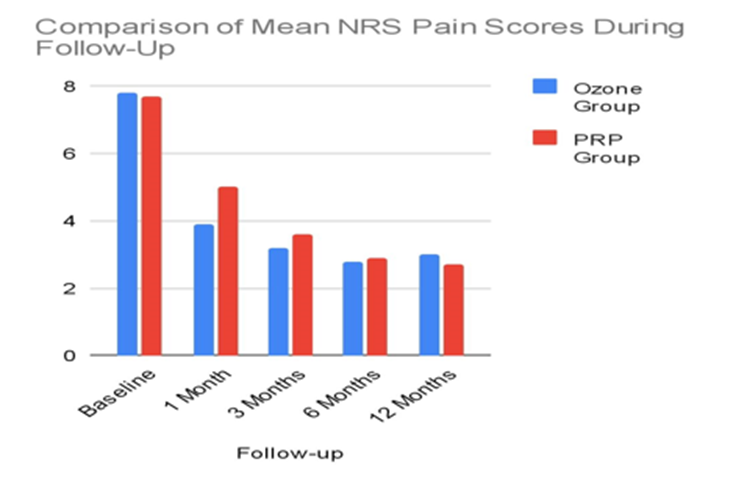
Bar graph: Comparison of Mean NRS Pain Scores During Follow-Up.
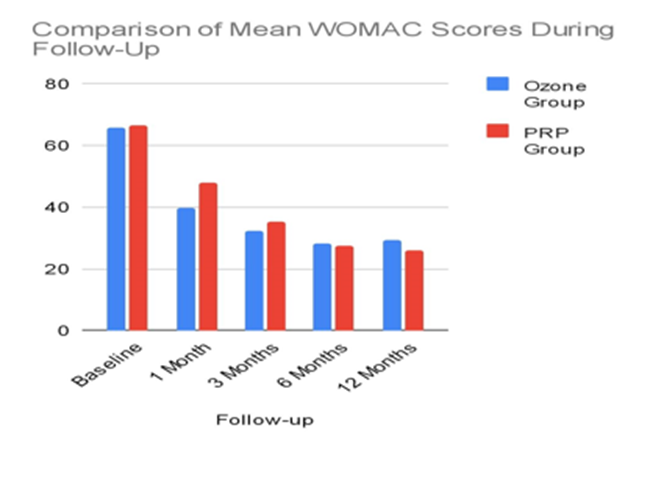
Bar graph: Comparison of Mean WOMAC Scores During Follow-Up.
DISCUSSION:
Knee osteoarthritis is a progressive degenerative disorder that remains a major cause of chronic pain, disability, and impaired quality of life worldwide. In recent years, increasing interest has been directed toward minimally invasive biological therapies that can provide symptomatic relief while potentially modifying the intra-articular environment. The present prospective observational study compared the effectiveness of intra-articular ozone injections and platelet-rich plasma (PRP) injections in patients with mild-to-moderate knee osteoarthritis. The findings demonstrated that both treatment modalities significantly improved pain and functional outcomes; however, notable differences were observed regarding the onset of symptom relief, treatment tolerability, and long-term efficacy.
The demographic characteristics of the two study groups were comparable, with no significant differences in age, gender distribution, body mass index, duration of symptoms, or radiographic severity of disease. This similarity between groups minimized potential confounding factors and allowed a more reliable comparison of treatment outcomes. The demographic profile observed in the present study is consistent with previous reports showing a higher prevalence of knee osteoarthritis among middle-aged and elderly individuals, particularly females, owing to hormonal, biomechanical, and age-related factors influencing joint degeneration [14,15].
Pain reduction remains one of the primary goals of osteoarthritis treatment. In the present study, both ozone and PRP therapies resulted in significant reductions in NRS pain scores compared with baseline values. However, patients treated with ozone experienced more rapid pain relief during the early follow-up period. At one month, mean NRS scores were significantly lower in the ozone group compared with the PRP group. This finding supports previous investigations suggesting that ozone therapy produces early analgesic effects through modulation of inflammatory mediators, improved tissue oxygenation, and activation of antioxidant defense systems [16].
Lopes de Jesus and colleagues demonstrated significant reductions in pain scores following intra-articular ozone therapy when compared with placebo treatment, emphasizing the rapid onset of symptom relief associated with ozone injections [12]. Similarly, Raeissadat et al. reported that ozone therapy produced substantial short-term improvements in pain and function comparable to other intra-articular treatment modalities [9]. The findings of the present study further support these observations and suggest that ozone therapy may be particularly advantageous for patients seeking immediate symptomatic improvement.
PRP therapy also resulted in significant pain reduction throughout the study period. The beneficial effects of PRP have been attributed to the release of multiple growth factors that promote tissue repair, reduce inflammation, and improve the biological environment within osteoarthritic joints [7]. Several previous studies have reported favorable outcomes following PRP administration. Filardo et al. observed significant improvement in pain and functional status among patients treated with PRP injections, particularly in individuals with early-stage osteoarthritis [8]. Similarly, Patel et al. demonstrated superior pain reduction following PRP therapy compared with placebo injections [10].
An important observation in the present study was the tendency of PRP-treated patients to maintain slightly better pain scores during long-term follow-up. Although the difference at twelve months did not reach statistical significance, this trend may reflect the regenerative potential of platelet-derived growth factors and their sustained biological effects within the joint. Similar long-term benefits of PRP have been reported in systematic reviews and meta-analyses evaluating biological therapies for knee osteoarthritis [17].
Functional improvement, as measured by WOMAC scores, was observed in both treatment groups. Patients receiving ozone therapy demonstrated earlier improvements in function and mobility, paralleling the rapid reduction in pain scores. Early restoration of function is clinically important because it enables patients to resume daily activities and maintain physical independence. Previous studies have similarly reported significant improvement in WOMAC scores following ozone treatment, suggesting that the anti-inflammatory and analgesic effects of ozone contribute directly to improved joint performance [18].
At twelve months, PRP-treated patients demonstrated slightly better WOMAC scores compared with the ozone group. This finding may indicate prolonged biological activity associated with platelet-derived growth factors and their influence on cartilage metabolism and tissue healing. Dai et al., in a meta-analysis of randomized controlled trials, concluded that PRP injections provide significant long-term improvements in pain and functional outcomes among patients with knee osteoarthritis [19]. The results of the present study are in agreement with these findings and suggest that PRP may offer sustained functional benefits despite a slower onset of action.
Treatment tolerability is another important consideration when selecting intra-articular therapies. In the current study, post-injection pain, swelling, and local tenderness were significantly more frequent among PRP-treated patients. Many patients reported transient discomfort and inflammatory reactions during the days following injection. These findings are consistent with previous reports describing post-procedural inflammatory responses following PRP administration, likely resulting from platelet activation and cytokine release within the joint space [10,17].
In contrast, ozone therapy was associated with minimal adverse effects and excellent patient tolerance. The incidence of post-injection pain and swelling was considerably lower in the ozone group. Furthermore, no serious complications were observed in either treatment group throughout the study period. These observations reinforce the favorable safety profile of both interventions and support their use as minimally invasive treatment options for mild-to-moderate knee osteoarthritis.
Patient satisfaction outcomes in the present study reflected the differences observed in pain relief and treatment tolerability. A greater proportion of patients receiving ozone therapy reported excellent satisfaction levels, largely because of rapid symptom improvement and minimal post-procedural discomfort. PRP-treated patients generally expressed satisfaction with treatment outcomes during later follow-up periods despite experiencing transient pain and swelling after injections. Similar findings have been reported in comparative studies evaluating intra-articular treatment modalities for osteoarthritis [13].
The present study possesses several strengths, including its prospective design, standardized outcome assessment using validated scoring systems, and complete follow-up of all enrolled patients. However, certain limitations should also be acknowledged. The study was conducted at a single center with a relatively modest sample size. Treatment allocation was observational rather than randomized, which may introduce selection bias. Additionally, radiological and biochemical markers of cartilage regeneration were not evaluated. Future multicenter randomized controlled trials with larger sample sizes and longer follow-up periods are warranted to further clarify the comparative effectiveness of ozone and PRP therapies.
Overall, the findings of the present study suggest that both intra-articular ozone and PRP injections are effective treatment modalities for patients with mild-to-moderate knee osteoarthritis. Ozone therapy provides rapid pain relief, earlier functional recovery, superior patient comfort, and fewer post-injection adverse effects. PRP therapy, although frequently associated with transient post-procedural pain and swelling, appears to offer sustained long-term benefits in selected patients. These observations support the use of both therapies as valuable alternatives in the non-surgical management of knee osteoarthritis.
CONCLUSION:
The present prospective observational study demonstrated that both intra-articular ozone therapy and platelet-rich plasma (PRP) injections are effective treatment modalities for patients with mild-to-moderate knee osteoarthritis. Both therapies produced significant reductions in pain and substantial improvements in functional status as assessed by NRS and WOMAC scores throughout the follow-up period.
Ozone therapy was associated with more rapid pain relief, earlier functional recovery, and superior patient comfort during the treatment phase. Patients receiving ozone injections experienced significantly lower rates of post-injection pain, swelling, and local discomfort, contributing to higher levels of early patient satisfaction. These findings suggest that ozone therapy is a safe, well-tolerated, and cost-effective treatment option capable of providing prompt symptomatic improvement.
PRP therapy also demonstrated significant clinical benefits and showed a tendency toward sustained long-term improvement in pain and functional outcomes. However, a considerable proportion of patients experienced transient post-procedural pain, swelling, and inflammatory reactions following PRP injections. Despite these short-term adverse effects, long-term patient satisfaction remained high because of the continued clinical benefits observed during follow-up.
No major complications or serious adverse events were encountered in either treatment group, confirming the favorable safety profile of both interventions. The results of this study indicate that ozone therapy may be preferred when rapid pain relief and improved treatment tolerability are desired, whereas PRP may be considered in patients seeking potential long-term biological benefits.
In conclusion, intra-articular ozone and PRP injections represent valuable non-surgical treatment options for knee osteoarthritis. Ozone therapy offers the advantages of immediate symptom relief, faster recovery, lower treatment-related discomfort, and excellent patient acceptance, while PRP may provide sustained long-term benefits in selected patients. Further large-scale randomized controlled studies with extended follow-up are recommended to establish the optimal role of these therapies in the management of knee osteoarthritis and to define patient populations most likely to benefit from each treatment modality.
REFERENCES:
1. Cross M., Smith E., Hoy D., Nolte S., Ackerman I., Fransen M., Bridgett L., Williams S., Guillemin F., Hill C.L., Laslett L.L., Jones G., Cicuttini F., Osborne R., Vos T., Buchbinder R., Woolf A., March L. "The Global Burden of Hip and Knee Osteoarthritis: Estimates from the Global Burden of Disease 2010 Study." Annals of the Rheumatic Diseases, 2014;73(7):1323-1330.
2. Loeser R.F., Goldring S.R., Scanzello C.R., Goldring M.B. "Osteoarthritis: A Disease of the Joint as an Organ." Arthritis & Rheumatism, 2012;64(6):1697-1707.
3. Hunter D.J., Bierma-Zeinstra S.M.A. "Osteoarthritis." Lancet, 2019;393(10182):1745-1759.
4. Kapoor M., Martel-Pelletier J., Lajeunesse D., Pelletier J.P., Fahmi H. "Role of Proinflammatory Cytokines in the Pathophysiology of Osteoarthritis." Nature Reviews Rheumatology, 2011;7(1):33-42.
5. Neogi T. "The Epidemiology and Impact of Pain in Osteoarthritis." Osteoarthritis and Cartilage, 2013;21(9):1145-1153.
6. Kolasinski S.L., Neogi T., Hochberg M.C., Oatis C., Guyatt G., Block J., Callahan L., Copenhaver C., Dodge C., Felson D., Gellar K., Harvey W., Hawker G., Herzig E., Kwoh K., Nelson A., Samuels J., Scanzello C., White D., Wise B., Altman R. "2019 American College of Rheumatology/Arthritis Foundation Guideline for the Management of Osteoarthritis of the Hand, Hip, and Knee." Arthritis Care & Research, 2020;72(2):149-162.
7. Andia I., Maffulli N. "Platelet-Rich Plasma for Managing Pain and Inflammation in Osteoarthritis." Nature Reviews Rheumatology, 2013;9(12):721-730.
8. Filardo G., Kon E., Di Matteo B., Di Martino A., Merli M.L., Cenacchi A., Fornasari P.M., Marcacci M. "Platelet-Rich Plasma Injections for the Treatment of Knee Osteoarthritis: A Randomized Controlled Trial." American Journal of Sports Medicine, 2012;40(12):2822-2827.
9. Raeissadat S.A., Rayegani S.M., Hassanabadi H., Fathi M., Ghorbani E., Babaee M., Azma K. "Knee Osteoarthritis Injection Choices: Platelet-Rich Plasma versus Hyaluronic Acid versus Ozone Therapy." Clinical Rheumatology, 2018;37(2):573-580.
10. Patel S., Dhillon M.S., Aggarwal S., Marwaha N., Jain A. "Treatment with Platelet-Rich Plasma Is More Effective Than Placebo for Knee Osteoarthritis." American Journal of Sports Medicine, 2013;41(2):356-364.
11. Elvis A.M., Ekta J.S. "Ozone Therapy: A Clinical Review." Journal of Natural Science, Biology and Medicine, 2011;2(1):66-70.
12. Lopes de Jesus C.C., Dos Santos F.C., de Jesus L.M.O.B., Monteiro I., Sant'Ana M.S.S.C., Trevisani V.F.M. "Comparison Between Intra-Articular Ozone and Placebo in the Treatment of Knee Osteoarthritis." PLoS One, 2017;12(7):e0179185.
13. Duymus T.M., Mutlu S., Dernek B., Komur B., Aydogmus S., Kesiktas F.N. "Choice of Intra-Articular Injection in Treatment of Knee Osteoarthritis: Platelet-Rich Plasma, Hyaluronic Acid or Ozone Options." Journal of Back and Musculoskeletal Rehabilitation, 2017;30(2):339-345.
14. Palazzo C., Nguyen C., Lefevre-Colau M.M., Rannou F., Poiraudeau S. “Risk Factors and Burden of Osteoarthritis.” Annals of Physical and Rehabilitation Medicine, 2016;59(3):134-138.
15. Litwic A., Edwards M.H., Dennison E.M., Cooper C. “Epidemiology and Burden of Osteoarthritis.” British Medical Bulletin, 2013;105(1):185-199.
16. Bocci V., Borrelli E., Zanardi I., Travagli V. “The Use of Ozone in Medicine.” Ozone: Science & Engineering, 2009;31(6):405-411.
17. Belk J.W., Kraeutler M.J., Houck D.A., Goodrich J.A., Dragoo J.L., McCarty E.C. “Platelet-Rich Plasma Versus Hyaluronic Acid for Knee Osteoarthritis: A Systematic Review and Meta-analysis of Randomized Controlled Trials.” American Journal of Sports Medicine, 2021;49(1):249-260.
18. Hashemi M., Jalili P., Mennati S., Koosha A., Rohanifar R., Madadi F., Jalaie S. “The Effects of Intra-Articular Ozone Injection on Pain and Function in Patients with Knee Osteoarthritis.” ActaMedicaIranica, 2015;53(10):652-657.
19. Dai W.L., Zhou A.G., Zhang H., Zhang J. “Efficacy of Platelet-Rich Plasma in the Treatment of Knee Osteoarthritis: A Meta-analysis of Randomized Controlled Trials.” Arthroscopy, 2017;33(3):659-670.