A Comparative Study of Intrathecal Midazolam and Fentanyl as Adjuvants to Hyperbaric Bupivacaine in Spinal Anaesthesia for Lower Limb and Urological Surgeries.
- Abhinov K , Assistant Professor, Department of Anesthesia, Mahavir Institute of Medical Sciences, Vikarabad, Telangana.
- Tekurala Tejaswini , Assistant Professor, Department of Anesthesia, Government Medical College, Kamareddy, Telangana.
- Kannoju Saideepika , Assistant Professor, Department of Anesthesia, Government Medical College, Kamareddy, Telangana.
Article Information:
Abstract:
Introduction: Intrathecal adjuvants are commonly added to hyperbaric bupivacaine to improve the quality and duration of spinal anaesthesia. Fentanyl is a widely used opioid adjuvant, whereas preservative-free midazolam is a non-opioid alternative with potential analgesic benefits and fewer opioid-related adverse effects. Aim was to compare intrathecal midazolam 2 mg and fentanyl 25 µg as additives to 15 mg of 0.5% hyperbaric bupivacaine for spinal anaesthesia. Materials and Methods: This prospective, randomized, double-blind study included 80 ASA physical status I and II patients aged 20–60 years undergoing elective lower limb and urological surgeries. Patients were divided into two groups of 40 each. Group BF received hyperbaric bupivacaine with fentanyl, while Group BM received hyperbaric bupivacaine with preservative-free midazolam. Sensory and motor block characteristics, duration of analgesia, haemodynamic parameters, respiratory parameters, sedation and side effects were recorded. Results: Both groups were comparable with respect to demographic profile and type of surgery. Onset and duration of sensory and motor block, duration of complete and effective analgesia, haemodynamic parameters, respiratory rate, oxygen saturation and sedation scores were statistically comparable between the groups. Nausea and pruritus were significantly higher in Group BF than Group BM. Conclusion: Intrathecal midazolam provided anaesthetic and analgesic effects comparable to fentanyl with fewer opioid-related side effects. It may be considered a safe and effective non-opioid adjuvant to hyperbaric bupivacaine.
Keywords:
Article :
INTRODUCTION:
Spinal anaesthesia remains one of the most commonly used regional anaesthetic techniques for lower abdominal, pelvic, perineal and lower limb surgeries because it is simple, economical, reliable, avoids airway manipulation and provides dense sensory and motor blockade with good intraoperative surgical conditions. Lignocaine was earlier widely used for short procedures because of its rapid onset and moderate duration of action. However, concerns regarding transient neurological symptoms and possible neurotoxicity after intrathecal lignocaine led to a gradual decline in its use. Hyperbaric bupivacaine 0.5% has therefore become the preferred local anaesthetic for spinal anaesthesia because it provides a predictable and satisfactory sensory and motor block. Despite this advantage, the duration of postoperative analgesia produced by bupivacaine alone is limited. Increasing the dose of bupivacaine may prolong analgesia, but it may also increase the risk of hypotension, prolonged motor blockade, urinary retention and delayed ambulation. Hence, the addition of suitable intrathecal adjuvants has become an important strategy to improve the quality of anaesthesia and extend postoperative pain relief without unnecessarily increasing the dose of local anaesthetic.
Fentanyl is one of the most frequently used intrathecal adjuvants with bupivacaine. Being a highly lipophilic µ-opioid receptor agonist, it has a rapid onset of action, enhances intraoperative analgesia and improves the quality of spinal block, particularly for visceral pain. Studies using intrathecal fentanyl with bupivacaine have shown better intraoperative comfort and prolonged postoperative analgesia compared with bupivacaine alone [1]. Ebrie et al. observed that the addition of fentanyl to bupivacaine improved analgesic duration and was associated with favourable haemodynamic effects in patients undergoing caesarean section [2]. Similarly, Sabertanha et al. reported improved onset and duration of analgesia when fentanyl was added to intrathecal bupivacaine in lower limb orthopaedic surgery [3]. However, fentanyl is not free from adverse effects. Pruritus, nausea, vomiting, shivering, urinary retention and, rarely, respiratory depression may occur, making the search for non-opioid alternatives clinically relevant.
Midazolam, a water-soluble benzodiazepine, has attracted interest as an intrathecal adjuvant after the identification of benzodiazepine and gamma-aminobutyric acid-A receptors in the spinal cord. Preservative-free midazolam is believed to produce spinal antinociception by modulating nociceptive transmission in the dorsal horn and through interaction with endogenous opioid mechanisms. Unlike opioids, midazolam is expected to provide analgesic benefits with a lower incidence of pruritus, nausea and vomiting. A systematic review and meta-analysis by Hung et al. showed that intrathecal midazolam as an adjuvant to spinal anaesthesia prolonged the time to first analgesic request and reduced postoperative nausea and vomiting, although it was associated with increased sedation in some patients [4].
Recent studies directly comparing intrathecal midazolam and fentanyl have produced variable findings. Nayak et al. compared midazolam and fentanyl as adjuvants to hyperbaric bupivacaine in women undergoing total abdominal hysterectomy and observed differences in postoperative analgesic profile and adverse effects [5]. Yazhini et al. compared fentanyl and midazolam as adjuvants to levobupivacaine in caesarean sections and highlighted that the clinical effects of these adjuvants may vary depending on the population, surgical procedure and local anaesthetic used [6]. Bhatia and Suryawanshi also compared intrathecal bupivacaine with fentanyl versus bupivacaine with midazolam in lower abdominal and lower limb surgeries and reported differences in sensory block characteristics, analgesic duration and side-effect profile [7]. A recent systematic review by Tadesse et al. concluded that both midazolam and fentanyl can be effective intrathecal adjuvants, but fentanyl was associated with a higher incidence of opioid-related side effects such as nausea, vomiting, shivering and pruritus [8]. Thus, although both fentanyl and midazolam have been studied as intrathecal adjuvants, the comparative evidence remains limited and heterogeneous, especially with respect to fixed doses of preservative-free midazolam 2 mg and fentanyl 25 µg added to 15 mg of 0.5% hyperbaric bupivacaine. Differences in surgical population, drug dose, type of local anaesthetic and outcome definitions have contributed to inconsistent conclusions. Therefore, the present study was undertaken to compare the effects of intrathecal midazolam 2 mg and fentanyl 25 µg as additives to intrathecal hyperbaric bupivacaine 15 mg with regard to onset and duration of sensory block, onset and duration of motor block, duration of complete and effective analgesia, haemodynamic effects and drug-related side effects.
MATERIALS AND METHODS:
Study Design and Setting
The present study was designed as a prospective, randomized, double-blind controlled study conducted in the Department of Anaesthesiology, Sri Sathya Sai Institute of Higher Medical Sciences, Prashanthigram, Ananthapur District, Andhra Pradesh. The hospital is a multispecialty tertiary care centre providing free medical care to a large number of patients, thereby enabling convenient selection of eligible cases for the study. The study was conducted over a period from April 2014 to June 2015 after obtaining approval from the Institutional Ethics and Scientific Committee. Written informed consent was obtained from all patients before enrolment into the study.
Study Population
The study population consisted of adult patients belonging to American Society of Anesthesiologists physical status I and II, aged between 20 and 60 years, scheduled to undergo elective lower limb and urological surgeries under spinal anaesthesia. A total of 80 patients were included in the study and were randomly allocated into two equal groups of 40 patients each using the sealed envelope technique. Group BF received 3 ml of 0.5% hyperbaric bupivacaine, equivalent to 15 mg, with 25 µg fentanyl in 0.5 ml. Group BM received 3 ml of 0.5% hyperbaric bupivacaine, equivalent to 15 mg, with 2 mg preservative-free midazolam in 0.4 ml and 0.1 ml normal saline. The study drug was prepared by an anaesthesiologist not involved in patient assessment and was handed over in a coded syringe to the attending anaesthesiologist, thereby maintaining double blinding of both the patient and observer.
Sample Size
The sample size was calculated based on earlier clinical observations showing that the incidence of pruritus with intrathecal fentanyl was approximately 30%, whereas it was nearly absent with intrathecal midazolam. A minimum sample size of 74 patients, 37 in each group, was calculated to provide 80% power at a 5% level of significance to detect a reduction in the incidence of side effects. Considering feasibility and possible dropouts, the final sample size was rounded to 80 patients, with 40 patients in each group.
Inclusion Criteria
• Patients belonging to ASA physical status I and II.
• Patients aged between 20 and 60 years.
• Patients weighing between 50 and 80 kg.
• Patients who provided valid written informed consent.
• Patients scheduled for elective lower extremity or urological surgeries under subarachnoid block.
Exclusion Criteria
• Patient refusal to participate in the study.
• Patients belonging to ASA physical status III and IV.
• Patients with gross spinal deformity or spinal abnormality.
• Patients with localized skin infection at the site of injection, sepsis, haemorrhagic diathesis or neurological disease.
• Patients physically dependent on benzodiazepines or opioids.
• Patients with history of allergy to study drugs.
• Pregnant patients.
• Patients with significant cardiac, pulmonary, hepatic or renal disorders.
• Patients with peripheral neuropathy.
• Patients aged below 20 years or above 60 years.
Study Tool
• A predesigned and pretested proforma was used to record demographic details, clinical history, examination findings, investigations, intraoperative parameters and postoperative observations.
• Sensory block was assessed by pin-prick method using a 27-gauge hypodermic needle along the midclavicular line bilaterally.
• Motor block was assessed using the Modified Bromage Scale.
• Postoperative pain was assessed using the Visual Analogue Scale, ranging from 0 to 10, where 0 indicated no pain and 10 indicated worst possible pain.
• Sedation was assessed using the four-point sedation score described by Chernik et al.
• Routine monitors such as non-invasive blood pressure monitor, pulse oximeter and electrocardiography were used for haemodynamic monitoring.
Data Collection
• Demographic data including age, sex, weight and ASA physical status were recorded before surgery.
• Detailed history, general physical examination, systemic examination, airway assessment and spinal column examination were performed during pre-anaesthetic evaluation.
• Routine investigations including complete blood picture, random blood sugar, coagulation profile, blood urea, serum creatinine, blood grouping and typing, liver function tests, chest X-ray, electrocardiography and urine examination were recorded.
• Baseline pulse rate, blood pressure, respiratory rate and oxygen saturation were recorded before administration of spinal anaesthesia.
• Onset of sensory block was recorded as the time from intrathecal injection to attainment of sensory block at T8 level.
• Duration of sensory block was recorded as the time from intrathecal injection to regression of sensory block to S2 dermatome.
• Onset of motor block was recorded as the time from intrathecal injection to inability to lift the straight extended leg.
• Duration of motor block was recorded from onset of motor block to recovery of ability to lift the extended leg.
• Duration of complete analgesia was recorded as the time from intrathecal drug administration to the first report of pain.
• Duration of effective analgesia was recorded as the time from intrathecal drug administration to the requirement of first rescue analgesic.
• Rescue analgesia was given as intramuscular diclofenac sodium 1 mg/kg when VAS score was ≥4 or when the patient requested analgesia, whichever occurred earlier.
• Pulse rate, respiratory rate, blood pressure and oxygen saturation were monitored every 5 minutes for the first 30 minutes, every 10 minutes for the next 30 minutes, every 15 minutes up to 90 minutes and thereafter hourly until sensory block regressed to S2 dermatome.
• Side effects such as hypotension, bradycardia, nausea, vomiting, pruritus and sedation were recorded during the intraoperative and postoperative periods until requirement of rescue analgesia.
Conduct of the Study
All patients underwent pre-anaesthetic evaluation before surgery. Nil per oral status was confirmed and the procedure of spinal anaesthesia was explained to the patient. Patients were also familiarized with the Visual Analogue Scale for assessment of pain. Premedication was given with tablet alprazolam 0.5 mg and tablet ranitidine 150 mg orally on the night before surgery. In the preoperative room, an intravenous line was secured and patients were preloaded with Ringer lactate 10 ml/kg, 30 minutes before spinal anaesthesia. After shifting to the operating room, standard monitors were attached and baseline vital parameters were recorded. Under strict aseptic precautions, spinal anaesthesia was administered in the sitting position at the L3-L4 interspace using a 25-gauge Quincke spinal needle. The study drug was injected into the subarachnoid space at a rate of approximately 0.2 ml/second. After injection, the patient was immediately placed in the supine position with a pillow under the head and neck. Oxygen was administered at 2 L/min through nasal cannula throughout the surgery, and intraoperative fluids were administered according to body weight, vital signs and surgical losses.
Statistical Analysis
Data were entered into Microsoft Excel and analysed using appropriate statistical software. Continuous variables were expressed as mean ± standard deviation, while categorical variables were expressed as frequency and percentage. Student’s independent t-test was used to compare continuous variables between the two groups. Chi-square test or Fisher’s exact test was used to compare categorical variables. A p-value of less than 0.05 was considered statistically significant.
RESULTS:
Table 1: Baseline Demographic Characteristics of the Study Population
|
Parameter |
Group BF (n=40) |
Group BM (n=40) |
p-value |
|
Age, years |
41.37 ± 10.78 |
40.60 ± 11.82 |
0.76 |
|
Weight, kg |
55.45 ± 7.47 |
57.30 ± 10.28 |
0.36 |
|
Male |
20 (50.0%) |
20 (50.0%) |
1.00 |
|
Female |
20 (50.0%) |
20 (50.0%) |
1.00 |
|
ASA Grade I |
20 (50.0%) |
20 (50.0%) |
1.00 |
|
ASA Grade II |
20 (50.0%) |
20 (50.0%) |
1.00 |
The baseline demographic characteristics were comparable between the two study groups. The mean age was 41.37 ± 10.78 years in Group BF and 40.60 ± 11.82 years in Group BM, with no statistically significant difference. Similarly, the mean weight was comparable between the groups. Gender distribution was equal in both groups, with 20 males and 20 females in each group. ASA physical status distribution was also identical, with 50% ASA Grade I and 50% ASA Grade II patients in both groups. Thus, the two groups were well matched with respect to baseline characteristics, reducing the possibility of demographic bias affecting the study outcomes.
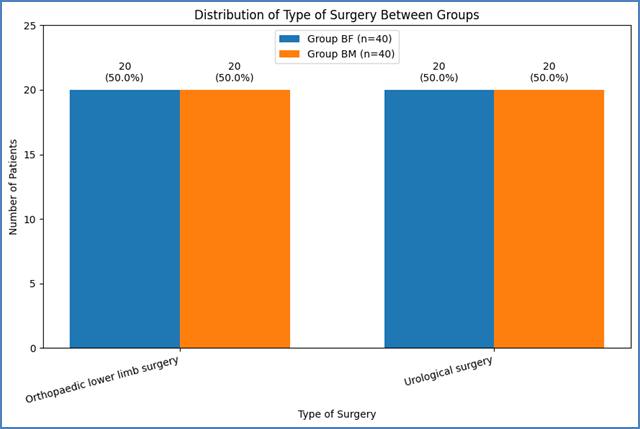
Figure 1: Distribution of Type of Surgery Between the Two Groups
The distribution of surgical procedures was identical in both groups. In Group BF, 20 patients underwent orthopaedic lower limb surgeries and 20 patients underwent urological surgeries. The same distribution was observed in Group BM. The chi-square test showed no statistically significant difference between the groups with respect to type of surgery. This equal distribution is important because the nature of surgery can influence the duration of anaesthesia, haemodynamic response and postoperative pain. Therefore, both groups were comparable with regard to surgical profile.
Table 2: Comparison of Sensory Block Characteristics Between the Two Groups
|
Sensory Block Parameter |
Group BF (n=40) Mean ± SD |
Group BM (n=40) Mean ± SD |
Mean Difference |
95% CI of Difference |
t-value |
p-value |
|
Onset of sensory block, seconds |
229.50 ± 35.65 |
225.00 ± 35.30 |
4.50 |
-20.29 to 11.29 |
-0.57 |
0.57 |
|
Duration of sensory block, minutes |
218.25 ± 24.01 |
220.50 ± 25.46 |
-2.25 |
-8.77 to 13.27 |
0.41 |
0.69 |
The onset of sensory block was comparable between the two groups. Group BF had a mean sensory block onset time of 229.50 ± 35.65 seconds, while Group BM had a mean onset time of 225.00 ± 35.30 seconds. The difference was not statistically significant. The duration of sensory block was also similar between the groups, with Group BF showing 218.25 ± 24.01 minutes and Group BM showing 220.50 ± 25.46 minutes. These findings indicate that both fentanyl and midazolam, when added to hyperbaric bupivacaine, produced comparable sensory block characteristics.
Table 3: Comparison of Motor Block Characteristics Between the Two Groups
|
Motor Block Parameter |
Group BF (n=40) Mean ± SD |
Group BM (n=40) Mean ± SD |
Mean Difference |
95% CI of Difference |
p-value |
|
Onset of motor block, seconds |
273.00 ± 44.96 |
276.00 ± 50.47 |
-3.00 |
-18.28 to 24.28 |
0.78 |
|
Duration of motor block, minutes |
170.62 ± 23.20 |
174.75 ± 18.15 |
-4.12 |
-5.15 to 13.40 |
0.38 |
Motor block characteristics did not differ significantly between the two groups. The mean onset of motor block was 273.00 ± 44.96 seconds in Group BF and 276.00 ± 50.47 seconds in Group BM. The duration of motor block was 170.62 ± 23.20 minutes in Group BF and 174.75 ± 18.15 minutes in Group BM. The p-values for both onset and duration of motor block were greater than 0.05. This suggests that the addition of either fentanyl or midazolam to intrathecal bupivacaine did not produce a statistically significant difference in motor block onset or recovery.
Table 4: Comparison of Duration of Complete and Effective Analgesia Between the Two Groups
|
Analgesia Parameter |
Group BF (n=40) Mean ± SD |
Group BM (n=40) Mean ± SD |
Mean Difference |
95% CI of Difference |
p-value |
|
Duration of complete analgesia, minutes |
210.37 ± 28.11 |
209.87 ± 26.44 |
0.50 |
-11.64 to 12.64 |
0.93 |
|
Duration of effective analgesia, minutes |
224.25 ± 25.10 |
225.75 ± 29.01 |
-1.50 |
-13.57 to 10.57 |
0.80 |
The duration of complete analgesia was nearly identical in both groups, with Group BF showing 210.37 ± 28.11 minutes and Group BM showing 209.87 ± 26.44 minutes. The difference was not statistically significant. Similarly, the duration of effective analgesia was 224.25 ± 25.10 minutes in Group BF and 225.75 ± 29.01 minutes in Group BM. The p-value for effective analgesia was also not significant. These findings suggest that intrathecal fentanyl and intrathecal midazolam provided comparable postoperative analgesic duration when used as adjuvants to hyperbaric bupivacaine.
Table 5: Comparison of Haemodynamic Parameters Between the Two Groups at Selected Time Intervals
|
Time Interval |
HR BF Mean ± SD |
HR BM Mean ± SD |
HR p-value |
SBP BF Mean ± SD |
SBP BM Mean ± SD |
SBP p-value |
DBP BF Mean ± SD |
DBP BM Mean ± SD |
DBP p-value |
|
Preoperative |
74.45 ± 8.28 |
74.80 ± 7.53 |
0.84 |
116.90 ± 13.74 |
117.22 ± 11.92 |
0.91 |
73.97 ± 8.94 |
75.00 ± 9.67 |
0.62 |
|
5 minutes |
70.20 ± 12.51 |
70.15 ± 12.15 |
0.98 |
107.30 ± 17.51 |
105.62 ± 17.98 |
0.67 |
65.12 ± 12.43 |
64.52 ± 12.38 |
0.82 |
|
15 minutes |
71.27 ± 9.38 |
71.20 ± 6.82 |
0.96 |
108.15 ± 9.58 |
106.27 ± 8.52 |
0.35 |
65.30 ± 8.74 |
64.10 ± 9.12 |
0.55 |
|
30 minutes |
71.77 ± 5.08 |
71.40 ± 6.50 |
0.77 |
109.30 ± 8.28 |
108.82 ± 6.99 |
0.78 |
65.95 ± 6.85 |
67.32 ± 5.53 |
0.32 |
|
60 minutes |
73.77 ± 6.94 |
73.05 ± 6.26 |
0.62 |
113.02 ± 8.59 |
113.07 ± 5.70 |
0.97 |
70.17 ± 8.32 |
69.52 ± 5.99 |
0.69 |
|
90 minutes |
74.45 ± 8.28 |
74.30 ± 8.95 |
0.93 |
113.85 ± 9.44 |
114.62 ± 6.07 |
0.66 |
70.67 ± 7.41 |
71.30 ± 6.38 |
0.68 |
|
210 minutes |
74.80 ± 7.53 |
74.45 ± 8.28 |
0.84 |
116.90 ± 13.74 |
117.22 ± 11.92 |
0.91 |
75.00 ± 9.67 |
73.97 ± 8.94 |
0.62 |
Haemodynamic parameters were stable and comparable between the two groups throughout the observation period. Heart rate, systolic blood pressure and diastolic blood pressure showed a mild fall after spinal anaesthesia in both groups, which is expected after subarachnoid block. However, there was no statistically significant difference between Group BF and Group BM at any selected time interval. All p-values were greater than 0.05. These findings indicate that both fentanyl and midazolam, when used as intrathecal adjuvants, maintained comparable haemodynamic stability.
Table 6: Comparison of Respiratory Parameters Between the Two Groups at Selected Time Intervals
|
Time Interval |
RR BF Mean ± SD |
RR BM Mean ± SD |
RR p-value |
SpO₂ BF Mean ± SD |
SpO₂ BM Mean ± SD |
SpO₂ p-value |
|
Preoperative |
11.67 ± 0.91 |
11.95 ± 0.67 |
0.13 |
98.90 ± 0.90 |
98.75 ± 0.74 |
0.42 |
|
5 minutes |
12.12 ± 1.45 |
11.65 ± 0.92 |
0.08 |
98.87 ± 0.91 |
98.77 ± 0.76 |
0.59 |
|
15 minutes |
11.52 ± 1.10 |
11.65 ± 0.92 |
0.58 |
99.12 ± 0.64 |
98.85 ± 0.80 |
0.09 |
|
30 minutes |
11.65 ± 1.23 |
11.65 ± 0.92 |
1.00 |
99.20 ± 0.75 |
98.97 ± 0.65 |
0.16 |
|
60 minutes |
11.35 ± 1.21 |
11.52 ± 0.90 |
0.46 |
99.20 ± 0.85 |
98.95 ± 0.71 |
0.15 |
|
90 minutes |
11.62 ± 0.95 |
11.65 ± 0.92 |
0.90 |
99.02 ± 0.83 |
98.77 ± 0.76 |
0.16 |
|
210 minutes |
11.67 ± 0.91 |
11.95 ± 0.67 |
0.13 |
99.02 ± 0.83 |
98.77 ± 0.76 |
0.16 |
Respiratory parameters remained stable in both groups during the study period. The respiratory rate was comparable between Group BF and Group BM at all selected time intervals. Oxygen saturation also remained within normal limits in both groups, with no statistically significant difference at any time point. This is clinically important because fentanyl is an opioid and may theoretically be associated with respiratory depression. However, in the present study, neither fentanyl nor midazolam produced significant respiratory compromise when used intrathecally in the studied doses.
Table 7: Distribution of Side Effects and Sedation Score Between the Two Groups
|
Side Effect / Sedation Parameter |
Group BF (n=40) |
Group BM (n=40) |
Total (n=80) |
Statistical Value |
p-value |
|
Bradycardia |
5 (12.5%) |
6 (15.0%) |
11 (13.8%) |
χ² = 0.11, df = 1 |
0.75 |
|
Hypotension |
5 (12.5%) |
6 (15.0%) |
11 (13.8%) |
χ² = 0.11, df = 1 |
0.75 |
|
Nausea |
8 (20.0%) |
1 (2.5%) |
9 (11.3%) |
— |
0.03* |
|
Vomiting |
0 |
0 |
0 |
— |
— |
|
Pruritus |
6 (15.0%) |
0 |
6 (7.5%) |
— |
0.03* |
|
Sedation score 0 |
34 (85.0%) |
33 (82.5%) |
67 (83.8%) |
χ² = 0.09, df = 1 |
0.76 |
|
Sedation score 1 |
6 (15.0%) |
7 (17.5%) |
13 (16.3%) |
χ² = 0.09, df = 1 |
0.76 |
The incidence of bradycardia and hypotension was comparable between the two groups and was not statistically significant. Nausea was significantly higher in Group BF, occurring in 8 patients compared with only 1 patient in Group BM. Pruritus was also significantly more common in Group BF, occurring in 6 patients, while no patient in Group BM developed pruritus. Vomiting was not observed in either group. Sedation scores were comparable, with most patients remaining fully awake. These findings suggest that midazolam had a better side-effect profile than fentanyl, particularly with respect to nausea and pruritus.
DISCUSSION:
The present prospective randomized double-blind study compared intrathecal fentanyl 25 µg and preservative-free midazolam 2 mg as additives to 15 mg of 0.5% hyperbaric bupivacaine in 80 ASA physical status I and II patients undergoing elective lower limb and urological surgeries under spinal anaesthesia. The two groups were comparable with respect to age, weight, gender distribution, ASA physical status and type of surgery, indicating that both groups were well matched and that the observed differences were likely related to the intrathecal adjuvant rather than demographic or surgical variation. In the present study, the mean onset of sensory block was 229.50 ± 35.65 seconds in Group BF and 225.00 ± 35.30 seconds in Group BM, with no statistically significant difference. Similarly, the duration of sensory block was 218.25 ± 24.01 minutes in Group BF and 220.50 ± 25.46 minutes in Group BM. These findings suggest that both fentanyl and midazolam produced comparable sensory block characteristics when combined with hyperbaric bupivacaine. Dhawale and Sivashankar studied intrathecal fentanyl as an adjuvant to 0.5% hyperbaric bupivacaine and observed that fentanyl improved the quality and duration of spinal anaesthesia without major haemodynamic instability [9]. The findings of the present study are partly comparable, as fentanyl provided adequate sensory blockade; however, in the present study, midazolam was equally effective with respect to onset and duration of sensory block.
Motor block characteristics were also comparable between the two groups. The onset of motor block was 273.00 ± 44.96 seconds in Group BF and 276.00 ± 50.47 seconds in Group BM. The duration of motor block was 170.62 ± 23.20 minutes in Group BF and 174.75 ± 18.15 minutes in Group BM. The absence of a significant difference indicates that neither fentanyl nor midazolam produced clinically important prolongation of motor blockade. This is desirable in lower limb and urological surgeries, as excessive prolongation of motor block may delay postoperative mobilization. Shama et al. reported that the addition of intrathecal midazolam to bupivacaine prolonged spinal anaesthesia and postoperative analgesia in children undergoing lower abdominal surgeries [10]. In contrast, the present study found that midazolam produced analgesic effects similar to fentanyl, without significantly prolonging motor recovery, which may be advantageous in routine adult surgical practice. The duration of complete analgesia and effective analgesia was also similar in the two groups. Complete analgesia lasted 210.37 ± 28.11 minutes in Group BF and 209.87 ± 26.44 minutes in Group BM. Effective analgesia lasted 224.25 ± 25.10 minutes in Group BF and 225.75 ± 29.01 minutes in Group BM. These findings indicate that intrathecal midazolam 2 mg provides postoperative analgesia comparable to fentanyl 25 µg when used with hyperbaric bupivacaine. Chekole et al. demonstrated that intrathecal fentanyl with hyperbaric bupivacaine enhances spinal anaesthesia and improves analgesia in caesarean section patients [11]. The present findings support the analgesic usefulness of fentanyl but further suggest that midazolam may offer similar analgesic efficacy in non-obstetric lower limb and urological surgeries.
Haemodynamic parameters remained stable in both groups throughout the observation period. Heart rate, systolic blood pressure and diastolic blood pressure showed no statistically significant difference at any recorded time interval. Bradycardia occurred in 12.5% of patients in Group BF and 15.0% in Group BM, while hypotension occurred in 12.5% and 15.0% respectively; both differences were statistically insignificant. Kalbande et al., while comparing intrathecal dexmedetomidine and fentanyl with hyperbaric bupivacaine in lower limb surgeries, also observed that fentanyl provided acceptable spinal anaesthesia with manageable haemodynamic effects [12]. The present study similarly confirms that both fentanyl and midazolam, in the doses used, are haemodynamically safe intrathecal adjuvants. Respiratory parameters were also stable. Respiratory rate and oxygen saturation remained comparable in both groups, and no episode of respiratory depression was observed. This is clinically important because fentanyl, being an opioid, carries a theoretical risk of respiratory depression. Thakur et al. studied intrathecal fentanyl with bupivacaine and reported that low-dose fentanyl reduced shivering without significant respiratory compromise [13]. The absence of respiratory depression in the present study supports the safety of 25 µg intrathecal fentanyl, while also showing that intrathecal midazolam is similarly safe from a respiratory standpoint.
The most important difference between the two groups was observed in the side-effect profile. Nausea was significantly higher in Group BF, occurring in 8 patients, compared with only 1 patient in Group BM. Similarly, pruritus was seen in 6 patients in Group BF and in none of the patients in Group BM. These differences were statistically significant. Vomiting was not seen in either group. Sedation scores were comparable, with most patients remaining fully awake. Satapathy et al., in a study comparing intrathecal fentanyl and nalbuphine with hyperbaric bupivacaine in lower limb orthopaedic surgeries, reported opioid-related side effects such as pruritus and vomiting in the fentanyl group, though without serious adverse events [14]. The present study similarly demonstrates that fentanyl is effective but is associated with a higher incidence of opioid-related adverse effects. In urological procedures, Khoshrang et al. found that bupivacaine with fentanyl 25 µg provided adequate spinal anaesthesia in patients undergoing transurethral lithotripsy, although block characteristics and complications were largely comparable to bupivacaine alone [15]. This supports the present observation that fentanyl can provide satisfactory intraoperative conditions without major haemodynamic or respiratory instability. However, the present study adds that midazolam may provide similar anaesthetic and analgesic benefits with fewer opioid-related side effects. Jananimadi et al. also reported that although fentanyl is a useful intrathecal adjuvant, alternative agents may offer better postoperative analgesic profiles or fewer side effects depending on the clinical setting [16].
Overall, the present study shows that intrathecal fentanyl 25 µg and preservative-free midazolam 2 mg, when added to 15 mg hyperbaric bupivacaine, produce comparable sensory block, motor block, duration of complete analgesia and duration of effective analgesia. Both drugs maintained stable haemodynamic and respiratory parameters. However, fentanyl was associated with significantly higher nausea and pruritus, while midazolam showed a better side-effect profile. Therefore, preservative-free midazolam may be considered a useful non-opioid alternative to fentanyl as an intrathecal adjuvant to hyperbaric bupivacaine, particularly when avoidance of opioid-related adverse effects is desired.
CONCLUSION:
The present study concluded that both intrathecal fentanyl 25 µg and preservative-free midazolam 2 mg are effective additives to 15 mg of 0.5% hyperbaric bupivacaine for spinal anaesthesia in lower limb and urological surgeries. Both adjuvants produced comparable onset and duration of sensory and motor blockade, similar duration of complete and effective analgesia, and stable haemodynamic and respiratory parameters. However, fentanyl was associated with significantly higher incidence of nausea and pruritus, whereas midazolam had fewer adverse effects. Hence, intrathecal midazolam may be considered a safe and effective non-opioid alternative to fentanyl for improving spinal anaesthesia quality while reducing opioid-related side effects.
REFERENCES:
1. Ferrarezi WPP, Braga AFA, Ferreira VB, Mendes SQ, Brandão MJN, Braga F, et al. Spinal anesthesia for elective cesarean section. Bupivacaine associated with different doses of fentanyl: randomized clinical trial. Braz J Anesthesiol. 2021;71(6):642-648. doi:10.1016/j.bjane.2021.03.030. PMID:34411627.
2. Ebrie AM, Woldeyohanis M, Abafita BJ, Ali SA, Zemedkun A, Yimer Y, et al. Hemodynamic and analgesic effect of intrathecal fentanyl with bupivacaine in patients undergoing elective cesarean section; a prospective cohort study. PLoS One. 2022;17(7):e0268318. doi:10.1371/journal.pone.0268318. PMID:35797265.
3. Sabertanha A, Makhmalbaf GR, Bayati M, Meshkini A. The Effect of Intrathecal Bupivacaine Plus Dextrose 5% and Fentanyl Compared with Bupivacaine Alone on the Onset and Duration of Analgesia in Patients Undergoing Lower-Limb Orthopedic Surgery. Adv Orthop. 2023;2023:2496557. doi:10.1155/2023/2496557. PMID:36824661.
4. Hung TY, Huang YS, Lin YC. Maternal and neonatal outcomes with the addition of intrathecal midazolam as an adjuvant to spinal anesthesia in cesarean delivery: A systematic review and meta-analysis of randomized controlled trials. J Clin Anesth. 2022;80:110786. doi:10.1016/j.jclinane.2022.110786. PMID:35461171.
5. Nayak A, Ninave S, Tayade S, Tayade H. Intrathecal Adjuvant Midazolam Versus Fentanyl With Hyperbaric Bupivacaine for Post-operative Analgesia in Women Undergoing Total Abdominal Hysterectomy. Cureus. 2023;15(6):e40565.
6. Yazhini S, Venkatraman R, Kandan K. Comparison of Fentanyl With Midazolam As Adjuvants to Levobupivacaine in Spinal Anesthesia for Cesarean Sections: A Randomized Controlled Trial. Cureus. 2024;16:e64732. doi:10.7759/cureus.64732. PMID:39156298.
7. Bhatia J, Suryawanshi C. Comparative Analysis of Intrathecal Bupivacaine With Fentanyl Versus Intrathecal Bupivacaine With Midazolam in Lower Abdominal and Lower Limb Surgeries. Cureus. 2024;16(9):e68908. doi:10.7759/cureus.68908. PMID:39381493.
8. Tadesse MA, Alemu EA, Allene MD, Abebe MM, Alimawu AA, Kebede FS, Wondemu ES. Efficacy and safety of midazolam compared to fentanyl as adjuvants to hyperbaric bupivacaine in spinal anesthesia: a systematic review and meta-analysis of randomized controlled trials. BMC Anesthesiol. 2025;25(1):397. doi:10.1186/s12871-025-03261-1. PMID:40775683.
9. Dhawale TA, Sivashankar KR. Comparison of Intrathecal Fentanyl and Buprenorphine as an Adjuvant to 0.5% Hyperbaric Bupivacaine for Spinal Anesthesia. Anesth Essays Res. 2021;15(1):126-132. doi:10.4103/aer.aer_59_21. PMID:34667359.
10. Shama AA, Ng KT, Shahen MM, Abosamak MF. Effect of adding midazolam to intrathecal bupivacaine in children undergoing lower abdominal surgeries: A randomised controlled trial. Indian J Anaesth. 2022;66(3):200-206.
11. Chekole AT, Kassa A, Yadeta S, Aytolign HA. Comparison of sequential versus pre mixed administration of intrathecal fentanyl with hyperbaric bupivacaine for patients undergoing elective Caesarean section at Zewditu Memorial Referral Hospital: A prospective cohort study. Ann Med Surg (Lond). 2022;74:103313.
12. Kalbande JV, Deotale KD, N AK, Karim HMR. Addition of Dexmedetomidine and Fentanyl to Intrathecal Hyperbaric Bupivacaine for Lower Limb Surgeries: A Randomized, Comparative Study. Cureus. 2022;14(8):e28276.
13. Thakur N, Balachander H, Rudingwa P, Panneerselvam S. Shivering and changes in body temperature in patients undergoing caesarean section under spinal anaesthesia with bupivacaine vs bupivacaine and fentanyl: A randomized clinical study. J Anaesthesiol Clin Pharmacol. 2023;39(1):67-73. doi:10.4103/joacp.joacp_156_21. PMID:37250246.
14. Satapathy S, Nayak LK, Behera SK, Satapathy GC, Swain R, Das S. A Comparative Study of Intrathecal Fentanyl and Nalbuphine as an Adjuvant to Hyperbaric Bupivacaine for Spinal Anesthesia in Lower Limb Orthopedic Surgeries: A Prospective, Double-Blind, Randomized Controlled Study. Cureus. 2023;15(6):e41230. doi:10.7759/cureus.41230. PMID:37529511.
15. Khoshrang H, Damavand RS, Nasseh H, Tavakoli AA, Esmaeili S, Ghaffari M, Shakiba M. Comparing spinal anesthesia approaches for transurethral lithotripsy in patients with proximal ureteral stones: A randomized clinical trial of bupivacaine alone versus bupivacaine with fentanyl. J Med Life. 2023;16(10):1508-1513. doi:10.25122/jml-2023-0109. PMID:38313179.
16. Jananimadi S, Arish BT, Hariharasudhan B, Sivakumar S, Sagiev GK, Neelakandan E. Comparison of Postoperative Analgesia Between Intrathecal Nalbuphine and Intrathecal Fentanyl in Infraumbilical Surgeries: A Double-Blind Randomized Controlled Trial. Cureus. 2024;16(4):e58503. doi:10.7759/cureus.58503. PMID:38638177