A Prospective Observational Evaluation of Extrapulmonary Comorbidities among Patients with Chronic Obstructive Pulmonary Disease
- Swetha K , Junior Resident, Department of Respiratory Medicine, Sree Mookambika Institut of Medical Sciences, Kulasekharam, India
- Jayaprakash B , Professor, Department of Respiratory Medicine, Sree Mookambika Institute of Medical Sciences, Kulasekharam, India.
Article Information:
Abstract:
Background: Chronic Obstructive Pulmonary Disease (COPD) is a progressive respiratory disorder characterized by persistent airflow limitation and a significant systemic inflammatory response. It is commonly associated with extrapulmonary comorbidities that contribute to increased morbidity, mortality, and healthcare burden. Methodology: A prospective observational study was conducted in the Department of Pulmonology, Sree Mookambika Institute of Medical Sciences, Kulasekharam, from March 2025 to February 2026. A total of 100 patients diagnosed with COPD, aged between 30–90 years, were included. Patients with HIV/AIDS and chronic kidney disease were excluded. Data regarding demographic profile, clinical characteristics, and extrapulmonary comorbidities were collected and analyzed using descriptive and inferential statistics. Results: Among 100 COPD patients studied, 85% had at least one extrapulmonary comorbidity, while 15% had stable COPD without comorbid conditions. Anemia was the most common comorbidity, followed by cor pulmonale, while diabetes mellitus and tuberculosis were the least frequent. Most patients were classified under mMRC grade III and IV, indicating severe disease. Asthma-COPD overlap syndrome was observed in 22% of cases. Smoking history of 25–30 years was present in the majority of patients, while a significant proportion of non-smokers had biomass or occupational exposure. Conclusion: COPD is strongly associated with a high burden of extrapulmonary comorbidities, with anemia being the most prevalent condition. The study highlights the systemic nature of COPD and emphasizes the need for early diagnosis, comprehensive assessment, and multidisciplinary management to improve patient outcomes.
Keywords:
Article :
INTRODUCTION:
Chronic Obstructive Pulmonary Disease (COPD) is a common, preventable, and treatable respiratory disorder characterized by persistent airflow limitation that is usually progressive and associated with an enhanced chronic inflammatory response of the airways and lungs to noxious particles or gases, particularly tobacco smoke and biomass fuel exposure (1). The disease encompasses chronic bronchitis and emphysema, which frequently coexist and contribute to the progressive deterioration of pulmonary function. COPD has emerged as a major public health challenge worldwide owing to its high prevalence, morbidity, mortality, and economic burden (2). According to the World Health Organization (WHO), COPD is currently one of the leading causes of death globally, accounting for more than 3 million deaths annually and representing approximately 6% of all deaths worldwide (3). The burden of COPD is expected to increase further because of continued exposure to risk factors, population aging, and increasing life expectancy. In India, COPD constitutes a substantial proportion of chronic respiratory diseases and is associated with considerable healthcare utilization and loss of productivity (4).
Traditionally, COPD was considered a disease confined primarily to the lungs. However, accumulating evidence suggests that COPD is a systemic disorder with significant extrapulmonary manifestations and comorbidities. Chronic systemic inflammation, oxidative stress, hypoxia, physical inactivity, and shared risk factors such as smoking contribute to the development of multiple comorbid conditions in these patients (5). These comorbidities substantially influence disease severity, frequency of exacerbations, quality of life, hospitalization rates, and overall survival. Cardiovascular diseases, including hypertension, ischemic heart disease, heart failure, and arrhythmias, are among the most common comorbidities associated with COPD (6). Metabolic disorders such as diabetes mellitus, metabolic syndrome, and osteoporosis are also frequently encountered. Furthermore, anxiety, depression, skeletal muscle dysfunction, anemia, malnutrition, lung cancer, and chronic kidney disease have been increasingly recognized as important contributors to adverse outcomes in COPD patients (7). The coexistence of these conditions often complicates diagnosis and management, leading to increased healthcare costs and poorer prognosis.
Recognition and early identification of extrapulmonary comorbidities are therefore essential for comprehensive management of COPD. Current treatment strategies emphasize a holistic approach that addresses both pulmonary and non-pulmonary manifestations of the disease. Understanding the pattern and prevalence of these comorbidities can aid clinicians in risk stratification, individualized treatment planning, and improving patient outcomes (8). Despite growing awareness regarding the systemic nature of COPD, data regarding the spectrum of extrapulmonary comorbidities in different populations remain limited. Variations in demographic characteristics, environmental exposures, socioeconomic factors, and healthcare access may influence the prevalence and impact of these comorbid conditions. Hence, the present prospective observational study was undertaken to assess the prevalence and profile of extrapulmonary comorbidities among patients diagnosed with COPD and to evaluate their clinical significance.
Aim
To assess the prevalence and spectrum of extrapulmonary comorbidities among patients with Chronic Obstructive Pulmonary Disease (COPD) attending a tertiary care hospital.
Objectives
1. To identify the various extrapulmonary comorbidities present in patients diagnosed with COPD.
2. To determine the prevalence of individual extrapulmonary comorbid conditions among COPD patients.
3. To evaluate the association between COPD severity and the presence of extrapulmonary comorbidities.
METHODOLOGY:
The present study was conducted in the Department of Pulmonology, Sree Mookambika Institute of Medical Sciences, Kulasekharam. This was a prospective observational study carried out over a period of March 2025 to February 2026. A total of 100 patients diagnosed with Chronic Obstructive Pulmonary Disease (COPD) attending both outpatient and inpatient services were included as the study population. Patients were selected based on predefined inclusion and exclusion criteria.
The inclusion criteria comprised all patients diagnosed with COPD, both male and female patients, individuals with associated comorbid conditions, and patients aged between 30 and 90 years. Both outpatients and inpatients fulfilling the diagnostic criteria were included in the study.
The exclusion criteria included patients diagnosed with COPD associated with chronic kidney disease (CKD) and patients with HIV/AIDS infection, in order to avoid confounding due to these chronic systemic illnesses. All relevant demographic, clinical, and comorbidity-related data were collected using a structured proforma after obtaining informed consent from the participants.
The collected data were systematically recorded and entered into a Microsoft Excel spreadsheet for analysis. Statistical analysis was performed using appropriate descriptive and inferential statistical methods. Categorical variables were expressed as frequencies and percentages, while continuous variables were summarized as mean and standard deviation.
The association between variables was assessed using the Chi-square test or Fisher’s exact test as appropriate, and a p-value of less than 0.05 was considered statistically significant. The final analysis aimed to determine the prevalence and pattern of extrapulmonary comorbidities among COPD patients and evaluate their clinical associations.
RESULTS:
We have collected about 100 cases of COPD with extra pulmonary comorbidities, based on inclusion and exclusion criteria.
Table 1: Smokers vs. Non-smokers
|
Parameters |
Total |
Male |
Female |
|
Total |
100 |
66 |
34 |
|
Smokers |
83 |
63 |
20 |
|
Non-smokers |
17 |
3 |
14 |
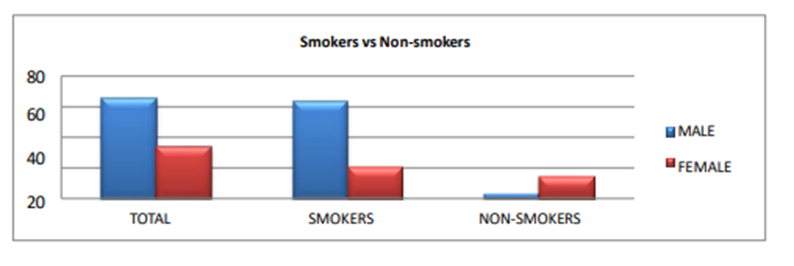
Chart 1: Smokers vs. Non-smokers
Table 2: Current Smokers vs. Ex-smokers:
|
PARAMETERS |
TOTAL NUMBER |
% |
MALE |
% |
FEMALE |
% |
|
CURRENT SMOKER |
55 |
55% |
41 |
75.54% |
14 |
25.45% |
|
EX-SMOKERS |
28 |
28% |
22 |
78.57% |
6 |
21.42% |
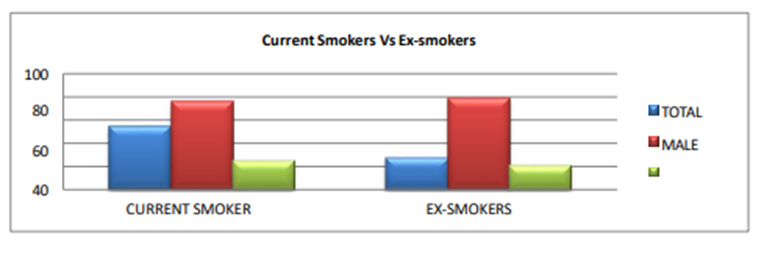
Chart 2: Current Smokers vs. Smokers
Table 3: Age Vs Number of Patients:
|
AGE |
NUMBER OF PERSONS |
PERCENTAGE |
|
21-30 |
1 |
1% |
|
31-40 |
3 |
3% |
|
41-50 |
6 |
6% |
|
51-60 |
25 |
25% |
|
61-70 |
44 |
44% |
|
71-80 |
16 |
16% |
|
81-90 |
5 |
5% |
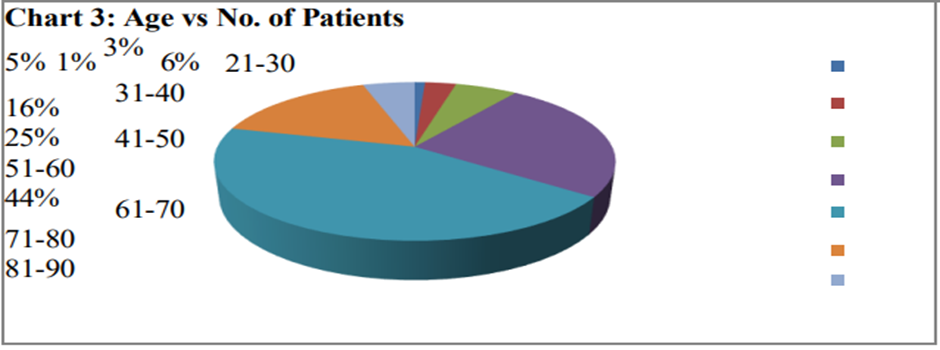
Table 4: Stages of Dyspnea Scale Vs Number of Patients:
|
STAGES |
NO.OF PATIENTS |
PERCENTAGE |
|
STAGE 0 |
1 |
1% |
|
STAGE I |
2 |
2% |
|
STAGE II |
17 |
17% |
|
STAGE III |
56 |
56% |
|
STAGE IV |
24 |
24% |
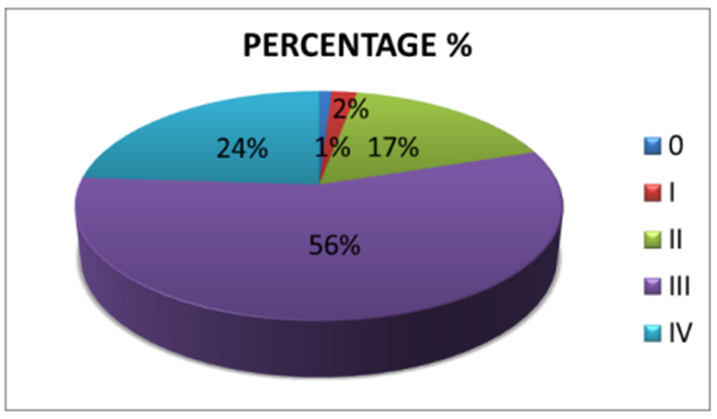
Chart 4: Dyspnea scale vs No. of patients:
Table 5: Age Vs Stage:
|
AGE |
TOTAL |
STAGE 0 |
STAGE 1 |
STAGE 2 |
STAGE 3 |
STAGE 4 |
|
21-30 |
1 |
0 |
0 |
0 |
1 |
0 |
|
31-40 |
3 |
0 |
0 |
0 |
3 |
0 |
|
41-50 |
9 |
0 |
1 |
5 |
3 |
0 |
|
51-60 |
22 |
1 |
1 |
5 |
14 |
1 |
|
61-70 |
44 |
0 |
0 |
5 |
26 |
13 |
|
71-80 |
16 |
0 |
0 |
1 |
8 |
7 |
|
81-90 |
5 |
0 |
0 |
0 |
2 |
3 |
|
TOTAL |
100 |
1 |
2 |
16 |
57 |
24 |
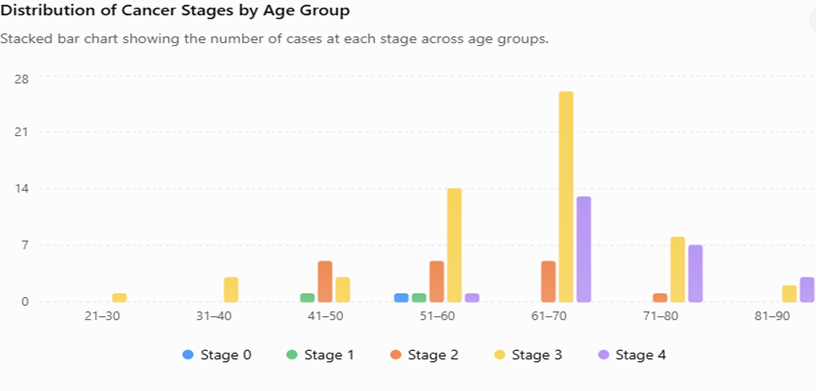
Chart 5: Age Vs Stage
Table 6: Extrapulmonary Comorbidities Vs Number of Patients:
|
PARAMET ERS |
TOTAL |
% |
MALE |
% |
FEMALE |
% |
|
Anemia |
69 |
81.17% |
39 |
56.52% |
30 |
43.47% |
|
Cor pulmonale |
14 |
16.47% |
8 |
57.14% |
6 |
42.85% |
|
Osteoporosis |
5 |
5.88% |
3 |
60% |
2 |
40% |
|
Depression |
5 |
5.88% |
2 |
40% |
3 |
60% |
|
Pulmonary arterial hypertension |
3 |
3.52% |
2 |
66.66% |
1 |
33.33% |
|
Coronary artery disease |
3 |
3.52% |
3 |
100% |
0 |
0 |
|
Diabetes |
2 |
2.35% |
0 |
0 |
2 |
100% |
|
Tuberculosis |
2 |
2.35% |
1 |
50% |
1 |
50% |
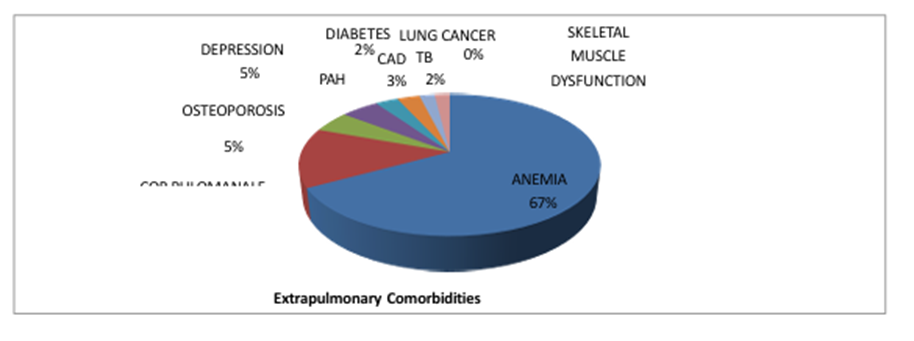
Chart 6: EPC vs No. of patients
Table 6.1: Overlap Syndrome
|
PARAMETER |
TOTAL |
MALE |
FEMALE |
|
ASTHMA |
22 |
12 |
10 |
Table 7: Age Vs Complications:
|
AGE |
TOTAL |
COR PULMO NALE |
ANEMIA |
OSTEOP OROSIS |
DEPRES SION |
PAH |
DIABET ES |
CAD |
TB |
ASTHM A |
|
21-30 |
0 |
0 |
0 |
0 |
0 |
0 |
0 |
0 |
0 |
0 |
|
31-40 |
1 |
0 |
1 |
0 |
0 |
0 |
0 |
0 |
0 |
0 |
|
41-50 |
10 |
1 |
4 |
0 |
1 |
1 |
0 |
0 |
1 |
2 |
|
51-60 |
20 |
1 |
17 |
0 |
0 |
0 |
0 |
0 |
0 |
2 |
|
61-70 |
56 |
10 |
28 |
1 |
0 |
1 |
2 |
2 |
1 |
11 |
|
71-80 |
26 |
2 |
14 |
2 |
2 |
1 |
0 |
1 |
0 |
4 |
|
81-90 |
12 |
0 |
5 |
2 |
2 |
0 |
0 |
0 |
0 |
3 |
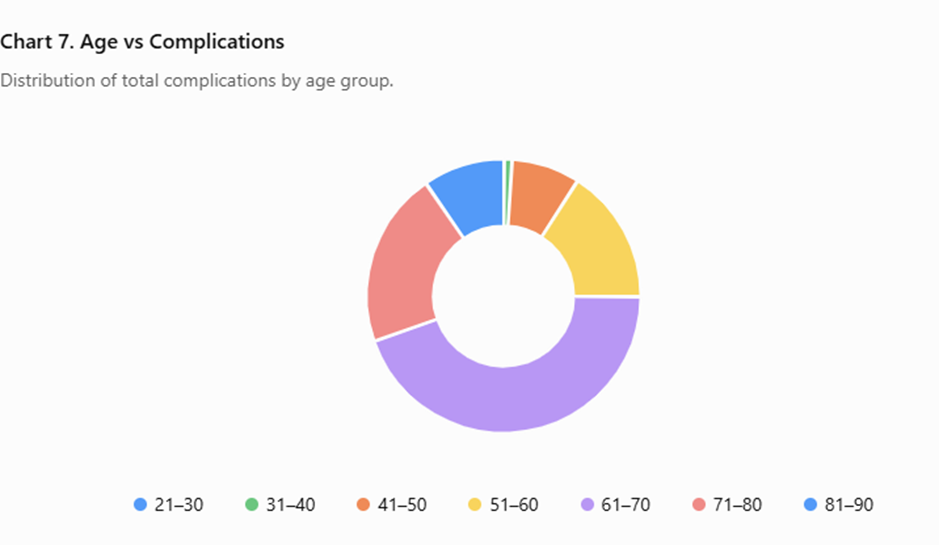
Chart: 7 Age Vs Complications
DISCUSSION:
Chronic Obstructive Pulmonary Disease (COPD) is a progressive respiratory disorder characterized by persistent airflow limitation and is strongly associated with long-term exposure to noxious particles and gases, particularly cigarette smoke and biomass fuel exposure (6). In the present prospective observational study conducted at the Department of Pulmonology, Sree Mookambika Institute of Medical Sciences, Kulasekharam, we evaluated 100 COPD patients to assess the prevalence and pattern of extrapulmonary comorbidities.
In our study population, the majority of patients had a significant smoking history of approximately 25–30 years, highlighting tobacco exposure as the major risk factor. However, a considerable proportion of non-smokers were also affected, most likely due to occupational exposure and biomass fuel inhalation, particularly among females, consistent with previous epidemiological observations that indoor air pollution is an important contributor to COPD in developing countries (8). Among the 100 patients studied, 85% had at least one extrapulmonary comorbidity, while 15% had stable COPD without identifiable systemic involvement at the time of assessment. This finding supports the concept that COPD is a systemic disease rather than being confined to the lungs alone (7).
Among extrapulmonary comorbidities, anemia was found to be the most prevalent condition in our study population, followed by cor pulmonale, while diabetes mellitus and tuberculosis were the least frequently observed comorbidities. The high prevalence of anemia may be attributed to chronic systemic inflammation, nutritional deficiencies, and hypoxia-induced alterations in erythropoiesis, which are commonly observed in advanced COPD patients. Cor pulmonale remains a significant complication due to long-standing hypoxic vasoconstriction and pulmonary hypertension, indicating advanced disease progression.
Based on the Modified Medical Research Council (mMRC) dyspnea grading, most patients belonged to grade III and IV, suggesting that a large proportion of patients presented with advanced disease and significant functional limitation. This also correlates with the high burden of comorbidities observed in our study population, as disease severity is directly associated with systemic involvement and reduced quality of life.
A notable finding in our study was the presence of asthma-COPD overlap syndrome (ACOS) in 22% of cases. This may be due to long-standing asthma with progression to fixed airflow obstruction, inappropriate or irregular use of inhaled therapy, and delayed diagnosis. Poor medication adherence and lack of inhaler technique education further contribute to disease progression and increased risk of exacerbations.
The burden of COPD in our study reflects inadequate early screening and delayed diagnosis, particularly in high-risk individuals such as smokers and biomass fuel-exposed populations. Early use of spirometry and structured questionnaires can aid in early detection and smoking cessation, which has been shown to slow disease progression and reduce complications (6). Furthermore, lack of patient education regarding inhaler techniques and disease understanding contributes significantly to frequent exacerbations and hospitalizations.
The present findings strongly support previous evidence that COPD is a systemic disease with significant extrapulmonary manifestations affecting morbidity and mortality (7). Smoking cessation and reduction of environmental exposure remain the most effective preventive strategies. In addition, early identification and management of comorbidities such as anemia and cardiovascular complications are essential to improve outcomes. COPD exacerbations, often triggered by infections and environmental factors, significantly worsen prognosis and increase healthcare burden (9). Overall, our study emphasizes the importance of a holistic approach in COPD management, focusing not only on pulmonary function but also on early detection and treatment of extrapulmonary comorbidities to improve survival and quality of life.
CONCLUSION:
Chronic Obstructive Pulmonary Disease (COPD) is a progressive systemic disorder frequently associated with significant extrapulmonary comorbidities, which contribute substantially to disease severity, morbidity, and overall prognosis. In the present study, a high proportion of COPD patients (85%) were found to have at least one extrapulmonary comorbidity, highlighting the systemic nature of the disease. Anemia emerged as the most common comorbidity, followed by cor pulmonale, while diabetes mellitus and tuberculosis were comparatively less frequent.
Most patients presented in advanced stages of disease severity (mMRC grade III and IV), indicating late presentation and inadequate early detection. The presence of asthma-COPD overlap syndrome in a significant number of patients further emphasizes diagnostic challenges and the role of long-standing poorly controlled airway disease. Smoking and biomass fuel exposure remain the predominant risk factors, with non-smokers also affected due to environmental and occupational exposure. The study highlights that COPD is not limited to pulmonary involvement but is strongly associated with systemic manifestations that worsen clinical outcomes. Early screening using spirometry, patient education regarding inhaler technique, smoking cessation, and timely management of comorbidities are essential strategies to reduce disease burden and improve quality of life. A multidisciplinary and holistic approach is therefore necessary for optimal management of COPD patients.
REFERENCES:
1. Global Initiative for Chronic Obstructive Lung Disease. Global Strategy for the Diagnosis, Management and Prevention of Chronic Obstructive Pulmonary Disease. 2024 Report.
2. Vogelmeier CF, Criner GJ, Martinez FJ, Anzueto A, Barnes PJ, Bourbeau J, et al. Global strategy for the diagnosis, management, and prevention of chronic obstructive lung disease 2017 report. Am J Respir Crit Care Med. 2017;195(5):557-82.
3. World Health Organization. Chronic obstructive pulmonary disease (COPD). Geneva: WHO; 2024.
4. Salvi S, Agrawal A. India needs a national COPD prevention and control programme. J Assoc Physicians India. 2012;60(Suppl):5-7.
5. Barnes PJ, Celli BR. Systemic manifestations and comorbidities of COPD. Eur Respir J. 2009;33(5):1165-85.
6. Mannino DM, Thorn D, Swensen A, Holguin F. Prevalence and outcomes of cardiovascular disease in COPD. Eur Respir J. 2008;32(4):962-9.
7. Divo M, Cote C, de Torres JP, Casanova C, Marin JM, Pinto-Plata V, et al. Comorbidities and risk of mortality in patients with COPD. Am J Respir Crit Care Med. 2012;186(2):155-61.
8. Celli BR, Wedzicha JA. Update on clinical aspects of chronic obstructive pulmonary disease. N Engl J Med. 2019;381(13):1257-66
9. Vogelmeier CF, Criner GJ, Martinez FJ, Anzueto A, Barnes PJ, Bourbeau J, et al. Global strategy for the diagnosis, management, and prevention of chronic obstructive lung disease 2017 report. Am J Respir Crit Care Med. 2017;195(5):557-82.
10. Barnes PJ, Celli BR. Systemic manifestations and comorbidities of COPD. Eur Respir J. 2009;33(5):1165-85.
11. Salvi S, Agrawal A. India needs a national COPD prevention and control programme. J Assoc Physicians India. 2012;60(Suppl):5-7.
12. Wedzicha JA, Seemungal TA. COPD exacerbations: defining their cause and prevention. Lancet. 2007;370(9589):786-96.