Predictive Value of Serum Albumin and Cholesterol Levels on the Development of Surgical Site Infection Following Elective Surgery
- Asha Jose V , Associate Professor, Department of General Surgery, Malabar Medical College Hospital and Research Centre, Modakkalloor, Kozhikode, Kerala.
- Vishal V Anil , Assistant Professor, Department of General Surgery, Malabar Medical College Hospital and Research Centre, Modakkalloor, Kozhikode, Kerala.
- Akhil Raj , Senior Resident, Department of General Surgery, Malabar Medical College Hospital and Research Centre, Modakkalloor, Kozhikode, Kerala.
Article Information:
Abstract:
Background: Surgical site infection (SSI) is a common postoperative complication that contributes substantially to patient morbidity and mortality, prolonged hospitalization, and increased healthcare costs. Serum albumin and cholesterol are recognized indicators of nutritional status and may influence postoperative outcomes. This study was undertaken to evaluate the role of preoperative serum albumin and serum cholesterol levels as risk factors for the development of surgical site infections following elective surgery. Materials and Methods: A prospective cohort study was conducted among 200 patients undergoing elective surgical procedures at a tertiary healthcare center. Preoperative serum albumin and serum cholesterol levels were measured and recorded along with duration of surgery and length of hospital stay. Patients were followed postoperatively for the occurrence of surgical site infections. Statistical analysis was performed using SPSS version 21.0. Results: Surgical site infection was observed in 58 of the 200 patients, yielding an incidence of 29%. The mean preoperative serum albumin level was significantly lower among patients who developed SSI compared to those who did not (P < 0.0001). In contrast, no significant difference was observed in serum cholesterol levels between the two groups (P = 0.27). Patients who developed SSI also had a significantly longer hospital stay than those without SSI (P < 0.001). Conclusion: The findings of this study demonstrate that low preoperative serum albumin levels are significantly associated with the development of surgical site infections following elective surgery. Serum albumin may therefore serve as a useful prognostic marker for identifying patients at increased risk of SSI. However, serum cholesterol levels were not found to be significantly associated with SSI occurrence.
Keywords:
Article :
INTRODUCTION:
Surgical site infections (SSIs) are among the most frequently reported healthcare-associated infections, ranking third among nosocomial infections worldwide. The development of SSI is influenced by multiple factors, which may be patient-related, hospital-acquired, or surgery-related.(1) Important surgical risk factors include a higher American Society of Anesthesiologists (ASA) score, wound classification, perioperative blood transfusions, creation of an ostomy, type of surgical procedure, use of surgical drains, and the surgical technique employed.(2)
SSIs impose a substantial clinical and economic burden on patients, their families, and healthcare systems. They are associated with prolonged hospital stays, increased healthcare costs, delayed recovery, and higher morbidity. Based on the depth and extent of involvement, SSIs are classified as superficial incisional infections, deep incisional infections, or organ/space infections.
Serum albumin and total cholesterol are commonly used indicators of an individual's nutritional status; however, their contribution as risk factors for surgical site infections (SSIs) has received comparatively less attention. Alterations in lipid profiles, including low high-density lipoprotein (HDL), elevated low-density lipoprotein (LDL), and increased total cholesterol levels, have been widely associated with cardiovascular morbidity and mortality. Conversely, hypocholesterolemia has been identified as a predictor of increased mortality, particularly among elderly patients.(3,4)
Serum albumin plays a vital role in maintaining physiological homeostasis. In conditions such as renal failure and systemic inflammation, protein synthesis shifts from albumin production toward acute-phase reactants such as C-reactive protein and cytokines. Albumin also binds and transports various small molecules, helping to modulate the effects of inflammatory mediators and maintain vascular integrity. Reduced serum albumin levels may therefore impair immune function and wound healing, increasing susceptibility to postoperative complications.(5,6)
Cholesterol is equally important for normal cellular function, serving as a precursor for the synthesis of steroid hormones in the adrenal glands and gonads. It is also essential for cell membrane formation, maintenance of membrane fluidity, and intracellular signaling processes. Consequently, low serum cholesterol levels may adversely affect tissue repair and immune responses, potentially increasing the risk of postoperative complications.(4,7)
Given the physiological importance of both serum albumin and cholesterol, the present study was undertaken to evaluate their role as potential risk factors for the development of surgical site infections following elective surgical procedures.
MATERIALS AND METHODS:
A prospective cohort study was conducted at a tertiary healthcare center after obtaining approval from the Institutional Ethics Committee. The study included patients undergoing elective surgical procedures in the Surgery Department at Malabar Medical College Hospital and Research Centre, Modakkallor, Kerala from February 2025 to March 2026. Written informed consent was obtained from all participants before enrollment in the study.
Inclusion Criteria
1. Patients undergoing elective surgery in the Department of General Surgery.
2. Patients willing to participate and provide written informed consent.
Exclusion Criteria
1. Critically ill patients requiring emergency surgery.
2. Immunocompromised patients, including those who were HIV-positive or receiving corticosteroid therapy.
3. Patients with diabetes mellitus.
4. Pregnant women.
5. Patients lost to follow-up.
6. Patients with pre-existing infection at the surgical site.
7. Patients unwilling to provide informed consent.
A total of 200 patients undergoing elective surgical procedures were enrolled in the study. Confidentiality of all participants was maintained throughout the study period. The surgical procedures included inguinal hernia repair, appendectomy, colorectal surgery, cholecystectomy, breast surgeries, and other major elective operations.
Prior to surgery, all patients underwent detailed clinical evaluation and routine preoperative investigations, including complete blood count, liver function tests, lipid profile, routine biochemical tests, bleeding time, clotting time, urine examination, chest radiography, and electrocardiography. A structured proforma was prepared for each patient to record demographic and clinical details, including preoperative serum albumin levels, serum cholesterol levels, duration of surgery, and length of hospital stay.
Patients were monitored throughout their hospital stay until discharge for the development of surgical site infections (SSIs). The primary variables assessed in the study were preoperative serum albumin concentration, serum cholesterol level, duration of surgery, and length of hospital stay, and their association with the occurrence of SSI. Factors such as antimicrobial prophylaxis, postoperative antibiotic treatment, microbial culture and sensitivity patterns were not included in the analysis.
Postoperatively, patients underwent regular monitoring, including assessment of vital signs such as pulse rate, blood pressure, and temperature. Daily wound inspections and dressing assessments were performed, and wound healing was evaluated using the Southampton Wound Grading System. All participants were educated regarding the signs and symptoms of SSI, including erythema, wound discharge, tenderness, seroma, hematoma, and wound dehiscence, and were advised to report promptly if any of these symptoms developed.
Surgical site infections were defined according to the criteria established by the Centers for Disease Control and Prevention (CDC). Superficial SSI was characterized by wound erythema, cellulitis, or purulent discharge involving the skin and subcutaneous tissue. Deep SSI was defined as an infection involving deeper soft tissues that required surgical intervention, such as removal of sutures or clips, drainage of deep-seated pus collections, wound packing, or other operative procedures.
RESULTS:
A total of 200 patients undergoing elective surgery were included in the study. Among the study population, 120 patients (60%) had hypoalbuminemia, while 80 patients (40%) had normal serum albumin levels (Table 1). Regarding serum cholesterol levels, 129 patients (64.5%) had cholesterol levels between 100–200 mg/dL, 38 patients (19%) had levels below 100 mg/dL, and 33 patients (16.5%) had levels above 200 mg/dL (Table 2)
Table 1: Distribution of study groups based on hypoalbuminemia
|
Hypoalbuminemia |
N |
% |
|
No |
80 |
40 |
|
Yes |
120 |
60 |
|
Total |
200 |
100 |
Table 2: Distribution of study groups based on cholesterol levels
|
Total Cholesterol (mg%) |
N |
% |
|
<100 |
38 |
19 |
|
100-200 |
129 |
64.5 |
|
>200 |
33 |
16.5 |
|
Total |
200 |
100 |
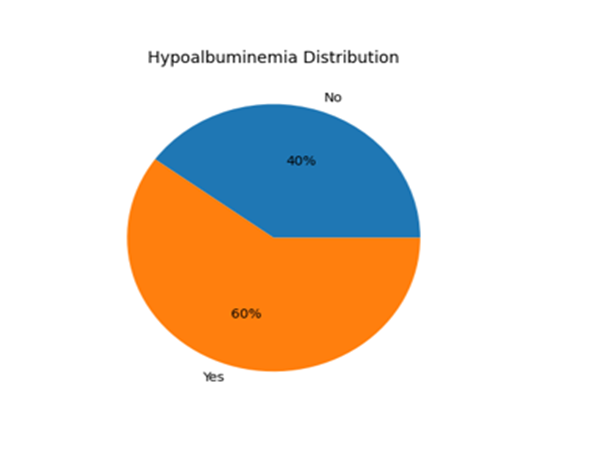
Graph 1: Distribution of Hypoalbuminemia cases
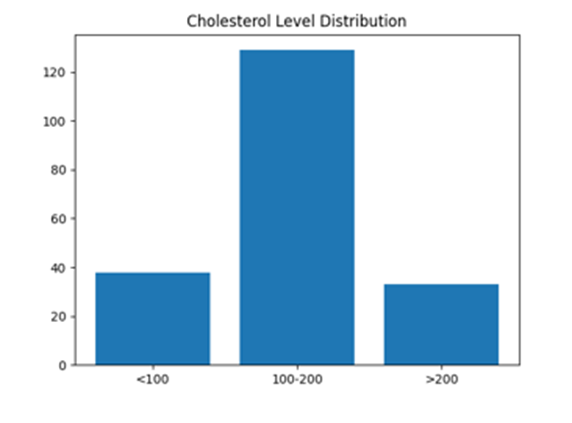
Graph 2: Distribution of cases with respect to cholesterol levels
Comparison of Albumin Levels and Surgical Site Infection
The mean serum albumin level was significantly lower among patients who developed surgical site infections (SSI) (3.10 ± 0.46 g/dL) compared with those who did not develop SSI (3.38 ± 0.51 g/dL). This difference was statistically significant (p < 0.001) (Table 3).
Table 3: Comparison of mean albumin levels among cases with and without surgical site infection
|
Variable |
SSI |
N |
Mean Albumin |
SD |
P-value |
|
Albumin levels (mg%) |
No |
142 |
3.38 |
0.51 |
<0.001 |
|
Yes |
58 |
3.10 |
0.46 |
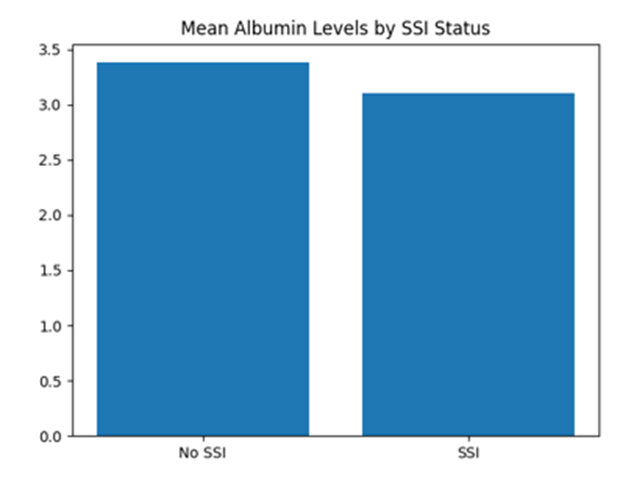
Graph 3: Mean Albumin levels by SSI status
Comparison of Cholesterol Levels and Surgical Site Infection
The mean serum cholesterol level among patients without SSI was 158.28 ± 23.14 mg/dL, compared with 154.32 ± 22.78 mg/dL among patients with SSI. The difference was not statistically significant (p = 0.2713) (Table 4).
Table 4: Comparison of mean cholesterol levels among cases with and without surgical site infection
|
Variable |
SSI |
N |
Mean Albumin |
SD |
P-value |
|
Cholesterol levels (mg%) |
No |
142 |
158.28 |
23.14 |
0.2713 |
|
Yes |
58 |
154.32 |
22.78 |
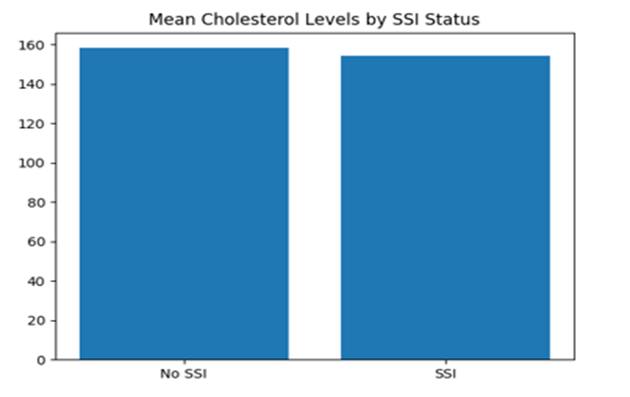
Graph 4: Mean cholesterol levels by SSI status
Comparison of Hospital Stay and Surgical Site Infection
Patients who developed SSI had a significantly longer hospital stay (9.38 ± 3.58 days) than those without SSI (7.45 ± 2.36 days). This difference was highly significant (p < 0.0001) (Table 5).
Table 5: Comparison of mean hospital stay among cases with and without surgical site infection
|
Variable |
SSI |
N |
Mean Albumin |
SD |
P-value |
|
Hospital stay (Days) |
No |
142 |
7.45 |
2.36 |
<0.0001 |
|
Yes |
58 |
9.38 |
3.58 |
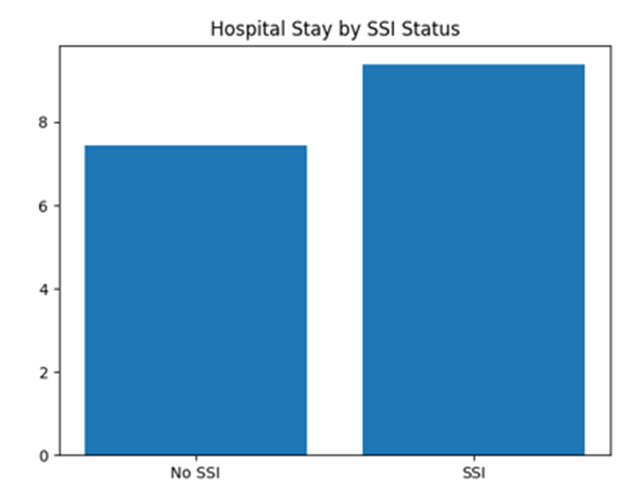
Graph 5: Hospital stay by SSI status
Association Between Hypoalbuminemia and Surgical Site Infection
Among patients without hypoalbuminemia, 18 of 75 patients (24%) developed SSI. In contrast, among patients with hypoalbuminemia, 40 of 125 patients (32%) developed SSI. Thus, the incidence of SSI was higher in patients with hypoalbuminemia (Table 6).
Table 6: Association of surgical site infections with hypoalbuminemia
|
Hypoalbuminemia |
Surgical site infection (SSI) |
Total |
|
|
No |
No |
Yes |
|
|
57 |
18 |
75 |
|
|
76% |
24% |
100% |
|
|
Yes |
85 |
40 |
125 |
|
68% |
32% |
100% |
|
|
Total |
142 |
58 |
200 |
|
71% |
29% |
100% |
|
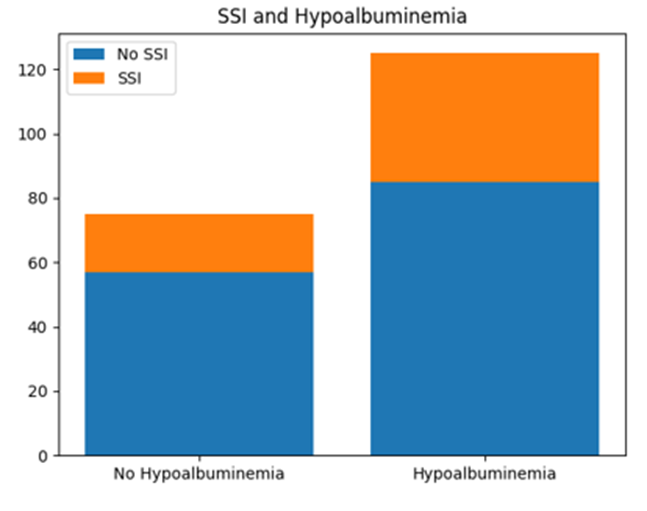
Graph 6: SSI status and Hypoalbuminemia
Association Between Cholesterol Levels and Surgical Site Infection
SSI occurred in 45% of patients with cholesterol levels below 100 mg/dL, compared with 27.2% of those with cholesterol levels between 100–200 mg/dL and 24.1% of those with cholesterol levels above 200 mg/dL. This indicates a trend toward increased SSI occurrence with lower cholesterol levels (Table 7)
Table 7: Association of surgical site infections with total cholesterol levels
|
Total cholesterol levels (mg%) |
Surgical site infection (SSI) |
Total |
|
|
No |
Yes |
||
|
>100 |
22 |
18 |
40 |
|
55% |
45% |
100% |
|
|
100-200 |
32 |
12 |
44 |
|
72.7% |
27.2% |
100% |
|
|
>200 |
88 |
28 |
116 |
|
75.8% |
24.1% |
100% |
|
|
Total |
142 |
58 |
200 |
|
71% |
29% |
100% |
|
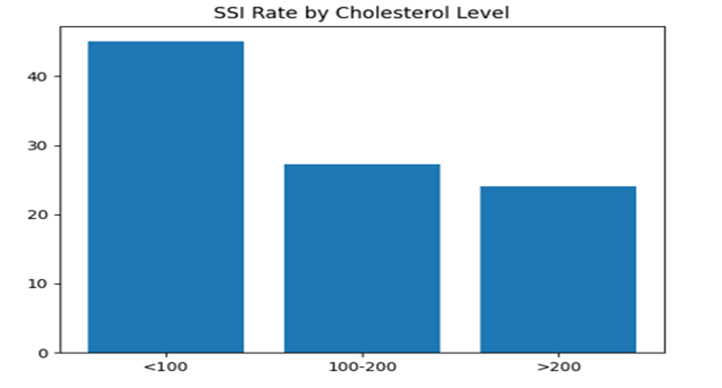
Graph 7: Incidence of SSI rate by cholesterol level
Combined Effect of Hypoalbuminemia and Low Cholesterol on Surgical Site Infection
Among patients without both risk factors, 14.1% developed SSI, whereas 55.5% of patients with both hypoalbuminemia and low cholesterol developed SSI. This suggests a markedly increased risk of SSI when hypoalbuminemia and low cholesterol coexist (Table 8).
Table 8: Association of surgical site infections with low albumin and total cholesterol levels
|
Hypoalbuminemia + Low Cholesterol |
Surgical site infection (SSI) |
Total |
|
|
No |
No |
Yes |
|
|
110 |
18 |
128 |
|
|
85.9 |
14.1 |
100% |
|
|
Yes |
32 |
40 |
72 |
|
44.4% |
55.5% |
100% |
|
|
Total |
142 |
58 |
200 |
|
71% |
29% |
100% |
|
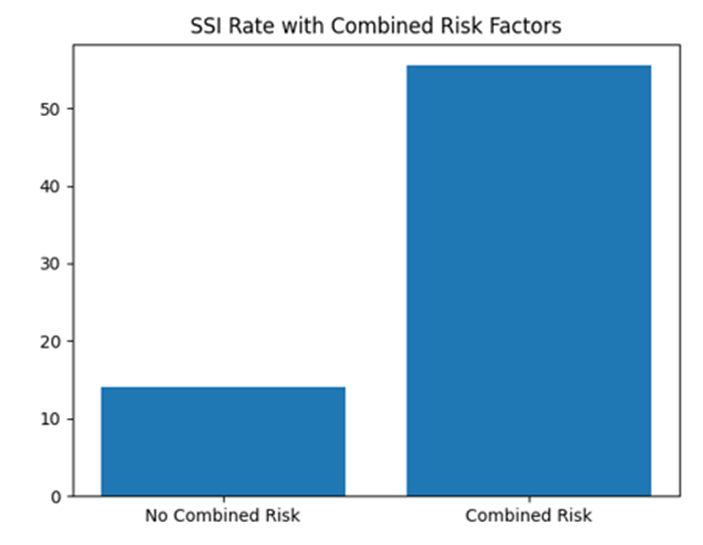
Graph 8: Incidence of SSI rate with combined risk factors
Summary of Key Findings
A total of 60% of patients had hypoalbuminemia. Mean serum albumin levels were significantly lower in patients who developed SSI (P < 0.001). Mean cholesterol levels did not differ significantly between SSI and non-SSI groups (P = 0.2713). SSI was associated with a significantly longer hospital stay (P < 0.0001). Patients with hypoalbuminemia showed a higher incidence of SSI (32% vs. 24%). The highest SSI rate (55.5%) was observed among patients with both hypoalbuminemia and low cholesterol levels/ Combined deficiencies appear to be stronger predictors of SSI than either factor alone.
DISCUSSION:
Surgical site infection (SSI) is one of the most common complications following surgery and remains a significant cause of postoperative morbidity and mortality. SSI can lead to a wide spectrum of adverse outcomes ranging from delayed wound healing and prolonged hospitalization to severe systemic infections and sepsis. In addition to increasing healthcare costs and burdening hospital resources, SSIs adversely affect patients' quality of life, productivity, and overall recovery. Several patient-related factors, including advanced age, poor nutritional status, pre-existing infections, and comorbid illnesses, as well as procedure-related factors such as prolonged operative duration, inadequate sterilization, poor surgical technique, inappropriate suture material, and inadequate preoperative preparation, have been identified as important determinants of SSI risk.(8,9)
Previous studies have suggested that low serum albumin and cholesterol levels are associated with an increased risk of surgical site infection, prolonged hospital stay, and higher mortality among hospitalized patients. Nutritional deficiencies may impair immune function and wound healing, thereby predisposing patients to postoperative complications. The present hospital-based prospective observational study was conducted to evaluate the role of serum albumin and serum cholesterol levels as risk factors for the development of SSI following elective surgery.(3,6)
A total of 200 patients undergoing elective surgical procedures were included in the study. The mean age of the study population was 38.3 years, with 8.5% of patients aged over 60 years. Males constituted 57.5% of the study population, while females accounted for 42.5%. The overall incidence of SSI in the present study was 29%, with 58 out of 200 patients developing postoperative wound infections.
According to the United States Centers for Disease Control and Prevention (CDC) National Nosocomial Infections Surveillance (NNIS) system, SSI is the third most common healthcare-associated infection, accounting for approximately 14–16% of all nosocomial infections and up to 38% of infections among surgical patients. Surgical site infection rates are particularly high following laparotomy procedures, with reported incidences reaching up to 20%, ranging from 3.4% to 36.1% across different studies.(8,9)
In India, the incidence of SSI among tertiary care hospitals has been reported to range from 2.06% in minimally invasive surgeries (MIS) to 16.16% in open surgical procedures. Other Indian studies have documented SSI rates ranging from 2% to 23% across various surgical specialties between 1995 and 2010. The prevalence and risk factors associated with SSI have been extensively investigated by several Indian researchers. Giri et al. reported an SSI incidence of 23%, with 53 infections identified among 230 surgical patients.(10) Similarly, Khadilkar et al.(11) observed an SSI rate of 22% in their study population. Tevlin et al.(12) reported that 24.7% of patients developed SSI before discharge, including 8.6% with superficial SSI and 16.1% with organ-space infections. Likewise, Nwankwo et al. found that 585 of 2,880 patients (20.3%) developed SSI.(13)
The incidence of SSI observed in the present study (29%) is comparable to findings reported in previous national and international studies, although it is slightly higher than some published reports. This variation may be attributed to differences in patient characteristics, nutritional status, surgical procedures performed, perioperative care practices, and definitions used for SSI surveillance. The findings emphasize the continued importance of identifying modifiable risk factors, particularly nutritional parameters such as serum albumin and cholesterol levels, to reduce the burden of postoperative wound infections and improve surgical outcomes. (5)
As anticipated, surgical site infection (SSI) was associated with a significantly prolonged duration of hospitalization. Patients who developed SSI had a significantly longer mean hospital stay compared to those without SSI (9.38±3.58 vs. 7.45±2.36 days; P < 0.0001). Similar findings were reported by Malik AZ et al., who observed a significant difference in the average length of hospital stay between patients with and without SSI (8.3 ± 10.3 vs. 3.3 ± 2.9 days; P<0.01). Prolonged hospitalization increases exposure to hospital-acquired microorganisms, including antibiotic-resistant strains, thereby increasing susceptibility to infection through enhanced bacterial colonization and reduced host resistance.(1)
Malnutrition is a common problem among patients presenting to government healthcare facilities in India and represents an important contributing factor to adverse surgical outcomes. There is substantial evidence demonstrating that malnourished patients are at a higher risk of postoperative complications and mortality than patients with adequate nutritional reserves. Serum albumin is a well-recognized marker of nutritional status and a reliable predictor of surgical risk. As a negative acute-phase protein, serum albumin levels decrease in response to inflammation and malnutrition, making it a valuable indicator of perioperative risk.(14,15)
In the present study, mean serum albumin levels were significantly lower among patients who developed SSI compared to those who did not (3.10 vs. 3.38 g/dL; P < 0.001). Furthermore, the incidence of SSI was higher among patients with hypoalbuminemia (32%) than among those with normal serum albumin levels (24%). Hypoalbuminemia was associated with a significantly increased risk of SSI (RR = 1.26; 95% CI: 1.10–1.49; P = 0.019). These findings are consistent with previous studies. Delgado-Rodríguez et al.(16) reported that lower serum albumin levels were independently associated with an increased risk of nosocomial infections, with patients in the lowest quintile demonstrating an adjusted odds ratio (OR) of 1.9 (95% CI: 1.2–2.9) compared with those in the highest quintile. Similarly, Sodavadiya KB et al. also observed a significantly higher frequency of SSI among patients with hypoalbuminemia (44.6%) compared with patients having normal albumin levels (10.7%). The reported relative risk was 4.17 (95% CI: 2.46–7.00; P < 0.001).(17)
In contrast, serum cholesterol levels did not demonstrate a significant association with the occurrence of SSI in the present study. Mean cholesterol levels were comparable between patients with and without SSI (154.32 vs. 158.28 mg/dL; P = 0.2713). Although the incidence of SSI was somewhat higher among patients with low cholesterol levels (45%) compared to those with normal (27.2%) and high cholesterol levels (24.1%), the difference was not statistically significant (P = 0.063).
These findings are partially supported by the study conducted by Delgado-Rodríguez et al., (16) who reported that HDL-C and LDL-C levels were independently and inversely associated with hospital stay and nosocomial infection rates. However, no significant association was observed with total cholesterol levels. Conversely, Sodavadiya KB et al.(17) reported a strong and statistically significant relationship between hypocholesterolemia and SSI, with a relative risk of 3.98 (95% CI: 2.28–6.95; P < 0.001). The discrepancy between studies may be attributable to differences in study populations, sample sizes, nutritional status, and perioperative management practices.
In summary, the findings of the present study suggest that preoperative serum albumin level is a valuable prognostic marker for predicting the development of surgical site infections following elective surgery. Patients with hypoalbuminemia were at a significantly greater risk of developing SSI and experienced poorer postoperative outcomes. In contrast, total serum cholesterol levels were not significantly associated with SSI in the study population. Therefore, routine assessment of serum albumin levels should be incorporated into the preoperative evaluation of surgical patients. Early identification and correction of hypoalbuminemia may contribute to reducing postoperative morbidity, shortening hospital stay, and improving overall surgical outcomes.
CONCLUSION:
The present study was undertaken to evaluate the role of preoperative serum albumin and serum cholesterol levels as risk factors for the development of surgical site infections (SSI) following elective surgery. A total of 200 patients undergoing elective surgical procedures were included in the study. Surgical site infections were observed in approximately one-third of the study population, highlighting the continued burden of postoperative wound infections.
The findings of the study demonstrated that patients who developed SSI had significantly lower preoperative serum albumin levels compared to those who did not develop infection. Hypoalbuminemia was found to be significantly associated with an increased risk of SSI, indicating that serum albumin is a valuable prognostic marker for predicting postoperative infectious complications. In contrast, no statistically significant association was observed between serum cholesterol levels and the occurrence of SSI.
Based on these findings, it can be concluded that preoperative serum albumin level is a significant predictor of surgical site infection following elective surgery. Routine assessment of serum albumin should therefore be incorporated into the preoperative evaluation of surgical patients. Early identification and appropriate correction of hypoalbuminemia may help reduce postoperative morbidity, improve wound healing, shorten hospital stay, and enhance overall surgical outcomes.
REFERENCES:
1. Owens CD, Stoessel K. Surgical site infections: epidemiology, microbiology and prevention. J Hosp Infect. 2008 Nov 1;EMEA symposium on new non-pharmaceutical ways to reduce surgical site infections70:3–10. doi:10.1016/S0195-6701(08)60017-1
2. de Lissovoy G, Fraeman K, Hutchins V, Murphy D, Song D, Vaughn BB. Surgical site infection: Incidence and impact on hospital utilization and treatment costs. Am J Infect Control. 2009 Jun 1;37(5):387–97. doi:10.1016/j.ajic.2008.12.010
3. Hofmaenner DA, Arina P, Kleyman A, Black LP, Salomao R, Tanaka S, et al. Association Between Hypocholesterolemia and Mortality in Critically Ill Patients With Sepsis: A Systematic Review and Meta-Analysis. Crit Care Explor. 2023 Feb 1;5(2):e0860. doi:10.1097/CCE.0000000000000860 PubMed PMID: 36751516; PubMed Central PMCID: PMC9894355.
4. Schatz IJ, Masaki K, Yano K, Chen R, Rodriguez BL, Curb JD. Cholesterol and all-cause mortality in elderly people from the Honolulu Heart Program: a cohort study. The Lancet. 2001 Aug 4;358(9279):351–5. doi:10.1016/S0140-6736(01)05553-2
5. Gibbs J, Cull W, Henderson W, Daley J, Hur K, Khuri SF. Preoperative Serum Albumin Level as a Predictor of Operative Mortality and Morbidity: Results From the National VA Surgical Risk Study. Arch Surg. 1999 Jan 1;134(1):36–42. doi:10.1001/archsurg.134.1.36
6. Hennessey DB, Burke JP, Ni-Dhonochu T, Shields C, Winter DC, Mealy K. Preoperative hypoalbuminemia is an independent risk factor for the development of surgical site infection following gastrointestinal surgery: a multi-institutional study. Ann Surg. 2010 Aug;252(2):325–9. doi:10.1097/SLA.0b013e3181e9819a PubMed PMID: 20647925.
7. Calderwood MS, Anderson DJ, Bratzler DW, Dellinger EP, Garcia-Houchins S, Maragakis LL, et al. Strategies to prevent surgical site infections in acute-care hospitals: 2022 Update. Infect Control Hosp Epidemiol. 2023 May;44(5):695–720. doi:10.1017/ice.2023.67 PubMed PMID: 37137483; PubMed Central PMCID: PMC10867741.
8. Berríos-Torres SI, Umscheid CA, Bratzler DW, Leas B, Stone EC, Kelz RR, et al. Centers for Disease Control and Prevention Guideline for the Prevention of Surgical Site Infection, 2017. JAMA Surg. 2017 Aug 1;152(8):784–91. doi:10.1001/jamasurg.2017.0904
9. Astagneau P, Rioux C, Golliot F, Brücker G. Morbidity and mortality associated withsurgical site infections: results from the 1997–1999 INCISO surveillance. J Hosp Infect. 2001 Aug 1;48(4):267–74. doi:10.1053/jhin.2001.1003
10. Giri S, Kandel BP, Pant S, Lakhey PJ, Singh YP, Vaidya P. Risk Factors for Surgical Site Infections in Abdominal Surgery: A Study in Nepal. Surg Infect. 2013 Jun 1;14(3):313–8. doi:10.1089/sur.2012.108
11. Khadilkar DR. A Comprehensive Study of 100 Patients of SSI (Surgical Site Infections) in Patients Undergoing Abdominal Surgery, Elective/Emergency, in Our Hospital. J Med Sci Clin Res. 2017 Apr 27;05(04):20947–50. doi:10.18535/jmscr/v5i4.192
12. Tevlin R, Speaker B, O’Rourke S, Hanly A, Hyland J, Fitzgerald S, et al. A prospective 30-day observational study of surgical site infection in patients undergoing elective and emergency colorectal surgery. Int J Surg Lond Engl. 2013 Oct 1;11:625. doi:10.1016/j.ijsu.2013.06.207
13. Nwankwo E, Ibeh I, Enabulele O. Incidence and risk factors of surgical site infection in a tertiary health institution in Kano, Northwestern Nigeria. Int J Infect Control. 2012 Nov 22;8. doi:10.3396/ijic.v8i4.035.12
14. Isabel T. D. Correia M, Waitzberg DL. The impact of malnutrition on morbidity, mortality, length of hospital stay and costs evaluated through a multivariate model analysis. Clin Nutr. 2003 Jun 1;22(3):235–9. doi:10.1016/S0261-5614(02)00215-7
15. Sheinenzon A, Shehadeh M, Michelis R, Shaoul E, Ronen O. Serum albumin levels and inflammation. Int J Biol Macromol. 2021 Aug 1;184:857–62. doi:10.1016/j.ijbiomac.2021.06.140
16. Delgado DA, Lambert BS, Boutris N, McCulloch PC, Robbins AB, Moreno MR, et al. Validation of Digital Visual Analog Scale Pain Scoring With a Traditional Paper-based Visual Analog Scale in Adults. J Am Acad Orthop Surg Glob Res Rev. 2018 Mar;2(3):e088. doi:10.5435/JAAOSGlobal-D-17-00088 PubMed PMID: 30211382; PubMed Central PMCID: PMC6132313.
17. Sodavadiya D, Singh D, Agrawal D. ROLE OF PREOPERATIVE ASSESSMENT OF SERUM CHOLESTEROL AND ALBUMIN IN SURGICAL SITE INFECTION. Int J Med Biomed Stud. 2019 Jul 17;3. doi:10.32553/ijmbs.v3i7.384.