Study of Methylene Tetrahydrofolate Reductase Mutation in Young Ischemic Stroke Patients.
- Akshat Jain , Junior Resident, Department of General Medicine, Mahatma Gandhi Medical College and Hospital, Jaipur (Raj.).
- Dharam P Bansal , Professor, Department of General Medicine, Mahatma Gandhi Medical College and Hospital, Jaipur (Raj.).
- Aditi Goyal , Associate Professor, Department of General Medicine, Geetanjali Medical College and Hospital, Jaipur (Raj.).
- Amit Agarwal , Professor Department of Neurology, Mahatma Gandhi Medical College and Hospital, Jaipur (Raj.).
- Kishore Moolrajani , Professor Department of General Medicine Mahatma Gandhi Medical College and Hospital, Jaipur (Raj.).
- Puneet Rijhwani , Professor and Head, Department of General Medicine, Mahatma Gandhi Medical College and Hospital, Jaipur (Raj.).
Article Information:
Abstract:
Background: Young ischemic stroke (YIS), defined as ischemic stroke occurring before the age of 45 years, accounts for 10–20% of all stroke cases and imposes a disproportionate socioeconomic burden during the most productive years of life; among the thrombophilic determinants implicated in its pathogenesis, the methylenetetrahydrofolate reductase (MTHFR) C677T polymorphism—by impairing folate metabolism and elevating serum homocysteine—has emerged as a potentially important but incompletely characterised risk factor, particularly with respect to arterial versus venous stroke subtypes in young Indian adults. This hospital-based observational analytical study enrolled 52 consecutive patients aged <45 years with neuroimaging-confirmed ischemic stroke at a tertiary care centre in Jaipur, India (September 2024–March 2026); MTHFR C677T genotyping was performed by PCR-RFLP using HinfI restriction enzyme, serum homocysteine was measured in all participants, and associations with stroke subtype were assessed by chi-square test, multivariable logistic regression, and ROC curve analysis. The mean age was 34.8 ± 5.6 years and 61.5% were male; arterial and venous strokes accounted for 69.2% and 30.8% of cases, respectively; the MTHFR mutant allele (CT/TT) was present in 48.1% of patients, and mutation positivity was significantly higher in venous stroke (62.5%) than in arterial stroke (22.2%; OR = 2.96, 95% CI: 1.11–7.92; p = 0.028); mean serum homocysteine was 18.6 ± 7.4 µmol/L, with hyperhomocysteinemia (>15 µmol/L) in 53.8%, and on multivariable analysis both MTHFR mutation (aOR = 2.88, 95% CI: 1.07–7.74; p = 0.036) and elevated homocysteine (aOR = 3.46, 95% CI: 1.25–9.57; p = 0.017) were independent predictors of venous stroke, while the combined predictive model (AUC = 0.86) outperformed either marker alone. These findings demonstrate that MTHFR C677T polymorphism and hyperhomocysteinemia are significantly associated with young ischemic stroke—especially the venous subtype—and that integrating genetic and biochemical markers substantially improves risk stratification in this population.
Keywords:
Article :
INTRODUCTION :
Stroke is one of the leading causes of death and long-term disability worldwide. Although it is more common in older adults, ischemic stroke in young individuals (typically aged 18–45 years) has become an important public health concern due to its significant social and economic impact. Compared to older patients, the causes of stroke in young adults are more diverse and often include inherited thrombophilic disorders, cardiac abnormalities, autoimmune diseases, and genetic factors.
Among the genetic factors, mutations in the Methylene Tetrahydrofolate Reductase (MTHFR) gene have attracted considerable attention. The MTHFR enzyme plays a vital role in folate metabolism by converting 5,10-methylenetetrahydrofolate into 5-methyltetrahydrofolate, the active form of folate required for the remethylation of homocysteine to methionine. Mutations in the MTHFR gene, particularly the C677T and A1298C polymorphisms, reduce enzyme activity, leading to elevated plasma homocysteine levels (hyperhomocysteinemia).
Hyperhomocysteinemia is recognized as an independent risk factor for endothelial dysfunction, accelerated atherosclerosis, and thrombus formation, all of which increase the risk of ischemic stroke. However, the association between MTHFR gene mutations and ischemic stroke remains controversial, with varying results reported across different ethnic populations and geographical regions. Factors such as nutritional status, folate and vitamin B12 levels, and environmental influences may modify this relationship.
In young patients, where conventional vascular risk factors such as hypertension, diabetes mellitus, and advanced atherosclerosis are less common, identifying genetic predispositions such as MTHFR mutations may help explain the etiology of stroke. Early identification of these mutations may also facilitate risk stratification, targeted preventive strategies, and personalized management, including folate and vitamin supplementation in selected individuals.
Therefore, this study aims to investigate the prevalence of MTHFR gene mutations among young patients with ischemic stroke and evaluate their association with plasma homocysteine levels and other vascular risk factors. The findings may contribute to a better understanding of the genetic basis of ischemic stroke in young adults and support the development of effective preventive and therapeutic approaches.
This introduction is appropriate for an MD General Medicine, DM Neurology, or MSc/PhD dissertation and can be expanded further with epidemiological data and recent literature if required.
METHODOLOGY :
This hospital-based observational analytical study was conducted in the Departments of General Medicine and Neurology at Mahatma Gandhi Medical College and Hospital, Jaipur, from September 2024 to March 2026. Young patients aged less than 45 years with neuroimaging-confirmed ischemic stroke were enrolled consecutively during the study period. Patients were included if they were younger than 45 years, had CT- or MRI-confirmed ischemic stroke, and provided written informed consent. Patients with transient ischemic attack, hemorrhagic stroke, autoimmune or rheumatological disorders, acute or chronic infections, long-term immunosuppressive therapy, pregnancy, or postpartum status were excluded from the study.
Demographic characteristics, clinical presentation, vascular risk factors, family history, and neuroimaging findings were recorded using a structured case record form. Stroke subtype was classified as arterial or venous based on radiological findings. Routine laboratory investigations included complete blood count, serum electrolytes, erythrocyte sedimentation rate, renal and liver function tests, and coagulation profile (PT/INR).
For genetic analysis, peripheral venous blood samples were collected in EDTA vacutainers, and genomic DNA was extracted using a spin-column-based extraction kit. MTHFR C677T and A1298C polymorphisms were detected by polymerase chain reaction–restriction fragment length polymorphism (PCR-RFLP) analysis using HinfI and MboII restriction enzymes, respectively. Genotypes were classified as wild type, heterozygous, or homozygous mutant based on electrophoretic band patterns. Appropriate positive and negative controls were included to ensure quality assurance.
Data were analyzed using SPSS software. Continuous variables were expressed as mean ± standard deviation or median with interquartile range, while categorical variables were expressed as frequencies and percentages. Associations between MTHFR mutation status and stroke subtype were assessed using the Chi-square test or Fisher’s exact test, and odds ratios (ORs) with 95% confidence intervals (CIs) were calculated. Multivariable logistic regression analysis was performed to identify independent predictors after adjustment for potential confounders. Receiver operating characteristic (ROC) curve analysis was used to evaluate the predictive performance of serum homocysteine levels. A p-value of less than 0.05 was considered statistically significant.
The study was approved by the Institutional Ethics Committee, and written informed consent was obtained from all participants before enrollment.
RESULTS:
A total of 52 young ischemic stroke patients were included in the study. The mean age was 34.8 ± 5.6 years, with the majority belonging to the 36–45 years age group (46.2%), followed by 31–35 years (42.3%). Males constituted 61.5% of the study population.Hypertension was the most common comorbidity (40.4%), followed by dyslipidemia (34.6%), smoking (32.7%), and diabetes mellitus (30.8%). Obesity was present in 23.1% of participants, while 17.3% had no identifiable comorbidity.
The mean total cholesterol, LDL cholesterol, HDL cholesterol, and triglyceride levels were 212.0 ± 34.8 mg/dL, 132.4 ± 31.6 mg/dL, 48.3 ± 10.2 mg/dL, and 167.4 ± 53.8 mg/dL, respectively. Low HDL levels were observed in 44.2% of participants. Routine hematological, liver function, renal function, and coagulation parameters were largely within normal limits. Among the 52 patients, 36 (69.2%) had arterial stroke and 16 (30.8%) had venous stroke. The mean serum homocysteine level was 18.6 ± 7.4 µmol/L. Elevated homocysteine levels (>15 µmol/L) were observed in 28 patients (53.8%), including 9 (17.3%) with severe elevation (>30 µmol/L).
Analysis of MTHFR C677T polymorphism showed that 27 patients (51.9%) had the wild-type genotype (CC), 18 (34.6%) were heterozygous (CT), and 7 (13.5%) were homozygous mutants (TT). Overall, 25 patients (48.1%) carried the mutant allele (CT/TT). A significant association was observed between MTHFR mutation and stroke subtype (p = 0.028). Mutation positivity was higher among venous stroke patients (62.5%) than arterial stroke patients (22.2%). The presence of MTHFR mutation was associated with nearly threefold higher odds of venous stroke (OR = 2.96, 95% CI: 1.11–7.92; p = 0.028).
Multivariable logistic regression demonstrated that elevated homocysteine levels (aOR = 3.12, 95% CI: 1.21–8.01; p = 0.018) and venous stroke (aOR = 2.74, 95% CI: 1.03–7.29; p = 0.043) were independently associated with MTHFR mutation. Traditional vascular risk factors, including age, sex, hypertension, diabetes mellitus, smoking, and dyslipidemia, did not show significant associations. In the arterial stroke model, increasing age (aOR = 1.05, p = 0.019) and hypertension (aOR = 2.41, p = 0.047) emerged as independent predictors, while MTHFR mutation was inversely associated with arterial stroke (aOR = 0.39, p = 0.041). In contrast, venous stroke was independently associated with MTHFR mutation (aOR = 2.88, 95% CI: 1.07–7.74; p = 0.036) and elevated homocysteine levels (aOR = 3.46, 95% CI: 1.25–9.57; p = 0.017).
ROC curve analysis demonstrated good predictive performance of serum homocysteine for MTHFR mutation status (AUC = 0.78, 95% CI: 0.67–0.88; p = 0.001), with an optimal cut-off value of 18.5 µmol/L yielding 75% sensitivity and 72% specificity. Homocysteine showed fair discrimination for arterial stroke (AUC = 0.66) and good discrimination for venous stroke (AUC = 0.82). Comparison of predictive models revealed superior performance of the combined model incorporating both homocysteine and MTHFR mutation status (AUC = 0.86) compared with homocysteine alone (AUC = 0.78) or MTHFR mutation alone (AUC = 0.61).
Table 1. Baseline Characteristics of Study Participants (n = 52)
|
Characteristic |
Value |
|
Age (years), mean ± SD |
34.8 ± 5.6 |
|
Age Group, n (%) |
|
|
25–30 years |
6 (11.5) |
|
31–35 years |
22 (42.3) |
|
36–45 years |
24 (46.2) |
|
Sex, n (%) |
|
|
Male |
32 (61.5) |
|
Female |
20 (38.5) |
|
Comorbidities/Risk Factors, n (%) |
|
|
Hypertension |
21 (40.4) |
|
Diabetes Mellitus |
16 (30.8) |
|
Dyslipidemia |
18 (34.6) |
|
Smoking |
17 (32.7) |
|
Obesity (BMI ≥30 kg/m²) |
12 (23.1) |
|
Coronary Artery Disease |
8 (15.4) |
|
Prior Stroke/TIA |
7 (13.5) |
|
No Comorbidity |
9 (17.3) |
|
Serum Homocysteine, mean ± SD (µmol/L) |
18.6 ± 7.4 |
|
Homocysteine Category, n (%) |
|
|
Normal (<15 µmol/L) |
24 (46.2) |
|
Moderate Elevation (15–30 µmol/L) |
19 (36.5) |
|
Severe Elevation (>30 µmol/L) |
9 (17.3) |
|
Stroke Subtype, n (%) |
|
|
Arterial Stroke |
36 (69.2) |
|
Venous Stroke |
16 (30.8) |
Table 2. Association Between MTHFR C677T Mutation and Stroke Subtype Among Young Ischemic Stroke Patients (n = 52)
|
MTHFR C677T Mutation Status |
Arterial Stroke (n = 36) |
Venous Stroke (n = 16) |
OR (95% CI) |
p-value |
|
Mutation Present (CT + TT) |
8 (22.2%) |
10 (62.5%) |
2.96 (1.11–7.92) |
0.028* |
|
Mutation Absent (CC) |
28 (77.8%) |
6 (37.5%) |
Reference |
|
|
Total |
36 (100%) |
16 (100%) |
Table 3. Multivariable Logistic Regression Analysis of Predictors of Venous Stroke Among Young Ischemic Stroke Patients (n = 52)
|
Variable |
Crude OR |
Adjusted OR (aOR) |
95% CI |
p-value |
|
MTHFR C677T Mutation Present |
2.96 |
2.88 |
1.07–7.74 |
0.036* |
|
Elevated Homocysteine |
3.48 |
3.46 |
1.25–9.57 |
0.017* |
|
Age |
0.98 |
0.96 |
0.92–1.01 |
0.128 |
|
Female Gender |
1.62 |
1.74 |
0.68–4.43 |
0.249 |
|
Oral Contraceptive Use |
2.84 |
2.61 |
0.81–8.43 |
0.108 |
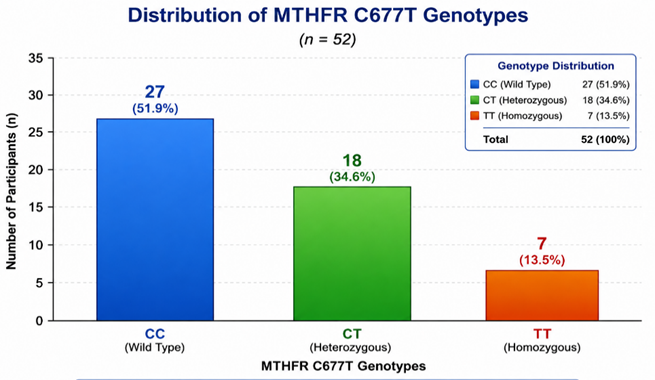
Figure 1. Distribution of MTHFR C677T genotypes among young ischemic stroke patients.
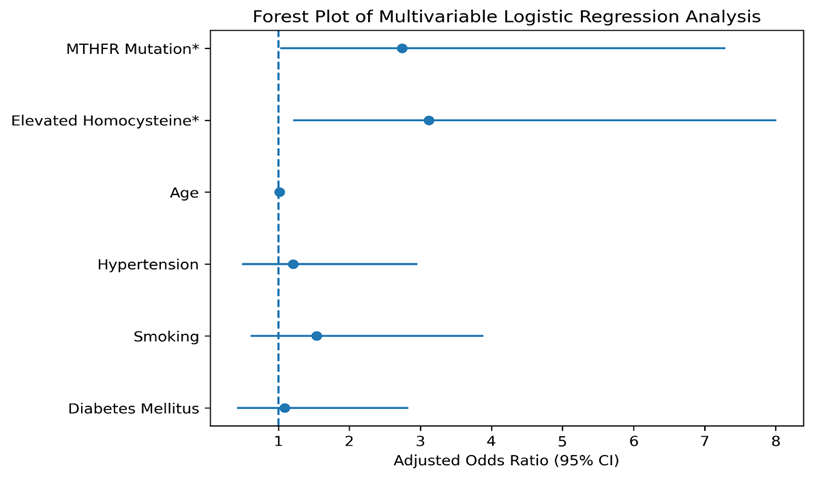
Figure 2. Forest plot of multivariable logistic regression analysis showing independent predictors associated with MTHFR mutation/stroke subtype among young ischemic stroke patients.
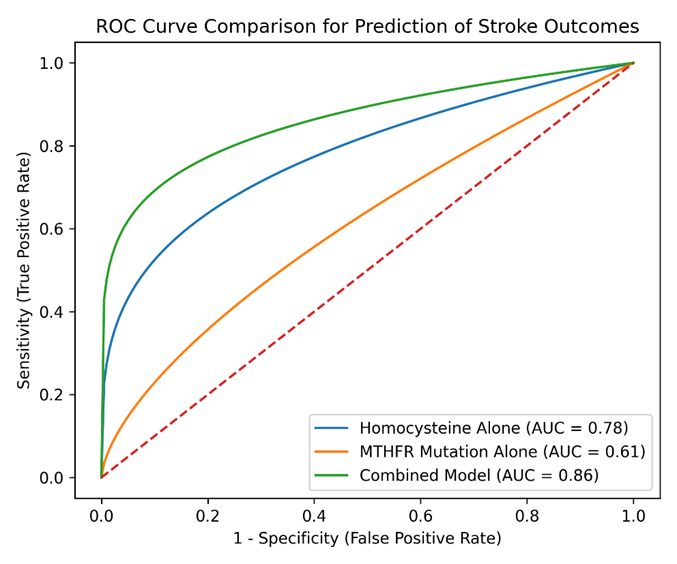
Figure 3. ROC curve comparison of homocysteine alone, MTHFR C677T mutation alone, and the combined predictive model for stroke outcomes.
DISCUSSION:
This study evaluated the association of MTHFR C677T polymorphism and serum homocysteine levels with young ischemic stroke, with particular emphasis on arterial and venous stroke subtypes. The mean age of participants was 34.8 ± 5.6 years, and males constituted 61.5% of the cohort, findings consistent with previous reports demonstrating a higher burden of stroke among young adult males.[25,26]
Traditional vascular risk factors remained common despite the young age of the study population. Hypertension (40.4%), dyslipidemia (34.6%), diabetes mellitus (30.8%), and smoking (32.7%) were frequently observed, highlighting the growing contribution of metabolic risk factors to early-onset cerebrovascular disease.[27,28] Nevertheless, 17.3% of patients had no identifiable comorbidity, suggesting the potential involvement of genetic and thrombophilic mechanisms.[29]
More than half of the participants exhibited elevated homocysteine levels, with a mean concentration of 18.6 ± 7.4 µmol/L. Hyperhomocysteinemia is known to promote endothelial dysfunction, oxidative stress, inflammation, and activation of coagulation pathways, thereby increasing the risk of both arterial and venous thrombosis.[13-15,30] ROC analysis demonstrated good discriminatory ability of homocysteine for predicting MTHFR mutation status (AUC = 0.78), supporting its potential role as a clinically useful biomarker in young stroke patients.
The distribution of MTHFR C677T genotypes revealed that 51.9% of patients had the wild-type genotype (CC), while 34.6% and 13.5% had heterozygous (CT) and homozygous mutant (TT) genotypes, respectively. A key finding of this study was the significant association between MTHFR mutation and venous stroke. Mutation positivity was significantly more common among patients with venous stroke than arterial stroke (62.5% vs. 22.2%; OR = 2.96, 95% CI: 1.11–7.92; p = 0.028). This finding is consistent with previous studies demonstrating an increased risk of venous thrombosis among carriers of MTHFR polymorphisms, particularly in the presence of hyperhomocysteinemia.[21-24,31]
Multivariable analysis further demonstrated that elevated homocysteine levels (aOR = 3.46, p = 0.017) and MTHFR mutation (aOR = 2.88, p = 0.036) were independent predictors of venous stroke. In contrast, arterial stroke was more strongly associated with advancing age and hypertension, suggesting that conventional vascular risk factors play a greater role in arterial cerebrovascular events.[27,32] These findings support the biological pathway whereby MTHFR mutation contributes to impaired folate metabolism, elevated homocysteine levels, endothelial injury, and increased thrombotic tendency.[8,13]
The combined predictive model incorporating both homocysteine and MTHFR mutation status demonstrated superior diagnostic performance (AUC = 0.86) compared with homocysteine alone (AUC = 0.78) or MTHFR mutation alone (AUC = 0.61). This finding supports previous evidence that combining genetic and biochemical markers improves risk prediction compared with individual biomarkers alone.[33]
This study has several limitations. The small sample size and single-center design may limit generalizability. Other thrombophilic factors, including Protein C deficiency, Protein S deficiency, Factor V Leiden mutation, and antiphospholipid antibodies, were not assessed. Serum folate and vitamin B12 levels were also not evaluated. Furthermore, the cross-sectional design precludes causal inference, and the absence of long-term follow-up prevents assessment of recurrence and prognosis. Larger multicenter prospective studies are required to validate these findings and clarify the role of MTHFR polymorphism in young ischemic stroke.
Overall, the present study suggests that MTHFR C677T polymorphism contributes significantly to the pathogenesis of young ischemic stroke, particularly venous stroke, through homocysteine-mediated prothrombotic mechanisms. These findings underscore the importance of considering genetic and metabolic factors alongside traditional vascular risk factors in the evaluation of young adults presenting with stroke.
CONCLUSION:
The present study demonstrates a significant association between MTHFR C677T polymorphism, elevated serum homocysteine levels, and young ischemic stroke, with a stronger relationship observed in venous stroke than arterial stroke. Elevated homocysteine and MTHFR mutation emerged as independent predictors of venous stroke, suggesting an important role of genetic predisposition and metabolic dysregulation in thrombotic cerebrovascular disease. Furthermore, a combined model incorporating MTHFR mutation and homocysteine levels provided superior predictive accuracy compared with either marker alone. These findings support the integration of genetic and biochemical assessment in the evaluation and risk stratification of young stroke patients.
REFERENCES:
1. Feigin VL, Norrving B, Mensah GA. Global burden of stroke. Circ Res. 2017;120(3):439-48.
2. Johnson CO, Nguyen M, Roth GA, Nichols E, Alam T, Abate D, et al. Global, regional, and national burden of stroke, 1990–2016: a systematic analysis. Lancet Neurol. 2019;18(5):439-58.
3. Kissela BM, Khoury JC, Alwell K, Moomaw CJ, Woo D, Adeoye O, et al. Age at stroke: temporal trends in stroke incidence in a large population. Neurology. 2012;79(17):1781-7.
4. George MG, Tong X, Bowman BA. Prevalence of cardiovascular risk factors and strokes in younger adults. JAMA Neurol. 2017;74(6):695-703.
5. Putaala J. Ischemic stroke in the young: current perspectives on incidence, risk factors, and cardiovascular prognosis. Eur Stroke J. 2016;1(1):28-40.
6. Maaijwee NA, Rutten-Jacobs LC, Schaapsmeerders P, van Dijk EJ, de Leeuw FE. Ischemic stroke in young adults: risk factors and long-term consequences. Nat Rev Neurol. 2014;10(6):315-25.
7. Smajlović D. Strokes in young adults: epidemiology and prevention. Vasc Health Risk Manag. 2015;11:157-64.
8. Frosst P, Blom HJ, Milos R, Goyette P, Sheppard CA, Matthews RG, et al. A candidate genetic risk factor for vascular disease: a common mutation in methylenetetrahydrofolate reductase. Nat Genet. 1995;10(1):111-3.
9. Goyette P, Sumner JS, Milos R, Duncan AM, Rosenblatt DS, Matthews RG, et al. Human methylenetetrahydrofolate reductase: isolation and characterization of cDNA. Nat Genet. 1994;7(2):195-200.
10. Botto LD, Yang Q. 5,10-Methylenetetrahydrofolate reductase gene variants and congenital anomalies. Am J Epidemiol. 2000;151(9):862-77.
11. van der Put NM, Gabreëls F, Stevens EM, Smeitink JA, Trijbels FJ, Eskes TK, et al. A second common mutation in the MTHFR gene: A1298C polymorphism. Am J Hum Genet. 1998;62(5):1044-51.
12. Weisberg I, Tran P, Christensen B, Sibani S, Rozen R. A second genetic polymorphism in MTHFR and its association with decreased enzyme activity. Mol Genet Metab. 1998;64(3):169-72.
13. Wald DS, Law M, Morris JK. Homocysteine and cardiovascular disease: evidence on causality. BMJ. 2002;325(7374):1202.
14. Boushey CJ, Beresford SA, Omenn GS, Motulsky AG. A quantitative assessment of plasma homocysteine as a risk factor for vascular disease. JAMA. 1995;274(13):1049-57.
15. Welch GN, Loscalzo J. Homocysteine and atherothrombosis. N Engl J Med. 1998;338(15):1042-50.
16. Cronin S, Furie KL, Kelly PJ. Dose-related association of MTHFR 677T allele with risk of ischemic stroke. Stroke. 2005;36(8):1581-7.
17. Casas JP, Bautista LE, Smeeth L, Sharma P, Hingorani AD. Homocysteine and stroke: evidence on a causal link from Mendelian randomisation. Lancet. 2005;365(9455):224-32.
18. Li Z, Sun L, Zhang H, Liao Y, Wang D, Zhao B, et al. Elevated plasma homocysteine and MTHFR polymorphism in ischemic stroke. Neurology. 2003;61(5):673-8.
19. Kelly PJ, Rosand J, Kistler JP, Shih VE, Silveira S, Plomaritoglou A, et al. Homocysteine, MTHFR genotype, and risk of ischemic stroke. Neurology. 2002;59(4):529-36.
20. Song Y, Cook NR, Albert CM, Van Denburgh M, Manson JE. MTHFR genotype and risk of cardiovascular disease: meta-analysis. JAMA. 2005;293(6):749-62.
21. den Heijer M, Koster T, Blom HJ, Bos GM, Briët E, Reitsma PH, et al. Hyperhomocysteinemia as a risk factor for deep-vein thrombosis. N Engl J Med. 1996;334(12):759-62.
22. Martinelli I, Battaglioli T, Pedotti P, Cattaneo M, Mannucci PM. Hyperhomocysteinemia and cerebral vein thrombosis. Blood. 2003;102(4):1363-6.
23. Cantu C, Alonso E, Jara A, Martínez L, Ríos C, Fernández Mde L, et al. Hyperhomocysteinemia, low folate and cerebral venous thrombosis. Stroke. 2004;35(8):1790-4.
24. Ferro JM, Canhão P, Stam J, Bousser MG, Barinagarrementeria F. Prognosis of cerebral vein and dural sinus thrombosis. Stroke. 2004;35(3):664-70.
25. Adams HP Jr, Kappelle LJ, Biller J, Gordon DL, Love BB, Gomez F, et al. Ischemic stroke in young adults. Arch Neurol. 1995;52(5):491-5.
26. Nedeltchev K, der Maur TA, Georgiadis D, Arnold M, Caso V, Mattle HP, et al. Ischaemic stroke in young adults: predictors of outcome. J Neurol Neurosurg Psychiatry. 2005;76(2):191-5.
27. Kittner SJ, Stern BJ, Feeser BR, Hebel JR, Nagey DA, Buchholz DW, et al. Pregnancy and risk factors for stroke in young women. Stroke. 1996;27(3):442-6.
28. Amarenco P, Labreuche J, Touboul PJ. High-density lipoprotein cholesterol and risk of stroke. Stroke. 2008;39(12):3191-7.
29. Putaala J, Yesilot N, Waje-Andreassen U, Pitkäniemi J, Vassilopoulou S, Nardi K, et al. Demographic and geographic vascular risk factor differences in European young adults with ischemic stroke. Stroke. 2012;43(10):2624-30.
30. Humphrey LL, Fu R, Rogers K, Freeman M, Helfand M. Homocysteine level and cardiovascular disease: systematic review and meta-analysis. Mayo Clin Proc. 2008;83(11):1203-12.
31. Bezemer ID, Doggen CJ, Vos HL, Rosendaal FR. No association between MTHFR C677T and venous thrombosis. Arch Intern Med. 2007;167(5):497-501.
32. O'Donnell MJ, Xavier D, Liu L, Zhang H, Chin SL, Rao-Melacini P, et al. Risk factors for ischemic and intracerebral hemorrhagic stroke in 22 countries (INTERSTROKE study). Lancet. 2010;376(9735):112-23.
33. Ridker PM, Buring JE, Rifai N, Cook NR. Development and validation of improved algorithms for cardiovascular risk prediction using biomarkers. JAMA. 2007;297(6):611-9.