DETERMINANTS AFFECTING IMMUNIZATION STATUS UP TO 18 YEARS OF AGE.
- Shukdev chaturvedi , Resident, Department of Paediatric, J.L.N. Medical College and Hospital Ajmer.
- Kanwar Singh , Professor, Department of Paediatric, J.L.N. Medical College and Hospital Ajmer.
- Chandraprakash Dhaker , Resident, Department of Paediatric, J.L.N. Medical College and Hospital Ajmer.
Article Information:
Abstract:
INTRODUCTION: Vaccines are biological agents that, when introduced into the body, trigger the immune system to develop protective immune responses by producing antibodies against the disease-causing organisms, effectively and safely. AIM: To determine the prevalence of non-immunization, and assessing the factors influencing delayed and non-immunization among children aged up to 18 years. METHODOLOGY: This prospective observational hospital-based cross-sectional study was conducted under the Department of Paediatrics at Jawaharlal Nehru Medical College, Ajmer, Rajasthan, after obtaining approval from the Institutional Ethical Committee. RESULT: The present study showed that 80.67% of children were fully immunized, while lack of awareness, child illness, poor communication, low socioeconomic status, home delivery, and parental illiteracy were major factors associated with non- or incomplete immunization. Maternal and paternal education showed a significant positive association with complete immunization status among children. CONCLUSION: this study emphasizes that improving immunization coverage requires a multi-faceted approach—combining awareness generation, service delivery improvements, and focused attention on vulnerable groups such as migrant families and those with low socioeconomic status.
Keywords:
Article :
INTRODUCTION:
Vaccines are biological agents that, when introduced into the body, trigger the immune system to develop protective immune responses by producing antibodies against the disease-causing organisms, effectively and safely.1 Vaccines help the body build a defense against infections by imitating a disease-causing organism without actually causing illness. Once administered, the immune system reacts by generating antibodies—specialized proteins that identify and block the harmful agent2.The concept of vaccination has been known since ancient times, even before the start of the era of modern science. One such known early method, known as variolation.
This technique involved the introduction of material from dried scabs or pus of a person with mild cases of smallpox to healthy individuals intentionally to elicit a controlled infection, which in turn offered protection against severe illness3. A major turning point came in 1796 with Edward Jenner, an English doctor who paved the groundwork for contemporary vaccines. His successful experiment marked the development of the world’s first vaccine. Vaccination minimizes healthcare costs, reduces suffering, and helps prevent productive years of life lost associated with illness-related work absences. With continuous advancements in technology, vaccines are now able to prevent a number of life-threatening diseases/conditions, which are major causes of childhood mortality. India’s journey in immunization has evolved through decades of progressive public health efforts4. In 1977, the nation was declared free of smallpox, a major milestone in disease eradication. The following year, 1978, marked the launch of the Expanded Program on Immunization (EPI), initially offering vaccines such as BCG, DPT, OPV, and Typhoid, primarily targeting urban populations.
A child is considered fully immunized when they have received all vaccines listed in theNational Immunization Schedule, in the appropriate dosages, before reaching one year of age5. A child is regarded as completely immunized when they have received all scheduled vaccines recommended for both the first and second years of life.6 This includes one dose each of BCG, MR, and Japanese Encephalitis (JE) vaccines*, three doses of OPV, Pentavalent, Rotavirus, and Pneumococcal Conjugate Vaccine (PCV), and two doses of IPV in the first year. In the second year, the complete immunization also covers a second dose of MR and JE vaccines*, along with booster doses of OPV and DPT. The National Family Health Survey 5 (2019–21), or NFHS-5, revealed that only 76.4% of children across India are fully immunized. Though the coverage has increased from NFHS-4 to NFHS-5, there existed a substantial difference at subnational level, with Tamil Nadu reporting the highest coverage at 89.2%, while Nagaland records the lowest at just 57.9%.
To address such gaps, the Ministry of Health introduced Mission1 Indradhanush in 2014 to improve vaccine access among underserved, remote, and hesitant populations. Despite these efforts, the first two phases of the initiative led to only a modest improvement—an overall increase of 6.7% in full immunization, with rural areas witnessing a 7.9% rise and urban areas just 3.1%. Under-vaccination is influenced by a combination of factors.Beyond overall coverage, the timeliness of vaccine administration is a key metric for assessing the effectiveness of immunization efforts.7 Delays in vaccination can leave children exposed to preventable illnesses and weaken overall community immunity by compromising the herd immunity.
Multiple interdependent factors contribute to delays or gaps in childhood vaccination, which are (but not limited to) systemic issues within immunization services,sociodemographic characteristics, and parental awareness, attitudes, and beliefs about vaccines. Looking at the disparity and multitude of determinants of immunization coverage, it will be imperative to explore the basket of determinants of immunization coverage by increasing the age group to 18 years, keeping in mind delayed immunization.8 This study will give us an in-depth insight into various factors affecting immunization status up to the age of 18 years
AIM
To determine the prevalence of non-immunization, and assessing the factors influencing delayed and non-immunization among children aged up to 18 years.
METHODOLOGY :
This prospective observational hospital-based cross-sectional study was conducted under the Department of Paediatrics at Jawaharlal Nehru Medical College, Ajmer, Rajasthan, after obtaining approval from the Institutional Ethical Committee.
The study was planned to determine the prevalence of non-immunization and delayed immunization and to assess the factors influencing delayed and non-immunization among children aged 1–18 years. Data collection was carried out over a period of 12 months from October 2023 to September 2024, followed by 6 months allocated for data analysis. The study population included children aged 1–18 years who attended the outpatient department or were admitted to the paediatric wards.
A purposive sampling technique was used, and 150 consecutive children fulfilling the inclusion criteria were enrolled in the study. Children aged between 1–18 years whose parents provided written informed consent were included. Critically ill children and those whose parents did not provide consent were excluded from the study.
RESULTS:
Table 1: Immunization status of child
|
Availability of immunization card |
Available |
137 |
91.33 |
|
Not available |
13 |
8.67 |
|
|
Immunization status |
Fully Immunized |
121 |
80.67 |
|
Partially immunized |
7 |
4.67 |
|
|
Unimmunized |
22 |
14.67 |
|
|
Place of immunization |
Government |
128 |
85.33 |
|
Private |
5 |
3.33 |
|
|
Both |
12 |
8.00 |
|
|
Information not available |
5 |
3.33 |
In this study, 91.33% of children had an immunization card available, indicating good documentation practices, while 8.67% lacked proper records. 80.67% of children were fully immunized. However, 14.67% were unimmunized, and 4.67% were partially immunized. immunization was mainly conducted at government health facilities (85.33%). A small number of children were vaccinated in private setups (3.33%) and both (8%).
Table 2: Association of Immunization status with Baseline characteristics of study population
|
|
|
Unimmunised/Incomplete immunised |
Fully immunised |
Total |
P value |
|
Sex |
Male |
21(20.6) |
81(79.4) |
102(100) |
0.730 |
|
|
Female |
8(16.7) |
40(83.3) |
48 (100) |
|
|
Place of Birth |
Institutional |
24(18.1) |
109(81.9) |
133(100 ) |
0.429 |
|
Home |
5(29.4) |
12(70.6) |
17(100) |
||
|
Socioeconomic status of family |
APL |
8(13.6) |
51(86.4) |
59(100) |
0.219 |
|
BPL |
21(23.1) |
70(76.9) |
91(100) |
||
|
Birth order of children |
Less or equal to 2 |
24(19.5) |
99(80.5) |
123(100) |
0.721 |
|
>2 |
5(18.5) |
22(81.5) |
27(100) |
In this study, unimmunized or incompletely immunized children were slightly more among males (20.6%) than females (16.7%). children born at home had a higher rate of unimmunization or incomplete immunization (29.4%) compared to those born in institutional settings (18.1%). BPL families showed a higher rate of unimmunization or incomplete immunization (23.1%) than those from APL families (13.6%). This association was not statistically significant (p = 0.219). unimmunization or incomplete immunization was slightly higher in children with birth order ≤2 (19.5%) than those with higher birth order (>2; 18.5%). However, these associations were not statistically significant.
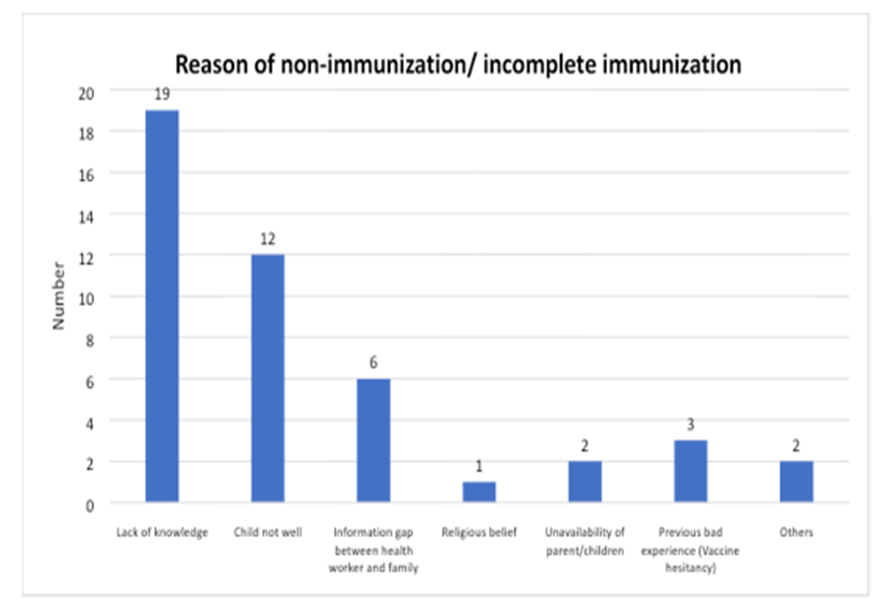
Figure 1:Reason of non-immunization/ incomplete immunization
In the current study, the most common reason for non-immunization was lack of knowledge (65.52%), followed by child illness (41.38%), poor communication with health workers (20.69%), and vaccine hesitancy (10.34%).
Table 3: Association of immunization status with various family parameters
|
|
|
Unimmunised/Incomplete immunised |
Fully immunised |
Total |
P value |
|
Mother's education |
Illiterate |
10(26.3) |
28(73.7) |
38(100) |
0.027 |
|
Primary/Secondar y |
17(18.3) |
76(81.7) |
93(100) |
||
|
Graduate and above |
2(10.5) |
17(89.5) |
19(100) |
||
|
Father's education
|
Illiterate |
8(29.6) |
19(70.4) |
27(100) |
0.050 |
|
Primary/Secondary |
19(19.8) |
77(80.2) |
96(100) |
||
|
Graduate and above |
2(7.4) |
25(92.6) |
27(100) |
||
|
Father's employment
|
Labour |
26(22.4) |
90(77.6) |
116(100) |
0.010 |
|
Skilled Job |
1(4.2) |
23(95.8) |
24(100) |
||
|
Not working |
2(20) |
8(80) |
10(100) |
||
|
Migration status of family
|
Yes |
10(58.8) |
7(41.2) |
17(100) |
< 0.001 |
|
No |
19(14.3) |
114(85.7) |
133(100) |
In the present study, children of illiterate mothers had the highest rate of unimmunization or incomplete immunization (26.3%) compared to those whose mothers had primary/secondary education (18.3%) or were graduates and above (10.5%).. The highest rate of unimmunization or incomplete immunization was observed among children of illiterate fathers (29.6%) compared to 19.8% in those with primary/secondary education and 7.4% in graduates. Unimmunization or incomplete immunization was most prevalent among children of laborers (22.4%), followed by those of unemployed fathers (20%) and was least in those whose fathers had skilled jobs (4.2%). children from migrant families had a significantly higher rate of unimmunization or incomplete immunization (58.8%) compared to non-migrant families (14.3%). These associations were statistically significant.
DISCUSSION:
In the present study, it was observed that 80.67% of children aged up to 18 years were fully immunized, while 14.67% were found to be completely unimmunized, and 4.67% were partially immunized. These findings suggest a relatively high level of immunization coverage, especially when compared to previous studies from various regions of India. Gupta P et al9 reported that 74.7% of children were fully immunized, 11.1% partially immunized, and 14.1% were not immunized at all.
In the present study, among the children who were either not immunized or only partially immunized, the most commonly reported reason was lack of knowledge about immunization, accounting for 65.52% of cases. This indicates a significant gap in awareness and health education among caregivers, highlighting the need for more targeted information and communication strategies, particularly in underserved areas.The second most common reason was that the child was unwell at the time of vaccination (41.38%), a concern that is frequently reported by caregivers who tend to postpone or skip vaccination visits during episodes of illness.
Poor communication between health workers and the family was reported by 20.69% of respondents. This suggests that even when health services are available, the absence of effective communication, follow-up, and interpersonal trust between the health system and the community can hinder vaccine uptake.Other reasons included previous bad experiences with vaccines (10.34%), unavailability of the parent or child at the time of vaccination (6.9%), religious beliefs (3.45%), and various miscellaneous factors, showing that personal, cultural, and systemic issues all play a role in immunization delays.
Similar findings have been reported in various other studies. For instance,Anitha SS et al10 found that religious beliefs (70.4%) were the most frequently cited reason for vaccine refusal, followed by personal engagements (14.8%), fear of fever post-vaccination (11.1%), and child being sick on the scheduled day (3.7%).
The findings from our study and the comparative literature highlight that lack of awareness, child illness, poor communication, cultural beliefs, fear of side effects, and logistical issues are the most common reasons for non- or under-immunization. Therefore, a multifaceted approach involving community engagement, health education, counselling by frontline workers, service flexibility, and reliable vaccine supply is essential to address these challenges and achieve higher immunization coverage.
In the present study, it was observed that unimmunized or incompletely immunized children were slightly more common among males (20.6%) as compared to females (16.7%).
Regarding the place of delivery, our study found that children born at home had a higher rate of non- or incomplete immunization (29.4%) compared to those born in healthcare institutions (18.1%).Maina et al11 also demonstrated that children delivered in health facilities were 2.26 times more likely to be fully immunized than those delivered at home, either by themselves or with the help of traditional birth attendants.
In the present study, children belonging to Below Poverty Line (BPL) households had a higher rate of non- or incomplete immunization (23.1%) compared to children from Above Poverty Line (APL) families (13.6%). Although this difference was not statistically significant, the trend suggests that socioeconomic status plays an important role in determining immunization coverage. Sood N et al12 observed that children from higher socioeconomic classes and literate families were more likely to be fully immunized compared to those from lower socioeconomic and illiterate backgrounds.
In the present study, a statistically significant association was found between maternal education and child immunization status. Children of illiterate mothers had the highest rate of non- or incomplete immunization (26.3%), and this rate decreased progressively with higher levels of maternal education.
Educated mothers are more likely to be aware of the immunization schedule, understand the benefits of vaccines, and respond to counselling provided during antenatal and postnatal care. Awasthi A et al13 observed that mothers with secondary or higher education had significantly higher odds (OR = 1.59, 95% CI: 1.30–2.88, p = 0.02) of fully immunizing their children.
The influence of father’s education was also evident in our study. A statistically significant association was found, with 29.6% of children of illiterate fathers being non- or incompletely immunized, compared to only 7.4% of children of graduate fathers. This aligns with findings from Ratta AK et al,14 who reported that maternal education (p = 0.0001) and paternal education were both important determinants of child immunization .
Beyond education, occupation of parents also influenced immunization status.
CONCLUSION:
We found that while a significant majority (80.67%) of children were fully immunized, a concerning proportion remained either partially immunized (4.67%) or completely unimmunized (14.67%). The findings highlight that immunization coverage, although improved, is still below the national target of 90%, indicating persistent gaps in reaching every child.
Several factors were identified as important determinants of immunization status. Parental education—especially the mother's—and the father's employment status showed a significant impact, with children of educated parents and those in skilled occupations more likely to be fully immunized. Additionally, children from migrant families had significantly lower immunization rates, suggesting that mobility and displacement disrupt access to regular health services.
The most commonly reported reason for missed or delayed vaccinations was lack of knowledge about the importance and timing of immunization. Other barriers included illness at the time of scheduled vaccination, poor communication with health workers, and vaccine hesitancy due to past negative experiences or cultural beliefs.
These findings underscore the importance of addressing both demand-side and supply-side barriers to improve immunization coverage. On the other hand, health systems must strengthen outreach, follow-up, and communication strategies to ensure timely vaccination and reduce missed opportunities.
REFERENCES:
1. Ministry of Health and Family Welfare, Government of India. Routine Immunization Manual for Health Workers [Internet]. New Delhi: MoHFW; [cited 2025 Jun 6]. Available from: https://nccmis.mohfw. gov.in/ document /RI_Manual_For_Health_Workers.pdf
2. Ministry of Health and Family Welfare, Government of India. Immunization Handbook for Health Workers [Internet]. New Delhi: MoHFW; [cited 2025 Jun 6]. Available from: https://nhm.gov.in/New_ Updates_2018/NHM_ Components/ Immunization/Guildelines_for_immunization/Immunization_Handbook_for_Heal th_Workers-English.pdf
3. Prudêncio M. About Vaccines and Vaccination [Internet]. Lisbon: Miguel Prudêncio; [cited 2025 Jun 6]. Available from: https://miguelprudencio. com/vaccines/
4. Ministry of Health and Family Welfare, Government of India. Universal Immunization Programme [Internet]. New Delhi: MoHFW; [cited 2025 Jun 6]. Available from: https://mohfw.gov.in/sites/default/files/Universal.pdf
5. Dhalaria P, Soni GK, Singh AK, Kumari A, Rastogi A, Agarwal A, et al. Vaccines on time: Exploring determinants of delaying child vaccination in states of India. Clin Epidemiol Glob Health. 2022;14:100996. doi:10.1016/j.cegh.2022.100996.
6. Gandhi K D, Bhorge M T, Dhabe H. Immunisation status of children up to 15 years of age. Pediatr Oncall J. 2022;19: 5-9. doi: 10.7199/ped.oncall.2022.12
7. Rainey JJ, Watkins M, Ryman TK, Sandhu P, Bo A, Banerjee K. Reasons related to non-vaccination and under-vaccination of children in low and middle income countries: Findings from a systematic review of the published literature, 1999– 2009. Vaccine. 2011 Nov 21;29(46):8215–21. doi:10.1016/j.vaccine.2011.08.096
8. De P, Bhattacharya BN. Determinants of child immunization in fourlessdeveloped states of North India. Journal of Child Health Care. 2002 Mar;6(1):3450.
9. Gupta P, Prakash D, Srivastava JP. Determinants of immunization coverage in Lucknow district. North Am J Med Sci 2015;7:36-40.
10. Anitha S. S, A.K Jayasree, &Antherjanam S., D. Immunization coverage among anganwadi preschool children in Kannur, Kerala, India. International Journal Of Community Medicine And Public Health. 2017; 4(6), 2042–2045.
11. Maina LC, Karanja S, Kombich J. Immunization coverage and its determinants among children aged 12-23 months in a peri-urban area of Kenya. Pan Afr Med J. 2013;14:3.
12. Sood N, Sood A. Study of immunization status of children less than 5 years of age in a tertiary health care institution of Amritsar: A hospital based study. Int J Clin ObstetGynaecol. 2021;5(2):62–65.
13. Awasthi A, Pandey CM, Singh U, Kumar S, Singh TB. Maternal determinants of immunization status of children aged 12–23 months in urban slums of Varanasi, India. Clin Epidemiol Glob Health. 2015;3(3):110–116.
14. Ratta AK, Meshram PD. Study of determinants of immunization status among under-five children attending OPD in a rural health center of the tertiary health care institute. J Family Med Prim Care 2020;9:2724-9.