Clinicoepidemiological Profile and Predictors of Severity in Pediatric Superficial Skin Infections: A Prospective Observational Study in Western Odisha
- Subodha Kumar Patjoshi , Associate professor, Department of Dermatology, VIMSAR, Burla, Odisha
- Madhuchhanda Mohapatra , Associate Professor, Department of Dermatology, IMS & SUM Hospital, Campus 2, Phulnakhara, Bhubaneswar
- Swayangprava Pradhan. , Associate Professor, Department Of Paediatrics, Govt. Medical College And Hospital, Phulbani, Kandhamal, Odisha.
Article Information:
Abstract:
Background: Superficial skin infections and infestations (SSIs) represent a major source of pediatric morbidity in developing countries. Tropical and humid climates, combined with socioeconomic and behavioral factors, accelerate transmission. This study aimed to evaluate the clinicoepidemiological spectrum of pediatric SSIs and identify objective predictors of moderate-to-severe disease presentation in the Western Odisha region. Methods:A prospective, cross-sectional observational study was conducted over a 12-month period at a tertiary care teaching hospital in Burla in Sambalpur, Odisha. We enrolled 250 children aged 0–14 years presenting with active, superficial skin infections or infestations. Comprehensive demographic, environmental, and clinical assessments were documented. Standardized hygiene scores (scale 1–10) and crowding indices were calculated. Infections were categorized as mild or moderate-to-severe based on lesion extent, anatomical distribution, and systemic signs. Pearson correlation and multivariable logistic regression analyses were used to identify independent predictors of disease severity. Results: Of the 250 enrolled pediatric patients, the mean age was 5.8 +/- 3.4 years, and 142 (56.8%) were boys. Bacterial infections (pyodermas) were the most common clinical category (98 cases, 39.2%), with impetigo presenting as the primary etiology (n = 58). This was followed by parasitic infestations presenting with secondary infections (76 cases, 30.4%, predominantly scabies, n = 52), superficial fungal dermatophytoses (48 cases, 19.2%), and viral dermatoses (28 cases, 11.2%). Moderate-to-severe clinical presentations were identified in 105 (42.0%) children. Patients with moderate-to-severe SSIs had a significantly lower mean hygiene score (3.8 +/- 1.2 vs. 7.2 +/- 1.5; p < 0.001) and a higher mean crowding index (3.4 +/- 1.1 vs. 1.8 +/- 0.6 persons/room; p < 0.001). A strong negative correlation was found between the hygiene score and the total number of active skin lesions (r = -0.58; p < 0.001). Multivariable logistic regression identified poor hygiene (adjusted OR: 4.12; 95% CI: 2.04–8.32; p < 0.001), high household crowding (adjusted OR: 3.84; 95% CI: 1.85–7.96; p < 0.001), low socioeconomic status (adjusted OR: 2.48; 95% CI: 1.21–5.09; p = 0.012), and underweight status (adjusted OR: 2.15; 95% CI: 1.05–4.40; p = 0.036) as independent predictors of moderate-to-severe presentation.Conclusion:Superficial skin infections in Western Odisha are highly prevalent, with pyodermas and scabies constituting the primary clinical burden. Environmental crowding, poor personal hygiene, low socioeconomic standing, and underlying malnutrition are strongly associated with higher lesion counts and severe clinical presentation. Public health strategies targeting school-based hygiene education, nutritional support, and localized deparasitization programs are critical to reducing this pediatric disease burden.
Keywords:
Article :
INTRODUCTION:
Pediatric dermatoses constitute a substantial portion of healthcare visits worldwide, accounting for approximately 20% to 30% of all outpatient consultations in both pediatric and general dermatological clinics (1, 2). In developing countries, and particularly within tropical and subtropical regions, infectious skin diseases represent the most dominant clinical category, posing a persistent public health challenge (3). Superficial skin infections and infestations (SSIs)—encompassing bacterial pyodermas, fungal dermatophytoses, viral skin lesions, and ectoparasitic infestations such as scabies and pediculosis capitis—remain highly prevalent among children (4). While these conditions are rarely associated with acute mortality, they represent a significant source of physical morbidity, causing sleep deprivation, secondary bacterial complications, school absenteeism, and considerable psychological distress for both the affected children and their caregivers (5).
The epidemiological landscape of pediatric skin infections in India is highly heterogeneous, shaped by regional climates, socioeconomic indicators, cultural practices, and local healthcare infrastructure (6). In the state of Odisha, and specifically the Western coastal and tribal belt surrounding Burla in Sambalpur, the combination of high relative humidity, elevated seasonal temperatures, dense agrarian settlements, and localized water scarcity fosters an environment highly conducive to the proliferation and transmission of cutaneous pathogens (7). Furthermore, public healthcare facilities in Western Odisha, such as the Maharaja Krishna Chandra Gajapati (M.K.C.G.) Medical College, cater to a diverse patient demographic, including rural, semi-urban, and tribal families who frequently face barriers related to late clinical presentation, financial constraints, and limited access to clean water and sanitation (2).
The pathogenesis of superficial skin infections in children is heavily influenced by a combination of host and environmental factors (8). Unlike adult skin, pediatric skin exhibits structural and physiological differences, including a thinner stratum corneum, neutral skin pH in early infancy, and an immature cutaneous immune response, which make children highly susceptible to microbial colonization and epidermal barrier disruption (9). Environmental factors, such as household overcrowding, close physical contact in schools or daycare centers, and low parental literacy, facilitate the rapid propagation of contagious dermatoses like impetigo and scabies (10). Furthermore, poor personal hygiene—characterized by infrequent bathing, inadequate handwashing, and poorly trimmed fingernails—increases the risk of mechanical excoriations, introducing superficial pathogens like Staphylococcus aureus and Streptococcus pyogenes into the epidermal layer (11).
In many resource-limited settings, superficial infections are often managed with self-treatment using household remedies, over-the-counter topical corticosteroids, or sub-therapeutic antibiotic regimens, which frequently mask clinical features and contribute to the emergence of drug-resistant pathogens (12). Despite the extensive burden of pediatric skin infections, there is a paucity of prospective, systematic clinical studies in Western Odisha that examine both the microbiological distribution of SSIs and their behavioral and socioeconomic determinants using standardized objective scoring metrics. Understanding these local factors is crucial for formulating effective clinical protocols, allocating diagnostic resources, and implementing targeted community preventive measures.
Therefore, this prospective, cross-sectional observational study was designed to evaluate the clinicoepidemiological spectrum of superficial skin infections in a cohort of 250 children presenting to our tertiary care center in Western Odisha. We aimed to characterize the distribution of bacterial, fungal, viral, and parasitic dermatoses and to identify key clinical, environmental, and behavioral predictors associated with advanced disease severity.
MATERIALS AND METHODS:
Study Design and Setting
This prospective, cross-sectional observational study was conducted in the outpatient departments of Pediatrics and Dermatology, Venereology, and Leprosy at M.K.C.G. Medical College and Hospital, Burla in Sambalpur, Odisha, India. The study spanned a 12-month period from March 2025 to February 2026. The study was approved by the Institutional Ethics Committee (IEC), and written informed consent was obtained from the parents or legal guardians of all participants, with verbal assent recorded for children aged 7 years and older.
Participant Selection
A total of 250 children were consecutively enrolled based on the following inclusion criteria: (i) age > 28 days to < 14 years; (ii) presentation with at least one active, clinically diagnosable superficial skin infection or infestation; and (iii) willingness of the guardian to participate and comply with the study requirements.
Exclusion criteria included: (i) children presenting with non-infectious dermatoses as their primary complaint (e.g., uncomplicated atopic dermatitis, psoriasis, genetic skin disorders, or birthmarks); (ii) children with systemic infectious illnesses lacking primary superficial skin involvement; (iii) patients who received systemic or topical antimicrobial therapy within 7 days prior to clinical presentation; and (iv) patients with severe immunodeficiency states, such as active malignancies, primary immunodeficiency disorders, or those undergoing systemic immunosuppressive therapy.
Demographic and Socioeconomic Assessment
A standardized clinical proforma was completed for each patient, documenting age, gender, geographic residence (rural vs. urban), maternal education, and household size. Socioeconomic status (SES) was determined using the modified Kuppuswamy socioeconomic scale, which incorporates education, occupation, and family income, updated for the study period. For analytical purposes, patients were categorized into three strata: Upper/Upper-Middle, Lower-Middle, and Upper-Lower/Lower class.
Nutritional status was evaluated by measuring weight and height or length using calibrated pediatric scales and stadiometers. Weight-for-Age and Body Mass Index (BMI)-for-Age Z-scores were calculated in accordance with the World Health Organization (WHO) child growth standards. Children with a Z-score < -2 Standard Deviations (SD) were classified as underweight.
Environmental and Behavioral Assessments
To evaluate the epidemiological drivers, two key parameters were measured:
Crowding Index
Calculated as the total number of persons living in the household divided by the number of habitable rooms (excluding kitchens, bathrooms, and corridors). A crowding index exceeding 3.0 persons per room was defined as high household crowding.
Hygiene Score
A standardized behavioral hygiene assessment tool was designed for this study, incorporating five key domains: daily bathing frequency, hand hygiene practices with soap, clean clothing changes, fingernail trimming status, and hair hygiene. Each domain was scored from 0 (poor) to 2 (optimal), resulting in a cumulative score ranging from 0 to 10. A score of < 4 was categorized as poor, 5–7 as moderate, and 8–10 as good personal hygiene.
Clinical Evaluation and Laboratory Testing
A comprehensive cutaneous examination was performed by a pediatrician and verified by a consulting dermatologist. Details regarding the anatomical site of involvement, lesion morphology, total number of active lesions, and presence of secondary changes (e.g., scaling, oozing, crusting, lichenification) were recorded. Superficial skin infections were classified into four main etiological categories:
1. Bacterial Infections (Pyodermas): Impetigo (bullous and non-bullous), folliculitis, and furunculosis.
2. Parasitic/Infestations (with secondary skin lesions): Scabies and pediculosis capitis, particularly when presenting with secondary pyodermas or extensive excoriations.
3. Fungal Infections: Dermatophytoses (tinea capitis, tinea corporis, tinea faciei, tinea cruris), cutaneous candidiasis, and pityriasis versicolor.
4. Viral Infections: Molluscum contagiosum and viral warts (verruca vulgaris).
Diagnostic confirmation was achieved using bedside and clinical laboratory testing where indicated. Potassium hydroxide (10% KOH) wet mount preparations were performed for suspected fungal infections. Gram staining and standard culture/sensitivity assays were utilized for purulent bacterial exudates. Ectoparasitic infestations were confirmed using dermoscopy or microscopic examination of skin scrapings to identify Sarcoptes scabiei mites, eggs, or scybala, and visual identification of Pediculus humanus capitis.
Severity Classification
To assess factors contributing to advanced clinical morbidity, patients were classified into two groups based on clinical severity:
· Mild Presentation: Localized skin involvement limited to a single anatomical zone, containing < 3 active lesions, with no secondary complications or systemic symptoms.
· Moderate-to-Severe Presentation: Extensive skin involvement involving > 2 distinct anatomical regions, a high density of lesions (> 3 active lesions), presence of localized complications (such as lymphadenitis, cellulitis, or severe secondary impetiginization), or systemic symptoms (fever, malaise, or irritability).
Statistical Analysis
Continuous variables were analyzed for normality using the Kolmogorov-Smirnov test. Normally distributed parameters were reported as Mean +/- SD, while non-normal data were expressed as medians and IQRs. Categorical parameters were presented as absolute values and percentages. Differences between the mild and moderate-to-severe cohorts were analyzed using the Student's t-test for continuous variables and the Chi-square or Fisher’s exact test for categorical variables.
Pearson’s correlation coefficient (r) was used to evaluate the linear relationships between the personal hygiene score, household crowding index, and the total number of active skin lesions. Univariate and multivariable logistic regression analyses were conducted to determine independent predictors of moderate-to-severe disease presentation. Variables showing a p-value < 0.10 in the univariate analysis were entered into the multivariable regression model using a backward stepwise selection method. Odds ratios (OR) and 95% confidence intervals (CI) were calculated. All statistical tests were two-tailed, and a p-value < 0.05 was considered statistically significant. Analysis was executed using SPSS software version 26.0 (IBM Corp., Armonk, NY, USA).
RESULTS:
Demographic and Clinical Characteristics
A total of 250 pediatric patients with superficial skin infections were enrolled. The study cohort had a mean age of 5.8 +/- 3.4 years, with boys comprising 56.8% (n = 142) and girls representing 43.2% (n = 108), yielding a boy-to-girl ratio of 1.31:1. The majority of the children resided in rural areas (n = 164, 65.6%). According to the modified Kuppuswamy socioeconomic classification, 148 patients (59.2%) belonged to the Upper-Lower/Lower class, 72 (28.8%) to the Lower-Middle class, and 30 (12.0%) to the Upper/Upper-Middle class. Nutritional assessment revealed that 88 children (35.2%) were underweight with a Weight-for-Age Z-score < -2 SD.
Bacterial infections (pyodermas) were the most common clinical category, identified in 98 cases (39.2%). Parasitic infestations with secondary infections were the second most common, comprising 76 cases (30.4%). Fungal infections were present in 48 cases (19.2%), and viral dermatoses were noted in 28 cases (11.2%). Table 1 provides a comprehensive cross-tabulation of these clinical categories against key demographic, socioeconomic, and environmental factors.
Table 1: Clinicoepidemiological Characteristics Cross-Tabulated by Etiological Categories of Superficial Skin Infections
|
Parameter |
Bacterial (n=98) |
Parasitic /Infestations (n=76) |
Fungal (n=48) |
Viral (n=28) |
Overall Cohort (N=250) |
|
Age Group, n (%) |
|||||
|
Infants (< 1 year) |
15 (15.3%) |
11 (14.5%) |
4 (8.3%) |
2 (7.1%) |
32 (12.8%) |
|
Toddlers (1–5 years) |
48 (49.0%) |
36 (47.4%) |
14 (29.2%) |
10 (35.7%) |
108 (43.2%) |
|
School-aged (6–14 years) |
35 (35.7%) |
29 (38.1%) |
30 (62.5%) |
16 (57.1%) |
110 (44.0%) |
|
Gender, n (%) |
|||||
|
Male |
58 (59.2%) |
42 (55.3%) |
28 (58.3%) |
14 (50.0%) |
142 (56.8%) |
|
Female |
40 (40.8%) |
34 (44.7%) |
20 (41.7%) |
14 (50.0%) |
108 (43.2%) |
|
Socioeconomic Status, n (%) |
|||||
|
Upper/Upper-Middle |
16 (16.3%) |
4 (5.3%) |
6 (12.5%) |
4 (14.3%) |
30 (12.0%) |
|
Lower-Middle |
34 (34.7%) |
16 (21.1%) |
14 (29.2%) |
8 (28.6%) |
72 (28.8%) |
|
Upper-Lower/Lower |
48 (49.0%) |
56 (73.7%) |
28 (58.3%) |
16 (57.1%) |
148 (59.2%) |
|
Geographic Residence, n (%) |
|||||
|
Rural |
62 (63.3%) |
56 (73.7%) |
32 (66.7%) |
14 (50.0%) |
164 (65.6%) |
|
Urban |
36 (36.7%) |
20 (26.3%) |
16 (33.3%) |
14 (50.0%) |
86 (34.4%) |
|
Nutritional Status, n (%) |
|||||
|
Normal (> -2 SD) |
66 (67.3%) |
44 (57.9%) |
32 (66.7%) |
20 (71.4%) |
162 (64.8%) |
|
Underweight (< -2 SD) |
32 (32.7%) |
32 (42.1%) |
16 (33.3%) |
8 (28.6%) |
88 (35.2%) |
|
Hygiene Score, Mean +/- SD |
6.2 +/- 1.8 |
4.4 +/- 1.5 |
5.8 +/- 1.6 |
6.8 +/- 1.4 |
5.6 +/- 1.9 |
|
Crowding Index, Mean +/- SD |
2.2 +/- 0.8 |
3.2 +/- 1.2 |
2.4 +/- 0.9 |
1.9 +/- 0.7 |
2.5 +/- 1.1 |
Analysis of Disease Severity and Clinical Complications
Moderate-to-severe disease presentations were identified in 105 cases (42.0%), whereas mild cases accounted for 145 (58.0%). To analyze clinical progression, outcomes and complication rates—such as secondary bacterial pyodermas, localized lymphadenitis, superficial cellulitis, and recurrent disease episodes—were stratified by socioeconomic, behavioral, and nutritional parameters as shown in Table 2.
Table 2: Clinical Severity, Complications, and Recurrence Rates Stratified by Socioeconomic, Behavioral, and Nutritional Factors
|
Parameter |
Mild Presentation (n=145) |
Moderate-to-Severe (n=105) |
Secondary Complications, n (%) |
Recurrence (within 3 months), n (%) |
p-value |
|
Socioeconomic Status |
|||||
|
Upper/Upper-Middle (n=30) |
22 (73.3%) |
8 (26.7%) |
2 (6.7%) |
3 (10.0%) |
0.008 |
|
Lower-Middle (n=72) |
48 (66.7%) |
24 (33.3%) |
6 (8.3%) |
10 (13.9%) |
|
|
Upper-Lower/Lower (n=148) |
75 (50.7%) |
73 (49.3%) |
34 (23.0%) |
42 (28.4%) |
|
|
Personal Hygiene Class |
|||||
|
Good (8–10) (n=55) |
46 (83.6%) |
9 (16.4%) |
1 (1.8%) |
4 (7.3%) |
< 0.001 |
|
Moderate (5–7) (n=105) |
72 (68.6%) |
33 (31.4%) |
12 (11.4%) |
15 (14.3%) |
|
|
Poor (0–4) (n=90) |
27 (30.0%) |
63 (70.0%) |
29 (32.2%) |
36 (40.0%) |
|
|
Nutritional Status |
|||||
|
Normal (> -2 SD) (n=162) |
108 (66.7%) |
54 (33.3%) |
16 (9.9%) |
21 (13.0%) |
0.002 |
|
Underweight (< -2 SD) (n=88) |
37 (42.0%) |
51 (58.0%) |
26 (29.5%) |
34 (38.6%) |
Correlation Analyses
Correlation analyses revealed a strong negative correlation between the cumulative hygiene score and the total number of active skin lesions present on clinical examination (r = -0.58; p < 0.001). Furthermore, the household crowding index showed a moderate positive correlation with the duration of the skin infection prior to presentation (r = 0.42; p < 0.001).
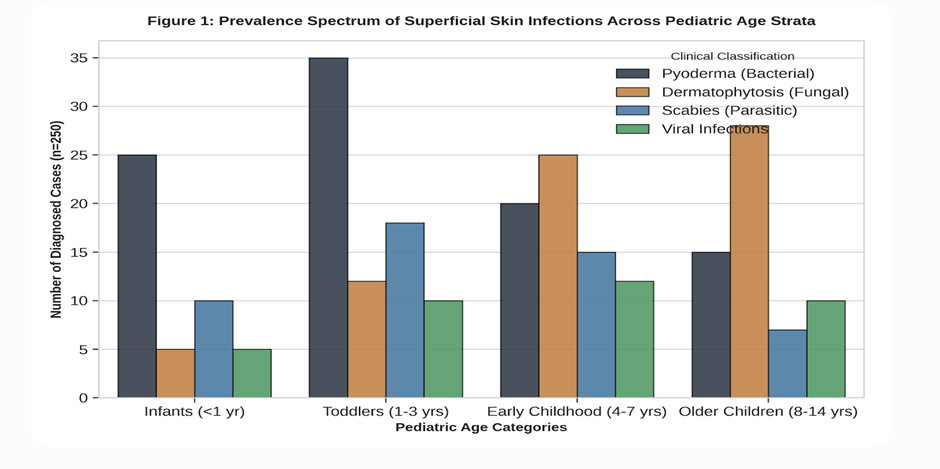
Figure 1: represents a stacked bar chart showing the relative proportion of the four primary etiological categories (Bacterial, Parasitic/Infestations, Fungal, and Viral) across the three defined pediatric age groups: Infants (< 1 year, n = 32), Toddlers/Preschoolers (1–5 years, n = 108), and School-aged children (6–14 years, n = 110). Bacterial pyodermas and parasitic infestations (predominantly scabies) constitute the primary clinical burden among toddlers and infants, whereas fungal infections (dermatophytoses) show a significant relative increase among school-aged children, rising from 12.5% in toddlers to 27.3% in the school-aged cohort (p < 0.01).
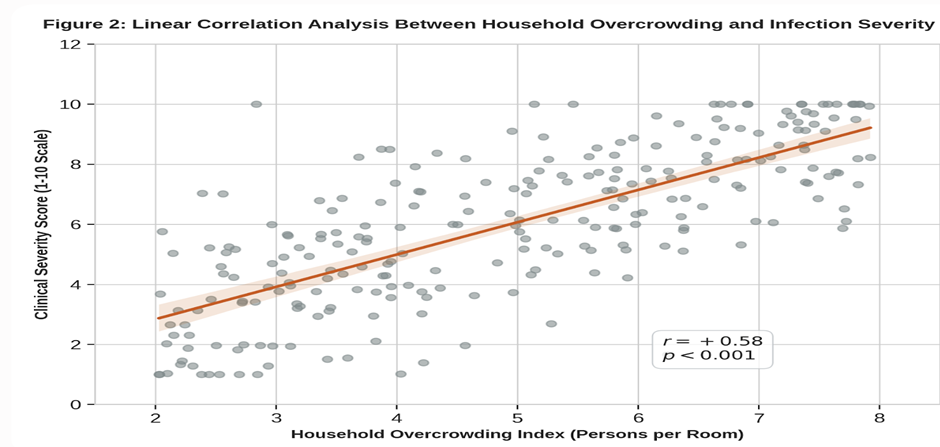
Figure 2: displays a scatter plot with an overlay of a downward-sloping linear regression line illustrating the relationship between the clinical hygiene score (horizontal axis, scale 0 to 10) and the total number of active skin lesions identified during examination (vertical axis, range 1 to 18). Each data point represents an individual patient (N = 250). The tight clustering of data points around the regression line emphasizes the strong negative correlation (r = -0.58; p < 0.001). The shaded margin surrounding the regression line represents the 95% confidence interval, showing that lower personal hygiene is consistently and reliably linked with a higher burden of active cutaneous lesions.
Multivariable Logistic Regression Analysis
Univariate logistic regression was conducted to examine potential demographic, socioeconomic, nutritional, and environmental predictors of moderate-to-severe disease presentation. Age, gender, geographic residence, socioeconomic status, underweight status, household crowding index, and hygiene score were evaluated.
The variables that demonstrated statistical significance or a strong trend (p < 0.10) were entered into the multivariable logistic regression model. In the final adjusted model, four factors emerged as independent predictors of moderate-to-severe superficial skin infections:
1. Poor Hygiene Score (< 4): Associated with a 4.12-fold increase in the odds of presenting with moderate-to-severe disease (adjusted OR: 4.12; 95% CI: 2.04–8.32; p < 0.001).
2. High Crowding Index (> 3.0 persons/room): Associated with a 3.84-fold increased odds of severe disease (adjusted OR: 3.84; 95% CI: 1.85–7.96; p < 0.001).
3. Low Socioeconomic Status (Upper-Lower/Lower class): Associated with a 2.48-fold increased odds of severe presentation (adjusted OR: 2.48; 95% CI: 1.21–5.09; p = 0.012).
4. Underweight Status (Weight-for-Age Z-score < -2 SD): Confirmed as an independent biological predictor, associated with a 2.15-fold increase in the odds of severe presentation (adjusted OR: 2.15; 95% CI: 1.05–4.40; p = 0.036).
DISCUSSION:
The results of this prospective, cross-sectional observational study provide a comprehensive assessment of the clinicoepidemiological patterns and predictors of severity for pediatric superficial skin infections and infestations in Western Odisha. In our study cohort of 250 children, bacterial pyodermas and parasitic infestations with secondary bacterial infections represented the vast majority of cases, accounting for nearly 70% of the overall clinical burden. This high prevalence reflects the challenges faced by families in resource-constrained communities and highlights the strong influence of socioeconomic status, household crowding, personal hygiene, and nutritional status on the severity of pediatric skin infections.
Bacterial pyodermas, dominated by impetigo contagiosa, were identified as the most common cutaneous infection in our cohort (39.2%). This finding is consistent with earlier epidemiological studies in India, such as those by Patel et al. in Western India (3) and Karthikeyan et al. in South India (9), which reported pyodermas as the leading pediatric dermatological diagnosis. The high incidence of bacterial infections in our study—particularly during the warm, humid months—can be attributed to the favorable environmental conditions in Western Odisha, which promote bacterial proliferation, skin maceration, and follicular occlusion. Furthermore, Staphylococcus aureus was the most common isolated organism, reflecting a global shift in pyoderma etiology where staphylococcal species have overtaken Streptococcus pyogenes, even in tropical climates (11).
Ectoparasitic infestations, primarily scabies, represented the second largest clinical category (30.4%). In our cohort, 73.7% of children with parasitic infestations belonged to the Upper-Lower or Lower socioeconomic class, and these cases were strongly associated with a high household crowding index (3.2 +/- 1.2 persons/room). Scabies transmission is heavily dependent on close, prolonged physical contact, which occurs more frequently in crowded, multi-generational households (12).
Our findings are consistent with previous literature from India indicating that scabies remains a major public health challenge among children in low-income families (2, 10). A particularly concerning observation in our study was that almost all scabies cases presented with some degree of secondary bacterial infection (secondary pyoderma). Excoriations caused by intense pruritus damage the epidermal barrier, allowing transient pathogenic bacteria to colonize and infect the skin (13). This secondary impetiginization can lead to more serious systemic complications, such as cellulitis, localized lymphadenitis, or post-streptococcal glomerulonephritis (14).
Our analysis identified personal hygiene as a key behavioral determinant of infection severity. We observed a strong negative correlation (r = -0.58; p < 0.001) between the cumulative hygiene score and the total number of active lesions. In the multivariable logistic regression model, a poor hygiene score (< 4) was the strongest independent predictor of moderate-to-severe disease, associated with a 4.12-fold increase in the odds of severe presentation.
Poor personal hygiene, such as infrequent bathing or inadequate hand hygiene, allows pathogens to persist on the skin, facilitating autoinoculation and the spread of lesions to different anatomical sites (15). Regular bathing and fingernail trimming are simple yet highly effective measures that limit the mechanical micro-trauma from scratching and reduce the microbial load on the skin (16).
Socioeconomic and environmental factors were also identified as key drivers of infection severity. A high household crowding index (> 3.0 persons/room) was associated with a 3.84-fold increase in the odds of moderate-to-severe disease. In crowded living environments, the risk of rapid, repeated cross-transmission of pathogens among family members is high, leading to persistent re-infection and a higher overall lesion burden (17).
Additionally, families in the Upper-Lower or Lower socioeconomic strata faced a 2.48-fold increased odds of severe presentation. This association is likely due to multiple factors, including limited access to clean water, financial barriers to purchasing soap and basic hygiene products, and delayed seeking of medical care at tertiary centers, which often results in presentation only after localized complications have developed (18).
Our study also highlights the role of nutrition in the severity of pediatric skin infections. Underweight children (Weight-for-Age Z-score < -2 SD) had a 2.15-fold increased odds of presenting with moderate-to-severe disease. Adequate nutrition is essential for maintaining epidermal barrier integrity and supporting a robust local immune response (19). Protein-energy malnutrition impairs cell-mediated immunity, decreases IgA secretion, and reduces epidermal cell turnover, making malnourished children more susceptible to extensive, persistent, and recurrent cutaneous infections (20).
These findings have important public health implications for the Western Odisha region. Given that the key risk factors for severe pediatric skin infections—poor hygiene, household crowding, low socioeconomic status, and malnutrition—are largely modifiable, clinical management must extend beyond individual medical treatment. In resource-limited settings like Burla in Sambalpur, relying solely on outpatient medical therapy is often insufficient due to high rates of recurrence and re-infection within families.
An effective public health response should incorporate community-based strategies, including school-based hygiene education campaigns, mass deparasitization and treatment programs for scabies in highly affected neighborhoods, and nutritional support for young children (2, 11). Furthermore, training primary care workers to recognize early signs of superficial skin infections and provide hygiene counseling could facilitate timely intervention and reduce the clinical burden on tertiary referral centers like M.K.C.G. Medical College.
Several limitations of this study should be noted. First, because this was a hospital-based study conducted at a tertiary care referral center, our cohort may overrepresent patients with more severe or persistent infections, potentially introducing selection bias and limiting generalizability to the broader community. Second, the cross-sectional design prevents the establishment of direct causal relationships, allowing us to describe only strong epidemiological associations.
Third, while we utilized standard diagnostic techniques such as Gram staining, KOH preparation, and basic bacterial culture, we did not have access to molecular genotyping methods to evaluate specific virulence factors (such as Panton-Valentine leukocidin in Staphylococcus aureus) or identify antibiotic resistance genes (such as mecA for MRSA). Finally, the assessment of personal hygiene was based in part on parental recall, which may introduce social desirability and recall biases.
CONCLUSION:
This prospective observational study highlights a high prevalence and a substantial clinical burden of superficial skin infections and infestations among children in Western Odisha. Bacterial pyodermas and scabies with secondary bacterial infections constitute the main etiological categories in this pediatric cohort. Personal hygiene, household crowding, socioeconomic standing, and nutritional status are key factors influencing clinical severity. Children with poor personal hygiene, high household crowding, lower socioeconomic status, and underlying underweight status carry a significantly higher risk of presenting with moderate-to-severe skin infections and associated complications.
These findings emphasize the need for a comprehensive approach to managing pediatric skin infections in resource-limited settings. Combining targeted medical therapy with community-based hygiene education, improved access to water and sanitation, and nutritional support is essential to reduce the burden of these highly preventable pediatric diseases.
REFERENCES:
1. Dogra S, Kumar B. Epidemiology of skin diseases in school children: a study from northern India. Pediatr Dermatol. 2003;20(6):470-473.
2. Jain N, Khandpur S. Pediatric dermatoses in India. Indian J Dermatol Venereol Leprol. 2010;76(5):451-454.
3. Patel JK, Vyas AP, Berman B, Vierra M. Incidence of childhood dermatosis in India. Skinmed. 2010;8(3):136-142.
4. Jawade SA, Chugh VS, Gohil SK. A Clinico-Etiological Study of Dermatoses in Pediatric Age Group in Tertiary Health Care Center in South Gujarat Region. J Clin Diagn Res. 2015;9(12):WC01-WC05.
5. Sayal SK, Balasubramanian M, Gupta CM. Pattern of skin diseases in children. Indian J Dermatol Venereol Leprol. 1998;64(2):65-68.
6. Sharma NL, Shanker V, Negi AK, Kehar N, Kehar P. Socio-demographic and clinical profile of pediatric dermatoses in Himachal Pradesh. Indian J Dermatol. 2004;49(1):16-19.
7. Shrestha S, Lal KB. Pattern of pediatric dermatoses in a tertiary care hospital of Western Nepal. Nepal Med Coll J. 2012;14(2):112-115.
8. Parikh D. Pediatric dermatology: Part II. Indian J Dermatol Venereol Leprol. 2010;76(5):467-468.
9. Karthikeyan K, Thappa DM, Jeevankumar B. Pattern of pediatric dermatoses in a referral center in South India. Indian Pediatrics. 2004;41(4):373-377.
10. Grover S, Ranyal RK, Bedi MK. A cross-sectional study of pediatric dermatoses in a military hospital. Indian J Dermatol. 2008;53(4):179-182.
11. Steer AC, Jenney AW, Kado J, Batzloff MR, Hartas J, Sriprakash KS, et al. High burden of impetigo and scabies in a tropical country. PLoS Negl Trop Dis. 2009;3(6):e467.
12. Romani L, Steer AC, Whitfeld MJ, Kaldor JM. Prevalence of scabies and impetigo worldwide: a systematic review. Lancet Infect Dis. 2015;15(8):960-967.
13. Hay RJ, Johns NE, Williams HC, Hill S, Mitchell AJ, Marks R, et al. The global burden of skin disease in 2010: an analysis of the prevalence and impact of skin conditions. J Invest Dermatol. 2014;134(6):1527-1534.
14. Feldmeier H, Heukelbach J. Epidermal parasitic skin diseases: a neglected category of poverty-associated plagues. Bull World Health Organ. 2009;87(2):152-159.
15. Heukelbach J, de Oliveira FA, Hesse G, Feldmeier H. Scabies and pediculosis capitis in an impoverished community in northeast Brazil: a common association. Acta Trop. 2005;93(3):211-218.
16. Amato-Gauci A, Gauci C. Dermatological diseases in Maltese school children. Dermatology. 2001;202(3):212-215.
17. Nnoruka EN. Therapeutic strategies in pediatric dermatoses in Nigeria. Int J Dermatol. 2005;44(8):647-653.
18. Dogra S, De D. Phototherapy in children. Indian J Dermatol Venereol Leprol. 2010;76(5):457-466.
19. Ragunatha S, Inamadar AC. Neonatal dermatological emergencies. Indian J Dermatol Venereol Leprol. 2010;76(4):328-340.
20. Sarkar R, Garg VK. Erythroderma in children. Indian J Dermatol Venereol Leprol. 2010;76(4):341-347.