MTHFR Gene Polymorphisms with Hyperhomocysteinemia in Cerebral Venous Sinus Thrombosis: A Hospital-Based Observational Study.
- Jyoti Milind Kharche , Professor, Department of General Medicine, MGM Medical College and Hospital, Chhatrapati Sambhajinagar (Aurangabad), India.
- Kaivalya Sudhir Gojamgunde , Resident, Department of General Medicine, MGM Medical College and Hospital, Chhatrapati Sambhajinagar (Aurangabad), India.
- Khushbu Manish Agrawal , Resident, Department of General Medicine, MGM Medical College and Hospital, Chhatrapati Sambhajinagar (Aurangabad), India.
Article Information:
Abstract:
Background: Cerebral venous sinus thrombosis (CVST) is an uncommon but potentially life-threatening cerebrovascular disorder characterized by thrombosis of the cerebral veins and dural venous sinuses. Hyperhomocysteinemia is a well-established prothrombotic state associated with endothelial dysfunction and increased risk of venous thrombosis. Methylenetetrahydrofolate reductase (MTHFR) gene polymorphisms are important genetic determinants of homocysteine metabolism and may contribute to the development of CVST. This study aimed to evaluate the prevalence of MTHFR gene polymorphisms in patients with CVST and hyperhomocysteinemia and to determine their association with serum homocysteine levels, neuroimaging findings, and clinical outcomes. Methods: A hospital-based cross-sectional observational study was conducted among 24 adult patients with radiologically confirmed CVST and hyperhomocysteinemia. Detailed clinical evaluation, neuroimaging assessment, serum homocysteine estimation, and MTHFR gene polymorphism analysis for C677T and A1298C variants using real-time polymerase chain reaction were performed. Statistical analysis was carried out using SPSS version 28.0, and associations were evaluated using appropriate statistical tests with a significance level of p<0.05. Results: The majority of patients belonged to the 21–40 years age group (45.8%), with a male predominance (58.3%). Headache (87.5%) and seizures (50.0%) were the most common presenting symptoms. Moderate hyperhomocysteinemia was observed in 54.2% of patients, while severe hyperhomocysteinemia was present in 29.2%. MTHFR gene polymorphisms were identified in 66.7% of patients, predominantly involving the C677T mutation. A significant association was observed between MTHFR polymorphisms and serum homocysteine levels (χ²=9.82, p=0.044), with homozygous C677T mutation showing a strong association with severe hyperhomocysteinemia. Superior sagittal sinus involvement was the most common neuroimaging finding (29.2%). Severe hyperhomocysteinemia was significantly associated with poorer clinical outcomes (χ²=6.87, p=0.032). Conclusion: MTHFR gene polymorphisms, particularly the C677T variant, are significantly associated with elevated homocysteine levels in patients with CVST. Hyperhomocysteinemia, especially in its severe form, is linked to adverse clinical outcomes, underscoring the importance of early detection and management of genetic and metabolic risk factors in CVST.
Keywords:
Article :
INTRODUCTION:
Cerebral venous sinus thrombosis (CVST) is an uncommon but potentially life-threatening cerebrovascular disorder caused by thrombosis of the dural venous sinuses and/or cerebral veins, resulting in impaired venous drainage and raised intracranial pressure.1 Although CVST accounts for only 0.5–1% of all strokes, it predominantly affects young and middle-aged adults. Despite advances in diagnostic techniques, the underlying etiology remains unidentified in a substantial proportion of patients.1
Hyperhomocysteinemia is a recognized prothrombotic state that contributes to endothelial dysfunction, oxidative stress, platelet activation, and impairment of natural anticoagulant pathways, thereby increasing the risk of arterial and venous thrombosis.2 Genetic factors, particularly methylenetetrahydrofolate reductase (MTHFR) gene polymorphisms, play an important role in homocysteine metabolism.2
Nutritional deficiencies such as folate and vitamin B12 deficiency, which are common in developing countries, may further aggravate hyperhomocysteinemia and enhance thrombotic risk. However, the relationship between MTHFR gene polymorphisms, hyperhomocysteinemia, and CVST remains incompletely understood.2,3
Through this study we aimed to evaluate the prevalence of MTHFR gene polymorphisms in patients with cerebral venous sinus thrombosis associated with hyperhomocysteinemia and to determine their association with serum homocysteine levels, clinical profile, neuroimaging findings, and clinical outcomes.
MATERIALS AND METHODS:
This hospital-based cross-sectional observational study was conducted in the Department of General Medicine, at a tertiary care hospital, after approval from the Institutional Ethics Committee.
Adult patients (>18 years) with radiologically confirmed cerebral venous sinus thrombosis (CVST) on MRI/MRV or CT venography and elevated serum homocysteine levels were enrolled after obtaining written informed consent.
Hyperhomocysteinemia was defined as serum homocysteine levels >15 µmol/L and categorized as mild (15–30 µmol/L), moderate (31–100 µmol/L), and severe (>100 µmol/L). Pregnant women and patients receiving vitamin B12, folate, or vitamin B6 supplementation were excluded.
Detailed clinical history, neurological examination, and assessment of vascular risk factors were performed using a structured case record form. Neuroimaging findings were reviewed to determine the extent and site of sinus involvement. Venous blood samples were collected for estimation of serum homocysteine levels and MTHFR gene polymorphism analysis.
Genomic DNA was extracted from EDTA blood samples, and MTHFR C677T (rs1801133) and A1298C (rs1801131) polymorphisms were detected using real-time polymerase chain reaction (RT-PCR) with the TRUPCR™ MTHFR Mutation Detection Kit (Version 1.1).
Data were analyzed using SPSS version 28.0. Continuous variables were expressed as mean ± standard deviation and categorical variables as frequencies and percentages. Chi-square test, Fisher’s exact test, Student’s t-test, or ANOVA were applied where appropriate. A p-value <0.05 was considered statistically significant.
RESULTS:
A total of 24 patients with radiologically confirmed cerebral venous sinus thrombosis (CVST) and hyperhomocysteinemia were included in the study. The majority of patients belonged to the 21–40 years age group (45.8%), followed by the 41–60 years group (37.5%). Male predominance was observed, with males accounting for 58.3% of cases (Table 1). Headache was the most common presenting symptom, seen in 87.5% of patients, while seizures were observed in 50.0% of cases. Smoking and obesity were present in 20.8% of patients each. Vitamin B12 deficiency was identified in 37.5% of participants. Moderate hyperhomocysteinemia (31–100 µmol/L) was the most common biochemical abnormality, observed in 54.2% of patients, followed by severe hyperhomocysteinemia (>100 µmol/L) in 29.2% of cases (Table 1).
Table 1: Homocysteine Levels and
|
Variable |
Frequency (%) |
|
Mild hyperhomocysteinemia (15–30 µmol/L) |
4 (16.7) |
|
Moderate hyperhomocysteinemia (31–100 µmol/L) |
13 (54.2) |
|
Severe hyperhomocysteinemia (>100 µmol/L) |
7 (29.2) |
|
Total |
24 |
MTHFR gene polymorphism analysis showed wild-type genotype in 33.3% of patients. Heterozygous C677T and homozygous C677T mutations were each observed in 29.2% of patients, while heterozygous A1298C mutation was identified in 8.3% of cases (Table 2).
Table 2: MTHFR Gene Polymorphism
|
Variable |
Frequency (%) |
|
Wild-type genotype |
8 (33.3) |
|
Heterozygous C677T |
7 (29.2) |
|
Homozygous C677T |
7 (29.2) |
|
Heterozygous A1298C |
2 (8.3) |
|
Total |
24 |
The superior sagittal sinus was the most frequently involved sinus (29.2%), followed by multiple sinus involvement (25.0%) (Table 3).
Table 3: Neuroimaging Findings and Sinus Involvement
|
Variable |
Frequency (%) |
|
Superior sagittal sinus involvement |
7 (29.2) |
|
Multiple sinus involvement |
6 (25.0) |
|
Transverse sinus involvement |
5 (20.8) |
|
Cavernous sinus involvement |
4 (16.7) |
|
Sigmoid sinus involvement |
2 (8.3) |
|
Total |
24 |
Table 4: Association of MTHFR Gene Polymorphism with Homocysteine Levels (N = 24)
|
MTHFR Gene Result |
Mild Hyperhomocysteinemia n (%) |
Moderate Hyperhomocysteinemia n (%) |
Severe Hyperhomocysteinemia n (%) |
Total |
|
Wild Type |
3 (37.5) |
4 (50.0) |
1 (12.5) |
8 |
|
Heterozygous C677T |
1 (14.3) |
4 (57.1) |
2 (28.6) |
7 |
|
Homozygous C677T |
0 (0.0) |
3 (42.9) |
4 (57.1) |
7 |
|
Heterozygous A1298C |
0 (0.0) |
2 (100.0) |
0 (0.0) |
2 |
|
Total |
4 |
13 |
7 |
24 |
χ² = 9.82, p = 0.044 (Significant)
A statistically significant association was observed between MTHFR gene polymorphism and serum homocysteine levels (χ² = 9.82, p = 0.044). Homozygous C677T mutation was predominantly associated with severe hyperhomocysteinemia (57.1%), whereas the wild-type genotype was more commonly associated with mild to moderate homocysteine levels. This finding suggests that MTHFR polymorphisms, particularly the homozygous C677T variant, contribute to elevated homocysteine levels in patients with CVST (Table 4) and (Figure 1).
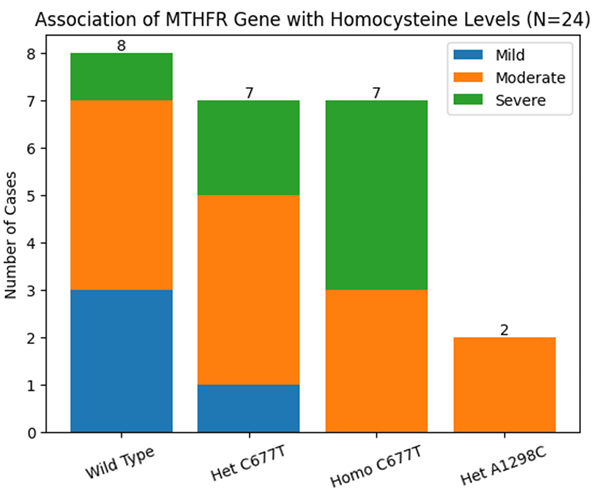
Figure 1: Association of MTHFR Gene Polymorphism with Homocysteine Levels (N = 24).
A significant association was also found between homocysteine levels and clinical outcomes (χ² = 6.87, p = 0.032), with severe hyperhomocysteinemia associated with poorer clinical outcomes.
Table 5: Association of MTHFR Gene Polymorphism with Sinus Involvement (N = 24)
|
MTHFR Gene Result |
Superior Sagittal n (%) |
Transverse n (%) |
Cavernous n (%) |
Multiple n (%) |
Sigmoid n (%) |
Total |
|
Wild Type |
3 (37.5) |
2 (25.0) |
1 (12.5) |
1 (12.5) |
1 (12.5) |
8 |
|
Heterozygous C677T |
2 (28.6) |
1 (14.3) |
1 (14.3) |
3 (42.9) |
0 (0.0) |
7 |
|
Homozygous C677T |
2 (28.6) |
2 (28.6) |
1 (14.3) |
2 (28.6) |
0 (0.0) |
7 |
|
Heterozygous A1298C |
0 (0.0) |
0 (0.0) |
1 (50.0) |
0 (0.0) |
1 (50.0) |
2 |
|
Total |
7 |
5 |
4 |
6 |
2 |
24 |
χ² = 6.21, p = 0.718 (Not Significant).
No statistically significant association was observed between MTHFR gene polymorphism and the pattern of sinus involvement (χ² = 6.21, p = 0.718). Although superior sagittal sinus involvement was the most frequently observed finding overall, the distribution of involved sinuses did not differ significantly across MTHFR genotypes.
These findings suggest that MTHFR polymorphisms may contribute to thrombotic susceptibility through altered homocysteine metabolism but do not appear to influence the anatomical site of thrombosis in patients with CVST.
DISCUSSION:
The majority of patients in the present study belonged to the 21–40 years age group (45.8%), which is comparable to the findings of Ouachaou J et al.4 and Khan MWA et al.5, who reported that CVST predominantly affects young and middle-aged adults.
The lower proportion of elderly patients in the present study further supports the observation that CVST is relatively uncommon in older age groups. Male predominance was observed in the present study (58.3%), which is in agreement with the findings of Wasay M et al.6 from South Asian populations. Although earlier studies demonstrated female predominance due to pregnancy and oral contraceptive use, recent regional studies have increasingly reported male predominance, likely due to variations in lifestyle and thrombophilic risk factors.
Smoking and obesity were each observed in 20.8% of patients. Similar observations have been reported in previous studies where conventional vascular risk factors were found to contribute less significantly compared to inherited and metabolic thrombophilic conditions. Vitamin B12 deficiency was identified in 37.5% of patients, highlighting the important contribution of nutritional factors in the development of hyperhomocysteinemia-associated CVST, particularly in developing countries such as India where Vitamin B12 deficiency is relatively common.
Headache was the most common presenting symptom in the present study, observed in 87.5% of patients, followed by seizures in 50% of cases. These findings are comparable to those reported by Salottolo K et al.8 and Ferro JM et al.9, who documented headache as the predominant clinical manifestation of CVST. Seizures were also frequently observed in previous studies, indicating significant cortical involvement in these patients. Regarding sinus involvement, the superior sagittal sinus was the most commonly affected site in the present study (29.2%), followed by multiple sinus involvement (25.0%). Similar patterns have been described by Ferro JM et al.9 and Miraclin TA et al.10, suggesting that superior sagittal sinus thrombosis remains the commonest radiological pattern in CVST.
Moderate hyperhomocysteinemia was the most common biochemical abnormality observed in the present study (54.2%), followed by severe hyperhomocysteinemia (29.2%). Similar findings were reported by den Filip C et al.11, who demonstrated a strong association between elevated homocysteine levels and venous thrombosis. In the present study, 66.7% of patients demonstrated MTHFR gene polymorphisms, predominantly involving the C677T mutation. Comparable findings have been reported by Shane B et al.12 and Chen L et al.13, who showed that MTHFR C677T polymorphism is strongly associated with elevated serum homocysteine levels and increased thrombotic risk. A statistically significant association was observed between MTHFR polymorphism and homocysteine levels in the present study (χ² = 9.82, p = 0.044), with homozygous C677T mutation showing a greater association with severe hyperhomocysteinemia. These findings support the role of genetic predisposition in impaired homocysteine metabolism and thrombogenesis.
As shown in Table 7, MRI findings suggestive of CVST were positive in 70.8% of patients, while MRV positivity was observed in 66.7%. Similar radiological sensitivity has been reported by Aggarwal S et al.14, who demonstrated MRI sensitivity ranging from 70–85% for CVST diagnosis. The present study also demonstrated a statistically significant association between severe hyperhomocysteinemia and poorer clinical outcomes (χ² = 6.87, p = 0.032), which is comparable to the findings of Nair AS et al.15
Elevated homocysteine levels may contribute to endothelial dysfunction, oxidative stress, and enhanced thrombogenicity, thereby worsening disease severity and clinical outcome. Additionally, MRI positivity was significantly higher among patients with MTHFR mutations compared to wild-type genotype (χ² = 3.92, p = 0.048). Similar observations have been reported by Paradkar MU et al.16, suggesting that MTHFR polymorphisms may be associated with more extensive thrombotic involvement and increased radiological detectability.
Overall, the findings of the present study demonstrate a significant association between hyperhomocysteinemia, MTHFR gene polymorphisms, and CVST.
CONCLUSION:
Hyperhomocysteinemia and MTHFR gene polymorphisms, particularly the C677T variant, were frequently observed among patients with CVST. A significant association was found between MTHFR polymorphism and elevated homocysteine levels, while severe hyperhomocysteinemia was associated with poorer clinical outcomes. No significant association was observed between MTHFR polymorphism and the pattern of sinus involvement. These findings support the role of genetic and metabolic factors in the pathogenesis of CVST and highlight the importance of early detection and correction of modifiable risk factors such as vitamin B12 deficiency and hyperhomocysteinemia.
The present study is limited by its small sample size, single-centre design, and cross-sectional nature, which restrict the generalizability of the findings and preclude causal inference. Larger multicentric studies are required to validate these observations and further define the role of MTHFR polymorphisms in CVST.
REFERENCES:
1. Saposnik G, Bushnell C, Coutinho JM, Field TS, Furie KL, Galadanci N, Kam W, Kirkham FC, McNair ND, Singhal AB, Thijs V, Yang VXD; American Heart Association Stroke Council; Council on Cardiopulmonary, Critical Care, Perioperative and Resuscitation; Council on Cardiovascular and Stroke Nursing; and Council on Hypertension. Diagnosis and Management of Cerebral Venous Thrombosis: A Scientific Statement From the American Heart Association. Stroke. 2024 Mar;55(3):e77-e90.
2. Liu YT, Lin CC, Wang L, Nfor ON, Hsu SY, Lung CC, Tantoh DM, Chang HR, Liaw YP. Peripheral Vascular Disease Susceptibility Based on Diabetes Mellitus and rs17367504 Polymorphism of the MTHFR Gene. Diabetes Metab Syndr Obes. 2021 May 26;14:2381-2388.
3. Ospina-Romero M, Cannegieter SC, den Heijer M, Doggen CJM, Rosendaal FR, Lijfering WM. Hyperhomocysteinemia and Risk of First Venous Thrombosis: The Influence of (Unmeasured) Confounding Factors. Am J Epidemiol. 2018 Jul 1;187(7):1392-1400.
4. Ouachaou J, Aicha D, Sidayne M, El Khettab F, Zarrouki Y. Extensive Cerebral Venous Sinus Thrombosis at High Altitude. Cureus. 2025 Jun 10;17(6):e85742.
5. Khan MWA, Zeeshan HM, Iqbal S. Clinical Profile and Prognosis of Cerebral Venous Sinus Thrombosis. Cureus. 2020 Dec 22;12(12):e12221.
6. Wasay M, Kaul S, Menon B, Dai AI, Saadatnia M, Malik A, Khalifa A, Borhani Haghighi A, Mehndiratta M, Khan M, Bikash Bhowmik N, Awan S. Asian Study of Cerebral Venous Thrombosis. J Stroke Cerebrovasc Dis. 2019 Oct;28(10):104247.
7. Mohan A, Kumar R, Kumar V, Yadav M. Homocysteine, Vitamin B12 and Folate Level: Possible Risk Factors in the Progression of Chronic Heart and Kidney Disorders. Curr Cardiol Rev. 2023;19(4):e090223213539.
8. Salottolo K, Wagner J, Frei DF, Loy D, Bellon RJ, McCarthy K, Jensen J, Fanale C, Bar-Or D. Epidemiology, Endovascular Treatment, and Prognosis of Cerebral Venous Thrombosis: US Center Study of 152 Patients. J Am Heart Assoc. 2017 Jun 13;6(6):e005480
9. Ferro JM, Aguiar de Sousa D. Cerebral Venous Thrombosis: an Update. Curr Neurol Neurosci Rep. 2019 Aug 23;19(10):74.
10. Miraclin T A, Bal D, Sebastian I, Shanmugasundaram S, Aaron S, Pandian JD. Cerebral Venous Sinus Thrombosis: Current Updates in the Asian Context. Cerebrovasc Dis Extra. 2024;14(1):177-184.
11. Filip C, Socolov DG, Albu E, Filip C, Serban R, Popa RF. Serological Parameters and Vascular Investigation for a Better Assessment in DVT during Pregnancy-A Systematic Review. Medicina (Kaunas). 2021 Feb 10;57(2):160.
12. Shane B, Pangilinan F, Mills JL, Fan R, Gong T, Cropp CD, Kim Y, Ueland PM, Bailey-Wilson JE, Wilson AF, Brody LC, Molloy AM. The 677C→T variant of MTHFR is the major genetic modifier of biomarkers of folate status in a young, healthy Irish population. Am J Clin Nutr. 2018 Dec 1;108(6):1334-1341.
13. Chen L, Jiang Y. Association Study of MTHFR C677T Polymorphism With Homocysteine Level and Coronary Heart Disease in Elderly Patients. Cardiol Res Pract. 2025 Mar 16;2025:6246458.
14. Aggarwal S, Kumar A, Deo V; i-RegVeD Team; Tabassum H. Epidemiology and risk factors for cerebral venous sinus thrombosis: insights from leading centres in the i RegVeD registry, India. Sci Rep. 2025 Jul 2;15(1):22712.
15. Nair AS, Tauro L, Joshi HB, Makhal A, Sobczak T, Goret J, Dewitte A, Kaveri S, Chakrapani H, Matsuda MM, Joshi MB. Influence of homocysteine on regulating immunothrombosis: mechanisms and therapeutic potential in management of infections. Inflamm Res. 2025 May 24;74(1):86.
16. Paradkar MU, Padate B, Shah SAV, Vora H, Ashavaid TF. Association of Genetic Variants with Hyperhomocysteinemia in Indian Patients with Thrombosis. Indian J Clin Biochem. 2020 Oct;35(4):465-473.
17. Shah JH, Salagre KD, Sahay RN, Anand A. Heterozygous MTHFR A1298C Mutation causing Cerebral Venous Sinus Thrombosis. J Assoc Physicians India. 2016 Nov;64(11):76-77. PMID: 27805340.
18. Dmytriw AA, Song JSA, Yu E, Poon CS. Cerebral venous thrombosis: state of the art diagnosis and management. Neuroradiology. 2018 Jul;60(7):669-685.
19. Konakondla S, Schirmer CM, Li F, Geng X, Ding Y. New Developments in the Pathophysiology, Workup, and Diagnosis of Dural Venous Sinus Thrombosis (DVST) and a Systematic Review of Endovascular Treatments. Aging Dis. 2017 Apr 1;8(2):136-148.
20. Pastori D, Cormaci VM, Marucci S, Franchino G, Del Sole F, Capozza A, Fallarino A, Corso C, Valeriani E, Menichelli D, Pignatelli P. A Comprehensive Review of Risk Factors for Venous Thromboembolism: From Epidemiology to Pathophysiology. Int J Mol Sci. 2023 Feb 5;24(4):3169.
21. Amoozegar F, Ronksley PE, Sauve R, Menon BK. Hormonal contraceptives and cerebral venous thrombosis risk: a systematic review and meta-analysis. Front Neurol. 2015 Feb 2;6:7.
22. Khatri IA, Wasay M. Septic cerebral venous sinus thrombosis. J Neurol Sci. 2016 Mar 15;362:221-7.