PREDICTION OF MORTALITY BY APPLICATION OF MODIFIED PEDIATRIC RISK OF MORTALITY SCORE (PRISM III MODEL) IN PEDIATRIC INTENSIVE CARE UNIT OF A TERTIARY CARE TEACHING HOSPITAL.
- Lanka Gourav Reddy , Assistant Professor, Department of Pediatrics, Mallareddy Institute of Medical Sciences, Suraram, Hyderabad, Telangana.
- M. Bhaskar , Assistant Professor, Department of Pediatrics, Mallareddy Institute of Medical Sciences, Suraram, Hyderabad, Telangana.
- Chinthi Reddy Sanjana Reddy , Assistant Professor, Department of Pediatrics, Mallareddy Institute of Medical Sciences, Suraram, Hyderabad, Telangana.
Article Information:
Abstract:
Background: Introduction: Accurate assessment of illness severity at admission is crucial for predicting prognosis and optimizing resource allocation in Pediatric Intensive Care Units (PICUs), particularly in developing countries. The Pediatric Risk of Mortality (PRISM III) score is a widely accepted prognostic tool, but local institutional validation is necessary due to regional variations in patient profiles and healthcare resources. Objectives: To evaluate the performance of the Modified PRISM III score in predicting mortality among patients admitted to a tertiary care teaching hospital PICU, compare predicted versus observed mortality, and assess associated clinical risk factors. Material & Methods: A prospective observational study was conducted over a one-year period involving 100 subjects admitted to the PICU at the Malla Reddy Institute of Medical Sciences. Clinical and laboratory parameters were documented within 24 hours of admission to calculate the Modified PRISM III score. Outcomes (discharge or death) and clinical variables were statistically evaluated using univariate, multivariate, and Receiver Operating Characteristic (ROC) curve analyses. Observations & Results: The mean Modified PRISM III score was significantly higher for non-survivors (8.25) than for survivors (4.94). ROC curve analysis demonstrated a "fair" predictive capacity with an area under the curve (AUC) of 0.707. A score cut-off of >8 delineated higher risk, yielding a 40% mortality risk compared to 5% for scores (P = 0.01). Univariate analysis revealed that a PRISM score >8, a Glasgow Coma Scale (GCS), shock, and mechanical ventilation requirements were all significantly associated with mortality (P < 0.01). However, in the multivariate logistic regression model, only mechanical ventilation requirements (Adjusted OR: 27.56) and a GCS (Adjusted OR: 0.17) retained independent statistical significance. Conclusion: The Modified PRISM III score serves as a valuable, objective instrument for initial risk stratification and clinical audit in Indian PICU settings. While it accurately reflects disease severity trends, dynamic variables such as a low GCS score and the necessity for invasive mechanical ventilation remain the strongest independent predictors of adverse clinical outcomes.
Keywords:
Article :
INTRODUCTION:
Pediatric intensive care units (PICUs) provide specialized care for critically ill children with life-threatening illnesses requiring continuous monitoring, advanced organ support, and timely therapeutic interventions. Despite significant advances in pediatric critical care, mortality in PICUs continues to be a major concern, particularly in developing countries where the burden of infectious diseases, delayed referrals, malnutrition, and limited healthcare resources contribute to adverse outcomes. Accurate assessment of illness severity at the time of admission is therefore essential for predicting prognosis, guiding clinical decision-making, optimizing resource utilization, counseling families, and comparing outcomes across different healthcare institutions. ¹,²
Mortality prediction models have become indispensable tools in pediatric critical care. These scoring systems objectively quantify the severity of illness using physiological and laboratory variables measured during the early phase of PICU admission. An ideal prognostic model should be accurate, reproducible, easy to apply, and capable of distinguishing patients at high risk of mortality from those likely to survive. Such models also facilitate quality assurance, benchmarking of PICU performance, clinical research, and evaluation of therapeutic interventions. ³⁻⁵
Several severity scoring systems have been developed for critically ill children, including the Physiologic Stability Index (PSI), Pediatric Risk of Mortality (PRISM), Pediatric Index of Mortality (PIM), and Pediatric Logistic Organ Dysfunction (PELOD) scores. Among these, the Pediatric Risk of Mortality (PRISM) scoring system has been one of the most extensively studied and validated tools for mortality prediction. Initially introduced in 1988 as a refinement of the Physiologic Stability Index, PRISM reduced the number of variables while maintaining excellent predictive performance. ⁶
To improve predictive accuracy and adapt to changing PICU practices, Pollack et al. developed the PRISM III model in 1996 after analyzing data from more than 11,000 admissions across 32 pediatric intensive care units. The updated model incorporates 17 physiological variables categorized into 26 ranges and evaluates the most abnormal clinical and laboratory parameters during the first 12 or 24 hours of PICU admission. The PRISM III score demonstrated excellent discrimination and calibration for predicting mortality and has since become one of the most widely accepted pediatric severity scoring systems worldwide. ²,⁷
The modified PRISM III model has several practical advantages. It objectively reflects the physiological derangement present at admission, allows stratification of patients according to mortality risk, and serves as an effective tool for evaluating PICU performance independent of case mix. Higher PRISM III scores have consistently been associated with increased mortality, prolonged intensive care stay, greater need for mechanical ventilation, and increased healthcare resource utilization. Furthermore, the score enables clinicians to identify high-risk patients early, thereby facilitating prompt interventions and better allocation of limited critical care resources. ⁸⁻¹¹
Several international and Indian studies have validated the utility of PRISM III in predicting mortality among critically ill children. These studies have demonstrated good sensitivity, specificity, and overall predictive accuracy across diverse patient populations. Nevertheless, the performance of prognostic scoring systems may vary depending on demographic characteristics, disease spectrum, nutritional status, availability of intensive care facilities, and regional healthcare practices. Therefore, periodic validation of PRISM III within individual institutions and geographical settings remains essential before it can be reliably used for clinical audit and outcome prediction. ¹¹⁻¹⁴
In India, pediatric intensive care services have expanded considerably over the past two decades. However, variations in patient profile, referral patterns, socioeconomic status, and disease burden necessitate local evaluation of established mortality prediction models. Limited studies from tertiary care teaching hospitals have assessed the applicability of the modified PRISM III model, and further evidence is required to determine its predictive performance in different institutional settings. Such validation will help clinicians assess disease severity more accurately, improve quality of care, and establish standardized benchmarks for PICU outcomes. ¹²⁻¹⁵
Against this background, the present study titled “Prediction of Mortality by Application of Modified Pediatric Risk of Mortality Score (PRISM III Model) in Pediatric Intensive Care Unit of a Tertiary Care Teaching Hospital” was undertaken to evaluate the effectiveness of the modified PRISM III score in predicting mortality among children admitted to the PICU. The findings of this study are expected to contribute to evidence-based risk stratification, facilitate early identification of critically ill children at high risk of death, and support continuous quality improvement in pediatric intensive care services.
Objectives:
• To find the performance of Modified PRISM III score in predicting mortality in patients admitted to PICU of Malla Reddy Institute of Medical Sciences.
• To compare the predicted mortality with the observed mortality.
• To assess the factors contributing to mortality such as need for assisted ventilation, presence of shock and poor Glasgow Coma Scale (GCS) etc.
MATERIALS AND METHODS:
Study Design: Prospective observational study.
Study area: Study was conducted in the pediatric department, PICU at the Malla Reddy Institute of Medical Sciences.
Study Period: 1 year.
Sample size: The study consisted of a total of 100 subjects.
Sampling Technique: Purposive sampling of eligible children.
Inclusion Criteria: All patients admitted to Pediatric intensive care unit.
Exclusion criteria:
• Patients in PICU for less than 2 hours (e.g. shifted to ICU for observation).
• Age less than 3 months.
• Patients admitted with continuous CPR who do not achieve stable vital signs for > 2 hours.
Ethical consideration: Institutional Ethical committee permission was taken before the commencement of the study.
Study tools and Data collection procedure:
Modified PRISM III (shown later) scoring which involves both clinical and laboratory data will be done once at the time of admission or within 24 hours after admission using a pretested proforma. The clinical condition at arrival to the PICU will be documented and not the condition at arrival to the Emergency department. The monitoring of the vital parameters – blood pressure, heart rate, temperature, pupillary reaction to light and Glasgow Coma Scale will be done. For the laboratory parameters as shown, the values obtained at the time of admission will be recorded. The Modified PRISM III scoring will be assigned. The patient’s course of PICU stay will be monitored and the duration of stay and outcome (Discharge/Death/Transfer to the general ward) will be recorded.
RESULTS:
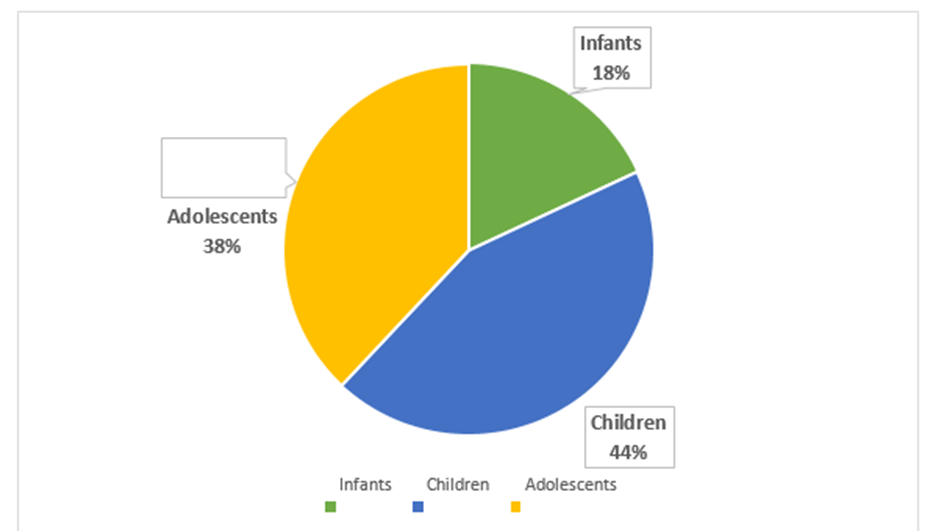
FIGURE 1: AGE DISTRIBUTION
Among them, 18 were infants (those who were less than 1 year including those who were 1 year old), 44 were children (between 1 and 10 years of age- excluding 10) and 38 were adolescents i.e. those who aged 10 yearsand above. The average age of children studied was 7.59 years (range: 1 month – 17 years). In this study of 100 children, 38 children were females and 62 were males.
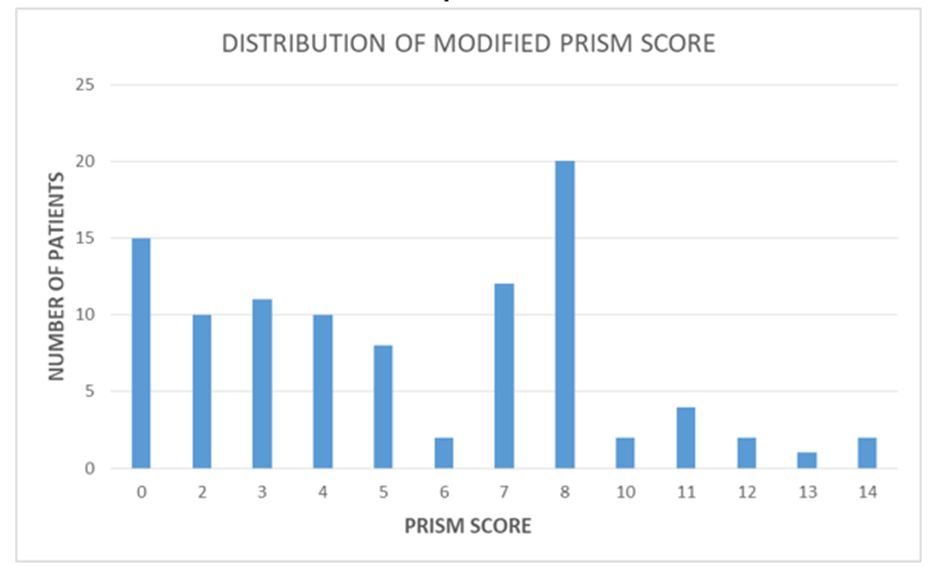
FIGURE 2: DISTRIBUTION OF MODIFIED PRISM SCORE
The minimum Modified PRISM III score in this study was 0 and the maximum PRISM score was 14 with a mean of 5.04. The mode is 8 and the median is 5. The mean score for those who recovered was 4.94 and for those who died was 8.25. The distribution of the Modified PRISM III score with the number of patients is shown in the following histogram. Clustering of cases occurs in the region of 7 and 8.
Receiver Operating Curve:
In this study, the area under the ROC curve is 0.707 and the 95% confidence interval is 0.49, 0.90. The best cut off is at 8 with a sensitivity of 50% and specificity of 70%. The Modified Prism III Score would be considered to be "Fair" at predicting mortality.
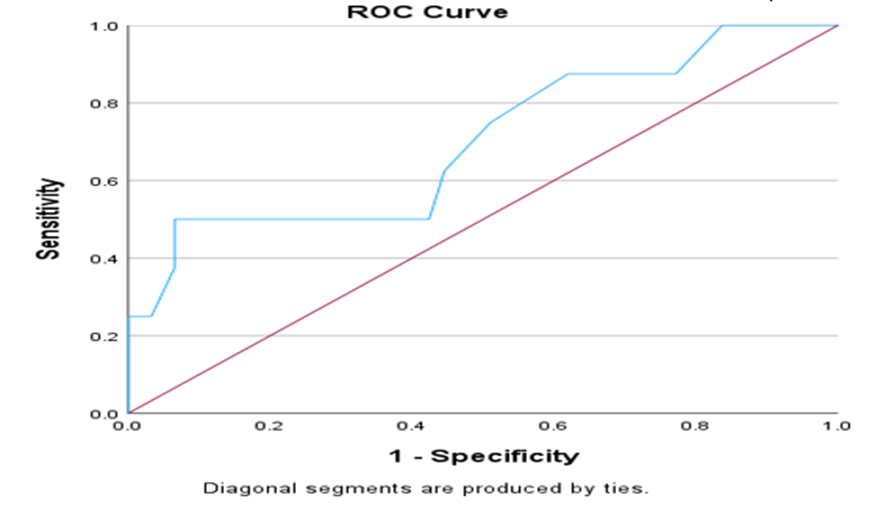
FIGURE 3: PREDICTION OF MORTALITY BY MODIFIED PRISM III SCORE
TABLE 1: MODIFIED PRISM III SCORE ≤8 AND MORTALITY
|
|
DISCHARGED |
DIED |
||
|
SCORE |
N |
% |
n |
% |
|
≤8 |
86 |
95% |
4 |
5% |
|
>8 |
6 |
60% |
4 |
40% |
Chi square value: 15.45, P value: 0.01
CHILDREN WITH MODIFIED PRISM III SCORE <8 AND >8:
Based on statistics and receiver operating curve, cut off for the Modified PRISM III score which delineates the higher mortality risk from the lower mortality risk was calculated as 8 and analysis was done for those who had score more than 8 and those who had 8 and below which showed a p value of 0.00 which was statistically significant as shown in the table. Those who have a score of less than 8 had a mortality risk of 5 % and those who crossed it had 40% mortality risk.
TABLE 2: DIAGNOSIS AND MORTALITY ANALYSIS
|
DISEASES |
TOTAL |
DISCHARGED |
DISCHARGED% |
DIED |
DIED% |
|
Neurological diseases |
10 |
8 |
80% |
2 |
20% |
|
Respiratory diseases |
21 |
19 |
90.5% |
2 |
9.5% |
|
Infection |
54 |
51 |
94% |
3 |
6% |
|
Cardiovascular diseases |
3 |
3 |
100% |
0 |
|
|
Gastrointestinal diseases |
3 |
3 |
100% |
0 |
|
|
Haematological diseases |
1 |
1 |
100% |
0 |
|
|
Renal diseases |
3 |
2 |
66% |
1 |
33% |
|
Others* |
5 |
5 |
100% |
0 |
|
*others include Diabetic ketoacidosis, Multi system inflammatory response syndrome in children (MIS-C)
The diagnoses of the children were classified into 7 broad categories and are given in table. Because of the small sample size, children with Multi system inflammatory response syndrome in children (MIS-C) and diabetic keto acidosis were included in the others’ list.
TABLE 3: NEUROLOGICAL DISEASES AND MORTALITY
|
DIAGNOSIS |
NO.OF CASES |
MORTALITY |
% |
|
NEUROLOGICAL DISEASES |
10 |
2 |
20 |
|
TUBERCULOMA |
1 |
0 |
|
|
STATUS EPILEPTICUS |
4 |
0 |
|
|
ENCEPHALITIS |
3 |
1 |
33% |
|
MENINGITIS |
1 |
0 |
|
|
HYPERTENSIVE ENCEPHALOPATHY |
1 |
1 |
100% |
TABLE 4: RESPIRATORY DISEASES AND INFECTIONS AND THEIR MORTALITY
|
RESPIRATORY DISEASES |
21 |
2 |
9.5% |
|
Bronchiolitis |
2 |
|
|
|
Pneumonia |
16 |
2 |
12.5% |
|
Acute Asthma |
2 |
|
|
|
Tuberculosis |
1 |
|
|
|
|
|
|
|
|
INFECTIONS |
54 |
3 |
6% |
|
Dengue fever |
51 |
2 |
3.9% |
|
Septic shock |
2 |
1 |
50% |
|
HIV |
1 |
0 |
|
TABLE 5: MINOR CLINICAL DIAGNOSIS AND MORTALITY
|
DIAGNOSIS |
CASES |
MORTALITY |
% |
|
CARDIOVASCULAR DISEASES |
3 |
0 |
0 |
|
Congenital acyanotic heart disease |
1 |
0 |
|
|
TB Pericarditis |
1 |
0 |
|
|
Congestive cardiac failure |
1 |
0 |
|
|
|
|
|
|
|
GASTROINTESTINAL DISEASES |
3 |
0 |
0 |
|
Viral Hepatitis |
3 |
0 |
|
|
|
|
|
|
|
HEMATOLOGICAL DISEASES |
1 |
0 |
0 |
|
Haematological malignancies |
1 |
0 |
|
|
|
|
|
|
|
RENAL DISEASES |
3 |
1 |
33% |
|
Nephritic syndrome |
2 |
0 |
|
|
Acute Renal failure |
1 |
1 |
|
|
|
|
|
|
|
OTHERS |
5 |
0 |
0% |
|
Diabetic ketoacidosis |
3 |
0 |
|
|
MIS-C |
2 |
0 |
|
TABLE 6: ASSOCIATED FACTORS AND MORTALITY
|
|
ALIVE |
DEAD |
ODD’S RATIO |
P-VALUE |
||
|
N |
% |
n |
% |
|||
|
AGE |
|
|
|
|
0.63 |
0.59 |
|
≤ 1 year |
16 |
86.6% |
2 |
13.3% |
||
|
> 1 year |
76 |
92.9% |
6 |
7.1% |
||
|
SEX |
|
|
|
|
1.02 |
0.97 |
|
Male |
57 |
91.9% |
5 |
8.1% |
||
|
Female |
35 |
92.1% |
3 |
7.9% |
||
|
SHOCK |
|
|
|
|
6.67 |
0.01 |
|
Present |
12 |
75% |
4 |
25% |
||
|
Absent |
80 |
95.2% |
4 |
4.8% |
||
|
VENTILATION |
|
|
|
|
49.4 |
0.01 |
|
Required |
3 |
37.5% |
5 |
62.5% |
||
|
Not Required |
89 |
94.7% |
3 |
5.3% |
||
|
GCS SCORE |
|
|
|
|
0.011 |
0.01 |
|
≤ 8 |
1 |
20% |
4 |
80% |
||
|
> 8 |
91 |
95.8% |
4 |
4.2% |
||
Common risk factors for poor outcome like age less than 1 year, patients with a Glasgow Coma Scale score of less than 8, those who presented with shock, those who required mechanical ventilation to find out whether there was any significant association. Sex was also analysed for poor outcome. Variables like sex, age and shock did not show any statistical significance.
In this study, 8 patients required assisted ventilation. As the requirement of assisted ventilation is a risk factor for poor outcome, it was analysed statistically. The analysis showed clearly that there was a significant correlation with a p value of less than 0.05. The average duration of assisted ventilation was 1 day.
Presence of shock is a common indication for admission to our PICU. There were 16 out of 100 cases presented with shock. Septic shock is the most common type in our PICU. Patients presented with shock were analysed statistically with those who did not present with shock and it showed significant association with mortality.
TABLE 7: UNIVARIATE ANALYSIS
|
|
ODD’S
RATIO |
95% C.I |
p- value |
|
SHOCK |
6.67 |
1.468, 30.266 |
0.01 |
|
MODIFIED PRISM III
SCORE |
14.33 |
2.853, 72.009 |
0.01 |
|
VENTILATION
REQUIRED |
49.4 |
7.88, 310.21 |
0.01 |
|
GCS |
0.011 |
0.001, 0.122 |
0.01 |
Univariate analysis for the parameters like Glasgow Coma Scale, Need for assisted ventilation, presence of shock and PRISM cut off of 8 were done. All had the p value of less than 0.01. PRISM score had the highest odds ratio than the other two. Those who had PRISM of more than 8 had about 14 times higher mortality risk than those with less than 8. Those who developed shock had 7 times higher mortality than those who did not have shock. Patients who needed assisted ventilation had 49 times higher risk than who did not need it while Glasgow Coma Scale of less than 8 had a risk <1 times more than those who had more than that.
TABLE 8: MULTIVARIATE ANALYSIS
|
|
ADJUSTED O.R |
95% C.I |
P – VALUE |
|
SHOCK |
0.683 |
0.28,16.717 |
0.81 |
|
MODIFIED
PRISM III SCORE |
1.658 |
0.85,32.225 |
0.738 |
|
VENTILATION
REQUIRED |
27.56 |
2.087,364.27 |
0.01 |
|
GCS |
0.17 |
0.00,0.686 |
0.03 |
Risk factors that were deemed to significantly contribute to mortality like PRISM III score > 8, Glasgow coma scale of less than 8 and need of assisted ventilation were further analyzed using logistic regression multivariate model. Modified PRISM III score >8 and presence of shock failed to show statically significant association in multivariate analysis but the other two namely GCS<8 and ventilation required showed statistical significance with the outcome as shown in table.
DISCUSSION:
Although pediatric intensive care has advanced considerably over the past few decades, there are relatively few reports from India regarding critical care audits and the routine application of mortality prediction scoring systems. Furthermore, studies evaluating pediatric critical care requirements in Indian settings remain limited. Since most mortality prediction models, including the PRISM III score, were originally developed and validated in Western populations, their applicability must be assessed in local patient populations before widespread adoption.
In the present study, the Modified PRISM III score demonstrated acceptable discriminative ability in predicting mortality among critically ill children admitted to the PICU, with an area under the receiver operating characteristic (ROC) curve of 0.707, indicating approximately 70% predictive accuracy. These findings are comparable to those reported by Singhal et al.16, who observed an ROC value of 72% using the PRISM score and concluded that it was an effective predictor of mortality in critically ill pediatric patients. Likewise, Surekha Joshi et al.17, in a study conducted at B.Y.L. Nair Hospital, Mumbai and presented at Pedicon 2006, also demonstrated the usefulness of the PRISM III score in predicting mortality among children admitted to the PICU.
An important consideration while interpreting PRISM III scores is the concept of lead time bias. The physiological instability with which a patient initially presents to the emergency department is often not reflected in the PRISM III score calculated after admission to the PICU. During the interval between emergency room presentation and PICU admission, several therapeutic interventions—including oxygen supplementation, fluid resuscitation, vasoactive medications, and endotracheal intubation—may normalize physiological parameters, resulting in artificially lower PRISM III scores despite the persistence of severe underlying illness. For example, a child presenting with severe hypoxemia who has already been intubated and mechanically ventilated before PICU admission may receive a lower PRISM III score than would accurately represent the initial physiological derangement. Supporting this concept, Zuckerman et al.18 demonstrated improved predictive performance when the PRISM score was calculated in the emergency department for children with submersion injuries rather than after PICU admission.
The present study also demonstrated that the Modified PRISM III score maintained comparable predictive validity across the three most common diagnostic categories encountered in Indian PICUs, namely infectious diseases, respiratory illnesses, and central nervous system disorders. Since these conditions constitute the majority of pediatric critical care admissions in India, the Modified PRISM III score may serve as a reliable prognostic tool across diverse disease categories.
The clinical utility of the Modified PRISM III score extends beyond mortality prediction. Its application provides several important advantages, including:
1. Prediction of mortality among critically ill children.
2. Objective assessment of disease severity at admission.
3. Comparison of patients with similar illness severity for clinical audits and evaluation of therapeutic interventions.
4. Benchmarking and comparison of performance between different PICUs or within the same PICU over time.
The predictive performance of PRISM III has generally remained consistent across different organ system diseases. Similar observations were reported by Fargason et al.19 while evaluating children with renal failure. Although the PRISM score was useful in assessing illness severity, it was insufficient to independently guide clinical decisions such as initiation or withholding of dialysis because of limited predictive accuracy within this subgroup. Since relatively few patients belonged to this category, larger multicentric studies are required to establish disease-specific performance.
One of the major limitations of the Modified PRISM III score is its dependence on numerous laboratory investigations. Calculation of the complete score requires extensive biochemical and hematological testing, making it relatively expensive and limiting its utility as a rapid triage tool in resource-constrained settings. In the present study, coagulation profiles could not be performed uniformly because assessment of clotting parameters was not clinically indicated for every patient admitted to the PICU.
Recent advances in pediatric critical care have increasingly favored non-invasive monitoring techniques over invasive investigations. Consequently, modified versions of PRISM III that replace certain arterial blood gas variables with clinical parameters have demonstrated discrimination comparable to the original scoring system. Earlier studies recommended the use of end-tidal carbon dioxide measurements as an alternative to arterial PaCO₂ estimation20 and advocated pulse oximetry-derived oxygen saturation (SpO₂) instead of arterial PaO₂ for evaluating respiratory failure, even in mechanically ventilated children.21 Additionally, the growing use of non-invasive ventilation (NIV) and high-flow nasal cannula (HFNC) as first-line respiratory support in children with cardiorespiratory failure and postoperative respiratory compromise has substantially reduced the need for arterial blood gas monitoring.22-24 In many clinical situations, repeated arterial sampling may even be considered ethically undesirable. Supporting this approach, Ray et al.25 demonstrated that Pediatric Index of Mortality (PIM) scores calculated using SpO₂/FiO₂ ratios were comparable to those derived from conventional PaO₂/FiO₂ measurements.
The findings of the present study also suggest that incorporation of important admission characteristics and treatment-related variables may improve the discriminative ability of the original PRISM III model. The physiological variables recorded during the initial hours following PICU admission may not adequately capture the dynamic clinical changes experienced by critically ill children, particularly those requiring prolonged intensive care. In agreement with this observation, Visser et al.26 reported that both PRISM and PIM models demonstrated lower predictive accuracy among patients remaining in the PICU for more than six days compared with those having shorter admissions.
The median duration of PICU stay among non-survivors in the present study was four days, which is comparable to findings reported in previous studies.27,28 Infectious diseases and respiratory illnesses constituted the most common indications for PICU admission in our patient population. In recent years, our institution has progressively adopted non-invasive ventilation as the preferred initial mode of respiratory support whenever clinically feasible. This strategy aims to reduce mechanical ventilation duration, ventilator-associated pneumonia, post-extubation complications, and overall PICU length of stay, consistent with current recommendations.29 Consequently, the requirement for endotracheal intubation or invasive mechanical ventilation at admission generally reflects either failure of non-invasive respiratory support or greater severity of illness, similar to previous observations.30,31
Yaman et al.22 similarly reported that children experiencing failure of non-invasive ventilation had significantly higher Modified PRISM III scores, longer PICU stays, a greater prevalence of underlying chronic illnesses, and higher mortality rates. High-frequency oscillatory ventilation (HFOV), on the other hand, is generally reserved as rescue therapy for patients with refractory hypoxemia, particularly in acute respiratory distress syndrome (ARDS). However, current evidence remains insufficient to demonstrate a mortality benefit with HFOV. Moreover, HFOV is frequently associated with increased use of sedatives, vasoactive agents, and neuromuscular blocking drugs and has been linked to poorer PICU outcomes and increased mortality.32 HFOV was not utilized in our study population.
CONCLUSION:
The Modified PRISM III score is a simple, objective, and reliable tool for assessing disease severity and predicting mortality among critically ill children admitted to the Pediatric Intensive Care Unit. In the present study, the score demonstrated acceptable discriminative ability, with higher PRISM III scores being significantly associated with increased mortality, thereby supporting its usefulness in early risk stratification and prognostication. Beyond mortality prediction, the Modified PRISM III score provides an objective measure of illness severity that facilitates clinical decision-making, optimal resource allocation, performance evaluation, and comparison of outcomes across PICUs. Although certain limitations, including dependence on laboratory investigations and the influence of pre-PICU interventions on physiological variables, may affect its predictive performance, the score remains a valuable instrument for clinical audit and quality improvement in pediatric critical care. Larger multicentric studies are warranted to further validate its applicability in diverse Indian healthcare settings and to refine mortality prediction models that better reflect contemporary pediatric intensive care practices.
REFERENCES:
1. Yeh TS, Pollack MM, Ruttimann UE, Holbrook PR, Fields AI. Validation of a physiologic stability index for use in critically ill infants and children. Pediatr Res. 1984;18(5):445-51.
2. Pollack MM, Patel KM, Ruttimann UE. PRISM III: An updated Pediatric Risk of Mortality score. Crit Care Med. 1996;24(5):743-52.
3. Pollack MM, Patel KM, Ruttimann UE. The Pediatric Risk of Mortality III-Acute Physiology Score (PRISM III-APS): A method of assessing physiologic instability for pediatric intensive care unit patients. J Pediatr. 1997;131(4):575-81.
4. Shann F, Pearson G, Slater A, Wilkinson K. Paediatric Index of Mortality (PIM): A mortality prediction model for children in intensive care. Intensive Care Med. 1997;23(2):201-7.
5. Leteurtre S, Martinot A, Duhamel A, et al. Development of the Pediatric Logistic Organ Dysfunction (PELOD) score. Intensive Care Med. 2003;29(10):186-93.
6. Pollack MM, Ruttimann UE, Getson PR. Pediatric Risk of Mortality (PRISM) score. Crit Care Med. 1988;16(11):1110-6.
7. Pollack MM, Holubkov R, Funai T, et al. Relationship between the functional status scale and pediatric mortality. Pediatr Crit Care Med. 2014;15(9):794-800.
8. Ponce-Ponce de León AL, Romero-Gutiérrez G, Aldana-Valenzuela C, González-Bravo FE. Simplified PRISM III score and outcome in the pediatric intensive care unit. Pediatr Int. 2005;47(1):80-3.
9. Thukral A, Lodha R, Irshad M, Arora NK. Performance of Pediatric Risk of Mortality (PRISM), Pediatric Index of Mortality (PIM), and PIM2 in a pediatric intensive care unit in a developing country. Pediatr Crit Care Med. 2006;7(4):356-61.
10. Khilnani P, Sarma D, Singh R, et al. Demographic profile and outcome analysis of pediatric intensive care patients. Indian Pediatr. 2004;41:990-5.
11. Singhal D, Kumar N, Puliyel JM, Singh SK, Srinivas V. Prediction of mortality by application of PRISM score in intensive care unit. Indian Pediatr. 2001;38(7):714-9.
12. Varma A, Damke S, Meshram R, Vagha J, Kher A, Vagha K. Prediction of mortality by Pediatric Risk of Mortality (PRISM III) score in tertiary care rural hospital in India. Int J Contemp Pediatr. 2017;4(1):45-50.
13. Shah AA, Goyal D, Sareen D. Prediction of the risk of mortality in paediatric intensive care unit using PRISM III score. Int J Contemp Pediatr. 2019;6(3):1186-9.
14. Vijayaraghavan S, Sasivarathan R. Pediatric risk of mortality III score in predicting mortality in children with altered sensorium in pediatric intensive care unit. Int J Contemp Pediatr. 2019;6(4):1658-63.
15. Khanna A, Sandeep, Neha, Prajapati J. Predictive accuracy of the PRISM III score for mortality among critically ill children admitted to a tertiary care paediatric intensive care unit. J Popul Ther Clin Pharmacol. 2025.
16. Singhal D,Kumar N, Puliyel JM, Singh SK, Srinivas V. Prediction of mortality by application of PRISM score in Intensive Care Unit . Indian Pediatrics 2001; 38: 714 – 719.
17. Surekha Joshi,Chetan Padis,Sushma Save,Sonali Tank. Predicting mortality in PICU based on PRISMIII score. pedicon 2006 ; IC/ 06 (O): 86.
18. Zuckerman MD, Gregory PM, Suzanne M; Predictors of Death and Neurological Impairment in Pediatric Submersion Injuries. Arch Pediatr Adolesc Med 998;152: 134-40.
19. Fargason CA, Langman CB. Limitations of the pediatric risk of mortality score in assessing children with acute renal failure. Pediatr Nephrol 1993; 7:703-707.
20. Baudin F, Bourgoin P, Brossier D, Essouri S, Emeriaud G, Wysocki M, et al. Noninvasive estimation of arterial CO2 from end-tidal CO2 in mechanically ventilated children: The GRAeDIENT pilot study. Pediatr Crit Care Med 2016;17:1117-23.
21. Khemani RG, Thomas NJ, Venkatachalam V, Scimeme JP, Berutti T, Schneider JB, et al. Comparison of SpO2 to PaO2 based markers of lung disease severity for children with acute lung injury. Crit Care Med 2012;40:1309-16.
22. Yaman A, Kendirli T, Ödek Ç, Ateş C, Taşyapar N, Güneş M, et al. Efficacy of noninvasive mechanical ventilation in prevention of intubation and reintubation in the pediatric Intensive Care Unit. J Crit Care 2016;32:175-81.
23. Coletti KD, Bagdure DN, Walker LK, Remy KE, Custer JW. High-flow nasal cannula utilization in pediatric critical care. Respir Care 2017;62:1023-9.
24. Kneyber MC, de Luca D, Calderini E, Jarreau PH, Javouhey E, Lopez-Herce J, et al. Recommendations for mechanical ventilation of critically ill children from the paediatric mechanical ventilation consensus conference (PEMVECC). Intensive Care Med 2017;43:1764-80.
25. Ray S, Rogers L, Pagel C, Raman S, Peters MJ, Ramnarayan P, et al. PaO2/FIO2 ratio derived from the spO2/FIO2 ratio to improve mortality prediction using the pediatric index of mortality-3 score in transported intensive care admissions. Pediatr Crit Care Med 2017;18:e131-6.
26. Visser IH, Hazelzet JA, Albers MJ, Verlaat CW, Hogenbirk K, van Woensel JB, et al. Mortality prediction models for pediatric intensive care: Comparison of overall and subgroup specific performance. Intensive Care Med 2013;39:942-50.
27. Briassoulis G, Filippou O, Natsi L, Mavrikiou M, Hatzis T. Acute and chronic paediatric intensive care patients: Current trends and perspectives on resource utilization. QJM 2004;97:507-18.
28. Marcin JP, Slonim AD, Pollack MM, Ruttimann UE. Long-stay patients in the pediatric Intensive Care Unit. Crit Care Med 2001;29:652-7.
29. Morris JV, Ramnarayan P, Parslow RC, Fleming SJ. Outcomes for children receiving non-invasive ventilation as the first-line mode of mechanical ventilation at intensive care admission: A Propensity score-matched cohort study. Crit Care Med 2017;45:1045-53.
30. Costa GA, Delgado AF, Ferraro A, Okay TS. Application of the pediatric risk of mortality (PRISM) score and determination of mortality risk factors in a tertiary pediatric Intensive Care Unit. Clinics (Sao Paulo) 2010;65:1087-92.
31. Faraci M, Bagnasco F, Giardino S, Conte M, Micalizzi C, Castagnola E, et al. Intensive Care Unit admission in children with malignant or non-malignant disease: Incidence, outcome, and prognostic factors: A single-center experience. J Pediatr Hematol Oncol 2014;36:e403-9.
32. Ferguson ND, Cook DJ, Guyatt GH, Mehta S, Hand L, Austin P, et al. High-frequency oscillation in early acute respiratory distress syndrome. N Engl J Med 2013;368:795-805.