ROLE OF NUCLEATED RED BLOOD CELLS AS A DIAGNOSTIC MARKER IN LATE ONSET NEONATAL SEPSIS.
- Nand Lal Choudhary , MBBS, DCH, DNB, Fellowship in Neonatology, Sr Paediatric & Neonatology, Esic Medical College and Hospital, Jaipur.
- Rajesh Kanwar , Senior Resident Paediatric Department Esic Medical College and Hospital Jaipur.
- Vikas Meena , MBBS, MD Paediatric CBM Hospital and Research Centre, Manglana Road, Makrana.
- Pankaj Kumar Sharma , CMO, ESIC Medical College and Hospital Jaipur.
Article Information:
Abstract:
INTRODUCTION: Neonatal mortality in India continues to remain a major health problem. According to the 2010 census, the neonatal mortality rate in our country was 33/1000 live births. AIM: To determine usefulness of NRBC count in peripheral blood for diagnosis of late onset sepsis in newborns. METHODOLOGY: This descriptive cross-sectional study was conducted in the Department of Pediatrics at Swami Dayanand Hospital from 1 February 2019 to November 2019. RESULT: The study found that CRP, WBC count, ANC, and platelet count were significantly associated with proven neonatal sepsis, while NRBC showed poor sensitivity and low diagnostic accuracy despite good specificity. CONCLUSION: NRBC alone is not a reliable diagnostic marker for neonatal sepsis due to its low sensitivity and poor overall accuracy. Established markers such as CRP, WBC count, ANC, and platelet count remain more useful for early diagnosis and assessment of neonatal sepsis.
Keywords:
Article :
INTRODUCTION:
Neonatal mortality in India continues to remain a major health problem. According to the 2010 census, the neonatal mortality rate in our country was 33/1000 live births. Neonatal sepsis is defined as “the clinical syndrome characterized by systemic signs and symptoms of infection in the first month of life”.1 The presence of signs & symptoms distinguishes this condition from transient bacteraemia observed in some healthy neonates. Early onset sepsis contribute 67% of all sepsis and rest by late onset sepsis Infection can be transmitted from mother to fetus or new born by diverse modes.New born infants are less capable of responding to infection because of immature immune system.Coexisting condition often complicates the diagnosis & management of neonatal infection.2
Clinical manifestation of new born infections vary & include sub clinical infection, mild to severe manifestation of focal or systemic infection.Neonatal sepsis can be classified into two major categories:Early onset sepsis (EOS): It presents within the first 72 hours of life. In severe cases, the neonate may be symptomatic at birth. Late onset sepsis (LOS): It presents after 72 hours of age up to 28 days3. The earliest signs of sepsis are often subtle and nonspecific and need a high index of suspicion for early diagnosis. The diagnosis of neonatal sepsis is not possible on the basis of the clinical symptoms alone.Although isolation of the causative microorganisms by using blood culture has been the gold standard method for its diagnosis, the result is ready only 24-72 hrs after the sampling and during this period, it is necessary to treat the suspicious infants for sepsis with antibiotics on the basis of the clinical symptoms and the risk factors4.
Therefore, using fast diagnostic methods including laboratory markers could be beneficial for the diagnosis of neonatal sepsis. In addition to the blood culture, other tests that are usually used for the diagnosis of neonatal sepsis include estimations of the white blood cell count (WBC), the absolute neutrophil count (ANC),Platelet count, micro ESR, CRP and the I/T ratio, NRBC count, blood glucose level, serum lactate level or base excess . NRBCs are immature erythrocytes in blood which are released from the bone marrow in response to stress in the form of sepsis, birth asphyxia, hemolytic disease, hemorrhage and severe anemia. Nucleated RBCs are in the peripheral blood of normal infants up to the fifth day of life5,6. At birth, 3 to 10 NRBCs per 100 WBCs are present. Premature birth and fetal hypoxia can cause this number to increase. Beyond the neonatal period, the presence of NRBCs in the peripheral blood is usually associated with severe infections, malignant neoplasms, bone marrow diseases, and other serious disorders7.The present study was done to assess if NRBC can be used as a marker to diagnose late onset sepsis as it is simple to perform. This study was done to provide us data on role of NRBC count in diagnosis of late onset sepsis in newborns.
AIM
To determine usefulness of NRBC count in peripheral blood for diagnosis of late onset sepsis in newborns.
METHODOLOGY :
This descriptive cross-sectional study was conducted in the Department of Pediatrics at Swami Dayanand Hospital from 1 February 2019 to November 2019.A Sample of 70 newborns admitted in the pediatric department with features of sepsis in age group completed 72 hr to 28 days of life. The inclusion criteria comprised all newborns admitted in the pediatric department with suspected sepsis presenting between completed 72 hours and 28 days of life. Neonates have features of sepsis if they exhibited two or more clinical signs and symptoms suggestive of infection.
These included modified body temperature such as axillary temperature greater than 37.5°C or less than 36.5°C and/or temperature instability; cardiovascular instability including bradycardia (heart rate <90/min in the absence of external vagal stimulus, beta-blockers, or congenital heart disease), tachycardia (heart rate >180/min in the absence of external stimulus), rhythm instability, mottled skin, or impaired peripheral perfusion; skin and subcutaneous lesions such as petechial rash or sclerema; respiratory instability including apnea episodes, tachypnea (respiratory rate >60/min), increased oxygen requirement, or need for ventilatory support; gastrointestinal manifestations such as feeding intolerance, poor sucking, and abdominal distension; and non-specific features including irritability, lethargy, and hypotonia.
Neonates with conditions that could alter hematological parameters were excluded from the study. The exclusion criteria included birth asphyxia with APGAR score less than 7 at 1 minute, severe anemia (hemoglobin <10 g/dL), hemorrhagic conditions such as cephalhematoma, gastrointestinal bleeding, or umbilical bleeding, Rh or ABO isoimmunization, and neonates with gross congenital anomalies.
RESULTS:
Table 1:Demographic Characteristics
|
Row Labels |
Average of AGE(D) |
Std Dev of AGE(D) |
Median |
IQR |
P |
|
Clinical Sepsis |
11 |
8.18 |
6 |
5-20 |
0.684 |
|
Probable Sepsis |
8.96 |
6.76 |
5 |
4.5-13 |
|
|
Proven Sepsis |
9.68 |
8.54 |
5 |
4-12.25 |
|
|
Grand Total |
9.68 |
7.63 |
5 |
4-14.75 |
The mean age of newborns enrolled in study was 9.68 (SD 7.68) Days with median age of 5 days and IQR of 4-14.75 days. In group A, mean age of newborns was 11( 8.18) days ,median 6 days and IQR 5-20 days .In group B, mean age of newborns was 8.96 (SD 6.76 )days ,median 5 days and IQR was 4.5-13 days . Similarly in group C, mean age of newborns was 9.68(SD 7.63 days), median 5 days and IQR was 4-12.25 days. The mean age and median age of newborns compared with three groups was statistically not significant (p >0.5).
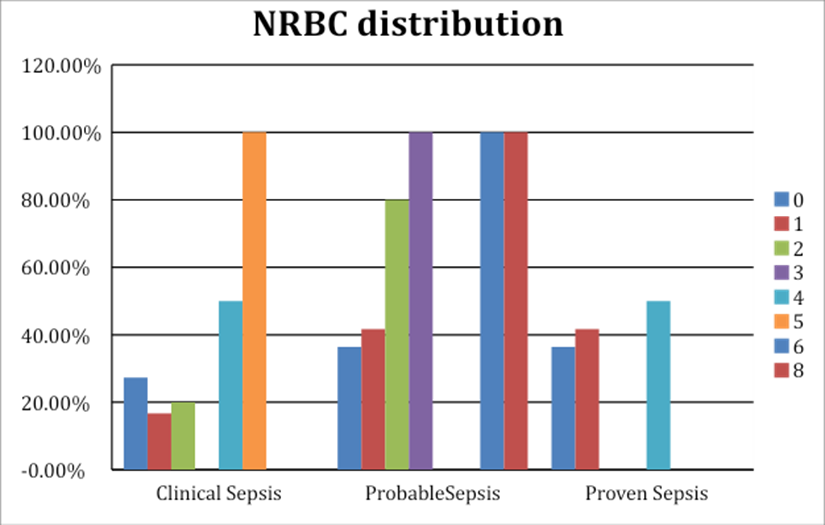
Figure 1:Distribution of NRBC in the groups
We included 70 newborns in our study according to study criteria .Out of 70 newborns 7(10%) had NRBC >3/100 WBC and 63(90%) had <3/100 WBC
Table 2:Distribution of particular parameters
|
Parameters |
Group A |
Group B |
Group C |
P |
|
WBC <5000->20000. 5000-20000 |
2 15 |
9 22 |
15 7 |
0.011 |
|
ANC <1800 >1800 |
1 16 |
6 25 |
14 8 |
0.002 |
|
I/T ratio >0.2 <0.2 |
6 11 |
22 9 |
18 4 |
0.5598 |
|
PC <1 lac >1 lac |
0 17 |
10 21 |
15 7 |
0.0213 |
|
mESR >15 <15 |
16 1 |
20 11 |
17 5 |
0.0213 |
|
CRP Positive Negative |
2 15 |
20 11 |
20 2 |
0.0278
|
|
RBS <45 45-180 |
0 17 |
13 18 |
5 17 |
0.145 |
|
BE <-10 >-10 |
17 0 |
21 10 |
11 11 |
0.3102 |
|
Lactate >2 <2 |
1 16 |
18 13 |
17 5 |
0.2453 |
|
NRBC >3 <3 |
2 15 |
4 27 |
1 21 |
0.388 |
A statistically significant association was observed for WBC count (p=0.011), ANC (p=0.002), platelet count (p=0.0213), mESR (p=0.0213), and CRP (p=0.0278). Abnormal values were more observed in Group B and Group C compared to Group A.In contrast, I/T ratio, RBS, base excess, lactate, and NRBC did not show a statistically significant association (p>0.05).
Table 3: Distribution of laboratory parameters according to NRBC
|
Parameters |
NRBC >3 |
NRBC <3 |
P value |
|
WBC <5000->20000 5000-200000 |
2 3 |
22 26 |
0.591 |
|
ANC <1800 >1800 |
2 3 |
18 30 |
0.632 |
|
I/T ratio >0.2 <0.2 |
. 4 1 |
36 12 |
0.643 |
|
Platelet count <1 lac >1 lac |
3 2 |
22 26 |
0.657 |
|
Micro ESR >15. <15 |
5 0 |
33 15 |
. 0.305
|
|
CRP Positive Negative |
3 4 |
39 24 |
0.303 |
|
RBS <45 45-185 |
2 3 |
16 32 |
0.558 |
|
Base Excess >-10 mEq/L <-10 mEq/L |
2 3 |
19 29 |
0.666 |
|
Lactate >2 <2 |
3 2 |
32 16 |
0.558 |
|
Blood culture Positive Sterile |
1 4 |
21 27 |
0.388 |
The relative percentages of the laid down WBC, ANC, IT ratio, mESR, Platelet, CRP, Base excess, lactate, RBS and Blood cultures were not significantly different amongst the groups. Platelet count, IT ratio and mESR were found to be more with nRBCs >3/100 WBC though not statistically different.
Table 4:Comparison of NRBC with various Laboratory parameters:
|
Parameters |
Sn |
Sp |
PLR |
NLR |
PPV |
NPV |
|
WBC |
68% |
77% |
2.98 |
0.41 |
58% |
84% |
|
Plat |
68% |
79% |
3.27 |
0.40 |
60% |
84% |
|
ANC |
64% |
85% |
4.36 |
0.43 |
67% |
84% |
|
I/T ratio |
82% |
42% |
1.40 |
0.44 |
39% |
83% |
|
mESR |
77% |
56% |
1.77 |
0.40 |
45% |
84% |
|
CRP |
91% |
54% |
1.98 |
0.17 |
48% |
93% |
|
RBS |
23% |
75% |
0.91 |
1.03 |
29% |
68% |
|
BE |
50% |
79% |
2.40 |
0.63 |
52% |
78% |
|
Lactate |
77% |
60% |
1.95 |
0.38 |
47% |
85% |
|
NRBC |
4.5% |
87.5% |
0.36 |
1.09 |
14.29% |
66.67% |
CRP demonstrated the highest sensitivity (91%) and negative predictive value (93%), while ANC showed the highest positive ratio (4.36) and PPV (67%). Platelet count, WBC count, lactate, and mESR also showed moderate diagnostic utility with sensitivity, specificity, and predictive values.NRBC exhibited the highest specificity (87.5%) but showed very low sensitivity (4.5%), low PPV (14.29%), and the highest negative likelihood ratio (1.09).
Table 5:Characteristics of NRBC in respect of the CRP
|
Parameters |
Sensitivity |
Specificity |
PLR |
NLR |
PPV |
NPV |
Accuracy |
|
NRBC |
7% |
86% |
0.50 |
1.08 |
43% |
38% |
39% |
NRBC demonstrated very low sensitivity (7%) with moderate specificity (86%) in diagnosing neonatal sepsis, indicating that it failed to identify a large proportion of true positive cases. The parameter also showed poor accuracy (39%), low PPV (43%), low NPV (38%), a low positive likelihood ratio (0.50), and a high negative likelihood ratio (1.08).
DISCUSSION:
The mean age and median age of newborns compared within the three groups was statistically not significant (p >0.5) . The majority of the studies have compared early onset sepsis ( <72 hrs) Vs late onset sepsis(>72 hrs) only.
In the present study, out of 70 newborns with late onset sepsis of three categories, 7(10%) had NRBC >3/100 WBC and 63(90%) had <3/100 WBC. Mean nucleated red cell count was 0.98(SD 1.86)/100 WBC. In group A, B and C newborns with NRBC >3/100 WBC were 2/17(%), 4/31(%) and 1/22(77%) respectively that was statistically not significant amongst the groups B & C. The relative percentages of the laid down WBC , ANC, IT ratio, mESR, Platelet, CRP, Base excess, lactate , RBS and Blood cultures were not significantly different amongst the groups. Platelet count, IT ratio and mESR as per the study criteria were found to be more with nRBCs >3/100 WBC though not statistically different. Dhananjay BS et al8 in their study found that in 27 neonates who developed sepsis, mean cord blood NRBC was 10.33% while in 43 neonates who did not develop sepsis it was 6.63%. The P value of the test was statistically significant i.e. p <.05.
The number of nucleated RBCs/100WBC (as categorized above and below 3 nRBCs/100 WBC ) was compared with the laboratory parameters as shown in table 9. The relative percentages of the laid downWBC , ANC, IT ratio, mESR, Platelet, CRP, Base excess, lactate , RBS and Blood cultures were not significantly different amongst the groups. Platelet count, IT ratio and mESR as per the study criteria were found to be more with nRBCs >3/100 WBC though not statistically different.
CRP is the most sensitive marker for the diagnosis of the neonatal sepsis so we compared the NRBC with the CRP .We concluded that sensitivity of the CRP was very poor but specificity was good and accuracy comparison to NRBC was 39% only.
In group A ( clinical sepsis) , WBC (<5000->20000) as per criteria laid upon in the study to diagnose sepsis was found in 2/17(12%) on newborns ;in group B ( probable sepsis) it was in 9/31(29%) while in group C (proven sepsis) 15/22(68%) of babies fulfilled the above criteria values. The difference amongst groups B and group C was found to be statistically significant with p value of .011 Gerdes JS and Polin R (1998)9 in their study reported the sensitivity and specificity of leucopenia to be 26% and 91% respectively in diagnosing septicemia . A significant value of ANC< 1800 was found in 1/17 ( 6%), 6/31(19%) and 14/22(64%) in groups A, B and C respectively.The difference amongst groups B and group C was found to be statistically significant with p value of .002Parikh M10 (1998) observed that neutropenia had a sensitivity range of 38-96% and specificity range of 61-92 % in diagnosing septicemia in their study
In group A such I/T ratio was seen in 1/17(6%), while in group B 6/31(19%) and in group 14/22(63.63%)The difference amongst groups B and group C was found to be statistically not significant with p value of 0.55which is >.05. In our study in group B and group C platelets (<1 lac/mm3) were 10/31 & /15/22 newborns difference was significant amongst these group (p <.02)Our study was more similar with Sriram et al11 in this aspect their study found that thrombocytopenia is a good marker for diagnosis of neonatal sepsis. C-reactive protein ( CRP) > 1mg/dl: CRP of the above mentioned values were seen in 2/17, 20/31 & 20/22 in groups A, B & C respectively. The difference amongst groups B and group C was found to be statistically significant with p value of <.05.Goyal et al12 found CRP with sensitivity and specificity 90 % and 83.21% respectively. Hypoglycemia as defined < 45 mg/dl was found only in groups B & C in 13/31 & 5/22 respectively.The difference amongst groups B and group C was found to be statistically significant with p value of <.05.
In our study sensitivity, specificity, PPV, NPV for RBS in diagnosis of the neonatal sepsis is 23%, 75%,29% and 38% respectively. It was seen in 10/31 ( %) & 11/22 ( %) in groups B & C respectively. The difference amongst groups B and group C was found to be statistically significant with p value of <.05. It was seen in 1/17 (%),18/31(%) & 17/22 in group A,B & C respectively The difference amongst groups B and group C was found to be statistically not significant with p value of <.05. Iskandar A et al13 used a cut-off ≥ 2.5 mmol/L and showed the sensitivity and specificity of 66.7% and 76.2% respectively which is similar to our findings of 70% & 60% sensitivity and specificity respectively. In our study 22 newborns (31.4%) had culture positive out of 70 newborns . Staph aureus was the most common isolated organism 10/22 (54.4%) which was followed by Klebsilla 4/22(18%) and Acinetonacter 4/22(18%). E.coli 3/22 (14%) and candida 1/22(4.5%) were the other two organisms isolated.
CONCLUSION:
The study demonstrated that NRBC count had low sensitivity and low overall accuracy, despite having relatively good specificity. Only some neonates with sepsis showed NRBC values >3/100 WBC, and no statistically significant association between NRBC levels and severity groups of sepsis. CRP is the most sensitive marker with the highest negative predictive value, making it a useful tool to detect neonatal sepsis. WBC count, absolute neutrophil count (ANC), platelet count, and CRP showed significant association, whereas I/T ratio, lactate, base excess, RBS, and NRBC did not show statistical significance. Thrombocytopenia and neutropenia were more frequently associated with culture-positive sepsis. Overall, NRBC should not be used as an isolated marker for diagnosis of neonatal sepsis. Instead, it can be used along with established clinical findings and laboratory markers such as CRP, WBC count, ANC, and platelet count for better diagnostic accuracy and early identification of neonatal sepsis.
REFERENCES:
1. Ghai OP, Gupta P, Paul VK. Essential paediat-rics, 5th ed., 2003; 141-142.
2. Nelson Waldo: Textbook of Paediatrics, vol-ume -1 Chapter 109, Page 915. 18th ed. 23-639.
3. Stoll BJ. The global impact of neonatal infec-tion. Clin Perinatol. 1997;24:1-21.Mathur NB. Neonatal sepsis. Indian Pedi-atr1996;33:663-74.
4. Abhishek MG, Sanjay M. Diagnostic efficacy of nucleated red blood cell count in the early diagnosis of neonatal sepsis. Indian J Pathol Oncol 2015;2:182-5.
5. Kulandaivel M, Manu A. Nucleated Red Blood Cell Count as Earliest Prognostic Marker for Adverse Neonatal Outcome in Neonatal Sepsis. Int J Sci Stud 2019;6(12):117-120.
6. Ashok KD. For the investigators of the national neonatal perinatal database (NNPD). Changing pattern of bacteriologic profile in neonatal sepsis among intramural babies. J Neonatol 2006;20:8-15.
7. Mouzinho A, Rosenfeld CR, Sanchez PJ, Risser R. Revised reference ranges for circulating neutrophils in very-low-birth-weight neonates. Pediatrics 1994;94:76-82.
8. Dhananjay BS, Sunil KN. Comparison of biochemical and pathological markers in neonates with sepsis and neonates without sepsis. Int J Biol Med Res. 2011;2(4):1131-4
9. Gerdes JS, Polin R. Early diagnosis and treatment of neonatal sepsis. Indian J Pediatr. 1998 Jan-Feb;65(1):63-78. doi: 10.1007/BF02849696. PMID: 10771948.
10. Parikh M, Singh N. Rapid diagnosis of neonatal septicemia. Indian J Med Microbiol.1995;13: 37-40
11. Sriram R. Correlation of Blood culture results with the Sepsis score and the Sepsis screen in the diagnosis of Neonatal Septicemia. Int J Biol Med Res. 2011; 2(1): 360-368.
12. Goyal, G. (2015). Role of C-Reactive Protein (CRP) as a screening tool in early diagnosis of neonatal septicemia. International Journal of Biomedical Research. https://doi.org/10.7439/IJBR
13. Iskandar, A., Pranidya, N.P., Sulistijono, E. and Aryati, A. 2019. Correlation between Lactic Acid Concentration and The Severity of Neonatal Sepsis. INDONESIAN JOURNAL OF CLINICAL PATHOLOGY AND MEDICAL LABORATORY. 26, 1 (Nov. 2019), 55–59. DOI:https://doi.org/10.24293/ijcpml.v26i1.1370.