EVALUATION OF CRITICALLY ILL OBSTETRIC WOMEN ADMITTED IN ICU OF C.R. Gardi HOSPITAL, UJJAIN.
- Priyamvada Saraf , Infertility Specialist, Obstetrician & Gynecologist, KKS UROLOGY & General Hospital Jaipur.
- Kalpana Mahadik , Professor, Department of Obstetrician & Gynecologist, RD GARDI Medical College, Ujjain.
Article Information:
Abstract:
INTRODUCTION: According to the World Health Organization (WHO, 2008), “There is a story behind every maternal death or life-threatening complication, and understanding the lessons learnt can help avoid such complications.” AIM: To evaluate critically ill obstetric women based on hematological, radiological, and biochemical investigations performed during ICU stay, and the maternal outcomes in terms of morbidity and mortality. METHODOLOGY: This prospective observational study was conducted at the Obstetric Intensive Care Unit (ICU) of C.R. Gardi Hospital, Ujjain, from November 2015 to May 2017. A sample of 115 antepartum, postpartum, and post-abortal women requiring obstetric ICU admission were recruited for the study after obtaining approval from the Institutional Ethical Committee. RESULT: Out of 115 critically ill obstetric patients admitted to the ICU, hypertensive disorders of pregnancy and obstetric hemorrhage were the most common causes of admission. Most patients survived following timely multidisciplinary management, while maternal mortality was observed in 8 patients with severe obstetric and medical complications. CONCLUSION: Early diagnosis, timely referral, and prompt intensive care management significantly improve maternal outcomes among critically ill obstetric patients. Strengthening antenatal care services and critical care facilities can help reduce maternal morbidity and mortality.
Keywords:
Article :
INTRODUCTION:
According to the World Health Organization (WHO, 2008), “There is a story behind every maternal death or life-threatening complication, and understanding the lessons learnt can help avoid such complications1.” Pregnancy, delivery, and the puerperium are physiological processes, yet they can sometimes become complicated . The management of critically ill obstetric patients in the ICU is challenging as it involves the care of both mother and fetus . Nearly 1% of obstetric patients require strict observation and immediate management. eclampsia, preeclampsia, antepartum haemorrhage (APH), postpartum haemorrhage (PPH), amniotic fluid embolism, infections and peripartum cardiomyopathy are some of the conditions that need observation2,3 . pre-existing medical diseases like congenital heart disease, rheumatic and non-rheumatic valvular disorders, pulmonary hypertension, anaemia and renal failure worsen during pregnancy and need critical care4 .
Other conditions such as trauma, asthma, diabetes mellitus, and autoimmune disorders can also contribute to maternal morbidity and admission to the ICU that are not related to pregnancy.Maternal mortality was defined by the WHO as the death of a woman while pregnant or within 42 days of termination of pregnancy, irrespective of the duration and site of pregnancy, from any cause related to or aggravated by the pregnancy or its management, but not from accidental or incidental causes.5 The obstetric deaths are divided into two causes: direct and indirect. complications of pregnancy during labour or the puerperium are direct causes . While Indirect obstetric deaths are caused by medical conditions that are aggravated by pregnancy.
According to previous studies hypertensive disorders, obstetric haemorrhage, sepsis, severe anaemia and cardiac diseases are common causes of ICU admission.6-9In India there is continuous increase of maternal mortality despite improvements in healthcare services10,11. Early detection of complications, referral, and intensive care management can reduce maternal mortality and improve fetal outcomes12,13. Therefore, evaluating the indications, clinical course, interventions, maternal outcomes, and perinatal outcomes of obstetric ICU admissions is essential for identifying preventable factors and improving the quality of maternal healthcare services.
AIM
To evaluate critically ill obstetric women based on hematological, radiological, and biochemical investigations performed during ICU stay, and the maternal outcomes in terms of morbidity and mortality.
METHODOLOGY :
This prospective observational study was conducted at the Obstetric Intensive Care Unit (ICU) of C.R. Gardi Hospital, Ujjain, from November 2015 to May 2017. A sample of 115 antepartum, postpartum, and post-abortal women requiring obstetric ICU admission were recruited for the study after obtaining approval from the Institutional Ethical Committee. This study aimed to evaluate the clinical profile, indications for ICU admission, investigations performed, treatment provided, and maternal outcomes among critically ill obstetric patients.
Detailed information regarding demographic characteristics, obstetric and medical history, clinical status at the time of hospital admission, was collected . The study was conducted in a Level 3 ICU . The multidisciplinary critical care team consisted of obstetricians, anesthesiologists, physicians, surgeons, pediatricians, pathologists, radiologists, and trained nursing staff, for management of critically ill obstetric patients.
RESULTS:
Table 1:Distribution of Women According to Previous Antenatal care (n=115).
|
Previous ante natal care |
Number |
Percentage |
|
Yes |
52 |
45.2 |
|
No |
63 |
54.8 |
|
Total |
115 |
100.0 |
Among the 115 study participants, 52 women (45.2%) had received previous antenatal care, whereas 63 women (54.8%) had not received any antenatal care. The majority of patients admitted to the obstetric ICU were unbooked cases without prior antenatal supervision.
Table 2:Hematological, Radiological, Biochemical Investigations
|
Hematological |
10 TO 12 |
49 |
42.6 |
|
13 TO 15 |
61 |
53.0 |
|
|
>15 |
5 |
4.3 |
|
|
Radiological |
00 TO 01 |
90 |
78.3 |
|
02 TO 03 |
25 |
21.7 |
|
|
>3 |
0 |
0.0 |
|
|
Biochemical |
07-09 |
42 |
36.5 |
|
10-12 |
65 |
56.5 |
|
|
>13 |
8 |
7.0 |
|
|
|
Total |
115 |
100.0 |
The majority of patients underwent 13–15 hematological investigations (53.0%), while most women had 0–1 radiological investigations (78.3%). Regarding biochemical investigations, 56.5% of patients underwent 10–12 investigations, whereas only a small proportion required more extensive evaluations.
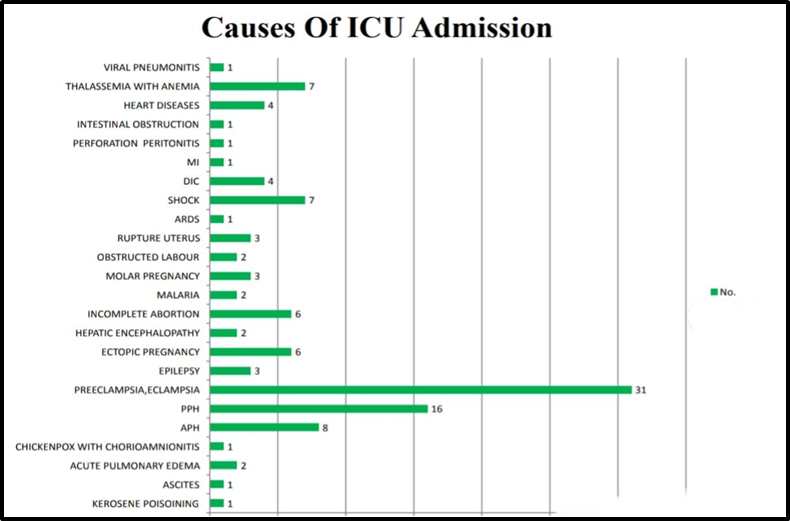
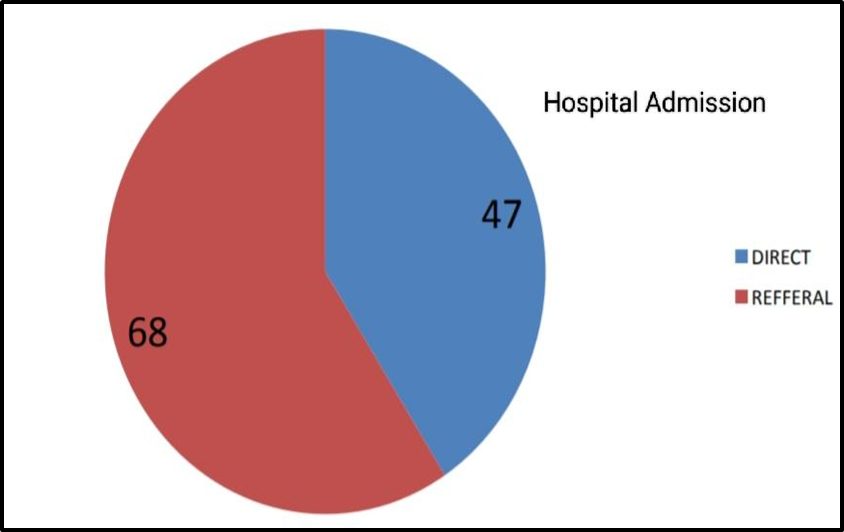
Figure 1,2:Causes Of ICU Admission
Preeclampsia and eclampsia were the most common causes of obstetric ICU admission, accounting for 31 cases, followed by postpartum hemorrhage (16 cases) and abruptio placentae (8 cases). Other important indications included shock, thalassemia with anemia, incomplete abortion, ectopic pregnancy, disseminated intravascular coagulation, and various medical and surgical complications requiring intensive care management.
Among the total study participants, 68 patients were referred from other healthcare centers, whereas 47 patients were admitted directly to the hospital. The higher proportion of referred cases suggests that many critically ill obstetric patients required transfer from peripheral centers for advanced intensive care management.
Table 3:Distribution Of Women According To modes of Interventions
|
Modes of Interventions |
No. |
% |
|
Mechanical Ventilation |
15 |
13.0 |
|
Blood and Components |
60 |
52.2 |
|
Ionotropes & infusion pump |
13 |
11.3 |
|
Anti-ht & infusion pump |
25 |
21.7 |
|
Anti-convul |
5 |
4.3 |
|
Cesarean |
42 |
36.5 |
|
Laparotomy |
9 |
7.8 |
|
Repair OF Rupture of uterus |
3 |
2.6 |
|
Hysterotmy |
1 |
0.9 |
|
B/l iil&uterine artery ligation |
3 |
2.6 |
|
B lynch suture |
2 |
1.7 |
|
Destructive Surgeries(symphysiotomy, cleidotomy,decapitation) |
1 |
0.9 |
|
Metx injection |
1 |
0.9 |
|
Instrumental delivery |
5 |
4.3 |
Blood and blood component transfusion was the most commonly performed intervention, required in 60 patients (52.2%), followed by cesarean section in 42 patients (36.5%) and antihypertensive therapy with infusion pump support in 25 patients (21.7%). Mechanical ventilation, ionotropic support, laparotomy, instrumental delivery, anticonvulsant therapy, and various obstetric surgical procedures were also performed depending on the severity and underlying condition of the patients.
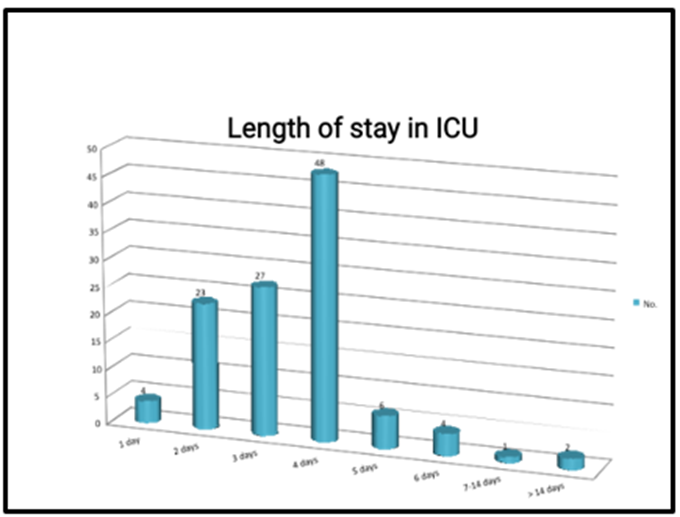
Figure 2:Length of hospital stay
The majority of patients had an ICU stay of 4 days (48 patients), followed by 3 days (27 patients) and 2 days (23 patients). Only a small number of women required prolonged ICU admission beyond 7 days, indicating that most patients showed clinical improvement within a short duration of intensive care management.
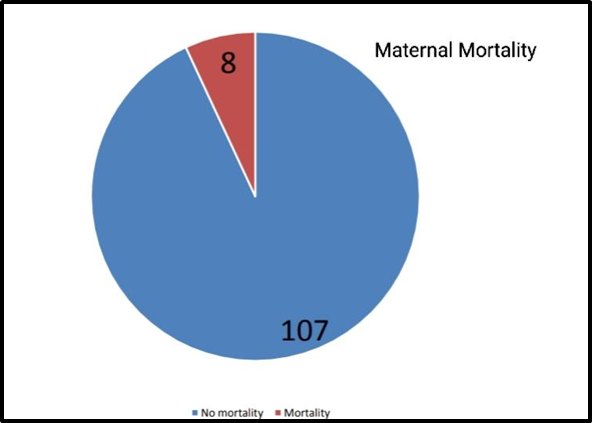
Figure 3: Maternal mortality outcome
Out of the 115 critically ill obstetric patients admitted to the ICU, 107 women survived while maternal mortality was observed in 8 patients. The findings indicate a high survival rate among ICU admissions, with mortality occurring only in a small proportion of severe cases.
DISCUSSION:
Out of a total of 115 study participants, 52 women (45.2%) had received previous antenatal care, while 63 women (54.8%) had not received any antenatal care prior to admission. Similarly Dr Madhanure Vanamala, et al14 also reported about 60% of the patients were unbooked cases, which is indicative of a lack of access to antenatal care.
Among the hematological investigations, 61 (53.0%)underwent 13–15 investigations, while 49 patients (42.6%) had 10–12 investigations and only 5 patients (4.3%) required more than 15 investigations. 90 (78.3%) required 0–1 investigation, whereas 25 patients (21.7%) required 2–3 radiological investigations. None of the patients required more than three radiological investigations. Regarding biochemical investigations, 65 patients (56.5%) underwent 10–12 investigations, followed by 42 patients (36.5%) who underwent 7–9 investigations. Only 8 patients (7.0%) required more than 13 biochemical investigations.
The causes of obstetric ICU admission varied widely among the study participants. Preeclampsia and eclampsia constituted the most common indication for ICU admission, accounting for 31 cases, followed by postpartum hemorrhage (16 cases) and abruptio placentae (8 cases). Other significant causes included shock and thalassemia with anemia, each contributing 7 cases, while incomplete abortion and ectopic pregnancy accounted for 6 cases each. Disseminated intravascular coagulation and heart diseases were observed in 4 patients each. Less common causes included rupture uterus, molar pregnancy, epilepsy, malaria, hepatic encephalopathy, obstructed labour, acute pulmonary edema, and other medical or surgical complications.
Similar to our study Saif KM et al15 also showed that among antepartum women, hypertensive diseases of pregnancy (19.5%) were the most common causes of admission. Obstetric hemorrhage (35%) was the most common indication for postpartum admissions. On univariate analysis, maternal mortality showed significant correlation with congestive cardiac failure, sepsis, hepatic encephalopathy, obstetric hemorrhage, pulmonary edema and perforation peritonitis. Most common causes of death in ICU were septic shock (24 %), hemorrhagic shock (22.8%) and acute respiratory failure (22.3%).
Among the total study participants, 68 patients were referred from other healthcare centers, whereas 47 patients were admitted directly to the hospital. Meshram TM et al16 Mechanical ventilation was necessitated in 67.3% of patients. The interventions needed were insertion of a central venous line, an arterial line, renal replacement therapy, and blood transfusion . Similar to this our study showed various medical and surgical interventions were performed for the management of critically ill obstetric patients admitted to the ICU. Blood and blood component transfusion was the most common intervention, required in 60 patients (52.2%), reflecting the high prevalence of obstetric hemorrhage and anemia. Cesarean section was performed in 42 patients (36.5%), while antihypertensive therapy with infusion pump support was required in 25 patients (21.7%). Mechanical ventilation and ionotropic support were needed in 15 patients (13.0%) and 13 patients (11.3%) respectively. Surgical procedures such as laparotomy, repair of rupture uterus, uterine artery ligation, B-Lynch suturing, and hysterotomy were carried out in selected complicated cases. Instrumental delivery, anticonvulsant therapy, methotrexate injection, and destructive surgeries were performed in a small proportion of patients according to clinical indications.
The duration of ICU stay varied among the study participants, with the majority of patients requiring intensive care for 4 days (48 patients). This was followed by 27 patients who stayed for 3 days and 23 patients who required ICU care for 2 days. A smaller number of patients had shorter stays of only 1 day (4 patients) or longer stays of 5 days (6 patients) and 6 days (4 patients). Only one patient required ICU admission for 7–14 days, while 2 patients stayed for more than 14 days. Our data is inconsistent with Yuan et al17 with a total of 528 patients with pregnancy and postpartum related morbidities being admitted to the ICU (5.16 per 1000 deliveries).
It accounted for 11.73% of all adult admissions to the unit. The median age was 28 years, the median gestation time was 37 weeks, and 89.98% did not receive irregular prenatal care. 182 (34.47%) were primiparous. Most admitted in postpartum (99.24%) and 48.67% were premature. The main reasons for admission included postpartum hemorrhage (PPH) (180/528), hypertensive disorders pregnancy (176/528), and cardiac diseases (69/528). The median length of ICU stay was four days (2–6
Out of the 115 critically ill obstetric patients admitted to the ICU, 107 women survived while maternal mortality was observed in 8 patients. The findings indicate a high survival rate among patients receiving intensive care management. Early diagnosis, timely referral, multidisciplinary management, and availability of critical care facilities may have contributed to improved maternal survival. However, mortality was seen in patients with severe obstetric and medical complications requiring advanced life support measures. The study highlights the importance of prompt ICU intervention in reducing maternal deaths among high-risk obstetric patients. Continuous monitoring and specialized critical care remain essential for improving maternal outcomes.
CONCLUSION:
Obstetric ICU admissions are associated with maternal morbidity and require management for favorable outcomes. Preeclampsia and eclampsia were the main indications for ICU admission, followed by obstetric hemorrhage, shock, severe anemia, and other medical and surgical complications. The majority of patients were unbooked and referred from peripheral healthcare centers.Blood and blood component transfusion, cesarean section, mechanical ventilation, ionotropic support, and other surgical interventions were required for the management of patients. Women receiving intensive care management had a higher survival rate. Our study highlighted the importance of early diagnosis, regular antenatal care, timely referral, availability of blood products, and well-equipped ICU facilities in reducing maternal morbidity and mortality.
REFERENCES:
1. Cunningham FG, Leveno KJ, Bloom SL, Hauth JC, Gilstrap.L. William’s Obstetrics 23rd edition. United States, McGraw Hill Medical Publishing division; 2010.
2. WHO “Maternal mortality 2015 :Estimates developed by WHO,UNICEF,UNFPA,UNICEF,UNFPA, The world bank and United nations population division.
3. Obstetric critical care a prospective analysis of clinical characteristics preedictability and fetomaternal outcome in a new dedicated intensive care unit.Sunanda Gupta et al, Indian journal of anesthesia,vol.55 issue 2march –april 2011.
4. Strand K, Flaatten H. Severity scoring in the ICU: A review. Acta Anaesthesiol Scand 2008;52:467-78.
5. El-Solh AA, Gran BJ.A comparison of severity of illness scoring systems for critically ill obstetric patients. Chest 1996;110:1299.304.
6. Osinaike B, Amanor-Boadu S, Sanusi A. Obstetric intensive care: A developing country experience. Internet J Anesthesiol 2006.Vol. 10.
7. Tempe A, Wadhwa L, Gupta S, Bansal S, Satyanarayana L. Prediction of mortality and morbidity by Simplified Acute Physiology Score (SAPS II) in obstetric intensive care unit admissions. Indian J Med Sci 2007;61:179-85.
8. Anjan trikha ,PM singh-The critically ill obstetricpatient –recent topics.Indian journal of Anaesthesia/vol54/issue5/sept-oct2010.
9. Crawford JS, Opit LJ. A survey of the anaesthetic services to obstetrics in the Birmingham Hospital Region.A summary. Anaesthesia.1976;31:56–
10. [PubMed] Olarra J,Longarela AM. Critically ill obstetric treated in an ICU.chest 2002;121(6)
11. Vasquez DN1, Estenssoro E, Canales HS, Reina R, Saenz MG, Das Neves AV, Toro MA, Loudet CI. 2007 Mar;131 (3) :718-24.Clinical characteristics and outcomes of obstetric patients requiring ICU admission.
12. Al-Suleiman SA1,Qutub HO,Rahman J,Rahman MS. 2006 Apr;274 (1) :4-8. Epub 2006 Jan 24. Obstetric a
13. Gupta S1,Naithani U,Doshi V,Bhargava V,Vijay BS2011 Mar;55 (2) :146-53. doi: 10.4103/0019-5049.79895. Obstetric critical care: A prospective analysis of clinical characteristics, predictability, and fetomaternal outcome in a new dedicated obstetric intensive care unit.
14. Dr Madhanure Vanamala, et al., Study of Obstetric Patients Requiring ICU Admission and Fetomaternal Outcome. Int. J Med. Pharm. Res., 6(4): 1431‐1437, 2025
15. Saif KM, Tahmina S, Maitree P. A prospective study of clinical profile and outcome of critically ill obstetric patients in ICU at a tertiary level hospital in India. Anaesth Pain & Intensive Care 2013;17(3):243-247
16. Meshram TM, Sharma A, Kothari N, Das AK, Choudhary G, Rathod D, Kumari K, Bhatia PK. Clinical profile and outcomes of critically ill obstetric patients in the intensive care unit of a tertiary care center. World J Crit Care Med 2026; 15(2): 118246 [DOI: 10.5492/wjccm.v15.i2.118246]
17. Yuan, W., Zheng, Y., Zhang, X. et al. Pregnancy and postpartum-related admissions to the intensive care unit at a tertiary centre in Northwest China: a 14-year retrospective study. BMC Pregnancy Childbirth 25, 1212 (2025). https://doi.org/10.1186/s12884-025-08235-2
18. Appinabhavi, A., Panicker, S., & N, R. (2016). Maternal and perinatal outcomes in critically ill obstetric patients. International Journal of Reproduction, Contraception, Obstetrics and Gynecology, 3(1), 189–194. Retrieved from https://www.ijrcog.org/index.php/ijrcog/article/view/814