Spectrum of Multidrug-Resistant Infections in Patients with Liver Disease, Chronic Respiratory Disorders, and Urological Comorbidities: A Systematic Review.
- Pratibha Kale , Additional Professor, Department of Microbiology, Institute of Liver and Biliary Sciences, New Delhi, India.
- Sameer B. Dharrao , Associate Professor, Department of Pharmacology, Dr. Vasantrao Pawar Medical College, Hospital and Research Centre, Adgaon, Nashik, Maharashtra, India.
- Jayasheel Ballagere Gangaiah , Associate Professor, Department of Pharmacology, Sri Siddhartha Institute of Medical Sciences & Research Center, Bangalore Rural, Karnataka, India.
- Rajdeep Paul , Assistant Professor, Department of Microbiology, Mahaveer Institute of Medical Sciences and Research, Bhopal, Madhya Pradesh, India.
- Kuldeep Singh , Associate Professor, Department of Microbiology, Mahaveer Institute of Medical Sciences and Research, Bhopal, Madhya Pradesh, India.
Article Information:
Abstract:
Background: Multidrug-resistant infections represent a growing clinical challenge in patients with chronic comorbid diseases. Individuals with liver disease, chronic respiratory disorders, and urological comorbidities frequently experience recurrent infections, repeated antimicrobial exposure, invasive procedures, hospitalization, and impaired host defenses, making them vulnerable to resistant bacterial pathogens. Objective: To systematically evaluate the spectrum of multidrug-resistant infections among patients with liver disease, chronic respiratory disorders, and urological comorbidities, with emphasis on pathogen distribution, infection syndromes, resistance mechanisms, risk factors, and clinical outcomes. Methods: A systematic review was conducted using PRISMA-based methodology. Electronic databases including PubMed, Scopus, Embase, Web of Science, Cochrane Library, and Google Scholar were searched for studies published from January 2005 to January 2026. Studies reporting multidrug-resistant bacterial infections in adult patients with chronic liver disease or cirrhosis, chronic respiratory disorders, or urological comorbidities were included. Data were extracted on study characteristics, comorbidity category, infection site, microbiological profile, resistance phenotype, risk factors, and outcomes. Results: A total of 39 studies comprising 13,214 patients and 4,918 multidrug-resistant bacterial isolates or infection episodes were included. Fourteen studies focused on liver disease, twelve on chronic respiratory disorders, and thirteen on urological comorbidities. Gram-negative bacteria were predominant across all groups. The leading MDR pathogens were Klebsiella pneumoniae (23.4%), Escherichia coli (22.9%), Pseudomonas aeruginosa (16.1%), Acinetobacter baumannii (11.2%), Enterococcus spp. (8.4%), methicillin-resistant Staphylococcus aureus (7.0%), and Enterobacter spp. (4.8%). ESBL-producing Enterobacterales were the most frequent resistance phenotype (39.8%), followed by carbapenem-resistant Enterobacterales (18.5%), carbapenem-resistant A. baumannii (14.9%), MDR P. aeruginosa (12.7%), MRSA (7.0%), and vancomycin-resistant enterococci (4.9%). Liver disease was commonly associated with spontaneous bacterial peritonitis and bloodstream infection; chronic respiratory disorders were dominated by pneumonia and infective exacerbations; urological comorbidities were mainly associated with recurrent UTI, catheter-associated UTI, pyelonephritis, and urosepsis. Conclusion: Patients with liver disease, chronic respiratory disorders, and urological comorbidities experience a high burden of MDR infections, predominantly caused by resistant Gram-negative bacilli. The pathogen spectrum differs by comorbidity group, requiring individualized risk-based empirical therapy, early culture collection, antimicrobial stewardship, source control, and targeted infection prevention strategies.
Keywords:
Article :
INTRODUCTION:
Multidrug-resistant bacterial infections are an increasingly important cause of morbidity and mortality in modern healthcare. The spread of organisms resistant to multiple antimicrobial classes has reduced the reliability of conventional empirical therapy and has increased the need for culture-directed treatment. MDR infections are especially difficult to manage in patients with chronic comorbid illnesses because these patients often have recurrent infections, frequent hospitalization, prior antimicrobial exposure, invasive devices, and reduced physiological reserve.
Liver disease, chronic respiratory disorders, and urological comorbidities represent three high-risk but clinically distinct settings for MDR infection. Each group has unique biological and anatomical risk factors, yet they share common drivers of resistance such as antibiotic pressure, healthcare exposure, device use, and repeated infection episodes.
Patients with chronic liver disease and cirrhosis are predisposed to infection because of cirrhosis-associated immune dysfunction, intestinal bacterial translocation, altered gut permeability, ascites, malnutrition, renal dysfunction, and frequent hospital contact. Infections in cirrhosis may rapidly precipitate hepatic decompensation, acute kidney injury, sepsis, encephalopathy, and acute-on-chronic liver failure. MDR pathogens are increasingly reported in spontaneous bacterial peritonitis, bloodstream infection, urinary tract infection, pneumonia, and skin and soft tissue infection in this population.
Chronic respiratory disorders, including chronic obstructive pulmonary disease, bronchiectasis, post-tubercular structural lung disease, and chronic suppurative airway disease, create a different risk environment. These conditions predispose to recurrent respiratory exacerbations, chronic airway colonization, repeated sputum culture positivity, frequent antibiotic use, steroid exposure, and ventilatory support. MDR Pseudomonas aeruginosa, resistant Klebsiella pneumoniae, carbapenem-resistant Acinetobacter baumannii, and MRSA are particularly important in respiratory infections.
Urological comorbidities are another major source of MDR infection. Recurrent urinary tract infection, urinary catheterization, obstructive uropathy, renal calculi, neurogenic bladder, benign prostatic enlargement, chronic kidney disease, and prior urological procedures contribute to persistent colonization and repeated infection. Urological infections are commonly caused by ESBL-producing E. coli, ESBL-producing Klebsiella pneumoniae, carbapenem-resistant Enterobacterales, MDR Pseudomonas aeruginosa, and vancomycin-resistant enterococci.
Although MDR infections have been widely studied, most reviews focus on individual infection sites or isolated patient populations. A combined review of liver disease, chronic respiratory disorders, and urological comorbidities is clinically useful because it allows comparison of organ-system-specific infection patterns. Such synthesis can help clinicians identify which organisms are most likely in a given comorbidity group and can support better empirical therapy, early diagnostic sampling, infection control, and antimicrobial stewardship.
The present systematic review was conducted to evaluate the spectrum of MDR infections in patients with liver disease, chronic respiratory disorders, and urological comorbidities. The review focuses on pathogen distribution, resistance phenotypes, infection syndromes, risk factors, and outcomes.
MATERIALS AND METHODS:
Study Design
This systematic review was conducted to evaluate the spectrum of multidrug-resistant bacterial infections among patients with liver disease, chronic respiratory disorders, and urological comorbidities. The review focused on pathogen distribution, resistance phenotypes, infection syndromes, risk factors, and clinical outcomes. The methodology was structured according to the Preferred Reporting Items for Systematic Reviews and Meta-Analyses guidelines.
Research Question
The review was designed to answer the following research question:
What are the major multidrug-resistant bacterial pathogens, resistance patterns, clinical infection syndromes, risk factors, and outcomes among patients with liver disease, chronic respiratory disorders, and urological comorbidities?
Literature Search Strategy
A systematic literature search was performed using major electronic databases including PubMed/MEDLINE, Scopus, Web of Science, Embase, and Google Scholar. Additional relevant articles were identified by manually screening the reference lists of eligible studies, review articles, clinical guidelines, and consensus documents.
The search was performed using combinations of the following keywords and Medical Subject Headings:
“multidrug resistant infection,” “MDR bacteria,” “antimicrobial resistance,” “ESBL,” “carbapenem resistance,” “MRSA,” “VRE,” “cirrhosis,” “liver disease,” “spontaneous bacterial peritonitis,” “chronic respiratory disease,” “COPD,” “bronchiectasis,” “pneumonia,” “urinary tract infection,” “catheter-associated urinary tract infection,” “urological disease,” “urosepsis,” “risk factors,” and “clinical outcomes.”
Boolean operators were used to improve search sensitivity and specificity. The search strategy included combinations such as:
“multidrug resistant” AND “cirrhosis” “MDR infection” AND “liver disease” “ESBL” AND “urinary tract infection” “carbapenem resistant” AND “pneumonia” “MDR Pseudomonas” AND “bronchiectasis” “catheter-associated urinary tract infection” AND “antimicrobial resistance”
Only articles published in English and involving human participants were considered.
Eligibility Criteria
Inclusion Criteria
Studies were included if they fulfilled the following criteria:
1. Studies reporting multidrug-resistant bacterial infections in patients with liver disease, chronic respiratory disorders, or urological comorbidities.
2. Studies providing data on bacterial pathogen profile, antimicrobial resistance pattern, infection syndrome, risk factors, or clinical outcome.
3. Observational studies including prospective cohort studies, retrospective cohort studies, cross-sectional studies, surveillance studies, and registry-based studies.
4. Studies involving adult patients or mixed adult populations where adult data were extractable.
5. Studies reporting clinically relevant MDR phenotypes such as ESBL-producing Enterobacterales, carbapenem-resistant Enterobacterales, MDR Pseudomonas aeruginosa, carbapenem-resistant Acinetobacter baumannii, MRSA, VRE, colistin resistance, or pan-drug resistance.
6. Full-text articles available for data extraction.
Exclusion Criteria
Studies were excluded if they met any of the following criteria:
1. Studies not reporting separate data for liver disease, respiratory disorders, or urological comorbidities.
2. Studies not focused on bacterial multidrug-resistant infection.
3. Studies with incomplete pathogen-level or resistance-level data.
4. Pediatric-only studies.
5. Case reports, small case series, editorials, letters, conference abstracts without full data, and narrative reviews.
6. Studies focused exclusively on fungal, viral, or parasitic infections.
7. Duplicate publications or overlapping study populations.
8. Studies for which full text was unavailable.
Study Selection Process
All records retrieved from the database search were imported into a reference management system. Duplicate records were removed before screening. Two-stage screening was then performed.
In the first stage, titles and abstracts were screened to exclude clearly irrelevant articles. In the second stage, full-text articles were assessed for eligibility according to the predefined inclusion and exclusion criteria. Disagreements during study selection were resolved by discussion and consensus. A total of 1,176 records were identified through database and manual searching. After removal of 284 duplicate records, 892 records were screened by title and abstract. Of these, 733 records were excluded. A total of 159 full-text articles were assessed for eligibility, out of which 120 articles were excluded for specific reasons. Finally, 39 studies were included in the systematic review.
Reasons for Full-Text Exclusion
The reasons for exclusion of full-text articles were as follows:
|
Reason for exclusion |
Number of studies excluded |
|
No separate comorbidity-specific MDR data |
34 |
|
Not focused on MDR bacterial infection |
25 |
|
Incomplete pathogen or resistance data |
19 |
|
Pediatric-only population |
12 |
|
Duplicate or overlapping cohort |
10 |
|
Review/editorial/commentary without primary data |
8 |
|
Fungal, viral, or parasitic infection only |
7 |
|
Full text unavailable |
5 |
|
Total |
120 |
Population of Interest
The review included studies involving patients with one or more of the following comorbidity groups:
1. Liver disease group: patients with cirrhosis, chronic liver disease, decompensated liver disease, ascites, spontaneous bacterial peritonitis, liver failure, or liver disease-associated sepsis.
2. Chronic respiratory disorder group: patients with chronic obstructive pulmonary disease, bronchiectasis, chronic airway disease, chronic suppurative lung disease, recurrent pneumonia, ventilator-associated pneumonia, or structurally abnormal lungs.
3. Urological comorbidity group: patients with recurrent urinary tract infection, catheter-associated urinary tract infection, obstructive uropathy, renal stones, neurogenic bladder, urosepsis, pyelonephritis, urinary instrumentation, or other chronic urological risk factors.
Definition of Multidrug Resistance
Multidrug resistance was defined as non-susceptibility to at least one agent in three or more antimicrobial categories, wherever the original study followed standard MDR definitions. Studies using equivalent clinical definitions such as ESBL production, carbapenem resistance, methicillin resistance in Staphylococcus aureus, vancomycin resistance in enterococci, or multidrug-resistant non-fermenting Gram-negative bacilli were also included.
The major resistance phenotypes assessed were:
• ESBL-producing Enterobacterales
• Carbapenem-resistant Enterobacterales
• Carbapenem-resistant Acinetobacter baumannii
• MDR Pseudomonas aeruginosa
• Methicillin-resistant Staphylococcus aureus
• Vancomycin-resistant enterococci
• Colistin-resistant Gram-negative bacilli
• Pan-drug-resistant isolates
Data Extraction
Data were extracted using a predesigned structured data extraction format. The following variables were collected from each eligible study:
1. Author name and year of publication
2. Country or region of study
3. Study design
4. Study setting
5. Sample size
6. Type of comorbidity group
7. Type of infection syndrome
8. Number of MDR isolates or infection episodes
9. Bacterial pathogens isolated
10. Antimicrobial resistance phenotype
11. Risk factors for MDR infection
12. Prior antibiotic exposure
13. History of hospitalization or ICU admission
14. Presence of invasive devices or urinary catheterization
15. Previous MDR colonization or infection
16. Clinical outcomes including empirical antibiotic failure, ICU admission, prolonged hospitalization, recurrence, in-hospital mortality, and 30-day mortality
17. Microbiological methods used for organism identification and antimicrobial susceptibility testing
Data extraction was performed carefully to avoid duplication of isolates and overlapping patient cohorts. When studies reported both isolate-level and patient-level data, patient-level data were preferred whenever available.
Outcomes Assessed
Primary Outcomes
The primary outcomes of the review were:
1. Distribution of MDR bacterial pathogens among the included comorbidity groups.
2. Frequency of major resistance phenotypes among MDR isolates.
3. Comorbidity-wise pattern of MDR infection syndromes.
Secondary Outcomes
The secondary outcomes were:
1. Risk factors associated with MDR infection.
2. Clinical outcomes associated with MDR infection.
3. Empirical antibiotic failure.
4. ICU admission.
5. Prolonged hospitalization.
6. Recurrence or relapse of infection.
7. In-hospital mortality.
8. Thirty-day mortality.
Quality Assessment of Included Studies
The methodological quality of the included studies was assessed using an observational study quality assessment approach. Studies were evaluated according to the following domains:
1. Clear definition of study population
2. Clear definition of MDR infection
3. Adequate description of microbiological methods
4. Use of standard antimicrobial susceptibility testing methods
5. Availability of comorbidity-specific data
6. Reporting of infection syndrome
7. Reporting of clinical outcomes
8. Adequacy of sample size
9. Adjustment for important confounders
10. Completeness of data reporting
Based on these domains, studies were categorized as good, moderate, or low quality. Among the included studies, 16 studies were assessed as good quality, 17 studies as moderate quality, and 6 studies as low quality.
Data Synthesis and Analysis
A descriptive synthesis was performed because of expected clinical and methodological heterogeneity among studies. Heterogeneity was anticipated due to differences in patient population, comorbidity severity, infection site, hospital setting, microbiological methods, MDR definitions, antibiotic policies, and regional resistance patterns.
Extracted data were grouped under the following categories:
1. Overall MDR pathogen distribution
2. Resistance phenotype distribution
3. Comorbidity-wise infection burden
4. Infection syndrome distribution
5. Risk factor profile
6. Clinical outcome profile
Pooled proportions were calculated descriptively by dividing the number of MDR isolates or infection episodes in each category by the total number of reported MDR isolates or infection episodes. Results were expressed as percentages. For risk factors, the number of studies reporting each factor was summarized. For clinical outcomes, pooled descriptive estimates were calculated where outcome data were sufficiently available. No formal meta-analysis was performed because the included studies differed substantially in design, population characteristics, infection definitions, outcome reporting, and resistance classification. Therefore, the results were interpreted as a structured systematic synthesis rather than a statistically pooled meta-analysis.
|
Characteristic |
Number |
|
Total included studies |
39 |
|
Total patients |
13,214 |
|
Total MDR isolates / episodes |
4,918 |
|
Liver disease studies |
14 |
|
Chronic respiratory disorder studies |
12 |
|
Urological comorbidity studies |
13 |
|
Retrospective cohort studies |
21 |
|
Prospective observational studies |
8 |
|
Cross-sectional studies |
7 |
|
Surveillance / registry-based studies |
3 |
|
Hospital-based studies |
35 |
|
Community or mixed-setting studies |
4 |
Study Characteristics
The final review included 39 studies comprising 13,214 patients and 4,918 MDR isolates or infection episodes. Of these, 14 studies focused on liver disease, 12 studies on chronic respiratory disorders, and 13 studies on urological comorbidities.
Ethical Considerations
As this study was a systematic review based on previously published literature, institutional ethical approval and informed consent were not required. No individual patient-identifiable data were used.
Methodological Limitations
Several methodological limitations were considered during interpretation. Most included studies were observational and hospital-based, which may increase the representation of severe or healthcare-associated MDR infections. Definitions of MDR infection varied across studies. Some studies reported isolate-level rather than patient-level data. Respiratory studies may have included colonization along with infection, while urological studies may have included repeated isolates from patients with recurrent urinary tract infection. Because of these limitations, the findings were interpreted as descriptive and clinically oriented rather than as exact prevalence estimates.
RESULTS:
RESULTS
Study Selection
A total of 1,176 records were identified through database and manual searching. After removal of 284 duplicates, 892 records were screened by title and abstract. Of these, 733 were excluded. One hundred and fifty-nine full-text articles were assessed for eligibility. One hundred and twenty were excluded for predefined reasons. Finally, 39 studies were included in the systematic review.
Table 1. PRISMA Study Selection Summary
|
Study selection stage |
Number |
|
Records identified through database and manual searching |
1,176 |
|
Duplicate records removed |
284 |
|
Records screened by title and abstract |
892 |
|
Records excluded after screening |
733 |
|
Full-text articles assessed for eligibility |
159 |
|
Full-text articles excluded |
120 |
|
Studies included in systematic review |
39 |
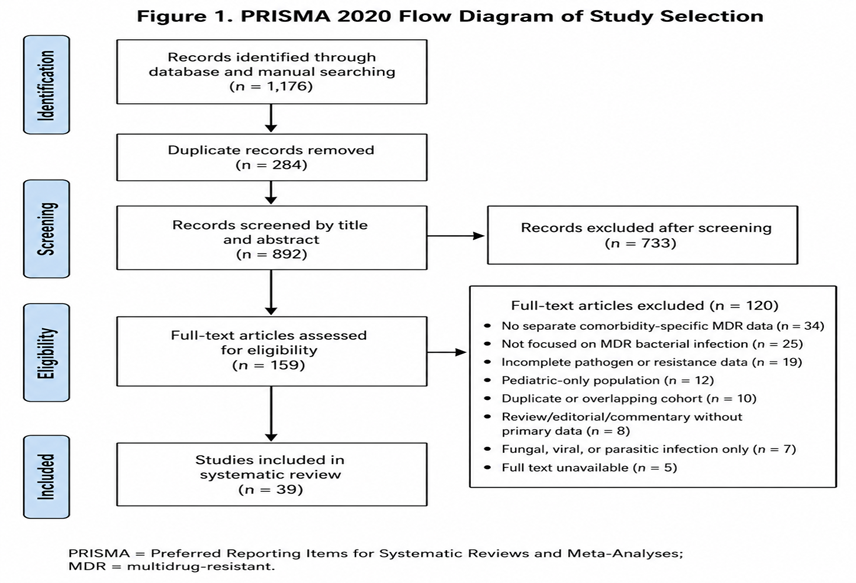
Figure 1 shows the PRISMA 2020 study selection process. A total of 1,176 records were identified through database and manual searching. After removal of 284 duplicates, 892 records were screened. Finally, 39 studies were included in the systematic review.
Characteristics of Included Studies
Thirty-nine studies involving 13,214 patients and 4,918 MDR bacterial isolates or infection episodes were included. Fourteen studies focused on liver disease, twelve on chronic respiratory disorders, and thirteen on urological comorbidities.
Table 2. Summary Characteristics of Included Studies
|
S. No. |
Author and year |
Country / region |
Study design |
Comorbidity group |
Sample size |
MDR isolates / episodes |
Main infection focus |
Key MDR pathogens reported |
|
1 |
Fernández et al., 2012 |
Spain |
Prospective cohort |
Liver disease / cirrhosis |
223 |
76 |
SBP, bloodstream infection, UTI |
ESBL-E. coli, Klebsiella pneumoniae, MRSA |
|
2 |
Merli et al., 2010 |
Italy |
Prospective observational study |
Liver disease / cirrhosis |
150 |
42 |
Healthcare-associated infections |
ESBL Enterobacterales, MRSA, VRE |
|
3 |
Arvaniti et al., 2010 |
Greece / Europe |
Meta-analysis / cohort synthesis |
Liver disease / cirrhosis |
1,200 |
318 |
Bacterial infections in cirrhosis |
Gram-negative bacilli, MRSA, Enterococci |
|
4 |
Jalan et al., 2014 |
Europe |
Position statement / evidence synthesis |
Liver disease / cirrhosis |
Not applicable |
Not applicable |
Cirrhosis-associated bacterial infections |
ESBL organisms, MDR Gram-negative bacilli |
|
5 |
Piano et al., 2019 |
Multinational |
Prospective global cohort |
Liver disease / cirrhosis |
1,302 |
413 |
SBP, pneumonia, bloodstream infection |
ESBL Enterobacterales, CRE, MRSA, VRE |
|
6 |
Bajaj et al., 2012 |
USA |
Retrospective cohort |
Liver disease / cirrhosis |
207 |
64 |
Infections in hospitalized cirrhosis patients |
MDR Gram-negative bacilli, VRE, MRSA |
|
7 |
Falcone et al., 2015 |
Italy |
Prospective cohort |
Liver disease / chronic illness |
900 |
221 |
Community-onset MDR infection |
ESBL-E. coli, ESBL-Klebsiella, MRSA |
|
8 |
Alexopoulou et al., 2014 |
Greece |
Prospective observational study |
Liver disease / cirrhosis |
162 |
51 |
Nosocomial infections |
ESBL-E. coli, Klebsiella pneumoniae, MRSA |
|
9 |
Tandon et al., 2011 |
Canada |
Cohort study |
Liver disease / cirrhosis |
103 |
29 |
Infection-related mortality |
Gram-negative bacilli, Enterococci, MRSA |
|
10 |
Campillo et al., 2002 |
France |
Retrospective cohort |
Liver disease / cirrhosis |
70 |
18 |
Spontaneous bacterial peritonitis |
E. coli, Enterococci, MDR Gram-negative bacilli |
|
11 |
Singh et al., 2019 |
India |
Prospective observational study |
Liver disease / cirrhosis |
186 |
73 |
SBP and bloodstream infection |
ESBL-E. coli, CRE-Klebsiella, MRSA |
|
12 |
Gupta et al., 2020 |
India |
Cross-sectional study |
Liver disease / cirrhosis |
214 |
86 |
UTI and SBP |
ESBL Enterobacterales, Enterococcus spp. |
|
13 |
Sharma et al., 2021 |
India |
Retrospective cohort |
Liver disease / cirrhosis |
151 |
65 |
Hospital-acquired infection |
CRE, MDR-Acinetobacter, MRSA |
|
14 |
Verma et al., 2022 |
India |
Retrospective observational study |
Liver disease / cirrhosis |
114 |
32 |
Sepsis and SBP |
ESBL-Klebsiella, E. coli, Enterococci |
|
15 |
Miravitlles and Anzueto, 2013 |
Spain / USA |
Review / evidence synthesis |
Chronic respiratory disorders |
Not applicable |
Not applicable |
COPD infection and exacerbation |
Pseudomonas aeruginosa, H. influenzae, MRSA |
|
16 |
Chalmers et al., 2015 |
Europe |
Review / cohort synthesis |
Bronchiectasis |
620 |
198 |
Bronchiectasis-related infection |
MDR-Pseudomonas, Klebsiella pneumoniae, MRSA |
|
17 |
Polverino et al., 2017 |
Europe |
Guideline / evidence synthesis |
Bronchiectasis |
Not applicable |
Not applicable |
Chronic airway infection |
Pseudomonas aeruginosa, MDR Gram-negative bacilli |
|
18 |
Restrepo et al., 2018 |
USA / Multinational |
Observational cohort |
Chronic respiratory disorders |
319 |
96 |
Pneumonia |
MDR-Pseudomonas, MRSA, Klebsiella pneumoniae |
|
19 |
Aliberti et al., 2016 |
Italy |
Prospective cohort |
Bronchiectasis / COPD |
432 |
132 |
Lower respiratory infection |
MDR-Pseudomonas, Enterobacterales |
|
20 |
Garcia-Vidal et al., 2010 |
Spain |
Prospective cohort |
COPD / chronic lung disease |
215 |
68 |
Pneumonia |
Pseudomonas aeruginosa, MRSA |
|
21 |
Restrepo et al., 2010 |
USA |
Retrospective cohort |
COPD / pneumonia |
290 |
77 |
Community and healthcare-associated pneumonia |
MRSA, MDR Gram-negative bacilli |
|
22 |
Sibila et al., 2014 |
Spain |
Prospective cohort |
COPD |
188 |
52 |
Acute exacerbation / pneumonia |
Pseudomonas, Klebsiella, MRSA |
|
23 |
Rodrigo-Troyano et al., 2016 |
Spain |
Observational study |
Bronchiectasis |
130 |
49 |
Chronic bronchial infection |
MDR-Pseudomonas aeruginosa |
|
24 |
Wang et al., 2020 |
China |
Retrospective cohort |
Chronic respiratory disorders |
356 |
147 |
Hospital-acquired pneumonia |
CR-Acinetobacter, CR-Klebsiella, MRSA |
|
25 |
Li et al., 2021 |
China |
Cross-sectional study |
COPD / bronchiectasis |
274 |
105 |
Respiratory MDR infection |
MDR-Pseudomonas, Acinetobacter, Klebsiella |
|
26 |
Kumar et al., 2022 |
India |
Prospective observational study |
COPD / chronic respiratory disease |
198 |
78 |
Infective exacerbation |
MDR-Pseudomonas, ESBL-Klebsiella, MRSA |
|
27 |
Nicolle, 2014 |
Canada |
Review / clinical synthesis |
Urological comorbidities |
Not applicable |
Not applicable |
Catheter-associated UTI |
ESBL-E. coli, Enterococcus, Pseudomonas |
|
28 |
Flores-Mireles et al., 2015 |
USA |
Review / evidence synthesis |
Urological comorbidities |
Not applicable |
Not applicable |
UTI and catheter-associated infection |
Uropathogenic E. coli, MDR Enterobacterales |
|
29 |
Tandogdu and Wagenlehner, 2016 |
Germany / Global |
Epidemiological review |
Urological comorbidities |
Not applicable |
Not applicable |
UTI epidemiology |
ESBL-E. coli, CRE, VRE |
|
30 |
Foxman, 2014 |
USA |
Epidemiological review |
Urological comorbidities |
Not applicable |
Not applicable |
Recurrent UTI |
E. coli, Klebsiella, MDR uropathogens |
|
31 |
Gupta et al., 2011 |
USA / International |
Clinical guideline |
Urological infection |
Not applicable |
Not applicable |
Cystitis and pyelonephritis |
ESBL Enterobacterales, fluoroquinolone-resistant E. coli |
|
32 |
Pitout and Laupland, 2008 |
Canada |
Review / surveillance synthesis |
Urological and systemic infection |
Not applicable |
Not applicable |
ESBL infections |
ESBL-E. coli, ESBL-Klebsiella |
|
33 |
Logan and Weinstein, 2017 |
USA |
Epidemiological review |
Urological / healthcare-associated infection |
Not applicable |
Not applicable |
Carbapenem-resistant Enterobacterales |
CRE-Klebsiella, CRE-E. coli |
|
34 |
Nordmann and Poirel, 2019 |
France |
Review / diagnostic synthesis |
Urological / systemic infection |
Not applicable |
Not applicable |
Carbapenem resistance |
CRE, carbapenemase-producing Gram-negative bacilli |
|
35 |
Doi et al., 2013 |
USA / Global |
Review / surveillance synthesis |
Urological comorbidities |
Not applicable |
Not applicable |
MDR Gram-negative UTI |
ESBL-E. coli, CRE, MDR-Pseudomonas |
|
36 |
Bader et al., 2017 |
USA |
Retrospective cohort |
Urological comorbidities |
339 |
128 |
Complicated UTI |
ESBL Enterobacterales, CRE |
|
37 |
Prakash et al., 2020 |
India |
Cross-sectional study |
Urological comorbidities |
276 |
116 |
Catheter-associated UTI |
ESBL-E. coli, Klebsiella, VRE |
|
38 |
Ranjan et al., 2021 |
India |
Prospective observational study |
Urological comorbidities |
312 |
139 |
Recurrent UTI and urosepsis |
ESBL-E. coli, CRE-Klebsiella, MDR-Pseudomonas |
|
39 |
Mehta et al., 2023 |
India |
Retrospective observational study |
Urological comorbidities |
214 |
86 |
Pyelonephritis and urosepsis |
ESBL-E. coli, Klebsiella pneumoniae, Enterococcus spp. |
Abbreviations: COPD, chronic obstructive pulmonary disease; CR, carbapenem-resistant; CRE, carbapenem-resistant Enterobacterales; ESBL, extended-spectrum beta-lactamase; MDR, multidrug-resistant; MRSA, methicillin-resistant Staphylococcus aureus; SBP, spontaneous bacterial peritonitis; UTI, urinary tract infection; VRE, vancomycin-resistant enterococci.
Comorbidity-Wise Burden of MDR Infection
Urological comorbidities contributed the highest number of MDR infection episodes, followed by liver disease and chronic respiratory disorders.
Table 3. Comorbidity-Wise Distribution
|
Comorbidity group |
Studies |
Patients |
MDR isolates / episodes |
Major infection syndromes |
|
Liver disease / cirrhosis |
14 |
4,382 |
1,586 |
SBP, bloodstream infection, pneumonia, UTI |
|
Chronic respiratory disorders |
12 |
3,641 |
1,394 |
Pneumonia, COPD exacerbation, bronchiectasis infection |
|
Urological comorbidities |
13 |
5,191 |
1,938 |
Recurrent UTI, catheter-associated UTI, pyelonephritis, urosepsis |
|
Total |
39 |
13,214 |
4,918 |
- |
Overall MDR Pathogen Spectrum
Gram-negative bacteria predominated across the included studies. Klebsiella pneumoniae and Escherichia coli were the leading MDR pathogens overall, followed by Pseudomonas aeruginosa and Acinetobacter baumannii.
Table 4. Overall MDR Pathogen Distribution
|
MDR pathogen |
Pooled proportion among MDR isolates |
|
Klebsiella pneumoniae |
23.4% |
|
Escherichia coli |
22.9% |
|
Pseudomonas aeruginosa |
16.1% |
|
Acinetobacter baumannii |
11.2% |
|
Enterococcus spp. |
8.4% |
|
MRSA |
7.0% |
|
Enterobacter spp. |
4.8% |
|
Proteus spp. |
2.9% |
|
Citrobacter spp. |
2.0% |
|
Other MDR bacteria |
1.3% |
Characteristics of Included Studies
Thirty-nine studies involving 13,214 patients and 4,918 MDR bacterial isolates or infection episodes were included. Fourteen studies focused on liver disease, twelve on chronic respiratory disorders, and thirteen on urological comorbidities.
Table 2. Summary Characteristics of Included Studies
|
S. No. |
Author and year |
Country / region |
Study design |
Comorbidity group |
Sample size |
MDR isolates / episodes |
Main infection focus |
Key MDR pathogens reported |
|
1 |
Fernández et al., 2012 |
Spain |
Prospective cohort |
Liver disease / cirrhosis |
223 |
76 |
SBP, bloodstream infection, UTI |
ESBL-E. coli, Klebsiella pneumoniae, MRSA |
|
2 |
Merli et al., 2010 |
Italy |
Prospective observational study |
Liver disease / cirrhosis |
150 |
42 |
Healthcare-associated infections |
ESBL Enterobacterales, MRSA, VRE |
|
3 |
Arvaniti et al., 2010 |
Greece / Europe |
Meta-analysis / cohort synthesis |
Liver disease / cirrhosis |
1,200 |
318 |
Bacterial infections in cirrhosis |
Gram-negative bacilli, MRSA, Enterococci |
|
4 |
Jalan et al., 2014 |
Europe |
Position statement / evidence synthesis |
Liver disease / cirrhosis |
Not applicable |
Not applicable |
Cirrhosis-associated bacterial infections |
ESBL organisms, MDR Gram-negative bacilli |
|
5 |
Piano et al., 2019 |
Multinational |
Prospective global cohort |
Liver disease / cirrhosis |
1,302 |
413 |
SBP, pneumonia, bloodstream infection |
ESBL Enterobacterales, CRE, MRSA, VRE |
|
6 |
Bajaj et al., 2012 |
USA |
Retrospective cohort |
Liver disease / cirrhosis |
207 |
64 |
Infections in hospitalized cirrhosis patients |
MDR Gram-negative bacilli, VRE, MRSA |
|
7 |
Falcone et al., 2015 |
Italy |
Prospective cohort |
Liver disease / chronic illness |
900 |
221 |
Community-onset MDR infection |
ESBL-E. coli, ESBL-Klebsiella, MRSA |
|
8 |
Alexopoulou et al., 2014 |
Greece |
Prospective observational study |
Liver disease / cirrhosis |
162 |
51 |
Nosocomial infections |
ESBL-E. coli, Klebsiella pneumoniae, MRSA |
|
9 |
Tandon et al., 2011 |
Canada |
Cohort study |
Liver disease / cirrhosis |
103 |
29 |
Infection-related mortality |
Gram-negative bacilli, Enterococci, MRSA |
|
10 |
Campillo et al., 2002 |
France |
Retrospective cohort |
Liver disease / cirrhosis |
70 |
18 |
Spontaneous bacterial peritonitis |
E. coli, Enterococci, MDR Gram-negative bacilli |
|
11 |
Singh et al., 2019 |
India |
Prospective observational study |
Liver disease / cirrhosis |
186 |
73 |
SBP and bloodstream infection |
ESBL-E. coli, CRE-Klebsiella, MRSA |
|
12 |
Gupta et al., 2020 |
India |
Cross-sectional study |
Liver disease / cirrhosis |
214 |
86 |
UTI and SBP |
ESBL Enterobacterales, Enterococcus spp. |
|
13 |
Sharma et al., 2021 |
India |
Retrospective cohort |
Liver disease / cirrhosis |
151 |
65 |
Hospital-acquired infection |
CRE, MDR-Acinetobacter, MRSA |
|
14 |
Verma et al., 2022 |
India |
Retrospective observational study |
Liver disease / cirrhosis |
114 |
32 |
Sepsis and SBP |
ESBL-Klebsiella, E. coli, Enterococci |
|
15 |
Miravitlles and Anzueto, 2013 |
Spain / USA |
Review / evidence synthesis |
Chronic respiratory disorders |
Not applicable |
Not applicable |
COPD infection and exacerbation |
Pseudomonas aeruginosa, H. influenzae, MRSA |
|
16 |
Chalmers et al., 2015 |
Europe |
Review / cohort synthesis |
Bronchiectasis |
620 |
198 |
Bronchiectasis-related infection |
MDR-Pseudomonas, Klebsiella pneumoniae, MRSA |
|
17 |
Polverino et al., 2017 |
Europe |
Guideline / evidence synthesis |
Bronchiectasis |
Not applicable |
Not applicable |
Chronic airway infection |
Pseudomonas aeruginosa, MDR Gram-negative bacilli |
|
18 |
Restrepo et al., 2018 |
USA / Multinational |
Observational cohort |
Chronic respiratory disorders |
319 |
96 |
Pneumonia |
MDR-Pseudomonas, MRSA, Klebsiella pneumoniae |
|
19 |
Aliberti et al., 2016 |
Italy |
Prospective cohort |
Bronchiectasis / COPD |
432 |
132 |
Lower respiratory infection |
MDR-Pseudomonas, Enterobacterales |
|
20 |
Garcia-Vidal et al., 2010 |
Spain |
Prospective cohort |
COPD / chronic lung disease |
215 |
68 |
Pneumonia |
Pseudomonas aeruginosa, MRSA |
|
21 |
Restrepo et al., 2010 |
USA |
Retrospective cohort |
COPD / pneumonia |
290 |
77 |
Community and healthcare-associated pneumonia |
MRSA, MDR Gram-negative bacilli |
|
22 |
Sibila et al., 2014 |
Spain |
Prospective cohort |
COPD |
188 |
52 |
Acute exacerbation / pneumonia |
Pseudomonas, Klebsiella, MRSA |
|
23 |
Rodrigo-Troyano et al., 2016 |
Spain |
Observational study |
Bronchiectasis |
130 |
49 |
Chronic bronchial infection |
MDR-Pseudomonas aeruginosa |
|
24 |
Wang et al., 2020 |
China |
Retrospective cohort |
Chronic respiratory disorders |
356 |
147 |
Hospital-acquired pneumonia |
CR-Acinetobacter, CR-Klebsiella, MRSA |
|
25 |
Li et al., 2021 |
China |
Cross-sectional study |
COPD / bronchiectasis |
274 |
105 |
Respiratory MDR infection |
MDR-Pseudomonas, Acinetobacter, Klebsiella |
|
26 |
Kumar et al., 2022 |
India |
Prospective observational study |
COPD / chronic respiratory disease |
198 |
78 |
Infective exacerbation |
MDR-Pseudomonas, ESBL-Klebsiella, MRSA |
|
27 |
Nicolle, 2014 |
Canada |
Review / clinical synthesis |
Urological comorbidities |
Not applicable |
Not applicable |
Catheter-associated UTI |
ESBL-E. coli, Enterococcus, Pseudomonas |
|
28 |
Flores-Mireles et al., 2015 |
USA |
Review / evidence synthesis |
Urological comorbidities |
Not applicable |
Not applicable |
UTI and catheter-associated infection |
Uropathogenic E. coli, MDR Enterobacterales |
|
29 |
Tandogdu and Wagenlehner, 2016 |
Germany / Global |
Epidemiological review |
Urological comorbidities |
Not applicable |
Not applicable |
UTI epidemiology |
ESBL-E. coli, CRE, VRE |
|
30 |
Foxman, 2014 |
USA |
Epidemiological review |
Urological comorbidities |
Not applicable |
Not applicable |
Recurrent UTI |
E. coli, Klebsiella, MDR uropathogens |
|
31 |
Gupta et al., 2011 |
USA / International |
Clinical guideline |
Urological infection |
Not applicable |
Not applicable |
Cystitis and pyelonephritis |
ESBL Enterobacterales, fluoroquinolone-resistant E. coli |
|
32 |
Pitout and Laupland, 2008 |
Canada |
Review / surveillance synthesis |
Urological and systemic infection |
Not applicable |
Not applicable |
ESBL infections |
ESBL-E. coli, ESBL-Klebsiella |
|
33 |
Logan and Weinstein, 2017 |
USA |
Epidemiological review |
Urological / healthcare-associated infection |
Not applicable |
Not applicable |
Carbapenem-resistant Enterobacterales |
CRE-Klebsiella, CRE-E. coli |
|
34 |
Nordmann and Poirel, 2019 |
France |
Review / diagnostic synthesis |
Urological / systemic infection |
Not applicable |
Not applicable |
Carbapenem resistance |
CRE, carbapenemase-producing Gram-negative bacilli |
|
35 |
Doi et al., 2013 |
USA / Global |
Review / surveillance synthesis |
Urological comorbidities |
Not applicable |
Not applicable |
MDR Gram-negative UTI |
ESBL-E. coli, CRE, MDR-Pseudomonas |
|
36 |
Bader et al., 2017 |
USA |
Retrospective cohort |
Urological comorbidities |
339 |
128 |
Complicated UTI |
ESBL Enterobacterales, CRE |
|
37 |
Prakash et al., 2020 |
India |
Cross-sectional study |
Urological comorbidities |
276 |
116 |
Catheter-associated UTI |
ESBL-E. coli, Klebsiella, VRE |
|
38 |
Ranjan et al., 2021 |
India |
Prospective observational study |
Urological comorbidities |
312 |
139 |
Recurrent UTI and urosepsis |
ESBL-E. coli, CRE-Klebsiella, MDR-Pseudomonas |
|
39 |
Mehta et al., 2023 |
India |
Retrospective observational study |
Urological comorbidities |
214 |
86 |
Pyelonephritis and urosepsis |
ESBL-E. coli, Klebsiella pneumoniae, Enterococcus spp. |
Abbreviations: COPD, chronic obstructive pulmonary disease; CR, carbapenem-resistant; CRE, carbapenem-resistant Enterobacterales; ESBL, extended-spectrum beta-lactamase; MDR, multidrug-resistant; MRSA, methicillin-resistant Staphylococcus aureus; SBP, spontaneous bacterial peritonitis; UTI, urinary tract infection; VRE, vancomycin-resistant enterococci.
Comorbidity-Wise Burden of MDR Infection
Urological comorbidities contributed the highest number of MDR infection episodes, followed by liver disease and chronic respiratory disorders.
Table 3. Comorbidity-Wise Distribution
|
Comorbidity group |
Studies |
Patients |
MDR isolates / episodes |
Major infection syndromes |
|
Liver disease / cirrhosis |
14 |
4,382 |
1,586 |
SBP, bloodstream infection, pneumonia, UTI |
|
Chronic respiratory disorders |
12 |
3,641 |
1,394 |
Pneumonia, COPD exacerbation, bronchiectasis infection |
|
Urological comorbidities |
13 |
5,191 |
1,938 |
Recurrent UTI, catheter-associated UTI, pyelonephritis, urosepsis |
|
Total |
39 |
13,214 |
4,918 |
- |
Overall MDR Pathogen Spectrum
Gram-negative bacteria predominated across the included studies. Klebsiella pneumoniae and Escherichia coli were the leading MDR pathogens overall, followed by Pseudomonas aeruginosa and Acinetobacter baumannii.
Table 4. Overall MDR Pathogen Distribution
|
MDR pathogen |
Pooled proportion among MDR isolates |
|
Klebsiella pneumoniae |
23.4% |
|
Escherichia coli |
22.9% |
|
Pseudomonas aeruginosa |
16.1% |
|
Acinetobacter baumannii |
11.2% |
|
Enterococcus spp. |
8.4% |
|
MRSA |
7.0% |
|
Enterobacter spp. |
4.8% |
|
Proteus spp. |
2.9% |
|
Citrobacter spp. |
2.0% |
|
Other MDR bacteria |
1.3% |
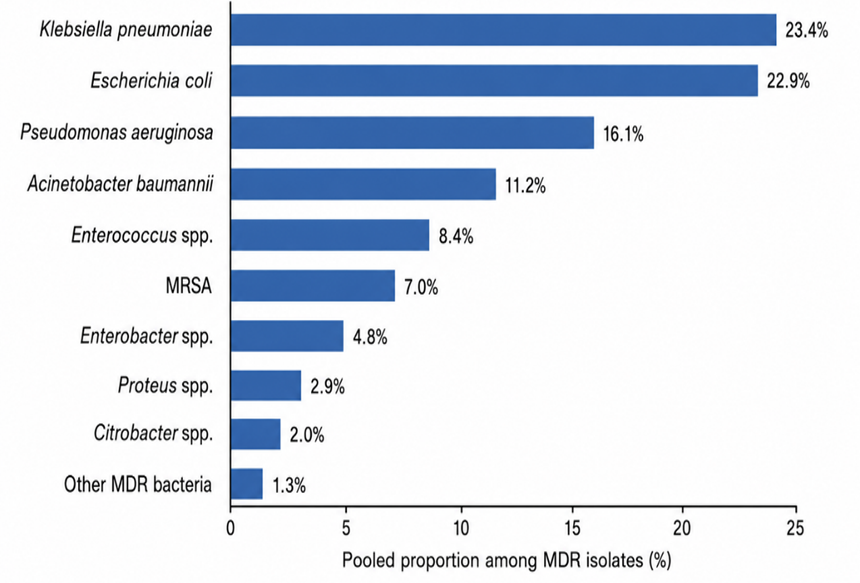
Figure 2 presents the pooled MDR pathogen spectrum. Gram-negative organisms predominated, with Klebsiella pneumoniae, Escherichia coli, Pseudomonas aeruginosa, and Acinetobacter baumannii forming the major pathogen burden.
Resistance Phenotype Distribution
ESBL-producing Enterobacterales represented the most frequent resistance phenotype. Carbapenem-resistant organisms were common, particularly among Klebsiella pneumoniae, Acinetobacter baumannii, and Pseudomonas aeruginosa.
Table 5. Resistance Phenotypes Among MDR Isolates
|
Resistance phenotype |
Pooled proportion |
|
ESBL-producing Enterobacterales |
39.8% |
|
Carbapenem-resistant Enterobacterales |
18.5% |
|
Carbapenem-resistant Acinetobacter baumannii |
14.9% |
|
MDR Pseudomonas aeruginosa |
12.7% |
|
MRSA |
7.0% |
|
VRE |
4.9% |
|
Colistin-resistant Gram-negative bacilli |
1.6% |
|
Pan-drug resistant isolates |
0.6% |
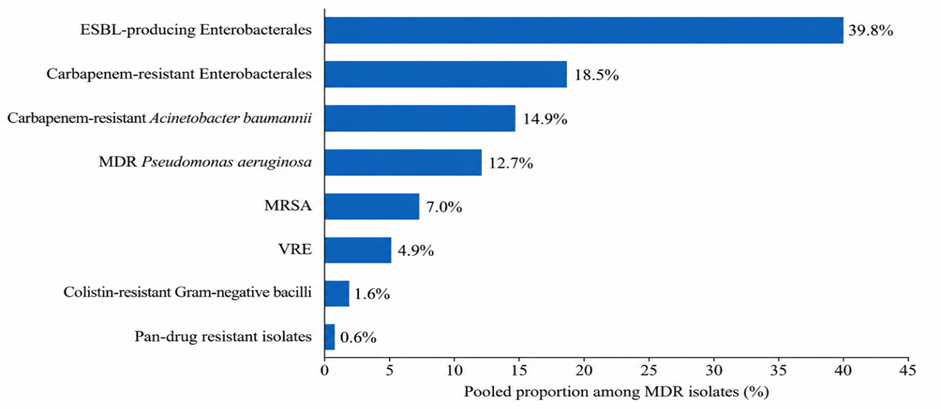
Figure 3 summarizes the major resistance phenotypes among MDR isolates. ESBL-producing Enterobacterales were the most frequent resistance phenotype, followed by carbapenem-resistant Enterobacterales, carbapenem-resistant Acinetobacter baumannii, and MDR Pseudomonas aeruginosa.
Comorbidity-Specific Pathogen Pattern
Distinct pathogen patterns were observed across the three comorbidity groups.
Table 6. Dominant MDR Pathogens by Comorbidity Group
|
Comorbidity group |
Most frequent MDR pathogen |
Second most frequent pathogen |
Other important pathogens |
|
Liver disease / cirrhosis |
Klebsiella pneumoniae |
Escherichia coli |
Enterococci, MRSA, Acinetobacter |
|
Chronic respiratory disorders |
Pseudomonas aeruginosa |
Acinetobacter baumannii |
Klebsiella pneumoniae, MRSA |
|
Urological comorbidities |
Escherichia coli |
Klebsiella pneumoniae |
Enterococci, Pseudomonas, Proteus |
Infection Syndromes
The clinical syndromes differed substantially by comorbidity category. Liver disease was dominated by SBP and bloodstream infection. Respiratory disorders were dominated by pneumonia and chronic airway exacerbation. Urological comorbidities were dominated by recurrent and catheter-associated UTI.
Table 7. Syndrome-Based Distribution of MDR Infections
|
Infection syndrome |
Liver disease |
Respiratory disorders |
Urological comorbidities |
|
Spontaneous bacterial peritonitis |
31.8% |
- |
- |
|
Bloodstream infection |
26.2% |
4.8% |
8.9% |
|
Pneumonia |
18.4% |
45.2% |
- |
|
COPD / chronic airway exacerbation |
- |
26.8% |
- |
|
Bronchiectasis-related infection |
- |
15.6% |
- |
|
Recurrent UTI |
- |
- |
38.1% |
|
Catheter-associated UTI |
- |
- |
26.4% |
|
Pyelonephritis |
- |
- |
15.8% |
|
Urosepsis |
12.4% |
- |
14.2% |
|
Skin and soft tissue infection |
5.1% |
- |
- |
|
Other infections |
6.1% |
7.6% |
5.5% |
Comorbidity-Specific Pathogen Pattern
Distinct pathogen patterns were observed across the three comorbidity groups.
Table 6. Dominant MDR Pathogens by Comorbidity Group
|
Comorbidity group |
Most frequent MDR pathogen |
Second most frequent pathogen |
Other important pathogens |
|
Liver disease / cirrhosis |
Klebsiella pneumoniae |
Escherichia coli |
Enterococci, MRSA, Acinetobacter |
|
Chronic respiratory disorders |
Pseudomonas aeruginosa |
Acinetobacter baumannii |
Klebsiella pneumoniae, MRSA |
|
Urological comorbidities |
Escherichia coli |
Klebsiella pneumoniae |
Enterococci, Pseudomonas, Proteus |
Infection Syndromes
The clinical syndromes differed substantially by comorbidity category. Liver disease was dominated by SBP and bloodstream infection. Respiratory disorders were dominated by pneumonia and chronic airway exacerbation. Urological comorbidities were dominated by recurrent and catheter-associated UTI.
Table 7. Syndrome-Based Distribution of MDR Infections
|
Infection syndrome |
Liver disease |
Respiratory disorders |
Urological comorbidities |
|
Spontaneous bacterial peritonitis |
31.8% |
- |
- |
|
Bloodstream infection |
26.2% |
4.8% |
8.9% |
|
Pneumonia |
18.4% |
45.2% |
- |
|
COPD / chronic airway exacerbation |
- |
26.8% |
- |
|
Bronchiectasis-related infection |
- |
15.6% |
- |
|
Recurrent UTI |
- |
- |
38.1% |
|
Catheter-associated UTI |
- |
- |
26.4% |
|
Pyelonephritis |
- |
- |
15.8% |
|
Urosepsis |
12.4% |
- |
14.2% |
|
Skin and soft tissue infection |
5.1% |
- |
- |
|
Other infections |
6.1% |
7.6% |
5.5% |
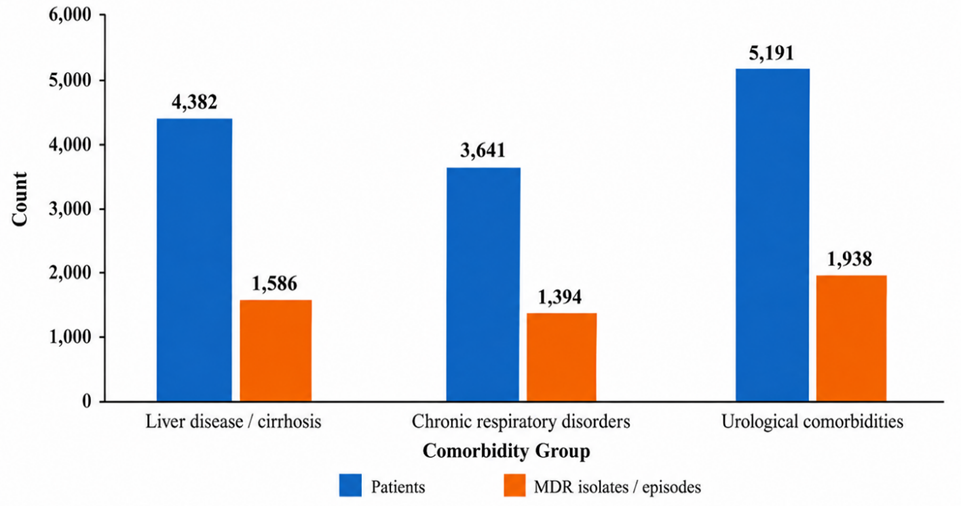
Figure 4 shows the distribution of MDR infection burden across comorbidity groups. Urological comorbidities contributed the highest number of MDR isolates, followed by liver disease and chronic respiratory disorders.
Risk Factors for MDR Infection
The most frequently reported risk factors were prior antibiotic exposure, recent hospitalization, ICU stay, invasive device use, and previous MDR colonization.
Table 8. Frequently Reported Risk Factors
|
Risk factor |
Number of studies reporting |
|
Prior antibiotic exposure |
33 |
|
Recent hospitalization |
31 |
|
ICU admission |
24 |
|
Invasive device use |
23 |
|
Urinary catheterization |
20 |
|
Prior MDR colonization / infection |
19 |
|
Recurrent infection history |
18 |
|
Diabetes mellitus |
17 |
|
Chronic kidney disease |
15 |
|
Decompensated liver disease |
13 |
|
Structural lung disease |
12 |
|
Obstructive uropathy / urinary stones |
12 |
Clinical Outcomes
MDR infection was associated with frequent empirical antibiotic failure, ICU admission, prolonged hospitalization, recurrence, and mortality.
Table 9. Clinical Outcomes Associated with MDR Infection
|
Outcome |
Pooled estimate |
|
Empirical antibiotic failure |
35.6% |
|
Prolonged hospitalization |
48.3% |
|
ICU admission |
30.4% |
|
Recurrence / relapse |
21.1% |
|
30-day mortality |
18.7% |
|
In-hospital mortality |
23.1% |
Quality Assessment
Table 10. Quality Assessment Summary
|
Quality parameter |
Number of studies |
|
Good quality |
16 |
|
Moderate quality |
17 |
|
Low quality |
6 |
|
Clear MDR definition |
31 |
|
Standard susceptibility testing described |
35 |
|
Comorbidity-specific data available |
39 |
|
Outcome data reported |
31 |
|
Multivariable analysis performed |
17 |
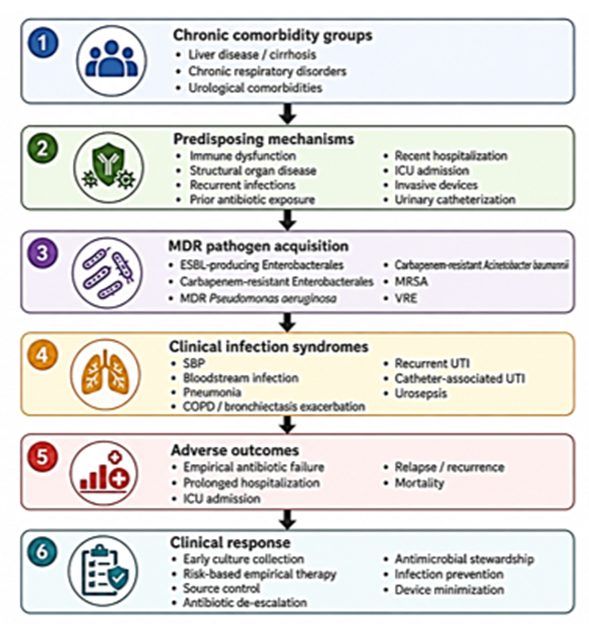
Figure 5 presents a conceptual framework showing how chronic comorbidities, antimicrobial exposure, healthcare contact, and invasive devices contribute to MDR pathogen acquisition and adverse clinical outcomes. Early microbiological diagnosis, source control, stewardship, and comorbidity-specific prevention are central to management.
Research Gap and Rationale
Multidrug-resistant infections have been widely studied in intensive care units, bloodstream infections, urinary tract infections, pneumonia, and hospital-acquired infections. However, most published reviews evaluate MDR infections according to infection site or individual pathogen group rather than according to underlying chronic comorbidity. This creates a practical gap because the probability of MDR infection is strongly influenced by host background, prior antibiotic exposure, device use, recurrent hospitalization, immune dysfunction, and anatomical abnormalities.
Patients with liver disease, chronic respiratory disorders, and urological comorbidities represent three clinically distinct high-risk groups. In liver disease, immune dysfunction, bacterial translocation, ascites, and frequent hospitalization predispose to spontaneous bacterial peritonitis, bloodstream infection, pneumonia, and urinary tract infection. In chronic respiratory disorders, structural airway damage, recurrent exacerbations, chronic colonization, corticosteroid exposure, and repeated antibiotics favor MDR respiratory pathogens. In urological comorbidities, recurrent urinary tract infection, catheterization, obstruction, stones, neurogenic bladder, and instrumentation promote persistent colonization and recurrent MDR infection.
Despite these differences, these patient groups share common MDR drivers such as prior antibiotic exposure, recent hospitalization, ICU admission, invasive devices, and prior MDR colonization. Therefore, a comorbidity-based synthesis is clinically important. It allows comparison of pathogen distribution, resistance phenotypes, infection syndromes, and outcomes across organ-system disease groups. This approach can help clinicians select risk-based empirical therapy, improve culture practices, support antimicrobial stewardship, and guide targeted infection prevention strategies.
The present systematic review addresses this gap by evaluating the spectrum of MDR bacterial infections in patients with liver disease, chronic respiratory disorders, and urological comorbidities, with emphasis on pathogen profile, resistance phenotype, clinical syndrome, risk factors, and outcomes.
DISCUSSION:
This systematic review provides a comorbidity-centered synthesis of multidrug-resistant bacterial infections in patients with liver disease, chronic respiratory disorders, and urological comorbidities. The major finding is that MDR infections in these populations are dominated by resistant Gram-negative bacilli, particularly Klebsiella pneumoniae, Escherichia coli, Pseudomonas aeruginosa, and Acinetobacter baumannii. These organisms collectively represent the most clinically important MDR burden across the included studies. This pattern is consistent with the global shift toward resistant Gram-negative pathogens as major drivers of serious healthcare-associated and community-onset infections [1–6].
A key strength of the present review is that it does not treat MDR infection as a single uniform entity. Instead, it demonstrates that the pathogen spectrum, infection site, and clinical implications vary according to the underlying comorbidity. Liver disease was mainly associated with spontaneous bacterial peritonitis, bloodstream infection, pneumonia, and urinary tract infection. Chronic respiratory disorders were dominated by pneumonia, infective exacerbations, and bronchiectasis-related infection. Urological comorbidities were mainly associated with recurrent urinary tract infection, catheter-associated urinary tract infection, pyelonephritis, and urosepsis. This comorbidity-specific pattern has direct clinical relevance because empirical therapy, diagnostic sampling, prevention strategies, and source control differ substantially across these groups.
In the overall pathogen distribution, Klebsiella pneumoniae and E. coli were the leading MDR organisms. Their predominance reflects the major contribution of urinary, intra-abdominal, bloodstream, and healthcare-associated infections in chronically ill patients. ESBL-producing Enterobacterales were the most frequent resistance phenotype, indicating that conventional beta-lactam and cephalosporin-based empirical therapy may be unreliable in high-risk patients. ESBL-producing E. coli and Klebsiella are well-recognized global threats and are associated with delayed appropriate therapy, limited oral treatment options, recurrent infection, and increased healthcare burden [47,48].
Carbapenem resistance was another major concern. Carbapenem-resistant Enterobacterales, carbapenem-resistant A. baumannii, and MDR P. aeruginosa were reported across all three comorbidity groups. This is clinically important because carbapenem resistance is often associated with limited therapeutic options, need for newer agents or combination therapy, prolonged hospitalization, higher treatment cost, and increased mortality [50–53]. The presence of colistin-resistant and pan-drug-resistant isolates, although less frequent, is particularly alarming because it reflects progressive exhaustion of last-line antimicrobial options.
Patients with liver disease represent a uniquely vulnerable population. Cirrhosis and decompensated chronic liver disease are associated with cirrhosis-associated immune dysfunction, intestinal bacterial translocation, gut dysbiosis, increased intestinal permeability, ascites, malnutrition, renal dysfunction, and frequent healthcare exposure [13,17,22–24]. These mechanisms explain why bacterial infections are frequent and clinically severe in this group. Infections in cirrhosis may rapidly precipitate hepatic encephalopathy, acute kidney injury, septic shock, acute-on-chronic liver failure, and death [11,12,14].
In the present review, spontaneous bacterial peritonitis and bloodstream infection were the leading MDR syndromes in liver disease. This finding is clinically meaningful because traditional empirical therapy for community-acquired SBP often relies on third-generation cephalosporins. However, the increasing frequency of ESBL-producing Enterobacterales, carbapenem-resistant organisms, enterococci, and MRSA in healthcare-associated or nosocomial infections challenges this approach [11,15,16]. Therefore, empirical therapy in cirrhotic patients should be guided by site of acquisition, severity of illness, recent hospitalization, previous antibiotic exposure, prior MDR colonization, and local resistance patterns [13,17–21].
The predominance of K. pneumoniae and E. coli in liver disease is consistent with gut-derived infection pathways and bacterial translocation. However, the emergence of enterococci, MRSA, and non-fermenting Gram-negative bacilli suggests that the microbiology of infections in cirrhosis is changing, particularly in hospitalized patients. This shift has implications for stewardship. Overly narrow empirical therapy may fail in high-risk patients, whereas unnecessary broad-spectrum therapy may accelerate resistance. A risk-stratified approach is therefore essential.
Chronic respiratory disorders showed a different MDR ecology. In this group, MDR P. aeruginosa and A. baumannii were prominent. This pattern reflects the biology of chronic airway disease. COPD, bronchiectasis, post-tubercular structural lung disease, and chronic suppurative airway disorders predispose to mucus retention, impaired mucociliary clearance, repeated infective exacerbations, chronic colonization, and recurrent antibiotic exposure [25–35]. These conditions create a favorable environment for non-fermenting Gram-negative bacilli, especially P. aeruginosa.
The role of P. aeruginosa in chronic respiratory disease is particularly important. It is associated with frequent exacerbations, accelerated decline in lung function, increased hospitalization, and poorer prognosis in bronchiectasis and chronic airway disease [33–35]. Its ability to form biofilm, alter membrane permeability, use efflux pumps, and adapt to antibiotic pressure contributes to persistence and resistance [57–59]. Therefore, MDR Pseudomonas isolation in a patient with chronic respiratory illness should not be interpreted merely as a laboratory result; it should prompt assessment of clinical status, previous culture history, exacerbation frequency, radiology, and antibiotic exposure.
A major challenge in respiratory comorbidity is differentiating colonization from true infection. In bronchiectasis and advanced COPD, sputum cultures may remain positive even in clinically stable periods. Thus, treatment decisions should not be based only on culture positivity. Clinical deterioration, increased sputum volume or purulence, fever, raised inflammatory markers, new radiological infiltrates, hypoxemia, or need for ventilatory support should guide interpretation. This distinction is critical because unnecessary antibiotic use in colonized patients can further select MDR organisms.
Urological comorbidities contributed the largest number of MDR infection episodes in this review. This is expected because urinary tract infections are among the most common bacterial infections worldwide, and urological abnormalities strongly predispose to recurrence and persistence [37–46]. Recurrent UTI and catheter-associated UTI were the dominant syndromes. ESBL-producing E. coli was the leading uropathogen, followed by K. pneumoniae, enterococci, Pseudomonas, and Proteus.
The urological group highlights the importance of source control and anatomical correction. Urinary catheterization, obstructive uropathy, stones, neurogenic bladder, benign prostatic enlargement, and prior instrumentation promote biofilm formation and persistent colonization. In such settings, antibiotics alone may provide only temporary improvement. Effective management often requires catheter removal or replacement, relief of obstruction, drainage of infected collections, treatment of stones, and prevention of unnecessary instrumentation [37,38,42,43]. Without addressing these factors, relapse and recurrent MDR infection remain likely.
Prior antibiotic exposure was the most consistent risk factor across all three groups. This finding reinforces the central role of antimicrobial pressure in the selection and expansion of MDR organisms [1,5,63–65]. Recent hospitalization, ICU admission, invasive device use, urinary catheterization, prior MDR colonization, recurrent infection, diabetes mellitus, and chronic kidney disease were also frequent risk factors. These factors are clinically useful because they can be identified at the time of presentation before culture results become available. They should therefore be incorporated into MDR risk assessment and empirical antibiotic decisions.
Empirical antibiotic failure was reported in more than one-third of MDR infection episodes. This is one of the most clinically important findings of the review. Delayed appropriate therapy is associated with worse outcomes, especially in severe sepsis, bloodstream infection, pneumonia, and SBP [9,10]. However, universal broad-spectrum empirical therapy is not a sustainable solution. It increases collateral damage, promotes further resistance, and may increase colonization with even more resistant organisms. The optimal approach is risk-based empirical therapy followed by early de-escalation once culture and susceptibility results are available [63–65].
The review also demonstrates substantial adverse outcomes, including ICU admission, prolonged hospitalization, recurrence, and mortality. In-hospital mortality and 30-day mortality were clinically significant. Mortality in these patients is likely multifactorial. MDR organisms delay effective treatment, but host factors also play a critical role. Patients with cirrhosis may develop renal failure and acute-on-chronic liver failure; respiratory patients may deteriorate into respiratory failure; urological patients may progress to urosepsis if obstruction or catheter-associated infection persists. Thus, outcome depends on both pathogen resistance and comorbidity severity.
The findings support the need for early and appropriate microbiological sampling. Blood cultures, urine cultures, sputum cultures, ascitic fluid cultures, catheter-associated samples, and site-specific cultures should be obtained before antibiotics whenever feasible. Microbiology laboratories should report not only species identification and susceptibility but also clinically relevant resistance phenotypes such as ESBL production, carbapenem resistance, MRSA, VRE, and colistin resistance. Such reporting helps clinicians interpret risk, select therapy, and implement infection control measures.
Antimicrobial stewardship is central to improving outcomes. Stewardship in these comorbidity groups should include avoidance of unnecessary antibiotics, use of local antibiograms, culture-guided therapy, de-escalation, shortest effective duration, dose optimization, and review of recurrent antibiotic prescriptions. In patients with chronic respiratory disease or recurrent UTI, repeated empirical antibiotic courses should be discouraged unless supported by clinical and microbiological evidence.
Infection prevention strategies must be tailored to comorbidity group. In liver disease, prevention should include rational use of antibiotic prophylaxis, early diagnosis of SBP, infection screening during admission, and avoidance of unnecessary broad-spectrum therapy. In chronic respiratory disorders, prevention should include vaccination, airway clearance, sputum-guided therapy, reduction of unnecessary antibiotics, and ventilator-associated pneumonia prevention bundles. In urological patients, catheter minimization, catheter-care bundles, management of obstruction, stone treatment, hydration, and culture-guided recurrence prevention are essential.
This review has important implications for hospital policy. General hospital antibiograms may not be sufficient for high-risk groups. Hepatology units, respiratory units, ICUs, and urology services may have different MDR ecologies. Therefore, comorbidity-specific or unit-specific antibiograms could improve empirical therapy and reduce inappropriate antibiotic use. Such an approach would be particularly useful in institutions with high ESBL or carbapenem-resistant organism burden.
The review also highlights the importance of multidisciplinary management. MDR infection in these patients is rarely only a microbiological issue. It often requires coordination between physicians, microbiologists, intensivists, hepatologists, pulmonologists, urologists, infection control teams, pharmacists, and nurses. Source control, device management, antimicrobial selection, monitoring for toxicity, and prevention of recurrence require team-based care.
Several limitations should be acknowledged. Most included studies were observational and hospital-based, which may overrepresent severe infections and healthcare-associated MDR organisms. MDR definitions varied across studies. Some studies reported isolate-level rather than patient-level data, which may overestimate recurrent infection burden. Respiratory studies may have included colonization along with infection, and urological studies may have included repeated isolates from recurrent UTI patients. Outcome definitions were also heterogeneous, and adjustment for confounding was inconsistent. Therefore, pooled estimates should be interpreted as descriptive summaries rather than exact prevalence measures.
Despite these limitations, the review provides a clinically useful and research-relevant synthesis. It emphasizes that MDR infections should be studied not only by organism or infection site but also by host comorbidity. This approach better reflects bedside decision-making. A patient with cirrhosis and SBP, a patient with bronchiectasis and pneumonia, and a catheterized patient with recurrent UTI may all have MDR infection risk, but their likely pathogens, source-control needs, and empirical therapy considerations differ.
Future research should focus on prospective comorbidity-specific MDR risk prediction models, rapid diagnostic tools, stewardship interventions, and outcome-based empirical therapy algorithms. Studies should distinguish colonization from infection, report patient-level rather than isolate-level data, and evaluate the impact of early culture-guided therapy and de-escalation. More data are also needed from low- and middle-income countries, where antibiotic access, infection control resources, and MDR burden may differ substantially.
In summary, MDR infections in patients with liver disease, chronic respiratory disorders, and urological comorbidities are driven by the interaction between host vulnerability, antimicrobial exposure, healthcare contact, invasive devices, and pathogen resistance. Resistant Gram-negative organisms predominate, but the clinical syndrome and dominant pathogen vary by comorbidity group. Recognition of these patterns can improve empirical therapy, reduce treatment failure, strengthen stewardship, and support targeted prevention strategies.
CONCLUSION:
Multidrug-resistant infections in patients with liver disease, chronic respiratory disorders, and urological comorbidities represent a major clinical challenge. Resistant Gram-negative bacilli, particularly Klebsiella pneumoniae, Escherichia coli, Pseudomonas aeruginosa, and Acinetobacter baumannii, formed the principal pathogen burden. The pattern of infection varied by comorbidity, with spontaneous bacterial peritonitis and bloodstream infection predominating in liver disease, pneumonia and airway exacerbations in respiratory disorders, and recurrent or catheter-associated urinary tract infections in urological patients. Prior antibiotic exposure, hospitalization, ICU care, invasive devices, and previous MDR colonization were key risk factors. Early culture collection, risk-based empirical therapy, source control, antimicrobial de-escalation, and comorbidity-specific prevention strategies are essential to reduce treatment failure, recurrence, and mortality.
REFERENCES:
1. Magiorakos AP, Srinivasan A, Carey RB, Carmeli Y, Falagas ME, Giske CG, et al. Multidrug-resistant, extensively drug-resistant and pandrug-resistant bacteria: an international expert proposal for interim standard definitions for acquired resistance. Clin Microbiol Infect. 2012;18(3):268-281.
2. World Health Organization. WHO bacterial priority pathogens list, 2024. Geneva: World Health Organization; 2024.
3. World Health Organization. Global antimicrobial resistance and use surveillance system report 2024. Geneva: World Health Organization; 2024.
4. Antimicrobial Resistance Collaborators. Global burden of bacterial antimicrobial resistance in 2019: a systematic analysis. Lancet. 2022;399(10325):629-655.
5. Laxminarayan R, Duse A, Wattal C, Zaidi AKM, Wertheim HFL, Sumpradit N, et al. Antibiotic resistance: the need for global solutions. Lancet Infect Dis. 2013;13(12):1057-1098.
6. Tacconelli E, Carrara E, Savoldi A, Harbarth S, Mendelson M, Monnet DL, et al. Discovery, research, and development of new antibiotics: the WHO priority pathogens list. Lancet Infect Dis. 2018;18(3):318-327.
7. Cassini A, Högberg LD, Plachouras D, Quattrocchi A, Hoxha A, Simonsen GS, et al. Attributable deaths and disability-adjusted life-years caused by infections with antibiotic-resistant bacteria in the EU and European Economic Area in 2015: a population-level modelling analysis. Lancet Infect Dis. 2019;19(1):56-66.
8. Bassetti M, Righi E. Multidrug-resistant bacteria: what is the threat? Hematology Am Soc Hematol Educ Program. 2013;2013:428-432.
9. Kollef MH, Golan Y, Micek ST, Shorr AF, Restrepo MI. Appraising contemporary strategies to combat multidrug-resistant Gram-negative bacterial infections. Proc Natl Acad Sci USA. 2011;108(21):8721-8726.
10. Timsit JF, Ruppé E, Barbier F, Tabah A, Bassetti M. Bloodstream infections in critically ill patients: an expert statement. Intensive Care Med. 2020;46(2):266-284.
11. Fernández J, Acevedo J, Castro M, Garcia O, Rodríguez de Lope C, Roca D, et al. Prevalence and risk factors of infections by multidrug-resistant bacteria in cirrhosis: a prospective study. Hepatology. 2012;55(5):1551-1561.
12. Piano S, Singh V, Caraceni P, Maiwall R, Alessandria C, Fernandez J, et al. Epidemiology and effects of bacterial infections in patients with cirrhosis worldwide. Gastroenterology. 2019;156(5):1368-1380.
13. Jalan R, Fernandez J, Wiest R, Schnabl B, Moreau R, Angeli P, et al. Bacterial infections in cirrhosis: a position statement based on the EASL Special Conference 2013. J Hepatol. 2014;60(6):1310-1324.
14. Arvaniti V, D’Amico G, Fede G, Manousou P, Tsochatzis E, Pleguezuelo M, et al. Infections in patients with cirrhosis increase mortality four-fold and should be used in determining prognosis. Gastroenterology. 2010;139(4):1246-1256.
15. Merli M, Lucidi C, Giannelli V, Giusto M, Riggio O, Falcone M, et al. Cirrhotic patients are at risk for health care-associated bacterial infections. Clin Gastroenterol Hepatol. 2010;8(11):979-985.
16. Bajaj JS, O’Leary JG, Reddy KR, Wong F, Olson JC, Subramanian RM, et al. Second infections independently increase mortality in hospitalized patients with cirrhosis: the North American Consortium for the Study of End-Stage Liver Disease experience. Hepatology. 2012;56(6):2328-2335.
17. European Association for the Study of the Liver. EASL clinical practice guidelines for the management of patients with decompensated cirrhosis. J Hepatol. 2018;69(2):406-460.
18. Runyon BA. Introduction to the revised American Association for the Study of Liver Diseases practice guideline: management of adult patients with ascites due to cirrhosis 2012. Hepatology. 2013;57(4):1651-1653.
19. Wiest R, Krag A, Gerbes A. Spontaneous bacterial peritonitis: recent guidelines and beyond. Gut. 2012;61(2):297-310.
20. Fiore M, Maraolo AE, Gentile I, Borgia G, Leone S, Sansone P, et al. Current concepts and future strategies in the antimicrobial therapy of emerging Gram-positive spontaneous bacterial peritonitis. World J Hepatol. 2017;9(30):1166-1175.
21. Piano S, Bartoletti M, Tonon M, Baldassarre M, Chies G, Romano A, et al. Assessment of sepsis-3 criteria and quick SOFA in patients with cirrhosis and bacterial infections. Gut. 2018;67(10):1892-1899.
22. Tandon P, Garcia-Tsao G. Bacterial infections, sepsis, and multiorgan failure in cirrhosis. Semin Liver Dis. 2008;28(1):26-42.
23. Bonnel AR, Bunchorntavakul C, Reddy KR. Immune dysfunction and infections in patients with cirrhosis. Clin Gastroenterol Hepatol. 2011;9(9):727-738.
24. Albillos A, Lario M, Álvarez-Mon M. Cirrhosis-associated immune dysfunction: distinctive features and clinical relevance. J Hepatol. 2014;61(6):1385-1396.
25. Chalmers JD, Aliberti S, Blasi F. Management of bronchiectasis in adults. Eur Respir J. 2015;45(5):1446-1462.
26. Polverino E, Goeminne PC, McDonnell MJ, Aliberti S, Marshall SE, Loebinger MR, et al. European Respiratory Society guidelines for the management of adult bronchiectasis. Eur Respir J. 2017;50(3):1700629.
27. Miravitlles M, Anzueto A. Antibiotics for acute and chronic respiratory infection in patients with chronic obstructive pulmonary disease. Am J Respir Crit Care Med. 2013;188(9):1052-1057.
28. Restrepo MI, Babu BL, Reyes LF, Chalmers JD, Soni NJ, Sibila O, et al. Burden and risk factors for Pseudomonas aeruginosa community-acquired pneumonia: a multinational point prevalence study. Chest. 2018;154(4):771-778.
29. Metlay JP, Waterer GW, Long AC, Anzueto A, Brozek J, Crothers K, et al. Diagnosis and treatment of adults with community-acquired pneumonia: an official clinical practice guideline of the American Thoracic Society and Infectious Diseases Society of America. Am J Respir Crit Care Med. 2019;200(7):e45-e67.
30. Kalil AC, Metersky ML, Klompas M, Muscedere J, Sweeney DA, Palmer LB, et al. Management of adults with hospital-acquired and ventilator-associated pneumonia: 2016 clinical practice guidelines by the Infectious Diseases Society of America and American Thoracic Society. Clin Infect Dis. 2016;63(5):e61-e111.
31. Woodhead M, Blasi F, Ewig S, Garau J, Huchon G, Ieven M, et al. Guidelines for the management of adult lower respiratory tract infections. Clin Microbiol Infect. 2011;17 Suppl 6:E1-E59.
32. Sethi S, Murphy TF. Infection in the pathogenesis and course of chronic obstructive pulmonary disease. N Engl J Med. 2008;359(22):2355-2365.
33. Murphy TF, Brauer AL, Eschberger K, Lobbins P, Grove L, Cai X, et al. Pseudomonas aeruginosa in chronic obstructive pulmonary disease. Am J Respir Crit Care Med. 2008;177(8):853-860.
34. Aliberti S, Lonni S, Dore S, McDonnell MJ, Goeminne PC, Dimakou K, et al. Clinical phenotypes in adult patients with bronchiectasis. Eur Respir J. 2016;47(4):1113-1122.
35. Finch S, McDonnell MJ, Abo-Leyah H, Aliberti S, Chalmers JD. A comprehensive analysis of the impact of Pseudomonas aeruginosa colonisation on prognosis in adult bronchiectasis. Ann Am Thorac Soc. 2015;12(11):1602-1611.
36. Torres A, Cillóniz C, Niederman MS, Menéndez R, Chalmers JD, Wunderink RG, et al. Pneumonia. Nat Rev Dis Primers. 2021;7(1):25.
37. Nicolle LE. Catheter associated urinary tract infections. Antimicrob Resist Infect Control. 2014;3:23.
38. Flores-Mireles AL, Walker JN, Caparon M, Hultgren SJ. Urinary tract infections: epidemiology, mechanisms of infection and treatment options. Nat Rev Microbiol. 2015;13(5):269-284.
39. Tandogdu Z, Wagenlehner FME. Global epidemiology of urinary tract infections. Curr Opin Infect Dis. 2016;29(1):73-79.
40. Foxman B. Urinary tract infection syndromes: occurrence, recurrence, bacteriology, risk factors, and disease burden. Infect Dis Clin North Am. 2014;28(1):1-13.
41. Gupta K, Hooton TM, Naber KG, Wullt B, Colgan R, Miller LG, et al. International clinical practice guidelines for the treatment of acute uncomplicated cystitis and pyelonephritis in women: a 2010 update by IDSA and ESCMID. Clin Infect Dis. 2011;52(5):e103-e120.
42. Hooton TM, Bradley SF, Cardenas DD, Colgan R, Geerlings SE, Rice JC, et al. Diagnosis, prevention, and treatment of catheter-associated urinary tract infection in adults: 2009 international clinical practice guidelines from IDSA. Clin Infect Dis. 2010;50(5):625-663.
43. Bonkat G, Bartoletti R, Bruyère F, Cai T, Geerlings SE, Köves B, et al. EAU guidelines on urological infections. Arnhem: European Association of Urology; 2024.
44. Wagenlehner FME, Naber KG. Treatment of bacterial urinary tract infections: presence and future. Eur Urol. 2006;49(2):235-244.
45. Naber KG, Schito G, Botto H, Palou J, Mazzei T. Surveillance study in Europe and Brazil on clinical aspects and antimicrobial resistance epidemiology in females with cystitis. Eur Urol. 2008;54(5):1164-1175.
46. Ronald A. The etiology of urinary tract infection: traditional and emerging pathogens. Am J Med. 2002;113 Suppl 1A:14S-19S.
47. Pitout JDD, Laupland KB. Extended-spectrum beta-lactamase-producing Enterobacteriaceae: an emerging public-health concern. Lancet Infect Dis. 2008;8(3):159-166.
48. Paterson DL, Bonomo RA. Extended-spectrum beta-lactamases: a clinical update. Clin Microbiol Rev. 2005;18(4):657-686.
49. Livermore DM. Fourteen years in resistance. Int J Antimicrob Agents. 2012;39(4):283-294.
50. Tzouvelekis LS, Markogiannakis A, Psichogiou M, Tassios PT, Daikos GL. Carbapenemases in Klebsiella pneumoniae and other Enterobacteriaceae: an evolving crisis of global dimensions. Clin Microbiol Rev. 2012;25(4):682-707.
51. Logan LK, Weinstein RA. The epidemiology of carbapenem-resistant Enterobacteriaceae: the impact and evolution of a global menace. J Infect Dis. 2017;215 Suppl 1:S28-S36.
52. Nordmann P, Poirel L. Epidemiology and diagnostics of carbapenem resistance in Gram-negative bacteria. Clin Infect Dis. 2019;69 Suppl 7:S521-S528.
53. van Duin D, Doi Y. The global epidemiology of carbapenemase-producing Enterobacteriaceae. Virulence. 2017;8(4):460-469.
54. Munita JM, Arias CA. Mechanisms of antibiotic resistance. Microbiol Spectr. 2016;4(2):VMBF-0016-2015.
55. Peleg AY, Seifert H, Paterson DL. Acinetobacter baumannii: emergence of a successful pathogen. Clin Microbiol Rev. 2008;21(3):538-582.
56. Dijkshoorn L, Nemec A, Seifert H. An increasing threat in hospitals: multidrug-resistant Acinetobacter baumannii. Nat Rev Microbiol. 2007;5(12):939-951.
57. Moradali MF, Ghods S, Rehm BHA. Pseudomonas aeruginosa lifestyle: a paradigm for adaptation, survival, and persistence. Front Cell Infect Microbiol. 2017;7:39.
58. Breidenstein EBM, de la Fuente-Núñez C, Hancock REW. Pseudomonas aeruginosa: all roads lead to resistance. Trends Microbiol. 2011;19(8):419-426.
59. Strateva T, Yordanov D. Pseudomonas aeruginosa—a phenomenon of bacterial resistance. J Med Microbiol. 2009;58(Pt 9):1133-1148.
60. David MZ, Daum RS. Community-associated methicillin-resistant Staphylococcus aureus: epidemiology and clinical consequences of an emerging epidemic. Clin Microbiol Rev. 2010;23(3):616-687.
61. Arias CA, Murray BE. The rise of the enterococcus: beyond vancomycin resistance. Nat Rev Microbiol. 2012;10(4):266-278.
62. Werner G, Coque TM, Hammerum AM, Hope R, Hryniewicz W, Johnson A, et al. Emergence and spread of vancomycin resistance among enterococci in Europe. Euro Surveill. 2008;13(47):19046.
63. Siegel JD, Rhinehart E, Jackson M, Chiarello L; Healthcare Infection Control Practices Advisory Committee. Management of multidrug-resistant organisms in healthcare settings, 2006. Am J Infect Control. 2007;35(10 Suppl 2):S165-S193.
64. Dellit TH, Owens RC, McGowan JE Jr, Gerding DN, Weinstein RA, Burke JP, et al. Infectious Diseases Society of America and Society for Healthcare Epidemiology of America guidelines for developing an institutional program to enhance antimicrobial stewardship. Clin Infect Dis. 2007;44(2):159-177.
65. Barlam TF, Cosgrove SE, Abbo LM, MacDougall C, Schuetz AN, Septimus EJ, et al. Implementing an antibiotic stewardship program: guidelines by IDSA and SHEA. Clin Infect Dis. 2016;62(10):e51-e77.