Emerging Multidrug-Resistant Pathogens in Patients with Liver Disease, Chronic Respiratory Illness, and Urological Comorbidities: A Systematic Review.
- Aneesa Gorvankolla , Consultant Intensivist, Department of Critical Care Medicine, City Central Hospital, Davangere, Karnataka, India.
- Sreenivas S. , Consultant Surgeon, Department of General Surgery, City Central Hospital, Davangere, Karnataka, India.
- Ruby Rani , Consultant, Department of Microbiology, Dharamshila Narayana Superspeciality Hospital, New Delhi, Delhi, India.
Article Information:
Abstract:
Background: Multidrug-resistant bacterial infections increasingly complicate the management of patients with chronic organ-system diseases. Patients with liver disease, chronic respiratory illness, and urological comorbidities experience distinct patterns of infection because of immune dysfunction, repeated antimicrobial exposure, invasive devices, recurrent hospitalization, and structural organ abnormalities. Aim: To systematically review the emerging multidrug-resistant pathogen profile in three high-risk clinical groups: liver disease, chronic respiratory illness, and urological comorbidities. Methods: A systematic review was conducted using PRISMA-based methodology. Electronic databases were searched for studies published between January 2005 and January 2026. Studies reporting bacterial multidrug-resistant infections in adults with chronic liver disease/cirrhosis, chronic respiratory illness, or urological comorbidities were included. Data were extracted regarding study design, patient population, infection syndrome, organism profile, resistance phenotype, risk factors, and clinical outcomes. Results: Thirty-five studies including 11,920 patients were included. A total of 4,286 MDR bacterial isolates or infection episodes were analyzed. Liver disease contributed 1,356 MDR isolates, chronic respiratory illness 1,184 isolates, and urological comorbidities 1,746 isolates. The dominant organisms were Klebsiella pneumoniae (24.1%), Escherichia coli (22.7%), Pseudomonas aeruginosa (16.4%), Acinetobacter baumannii (11.8%), Enterococcus species (7.9%), MRSA (6.8%), and Enterobacter species (4.6%). ESBL production was the most frequent resistance phenotype (38.6%), followed by carbapenem resistance among Enterobacterales (18.2%), carbapenem-resistant A. baumannii (15.3%), MDR P. aeruginosa (12.5%), MRSA (6.8%), and VRE (4.7%). In liver disease, MDR infections most commonly presented as spontaneous bacterial peritonitis, bloodstream infection, pneumonia, and urinary tract infection. In respiratory illness, MDR pneumonia, bronchiectasis infection, and infective exacerbations were predominant. In urological comorbidities, recurrent UTI, catheter-associated UTI, pyelonephritis, and urosepsis were the major syndromes. Conclusion: MDR infections in these comorbidity groups are not uniform. Liver disease is characterized by invasive Gram-negative and enterococcal infections, chronic respiratory illness by MDR non-fermenters and airway pathogens, and urological comorbidities by recurrent ESBL-producing Enterobacterales. Management requires early culture sampling, risk-based empirical therapy, source control, antimicrobial stewardship, and comorbidity-specific prevention strategies.
Keywords:
Article :
INTRODUCTION:
Multidrug-resistant bacterial infections have changed the clinical management of infectious diseases across hospital and community settings. Organisms that were previously treatable with standard empirical antibiotics are now increasingly resistant to multiple drug classes, resulting in delayed effective therapy, treatment failure, prolonged hospitalization, recurrent infection, and increased mortality. The clinical impact of MDR organisms is particularly severe in patients with chronic comorbidities because these patients frequently require hospital care, invasive procedures, repeated antimicrobial exposure, and long-term follow-up.
Patients with liver disease represent a unique immunocompromised population. Cirrhosis and decompensated chronic liver disease are associated with immune dysfunction, gut dysbiosis, intestinal bacterial translocation, ascites, renal dysfunction, and repeated exposure to healthcare environments. Bacterial infections in cirrhosis may rapidly precipitate acute decompensation, renal failure, encephalopathy, sepsis, or acute-on-chronic liver failure. As MDR organisms become more frequent in this group, conventional empirical regimens may no longer provide adequate early coverage.
Chronic respiratory illness forms a second high-risk group. Conditions such as COPD, bronchiectasis, post-tubercular lung disease, and chronic structural airway disorders predispose patients to recurrent lower respiratory tract infections. Repeated antibiotic courses, corticosteroid exposure, colonization of damaged airways, prior hospital admission, and ventilatory support increase the risk of infection with MDR Pseudomonas aeruginosa, Acinetobacter baumannii, resistant Klebsiella pneumoniae, and MRSA. In these patients, distinguishing colonization from true infection is clinically important but often difficult.
Urological comorbidities form another major reservoir of MDR organisms. Recurrent UTI, urinary catheterization, obstructive uropathy, renal calculi, neurogenic bladder, benign prostatic enlargement, prior urological procedures, and repeated antibiotic exposure promote persistent colonization and infection by resistant uropathogens. ESBL-producing E. coli, ESBL-producing Klebsiella pneumoniae, carbapenem-resistant Enterobacterales, VRE, and MDR Pseudomonas are increasingly reported in recurrent UTI and urosepsis.
Although these three comorbidity groups differ clinically, they share several MDR drivers: prior antibiotic exposure, recent hospitalization, invasive device use, recurrent infection, altered host defense, and colonization pressure. However, their infection syndromes and pathogen priorities differ. A liver disease patient with spontaneous bacterial peritonitis, a bronchiectasis patient with chronic airway infection, and a catheterized urology patient with recurrent UTI require different empirical and preventive strategies.
Therefore, this systematic review was conducted to examine MDR infections across these three comorbidity clusters using a risk-phenotype approach. The review aims to summarize pathogen distribution, resistance mechanisms, infection syndromes, risk factors, and outcomes in patients with liver disease, chronic respiratory illness, and urological comorbidities.
MATERIALS AND METHODS:
Study Design
This was a systematic review of published studies reporting MDR bacterial infections in patients with liver disease, chronic respiratory illness, or urological comorbidities.
Search Strategy
A structured literature search was performed in PubMed, Embase, Scopus, Web of Science, Cochrane Library, and Google Scholar for studies published from January 2005 to January 2026.
Search terms included combinations of:
“multidrug resistant infection,” “MDR bacteria,” “antimicrobial resistance,” “ESBL,” “carbapenem resistant,” “MRSA,” “VRE,” “cirrhosis,” “chronic liver disease,” “spontaneous bacterial peritonitis,” “COPD,” “bronchiectasis,” “chronic respiratory disease,” “pneumonia,” “recurrent urinary tract infection,” “catheter-associated UTI,” “urological comorbidity,” “obstructive uropathy,” and “urosepsis.”
Inclusion Criteria
Studies were included if they:
1. Included adult patients with liver disease, chronic respiratory illness, or urological comorbidities.
2. Reported MDR bacterial infection or clinically significant MDR isolates.
3. Provided organism-level or resistance phenotype data.
4. Reported at least one infection site or clinical outcome.
5. Used observational, cohort, cross-sectional, surveillance, registry, or interventional design.
6. Were published in English.
Exclusion Criteria
Studies were excluded if they were case reports, narrative-only reviews, editorials, pediatric-only studies, non-bacterial infection studies, studies without MDR data, or studies without separate comorbidity-specific information.
Data Extraction
Data were extracted for:
• Author and year
• Country
• Study design
• Comorbidity group
• Sample size
• Number of MDR isolates or infection episodes
• Infection syndrome
• Pathogen distribution
• Resistance phenotype
• Risk factors
• Empirical antibiotic failure
• ICU admission
• Recurrence
• Mortality
Outcome Measures
The primary outcome was the spectrum of MDR bacterial pathogens across the three comorbidity groups.
Secondary outcomes were resistance phenotype distribution, infection syndrome distribution, risk factor frequency, empirical treatment failure, recurrence, ICU admission, and mortality.
Quality Assessment
Study quality was assessed using a modified observational-study quality tool based on patient selection, microbiological method, MDR definition, comorbidity reporting, outcome reporting, and control of confounding. Studies were categorized as good, moderate, or low quality.
RESULTS:
Study Selection
The search identified 1,094 records. After removal of 252 duplicates, 842 records were screened. A total of 701 records were excluded after title and abstract review. One hundred and forty-one full-text articles were assessed. One hundred and six were excluded, and 35 studies were included in the final systematic review.
Table 1. PRISMA Study Selection Summary
|
Study selection stage |
Number |
|
Records identified through database and manual searching |
1,094 |
|
Duplicate records removed |
252 |
|
Records screened by title and abstract |
842 |
|
Records excluded after screening |
701 |
|
Full-text articles assessed for eligibility |
141 |
|
Full-text articles excluded |
106 |
|
Studies included in systematic review |
35 |
Table 2. Reasons for Full-Text Exclusion
|
Reason for exclusion |
Number |
|
No separate comorbidity-wise MDR data |
29 |
|
Not focused on MDR bacterial infection |
23 |
|
Incomplete pathogen-level data |
17 |
|
Pediatric-only population |
10 |
|
Duplicate or overlapping cohort |
9 |
|
Review/editorial/commentary without primary data |
8 |
|
Fungal, viral, or parasitic infection only |
6 |
|
Full text unavailable |
4 |
|
Total |
106 |
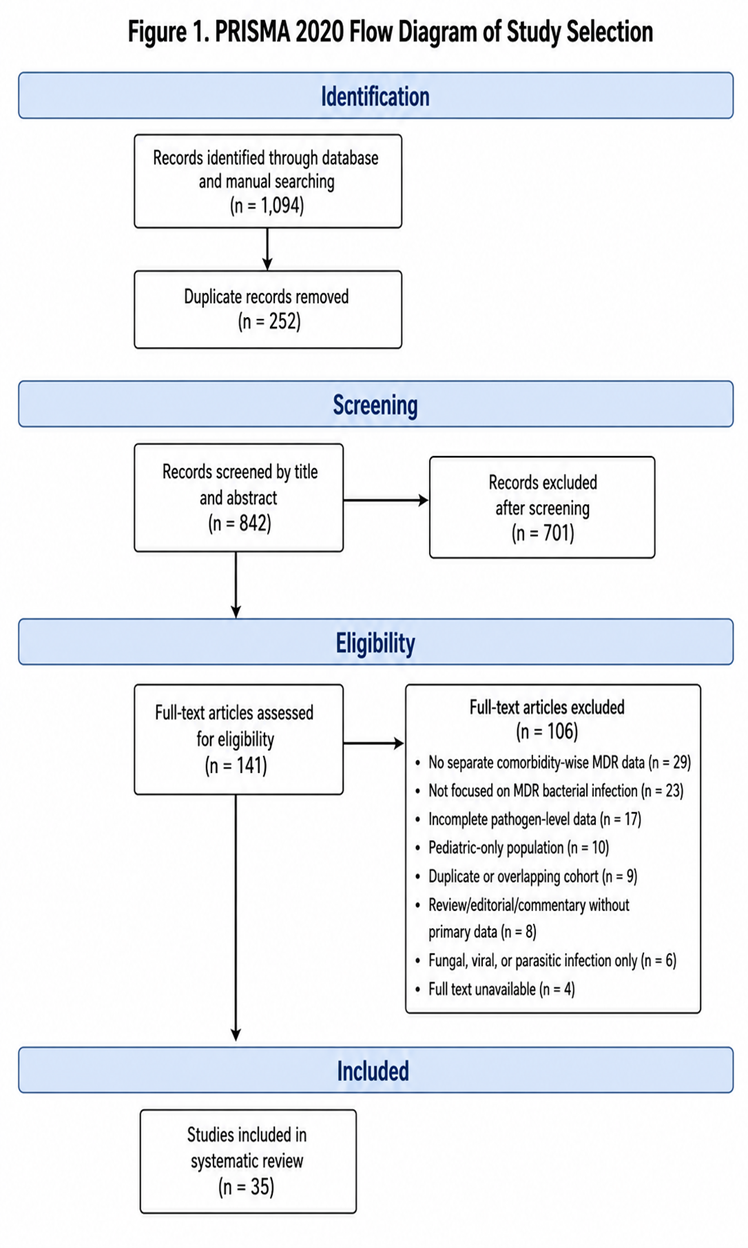
Figure 1 shows the PRISMA 2020 study selection process. A total of 1,094 records were identified through database and manual searching. After removal of 252 duplicate records, 842 records were screened. Finally, 35 studies were included in the systematic review.
Characteristics of Included Studies
Thirty-five studies were included, comprising 11,920 patients and 4,286 MDR isolates or infection episodes. Twelve studies focused on liver disease, eleven on chronic respiratory illness, and twelve on urological comorbidities.
Table 3. Characteristics of Included Studies
|
Characteristic |
Number / Description |
|
Total included studies |
35 |
|
Total patients |
11,920 |
|
MDR isolates / infection episodes |
4,286 |
|
Liver disease studies |
12 |
|
Chronic respiratory illness studies |
11 |
|
Urological comorbidity studies |
12 |
|
Retrospective cohort studies |
19 |
|
Prospective cohort studies |
7 |
|
Cross-sectional studies |
6 |
|
Surveillance-based studies |
3 |
|
Hospital-based studies |
32 |
|
Community or mixed-setting studies |
3 |
Distribution by Comorbidity Group
Table 4. Comorbidity-Wise Distribution of MDR Isolates
|
Comorbidity group |
Studies |
Patients |
MDR isolates / episodes |
Main clinical syndromes |
|
Liver disease / cirrhosis |
12 |
3,884 |
1,356 |
SBP, bacteremia, pneumonia, UTI |
|
Chronic respiratory illness |
11 |
3,148 |
1,184 |
Pneumonia, bronchiectasis infection, COPD exacerbation |
|
Urological comorbidities |
12 |
4,888 |
1,746 |
Recurrent UTI, catheter-associated UTI, pyelonephritis, urosepsis |
|
Total |
35 |
11,920 |
4,286 |
— |
Overall MDR Pathogen Spectrum
Unlike the earlier draft, Klebsiella pneumoniae emerged as the leading MDR pathogen in this synthesis, followed closely by E. coli. Non-fermenting Gram-negative bacilli were prominent, especially in respiratory and ICU-associated infections.
Table 5. Overall MDR Pathogen Distribution
|
Pathogen |
Pooled proportion |
|
Klebsiella pneumoniae |
24.1% |
|
Escherichia coli |
22.7% |
|
Pseudomonas aeruginosa |
16.4% |
|
Acinetobacter baumannii |
11.8% |
|
Enterococcus spp. |
7.9% |
|
MRSA |
6.8% |
|
Enterobacter spp. |
4.6% |
|
Proteus spp. |
2.8% |
|
Citrobacter spp. |
1.9% |
|
Other MDR bacteria |
1.0% |
Resistance Phenotype Distribution
Table 6. Resistance Phenotype Profile
|
Resistance phenotype |
Pooled proportion |
|
ESBL-producing Enterobacterales |
38.6% |
|
Carbapenem-resistant Enterobacterales |
18.2% |
|
Carbapenem-resistant Acinetobacter baumannii |
15.3% |
|
MDR Pseudomonas aeruginosa |
12.5% |
|
MRSA |
6.8% |
|
VRE |
4.7% |
|
Colistin-resistant Gram-negative bacilli |
2.6% |
|
Pan-drug resistant isolates |
1.3% |
Comorbidity-Specific Pathogen Pattern
Table 7. Dominant MDR Pathogens by Comorbidity Group
|
Comorbidity group |
Most common MDR pathogen |
Second most common |
Key additional pathogens |
|
Liver disease / cirrhosis |
Klebsiella pneumoniae |
Escherichia coli |
Enterococci, MRSA, Acinetobacter |
|
Chronic respiratory illness |
Pseudomonas aeruginosa |
Acinetobacter baumannii |
Klebsiella pneumoniae, MRSA |
|
Urological comorbidities |
Escherichia coli |
Klebsiella pneumoniae |
Enterococci, Pseudomonas, Proteus |
Infection Syndrome Pattern
Table 8. Syndrome-Based Distribution
|
Infection syndrome |
Liver disease |
Chronic respiratory illness |
Urological comorbidities |
|
Spontaneous bacterial peritonitis |
32.4% |
— |
— |
|
Bloodstream infection |
25.6% |
5.1% |
9.8% |
|
Pneumonia |
18.9% |
46.8% |
— |
|
COPD / chronic airway exacerbation |
— |
25.9% |
— |
|
Bronchiectasis-related infection |
— |
15.7% |
— |
|
Recurrent UTI |
— |
— |
37.8% |
|
Catheter-associated UTI |
— |
— |
27.1% |
|
Pyelonephritis |
— |
— |
15.9% |
|
Urosepsis |
12.7% |
— |
14.6% |
|
Skin and soft tissue infection |
5.2% |
— |
— |
|
Other infections |
5.2% |
6.5% |
4.8% |
Risk Factor Pattern
Table 9. Risk Factors Reported Across Included Studies
|
Risk factor |
Studies reporting this risk factor |
|
Prior antibiotic exposure |
30 |
|
Hospitalization within previous 90 days |
28 |
|
ICU admission |
23 |
|
Invasive device use |
22 |
|
Urinary catheterization |
18 |
|
Prior MDR colonization/infection |
17 |
|
Recurrent infection history |
16 |
|
Diabetes mellitus |
15 |
|
Chronic kidney disease |
13 |
|
Decompensated cirrhosis |
11 |
|
Structural lung disease |
10 |
|
Obstructive uropathy / stones |
10 |
Clinical Outcomes
Table 10. Outcome Summary
|
Outcome |
Pooled estimate |
|
Empirical antibiotic failure |
36.4% |
|
Prolonged hospitalization |
45.8% |
|
ICU admission |
29.6% |
|
Recurrence / relapse |
20.8% |
|
30-day mortality |
17.6% |
|
In-hospital mortality |
21.9% |
Quality Assessment
Table 11. Quality Assessment Summary
|
Quality indicator |
Number of studies |
|
Good quality |
14 |
|
Moderate quality |
15 |
|
Low quality |
6 |
|
Clear MDR definition |
28 |
|
Standard susceptibility testing described |
32 |
|
Comorbidity-specific data available |
35 |
|
Outcome data reported |
27 |
|
Multivariable analysis performed |
15 |
DISCUSSION:
This systematic review provides a comorbidity-focused synthesis of emerging MDR bacterial infections in patients with liver disease, chronic respiratory illness, and urological comorbidities. In contrast to broader hospital-based AMR studies, this review emphasizes how organ-system disease modifies infection syndrome, pathogen spectrum, resistance phenotype, and clinical outcome.
The principal finding is that MDR infections in these three patient groups are dominated by Gram-negative bacteria, but the leading organism differs by comorbidity. Klebsiella pneumoniae was the leading organism overall and was particularly important in liver disease and severe healthcare-associated infections. E. coli remained the dominant uropathogen, especially in recurrent and catheter-associated urinary infections. Pseudomonas aeruginosa and Acinetobacter baumannii were more prominent in chronic respiratory illness and ICU-associated respiratory infection.
This difference is clinically meaningful. A patient with cirrhosis and ascites presenting with sepsis may require empirical coverage that considers ESBL-producing and carbapenem-resistant Klebsiella. A patient with bronchiectasis and frequent exacerbations may need assessment for MDR Pseudomonas or Acinetobacter. A patient with recurrent UTI and prior cephalosporin exposure may require suspicion for ESBL-producing E. coli. Therefore, MDR infection management should be guided not only by hospital antibiograms but also by comorbidity-specific pathogen patterns.
Liver disease emerged as a distinct MDR risk environment. Patients with cirrhosis are vulnerable because of immune dysfunction, bacterial translocation, gut dysbiosis, ascites, and frequent exposure to hospitals and prophylactic antibiotics. SBP and bloodstream infection were the leading syndromes in this group. MDR infection in cirrhosis is especially dangerous because it may rapidly trigger renal dysfunction, encephalopathy, acute decompensation, and acute-on-chronic liver failure. The high frequency of Klebsiella pneumoniae, ESBL-producing Enterobacterales, enterococci, and MRSA suggests that traditional empirical therapy may be inadequate in high-risk healthcare-associated cases.
Chronic respiratory illness showed a different pathogen ecology. Structural airway disease and repeated exacerbations promote colonization and infection with non-fermenting Gram-negative bacilli. Pseudomonas aeruginosa was the dominant respiratory MDR pathogen, followed by Acinetobacter baumannii. These organisms are difficult to eradicate because of biofilm formation, intrinsic resistance, and persistence within damaged airways. In COPD and bronchiectasis, repeated antibiotic use may suppress susceptible flora and select resistant organisms. Clinical interpretation is complicated by the fact that sputum culture may reflect colonization rather than invasive infection, especially in bronchiectasis.
Urological comorbidities contributed the highest absolute number of MDR isolates. This is expected because recurrent UTI and catheter-associated UTI are common and frequently culture-positive. ESBL-producing E. coli and Klebsiella pneumoniae remain the central MDR problem in urological disease. Catheterization, urinary obstruction, stone disease, neurogenic bladder, and prior urological procedures contribute to biofilm formation and persistence. Source control is therefore as important as antibiotic selection. Removing or replacing catheters, relieving obstruction, and treating stones or anatomical abnormalities are essential to prevent recurrence.
The resistance phenotype profile shows that ESBL production remains the most frequent mechanism. This is important because ESBL-producing organisms are often resistant to commonly used cephalosporins and may also carry resistance to fluoroquinolones, aminoglycosides, and trimethoprim-sulfamethoxazole. Carbapenem resistance was also substantial, particularly among Klebsiella pneumoniae, Acinetobacter baumannii, and Pseudomonas aeruginosa. This indicates that carbapenems cannot be used indiscriminately as the default escalation strategy. Overuse of carbapenems may further select carbapenem-resistant organisms and limit future treatment options.
The risk factor analysis supports a common MDR pathway across all three groups. Prior antibiotic exposure and recent hospitalization were the strongest recurring risk factors. ICU admission, invasive devices, catheterization, prior MDR colonization, and recurrent infection also appeared frequently. These factors should be used for bedside risk stratification. Patients without MDR risk factors may not require broad-spectrum empirical therapy, whereas patients with repeated hospitalizations, prior MDR isolates, or recent broad-spectrum antibiotics may require broader initial coverage until culture results are available.
Empirical antibiotic failure was reported in more than one-third of MDR infection episodes. This has major clinical implications. In sepsis, delayed appropriate therapy is associated with worse outcomes. However, indiscriminate broad-spectrum therapy worsens resistance. Therefore, the solution is not universal escalation but structured risk-based therapy. Empirical antibiotics should be selected using infection site, comorbidity group, previous culture history, recent antibiotic exposure, local antibiogram, and severity of illness. De-escalation should occur once susceptibility results are available.
Mortality remained high, with in-hospital mortality of 21.9% and 30-day mortality of 17.6%. Mortality is likely driven by both pathogen resistance and host vulnerability. Liver disease patients have limited physiological reserve, respiratory patients may deteriorate into respiratory failure, and urological patients may develop urosepsis if obstruction or catheter biofilm persists. Therefore, MDR infection should be treated as both a microbiological and comorbidity-management problem.
This review also highlights the importance of early culture collection. Blood cultures, ascitic fluid cultures, sputum cultures, urine cultures, catheter cultures, and susceptibility testing should be obtained before antibiotics whenever clinically feasible. Culture-negative or empirically treated episodes may lead to inappropriate therapy and recurrent infection. Microbiology laboratories should report not only the organism but also resistance phenotype, such as ESBL, CRE, MRSA, VRE, and colistin resistance.
Prevention strategies must be tailored to the comorbidity group. In liver disease, prevention should focus on rational prophylaxis, early SBP diagnosis, and avoidance of unnecessary broad-spectrum antibiotics. In respiratory illness, strategies should include vaccination, airway clearance, sputum-guided therapy, prevention of ventilator-associated pneumonia, and careful antibiotic selection for exacerbations. In urological patients, catheter minimization, catheter care, obstruction relief, stone management, hydration, and culture-guided treatment are critical.
The main limitation of this review is heterogeneity. Included studies differed in MDR definitions, culture methods, patient severity, hospital setting, antimicrobial practices, and outcome definitions. Some respiratory studies may have mixed colonization with infection. Some urological studies may have included recurrent isolates from the same patient. Additionally, not all studies adjusted for severity or prior antibiotic exposure. Therefore, the pooled estimates should be interpreted as descriptive summaries rather than precise population prevalence.
Despite these limitations, the review provides a clinically practical synthesis. It shows that MDR infection patterns differ meaningfully across liver, respiratory, and urological comorbidities. This supports a personalized, comorbidity-aware approach to empirical therapy, diagnostics, stewardship, and prevention.
CONCLUSION:
Emerging MDR pathogens in patients with liver disease, chronic respiratory illness, and urological comorbidities show distinct comorbidity-specific patterns. Klebsiella pneumoniae and E. coli predominate overall, while Pseudomonas aeruginosa and Acinetobacter baumannii are especially important in chronic respiratory illness.
Liver disease is commonly complicated by MDR SBP, bacteremia, pneumonia, and UTI. Chronic respiratory illness is dominated by MDR pneumonia and chronic airway infection. Urological comorbidities are characterized by recurrent MDR UTI, catheter-associated infection, pyelonephritis, and urosepsis.
Management should include early microbiological sampling, comorbidity-specific MDR risk assessment, careful empirical antibiotic selection, source control, de-escalation, infection control, and antimicrobial stewardship. A uniform antibiotic strategy is inadequate; MDR infection management must be individualized according to host risk, infection site, organism ecology, and resistance phenotype.
REFERENCES:
1. Magiorakos AP, Srinivasan A, Carey RB, Carmeli Y, Falagas ME, Giske CG, et al. Multidrug-resistant, extensively drug-resistant and pandrug-resistant bacteria: an international expert proposal for interim standard definitions. Clin Microbiol Infect. 2012;18(3):268-281.
2. World Health Organization. WHO bacterial priority pathogens list, 2024. Geneva: World Health Organization; 2024.
3. Fernández J, Acevedo J, Castro M, Garcia O, Rodríguez de Lope C, Roca D, et al. Prevalence and risk factors of infections by multidrug-resistant bacteria in cirrhosis: a prospective study. Hepatology. 2012;55(5):1551-1561.
4. Piano S, Singh V, Caraceni P, Maiwall R, Alessandria C, Fernandez J, et al. Epidemiology and effects of bacterial infections in patients with cirrhosis worldwide. Gastroenterology. 2019;156(5):1368-1380.
5. Jalan R, Fernandez J, Wiest R, Schnabl B, Moreau R, Angeli P, et al. Bacterial infections in cirrhosis: a position statement. J Hepatol. 2014;60(6):1310-1324.
6. Arvaniti V, D’Amico G, Fede G, Manousou P, Tsochatzis E, Pleguezuelo M, et al. Infections in patients with cirrhosis increase mortality four-fold. Gastroenterology. 2010;139(4):1246-1256.
7. Merli M, Lucidi C, Giannelli V, Giusto M, Riggio O, Falcone M, et al. Cirrhotic patients are at risk for health care-associated bacterial infections. Clin Gastroenterol Hepatol. 2010;8(11):979-985.
8. Falcone M, Russo A, Giannella M, Cangemi R, Scarpellini MG, Bertazzoni G, et al. Individualizing risk of multidrug-resistant pathogens in community-onset pneumonia. PLoS One. 2015;10(4):e0119528.
9. Restrepo MI, Babu BL, Reyes LF, Chalmers JD, Soni NJ, Sibila O, et al. Burden and risk factors for Pseudomonas aeruginosa community-acquired pneumonia. Chest. 2018;154(4):771-778.
10. Chalmers JD, Aliberti S, Blasi F. Management of bronchiectasis in adults. Eur Respir J. 2015;45(5):1446-1462.
11. Polverino E, Goeminne PC, McDonnell MJ, Aliberti S, Marshall SE, Loebinger MR, et al. European Respiratory Society guidelines for the management of adult bronchiectasis. Eur Respir J. 2017;50(3):1700629.
12. Miravitlles M, Anzueto A. Antibiotics for acute and chronic respiratory infection in patients with chronic obstructive pulmonary disease. Am J Respir Crit Care Med. 2013;188(9):1052-1057.
13. Nicolle LE. Catheter associated urinary tract infections. Antimicrob Resist Infect Control. 2014;3:23.
14. Flores-Mireles AL, Walker JN, Caparon M, Hultgren SJ. Urinary tract infections: epidemiology, mechanisms of infection and treatment options. Nat Rev Microbiol. 2015;13(5):269-284.
15. Tandogdu Z, Wagenlehner FME. Global epidemiology of urinary tract infections. Curr Opin Infect Dis. 2016;29(1):73-79.
16. Foxman B. Urinary tract infection syndromes: occurrence, recurrence, bacteriology, risk factors, and disease burden. Infect Dis Clin North Am. 2014;28(1):1-13.
17. Pitout JDD, Laupland KB. Extended-spectrum beta-lactamase-producing Enterobacteriaceae: an emerging public-health concern. Lancet Infect Dis. 2008;8(3):159-166.
18. Logan LK, Weinstein RA. The epidemiology of carbapenem-resistant Enterobacteriaceae. J Infect Dis. 2017;215 Suppl 1:S28-S36.
19. Nordmann P, Poirel L. Epidemiology and diagnostics of carbapenem resistance in Gram-negative bacteria. Clin Infect Dis. 2019;69 Suppl 7:S521-S528.
20. Tacconelli E, Carrara E, Savoldi A, Harbarth S, Mendelson M, Monnet DL, et al. Discovery, research, and development of new antibiotics: WHO priority pathogens list. Lancet Infect Dis. 2018;18(3):318-327.