Fall from Height Mortality in an Urban Western Indian Population: A Comprehensive Retrospective Autopsy-Based Study from Ahmedabad, Gujarat.
- Bhavik Vanvi , 2nd Year Resident Doctor, Department of Forensic Medicine and Toxicology, Smt. N.H.L Municipal Medical College, Ahmedabad, Gujarat, India
- Tapan J. Mehta , Professor & Head of the department, Department of Forensic Medicine and Toxicology, Smt. N.H.L Municipal Medical College, Ahmedabad, Gujarat, India.
- Digvijay Vaghela , Associate Professor, Department of Forensic Medicine and Toxicology, Smt. N.H.L Municipal Medical College, Ahmedabad, Gujarat, India.
- Misbah Qureshi , Assistant Professor, Department of Forensic Medicine and Toxicology, Smt. N.H.L Municipal Medical College, Ahmedabad, Gujarat, India.
Article Information:
Abstract:
Introduction: Fall from height is a major, under-recognised contributor to fatal unintentional trauma worldwide and in India, producing heterogeneous injury patterns that create diagnostic and preventive challenges for forensic practitioners and public health planners alike. Objectives: To study the demographic profile, circumstances, and injury patterns of fatal fall-from-height cases, and to generate locally relevant evidence to guide prevention strategies in an urban Gujarati population. Materials and Methods: A retrospective record-based study was conducted on medico-legal autopsies performed at the mortuary of a tertiary-care teaching hospital in Ahmedabad, Gujarat, from January 2023 to October 2025. Data on demography, scene, height of fall, manner and cause of death, and external and internal injury patterns were extracted and analysed. Results: Of 1908 autopsies conducted during the study period, 103 (5.39%) were fall-from-height deaths. Males predominated (77.67%), with the 21-30-year age group most affected (31.07%). The home (47.57%) was the commonest scene, and most falls (78.6%) were accidental. Falls exceeding 40 feet accounted for 46.6% of cases. Abrasions (77.6%) were the commonest external finding, while subarachnoid haemorrhage (76.7%) and skull fracture (62.1%) predominated internally; polytrauma (71.84%) was the leading cause of death. Conclusion: Fall from height chiefly affects young, economically active males within domestic and occupational settings, with head injury and polytrauma dominating the fatal outcome, underscoring the need for structural and behavioural preventive interventions.
Keywords:
Article :
INTRODUCTION:
A fall is defined as an event resulting in a person or object coming to rest inadvertently on the ground, floor, or a lower surface after descending from a height such as a terrace, staircase, scaffold, tree, or building [1]. Globally, falls constitute the second leading cause of death from unintentional injury, after road traffic collisions, accounting for an estimated 684,000 deaths every year, with more than 80% of this burden concentrated in low- and middle-income countries such as India [2], a pattern corroborated by recent Global Burden of Disease modelling projecting a continued rise in unintentional injury mortality across developing regions through 2035 [3]. In the forensic setting, fall-from-height deaths are of particular importance because the resulting injuries are frequently severe, multi-system in distribution, and medico-legally significant, since the same fatal outcome may arise from accidental, suicidal, or homicidal circumstances that must be distinguished through careful autopsy correlation [4,5].
In the Indian context, falls consistently rank among the leading causes of unnatural death recorded during medico-legal autopsy, with recent tertiary-care series reporting a proportion ranging between roughly 4.8% and 5.4% of all autopsies [6,7,8]. A recent tertiary-hospital study from the same city as the present investigation similarly identified fall from height as a substantial contributor to unnatural mortality, with young adult males and domestic settings forming the predominant profile [1]. Comparable observations have been reported from Maharashtra, where an autopsy-based analysis found nearly two-thirds of victims to be male, with head injury forming the principal fatal lesion [6]. A recent Indian journal report further demonstrated that the severity of scalp, skull-base, and skull-vault injuries increases proportionately with the height of fall, reinforcing the biomechanical relationship between fall height and injury severity that is central to forensic reconstruction [9]. Epidemiological surveillance from Chennai and from tertiary centres in North India has likewise confirmed that falls remain a consistent, if secondary, contributor to unnatural mortality alongside road traffic accidents, hanging, and poisoning [7,8].
The causation of fall-related deaths is multifactorial. Intrinsic factors include age, gender, reduced muscular power, impaired gait or balance, sensory deficits, chronic illness, cognitive impairment, and psychiatric morbidity, while extrinsic factors include the height and nature of the fall surface, occupational hazards, inadequate safety infrastructure, and the absence of protective equipment at construction and other elevated workplaces [1,10]. National statistics on accidental deaths and suicides continue to document falls as a recurrent, quantifiable category of mortality across Indian states, reflecting persistent gaps in home and workplace safety practice [11]. Occupational fall prevention is further governed in India by statutory provisions under the Occupational Safety, Health and Working Conditions Code, 2020, which mandates safety equipment and protocols at construction and elevated worksites, yet enforcement gaps and poor awareness continue to translate into avoidable fatalities [12].
Despite this body of evidence, region-specific data from Gujarat remain limited, and injury patterns can vary meaningfully with the local built environment, climate, occupational profile, and socio-economic conditions. Understanding the demographic distribution, circumstances, and injury patterns of fall-from-height deaths in a defined urban Indian population is therefore essential to inform targeted, locally relevant prevention strategies. The present study was undertaken to analyse the pattern of fall-from-height fatalities autopsied at a tertiary-care teaching hospital in Ahmedabad, Gujarat, over a nearly three-year period, with the objective of characterising victim demography, circumstances of fall, and the pattern and severity of external and internal injuries, so as to generate evidence that can inform preventive and interventional strategies for reducing fall-related mortality in comparable Indian urban settings.
MATERIALS AND METHODS:
This was a retrospective, record-based, descriptive study conducted in the Department of Forensic Medicine and Toxicology at a tertiary-care teaching hospital (V.S. Hospital) in Ahmedabad, Gujarat. The study encompassed all medico-legal autopsies conducted at the mortuary of the said hospital over a period of approximately thirty-four months, from January 2023 to the end of October 2025.
During the study period, a total of 1908 medico-legal autopsies were performed, comprising 648 autopsies in 2023, 693 in 2024, and 567 in 2025 (up to October). All cases in which the recorded manner or circumstance of death involved a fall from height, ranging from relatively minor falls from a bed or standing height to falls from multi-storeyed buildings, terraces, scaffolding, trees, or similar elevated structures, were included in the study; this yielded 103 eligible cases. Cases in which the primary cause of death was unrelated to the fall itself, grossly decomposed or skeletonised remains in which injury pattern analysis was not feasible, and cases with incomplete autopsy or inquest documentation were excluded from analysis.
Data were retrieved from post-mortem examination reports, inquest panchnama records, police investigation reports, and hospital treatment records where available, and were entered into a structured proforma. Variables recorded included age and sex of the victim, scene and time of fall, height of fall (categorised in feet, in bands of twenty), manner of death (accidental, suicidal, or homicidal) as determined through correlation of autopsy findings with police investigation and available circumstantial evidence, and cause of death. Detailed documentation of the pattern, distribution, and severity of external injuries (abrasions, contusions, lacerations, and fractures) and internal injuries (intracranial haemorrhage, skull and long-bone fractures, and visceral injury of thoracic and abdominal organs) was extracted from the autopsy protocol for each case.
The collected data were compiled and entered into Microsoft Excel and analysed using descriptive statistics; frequencies and percentages were calculated for categorical variables such as age group, sex, scene of fall, height category, manner of death, and pattern of injury. Cross-tabulation was used to examine the association between height of fall and predominant injury pattern. The findings obtained were compared with previously published Indian and international.
RESULTS:
During the 34-month study period, a total of 1908 medico-legal autopsies were conducted at the study centre, of which 103 cases (5.39%) were attributable to fall from height, confirming falls as a consistent and non-trivial contributor to unnatural mortality at this tertiary centre. Of these, 80 victims (77.67%) were male and 23 (22.33%) were female, giving a male-to-female ratio of approximately 3.5:1.
Table 1: Age and Sex Distribution of Fall-from-Height Cases (n=103)
|
Age Group |
Male N |
Male % |
Female N |
Female % |
Total N |
Total % |
|
0-10 |
3 |
2.91% |
3 |
2.91% |
6 |
5.83% |
|
11-20 |
8 |
7.77% |
5 |
4.85% |
13 |
12.62% |
|
21-30 |
24 |
23.30% |
8 |
7.77% |
32 |
31.07% |
|
31-40 |
16 |
15.53% |
4 |
3.88% |
20 |
19.42% |
|
41-50 |
15 |
14.56% |
1 |
0.97% |
16 |
15.53% |
|
51-60 |
10 |
9.71% |
1 |
0.97% |
11 |
10.68% |
|
61-70 |
3 |
2.91% |
0 |
0.00% |
3 |
2.91% |
|
71-80 |
1 |
0.97% |
0 |
0.00% |
1 |
0.97% |
|
81-90 |
0 |
0.00% |
0 |
0.00% |
0 |
0.00% |
|
91-100 |
0 |
0.00% |
1 |
0.97% |
1 |
0.97% |
|
Total |
80 |
77.67% |
23 |
22.33% |
103 |
100% |
Table 1 depicts the age and sex distribution of the studied cases. The 21-30-year age group accounted for the largest proportion of deaths (31.07%), followed by the 31-40-year group (19.42%) and the 11-20-year group (12.62%). Collectively, victims below 40 years of age constituted more than two-thirds (68.94%) of all fall-related fatalities, indicating a strong predilection for the young, economically productive population. Extremes of age (below 10 years and above 70 years) together accounted for fewer than 9% of cases.
Table 2: Scene of Fall, Height of Fall, Manner and Cause of Death (n=103)
|
Category |
Finding |
Frequency |
Percentage (%) |
|
Place of Fall |
Home |
49 |
47.57% |
|
|
Workplace |
43 |
41.75% |
|
|
Other |
11 |
10.68% |
|
Height of Fall |
0-20 Feet |
28 |
27.18% |
|
|
21-40 Feet |
25 |
24.27% |
|
|
41-60 Feet |
36 |
34.95% |
|
|
61-80 Feet |
10 |
9.71% |
|
|
81-100 Feet |
2 |
1.94% |
|
|
>100 Feet |
2 |
1.94% |
|
Manner of Death |
Accidental |
81 |
78.6% |
|
|
Suicidal |
22 |
21.3% |
|
|
Homicidal |
0 |
0.0% |
|
Cause of Death |
Polytrauma |
74 |
71.84% |
|
|
Head Injury Only |
29 |
28.16% |
|
|
Chest Injury Only |
0 |
0.00% |
|
|
Abdomen Injury Only |
0 |
0.00% |
Table 2 summarises the scene of fall, height of fall, manner of death, and cause of death among the studied cases. The home (47.57%) was the commonest scene of fall, closely followed by the workplace (41.75%), while other locations (public spaces, religious sites, and open grounds) accounted for the remainder. When stratified by height, falls from 41-60 feet were most frequent (34.95%), followed by 0-20 feet (27.18%) and 21-40 feet (24.27%); falls exceeding 60 feet together comprised 13.59% of cases. Falls were predominantly accidental in manner (78.6%), with suicidal falls comprising 21.3% of cases and no homicidal falls identified during the study period. Polytrauma was the leading cause of death (71.84%), followed by isolated head injury (28.16%); no case had chest- or abdomen-isolated fatal injury.
Figure 1 shows that abrasions were the most common external injury (80; 77.7%), followed by contused lacerated wounds (58; 56.3%). Lower limb fractures (29; 28.2%), upper limb fractures (20; 19.4%), contusions (18; 17.5%), and sharp/stab wounds (12; 11.7%) were less frequent, indicating that blunt force injuries predominated in fall-from-height cases.
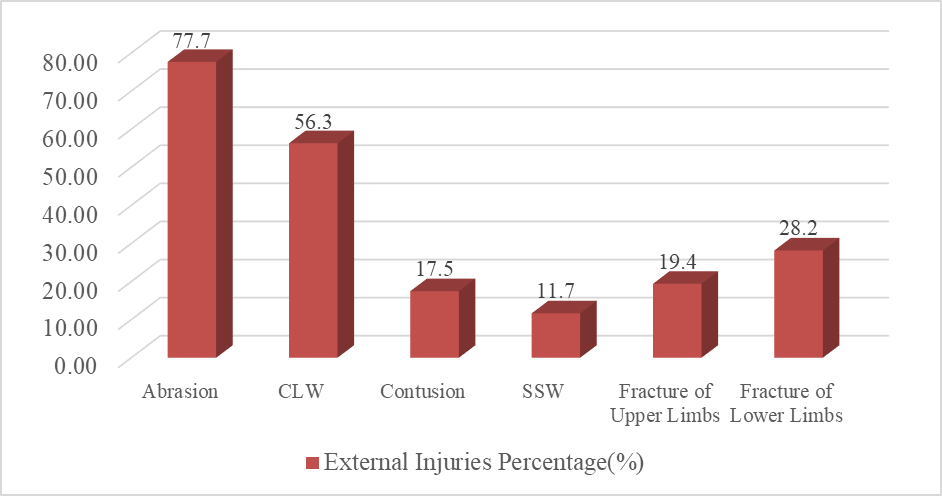
Figure 1: Distribution of External Injuries
Figure 2 demonstrates that subarachnoid haemorrhage was the most common internal injury, followed by skull fractures and extradural haemorrhage. Rib, clavicle, and sternum fractures, along with liver and lung lacerations, were also frequent, whereas heart, spleen, kidney injuries, and spinal fractures were comparatively uncommon. Cranio-cerebral injuries were the predominant internal injuries.
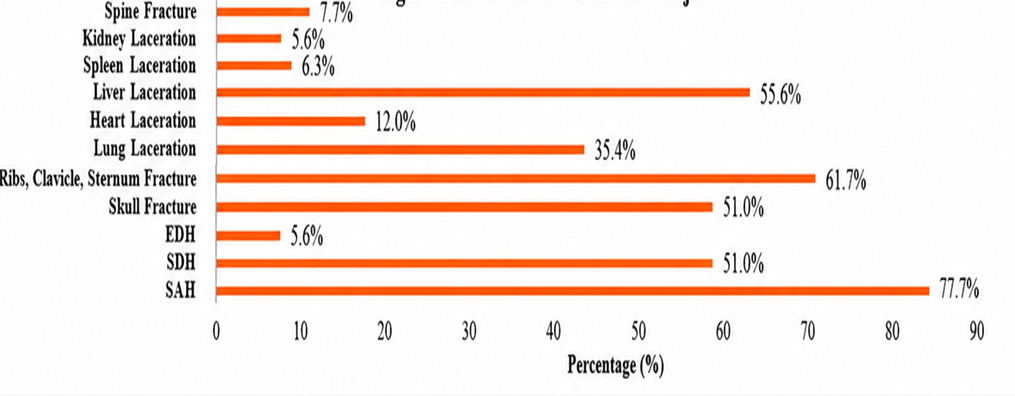
Figure 2: Distribution of Internal Injuries
Figure 3 shows that linear fractures were the most common (56), followed by comminuted (46), depressed (22), and diastatic fractures (20). The predominance of linear and comminuted fractures reflects the high-impact nature of falls from height.
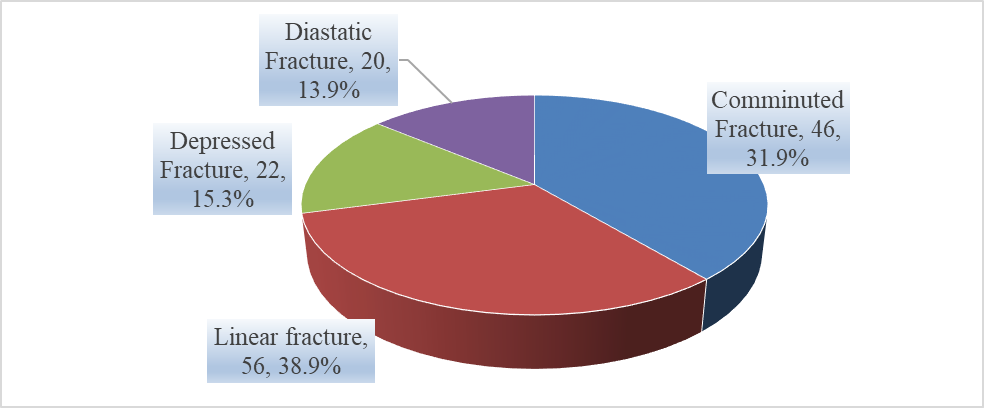
Figure 3: Distribution of Fractures
DISCUSSION:
The present retrospective analysis of 103 fall-from-height fatalities among 1908 medico-legal autopsies (5.39%) is broadly consistent with the proportion reported in other recent Indian tertiary-care series, which range from approximately 4.8% to 5.4% of total autopsy workload, reinforcing that falls constitute a stable, recurring share of unnatural mortality across Indian teaching hospitals regardless of geographic region [6,7,8]. A study conducted at the same institution reported closely comparable demographic and circumstantial findings, and our results are largely concordant with that series, both in terms of male preponderance and the predominance of domestic falls [1].
Male predominance (77.67% in the present study) mirrors the findings of an autopsy-based Maharashtra study, which reported 62.5% male victims, and is consistent with the broader forensic literature attributing this pattern to greater occupational exposure of men to elevated workplaces such as construction sites, along with generally higher risk-taking behaviour among young males [6]. The age distribution in our series, with peak involvement in the 21-30-year group (31.07%), aligns with observations from the Chennai-based one-year prospective study of medico-legal autopsies, which similarly identified young adults as the group most vulnerable to traumatic unnatural deaths, including falls [7]. This concentration among economically productive individuals carries substantial public-health and socio-economic implications, as it represents a disproportionate loss of productive life years. An earlier South Indian autopsy series by Murthy et al. similarly identified head injury as the predominant fatal lesion among fall-from-height victims, lending long-standing regional support to the injury pattern observed in the present study [13].
The predominance of home as the commonest scene of fall (47.57%) in our study parallels the findings of Ramadan et al. from Gharbia Governorate, Egypt, who similarly reported residential falls as a leading circumstance, often related to unsafe staircases, terraces without parapets, or falls during nocturnal activity when alertness is diminished [14]. Locally, this may additionally reflect socio-economic constraints that limit the construction of permanent, safety-compliant staircases and parapets in older or informally constructed housing, a concern also highlighted in previous work from this region [1]. Workplace falls (41.75%), the second commonest scene in our series, are consistent with the well-documented occupational risk described in construction-industry safety literature and reinforce the continuing relevance of the Occupational Safety, Health and Working Conditions Code, 2020, which mandates protective equipment such as safety harnesses, helmets, and anchor lines at elevated worksites, though enforcement gaps evidently persist [12].
Regarding manner of death, accidental falls predominated (78.6%) over suicidal falls (21.3%) in our series, with no homicidal fall identified, a pattern broadly consistent with earlier work from Karnataka reporting accidental circumstances as the leading manner in fall-related fatalities [10,15]. This proportion of suicidal falls is nevertheless not negligible and resonates with the sustained rise in national suicide rates documented in successive reports of the National Crime Records Bureau, which recorded suicide rates increasing from 9.9 to 12.4 per lakh population between 2017 and 2022, underscoring that falls remain one of several recognised methods of suicide in India warranting mental-health-oriented preventive attention [11].
With regard to injury pattern, our finding that subarachnoid haemorrhage (76.7%) and skull fracture (62.1%), predominantly linear in configuration (54.3%), were the leading internal injuries is strongly corroborated by a recent Indian journal analysis of head injuries in fatal falls, which similarly reported that scalp, skull-base, and skull-vault injury severity increased in direct proportion to the height of fall, and that combined subdural-subarachnoid haemorrhage with contusion was the commonest brain-injury pattern among fall victims [9]. Our observation that falls from 41-60 feet were most frequent (34.95%) and were disproportionately associated with polytrauma (71.84%) as the leading cause of death is consistent with biomechanical modelling studies demonstrating that increasing fall height correlates with rising head acceleration and injury severity indices, thereby increasing the probability of multi-system fatal injury rather than isolated regional trauma [5].
Additionally, an Italian comparative autopsy study distinguishing falls from height from pedestrian-impact deaths similarly identified high rates of bilateral pulmonary and hepatic injury among fall victims, findings that parallel our observation of the liver as a commonly involved abdominal viscus and lend further support to the concept of a distinct, height-dependent visceral injury signature in fatal falls [4]. Collectively, these concordances across Indian and international literature strengthen the reliability of our findings while highlighting a consistent, generalisable relationship between fall height, head and polytrauma severity, and fatal outcome that should inform future preventive and forensic-reconstructive practice.
LIMITATIONS
This study is subject to several limitations. Being a single-centre, retrospective, hospital-based study, the findings may not be fully generalisable to the broader population of Ahmedabad or Gujarat, since cases reaching a tertiary teaching-hospital mortuary may not represent all fall-related fatalities in the community. Reliance on existing autopsy and inquest documentation introduced the possibility of incomplete or inconsistent recording of scene circumstances, particularly with regard to intent in borderline accidental-versus-suicidal cases. Toxicological, psychiatric, and detailed occupational-safety data were not uniformly available, limiting deeper causal analysis. Additionally, non-fatal fall injuries were not captured, restricting inference to fatal outcomes alone.
CONCLUSION:
This retrospective study demonstrates that fall from height constitutes a significant, recurring component of unnatural mortality at this tertiary centre, disproportionately affecting young adult males in domestic and occupational settings. Falls from moderate-to-substantial heights predominated, and cranio-cerebral trauma with associated polytrauma emerged as the principal determinant of fatal outcome. Accidental circumstances vastly outnumbered suicidal falls, though the latter remained a non-negligible proportion. These findings reinforce the need for targeted structural, occupational, and behavioural preventive strategies tailored to the local urban context of Ahmedabad and comparable Indian cities.
RECOMMENDATION
Based on these findings, it is recommended that residential safety codes mandate parapets, guard rails, and non-slip surfaces on terraces and staircases, particularly in older and informally constructed housing. Employers at construction and elevated worksites should be held strictly accountable for providing and enforcing use of personal protective equipment, including safety harnesses, anchor lines, and helmets, in compliance with the Occupational Safety, Health and Working Conditions Code, 2020. Community-level awareness programmes addressing supervision of children and the elderly around unprotected heights, coupled with mental-health screening and suicide-prevention outreach, are recommended to reduce both accidental and intentional fall-related mortality.
REFERENCES:
1. Vaghela D, Barot D, Modi N, Mehta TJ, Patel P. Fall from height — a comprehensive retrospective study at tertiary care teaching hospital. Int J Toxicol Pharmacol Res. 2024;14(3):207-211.
2. World Health Organization. Falls [Internet]. Geneva: WHO; 2024 [cited 4th June 2026]. Available from: https://www.who.int/news-room/fact-sheets/detail/falls
3. Qin W, Liu X, Nong J, Feng D, Liu G, Xie J, Huang W, Liang H, Yan L, Tang H, Qin F. Global, regional, national burden and trends of unintentional injuries from 1990 to 2021 and projections to 2035: a systematic analysis of the Global Burden of Disease study 2021. Frontiers in Public Health. 2025 Sep 3;13:1653491.
4. Tavone AM, Marinelli R, Cazzato F, Piizzi G, Piselli F, Ceccobelli G, Giuga G, Vella R, Romaniello N, Oliva A, Marella GL. Distinguishing injury patterns in fatal falls from heights versus pedestrian impacts: An autopsy study for differential diagnosis in ambiguous cases. Forensic Science, Medicine and Pathology. 2025 Jun;21(2):665-73.
5. Erol P, Karagöz YM. Falls from height in forensic medicine: Differentiating accident, suicide, and homicide through case analysis and biomechanical modeling. Forensic Science International. 2026 Jan 5:112815.
6. Lakshmy S, Kachare RV, Pawar VG, Pardeshi AR. An Autopsy Based Study on Pattern of Fatal Injuries in Fall from Height. Journal of Indian Academy of Forensic Medicine. 2023 Dec;45(4):319-22.
7. Sivakumar S, Chandrasekar P, Ravi Hosaholalu L, Hariharan A. A one-year prospective study of epidemiological profile of medico-legal autopsy cases conducted at a center in Chennai. J Indian Acad Forensic Med. 2025;47(3):246-252.
8. Kumar S, Singh P, Yadav P, Pandey A, Arya AK, Singh A. An epidemiological study of forensic pathology in a tertiary care hospital in North India: A study of autopsy trends. J Popul Ther Clin Pharmacol. 2024;31(7):1979-1988.
9. Shrestha S, Limbu MH. Patterns of Head Injuries in Fatal Fall from Heights. Indian Journal of Forensic Medicine & Toxicology. 2025 Jan 1;19(1).
10. Guntheti BK, Singh UP. A study of pattern of injuries in fall from height. J Karnataka Med Leg Soc. 2016;25(1):26-34.
11. National Crime Records Bureau. Accidental deaths & suicides in India 2022. New Delhi: Ministry of Home Affairs, Government of India; 2022. Available from: https://ncrb.gov.in
12. Occupational Safety, Health and Working Conditions Code, 2020. Ministry of Labour and Employment, Government of India. Available from: https://labour.gov.in
13. Murthy CV, Harish S, Chandra YG. The study of pattern of injuries in fatal cases of fall from height. Al Ameen J Med Sci. 2012 Jan 18;5(1):45-52.
14. Ramadan AF, Soliman EM, Abo El-Noor MM, Shahin MM. Patterns of injuries in fatal fall from height cases in Gharbia Governorate: autopsy study. Egypt J Forensic Sci Appl Toxicol. 2020;20(4):27-42.
15. Roopak SN, Jagannatha SR. Deaths due to fall from height — an autopsy study. J Forensic Med Toxicol. 2015;9(1):123-125.