HYPOMAGNESEMIA AND ITS ASSOCIATION WITH DIABETIC NEPHROPATHY.
- Ashish Pannu , Senior Resident, department of medicine, Atal Bihari Vajpayee Institute of Medical Sciences and RML Hospital.
- Alok Chaudhary , Assistant Professor, department of medicine, Geetanjali Institute of Medical Sciences jaipur
- Anil Kumar Panwar , Professor, department of medicine, Geetanjali Institute of Medical Sciences Jaipur
- Aditi Goyal , Assistant Professor, department of medicine, Geetanjali Institute of Medical Sciences jaipur
- Ujjawal Dubey , Senior Resident Dr. Baba Saheb Ambedkar Hospital, Delhi.
Article Information:
Abstract:
INTRODUCTION: Magnesium (Mg) is the fourth most abundant cation in the human body and plays a key role in many fundamental biological processes including metabolism and DNA synthesis. AIM: The aim of the study is to assess association of Hypomagnesemia with Diabetic nephropathy. METHODOLOGY: This cross sectional study was carried out in The Department of General Medicine, MG Medical College and Research Centre, Jaipur. This study was conducted from june2023 to oct 2024. RESULT: Out of 150 cases 111 cases have normal magnesium level and 39 found to have hypomagnesemia. Out of 150 cases 102 cases have Normoalbuminuria, 39 cases have Microalbuminuria and 9 cases have Overt proteinuria. Out of 39 cases in hypomagnesemia group 7 have Normoalbuminuria, 23 cases have Microalbuminuria and 9 cases have Overt proteinuria whereas out of 111 cases in normal magnesium level group 95 have Normoalbuminuria, 16 cases have Microalbuminuria and none of the case have Overt proteinuria i.e. the prevalence of Microalbuminuria and Overt proteinuria was statistically higher in hypomagnesemia group as compared to normal magnesium level group. CONCLUSION: Hypomagnesemia is significantly associated with poor glycemic control and increased prevalence of diabetic complications in patients with Type 2 Diabetes Mellitus.
Keywords:
Article :
INTRODUCTION:
Type 2 diabetes makes 90% of diabetes cases. Its worldwide prevalence may be 439 million by 2030. According to the International Diabetes Federation and WHO, its prevalence is 10% and over 19% of world’s diabetics are Indians.1,2 Magnesium (Mg) is the fourth most abundant cation in the human body and plays a key role in many fundamental biological processes including metabolism and DNA synthesis. Mg deficiency has been shown to cause endothelial cell dysfunction, inflammation, and oxidative stress, which are major contributors to atherosclerosis. 3
Magnesium (Mg) has an important role in the actions of enzymes and is the fourth abundant cation in the human body. Magnesium is a cofactor of various enzymes in carbohydrate oxidation and used in the glucose-transporting mechanism of the cell membrane. It is also involved at multiple levels in insulin secretion, binding and activity.4 The incidence of subclinical magnesium deficiency is common in diabetes and cardiovascular disorders. Magnesium deficiency has recently been related with age-related diseases through free-radical mechanisms. The existence of oxidative stress has been well documented in diabetes and late diabetic complications.5
Mg also plays an important role in the phosphorylation reactions of glucose and its metabolism. Mg and Type 2 Diabetes mellitus (DM) have a close relationship. Its deficiency has been implicated in insulin resistance, carbohydrate intolerance, and complications of diabetes. Approximately one-third of subjects with Type 2 DM have hypomagnesemia mainly caused by enhanced renal excretion. Mg deficiency is associated with poor glycemic control and Mg supplementation improves insulin sensitivity .6 It is claimed that there is an inverse relationship between Mg intake and incidence of diabetes mellitus (DM).7Mg deficiency is common in diabetic patients. The incidence of hypomagnesemia varies between 11 and 47.7%.Compared with the control group, incidence of hypomagnesemia in newly diagnosed diabetes is 10.5-fold and in patients with previously diagnosed diabetes is 8.5-fold more common.
In type 2 diabetes, patients with microalbuminuria or clinical proteinuria showed a significant decrease in serum ionized magnesium levels. A significant negative correlation between serum ionized magnesium and HbA1c and triglycerides, in both microalbuminuria and clinical proteinuria groups, was observed.8
Mg has received considerable attention for its potential role in improving insulin sensitivity and preventing diabetes and its complications. However, results are inconsistent among the studies. There is substantial evidence of associations between hypomagnesemia and various complications of Type 2 DM such as foot ulcers, and albuminuria. Observations in Caucasian diabetics have linked hypomagnesemia as being an additional risk factor for the development of diabetic complications, but this correlation was not observed in black African diabetics. Hypomagnesemia has been reported in 25%–38% of type 2 diabetic and to be associated with increased morbidity and mortality. However, most reports are inconclusive. Hence, hypomagnesemia in diabetes is frequently overlooked.9. This study was performed to find association of serum Mg with diabetic control and complications in the Indian population.
AIM
The aim of the study is to assess the association of Hypomagnesemia with Diabetic nephropathy.
METHODOLOGY :
This cross-sectional observational study was conducted in the Department of General Medicine at Mahatma Gandhi Medical College and Research Centre over a period extending from June 2023 to October 2024. The study population included patients with known Type 2 Diabetes Mellitus who attended the outpatient department, casualty, or were admitted to various wards of the institution. A total of 150 cases were enrolled in the study. The sample size was calculated using a 95% confidence interval with an absolute allowable error of 10%. Patients diagnosed with Type 2 Diabetes Mellitus in the Medicine Department of Mahatma Gandhi Hospital, Jaipur, and aged between 18 and 75 years were included in the study. Patients with chronic diarrhea, malabsorption, renal failure, those receiving diuretics, magnesium supplements or magnesium-containing antacids, and pregnant females were excluded from the study.
RESULTS:
Table 1: Baseline characteristics of participants
|
Parameter |
Mean |
SD |
|
Age(years) |
59.04 |
8.70 |
|
Duration of DM (years) |
8.49 |
2.85 |
|
Magnesium level (mg/dL) |
1.73 |
.31 |
The above table shows that the mean age of cases was 59.04±8.70 years, mean magnesium level in cases was 1.73±.31 mg/dl and mean duration of DM in cases was 8.49±2.85 years.
Table 2: Association with Glycemic Control
|
Parameter |
Magnesium Status |
P Value |
||
|
Low |
Normal |
Total |
||
|
Mean (SD) |
Mean (SD) |
Mean (SD) |
||
|
FBS (mg/dl) |
181.13±15.79 |
129.57±18.89 |
142.97±29.02 |
<.001 |
|
PPBS (mg/dl) |
268.21±46.46 |
197.88±32.93 |
216.17±48.05 |
<.001 |
|
HBA1C (%) |
11.05±1.55 |
7.89±1.20 |
8.71±1.90 |
<.001 |
The mean FBS in hypomagnesemia group and Normo-magnesemia group was 181.13±15.79 mg/dl and 129.57±18.89 mg/dl .The mean PPBS in hypomagnesemia group and Normo-magnesemia group was 268.21±46.46 mg/dl and 197.88±32.93mg/dl respectively .Above table shows that mean HBA1C was significantly higher in the hypomagnesemia group as compared to normal magnesium level group (11.05±1.55 versus 7.89±1.20 %).
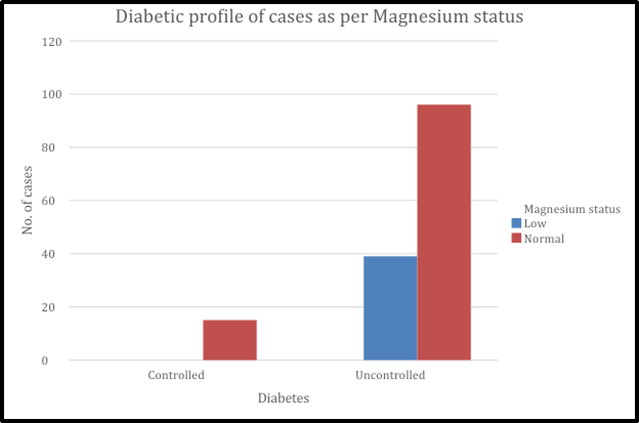
Figure 1:Glycemic control profile of cases as per Magnesium status
The prevalence of uncontrolled diabetes was significantly higher in the hypomagnesemia group as compared to the normo- magnesemia group(100% versus 86.5% respectively).
Table 3:Association with Metabolic Risk Factors
|
Parameter |
Magnesium Status |
P Value |
|||||
|
Low |
Normal |
Total |
|||||
|
BMI (Kg/m2) |
No. |
% |
No. |
% |
No. |
% |
24.73±3.35 |
|
BMI (Kg/m2) |
Mean |
SD |
Mean |
SD |
Mean |
SD |
<.001 |
|
29.25 |
2.70 |
24.73 |
3.35 |
25.90 |
3.75 |
||
The above table shows Mean BMI was significantly higher in the hypomagnesemia group as compared to the normo- magnesemia group (29.25±2.70 versus 24.73±3.35 Kg/m2 respectively).
Table 4:Biochemical Correlation
|
|
|
|
|
|
|
Sodium (mEq/L) |
139.26±1.77 |
140.19±2.61 |
139.95±2.45 |
.013 |
|
Potassium (mEq/L) |
3.68±0.07 |
4.19±0.46 |
4.06±0.45 |
<0.001 |
|
Magnesium level (mg/dL) |
1.25±.13 |
1.90±.12 |
1.73±.31 |
<.001 |
The mean sodium was comparable in hypomagnesemia group as compared to normal magnesium level group (139.26±1.77 versus 140.19±2.61 mEq/L respectively) and mean potassium was lower in hypomagnesemia group as compared to normal magnesium level group (3.68±0.07 versus 4.19±0.46 mEq/L respectively).
Table 5: Duration of DM profile of cases as per Magnesium status
|
Parameter |
Magnesium Status |
P Value |
||
|
Low |
Normal |
Total |
||
|
Mean (SD) |
Mean (SD) |
Mean (SD) |
||
|
Duration of DM (years) |
9.87±2.57 |
8.00±2.80 |
8.49±2.85 |
<.001 |
The above table shows that mean Duration of DM was significantly higher in the hypomagnesemia group as compared to normal magnesium level group (9.87±2.57 versus 8.00±2.80 years respectively).
Table 6: Association with Diabetic Complications
|
Parameter |
Magnesium Status |
P Value |
|||||
|
Low |
Normal |
Total |
|||||
|
No. |
% |
No. |
% |
No. |
% |
||
|
Mean UACR (μg/g) |
Mean |
SD |
Mean |
SD |
Mean |
SD |
<.001 |
|
82.18 |
82.23 |
24.84 |
10.88 |
39.75 |
49.48 |
||
Above table shows that the mean UACR was significantly higher in hypomagnesemia group as compared to normal magnesium level group (82.18±82.23 versus 24.84±10.88 μg/g respectively).The mean serum magnesium level was significantly lower in the hypomagnesemia group as compared to the normo- magnesemia group (1.25±.13 versus 1.90±.12 mg/dL respectively).
DISCUSSION:
In present study the 2 groups were comparable on parameters of age distribution.Similarly Rao and Shariff et al. (2015)10in their study found that the 2 groups- hypomagnesemia group and Normo-magnesemia group were comparable on parameter of age distribution which is in agreement with results of present study.
In present study the prevalence of hypomagnesemia in DM was 26%(39/150). Moradiya K, Muley et al.(2021)11 in their study found that the prevalence of hypomagnesemia in DM was 37.68%.
In present study we found that mean HBA1C was significantly higher in hypomagnesemia group as compared to normo- magnesemia group.Similarly Arpaci D et al.(2015)12 in their study found that mean HBA1C was significantly higher in hypomagnesemia group as compared to normo- magnesemia group which is in agreement with results of present study.
In the present study the prevalence of Microalbuminuria and Overt proteinuria was statistically higher in the hypomagnesemia group as compared to the Normo-magnesemia group. Similarly Rao Moradiya K, Muley et al.(2021)11 in their study found that the prevalence of , Microalbuminuria and Overt proteinuria was statistically higher in hypomagnesemia group as compared to In a study conducted by Corsonello et al.13, diabetic subjects with microalbuminuria or clinical proteinuria showed a significant decrease in serum ionized Mg with respect to normoalbuminuria group.
Similarly, we also found a negative correlation between Mg level and urine protein excretion.14
Zargar et al 15 suggested that glycemic control and presence of diabetic complications did not affect serum Mg levels. Other studies also have not found any association between Mg and diabetic complications in Type 1 and Type 2 diabetes16.
According to other hypotheses, oxidative stress is important in complications of diabetes.The antioxidative capacity of Mg has also been reported .Corica et al.17 have found an association of hypomagnesemia with high waist circumferences, high blood pressure, MA and overt proteinuria.
CONCLUSION:
Serum Mg was found to be inversely associated with the prevalence of Microalbuminuria. Hypomagnesemia was found to be associated with poor glycemic control. Further studies with large sample size are required to prove a definite role of hypomagnesemia in diabetic complications. Large-scale clinical trials are needed in order to determine whether the correction of Mg deficiency could be effective to reduce the incidence of diabetic complications and to further elucidate the association between serum Mg and diabetic complications.
REFERENCES:
1. Hadi HAR, Al Suwaidi JA. Endothelial dysfunction in diabetes mellitus. Vasc Health Risk Manag. 2007;3(6):853-876.
2. Solati M, Ouspid E, Hosseini S, Soltani N, Keshavarz M, Dehghani M. Oral magnesium supplementation in type II diabetic patients. Med J Islam Repub Iran. 2014;28(1):1-8.
3. Liu M, Jeong EM, Liu H, et al. Magnesium supplementation im proves diabetic mitochondrial and cardiac diastolic function. JCI Insight. 2019;4(1):1-11.
4. Rude RK, Gruber HE, Wei LY, Frausto A, Mills BG. Magnesium deficiency: effect on bone and mineral metabolism in the mouse. Calcif Tissue Int. 2003;72(1):32-41.
5. Jahnen-Dechent W, Ketteler M. Magnesium basics. CKJ Clin Kidney J. 2012;5(Suppl 1):i3-i4.
6. Gommers LMM, Hoenderop JGJ, Bindels RJM, De Baaij JHF. Hypomagnesemia in type 2 diabetes: a vicious circle? Diabetes. 2016;65(1):3-13.
7. Tosiello L. Hypomagnesemia and diabetes mellitus: a review of clinical implications. Arch Intern Med. 1996;156(11):1143-1148.
8. Elin, R.J. Assessment of magnesium status. Clin. Chem. 1987, 33, 1965–1970.
9. Guerrera, M.P.; Volpe, S.L.; Mao, J.J. Therapeutic uses of magnesium. Am. Fam. Physician. 2009, 80, 157–162.
10. Rao and Shariff: Serum Magnesium Levels in Type 2 Diabetic Patients with Microalbuminuria and Normoalbuminuria. International Journal of Scientific Study | July 2015 | Vol 3 | Issue 4.
11. Moradiya K, Muley A. A study of serum magnesium level in type 2 diabetes mellitus and its association with glycemic control and its complications. Int J Non-Commun Dis. 2021;6(1):34–7.
12. Arpaci D, Tocoglu AG, Ergenc H, Korkmaz S, Ucar A, Tamer A. Associations of serum Magnesium levels with diabetes mellitus and diabetic complications. Hippokratia. 2015 Apr-Jun;19(2):153-7. PMID: 27418765; PMCID: PMC4938107.
13. Corsonello A, Ientile R, Buemi M, Cucinotta D, Mauro VN, Macaione S, Corica F. Serum ionized magnesium levels in type 2 diabetic patients with microalbuminuria or clinical proteinuria. Am J Nephrol. 2000 May-Jun;20(3):187-92. doi: 10.1159/000013582. PMID: 10878399.
14. Pelczyńska M, Moszak M, Bogdański P. The Role of Magnesium in the Pathogenesis of Metabolic Disorders. Nutrients. 2022 Apr 20;14(9):1714. doi: 10.3390/nu14091714. PMID: 35565682; PMCID: PMC9103223.
15. Zargar AH, Bashir MI, Masoodi SR, Laway BA, Wani AI, Khan AR, et al. Copper, zinc and magnesium levels in type-1 diabetes mellitus. Saudi Med J. 2002;23:539–542.
16. Sales CH, Pedrosa LF, Lima JG, Lemos TM, Colli C. Influence of magnesium status and magnesium intake on the blood glucose control in patients with type 2 diabetes. Clin Nutr. 2011;30:359–364. doi: 10.1016/j.clnu.2010.12.011.
17. Corica F, Corsonello A, Ientile R, Cucinotta D, Di Benedetto A, Perticone F, et al. Serum ionized magnesium levels in relation to metabolic syndrome in type 2 diabetic patients. J Am Coll Nutr. 2006;25:210–215. doi: 10.1080/07315724.2006.10719534.