AN OBSERVATIONAL STUDY OF SERUM URIC ACID AS PREDICTOR OF SHORT-TERM MORTALITY AND LVF IN ACUTE CORONARY SYNDROME.
- Mohd Quamre Azam , Senior Resident, Department of Medicine, ESIC Medical College and Hospital, Sector-24, Noida, Uttar Pradesh, India.
- Kapil Kumar Verma , Associate Professor and Head, Department of Medicine, ESIC Medical College and Hospital, Ahmedabad, Gujarat, India.
- Meher Shikha Verma , Associate Professor, Department of Anaesthesia, Sri Aurobindo Medical College and Postgraduate institute, Indore (M.P).
Article Information:
Abstract:
Background: Acute coronary syndrome (ACS) is a major cause of cardiovascular morbidity and mortality worldwide. Early identification of patients at risk for adverse outcomes such as left ventricular failure (LVF) and death remains crucial for risk stratification and management. Serum uric acid, a product of purine metabolism, has been associated with oxidative stress, endothelial dysfunction, and inflammation, suggesting a potential role as a prognostic biomarker in ACS. This study aimed to evaluate the utility of serum uric acid as a predictor of short-term mortality and left ventricular failure in patients with acute coronary syndrome. Methods: This prospective observational study was conducted at ESIC Model Hospital and Occupational Disease Centre, Indore, Madhya Pradesh, from May 2023 to April 2024. A total of 220 patients diagnosed with ACS were enrolled. Clinical evaluation, electrocardiography, echocardiography, and laboratory investigations including serum uric acid estimation were performed at admission. Hyperuricemia was defined as serum uric acid levels >7 mg/dL in males and >6 mg/dL in females. Severity of left ventricular failure was assessed using the Killip classification. Patients were followed throughout their hospital stay to determine short-term mortality. Receiver operating characteristic (ROC) curve analysis was performed to assess the predictive value of serum uric acid for mortality. Results: The mean age of the study population was 61.2 ± 9.2 years, and 68.2% of patients were male. Hyperuricemia was observed in 86 (39.1%) patients. The overall in-hospital mortality was 12.7% (28 patients). A significant association was observed between hyperuricemia and Killip class (p=0.0001), with the prevalence of hyperuricemia increasing from 28.7% in Killip Class I to 100% in Killip Class IV. Mean serum uric acid levels increased significantly with worsening Killip class, ranging from 5.05 ± 1.33 mg/dL in Class I to 11.20 ± 0.09 mg/dL in Class IV (p=0.0001). Hyperuricemia was significantly more frequent among patients who died compared with survivors (82.1% vs 32.8%, p=0.0001). ROC analysis demonstrated good predictive accuracy of serum uric acid for short-term mortality, with an area under the curve (AUC) of 0.884 (95% CI: 0.628–0.940, p=0.001). Conclusions: Elevated serum uric acid levels are significantly associated with both left ventricular failure and short-term mortality in patients with acute coronary syndrome. Hyperuricemia is more common in patients with severe heart failure and adverse outcomes. Serum uric acid demonstrated good predictive ability for short-term mortality and may serve as a simple, inexpensive, and readily available prognostic biomarker for risk stratification in ACS.
Keywords:
Article :
INTRODUCTION:
Acute coronary syndrome (ACS) is a major cause of cardiovascular morbidity and mortality worldwide and includes a spectrum of clinical conditions resulting from acute myocardial ischemia, namely unstable angina, ST-segment elevation myocardial infarction (STEMI), and non-ST-segment elevation myocardial infarction (NSTEMI).[1,3] Despite remarkable advances in reperfusion strategies, pharmacological therapy, and critical care management, a substantial proportion of patients continue to develop complications such as left ventricular failure (LVF), cardiogenic shock, arrhythmias, and death during the acute phase of the illness.[3]
Early identification of high-risk patients is essential for optimizing management strategies and improving clinical outcomes. Although several clinical scoring systems and biochemical markers are available for risk stratification in ACS, there remains a need for simple, inexpensive, and readily available biomarkers that can predict adverse outcomes at an early stage.[4] In recent years, serum uric acid has emerged as a potential prognostic marker in various cardiovascular disorders, including coronary artery disease, heart failure, hypertension, and acute myocardial infarction.[5]
Serum uric acid is the end product of purine metabolism in humans and is generated through the action of xanthine oxidase. During myocardial ischemia, increased degradation of adenosine triphosphate and enhanced xanthine oxidase activity result in excessive production of uric acid and reactive oxygen species.[6] Consequently, elevated serum uric acid levels may reflect the extent of tissue ischemia, oxidative stress, and metabolic derangement occurring during an acute coronary event.
Beyond serving as a marker of cellular injury, uric acid has been implicated in several pathophysiological mechanisms associated with adverse cardiovascular outcomes. Hyperuricemia has been linked to endothelial dysfunction, inflammation, oxidative stress, platelet activation, and impaired vascular reactivity, all of which may contribute to worsening myocardial injury and ventricular dysfunction. [7-9] Elevated serum uric acid levels have also been associated with reduced left ventricular function and increased incidence of heart failure following acute myocardial infarction. [10,11]
Several studies have reported a significant relationship between hyperuricemia and adverse short-term outcomes in ACS, including increased mortality, heart failure, and major cardiovascular events. [12,13] However, the prognostic significance of serum uric acid in predicting left ventricular failure and short-term mortality remains incompletely defined, particularly in Indian patients presenting with ACS.
Given the biological plausibility and growing clinical evidence linking hyperuricemia with adverse cardiovascular outcomes, serum uric acid may serve as a valuable prognostic biomarker in acute coronary syndrome. Therefore, the present study was undertaken to evaluate the role of serum uric acid in predicting short-term mortality and left ventricular failure among patients with acute coronary syndrome.
MATERIALS AND METHODS:
This prospective observational study was conducted in the Department of Medicine at ESIC Model Hospital and Occupational Disease Centre, Indore, Madhya Pradesh, India, between May 2023 and April 2024. The study was approved by the Institutional Ethics Committee, and written informed consent was obtained from all participants prior to enrollment.
A total of 220 consecutive adult patients diagnosed with acute coronary syndrome (ACS) were included in the study. ACS was diagnosed based on the presence of angina or angina-equivalent symptoms in association with electrocardiographic changes suggestive of myocardial ischemia and/or elevated cardiac biomarkers consistent with current diagnostic criteria.
Inclusion and Exclusion Criteria
Patients aged 18 years or older presenting with ST-segment elevation myocardial infarction (STEMI) or non-ST-segment elevation myocardial infarction (NSTEMI) were eligible for inclusion.
Patients receiving uricosuric medications or drugs known to alter uric acid metabolism, those with acute kidney injury, chronic kidney disease, known gout, active malignancy, previous history of ischemic heart disease on aspirin therapy, chronic alcoholism, and patients younger than 18 years were excluded from the study.
Clinical Assessment and Data Collection
A detailed clinical history was obtained from all participants, including demographic characteristics, cardiovascular risk factors, smoking status, hypertension, diabetes mellitus, dyslipidemia, and medication history. Clinical examination findings and vital parameters were recorded at admission.
Electrocardiography was performed in all patients at presentation and repeated whenever clinically indicated. Echocardiographic evaluation was carried out in all patients to assess left ventricular function and determine left ventricular ejection fraction (LVEF).
Laboratory investigations included serum creatinine, fasting lipid profile, random blood glucose, serum electrolytes, cardiac biomarkers, and serum uric acid levels.
All patients were followed during their hospital stay and monitored for clinical outcomes. Particular attention was paid to the development of left ventricular failure (LVF) and in-hospital mortality. The duration of follow-up extended until discharge or death.
Estimation of Serum Uric Acid
Venous blood samples were collected immediately after hospital admission and analyzed in the central laboratory. Serum uric acid estimation was performed using the enzymatic uricase method on an automated analyzer. Hyperuricemia was defined as serum uric acid levels >7.0 mg/dL in males and >6.0 mg/dL in females.
Assessment of Left Ventricular Failure
The severity of left ventricular failure was assessed using the Killip classification at admission. Patients were categorized as follows:
• Killip Class I: No clinical signs of heart failure.
• Killip Class II: Presence of rales, S3 gallop, or elevated jugular venous pressure.
• Killip Class III: Acute pulmonary edema.
• Killip Class IV: Cardiogenic shock or systolic blood pressure <90 mmHg with evidence of peripheral hypoperfusion.
Left ventricular ejection fraction (LVEF) was assessed by transthoracic echocardiography and recorded for all participants.
Outcome Measures
Primary Outcomes
• Association between serum uric acid levels and severity of left ventricular failure as assessed by Killip classification.
• Association between hyperuricemia and in-hospital mortality.
Secondary Outcomes
• Relationship between mean serum uric acid levels and Killip class.
• Predictive accuracy of serum uric acid for short-term mortality using receiver operating characteristic (ROC) curve analysis.
Statistical Analysis
Data were entered into Microsoft Excel and analyzed using Statistical Package for the Social Sciences (SPSS) software version 21.0 (IBM Corp., Chicago, IL, USA). Continuous variables were expressed as mean ± standard deviation (SD), while categorical variables were presented as frequencies and percentages. Associations between categorical variables were analyzed using the chi-square test. Differences in mean serum uric acid levels across Killip classes were assessed using one-way analysis of variance (ANOVA). Receiver operating characteristic (ROC) curve analysis was performed to determine the predictive ability of serum uric acid for short-term mortality, and the area under the curve (AUC) with 95% confidence intervals was calculated.
A p-value <0.05 was considered statistically significant.
RESULTS:
A total of 220 patients with acute coronary syndrome (ACS) were enrolled in the study. The mean age of the study population was 61.2 ± 9.2 years (range: 39–78 years), and males constituted 68.2% of the cohort. The mean serum uric acid level was 7.52 ± 2.11 mg/dL, while the mean left ventricular ejection fraction (LVEF) was 38.3 ± 8.5%. Baseline demographic, clinical, and laboratory characteristics are summarized in Table 1.
Table 1. Baseline demographic and clinical characteristics of study participants
|
Variable |
Value |
|
Age (years), Mean ± SD |
61.2 ± 9.2 |
|
Male gender, n (%) |
150 (68.2) |
|
Hypertension, n (%) |
64 (29.1) |
|
Diabetes mellitus, n (%) |
79 (35.9) |
|
Dyslipidemia, n (%) |
57 (25.9) |
|
Smoking, n (%) |
98 (44.4) |
|
Serum uric acid (mg/dL), Mean ± SD |
7.52 ± 2.11 |
|
LVEF (%), Mean ± SD |
38.3 ± 8.49 |
Among the study participants, STEMI was the predominant presentation and was observed in 198 (90.0%) patients, while NSTEMI was present in 22 (10.0%) patients. Hyperuricemia was identified in 86 (39.1%) patients. According to Killip classification, 108 (49.1%) patients belonged to Class I, 85 (38.6%) to Class II, 13 (5.9%) to Class III, and 14 (6.4%) to Class IV. The overall in-hospital mortality was 12.7% (28 patients) (Figure 1).
Figure 1. Distribution of ACS severity, hyperuricemia, and mortality.
Serum Uric Acid and Left Ventricular Failure: A significant association was observed between hyperuricemia and severity of left ventricular failure as assessed by Killip classification (p=0.0001). The prevalence of hyperuricemia increased progressively with worsening Killip class, ranging from 28.7% in Class I to 100% in Class IV (Table 3).
Table 3. Association between hyperuricemia and Killip classification
|
Killip Class |
Hyperuricemia n (%) |
No Hyperuricemia n (%) |
|
I (n=108) |
31 (28.7) |
77 (71.3) |
|
II (n=85) |
32 (37.6) |
53 (62.4) |
|
III (n=13) |
9 (69.2) |
4 (30.8) |
|
IV (n=14) |
14 (100.0) |
0 (0.0) |
Chi-square test, p = 0.0001
Mean serum uric acid levels demonstrated a significant stepwise increase with worsening Killip class. Patients in Killip Class I had a mean serum uric acid level of 5.05 ± 1.33 mg/dL, whereas those in Class IV had a mean serum uric acid level of 11.20 ± 0.09 mg/dL. This trend was statistically significant (p=0.0001) (Table 4).
Table 4. Serum uric acid levels according to Killip classification
|
Killip Class |
Mean Serum Uric Acid (mg/dL) |
SD |
|
I |
5.05 |
1.33 |
|
II |
6.17 |
1.78 |
|
III |
8.17 |
3.31 |
|
IV |
11.20 |
0.09 |
ANOVA, p = 0.0001
Serum Uric Acid and Short-Term Mortality: Of the 220 patients, 28 (12.7%) died during the hospital stay, while 192 (87.3%) survived. Hyperuricemia was significantly more common among patients who died compared to those who survived (82.1% vs 32.8%, p=0.0001). Conversely, only 17.9% of patients who died had normal serum uric acid levels (Table 5).
Table 5. Association between hyperuricemia and mortality
|
Mortality Outcome |
Hyperuricemia n (%) |
No Hyperuricemia n (%) |
|
Died (n=28) |
23 (82.1) |
5 (17.9) |
|
Survived (n=192) |
63 (32.8) |
129 (67.2) |
Chi-square test, p = 0.0001
Predictive Value of Serum Uric Acid for Mortality
Receiver operating characteristic (ROC) curve analysis was performed to evaluate the predictive accuracy of serum uric acid for short-term mortality. Serum uric acid demonstrated good discriminatory ability, with an area under the curve (AUC) of 0.884 (95% CI: 0.628–0.940, p=0.001), indicating excellent predictive performance for mortality in patients with ACS (Table 6 and Figure 1).
Table 6. ROC analysis of serum uric acid for prediction of short-term mortality
|
Parameter |
AUC |
SE |
p-value |
95% CI |
|
Serum uric acid |
0.884 |
0.080 |
0.001 |
0.628–0.940 |
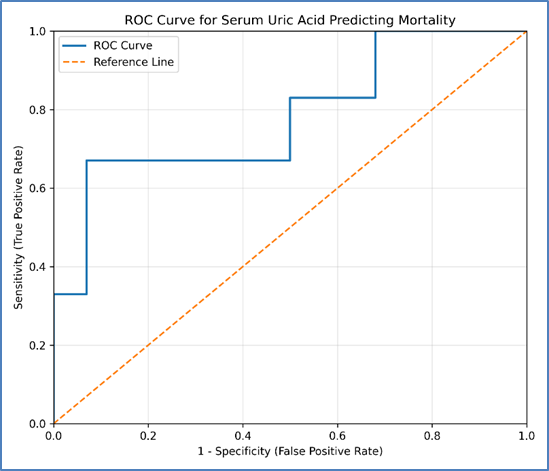
Figure 2. Receiver operating characteristic (ROC) curve of serum uric acid for prediction of short-term mortality in acute coronary syndrome.
Overall, the present study demonstrated that elevated serum uric acid levels were significantly associated with both left ventricular failure and short-term mortality in patients with acute coronary syndrome. The prevalence of hyperuricemia and mean serum uric acid levels increased progressively with worsening Killip class. Furthermore, patients with hyperuricemia exhibited significantly higher mortality rates compared with those having normal serum uric acid levels. ROC analysis confirmed good predictive accuracy of serum uric acid for short-term mortality, supporting its potential role as a simple and readily available prognostic biomarker in ACS.
DISCUSSION:
Acute coronary syndrome (ACS) remains a major cause of cardiovascular morbidity and mortality worldwide. Early identification of patients at risk of left ventricular failure (LVF) and death is essential for improving outcomes. Serum uric acid (SUA), the final product of purine metabolism, has been increasingly recognized as a potential prognostic biomarker because of its association with oxidative stress, endothelial dysfunction, inflammation, and myocardial ischemia.
The mean age of patients in the present study was 61.2 ± 9.2 years, and males constituted 68.2% of the study population. Traditional cardiovascular risk factors such as smoking, diabetes mellitus, hypertension, and dyslipidemia were commonly observed. These findings are comparable to those reported by Madan VD et al. (2011) [14] and Tang Q et al. (2011) [15], who demonstrated that ACS predominantly affects older individuals with multiple cardiovascular risk factors. STEMI constituted 90% of cases, and anterior wall myocardial infarction was the most common infarct location, similar to observations by Adhikari G et al. (2018) [17].
A major finding of the present study was the high prevalence of hyperuricemia among ACS patients. Hyperuricemia was present in 39.1% of patients, with a mean serum uric acid level of 7.52 ± 2.11 mg/dL. Elevated uric acid levels during ACS may result from increased purine degradation and enhanced xanthine oxidase activity secondary to myocardial ischemia. This process generates reactive oxygen species and contributes to endothelial dysfunction and myocardial injury.
Our findings are consistent with those of Sarna MK et al. (2025) [12], who demonstrated a significant association between elevated serum uric acid levels and acute myocardial infarction. Similar observations were reported by Choi JS et al. (2017) [18], Rathore A et al. (2023) [19], and Sharmila M et al. (2023) [20], all of whom documented significantly higher serum uric acid levels among ACS patients. Feng H et al. (2022) [21] further demonstrated that hyperuricemia was associated with more extensive coronary artery disease and adverse cardiovascular outcomes.
The most important finding of the present study was the strong association between serum uric acid levels and left ventricular failure as assessed by Killip classification. Hyperuricemia increased progressively from 28.7% in Killip Class I to 100% in Killip Class IV. Similarly, mean serum uric acid levels increased from 5.05 ± 1.33 mg/dL in Killip Class I to 11.20 ± 0.09 mg/dL in Killip Class IV (p=0.0001). These findings indicate that elevated serum uric acid levels are closely associated with worsening ventricular dysfunction.
Comparable observations have been reported by Kumar N et al. (2020) [22], who demonstrated a progressive increase in serum uric acid levels across Killip classes. Similar findings were reported by Shanker D et al. (2023) [23], Rathore A et al. (2023) [19], and Sharmila M et al. (2023) [20]. The progressive rise in serum uric acid with increasing Killip class may reflect greater myocardial ischemia, tissue hypoxia, enhanced purine metabolism, and heightened oxidative stress in patients with severe cardiac dysfunction.
Another important observation was the significant association between hyperuricemia and short-term mortality. The overall in-hospital mortality rate was 12.7%, and hyperuricemia was present in 82.1% of patients who died compared with only 32.8% of survivors (p=0.0001). These findings suggest that elevated serum uric acid levels identify patients at substantially higher risk of adverse outcomes.
The present findings are supported by Shanker D et al. (2023) [23], who reported higher mortality among patients with elevated uric acid levels and advanced Killip class. Rathore A et al. (2023) [19] observed that all deaths in their study occurred among patients with Killip Class IV and serum uric acid levels greater than 7 mg/dL. Likewise, Feng H et al. (2022) [21], Centola M et al. (2020) [24], and Thakur CP et al. (2018) [27] demonstrated significant associations between hyperuricemia, major adverse cardiovascular events, and mortality in ACS patients.
The ROC analysis further demonstrated good predictive accuracy of serum uric acid for short-term mortality, with an area under the curve (AUC) of 0.884. This finding indicates excellent discriminatory ability and supports the utility of serum uric acid as a prognostic marker for identifying high-risk ACS patients requiring closer monitoring and aggressive management.
Although Bagheri KR et al. (2022) [28] and Lin Y et al. (2021) [29] reported less consistent findings regarding the prognostic significance of serum uric acid, the majority of available evidence supports a strong association between hyperuricemia, worsening ventricular dysfunction, and adverse clinical outcomes. Given its low cost, wide availability, and ease of measurement, serum uric acid may serve as a practical biomarker for early risk stratification in patients with acute coronary syndrome.
CONCLUSION:
Elevated serum uric acid levels were significantly associated with both left ventricular failure and short-term mortality in patients with acute coronary syndrome. The prevalence of hyperuricemia and mean serum uric acid concentrations increased progressively with worsening Killip class, indicating a close relationship between serum uric acid and the severity of cardiac dysfunction. Patients with hyperuricemia also exhibited significantly higher mortality rates compared with those having normal serum uric acid levels. Furthermore, serum uric acid demonstrated good predictive accuracy for short-term mortality. These findings suggest that serum uric acid may serve as a simple, inexpensive, and readily available prognostic biomarker for early risk stratification and identification of high-risk ACS patients.
REFERENCES:
1. Alpert JS, Thygesen K, Antman E, Bassand JP. Myocardial infarction redefined: a consensus document of the Joint European Society of Cardiology/American College of Cardiology Committee for the redefinition of myocardial infarction. J Am Coll Cardiol. 2000;36(3):959-969.
2. Canto JG, Kiefe CI, Rogers WJ, Peterson ED, Frederick PD, French WJ. Number of coronary heart disease risk factors and mortality in patients with first myocardial infarction. JAMA. 2011;306(19):2120-2127.
3. Mozaffarian D, Benjamin EJ, Go AS, Arnett DK, Blaha MJ, Cushman M, et al. Heart disease and stroke statistics—2016 update: a report from the American Heart Association. Circulation. 2016;133(4):e38-e360.
4. Scharf RE. Platelet signaling in primary haemostasis and arterial thrombus formation: Part 1. Hamostaseologie. 2018;38(4):203-210.
5. Mohan S, Gu S, Parikh A, Radhakrishnan J. Prevalence of hyponatremia and association with mortality: results from NHANES. Am J Med. 2013;126(12):1127-1137.e1.
6. Nadkar MY, Jain VI. Serum uric acid in acute myocardial infarction. J Assoc Physicians India. 2008;56:759-762.
7. Anker SD, Doehner W, Rauchhaus M, et al. Uric acid and survival in chronic heart failure: validation and application in metabolic, functional, and haemodynamic staging. Circulation. 2003;107:1991-1997.
8. Ochiai ME, Barretto ACP, Oliveira MT Jr, Munhoz RT, Morgado PC, Ramires JAF. Uric acid renal excretion and renal insufficiency in decompensated severe heart failure. Eur J Heart Fail. 2005;7(4):468-474.
9. Hare JM, Johnson RJ. Uric acid predicts clinical outcomes in heart failure: insights regarding the role of xanthine oxidase and uric acid in disease pathophysiology. Circulation. 2003;107(15):1951-1953.
10. Fang J, Alderman MH. Serum uric acid and cardiovascular mortality: the NHANES I Epidemiologic Follow-up Study, 1971–1992. JAMA. 2000;283(18):2404-2410.
11. Guthikonda S, Sinkey C, Barenz T, Haynes WG. Xanthine oxidase inhibition reverses endothelial dysfunction in heavy smokers. Circulation. 2003;107(3):416-421.
12. Sarna MK, Godara R, Pahadia MR, Goel N, Rijhwani P, Lakhotia M, Aggarwal A, Singh S, Sarna S. Study of Relationship of Serum Uric Acid in Acute Myocardial Infarction. Journal of Contemporary Clinical Practice. 2025 Jul;11(7):141-146.
13. Thakur CP, Bhattacharjee K, Das D. Understanding the role of serum uric acid as a prognostic marker in acute coronary syndrome: a hospital based study. J. Evid. Based Med. Healthc. 2018; 5(11), 986-990.
14. Madan VD, Novak E, Rich MW. Impact of change in serum uric acid concentration on mortality in patients hospitalized with heart failure and hyponatremia. Circ Heart Fail. 2011;4(5):637-643.
15. Tang Q, Hua Q. Relationship between uric acid and in-hospital outcomes in Chinese patients with ST-elevation myocardial infarction. Intern Med. 2011;50(9):969-974.
16. Ibrahim FY, Qasim SE. The relation between serum uric acid and liver function tests in patients with acute coronary syndrome in Tikrit Teaching Hospital. Int J Adv Res Biol Sci. 2018;5(10):1-28.
17. Adhikari G, Agrawal A, Chhetri M, Baral D. Clinical profile of patients presenting with acute myocardial infarction in a tertiary care centre. Int J Adv Med. 2018;5(2):228-233
18. Choi JS, Kim CS, Bae EH, et al. Prognostic impact of hyponatremia occurring at various time points during hospitalization on mortality in patients with acute myocardial infarction. Medicine (Baltimore). 2017;96(23):e7023.
19. Rathore A, Tank L, Gupta D. Role of serum uric acid in acute myocardial infarction as a prognostic marker in a tertiary care center of South-Eastern Rajasthan. MGM J Med Sci. 2023;10(2):303-308.
20. Sharmila M, Bose P, Aparna SK, Kumar M. Serum uric acid level as an early prognostic indicator in patients with acute coronary syndrome. Int J Acad Med Pharm. 2023;5(4):1-4.
21. Feng H, Pan H, Yao W. Uric acid levels are associated with severity and mortality in patients with acute coronary syndrome. STE Medicine. 2022;3(3):e131.
22. Kumar N, Kumar H, Kumar V, Nayyer PS. A study of the serum uric acid level as prognostic indicator in acute myocardial infarction. J Assoc Physicians India. 2020;68(2):31-34
23. Shanker D, Gupta V. Prognostic role of serum uric acid in acute myocardial infarction: a prospective study. Int J Contemp Med Res. 2023;10(4).
24. Centola M, Maloberti A, Castini D, Persampieri S, Sabatelli L, Ferrante G, et al. Impact of admission serum uric acid levels on in-hospital outcomes in patients with acute coronary syndrome. Eur J Intern Med. 2020;82:62-67.
25. George J, Kataria SP, Isser HS. Correlation of serum uric acid with risk factors and severity of coronary artery disease in acute coronary syndrome. Int J Contemp Med Surg Radiol. 2019;4(4):D107-D112.
26. Marak AF, Thongam N, Hijam D, Devi OP, Singh SR, Taruni N. Serum uric acid in acute coronary syndromes. Int J Contemp Med Res. 2019;6(3):C1-C5.
27. Thakur CP, Bhattacharjee K, Das D. Understanding the role of serum uric acid as a prognostic marker in acute coronary syndrome: a hospital-based study. J Evid Based Med Healthc. 2018;5(11):986-990.
28. Bagheri RK, Najafi MN, Ahmadi M, Saberi M, Maleki M, Baradaran Rahimi V. Investigation of the association between serum uric acid levels and HEART risk score in patients with acute coronary syndrome. Physiol Rep. 2022;10(22):e15513.
29. Lin Y, Hidru TH, Fan R, Gao J, Li H, Yang X, Xia Y. The relationship between serum uric acid at different concentrations of lipid indices and the risk of myocardial revascularization in patients with acute coronary syndrome: a retrospective analysis. Front Cardiovasc Med. 2021;8:732715.