Postoperative Urinary Retention After Lower Abdominal and Anorectal Surgeries.
- Rajesh Kongara , Associate Professor, Department of General Surgery, Government Medical College, Nalgonda, Telangana, India.
- Aravind Kattula , Assistant Professor, Department of General Surgery, Government Medical College, Nalgonda, Telangana, India.
- Vijayakumar Ankathi , Associate Professor, Department of General Surgery, Government Medical College, Nalgonda, Telangana, India.
Article Information:
Abstract:
Background: Postoperative urinary retention (POUR) is a frequent but often under-recognized complication after lower abdominal and anorectal procedures. Pain, pelvic manipulation, spinal anaesthesia, perioperative fluids and opioid analgesia may interfere with bladder sensation and detrusor function, leading to bladder overdistension, catheterization and delayed recovery. The present study is designed to estimate the frequency of POUR after lower abdominal and anorectal surgeries and to identify patient-related, anaesthetic and perioperative factors associated with its occurrence. Materials and Methods: Two hundred adult patients who underwent elective or emergency lower abdominal or anorectal surgery were included. POUR was defined as inability to void within 6-8 hours after surgery with suprapubic discomfort or bladder scan/clinical evidence of retention requiring catheterization. Demographic profile, comorbidities, lower urinary tract symptoms, type of surgery, anaesthesia, operative duration, intravenous fluid volume, postoperative pain score, opioid use and early outcomes were recorded. Data were analysed using IBM SPSS Statistics version 28. Categorical variables were compared using the chi-square test and continuous variables using the independent samples t-test. A p value below 0.05 was considered statistically significant. Results: POUR developed in 32 of 200 patients, giving an incidence of 16.0%. The incidence was higher after anorectal procedures than lower abdominal procedures (22.5% versus 11.7%, chi-square=4.19, p=0.041). POUR was significantly associated with age above 60 years, male sex, diabetes mellitus, previous lower urinary tract symptoms or benign prostatic hyperplasia, spinal anaesthesia, surgery lasting more than 90 minutes, intravenous fluid volume above 1500 mL, postoperative opioid use, pain score above 6 and delayed mobilization. Patients with POUR had a higher frequency of urinary tract infection and longer hospital stay than those without POUR. Conclusion: POUR is a clinically relevant postoperative event after lower abdominal and anorectal surgeries. Older age, male sex, urinary symptoms, spinal anaesthesia, prolonged surgery, higher fluid administration, severe pain and opioid exposure were important associated factors. Structured bladder monitoring in high-risk patients may reduce bladder overdistension, unnecessary discomfort and avoidable delay in discharge.
Keywords:
Article :
INTRODUCTION:
Postoperative urinary retention is the inability to void adequately after surgery despite a filled bladder. It may present as suprapubic discomfort, restlessness, a palpable bladder, repeated unsuccessful attempts to pass urine or an unexpectedly high post-void residual volume. Although it is usually reversible, it can cause considerable distress and may result in bladder overdistension, urinary tract infection, repeated catheterization and delayed discharge [1-4].
Lower abdominal and anorectal surgeries have a close physiological relationship with bladder function. Pain from the operative site, pelvic floor spasm, reflex inhibition of detrusor contraction, spinal or regional anaesthesia, perioperative opioids and liberal intravenous fluid administration can disturb the normal voiding cycle. In anorectal surgery, pain and fear of straining may further delay micturition. In lower abdominal surgery, manipulation near the pelvis and postoperative immobility can add to the risk [5-12].
The reported incidence of POUR varies widely because studies use different definitions, surgical groups and bladder-volume thresholds. Recent anorectal surgery literature has reported POUR rates near one-fifth of operated patients, while broader surgical literature describes important roles for age, baseline urinary symptoms, anaesthesia, pain, opioids and duration of surgery. These factors are relevant in routine general-surgery units, particularly where bladder scanning is not uniformly available [6,8-13].
This study was undertaken at Government Medical College, Nalgonda, Telangana, to evaluate POUR after lower abdominal and anorectal procedures. The work focuses on practical risk factors that can be identified before or soon after surgery, so that monitoring and catheterization decisions can be made in a timely and selective manner.
MATERIALS AND METHODS:
Study design and setting
This hospital-based observational study was conducted in the Department of General Surgery, Government Medical College, Nalgonda, Telangana, India. Patients undergoing lower abdominal and anorectal procedures were observed during the immediate postoperative period until discharge. The study was planned to reflect routine surgical practice in a tertiary-care government medical college hospital.
Study population
Adult patients aged 18 years and above who underwent lower abdominal or anorectal surgery were considered for inclusion. Both elective and emergency procedures were included. Patients who were catheterized preoperatively for urinary retention, patients with known neurogenic bladder, chronic indwelling catheter, established urethral stricture, end-stage renal disease, major urological surgery during the same admission, or incomplete postoperative voiding records were excluded.
Sample size and sampling method
A total of 200 eligible patients were included by consecutive sampling. The sample size was considered adequate for estimating a POUR frequency of approximately 15% to 20% with acceptable precision in a single-centre observational setting and for examining common perioperative risk factors.
Surgical categories
Lower abdominal procedures included appendicectomy, inguinal hernia repair, lower midline laparotomy, hysterectomy-related general surgical assistance when applicable, stoma-related procedures and other operations involving the lower abdomen. Anorectal procedures included hemorrhoidectomy, fistula surgery, fissure surgery, perianal abscess drainage and other benign anorectal operations.
Definition and assessment of POUR
POUR was defined as failure to pass urine within 6 to 8 hours after surgery, or earlier if the patient developed suprapubic pain or discomfort, with clinical evidence of bladder distension or bladder scan evidence of significant urinary retention, requiring catheterization. In patients without bladder-scan documentation, the diagnosis was made from inability to void, suprapubic fullness and catheter drainage after clinical assessment. Patients who voided spontaneously without catheterization were classified as not having POUR.
Data collection
Demographic details, age, sex, diabetes mellitus, hypertension, previous lower urinary tract symptoms or benign prostatic hyperplasia, type of surgery, urgency of surgery, anaesthesia, operative duration, approximate intraoperative intravenous fluid volume, use of postoperative opioids, postoperative pain score, time to mobilization, need for catheterization, urinary tract infection, length of hospital stay and discharge outcome were recorded in a predesigned proforma.
Outcome measures
The primary outcome was occurrence of POUR. Secondary outcomes included requirement for single or repeated catheterization, temporary indwelling catheter placement, urinary tract infection, delayed mobilization and duration of hospital stay.
Ethical considerations
The study was conducted after obtaining institutional permission. Patient confidentiality was maintained by using coded data, and no personal identifiers were used during analysis or manuscript preparation. The study followed standard ethical principles for observational clinical research.
Statistical analysis
Data were entered into Microsoft Excel and analysed using IBM SPSS Statistics for Windows, version 28. Continuous variables were summarized as mean and standard deviation, while categorical variables were summarized as frequency and percentage. Associations between categorical variables and POUR were tested using the chi-square test. Continuous variables between POUR and non-POUR groups were compared using the independent samples t-test. A p value less than 0.05 was taken as statistically significant.
RESULTS:
Study population
A total of 200 patients were included in the analysis. The mean age of the study population was 48.9 ± 15.2 years, and 112 patients (56.0%) were male. Lower abdominal procedures accounted for 120 cases (60.0%), while anorectal procedures accounted for 80 cases (40.0%). Diabetes mellitus was present in 44 patients (22.0%), and previous lower urinary tract symptoms or benign prostatic hyperplasia were documented in 34 patients (17.0%). Baseline characteristics are shown in Table 1.
Table 1: Baseline characteristics and association with postoperative urinary retention
|
Variable |
Total, n (%) |
POUR, n (%) |
No POUR, n (%) |
Chi-square |
p value |
|
Age <=60 years |
148 (74.0) |
16 (10.8) |
132 (89.2) |
11.40 |
0.001 |
|
Age >60 years |
52 (26.0) |
16 (30.8) |
36 (69.2) |
|
|
|
Male sex |
112 (56.0) |
24 (21.4) |
88 (78.6) |
5.58 |
0.018 |
|
Female sex |
88 (44.0) |
8 (9.1) |
80 (90.9) |
|
|
|
Diabetes mellitus |
44 (22.0) |
12 (27.3) |
32 (72.7) |
5.33 |
0.021 |
|
No diabetes |
156 (78.0) |
20 (12.8) |
136 (87.2) |
|
|
|
Previous LUTS/BPH |
34 (17.0) |
14 (41.2) |
20 (58.8) |
19.32 |
<0.001 |
|
No previous LUTS/BPH |
166 (83.0) |
18 (10.8) |
148 (89.2) |
|
|
|
Hypertension |
58 (29.0) |
12 (20.7) |
46 (79.3) |
1.16 |
0.281 |
|
No hypertension |
142 (71.0) |
20 (14.1) |
122 (85.9) |
|
|
POUR = postoperative urinary retention; LUTS = lower urinary tract symptoms; BPH = benign prostatic hyperplasia. Percentages in POUR and No POUR columns are row percentages
Incidence of postoperative urinary retention
POUR was observed in 32 of 200 patients, giving an overall incidence of 16.0%. The incidence was 11.7% after lower abdominal procedures and 22.5% after anorectal procedures. The difference between surgical categories was statistically significant (chi-square=4.19, p=0.041), as shown in Table 2 and Figure 1.
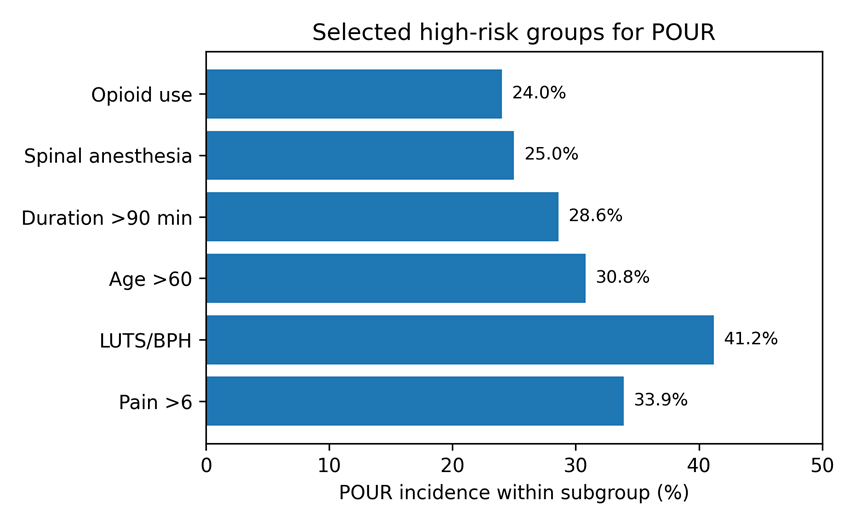
Figure 1: Incidence of postoperative urinary retention in the overall cohort and by surgical category.
Table 2: Surgical profile and association with postoperative urinary retention
|
Surgical variable |
Total, n (%) |
POUR, n (%) |
No POUR, n (%) |
Chi-square |
p value |
|
Lower abdominal surgery |
120 (60.0) |
14 (11.7) |
106 (88.3) |
4.19 |
0.041 |
|
Anorectal surgery |
80 (40.0) |
18 (22.5) |
62 (77.5) |
|
|
|
Elective surgery |
138 (69.0) |
18 (13.0) |
120 (87.0) |
2.67 |
0.102 |
|
Emergency surgery |
62 (31.0) |
14 (22.6) |
48 (77.4) |
|
|
|
Operative duration <=90 min |
130 (65.0) |
12 (9.2) |
118 (90.8) |
12.66 |
<0.001 |
|
Operative duration >90 min |
70 (35.0) |
20 (28.6) |
50 (71.4) |
|
|
Footnote: Percentages in POUR and No POUR columns are row percentages. Lower abdominal procedures included appendicectomy, hernia repair and lower abdominal laparotomy; anorectal procedures included hemorrhoidectomy, fistula, fissure and abscess surgery.
Anaesthetic and perioperative factors
Perioperative variables showed a clear relationship with POUR. Spinal anaesthesia, intravenous fluid administration above 1500 mL, postoperative opioid use, severe postoperative pain and delayed mobilization were significantly associated with retention.
Patients with a pain score above 6 had the highest subgroup incidence of POUR (33.9%). The distribution of high-risk groups is presented in Table 3 and Figure 2.
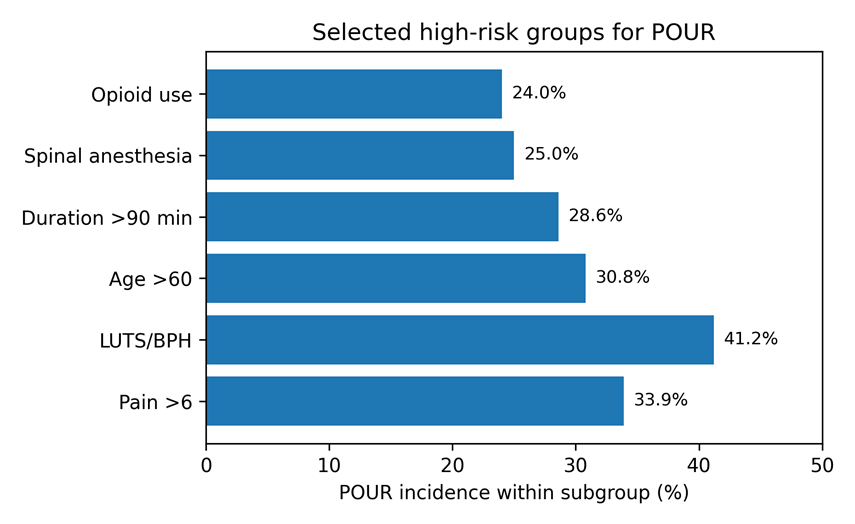
Figure 2: POUR incidence among selected high-risk subgroups.
Table 3: Anaesthetic and perioperative factors associated with postoperative urinary retention
|
Perioperative variable |
Total, n (%) |
POUR, n (%) |
No POUR, n (%) |
Chi-square |
p value |
|
General anaesthesia |
112 (56.0) |
10 (8.9) |
102 (91.1) |
9.47 |
0.002 |
|
Spinal anaesthesia |
88 (44.0) |
22 (25.0) |
66 (75.0) |
|
|
|
IV fluids <=1500 mL |
138 (69.0) |
14 (10.1) |
124 (89.9) |
11.35 |
0.001 |
|
IV fluids >1500 mL |
62 (31.0) |
18 (29.0) |
44 (71.0) |
|
|
|
Postoperative opioids used |
100 (50.0) |
24 (24.0) |
76 (76.0) |
9.52 |
0.002 |
|
No postoperative opioids |
100 (50.0) |
8 (8.0) |
92 (92.0) |
|
|
|
Pain score <=6 |
138 (69.0) |
11 (8.0) |
127 (92.0) |
21.35 |
<0.001 |
|
Pain score >6 |
62 (31.0) |
21 (33.9) |
41 (66.1) |
|
|
|
Mobilized within 24 hours |
145 (72.5) |
15 (10.3) |
130 (89.7) |
12.55 |
<0.001 |
|
Delayed mobilization |
55 (27.5) |
17 (30.9) |
38 (69.1) |
|
|
IV = intravenous. Pain score refers to the highest documented postoperative pain score within the early postoperative period
Clinical course and outcomes
Among the 32 patients with POUR, 24 patients improved after single catheterization, six required repeated catheterization and two required a temporary indwelling catheter beyond 24 hours. Compared with patients without retention, the POUR group had a higher frequency of urinary tract infection (15.6% versus 4.8%, chi-square=5.03, p=0.025), delayed mobilization (53.1% versus 22.6%, chi-square=12.55, p<0.001) and hospital stay longer than four days (46.9% versus 16.7%, chi-square=14.58, p<0.001). These outcomes are summarized in Table 4 and Figure 3.
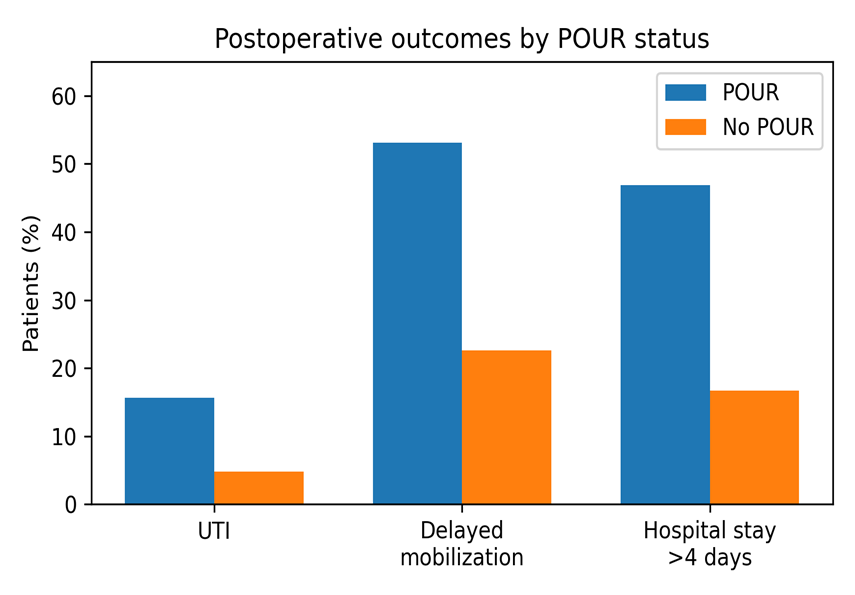
Figure 3: Comparison of early postoperative outcomes between patients with and without POUR
Table 4: Postoperative outcomes according to POUR status
|
Outcome |
Total, n (%) |
POUR, n (%) |
No POUR, n (%) |
Chi-square |
p value |
|
Urinary tract infection |
13 (6.5) |
5 (15.6) |
8 (4.8) |
5.03 |
0.025 |
|
No urinary tract infection |
187 (93.5) |
27 (84.4) |
160 (95.2) |
|
|
|
Delayed mobilization |
55 (27.5) |
17 (53.1) |
38 (22.6) |
12.55 |
<0.001 |
|
Mobilized within 24 hours |
145 (72.5) |
15 (46.9) |
130 (77.4) |
|
|
|
Hospital stay >4 days |
43 (21.5) |
15 (46.9) |
28 (16.7) |
14.58 |
<0.001 |
|
Hospital stay <=4 days |
157 (78.5) |
17 (53.1) |
140 (83.3) |
|
|
|
Readmission within 7 days |
5 (2.5) |
2 (6.3) |
3 (1.8) |
2.44 |
0.118 |
|
No readmission |
195 (97.5) |
30 (93.8) |
165 (98.2) |
|
|
Percentages are column percentages for POUR and No POUR groups. POUR = postoperative urinary retention.
DISCUSSION:
This study found that POUR occurred in 16.0% of patients undergoing lower abdominal and anorectal surgeries at Government Medical College, Nalgonda. The finding confirms that urinary retention is not a rare event in routine general surgical practice. The incidence was higher after anorectal procedures than lower abdominal procedures, which is clinically expected because anorectal pain, pelvic floor spasm and reluctance to strain can delay voluntary voiding [2,4,6,8,13].
Older age, male sex and baseline urinary symptoms showed strong associations with POUR. These factors probably reflect reduced bladder reserve, prostatic obstruction in a proportion of male patients and impaired detrusor response in older individuals. Diabetes mellitus was also significantly associated with retention, possibly due to autonomic neuropathy, impaired bladder sensation or coexisting urinary dysfunction [6,7,14].
Spinal anaesthesia was significantly related to POUR. This association is biologically plausible because neuraxial blockade may transiently inhibit bladder afferent and efferent pathways. In addition, patients who received larger volumes of intravenous fluid had more retention, suggesting that rapid bladder filling during the period of reduced sensation may contribute to overdistension before the patient is able to void [1,5-7,16].
Postoperative pain score above 6 and opioid analgesic use were among the strongest perioperative correlates. Pain increases sympathetic tone and pelvic floor guarding, while opioids may reduce detrusor contractility and alter bladder sensation. These findings support a balanced analgesic approach that limits avoidable opioid exposure while controlling pain adequately. Early mobilization also appeared important, since delayed mobilization was associated with retention and poorer recovery outcomes [7,9,15,18].
Patients with POUR had more urinary tract infections and longer hospital stay. This may reflect both the effect of catheterization and the clinical consequences of retention itself. These findings are relevant in resource-limited settings because selective bladder monitoring can help avoid emergency catheterization, repeated painful attempts at voiding and unnecessary prolongation of admission [3,12,19].
The practical implication is that every patient undergoing lower abdominal or anorectal surgery should not necessarily receive routine catheterization, but high-risk patients should be identified early. Older male patients, those with diabetes or urinary symptoms, patients receiving spinal anaesthesia, patients with prolonged operations, higher fluid administration, severe pain or opioid requirement may benefit from a planned voiding protocol, timely bladder scan where available and early catheterization when clinically indicated [2,6,17-19].
Limitations
This was a single-centre observational study and the findings may reflect the case mix and perioperative practices of GMC Nalgonda. Bladder scan was not available for every patient, so some diagnoses were based on clinical assessment and catheter drainage. Long-term urinary outcomes after discharge were not evaluated. The study also did not perform multivariable regression analysis in this draft version; therefore, the reported associations should not be interpreted as independent predictors until adjusted analysis is completed with the final dataset [5,6].
Recommendations
A simple perioperative risk checklist may be used for patients undergoing lower abdominal and anorectal procedures. Patients with age above 60 years, male sex, diabetes, previous urinary symptoms, spinal anaesthesia, prolonged surgery, high fluid load, severe pain or opioid requirement should undergo planned postoperative voiding assessment. Bladder scan, where available, should be used before catheterization to avoid unnecessary procedures. Multicentre studies with adjusted analysis are recommended to validate these findings and develop a local risk-based bladder-care protocol [6,17-19].
CONCLUSION:
Postoperative urinary retention occurred in 16.0% of patients after lower abdominal and anorectal surgeries in this study. The event was more common after anorectal procedures and was associated with older age, male sex, diabetes, previous lower urinary tract symptoms or benign prostatic hyperplasia, spinal anaesthesia, prolonged surgery, higher intravenous fluid volume, postoperative opioids, severe pain and delayed mobilization. POUR was also linked with urinary tract infection and longer hospital stay. A selective, risk-based postoperative bladder monitoring protocol can improve patient comfort and may reduce avoidable catheter-related morbidity and discharge delay [1,2,8-13].
REFERENCES:
1. Baldini G, Bagry H, Aprikian A, Carli F. Postoperative urinary retention: anesthetic and perioperative considerations. Anesthesiology. 2009;110(5):1139-1157. doi:10.1097/ALN.0b013e31819f7aea.
2. Kowalik U, Plante MK. Urinary retention in surgical patients. Surg Clin North Am. 2016;96(3):453-467. doi:10.1016/j.suc.2016.02.004.
3. Darrah DM, Griebling TL, Silverstein JH. Postoperative urinary retention. Anesthesiol Clin. 2009;27(3):465-484. doi:10.1016/j.anclin.2009.07.010.
4. Agrawal K, Majhi S, Garg R. Post-operative urinary retention: review of literature. World J Anesthesiol. 2019;8(1):1-12. doi:10.5313/wja.v8.i1.1.
5. Lamonerie L, Marret E, Deleuze A, Lembert N, Dupont M, Bonnet F. Prevalence of postoperative bladder distension and urinary retention detected by ultrasound measurement. Br J Anaesth. 2004;92(4):544-546. doi:10.1093/bja/aeh099.
6. Brouwer TA, van Roon EN, Rosier PFWM, Kalkman CJ, Veeger N. Postoperative urinary retention: risk factors, bladder filling rate and time to catheterization: an observational study as part of a randomized controlled trial. Perioper Med (Lond). 2021;10(1):2. doi:10.1186/s13741-020-00167-z.
7. Keita H, Diouf E, Tubach F, Brouwer T, Dahmani S, Mantz J, Desmonts JM. Predictive factors of early postoperative urinary retention in the postanesthesia care unit. Anesth Analg. 2005;101(2):592-596. doi:10.1213/01.ANE.0000159165.90094.40.
8. Liu B, Chen Y, Zhang P, Long W, He H, Li X, et al. Risk factors for postoperative urinary retention in patients underwent surgery for benign anorectal diseases: a nested case-control study. BMC Anesthesiol. 2024;24:272. doi:10.1186/s12871-024-02652-0.
9. Toyonaga T, Matsushima M, Sogawa N, Jiang SF, Matsumura N, Shimojima Y, et al. Postoperative urinary retention after surgery for benign anorectal disease: potential risk factors and strategy for prevention. Int J Colorectal Dis. 2006;21(7):676-682. doi:10.1007/s00384-005-0077-2.
10. Jeong HY, Song SG, Lee JK. Predictors of postoperative urinary retention after semiclosed hemorrhoidectomy. Ann Coloproctol. 2022;38(1):53-59. doi:10.3393/ac.2021.00304.0043.
11. Changchien CR, Yeh CY, Huang ST, Hsieh ML, Chen JS, Tang R. Postoperative urinary retention after primary colorectal cancer resection via laparotomy: a prospective study of 2,355 consecutive patients. Dis Colon Rectum. 2007;50(10):1688-1696. doi:10.1007/s10350-007-0305-7.
12. Kin C, Rhoads KF, Jalali M, Shelton AA, Welton ML. Predictors of postoperative urinary retention after colorectal surgery. Dis Colon Rectum. 2013;56(6):738-746. doi:10.1097/DCR.0b013e318280aad5.
13. Croghan SM, Mohan HM, Breen KJ, McGovern R, Bennett KE, Boland MR, et al. Global incidence and risk factors associated with postoperative urinary retention following elective inguinal hernia repair: the RETAINER I Study. JAMA Surg. 2023;158(8):865-873. doi:10.1001/jamasurg.2023.2137.
14. Sung KH, Lee KM, Chung CY, Kwon SS, Lee SY, Ban YS, et al. What are the risk factors associated with urinary retention after orthopaedic surgery? Biomed Res Int. 2015;2015:613216. doi:10.1155/2015/613216.
15. O'Riordan JA, Hopkins PM, Ravenscroft A, Stevens JD. Patient-controlled analgesia and urinary retention following lower limb joint replacement: prospective audit and logistic regression analysis. Eur J Anaesthesiol. 2000;17(7):431-435. doi:10.1046/j.1365-2346.2000.00720.x.
16. Blair AB, Dwarakanath A, Mehta A, Liang H, Hui X, Wyman C, et al. Postoperative urinary retention after inguinal hernia repair: a single institution experience. Hernia. 2017;21(6):895-900. doi:10.1007/s10029-017-1661-4.
17. Li H, Zhang W, Xu G, Wang D, Xu C, Zhang H, et al. Prophylactic tamsulosin can reduce the risk of urinary retention after surgery in male patients: a systematic review and meta-analysis. Front Surg. 2022;9:930707. doi:10.3389/fsurg.2022.930707.
18. Sirisreetreerux P, Thongprayoon C, Cheungpasitporn W, Mao MA, Mao SA, Erickson SB, et al. Medical and non-medical interventions for post-operative urinary retention prevention: network meta-analysis and risk-benefit analysis. Ther Adv Urol. 2021;13:17562872211022296. doi:10.1177/17562872211022296.
19. Saint S. Clinical and economic consequences of nosocomial catheter-related bacteriuria. Am J Infect Control. 2000;28(1):68-75. doi:10.1016/S0196-6553(00)90015-4.