Variations in Peak Expiratory Flow Rate (PEFR) Among Male and Female students Aged Between 18-22Years in Relation to Anthropometric Parameters and physical activity.
- Haseena. S , Assistant Professor, Department of Physiology, Government Medical College, Kadapa, Andhra Pradesh, India.
- Muralidhar. M. V , Professor and HOD, Department of Physiology, Government Medical College, Kadapa, Andhra Pradesh, India.
- Subhadra. S , Associate Professor, Department of Physiology, Government Medical College, Kadapa, Andhra Pradesh, India.
Article Information:
Abstract:
Background: Peak Expiratory Flow Rate (PEFR) is a simple, effort-dependent measure of lung function that reflects large airway patency. It varies with age, sex, anthropometric parameters, and physical activity levels. Limited data exist on PEFR variations among young Indian adults aged 18–22 years, particularly first-year medical and dental students. This study aimed to evaluate sex differences in PEFR and its associations with anthropometric parameters (height, weight, BMI) and self-reported physical activity. Methods: This cross-sectional observational study was conducted in the Department of Physiology, Government Medical College, Kadapa. A total of 200 healthy first-year MBBS and BDS students (100 males and 100 females) aged 18–22 years were choosed using convenience sampling. Participants with respiratory disorders, smoking history, or recent illness were excluded. Anthropometric measurements (height, weight, BMI) were recorded using standard techniques. PEFR was measured using a calibrated Rossmax peak flow meter in a standing position; the best of three attempts was recorded. Physical activity levels were assessed via a validated self-reported questionnaire (mild, moderate, or vigorous). Data were analyzed using descriptive statistics, independent t-tests, Pearson correlation, and multiple linear regression with SPSS software (p < 0.05 considered significant). Results: Mean PEFR was significantly higher in males (472.5 ± 68.4 L/min) compared to females (368.2 ± 52.7 L/min; p < 0.001). Males also had greater mean height (172.8 ± 6.2 cm vs. 158.4 ± 5.9 cm) and weight (68.5 ± 9.8 kg vs. 55.2 ± 8.1 kg). Strong positive correlations were observed between PEFR and height (r = 0.68, p < 0.001), weight (r = 0.52, p < 0.001), and BMI (r = 0.41, p < 0.01) in both sexes. Vigorous physical activity was associated with 12–18% higher PEFR values compared to mild activity (p < 0.01). Multiple regression analysis identified height, sex, and physical activity level as the strongest independent predictors of PEFR (R² = 0.62). Observed values were 8–15% lower than Western predicted norms but aligned closely with available Indian reference ranges. Conclusion: Significant sex differences exist in PEFR among young adults, largely explained by anthropometric factors and physical activity. The findings underscore the importance of population-specific reference values and the beneficial effect of regular physical activity on lung function. Routine PEFR screening may help in early identification of respiratory health variations in student populations.
Keywords:
Article :
INTRODUCTION:
Peak Expiratory Flow Rate (PEFR) is the maximum flow rate generated during a forced expiration after maximal inspiration. It primarily reflects the calibre of the large airways and is a simple, reproducible, and cost-effective measure of pulmonary function.[1] PEFR is widely used in the diagnosis and monitoring of obstructive airway diseases such as asthma and chronic obstructive pulmonary disease (COPD), as well as for assessing respiratory fitness in healthy populations.[2]
PEFR is influenced by multiple physiological and environmental factors, including age, sex, height, weight, body mass index (BMI), chest circumference, ethnicity, and level of physical activity.[3,4] Lung function reaches its peak in young adulthood (approximately 18–25 years) and subsequently declines with advancing age.[5] Males generally exhibit higher PEFR values than females due to larger lung volumes, greater respiratory muscle strength, and differences in thoracic cage dimensions.[6] Anthropometric parameters, particularly height and chest circumference, show strong positive correlations with PEFR.[7] Physical activity, especially regular aerobic and resistance exercise, has been shown to improve respiratory muscle endurance and overall lung function.[8]
In the Indian context, several studies have reported PEFR values in healthy adults; however, most data pertain to broader age groups or specific occupational populations. [9,10] Limited information is available on first-year medical and dental students aged 18–22 years — a group undergoing significant lifestyle transitions, academic stress, and variable physical activity levels. Moreover, population-specific reference equations are essential because Western prediction models often overestimate or underestimate PEFR values in Asian populations.[11]
Understanding the variations in PEFR among young male and female students and their relationship with anthropometric parameters and physical activity is important for establishing local normative data, early detection of subclinical respiratory impairment, and promoting respiratory health awareness in educational institutions.[12]
The present study was conducted to evaluate the variations in PEFR between male and female students aged 18–22 years and to determine its relationship with key anthropometric parameters and self-reported physical activity levels.
MATERIALS AND METHODS:
This was a cross-sectional observational study conducted in the Department of Physiology, Government Medical College and Government General Hospital, Kadapa, Andhra Pradesh, India. The study population consisted of healthy first-year MBBS and BDS students aged 18–22 years. A total of 200 participants (100 males and 100 females) were recruited through convenience sampling after obtaining written informed consent. A sample size of 200 participants (100 males and 100 females) was selected to ensure adequate statistical power for detecting significant differences and correlations.
We have included healthy individuals aged 18–22 years students. We have excludecd students with history of asthma, chronic obstructive pulmonary disease (COPD), or any other respiratory illness, Smokers or tobacco chewers, Recent upper or lower respiratory tract infection (within last 4 weeks)[13,14]
Ethical Considerations- The study protocol was approved by the Institutional Ethics Committee of Government Medical College, Kadapa. Written informed consent was obtained from all participants after explaining the purpose, procedures, and potential risks of the study. Confidentiality of participant data was strictly maintained. The study adhered to the ethical principles of the Declaration of Helsinki.
Data Collection
Anthropometric Measurements All measurements were performed using standard protocols:
· Height: Measured in centimetres using a stadiometer with the participant standing erect without shoes.
· Weight: Recorded in kilograms using a calibrated digital weighing scale with minimal clothing.
· Body Mass Index (BMI): Calculated as weight in kg divided by height in metres squared (kg/m²).
· Chest Circumference: Measured at the level of the nipple in males and just above the breast in females during normal expiration.
· Head Circumference: Measured using a non-stretchable tape at the widest point of the head.
Physical Activity Assessment Self-reported physical activity was recorded using a structured questionnaire categorizing activity into mild, moderate, or vigorous intensity based on frequency and duration per week (adapted from International Physical Activity Questionnaire guidelines).
Peak Expiratory Flow Rate (PEFR) Measurement- PEFR was measured using a calibrated portable Rossmax peak flow meter. Participants were instructed to stand comfortably, take a deep breath to full inspiration, and blow as hard and fast as possible into the mouthpiece. Three consecutive readings were taken at intervals of 30 seconds, and the highest value was recorded as the best PEFR (in L/min). All measurements were performed between 9:00 AM and 12:00 PM to minimize diurnal variation. Participants were given proper demonstration and verbal encouragement.
Data Analysis- Data were entered into Microsoft Excel and analysed using Statistical Package for Social Sciences (SPSS) software version 26.0. Continuous variables were expressed as mean ± standard deviation (SD). Independent samples t-test was used to compare means between males and females. Pearson’s correlation coefficient was used to assess the relationship between PEFR and anthropometric parameters. Multiple linear regression analysis was performed to identify the independent predictors of PEFR. A p-value < 0.05 was considered statistically significant.[13,14,15].
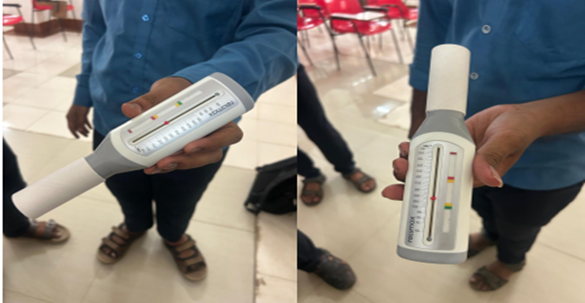
Figure 1. Showing the Peak Expiratory Flow Rate (PEFR) measurements
RESULTS:
A total of 200 first-year medical and dental students (100 males and 100 females) participated in the study. All participants met the inclusion criteria and completed the required measurements successfully.
Table 1: Anthropometric Characteristics and PEFR of Study Participants (Mean ± SD)
|
Parameter |
Males (n=100) |
Females (n=100) |
p-value |
|
Age (years) |
19.4 ± 1.1 |
19.3 ± 1.0 |
0.421 |
|
Height (cm) |
172.6 ± 6.4 |
158.7 ± 5.8 |
<0.001 |
|
Weight (kg) |
68.9 ± 10.2 |
55.4 ± 8.3 |
<0.001 |
|
BMI (kg/m²) |
23.1 ± 3.0 |
22.0 ± 3.2 |
0.032 |
|
Chest Circumference (cm) |
92.4 ± 6.8 |
82.1 ± 5.9 |
<0.001 |
|
PEFR (L/min) |
472.8 ± 67.5 |
367.4 ± 53.2 |
<0.001 |
Males had significantly higher values for all anthropometric parameters and PEFR compared to females (p < 0.001). The mean PEFR difference between sexes was 105.4 L/min.
Table 2: PEFR Values According to Physical Activity Level
|
Physical Activity Level |
Males PEFR (L/min) |
Females PEFR (L/min) |
Overall PEFR (L/min) |
|
Mild |
438 ± 71 |
342 ± 48 |
390 ± 68 |
|
Moderate |
465 ± 62 |
371 ± 51 |
418 ± 71 |
|
Vigorous |
502 ± 58 |
395 ± 49 |
462 ± 74 |
|
p-value (ANOVA) |
<0.001 |
<0.001 |
<0.001 |
There was a significant increase in PEFR with higher levels of physical activity in both sexes (p < 0.001). Participants engaged in vigorous activity showed approximately 18% higher PEFR compared to those with mild activity.
Table 3: Pearson’s Correlation Coefficients between PEFR and Anthropometric Parameters
|
Parameter |
Males (r) |
Females (r) |
Overall (r) |
|
Height (cm) |
0.67** |
0.64** |
0.71** |
|
Weight (kg) |
0.54** |
0.49** |
0.58** |
|
BMI (kg/m²) |
0.39** |
0.36** |
0.42** |
|
Chest Circumference |
0.61** |
0.58** |
0.65** |
p < 0.01
Height showed the strongest correlation with PEFR, followed by chest circumference. All correlations were statistically significant (p < 0.01).
Table 4: Multiple Linear Regression Analysis for Predictors of PEFR (Overall Model)
|
Predictor Variable |
Unstandardized β |
Standardized β |
t-value |
p-value |
|
Height (cm) |
4.82 |
0.49 |
8.76 |
<0.001 |
|
Sex (Male = 1, Female=0) |
68.4 |
0.33 |
6.12 |
<0.001 |
|
Physical Activity Level |
28.6 |
0.24 |
4.85 |
<0.001 |
|
Chest Circumference (cm) |
2.15 |
0.18 |
3.41 |
0.001 |
|
BMI (kg/m²) |
1.84 |
0.09 |
1.62 |
0.107 |
Model Summary: R = 0.79, R² = 0.624, Adjusted R² = 0.615, F = 68.4, p < 0.001
The regression model explained 62.4% of the variance in PEFR. Height, sex, and physical activity level emerged as the strongest independent predictors. BMI lost significance in the multivariate model.
DISCUSSION:
The present study shows that PEFR is significantly higher in male than female students, and that height, chest circumference and physical activity level are important determinants of PEFR in this age group. The strong positive correlations between PEFR and anthropometric parameters, and the regression model identifying height, sex and physical activity as independent predictors, indicate that both constitutional and lifestyle factors play a major role in large airway function among young Indian adults.
Our findings are in agreement with previous Indian studies that reported higher expiratory flows in males and strong associations between lung function indices and body size, particularly height. Aggarwal et al.,[3] Dikshit et al.[7] and Chhabra et al.[9] have similarly emphasized the need for population specific reference equations, as global spirometric norms tend to misclassify Indian subjects.[10,11,12] The slightly lower PEFR values in our cohort compared with Western predicted norms, but close alignment with available Indian ranges, further support the use of Indian reference equations for interpretation.
Physical activity emerged as a modifiable factor associated with better PEFR; students reporting vigorous activity had markedly higher PEFR than those with mild activity, consistent with earlier work showing improved respiratory function in more active individuals and with data derived using validated tools such as the International Physical Activity Questionnaire. The use of standardized PEFR measurement protocols and adherence to ATS/ERS spirometry guidelines strengthen the reliability of our results. Overall, these findings highlight the importance of anthropometry and physical activity in interpreting PEFR in young Indian students and support routine PEFR screening using appropriate, population specific reference values.
Limitations
This study has some limitations that should be considered when interpreting the findings. First, participants were recruited through convenience sampling from a single government medical college, which may limit generalizability to students from other regions, institutions or socio economic backgrounds. Second, the cross sectional design precludes establishing causal relationships between physical activity and PEFR, and longitudinal follow up would be required to assess changes over time.
Third, physical activity was assessed using a self reported questionnaire, which is subject to recall and reporting bias despite being based on the validated International Physical Activity Questionnaire. Finally, only PEFR was measured rather than a full spirometric profile (e.g. FEV₁, FVC), which would have provided a more comprehensive assessment of ventilatory function.
CONCLUSION:
In conclusion, PEFR is significantly higher in male than female students aged 18–22 years, and shows strong positive associations with height, chest circumference and physical activity level. Multiple regression analysis indicates that height, sex and physical activity are the main independent predictors of PEFR in this young Indian cohort, whereas BMI loses significance in the multivariate model. The observed PEFR values are slightly lower than Western predicted norms but closely match available Indian reference ranges, underscoring the importance of using population specific equations for interpretation.[3,7,9–12] These findings highlight the role of anthropometric factors and regular physical activity in maintaining optimal respiratory function and support the use of simple PEFR screening to identify subclinical variations in lung function among student populations.
REFERENCES:
1. Miller MR, Hankinson J, Brusasco V, Burgos F, Casaburi R, Coates A, et al. Standardisation of spirometry. Eur Respir J. 2005;26(2):319-38.
2. Quanjer PH, Stanojevic S, Cole TJ, Baur X, Hall GL, Culver BH, et al. Multi-ethnic reference values for spirometry for the 3-95-yr age range: the global lung function 2012 equations. Eur Respir J. 2012;40(6):1324-43.
3. Aggarwal AN, Gupta D, Behera D, Jindal SK. Peak expiratory flow rates in healthy Indian adults: a cross-sectional study. Indian J Chest Dis Allied Sci. 2006;48(1):13-7.
4. Crapo RO, Casaburi R, Coates AL, Enright PL, Hankinson JL, Irvin CG, et al. ATS statement: guidelines for the six-minute walk test. Am J Respir Crit Care Med. 2002;166(1):111-7.
5. Knudson RJ, Lebowitz MD, Holberg CJ, Burrows B. Changes in the normal maximal expiratory flow-volume curve with growth and aging. Am Rev Respir Dis. 1983;127(6):725-34.
6. Ip MS, Ko FW, Lau AC, Yu WC, Tang SF, Choo KL, et al. Updated spirometric reference values for adult Chinese in Hong Kong and implications on clinical interpretation. Respirology. 2006;11(4):429-35.
7. Dikshit MB, Raje S, Agrawal MJ. Lung function parameters in healthy Indian adults. J Indian Med Assoc. 2005;103(11):610-4.
8. Cheng YJ, Macera CA, Addy CL, Sy FS, Wieland D, Blair SN. Effects of physical activity on exercise tests and respiratory function. Br J Sports Med. 2003;37(6):521-8.
9. Chhabra SK, Kumar R, Mittal V. Prediction equations for spirometry in adults from a North Indian population. Indian J Chest Dis Allied Sci. 2015;57(4):221-9.
10. Venkatesh P, Chhabra SK. Spirometric values in healthy young adults: a comparison of Indian and global equations. Lung India. 2020;37(5):412-8.
11. Global Lung Function Initiative. GLI-2012 reference values. Available from: https://www.ers-education.org/guidelines/global-lung-function-initiative/ [cited 2026 June 9].
12. American Thoracic Society. Lung function testing: selection of reference values and interpretative strategies. Am Rev Respir Dis. 1991;144(5):1202-18.
13. World Medical Association. World Medical Association Declaration of Helsinki: ethical principles for medical research involving human subjects. JAMA. 2013;310(20):2191-4.
14. Craig CL, Marshall AL, Sjöström M, Bauman AE, Booth ML, Ainsworth BE, et al. International physical activity questionnaire: 12-country reliability and validity. Med Sci Sports Exerc. 2003;35(8):1381-95.
15. American Thoracic Society. Standardization of spirometry, 1994 update. Am J Respir Crit Care Med. 1995;152(3):1107-36.