PREVALENCE OF IRON DEFICIENCY AND ITS ASSOCIATION WITH CLINICAL CHARACTERISTICS AND SHORT-TERM OUTCOMES IN HOSPITALIZED PATIENTS WITH HEART FAILURE.
- Monesh Gupta , Junior Resident, Department of Internal Medicine, Mahatma Gandhi Memorial Medical College, Indore, Madhya Pradesh, India.
- Yashwant Panwar , Associate Professor, Department of Internal Medicine, Mahatma Gandhi Memorial Medical College, Indore, Madhya Pradesh, India.
- Mahendra Chourasiya , Assistant Professor, Department of Internal Medicine, Mahatma Gandhi Memorial Medical College, Indore, Madhya Pradesh, India.
- Asmita Jaiswal , Junior Resident, Department of Internal Medicine, Mahatma Gandhi Memorial Medical College, Indore, Madhya Pradesh, India.
Article Information:
Abstract:
Background: Objective: To determine the prevalence of iron deficiency among hospitalized patients with heart failure and evaluate its association with heart failure severity, hospital stay, and in-hospital mortality. Methods: This prospective observational study included 400 patients hospitalized with heart failure at a tertiary care center. Iron deficiency was assessed using serum ferritin and transferrin saturation (TSAT). Absolute iron deficiency was defined as ferritin <100 ng/mL and functional iron deficiency as ferritin 100–299 ng/mL with TSAT <20%. Clinical characteristics and in-hospital outcomes were analyzed. Results: Iron deficiency was present in 332 patients (83%), including 170 (42.5%) with absolute and 162 (40.5%) with functional iron deficiency. Anemia was present in more than three-fourths of patients, while 63 (15.8%) had iron deficiency without anemia. Iron deficiency was significantly associated with advanced heart failure severity, with a higher prevalence in NYHA class IV than class III patients (p=0.007). Iron-deficient patients had a longer median hospital stay (5 vs 4 days; p=0.008). Although more deaths occurred among iron-deficient patients, no significant association was observed between iron deficiency and in-hospital mortality (p=0.86). Conclusions: Iron deficiency is highly prevalent among hospitalized patients with heart failure and frequently occurs in the absence of anemia. Its association with advanced heart failure and prolonged hospitalization supports routine assessment of iron status in heart failure patients.
Keywords:
Article :
INTRODUCTION:
Heart failure (HF) is a complex clinical syndrome resulting from structural or functional abnormalities of the heart that impair its ability to meet the body's metabolic demands.1 Despite advances in diagnosis and treatment, HF remains a major cause of morbidity, mortality, and healthcare utilization worldwide. The condition encompasses a broad spectrum of disease and is commonly classified according to left ventricular ejection fraction into heart failure with reduced, mildly reduced, and preserved ejection fraction.1
The global burden of HF has increased steadily over recent decades, driven by population aging, improved survival after cardiovascular events, and the growing prevalence of hypertension, diabetes mellitus, and ischemic heart disease.1,2 In India, HF is emerging as an important public health concern, with cardiovascular risk factors becoming increasingly common and affecting individuals at younger ages. However, data describing the clinical profile and associated comorbidities of Indian patients with HF remain limited.
Iron is an essential micronutrient that plays a central role in oxygen transport, cellular energy production, and myocardial function.3,4 Adequate iron availability is necessary for mitochondrial metabolism and ATP generation, both of which are critical for maintaining cardiac performance.3 Iron deficiency can impair these processes, leading to reduced exercise capacity, worsening symptoms, and deterioration of cardiac function.4,5
In recent years, iron deficiency has gained recognition as an important comorbidity in patients with HF. It may occur due to depletion of iron stores (absolute iron deficiency) or impaired utilization of available iron (functional iron deficiency).6,7 Factors such as chronic inflammation, renal dysfunction, and altered iron regulation contribute to its development in HF.8,9 Importantly, iron deficiency may be present even in the absence of anemia and has been associated with poorer quality of life, reduced functional capacity, increased hospitalization, and adverse clinical outcomes.6,7
Current guidelines recommend routine assessment of iron status in patients with chronic HF because timely identification and treatment of iron deficiency can improve symptoms and functional status.6 However, information regarding the prevalence and clinical implications of iron deficiency among Indian patients with HF remains scarce.
Therefore, the present study aimed to evaluate the prevalence of iron deficiency among patients with heart failure admitted to a tertiary care hospital. In addition, the study assessed the duration of hospital stay among patients with iron deficiency, determined the incidence of cardiovascular deaths, and evaluated the association between iron deficiency and all-cause in-hospital mortality in patients with HF.
MATERIALS AND METHODS:
Study Design and Setting: This prospective observational study with admission-to-discharge follow-up was conducted over 12 months in the Intensive Cardiac Care Unit (ICCU) of a tertiary care teaching hospital in Central India.
The study protocol was approved by the Institutional Ethics Committee. Written informed consent was obtained from all participants or their legally authorized representatives before enrolment. Participant confidentiality was maintained using coded identifiers, and the study was conducted in accordance with the Declaration of Helsinki.
Study Population: All consecutive adult patients (≥18 years) admitted to the ICCU with heart failure were screened for eligibility. Heart failure was defined according to American Heart Association/American College of Cardiology (AHA/ACC) criteria based on clinical features with or without natriuretic peptide assessment where available, along with echocardiographic evidence.
Patients were included if they were diagnosed with heart failure (HFrEF, HFmrEF, or HFpEF) and able to provide informed consent. Patients with acute infections, previously treated iron-deficiency anaemia receiving parenteral iron therapy or blood transfusion prior to index sampling, chronic inflammatory conditions, active malignancy, haemoglobinopathies, or hyperferritinaemic states that could interfere with interpretation of iron status were excluded. A total of 400 eligible participants were consecutively enrolled.
Definitions: Heart failure phenotypes were classified according to left ventricular ejection fraction (LVEF) as HFrEF (≤40%), HFmrEF (41–49%), and HFpEF (≥50%). Anaemia was defined according to World Health Organization criteria as haemoglobin<13 g/dL in men and <12 g/dL in women. Iron deficiency was classified as absolute or functional. Absolute iron deficiency was defined as serum ferritin <100 μg/L, whereas functional iron deficiency was defined as serum ferritin 100–299 μg/L with transferrin saturation (TSAT) <20%. TSAT was calculated as (serum iron/total iron-binding capacity) ×100. Participants were further categorized according to the presence or absence of iron deficiency and anaemia.
Data Collection: Baseline demographic characteristics, clinical presentation, heart failure aetiology, comorbidities, and medication history were recorded at admission. Laboratory investigations performed within 24–48 hours included complete blood count, serum iron, ferritin, total iron-binding capacity, and TSAT. Electrocardiography and transthoracic echocardiography were performed in all patients to assess cardiac rhythm, ventricular function, and structural abnormalities.
Length of hospital stay was calculated from admission to discharge or death. Discharge outcomes were categorized as alive or in-hospital death. Cardiovascular death was defined as death resulting from myocardial infarction, arrhythmia, progressive heart failure, stroke, sudden cardiac death, or other documented cardiovascular causes.
Outcomes: The primary outcome was the prevalence of iron deficiency among patients with heart failure. Secondary outcomes included length of hospital stay and in-hospital mortality.
Statistical Analysis: Statistical analyses were performed using jamovi software. Continuous variables were assessed for normality using the Shapiro–Wilk test and are presented as median (interquartile range). Categorical variables are expressed as frequencies and percentages. Comparisons were performed using the Chi-square test or Fisher’s exact test for categorical variables and the Mann–Whitney U test or Kruskal–Wallis test for continuous variables. A two-sided p value <0.05 was considered statistically significant.
RESULTS:
A total of 400 patients hospitalized with heart failure were included in the final analysis. Continuous variables were non-normally distributed and are presented as median (interquartile range [IQR]), while categorical variables are expressed as frequencies and percentages. The baseline characteristics of the study population are summarized in Table 1. There was a slight male predominance, with 212 males (53%) and 188 females (47%). Most patients presented with advanced heart failure, with 244 (61%) classified as NYHA class IV and 156 (39%) as NYHA class III. HFrEF was the predominant heart failure phenotype, observed in 281 patients (70.3%), followed by HFmrEF in 85 (21.3%) and HFpEF in 34 (8.5%). Common comorbidities included diabetes mellitus (33%), coronary artery disease (30.8%), prior hospitalization for heart failure (24.5%), and hyperlipidemia (22.5%).
The iron profile of the study population is presented in Table 2. Iron deficiency was identified in 332 patients (83%), including 170 (42.5%) with absolute iron deficiency and 162 (40.5%) with functional iron deficiency, while 68 patients (17%) had normal iron status. Iron deficiency with anemia (ID+/A+) was present in 269 patients (67.3%), whereas 63 (15.8%) had iron deficiency without anemia. Anemia without iron deficiency (ID−/A+) was observed in 48 patients (12%), and only 20 patients (5%) had neither anemia nor iron deficiency (ID−/A−). The distribution of patients according to iron deficiency and anemia status is illustrated in Figure 1.
Associations between iron deficiency and clinical characteristics and outcomes are shown in Table 3. Age did not differ significantly between patients with and without iron deficiency (p = 0.953). However, iron deficiency was significantly associated with a higher NYHA functional class, with a greater proportion of iron-deficient patients belonging to NYHA class IV compared with those without iron deficiency (p = 0.007).
The relationship between NYHA functional class and iron deficiency is depicted in Figure 2. Iron deficiency was also associated with a longer duration of hospitalization (p = 0.008). Significant associations were observed between iron deficiency and hypertension (p = 0.006), hyperlipidemia (p < 0.001), and chronic obstructive pulmonary disease (p = 0.001). Overall in-hospital mortality was 9%, with 36 deaths recorded during hospitalization. Of these, 29 deaths (7.3%) were due to cardiovascular causes and 7 deaths (1.7%) were due to non-cardiovascular causes. Although a greater number of deaths occurred among iron-deficient patients, the association between iron deficiency and in-hospital mortality was not statistically significant (p = 0.86).
Table 1: Baseline Demographic and Clinical Characteristics of the Study Population (n = 400)
|
Variable |
Value |
|
Age (years) |
56.84 ± 13.88; Median (IQR): 60 (47–67) |
|
Left ventricular ejection fraction (%) |
32.8 ± 12.0; Median (IQR): 35 (25–45) |
|
Length of hospital stay (days) |
4.65 ± 1.14; Median (IQR): 5 (4–5) |
|
Male sex |
212 (53.0%) |
|
Female sex |
188 (47.0%) |
|
NYHA class III |
156 (39.0%) |
|
NYHA class IV |
244 (61.0%) |
|
In-hospital mortality |
36 (9.0%) |
|
Cardiovascular death |
29 (7.3%) |
|
Non-cardiovascular death |
7 (1.7%) |
|
Values are presented as mean ± standarddeviation (SD), median (interquartile range, IQR), or number (percentage) as appropriate. |
|
Table 2: Hematologic and Iron Profile of the Study Population
|
Variable |
Mean ± SD |
Median (IQR) |
|
Hemoglobin (males), g/dL |
10.13 ± 2.29 |
9.4 (8.4–10.6) |
|
Hemoglobin (females), g/dL |
9.67 ± 2.17 |
9.2 (8.3–10.3) |
|
Serum ferritin (ng/mL) |
123.70 ± 88.68 |
123 (19.6–185) |
|
Serum iron (µg/dL) |
59.50 ± 18.50 |
55 (50–71) |
|
Total iron binding capacity (µg/dL) |
385.78 ± 41.04 |
396 (360–414.3) |
|
Transferrin saturation (%) |
15.75 ± 5.93 |
14.9 (12.0–18.9) |
|
Values are presented as mean ± SD and median (IQR). |
||
Table 3: Association of Iron Deficiency with Clinical Characteristics and Outcomes
|
Variable |
Iron Deficient (n = 332) |
Non–Iron Deficient (n = 68) |
p-value |
|
Age (years), Median (IQR) |
60 (47–67) |
59 (48.8–65) |
0.953 |
|
Length of hospital stay (days), Median (IQR) |
5 (4–5) |
4 (3–5) |
0.008 |
|
Female sex |
136 (41.0%) |
52 (76.5%) |
0.046 |
|
NYHA Class IV |
212 (63.9%) |
32 (47.1%) |
0.007 |
|
Hypertension |
70 (21.1%) |
4 (5.9%) |
0.006 |
|
Hyperlipidemia |
63 (19.0%) |
27 (39.7%) |
<0.001 |
|
COPD |
66 (19.9%) |
2 (2.9%) |
0.001 |
|
In-hospital mortality |
29 (8.7%) |
7 (10.3%) |
0.86 |
|
Cardiovascular death |
23 (79.3%) |
6 (85.7%) |
1.00 |
|
Values are presented as number (percentage) unless otherwise specified.Continuous variables are expressed as median (interquartile range, IQR) and compared using the Mann–Whitney U test.Categorical variables were compared using the Chi-square test or Fisher’s exact test where appropriate.NYHA = New York Heart Association functional classification. |
|||
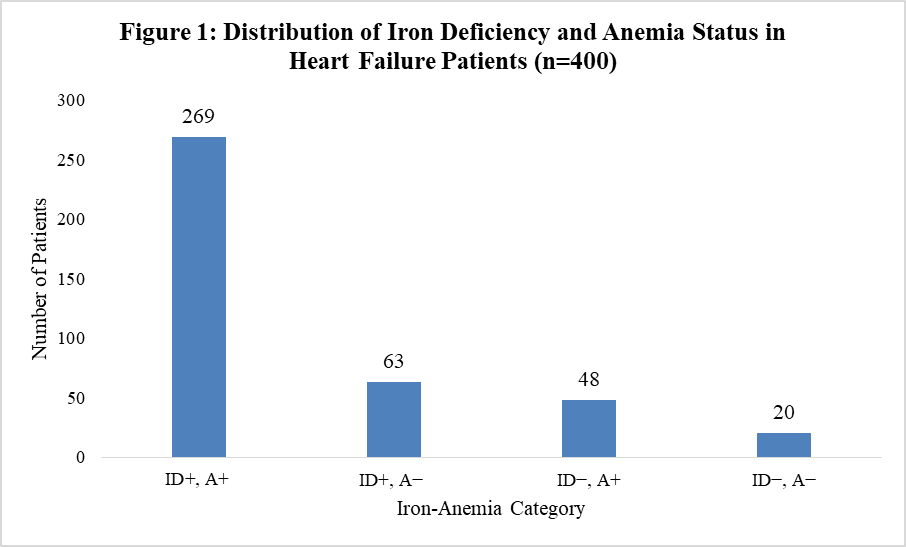
Figure 1 Legend: The figure shows the combined distribution of iron deficiency and anemia in the study population. Iron deficiency with anemia (ID+, A+) was the most common category, followed by iron deficiency without anemia (ID+, A−), anemia without iron deficiency (ID−, A+), and patients with neither iron deficiency nor anemia (ID−, A−).
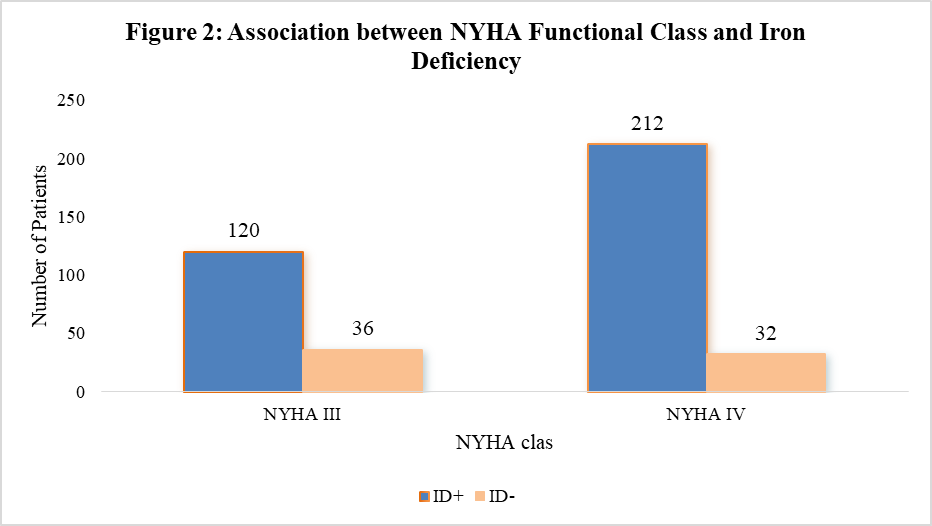
Figure 2: The figure illustrates the distribution of iron deficiency across New York Heart Association (NYHA) functional classes III and IV. Iron deficiency was more frequently observed among patients with NYHA class IV compared with NYHA class III, indicating a higher prevalence of iron deficiency with increasing heart failure severity.
DISCUSSION:
This study evaluated the prevalence and clinical implications of iron deficiency among hospitalized patients with heart failure. Three key findings emerged: iron deficiency was highly prevalent (83%), frequently occurred in the absence of anemia, and was associated with greater functional limitation and longer hospital stay.
The demographic profile of the study population was comparable to previous Indian heart failure cohorts, with a median age of 60 years, slight male predominance, and a high proportion of patients presenting with advanced heart failure.10,11 Similar observations from other Indian studies likely reflect delayed presentation and referral patterns in tertiary care settings.11,12
The prevalence of iron deficiency observed in the present study is among the highest reported and is consistent with findings from other Indian cohorts, while remaining higher than rates reported in Western populations.11,12,13 Anemia was also highly prevalent, affecting more than three-fourths of patients.13,14,15 Importantly, iron deficiency frequently occurred in patients without anemia, supporting previous evidence that iron deficiency represents a distinct metabolic abnormality and highlighting the limitations of relying solely on hemoglobin levels for screening.11,13
Iron deficiency was significantly associated with advanced heart failure severity, with a higher prevalence among patients with NYHA class IV symptoms. Similar associations with worsening functional status and reduced exercise capacity have been reported previously.16,17 Iron-deficient patients also had longer hospital stays, consistent with earlier studies linking iron deficiency to increased healthcare utilization and delayed recovery.18,19 In addition, iron deficiency was associated with hypertension, hyperlipidemia, and chronic obstructive pulmonary disease, suggesting that it commonly coexists with other chronic conditions in heart failure populations.16,18
Although more deaths occurred among iron-deficient patients, no significant association was observed with in-hospital mortality. Similar findings have been reported for short-term outcomes, whereas studies with longer follow-up have demonstrated associations with adverse cardiovascular events and mortality.15,18,20
Overall, the finding reinforce current evidence that iron deficiency is highly prevalent in heart failure and is associated with greater disease severity and increased healthcare utilization. These observations support guideline recommendations for routine assessment of iron status in patients with heart failure irrespective of hemoglobin levels.2
The strengths of this study include the relatively large cohort and the use of guideline-recommended definitions of iron deficiency based on serum ferritin and transferrin saturation. However, the single-center design, inclusion of only hospitalized patients, and absence of long-term follow-up may limit the generalizability of the findings.
CONCLUSION:
Iron deficiency was highly prevalent among hospitalized patients with heart failure and was associated with greater disease severity and longer hospital stay. Its frequent occurrence in the absence of anemia highlights the need for routine assessment of iron status in heart failure patients. Further studies are needed to determine the long-term impact of correcting iron deficiency on clinical outcomes.
REFERENCES:
1. Golla MSG, Hajouli S, Ludhwani D. Heart Failure and Ejection Fraction. In: StatPearls. StatPearls Publishing; 2025.
2. Chen QF, Chen L, Katsouras CS, Liu C, Shi J, Liang D, et al. Global burden of heart failure and its underlying causes in 204 countries and territories, 1990-2021. Eur Heart J Qual Care Clin Outcomes. 2025;11(4):493-509.
3. Sawicki KT, De Jesus A, Ardehali H. Iron metabolism in cardiovascular disease: physiology, mechanisms, and therapeutic targets. Circ Res. 2023;132(3):379-396.
4. Zhang J, Song Y, Li Y, Lin HB, Fang X. Iron homeostasis in the heart: molecular mechanisms and pharmacological implications. J Mol Cell Cardiol. 2023;174:15-24.
5. Zhang H, Zhabyeyev P, Wang S, Oudit GY. Role of iron metabolism in heart failure: from iron deficiency to iron overload. BiochimBiophys Acta Mol Basis Dis. 2019;1865(7):1925-1937.
6. Alnuwaysir RI, Hoes MF, van Veldhuisen DJ, van der Meer P, Beverborg NG. Iron deficiency in heart failure: mechanisms and pathophysiology. J Clin Med. 2021;11(1):125.
7. Cleland JGF, Zhang J, Pellicori P, et al. Prevalence and outcomes of anemia and hematinic deficiencies in patients with chronic heart failure. JAMA Cardiol. 2016;1(5):539-547.
8. Anand IS, Gupta P. Anemia and iron deficiency in heart failure: current concepts and emerging therapies. Circulation. 2018;138(1):80-98.
9. Beverborg NG, van Veldhuisen DJ, van der Meer P. Anemia in heart failure: still relevant? J Card Fail. 2017;23(9):722-730.
10. Harikrishnan S, Koshy L, Ganapathi S, Jeemon P, Kumar RK, Roy A, et al. Charting a roadmap for heart failure research in India: insights from a qualitative survey. Indian J Med Res. 2023;158(2):182-189.
11. Das PP, Kapoor M, Mishra A, Malviya A, Buragohain D, Shashank, et al. Anemia profile and iron deficiency in patients with heart failure: a hospital-based study in Northeast India. Heart Fail J India. 2023;1(3):189-194.
12. Panda TK, Sahoo PK, Dash A, Sahoo N, Dalai SP, Kabi S, et al. Prevalence of iron deficiency in chronic heart failure patients in a tertiary care hospital: an observational study. Indian J Public Health Res Dev. 2023;14(4):341-345.
13. Cohen-Solal A, Damy T, Terbah M, Kerebel S, Baguet JP, Hanon O, et al. High prevalence of iron deficiency in patients with acute decompensated heart failure. Eur J Heart Fail. 2014;16(9):984-991.
14. Beale A, Carballo D, Stirnemann J, Garin N, Agoritsas T, et al. Iron deficiency in acute decompensated heart failure. J Clin Med. 2019;8(10):1569.
15. Qureshi N, Kumar A, Muneer K. Prevalence and prognostic significance of iron deficiency anemia among heart failure patients: a prospective observational study. Heart India. 2024;12(1):40-46.
16. Negi PC, Dev M, Paul P, Pal Singh D, Rathoure S, Kumar R, et al. Prevalence, risk factors, and significance of iron deficiency and anemia in nonischemic heart failure patients with reduced ejection fraction from a Himachal Pradesh heart failure registry. Indian Heart J. 2018;70(Suppl 3).
17. Bhutia A, Singh SK, Reema N, Hijam D, Belinda N, Sora T. Iron profile in heart failure patients: a hospital-based cross-sectional study in north-eastern India. Int J Acad Med Pharm. 2024;6(1):200-205.
18. Beattie JM, Khatib R, Phillips CJ, Williams SG. Iron deficiency in 78,805 people admitted with heart failure across England: a retrospective cohort study. Open Heart. 2020;7(1).
19. Anker SD, Comin Colet J, Filippatos G, Willenheimer R, Dickstein K, Drexler H, et al; FAIR-HF Trial Investigators. Ferric carboxymaltose in patients with heart failure and iron deficiency. N Engl J Med. 2009;361(25):2436-2448.
20. Sarate N, Sonawane R, Pai V, Karatela S, Mulkalwar A. Iron deficiency: a silent threat in patients with heart failure with reduced ejection fraction. Cureus. 2024;16(2).
21. McDonagh TA, Metra M, Adamo M, Gardner RS, Baumbach A, Böhm M, et al. 2021 ESC Guidelines for the diagnosis and treatment of acute and chronic heart failure. Eur J Heart Fail. 2022;24(1):4-131.