Pedestrian Movement and Accident Causation as Determinants of Injury Severity in Road Traffic Accidents.
- Mohd Ajaz , Department of Community Medicine, Government Medical College, Budaun, Uttar Pradesh, India.
- Syed Shafi Ahmed , Department of Community Medicine, Government Medical College, Budaun, Uttar Pradesh, India.
- Kuldeep Verma , Department of Community Medicine, Government Medical College, Budaun, Uttar Pradesh, India.
- Arshiya Masood Siddiqui , Department of Community Medicine, Government Medical College, Budaun, Uttar Pradesh, India.
- Rituj Agarwal , Department of Orthopaedics, Government Medical College, Budaun, Uttar Pradesh, India.
- Shivam Kamthan , Department of Community Medicine, Government Medical College, Budaun, Uttar Pradesh, India.
Article Information:
Abstract:
Background: Road traffic accidents (RTAs) remain a major public health concern worldwide, contributing substantially to mortality, disability, and economic burden. Understanding the factors associated with accident severity and collision patterns is essential for developing effective prevention strategies. Methods: A cross-sectional study was conducted using the road traffic accident data collected from patients. Driver characteristics, environmental conditions, vehicle factors, temporal variables, pedestrian movements, and accident causes were analysed in relation to accident severity, collision type, and casualty class. Chi-square tests were used to assess associations between categorical variables, while ordinal logistic regression was employed to evaluate determinants of casualty severity. Results: Driver-related characteristics including age, sex, educational level, and driving experience were not significantly associated with accident severity (p > 0.05). Environmental factors such as lighting conditions, weather conditions, road surface type, and road surface condition showed no significant association with collision type. Vehicle service years were not significant predictors of casualty severity in ordinal logistic regression analysis. Temporal analysis demonstrated no significant variation in casualty class across days of the week. However, pedestrian movement patterns were significantly associated with accident severity (p < 0.001), indicating that pedestrian-related factors play an important role in determining injury outcomes. Most accident causes did not show significant associations with severity, although failure to give priority to pedestrians approached statistical significance. Conclusion: The findings suggest that pedestrian-related factors have a greater influence on accident severity than driver demographics, vehicle age, or environmental conditions. Strengthening pedestrian safety infrastructure, enforcing traffic regulations, and improving road-user behaviour may substantially reduce the burden of severe road traffic injuries and fatalities. These results provide valuable evidence for developing targeted road safety interventions and public health policies.
Keywords:
Article :
INTRODUCTION:
Road traffic accident (RTA) is an accident occurring on a road or road open to public transport, resulting in the death or injury of one or more individuals and the presence of at least one moving vehicle (Asefa et al. 2014). RTAs are a major public health problem worldwide and are among the leading causes of death, injury, and disability. According to the World Health Organization (WHO, 2023), road traffic injuries account for a substantial proportion of premature mortality globally, with low- and middle-income countries bearing the greatest burden despite having fewer vehicles than high-income countries.
Beyond mortality, RTAs result in long-term physical disabilities, psychological trauma, reduced productivity, and considerable healthcare expenditures. The societal and economic consequences of road crashes extend beyond affected individuals and families, placing a significant burden on healthcare systems and national economies (Blincoe et al., 2010; WHO, 2023). Earlier studies described road traffic injuries as a neglected epidemic because of their widespread impact and insufficient prioritization within public health agendas, particularly in developing countries (Nantulya & Reich, 2002; Odero et al., 2003).
India contributes substantially to the global burden of road traffic injuries due to rapid urbanization, increasing motorization, mixed traffic conditions, and varying levels of road safety compliance. Road traffic injuries not only affect the health and wellbeing of individuals but also have profound social and economic implications through loss of productivity, increased healthcare costs, and long-term rehabilitation requirements (Blincoe et al., 2010). Consequently, identifying the factors associated with accident severity and collision patterns is essential for designing targeted prevention strategies and strengthening trauma care systems. The severity of road traffic accidents is influenced by a complex interaction of human, vehicle, roadway, and environmental factors. Driver-related characteristics such as age, sex, education, and driving experience can influence risk-taking behaviour, hazard perception, and adherence to traffic regulations. Previous studies have suggested that demographic and behavioural characteristics may affect accident occurrence and injury outcomes, although findings vary across settings (Adefabi et al., 2023; Sufian et al., 2024). Understanding the role of these factors is important because driver behaviour remains one of the most frequently cited contributors to road traffic crashes. However, the extent to which these characteristics influence the severity of injuries sustained in accidents remains an area requiring further investigation.
Environmental and roadway conditions also play an important role in shaping collision patterns and injury outcomes. Factors such as lighting conditions, weather, road surface characteristics, and intersection design can influence visibility, vehicle control, and driver decision-making. Research has demonstrated that reduced visibility during darkness or adverse weather conditions may increase crash risk, particularly among vulnerable road users such as pedestrians (Harris et al., 2023). Similarly, roadway infrastructure and junction characteristics can affect the likelihood and nature of collisions (Retting et al., 2003; Turner et al., 2006). Studies evaluating pedestrian safety interventions have shown that engineering measures such as marked crosswalks, improved intersection design, and traffic-calming strategies can reduce crash occurrence and improve safety outcomes (Sarwar et al., 2017). These findings highlight the importance of considering environmental and infrastructural factors when examining accident characteristics.
Vehicle related factors are another important component of road safety research. Vehicle age, ownership status, maintenance condition, and the availability of safety features may influence both crash occurrence and injury severity. Older vehicles may lack advanced safety technologies and may be more susceptible to mechanical failures, potentially increasing the risk of severe outcomes. Recent studies utilizing machine learning and advanced analytical techniques have explored the relationship between vehicle characteristics and accident severity, emphasizing the need to identify determinants that contribute to serious and fatal injuries (Tong, 2025). However, findings remain inconsistent, and the role of vehicle age and ownership in determining casualty severity warrants further exploration.
Pedestrians represent one of the most vulnerable groups in road traffic environments because they lack the physical protection available to vehicle occupants. Several studies have reported that pedestrian movement patterns, crossing behaviour, and exposure to traffic are important determinants of injury severity (Aziz et al., 2013). Recent investigations have further demonstrated that factors such as visibility, pedestrian location, and road environment significantly influence the severity of pedestrian crashes (Kopsacheilis & Politis, 2024). Exposure-based analyses have also shown that pedestrian risk varies according to movement patterns and traffic interactions, emphasizing the need for targeted pedestrian safety measures (Li et al., 2020). Consequently, understanding how pedestrian behaviour contributes to accident severity is essential for developing interventions aimed at reducing fatalities and serious injuries among vulnerable road users.
The present study was undertaken to assess the relationship between driver-related characteristics and accident severity, evaluate the influence of road and environmental conditions on collision type, determine the association between vehicle factors and casualty severity, analyse temporal patterns of accidents, and explore the role of pedestrian movement and accident causes in influencing accident severity. Findings from this study may contribute to the development of targeted road safety interventions and evidence-based public health strategies aimed at reducing the burden of road traffic injuries (Adefabi et al., 2023). Based on the considerations, the present study was undertaken.
The objectives for the present study are as follows:
1. To assess the relationship between driver-related characteristics (age, sex, educational level, and driving experience) and accident severity among reported road traffic accidents.
2. To evaluate the effect of road and environmental conditions (light, weather, road surface, alignment, and junction type) on the type of collision.
3. To determine the association between vehicle factors (ownership status and service years of the vehicle) and the severity of casualties sustained in road traffic accidents.
4. To analyse temporal patterns of road traffic accidents by examining the day of the week and time of accident in relation to accident type and casualty class.
5. To explore the role of pedestrian movement and cause of accident in influencing accident severity.
METHODOLOGY :
This cross-sectional study was conducted using the data collected from the road traffic patients. The sample size of the study was 423 RTA patients. The dataset contains detailed information on accident circumstances, vehicle and road characteristics and casualty outcomes. For the present analysis, variables specifically related to pedestrian movement, cause of accident and accident severity were extracted, as they directly addressed the study objectives. Accident severity was categorized into three levels like slight, serious and fatal injury.
Descriptive statistics were generated to summarize the distribution of accident severity across the selected predictor variables. To examine the interaction between pedestrian movement, cause of accident, and accident severity, a multinomial logistic regression model was employed, as this technique is appropriate for categorical outcomes with more than two unordered categories. The analysis emphasized comparisons between slight versus fatal injuries and serious versus fatal injuries, with results interpreted based on statistical significance at the p < 0.05 level.
RESULTS:
The distribution of driver-related characteristics according to accident severity (slight injury, serious injury, and fatal injury). Most accidents across all categories resulted in slight injuries. Drivers aged 31-50 years accounted for the highest proportion of accidents, followed by those aged 18-30 years.
However, the association between age group and accident severity was not statistically significant (p = 0.899) This indicates that although accident frequencies differed across age groups, the severity of injuries sustained in accidents was not significantly influenced by the driver's age. In simple terms, drivers from different age groups experienced similar patterns of slight, serious, and fatal injuries (Table 1).
Table 1: Distribution of Driver related factors and Accident severity
|
|
|
Accident severity |
|
||
|
|
|
slight injury |
serious injury |
fatal injury |
Chi-Square (p-val) |
|
Age Band of Driver |
Under 18 |
23 |
6 |
0 |
<0.061 |
|
(%) |
5 |
1 |
0 |
||
|
18-30 |
128 |
21 |
2 |
||
|
(%) |
30 |
5 |
1 |
||
|
31-50 |
172 |
25 |
2 |
||
|
(%) |
41 |
6 |
1 |
||
|
Over 51 |
46 |
9 |
1 |
||
|
(%) |
11 |
2 |
0 |
||
|
Gender of Driver |
Female |
21 |
4 |
0 |
0.232 |
|
(%) |
5 |
1 |
0 |
||
|
Male |
342 |
57 |
5 |
||
|
(%) |
81 |
14 |
1 |
||
|
Education Level |
Primary |
65 |
11 |
1 |
0.987 |
|
(%) |
15 |
3 |
0 |
||
|
High School |
228 |
38 |
3 |
||
|
(%) |
54 |
9 |
1 |
||
|
Above High School |
47 |
8 |
1 |
||
|
(%) |
11 |
2 |
0 |
||
|
Writing & Reading |
5 |
1 |
0 |
||
|
(%) |
1 |
0 |
0 |
||
|
Driving Experience |
Below 1 Year |
40 |
7 |
0 |
0.059 |
|
(%) |
9 |
2 |
0 |
||
|
1-2 Years |
53 |
8 |
1 |
||
|
(%) |
13 |
2 |
0 |
||
|
2-5 Years |
77 |
13 |
2 |
||
|
(%) |
18 |
3 |
0 |
||
|
5-10 Years |
102 |
17 |
1 |
||
|
(%) |
24 |
4 |
0 |
||
|
Above 10 Years |
68 |
11 |
1 |
||
|
(%) |
16 |
3 |
0 |
||
With respect to gender, male drivers constituted the majority of accident cases, while female drivers represented only a small proportion. Nevertheless, no significant association was observed between driver gender and accident severity (p = 0.831). This suggests that being male or female did not significantly affect whether an accident resulted in a slight injury, serious injury, or fatal injury (Table 1). Regarding educational status, drivers with a high school education accounted for the largest proportion of accidents, followed by those with elementary education. However, education level was not significantly associated with accident severity (p = 0.999) Thus, the severity outcome of road traffic accidents appeared to be independent of the driver's educational attainment. In other words, higher or lower levels of education did not significantly alter the likelihood of sustaining more severe injuries during an accident (Table 1).
Similarly, no statistically significant association was found between driving experience and accident severity (x² = 1.556, p = 0.992). Drivers with varying levels of experience, ranging from less than one year to more than ten years, showed comparable distributions of slight, serious, and fatal injuries. This finding suggests that the severity of an accident was not substantially influenced by the number of years of driving experience (Table 1). The results indicate that age, gender, educational level, and driving experience were not significantly associated with accident severity in the study population. The distribution of slight, serious, and fatal injuries remained relatively similar across different driver-related characteristics (Table 1). These findings suggest that demographic and personal characteristics of drivers alone may not be the primary determinants of accident severity. Since age, gender, education, and driving experience did not significantly influence injury severity, other factors such as vehicle speed, use of safety devices (seat belts and helmets), alcohol consumption, road conditions, weather, vehicle type, and emergency medical response may play a more important role in determining the outcome of road traffic accidents.
These findings implies that severe injuries can occur across all driver groups, and prevention strategies should target the entire driving population rather than focusing exclusively on specific demographic categories. Public health interventions should therefore emphasize road safety regulations, enforcement of speed limits, use of protective equipment, reduction of impaired driving, and timely access to emergency medical services to reduce morbidity and mortality from road traffic injuries.
Table 2: Distribution of Collision type and Environmental, Roadway and Traffic Conditions
|
Type Of Collision |
|||||||
|
Vehicle with Vehicle Collision |
Collision with Roadside Objects |
Collision with Animals |
Collision with Pedestrians |
Chi-Square (p-Val) |
|||
|
Light Conditions |
Daylight |
223 |
45 |
4 |
22 |
0.121 |
|
|
(%) |
53 |
11 |
1 |
5 |
|||
|
Darkness-Lights Lit |
82 |
18 |
2 |
9 |
|||
|
(%) |
19 |
4 |
0 |
2 |
|||
|
Weather Conditions |
Normal |
254 |
52 |
5 |
26 |
0.315 |
|
|
(%) |
60 |
12 |
1 |
6 |
|||
|
Raining |
42 |
9 |
1 |
4 |
|||
|
(%) |
10 |
2 |
0 |
1 |
|||
|
Raining And Windy |
8 |
2 |
0 |
1 |
|||
|
(%) |
2 |
0 |
0 |
0 |
|||
|
Types of Junction |
No Junction |
19 |
2 |
10 |
0.42 |
||
|
(%) |
23 |
5 |
0 |
2 |
|||
|
Y-Shape |
115 |
23 |
2 |
12 |
|||
|
(%) |
27 |
5 |
1 |
3 |
|||
|
Crossing |
59 |
13 |
1 |
7 |
|||
|
(%) |
14 |
3 |
0 |
2 |
|||
|
Road Surface Type |
Asphalt Road |
286 |
58 |
5 |
29 |
0.094 |
|
|
(%) |
68 |
14 |
1 |
7 |
|||
|
Earth Roads |
16 |
3 |
0 |
1 |
|||
|
(%) |
4 |
1 |
0 |
2 |
|||
|
Road Surface Conditions |
Dry |
236 |
48 |
5 |
24 |
0.296 |
|
|
(%) |
56 |
11 |
1 |
6 |
|||
|
Wet Or Damp |
73 |
15 |
1 |
8 |
|||
|
(%) |
17 |
4 |
0 |
2 |
|||
The distribution of different types of road traffic collisions according to environmental, roadway, and traffic-related conditions. Vehicle-to-vehicle collisions were the most common type of collision across all categories, followed by collisions with roadside objects, pedestrians, and animals. With regard to lighting conditions, most collisions occurred during daylight hours. Vehicle-to-vehicle collisions accounted for the majority of accidents in both daylight and darkness with street lighting. However, the association between light conditions and collision type was not statistically significant (p = 0.121). This suggests that the pattern of collision types remained relatively similar regardless of whether accidents occurred during daylight or in lit darkness conditions (Table 2). Similarly, weather conditions did not show a significant association with collision type (p = 0.315). Most accidents occurred under normal weather conditions, likely reflecting greater traffic exposure during such conditions. Although fewer accidents were reported during rainy and rainy-windy weather, the relative distribution of collision types remained largely unchanged. Therefore, weather conditions did not appear to substantially influence the type of collision occurring in this study (Table 2). The type of junction was also not significantly associated with collision type (p = 0.420). Vehicle-to-vehicle collisions predominated across different junction categories, including Y-shaped intersections and crossings. This finding suggests that the nature of collisions was relatively consistent across various road junction configurations (Table 2).
Regarding road surface type, asphalt roads accounted for the majority of collisions. However, no statistically significant relationship was observed between road surface type and collision type (p=0.094). Although most accidents occurred on asphalt roads, this is likely because such roads constitute the primary transportation network and carry higher traffic volumes rather than indicating an increased risk of a particular collision type. Likewise, road surface condition was not significantly associated with collision type (p = 0.296). Both dry and wet road surfaces showed a similar pattern of collision distribution, with vehicle-to-vehicle collisions remaining the most common. Thus, the condition of the road surface did not appear to influence the type of collision experienced by road users (Table 2). These findings suggest that environmental and roadway conditions alone may not determine the type of road traffic collision. Since collision patterns remained similar across different lighting, weather, road surface, and junction conditions, other factors such as driver behavior, speeding, distracted driving, alcohol consumption, traffic density, vehicle condition, and compliance with traffic regulations may have a greater influence on collision occurrence.
The results indicate that trauma and emergency services should remain prepared for a wide range of collision mechanisms regardless of prevailing environmental conditions. Preventive strategies should focus not only on improving road infrastructure but also on strengthening driver education, traffic law enforcement, speed control measures, and public awareness campaigns. Further, because vehicle-to-vehicle collisions constituted the majority of accidents under nearly all conditions, interventions aimed at safer driving practices, improved vehicle safety features, and stricter adherence to traffic regulations may have the greatest impact on reducing injury burden, hospital admissions, disability, and mortality resulting from road traffic accidents.
Table 3: Ordinal logistic regression analysis of Casualty severity and Vehicle age
|
Estimate |
Std. Error |
Sig. (p-val) |
|
|
[Casualty severity = Sligh injury] |
-0.441 |
0.117 |
<0.001 |
|
[Casualty severity = serious injury] |
-0.182 |
0.117 |
0.119 |
|
[Casualty severity = fatal injury] |
-0.195 |
0.217 |
0.061 |
|
[Service year of vehicle=1-2 yrs] |
0.085 |
0.136 |
0.529 |
|
[Service year of vehicle=above 10 yrs] |
0.155 |
0.129 |
0.231 |
|
[Service year of vehicle=5-10yrs] |
0.106 |
0.121 |
0.383 |
|
[Service year of vehicle=2-5 yrs] |
0.154 |
0.126 |
0.223 |
The results of ordinal logistic regression analysis examining the association between vehicle age (service years) and casualty severity. The analysis assessed whether the age of the vehicle significantly influenced the likelihood of sustaining different levels of injury severity during road traffic accidents (Table 3). The regression coefficients for vehicles with service durations of 1-2 years, 2-5 years, 5-10 years, and more than 10 years were all positive; however, none of these associations reached statistical significance (p > 0.05) Vehicles aged 1-2 years (p = 0.52), 2-5 years (p = 0.223), 5-10 years (p = 0.383) and above 10 years (p = 0.231). These findings suggest that the service life of a vehicle was not a significant predictor of casualty severity in the present study. Although older vehicles showed slightly higher coefficient estimates, the differences were small and could have occurred by chance. Therefore, vehicle age alone did not appear to substantially influence whether an accident resulted in slight, serious, or fatal injuries (Table 3).
These findings indicate that vehicle age alone may not be a major determinant of injury severity following road traffic accidents. While older vehicles are often assumed to pose a greater risk because of wear and tear, the present analysis suggests that the severity of injuries may depend more on other factors such as vehicle speed, seatbelt use, helmet use, crash impact, road conditions, driver behavior, alcohol consumption, and the timeliness of emergency medical care (Table 3). These finding implies that trauma prevention efforts should not focus solely on replacing older vehicles but should also emphasize safer driving practices, regular vehicle maintenance, enforcement of traffic regulations, and improved pre-hospital and emergency trauma care services. From a road safety perspective, interventions targeting human factors and environmental risks may yield greater reductions in severe injuries and fatalities than interventions based solely on vehicle age. Consequently, public health programs should prioritize comprehensive road safety strategies involving driver education, enforcement of safety laws, and strengthening emergency response systems to reduce the burden of road traffic injuries.
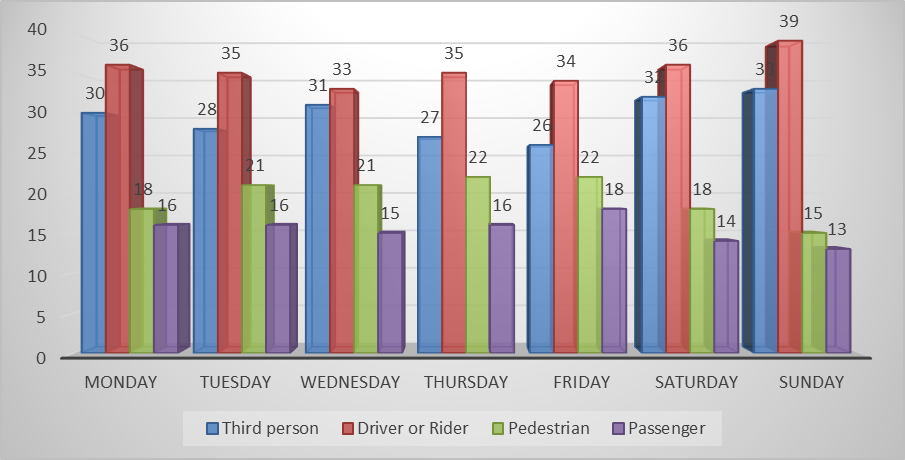
Figure 1: Distribution of Casualty class across day of the week
The distribution of casualty classes according to the day of the week. Across all days, drivers or riders constituted the largest proportion of casualties, followed by pedestrians and passengers. The overall pattern of casualty distribution remained relatively consistent throughout the week. On most days, drivers or riders accounted for approximately one-third of casualties, while pedestrians represented around one-fifth of the cases. Passenger-related casualties and cases with unavailable casualty classification (Third person) showed only minor fluctuations across different days (Figure 1).
Although slight variations were observed in the number of casualties reported on different days, particularly with a somewhat higher proportion of driver/rider casualties on Sundays and Saturdays, the association between day of the week and casualty class was not statistically significant (p = 0.51). This finding indicates that the type of casualty involved in road traffic accidents did not vary meaningfully according to the day of the week. In other words, whether an accident occurred on a weekday or weekend, the likelihood of the victim being a driver/rider, pedestrian, or passenger remained largely similar (Figure 1).
The results suggest that the distribution of casualty categories was relatively stable throughout the week, with no evidence that specific days were associated with a particular type of road traffic casualty (Figure 1). From a public health perspective, these findings indicate that road traffic injuries occur consistently throughout the week and affect similar categories of road users regardless of the day.
Since drivers/riders accounted for the majority of casualties on all days, road safety interventions should continuously target this group rather than focusing solely on weekends or specific weekdays. Further, the substantial proportion of pedestrian casualties observed across all days highlights the need for pedestrian-focused safety measures, including improved crossings, traffic calming interventions, public awareness campaigns, and stricter enforcement of road safety regulations. Since casualty patterns remain similar throughout the week, preventive strategies should be implemented as routine, year-round measures rather than being restricted to specific days.
Table 4: Determinants of Accident severity: Pedestrian and cause of accident
|
Predictor |
Category |
Slight Injury vs Fatal Injury (p-val) |
Serious Injury vs Fatal Injury (p-val) |
|
Pedestrian Movement |
Not a pedestrian |
<0.001 |
<0.001 |
|
Crossing from offside (masked) |
<0.001 |
<0.001 |
|
|
Crossing from nearside (masked) |
<0.001 |
<0.001 |
|
|
Walking along carriageway, back to traffic |
<0.001 |
<0.001 |
|
|
Cause of Accident |
Changing lane to left |
0.220 |
0.127 |
|
Changing lane to right |
0.263 |
0.150 |
|
|
No distancing |
0.150 |
0.102 |
|
|
Driving carelessly |
0.349 |
0.197 |
|
|
Driving under influence |
0.382 |
0.242 |
|
|
No priority to pedestrian |
0.083 |
0.059 |
|
|
Other causes |
Not significant (all p > 0.05) |
Not significant (all p > 0.05) |
The relationship between pedestrian movement patterns, causes of accidents, and accident severity by comparing slight injuries and serious injuries with fatal injuries as the reference category. The findings indicate that pedestrian-related factors were significantly associated with accident severity. Specifically, accidents involving pedestrians crossing from the offside, crossing from the nearside, walking along the carriageway with their back to traffic, and even cases classified as non-pedestrian incidents showed highly significant associations with both slight and serious injuries compared with fatal injuries (all p < 0.001). This suggests that pedestrian movement patterns play an important role in determining the severity of injuries sustained in road traffic accidents (Table 4).
In contrast, most accident causes did not demonstrate a statistically significant relationship with injury severity. Factors such as changing lanes to the left, changing lanes to the right, inadequate distancing between vehicles, careless driving, and driving under the influence of alcohol or other substances showed p-values greater than 0.05 for both slight injury versus fatal injury and serious injury versus fatal injury comparisons. These findings indicate that, within the present analysis, these factors did not significantly differentiate between less severe and fatal outcomes (Table 4).
However, failure to give priority to pedestrians showed p-values approaching statistical significance (p = 0.083 for slight injury versus fatal injury and p = 0.059 for serious injury versus fatal injury). Although these values did not reach the conventional level of significance (p<0.05), they suggest a possible trend indicating that pedestrian right-of-way violations may contribute to more severe injury outcomes. Further investigation with a larger sample size may be warranted to clarify this relationship (Table 4). The strong association between pedestrian movement and accident severity highlights pedestrians as one of the most vulnerable groups on the road.
Unsafe pedestrian behaviors such as crossing from inappropriate locations or walking along traffic lanes substantially increase the risk of severe and fatal injuries. These findings emphasize the need for pedestrian-focused road safety interventions, including construction of safe pedestrian crossings, footpaths, pedestrian bridges, improved street lighting, and public education regarding safe road-crossing practices (Table 4).
The results highlight pedestrian movement characteristics as important determinants of accident severity, whereas most driver-related causes of accidents were not independently associated with the severity of injury outcomes in this analysis. The pedestrian accidents often involve direct impact between the human body and a moving vehicle, resulting in severe injuries such as traumatic brain injury, spinal trauma, fractures, internal organ damage, and polytrauma. Since pedestrian-related factors were strongly associated with injury severity, emergency medical services and trauma centers should prioritize rapid identification and management of high-risk pedestrian injuries.
The finding that most driver-related accident causes were not significantly associated with severity suggests that while these factors may contribute to accident occurrence, the vulnerability of the pedestrian at the moment of impact may be a more critical determinant of injury outcome. Therefore, public health policies should focus on creating safer pedestrian environments and enforcing pedestrian protection measures to reduce mortality and disability resulting from road traffic accidents.
DISCUSSION:
Road traffic accidents continue to be a major public health concern worldwide, particularly in low- and middle-income countries where rapid urbanization, increasing vehicle numbers, and inadequate road safety measures contribute to a high burden of injuries and deaths. The findings of the present study provide important insights into the factors associated with accident severity, collision type, and casualty characteristics. By examining driver-related factors, environmental conditions, vehicle characteristics, temporal patterns, and pedestrian-related variables simultaneously, the study offers a comprehensive understanding of road traffic accident outcomes and highlights areas that require public health attention. The analysis of driver-related characteristics revealed that age, sex, educational level, and driving experience were not significantly associated with accident severity.
Although drivers aged 31-50 years accounted for the largest proportion of accidents, the severity of injuries did not differ significantly across age groups. Similarly, male drivers represented the majority of accident cases, but gender was not found to influence whether an accident resulted in a slight, serious, or fatal injury. Educational status and driving experience also showed no significant relationship with accident severity. These findings suggest that demographic characteristics alone may not be sufficient predictors of injury severity. Similar observations have been reported in studies emphasizing that crash outcomes are often influenced by a combination of factors, including speed, vehicle type, impact force, and use of safety measures, rather than individual demographic characteristics alone (Adefabi et al., 2023).
Environmental and roadway factors were also examined to determine their influence on collision type. The present study found no significant association between lighting conditions, weather conditions, road surface type, road surface condition, and collision type. Most collisions occurred during daylight and under normal weather conditions; however, these conditions did not significantly affect the pattern of collisions observed. Previous research has shown that poor visibility and adverse weather can increase crash risk, particularly for vulnerable road users such as pedestrians (Harris et al., 2023).
Nevertheless, the lack of significant findings in the present study suggests that environmental conditions alone may not be sufficient to explain differences in collision types. It is possible that driver behaviour, traffic density, road-user exposure, and local traffic conditions play a greater role in determining the nature of collisions. These findings emphasize the need for multifaceted road safety approaches that address behavioural and infrastructural factors simultaneously rather than relying solely on environmental improvements.
The study also explored the relationship between vehicle-related factors and casualty severity. Vehicle service years were not found to be significantly associated with the severity of injuries sustained in accidents. Although older vehicles are often perceived as less safe because of mechanical wear and the absence of modern safety technologies, the present findings indicate that vehicle age alone does not necessarily determine injury outcomes.
Similar conclusions have been reported in studies suggesting that factors such as crash speed, seatbelt use, vehicle maintenance, and crashworthiness may be more important determinants of injury severity than vehicle age itself (Adefabi et al., 2023; Rafe & Singleton, 2023). This finding highlights the importance of promoting regular vehicle maintenance and adherence to safety standards rather than focusing exclusively on the age of vehicles. For policymakers, these results suggest that improving compliance with vehicle safety regulations may be more beneficial than implementing measures based solely on vehicle age.
Temporal analysis demonstrated that casualty class did not vary significantly according to the day of the week. Drivers and riders consistently constituted the largest category of casualties throughout the week, followed by pedestrians and passengers. Although slight fluctuations in frequencies were observed, these differences were not statistically significant. This finding indicates that road traffic injuries occur relatively consistently throughout the week and are not confined to particular days. Similar observations have been noted in road safety literature, where the distribution of accidents often reflects overall traffic exposure rather than specific temporal patterns (Sufian et al., 2024).
From a healthcare planning perspective, this suggests that emergency departments, trauma centres, and ambulance services must maintain adequate preparedness every day of the week rather than allocating resources disproportionately to certain days. One of the most important findings of the study was the strong association between pedestrian movement and accident severity. Pedestrian behaviours such as crossing from the nearside or offside and walking along the carriageway were significantly associated with injury outcomes. This finding is consistent with previous studies that have identified pedestrians as one of the most vulnerable groups in road traffic environments (Kim et al., 2008; Aziz et al., 2013).
Recent research has also shown that pedestrian exposure, visibility, and movement patterns significantly influence crash severity (Kopsacheilis & Politis, 2024; Harris et al., 2023). The results suggest that pedestrian behaviour plays a crucial role in determining whether an accident results in slight, serious, or fatal injuries. Consequently, pedestrian safety should be a central component of road safety policies. Infrastructure improvements such as dedicated footpaths, pedestrian crossings, pedestrian signals, traffic calming measures, and improved street lighting have been shown to reduce pedestrian injuries and fatalities (Sarwar et al., 2017).
The analysis of accident causes indicated that most recorded causes, including lane changing, inadequate distancing, careless driving, and driving under the influence, were not significantly associated with injury severity. However, failure to give priority to pedestrians showed a near-significant relationship with severe injury outcomes. Although this association did not reach the conventional level of statistical significance, it suggests that pedestrian right-of-way violations may contribute to more severe injuries and deserve further investigation. This observation is supported by studies demonstrating that driver yielding behaviour is an important determinant of pedestrian safety (Turner et al., 2006).
The findings of the present study highlight the multifactorial nature of road traffic accidents and emphasize the importance of pedestrian-related factors in determining injury severity. While driver demographics, environmental conditions, vehicle age, and temporal patterns showed limited influence on accident outcomes, pedestrian movement emerged as a significant determinant of severity. These results support the implementation of comprehensive road safety strategies that combine behavioural interventions, infrastructure improvements, enforcement of traffic regulations, and strengthened trauma care systems. Such measures are essential for reducing the burden of road traffic injuries and achieving sustainable improvements in public health and road safety.
CONCLUSION:
Road traffic accidents remain a significant public health concern due to their contribution to injury, disability, mortality, and economic burden. The present study examined the influence of driver-related characteristics, environmental and roadway conditions, vehicle factors, temporal patterns, and pedestrian-related variables on accident severity and collision characteristics. The findings revealed that driver-related factors such as age, sex, educational level, and driving experience were not significantly associated with accident severity.
Similarly, environmental factors including lighting conditions, weather conditions, road surface type, road surface condition, and junction characteristics did not show a significant influence on the type of collision. Vehicle service years also failed to demonstrate a significant relationship with casualty severity. Furthermore, temporal analysis indicated that casualty patterns remained relatively stable across different days of the week, suggesting that road traffic injuries occur consistently rather than being concentrated on specific days. These findings imply that demographic, environmental, and vehicle-age factors alone may not adequately explain variations in accident outcomes within the study population.
The study underscores the need for comprehensive and evidence-based road safety interventions. Since pedestrian movement emerged as a significant determinant of accident severity, greater emphasis should be placed on improving pedestrian infrastructure through the provision of safe crossings, footpaths, pedestrian signals, traffic calming measures, and adequate street lighting. Continuous public awareness campaigns aimed at promoting safe road-use practices among both drivers and pedestrians are equally important. In addition, strengthening enforcement of traffic regulations, improving emergency medical response systems, and ensuring timely trauma care can further reduce the burden of road traffic injuries.
While the present study did not identify significant associations between several demographic, environmental, and vehicle-related factors and accident severity, it highlights the complex and multifactorial nature of road traffic accidents. Future research incorporating behavioural, vehicular, and healthcare-related variables may provide a more comprehensive understanding of injury outcomes and support the development of targeted policies for improving road safety and reducing preventable deaths and disabilities.
REFERENCES:
1. Adefabi A, Olisah S, Obunadike C, Oyetubo O, Taiwo E, Tella E. Predicting accident severity: an analysis of factors affecting accident severity using random forest model. arXiv preprint arXiv:2310.05840. 2023 Oct 9.
2. Asefa F, Assefa D, Tesfaye G. Magnitude of, trends in, and associated factors of road traffic collision in central Ethiopia. BMC public health. 2014 Oct 15;14(1):1072.
3. Aziz, H. A., S. V. Ukkusuri, and S. Hasan. Exploring the Determinants of Pedestrian–Vehicle Crash Severity in New York City. Accident Analysis & Prevention, Vol. 50, 2013, pp. 1298–1309.
4. Blincoe LJ, Miller TR, Zaloshnja E, Lawrence B. The economic and societal impact of motor vehicle crashes, 2010 (Revised).
5. Gitelman, V., D. Balasha, R. Carmel, L. Hendel, and F. Pesahov. Characterization of Pedestrian Accidents and An Examination of Infrastructure Measures to Improve Pedestrian Safety in Israel. Accident Analysis & Prevention, Vol. 44, No. 1, 2012, pp. 63–73.
6. Harris L, Ahmad N, Khattak A, Chakraborty S. Exploring the effect of visibility factors on vehicle-pedestrian crash injury severity. Transportation research record. 2023 Nov;2677(11):24-35.
7. Kim, J.-K., G. F. Ulfarsson, V. N. Shankar, and S. Kim. Age and Pedestrian Injury Severity in Motor-Vehicle Crashes: A Heteroskedastic Logit Analysis. Accident Analysis & Prevention, Vol. 40, No. 5, 2008, pp. 1695–1702.
8. Kopsacheilis A, Politis I. Exploring factors influencing pedestrian accident severity: a multi-source study in the city of Berlin. European Transport Research Review. 2024 Nov 12;16(1):63.
9. Li, H., D. Wu, D. J. Graham, and N. N. Sze. Comparison of Exposure in Pedestrian Crash Analyses: A Study Based on Zonal Origin-Destination Survey Data. Safety Science, Vol. 131, 2020, p. 104926.
10. Ministry of Road Transport and Highways (MORTH). (2022). Road accidents in India 2022. Government of India, New Delhi.
11. Nantulya, V. M., & Reich, M. R. (2002). The neglected epidemic: Road traffic injuries in developing countries. BMJ, 324(7346), 1139-1141. https://doi.org/10.1136/bmj.324.7346.1139
12. Odero, W., Garner, P., & Zwi, A. (2003). Road traffic injuries in developing countries: A comprehensive review of epidemiological studies. Tropical Medicine & International Health, 8(5), 445-460. https://doi.org/10.1046/j.1365-3155.2003.01029.x
13. Pulugurtha, S. S., V. Vasudevan, S. S. Nambisan, and M. R. Dangeti. Evaluating Effectiveness of InfrastructureBased Countermeasures for Pedestrian Safety. Transportation Research Record: Journal of the Transportation Research Board, 2012, 2299: 100–109.
14. Rafe A, Singleton PA. Exploring factors affecting pedestrian crash severity using TabNet: A deep learning approach. arXiv preprint arXiv:2312.00066. 2023 Nov 29.
15. Retting, R. A., Ferguson, S. A., & McCartt, A. T. (2003). A review of evidence-based traffic engineering measures designed to reduce pedestrian-motor vehicle crashes. American Journal of Public Health, 93(9). 1456-1463.
16. Sarwar, M. T., G. Fountas, C. Bentley, P. C. Anastasopoulos, A. Blatt, J. Pierowicz, K. Majka, and R. Limoges. Preliminary Investigation of the Effectiveness of High-Visibility Crosswalks on Pedestrian Safety Using Crash Surrogates. Transportation Research Record: Journal of the Transportation Research Board, 2017. 2659: 182–191.
17. Sufian MA, Varadarajan J, Niu M. RETRACTED: Enhancing prediction and analysis of UK road traffic accident severity using AI: Integration of machine learning, econometric techniques, and time series forecasting in public health research. Heliyon. 2024 Apr 15;10(7).
18. Tong Y. Non-Linear Determinants of Pedestrian Injury Severity: Evidence from Administrative Data in Great Britain. arXiv preprint arXiv:2512.04022. 2025 Dec 3.
19. Turner, S., K. Fitzpatrick, M. Brewer, and E. S. Park. Motorist Yielding to Pedestrians at Unsignalized Intersections: Findings from a National Study on Improving Pedestrian Safety. Transportation Research Record: Journal of the Transportation Research Board, 2006. 1982: 1–12
20. World Health Organization (WHO). (2023). Global status report on road safety 2023. Geneva: World Health Organization.