Evaluating the Effect of Self-Directed Learning on Knowledge Retention and Learning Patterns among First-Year MBBS Students.
- Suneetha Sandhya Sarojini Devi Kota , Professor and Head of the Department, Department of Physiology, Government Medical College, Vizianagaram, Andhra Pradesh, India.
- Aditya Dontham , Assistant Professor, Department of Physiology, Government Medical College, Vizianagaram, Andhra Pradesh, India.
- Reena Prasoona Gollapalli , Associate Professor, Department of Physiology, Government Medical College, Vizianagaram, Andhra Pradesh, India.
- Madhuri Indupalli , Associate Professor, Department of Physiology, Government Medical College, Vizianagaram, Andhra Pradesh, India.
- Lakshmi Sarapalli , Assistant Professor, Department of Physiology, Government Medical College, Vizianagaram, Andhra Pradesh, India.
Article Information:
Abstract:
Background: Self-directed learning (SDL) has become an important and integral component of Competency Based Medical Education (CBME) directed teaching learning methods (TLMs). However, the effectiveness in improving measurable academic outcomes remains uncertain. The present study adopted quasi-experimental design which evaluated the effectiveness of Jigsaw-based collaborative design with the conventional lecture-based teaching among 150 Phase I MBBS students from the Department of Physiology. We exposed all students to both methods in a crossover manner across 2 topics. The knowledge domain was assessed through MCQs based pre-test and post-test, followed by the 15-days retention assessment. The student perception regarding the new teaching learning methods (TLMs) was assessed using the 5-point Likert scale. The data was assessed using descriptive, paired t-tests, effect size estimation and exploratory subgroup analysis involving variance, score distribution and correlation patterns. There is a statistical improvement in post-test when compared to pre-test scores in both TLMs (p <0.001), indicating effective knowledge acquisition. The retention was comparable between two methods, with no statistically significant difference observed on within subject comparison (p = 0.49). The perception analysis showed variable student responses towards Jigsaw-based collaborative design, with 50% strongly favouring the approach and 37% agreeing that it was better method of TLM. The exploratory analysis demonstrated differing pattens of score variability across student sub-groups, with Jigsaw-based collaborative design showing relatively more uniform score distribution patterns among lower-performing students. Overall both teaching approaches were comparable in improving knowledge acquisition and short-term retention, while Jigsaw-based collaborative design appeared to influence patterns of learning distribution across students, suggesting its potential role as a complementary instructional strategy within the CBME frameworks.
Keywords:
Article :
INTRODUCTION:
Currently, medical education has undergone substantial transformation with the implementation of Competency Based Medical Education (CBME) (1). It emphasizes on the learner’s participation, integration of knowledge and development of adaptive learning behaviours among medical students (2). The CBME seems to be essential for training undergraduate MBBS students to possess the ethical and communicational skills along with the clinical skills, to meet the evolving needs of healthcare (3). The framework of CBME curriculum also emphasizes on the implementation of newer instructional strategies, which would encourage active engagement of students during the learning process rather than passive acquisition of information through conventional didactic lectures (4). The newer strategies in the Teaching Learning methods (TLMs) include Self-Directed learning (SDL), Demonstration, Observation, Assistance and Performance (DOAP), Early Clinical Exposure (ECE), Small Group teaching (SGT), Self-Regulated Learning (SRL) and many more. The traditional lecture based teaching is a proven strategy for delivering the structured and standardized content efficiently to large groups of students. However, it still raises the concerns regarding its limited ability to facilitate active learner participation, peer interaction and collaborative knowledge construction (5).
Malcolm Knowles describes SDL as the learner-centric approach where the learners should independently identify their learning needs, selecting learning resources, implementing learning strategies and evaluating their own progress (6). The implementation of SDL is advocated within CBME framework intended to promote better learner engagement in the academic journey. However, in the context of early undergraduate medical students training, particularly among the first-year MBBS students, completely autonomous learning may not be always feasible as these students are still developing their foundational subject knowledge, learning strategies and academic self-regulation. Consequently, structured instructional approaches that incorporate elements of learner participation, guided preparation, peer interaction and collaborative engagement may represent a more practical and educationally relevant model during the early phases of medical education (7). For the successful execution of SDL, a student must employ Self-Regulated Learning (SRL), this would foster the learner to develop the insights over the internal tools such as monitoring comprehension, planning time and staying motivated to complete the independent phases of SDL (8).
Self-regulated learning (SRL) provides an important theoretical framework for understanding how learners actively manage their learning process. According to SRL theory, effective learners regulate their cognition, motivation, emotions and learning behaviours in order to achieve desired academic outcomes (9). Zimmerman’s cyclical model of SRL conceptualizes learning as a continuous process consisting of forethought, performance and self-reflection phases, influenced by the dynamic interaction between personal, behavioural and environmental factors (10). Within this framework, learning is not viewed solely as an individual activity but as a process shaped by the educational environment and social context in which learning occurs (11). The previous studies on educational research has demonstrated that structured learning environments designed around SRL principles can enhance learner engagement, learning strategies, self-monitoring and academic performance (12 – 14). However, many traditional instructional approaches focus primarily on content delivery and provide limited opportunities to deliberately integrate the reciprocal interaction between learner characteristics, learning behaviours and environmental influences (15).
Among the environmental influences described in SRL theory, social learning factors play a particularly important role. The peer interaction, observation, collaborative problem-solving and role modelling provide opportunities for learners to refine their understanding through discussion and shared experiences. Such social interactions may facilitate the internalization of learning strategies and support the development of self-regulatory behaviours (16). The educational approaches that intentionally incorporate collaborative learning structures may therefore provide an environment conducive to the development of SRL processes (17).
The Jigsaw method represents one such approach, wherein students assume responsibility for specific learning tasks, engage in peer teaching and participate in structured group interactions (18). By combining individual preparation with collaborative knowledge sharing, the Jigsaw framework creates opportunities for planning, monitoring, communication, reflection and shared accountability, thereby integrating several elements central to self-regulated learning. Consequently, the Jigsaw approach may address some of the challenges associated with purely autonomous SDL by providing structured social and educational support while maintaining active learner participation.
In this context, the present study utilizes a Jigsaw-based collaborative learning strategy as a structured active learning intervention to mimic the classical SDL model. This method would take these individual abilities and places them into a collaborative and peer-teaching environment. In this approach, students initially learn assigned subtopics within small “expert groups” and subsequently teach these concepts to peers in mixed groups. This process facilitates collaborative knowledge sharing, peer-assisted learning, discussion-based learning and active participation. Such approaches are conceptually aligned with constructivist learning theory, which proposes that knowledge is actively constructed through interaction, discussion and social engagement. Additionally, the structured, collaborative and learner oriented as seen in the Jigsaw approach reflect aspects of SRL, wherein learners actively engage in planning, monitoring and participating in their learning process within a guided educational environment.
The existing literature has extensively evaluated SDL and related collaborative or active learning approaches in medical education and have demonstrated variable findings (19 – 20). While several studies have reported improved learner satisfaction, participation and perceived engagement, others have shown limited differences in measurable academic outcomes such as immediate knowledge acquisition and short-term retention when compared with conventional lecture-based teaching (21 – 22). Furthermore, many educational studies primarily focus on mean score comparisons, which may not fully capture differences in learning variability or distribution patterns among students with differing baseline performance levels. Examination of score variability and subgroup learning patterns may therefore provide additional insights into how different instructional strategies influence learning responses across heterogeneous student populations.
In this context, the present study was undertaken to compare a structured Jigsaw-based collaborative learning approach with conventional lecture-based teaching among first-year MBBS students in Physiology using a crossover educational design. The study evaluated knowledge acquisition, short-term retention, and student perception regarding the instructional approaches. In addition, an exploratory analysis was performed to examine patterns of score variability and subgroup learning responses across students with differing baseline performance levels.
Objectives
1) To compare the effects of Jigsaw-based collaborative learning and conventional lecture-based teaching on knowledge acquisition and short-term retention among first-year MBBS students.
2) To assess student perception regarding Jigsaw-based collaborative learning as a teaching-learning strategy.
3) To perform an exploratory analysis of variability in student performance and subgroup learning patterns following Jigsaw-based collaborative learning and conventional teaching methods.
MATERIALS AND METHODS:
The present study was conducted as a quasi-experimental educational intervention study in the Department of Physiology at Government Medical College, Vizianagaram, involving Phase I MBBS students. The sample size of 150 students was determined by the available cohort of Phase I MBBS students during the study course. The study protocol was approved by the Institutional Ethics Committee of Government Medical College, Vizianagaram (IEC No. 67/IEC-GMC/MAY 2025). The students who were willing to participate and provided inform consent were included and who were absent during the intervention sessions or missed assessments were excluded from the study. The study was conducted in lecture galleries and demonstration halls under routine academic conditions.
To ensure balanced exposure and minimize variation in the topic, students were divided into two groups based on roll numbers and were exposed to both Jigsaw-based collaborative learning sessions and conventional lecture-based teaching methods in a crossover manner. For the first topic, one group underwent Jigsaw-based collaborative learning sessions while the other received conventional didactic lectures teaching. For the second topic, the teaching methods were reversed, ensuring that all participants experienced both instructional approaches. Although the crossover design was intended to reduce the inter-group variability and topic-related bias, potential carryover effects between the interventions were not formally controlled.
The SDL sessions adopted the structured collaborative learning approach, where students were divided into small groups and assigned specific subtopics. Each group initially discussed their assigned content (“expert groups”) and subsequently redistributed into mixed groups where each student taught their subtopic to peers, facilitating collaborative learning, peer interaction and knowledge integration. All students were provided with relevant study resources including model questions to encourage independent learning, group discussion and learning objectives framing, while conventional teaching involved structured didactic lectures delivered by same faculty in this session to minimise instructor-related variation.
The assessment of knowledge was carried out using multiple-choice questions (MCQs), constructed in accordance to predefined learning objectives, which were later reviewed by our subject experts to ensure content validity. Both pre- and post-test assessments were administered to evaluate immediate knowledge acquisition following each teaching session. To assess short-term knowledge retention, a follow-up MCQ-based test was conducted after 15 days. In addition to objective assessment, student perception regarding SDL was evaluated using a structured questionnaire based on a 5-point Likert scale (where 5 strongly agree, 4 agree, 3 uncertain, 2 disagree, and 1 strongly disagree).
The collected data were compiled and analysed using descriptive and inferential statistics and expressed as mean standard deviation (SD). The paired t-test was used to compare pre-test and post-test scores within each instructional method. Since all participants were subjected to both instructions using the crossover design, within subject comparisons were performed using retention score paired analysis and statistical significance was considered at p < 0.05. The effect size (Cohen’s d value) were calculated to estimate the magnitude of effect size. All statistical analysis were performed using GraphPad Prism 11.0.0.
Furthermore, in addition to the primary outcome analysis, the exploratory subgroup analysis was performed to examine patterns of score variability across students with differing baseline performance levels. For which, the students were categorized into lower- and higher-performing subgroups based on pre-test scores using a median split (50th percentile). This subgroup classification was performed separately for exploratory descriptive analysis to examine whether score distribution patterns differed across instructional approaches and was not intended for confirmatory statistical inference. We measured variance, minimum and maximum scores, and score range across time points as the descriptive measure within the subgroups. Pearson’s correlation coefficient (r) and corresponding p-value was used to assess the stability of performance ranking relationship between pre-test, post-test, and retention scores across time points. These analyses were exploratory in nature and were interpreted cautiously to complement mean score comparisons rather than establish sub-group specific or causal effects.
RESULTS:
Participant characteristics and baseline assessment
A total of 150 Phase I MBBS students participated in the study and were included in the final analysis. The mean pre-test scores prior to Jigsaw-based collaborative learning and conventional teaching sessions are presented in Table 1.
Table 1: Comparison of mean knowledge scores between self-directed learning (SDL) and conventional teaching methods at pre-test, post-test, and 15-day follow-up
|
|
Sample size (n) |
Mean |
SD |
p-value |
|
SDL pre-test |
149 |
7.9 |
4 |
0.001* |
|
SDL post-test |
149 |
12.1 |
4.8 |
|
|
Conventional pre-test |
150 |
7.9 |
3.6 |
0.001* |
|
Conventional post-test |
150 |
12.0 |
4.4 |
|
|
SDL after 15 days |
150 |
10.9 |
4.2 |
0.49 |
|
Conventional after 15 days |
150 |
10.4 |
4.4 |
Values are expressed as mean ± standard deviation (SD). Paired t-test was used to compare pre-test and post-test scores within each group. Both SDL and conventional teaching methods showed a statistically significant improvement in post-test scores compared to pre-test scores (p < 0.001). No statistically significant difference was observed between SDL and conventional teaching methods in knowledge retention after 15 days (p = 0.49).
Knowledge acquisition assessment (Pre-test vs Post-test Performance)
The knowledge acquisition scores following both Jigsaw-based collaborative design and conventional teaching methods are summarised in the Table 1. In the Jigsaw-based collaborative learning condition, the mean pre-test score was 7.9 ± 4.0, which increased to 12.1 ± 4.8 in the post-test assessment. In the conventional teaching method, the mean pre-test score was 7.9 ± 3.6, which was increased to 12.0 ± 4.4 in the post-test assessment. The paired t-test analysis demonstrated statistically significant increases in post-test scores compared with pre-test scores within both instructional conditions (p < 0.001).
Knowledge Retention after 15 Days
The knowledge retention scores were assessed after a period of 15 days, the mean retention scores were 10.9 ± 4.2 following Jigsaw-based collaborative design and 10.4 ± 4.4 following conventional teaching. Within-subject paired comparison of retention scores demonstrated no statistically significant difference between instructional conditions (p = 0.49). The Cohen’s D effect size calculations demonstrated large within-condition effect sizes for both instructional methods and a small between condition effect sizes for retention scores (Table 1).
Student perception scores
The student perception scores assessed using a structured Likert scale questionnaire are presented in Table 2 and Figure 1. Among the participants, 76 students (50.7%) scored between 41 – 50 perception score range, while 56 students (37.3%) scored between 31– 40, 14 students (9.3%) scored within the 21 – 30 range and 4 students (2.7%) scored within the 11 – 20 range.
Table 2: Distribution of perception scores toward self-directed learning (SDL) among first-year MBBS students (n = 150)
|
Perception score range |
Frequency (n) |
Percentage (%) |
|
11 – 20 |
4 |
2.7 |
|
21 – 30 |
14 |
9.3 |
|
31 – 40 |
56 |
37.3 |
|
41 – 50 |
76 |
50.7 |
|
Total |
150 |
100 |
Perception scores were categorized into four ranges based on total Likert scale responses. The majority of students were distributed in higher score ranges, with 50.4% scoring between 41 – 50 and 37.2% between 31 – 40, while fewer students were in lower score ranges.
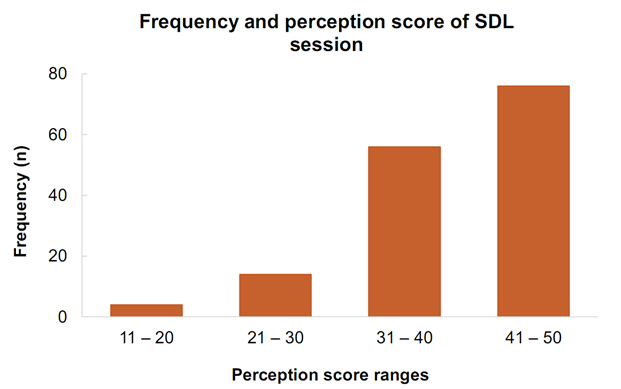
Figure 1: Distribution of perception scores toward self-directed learning (SDL) among first-year MBBS students (n = 150)
The bar chart illustrates the frequency of students across different perception score ranges. The majority of students were distributed in higher score ranges (41 – 50: n = 71; 31 – 40: n = 55), while fewer students were in lower score ranges (21 – 30: n = 17; 11 – 20: n = 7).
Exploratory Analysis of Score Variability and Subgroup Patterns
An exploratory subgroup analysis based on the baseline performance categories is presented in the Table 3 & 4. The Table 3 represents the variance scores, minimum scores and score ranges across pre-test, post-test and retention assessments, whereas the Table 4 represents the correlation coefficients (r) and corresponding p-values across the assessment time points. The students were categorized into relatively lower- and higher-performing sub-groups separately within each instructional condition using median split classification of pre-test scores. Within the lower-performing subgroup of the Jigsaw-based collaborative learning condition, variance values were 16.41 for pre-test versus post-test comparison and 7.53 for post-test versus retention assessment. Corresponding correlation coefficients were r = 0.139 (p = 0.27) and r = 0.091 (p = 0.47), respectively. In the higher-performing subgroup, variance values were 3.39 and 1.25 across the corresponding assessment intervals, with correlation coefficients of r = 0.257 (p = 0.04) and r = 0.276 (p = 0.03), respectively. Within the conventional teaching condition, variance values in the lower-performing subgroup were 12.80 for pre-test versus post-test comparison and 6.59 for post-test versus retention assessment. Corresponding correlation coefficients were r = 0.085 (p = 0.49) and r = 0.301 (p = 0.01), respectively. In the higher-performing subgroup, variance values were 4.11 and 4.54 across assessment intervals, with correlation coefficients of r = −0.003 (p = 0.98) and r = 0.262 (p = 0.03), respectively.
Table 3: Exploratory analysis of correlation, variance, and score distribution among low- and high-performing students in self-directed learning (SDL) and conventional teaching groups
|
Group |
Sub group |
Phase |
Variance |
Correlation (r) |
p-value |
|
SDL group |
Lower scorer |
Pre-test vs Post test |
16.40621 |
0.13875 |
0.27034 |
|
Post test vs After 15 day |
7.53036 |
0.09106 |
0.47068 |
||
|
High scorer |
Pre-test vs Post test |
3.39027 |
0.25737 |
0.03696 |
|
|
Post test vs After 15 day |
1.24837 |
0.27602 |
0.02488 |
||
|
Conventional method |
Lower scorer |
Pre-test vs Post test |
12.79756 |
0.08506 |
0.49374 |
|
Post test vs After 15 day |
6.59482 |
0.30097 |
0.01333 |
||
|
High scorer |
Pre-test vs Post test |
4.11111 |
-0.00297 |
0.98084 |
|
|
Post test vs After 15 day |
4.54053 |
0.26147 |
0.03126 |
Students were categorized into low- and high-performing subgroups based on the median (50th percentile) of pre-test scores within each teaching method. The table presents correlation coefficients (r) with corresponding p-values between pre-test and post test scores and between post-test and 15 day retention scores. Variance values reflect the spread of scores across time points, while minimum and maximum values indicate score distribution within each subgroup. These analyses were exploratory in nature and were not intended for inferential comparison.
Table 4: Distribution of knowledge scores across self-directed learning (SDL) and conventional teaching methods at pre-test, post-test, and 15-day follow-up
|
Group |
Sub group |
Phase |
Minimum score |
Maximum score |
Range |
|
SDL group |
Low scorers |
Pre-test |
2 |
9 |
7 |
|
Post-test |
2 |
15 |
13 |
||
|
Post 15 days |
6 |
15 |
9 |
||
|
High scorers |
Pre-test |
10 |
15 |
5 |
|
|
Post-test |
12 |
15 |
3 |
||
|
Post 15 days |
11 |
15 |
4 |
||
|
Conventional method |
Low scorers |
Pre-test |
3 |
9 |
6 |
|
Post-test |
5 |
15 |
10 |
||
|
Post 15 days |
3 |
15 |
12 |
||
|
High scorers |
Pre-test |
9 |
15 |
6 |
|
|
Post-test |
8 |
15 |
7 |
||
|
Post 15 days |
5 |
15 |
10 |
The table presents the minimum, maximum, and range of scores obtained by students at different assessment time points under both SDL and conventional teaching methods. These values illustrate the spread and distribution of scores, highlighting changes in performance variability following the intervention and during the retention phase.
Overall Interpretation of Findings
Overall, the study demonstrates that both SDL and conventional teaching methods significantly improve immediate knowledge acquisition among first-year MBBS students, with no significant difference observed between the two approaches in short term knowledge retention after 15 days. Student perception toward SDL showed a distribution skewed toward higher score ranges, indicating varying levels of agreement among students regarding its usefulness as a learning method. The exploratory subgroup analysis further revealed distinct patterns in learning distribution in the SDL group. The lower performing students in the SDL session showed improvement with reduced variability and increased minimum scores, while higher performing students maintained stable outcomes. In contrast, the conventional teaching group exhibited less consistent patterns, with widening score ranges and decline in minimum scores during retention, particularly among lower performing students. Collectively, while both methods yield comparable mean performance outcomes, SDL appears to influence the distribution and consistency of learning across different student subgroups.
DISCUSSION:
The present study explored how a structured Jigsaw-based collaborative learning approach influences learning behaviour, knowledge acquisition and short-term retention among first-year MBBS students when compared with conventional lecture-based teaching. Although both instructional approaches demonstrated significant improvement in post-test performance, the learning process observed under the two methods appeared qualitatively different in terms of learner interaction, distribution of participation and subgroup response patterns. The absence of a statistically significant difference in short-term retention scores suggests that immediate MCQ-based academic outcomes alone may not fully capture the broader educational dynamics operating within collaborative learning environments. One of the important observations during the Jigsaw sessions was the shift in the role of the learner from passive recipient to active participant in the learning process (24). Unlike conventional lecture-based teaching, where information flow predominantly unidirectionally from faculty to students, the Jigsaw structure redistributed cognitive responsibility among students themselves (25, 26). Each student was expected not only to understand the assigned subtopic, but also to communicate, reorganize and integrate that knowledge within mixed peer groups. We observed that students get into the deep discussion among each other with agreeing and disagreeing of thoughts, leading themselves to find out the correct solutions and problem-solving attitude. This redistribution of this learning pattern of responsibility appeared to alter the pattern of classroom interaction itself, introducing elements of accountability, peer dependency and collaborative problem-solving into the learning environment.
From a theoretical perspective, the present findings align more closely with constructivist and self-regulated learning frameworks than with completely autonomous models of classical self-directed learning. The educational process observed during the Jigsaw sessions was not entirely independent learning in the strict sense; rather, it represented guided collaborative learning where students actively engaged with content through peer discussion, explanation, and reciprocal teaching. Such interactions are central to constructivist learning theory, where knowledge is shaped through participation, dialogue and contextual engagement rather than passive reception alone (27). Simultaneously, the structured preparation required before peer discussion introduced important elements of self-regulated learning, including planning, monitoring of understanding, organization of learning resources and active participation within a defined academic framework. Previous educational studies have similarly emphasized that self-regulated learning differs from unrestricted self-directed learning in that the learning environment itself provides structured guidance and scaffolding for learners (28).
This distinction becomes particularly important in early undergraduate medical education. First-year MBBS students are in the process of adapting to large academic workloads, independent study expectations, and integration of multiple foundational subjects simultaneously (29). Although students may demonstrate motivation and willingness to learn, the ability to effectively regulate learning strategies, manage time, and organize academic resources may still be evolving during this stage of training (30, 31). Previous studies exploring self-directed learning readiness among undergraduate medical students have similarly reported that learners often exhibit strong desire for learning and self-control, while requiring additional support in self-management and structured learning organization (32, 33). Within this context, the Jigsaw-based collaborative model used in the present study may function less as a purely autonomous SDL strategy and more as a guided self-regulated learning environment, where peer interaction and structured accountability collectively support the learning process.
Interestingly, despite these differences in learning structure, the overall mean performance outcomes remained comparable between the two instructional approaches at the 15-day follow-up assessment. This observation is educationally important because it highlights that comparable mean scores do not necessarily imply identical learning processes. Conventional lectures may efficiently deliver organized information within limited academic time, particularly for foundational MBBS topics. In contrast, collaborative instructional methods such as the Jigsaw approach appear to influence how learners interact with information, peers, and classroom responsibility, even when short-term assessment scores remain broadly similar (34). The findings therefore suggest that educational interventions may influence learning behaviour and participation dynamics beyond what becomes directly visible through mean score comparison alone.
The MCQ framework used in the present study was developed carefully using predefined learning objectives and subject expert review to ensure content validity and alignment with intended learning outcomes. The intention was not merely to test factual recall, but to maintain objective and standardized assessment across instructional conditions. At the same time, short-duration MCQ-based assessments predominantly capture domains related to knowledge acquisition and comprehension. Certain educational processes that emerge during collaborative learning such as peer explanation, restructuring of concepts, communication-based reinforcement, and distributed cognition may not always become fully visible through immediate score comparison alone. This becomes particularly relevant in early medical training, where learning behaviour itself is still evolving alongside content acquisition. An additional dimension explored in the present study was the variability in learning responses across students with differing baseline performance levels. Educational studies frequently rely primarily on mean score comparison, which may overlook how instructional approaches influence the spread and distribution of learning within heterogeneous learner groups. The exploratory subgroup analysis in the present study was therefore undertaken to examine whether different instructional structures demonstrated differing response patterns across the cohort. Rather than attempting to establish subgroup-specific effects, the analysis was intended to explore whether the learning environment itself influenced how students with varying baseline preparation responded to the instructional process.
The subgroup categorization using median split analysis was adopted primarily as a descriptive exploratory framework to examine score distribution patterns among relatively lower- and higher-performing students. Although dichotomization of continuous variables has recognized statistical limitations, the approach allowed visualization of variance patterns, score ranges, and correlation behaviour that were not immediately evident from mean score analysis alone. Interestingly, the Jigsaw-based sessions demonstrated differing subgroup variability patterns when compared with conventional teaching, suggesting that collaborative instructional structures may influence learning distribution differently across students within the same cohort. These observations should not be interpreted as evidence of superiority of one instructional approach over another, but they do indicate that learning behaviour within collaborative educational environments may be more heterogeneous and dynamic than mean score comparisons alone would suggest.
The subgroup observations also become educationally relevant when viewed in relation to learner readiness and adaptation to collaborative responsibility. Students entering medical education often demonstrate substantial heterogeneity in prior academic preparation, confidence, communication style, and self-management behaviour (35). Within conventional lecture-based settings, such differences may remain partially concealed because classroom participation is relatively centralized around faculty delivery (36). In collaborative instructional settings, however, these learner differences become more visible through peer interaction, discussion participation, and responsibility sharing. The differing variance and score distribution patterns observed in the present study may therefore reflect differences in how individual learners adapted to collaborative learning expectations rather than simple differences in academic ability alone.
An additional strength of the present study was the attempt to examine learning outcomes beyond immediate post-test gain alone. Educational interventions are frequently interpreted primarily through statistical significance testing of mean scores, despite learning itself being a multidimensional process influenced by interaction, engagement, accountability, and learner adaptation (37 – 39). By incorporating retention assessment, perception analysis, effect size estimation, and exploratory variability analysis, the present study attempted to examine the educational process from multiple perspectives rather than relying exclusively on immediate performance comparison. This approach becomes particularly important in collaborative learning research, where educational influence may extend beyond short-duration score improvement alone.
The present findings should nevertheless be interpreted within the context of certain methodological limitations. The study was conducted within a single institution and involved a single cohort of first-year MBBS students, which may limit broader generalizability. Although the crossover design reduced inter-individual variability by exposing all participants to both instructional approaches, potential carryover effects between sessions were not formally controlled. Similarly, the follow-up period was limited to 15 days and therefore reflects short-term retention rather than long-term learning behaviour or sustained self-regulated learning development. In addition, the exploratory subgroup analyses were descriptive in nature and were not intended for confirmatory subgroup inference. Overall, the present study demonstrates that both Jigsaw-based collaborative learning and conventional lecture-based teaching were associated with improvement in immediate knowledge assessment outcomes among first-year MBBS students. However, the findings also suggest that collaborative instructional structures may influence learner interaction, participation behaviour, and subgroup learning dynamics differently from conventional lecture-based instruction. Rather than positioning collaborative learning as a replacement for conventional teaching, the present observations support its role as a structured complementary educational strategy within competency-based medical education, particularly during the early phases of undergraduate medical training where guided self-regulated learning may be more educationally appropriate than completely unrestricted independent learning.
CONCLUSION:
Self-directed learning and conventional teaching methods were found to be comparable in improving knowledge acquisition and short-term retention among first-year MBBS students. Student perception data indicated variability in agreement toward SDL as a learning approach. Exploratory findings suggest that SDL may influence the distribution and consistency of learning across student subgroups. These observations support the use of SDL as a complementary strategy rather than a replacement for traditional teaching. Integrating SDL within the CBME framework may support diverse learning patterns and complement conventional teaching approaches.
List of abbreviations
SDL : Self-Directed Learning
CBME : Competency Based Medical Education
MCQs : Multiple Choice Questions
OSCE : Objective Structured Clinical Examinations
Acknowledgement
We express our sincere gratitude to all faculty members of the Department of Physiology, GMC, Vizianagaram, for their support throughout the study. We also acknowledge the valuable assistance provided by our non-teaching staff in facilitating the smooth conduct of the sessions and assessments. We are especially thankful to Dr. Shiva Kumar L, Associate Professor, Department of Community Medicine, GMC, Vizianagaram for his support in statistical analysis and interpretation of the data. Finally, we extend our heartfelt appreciation to the students who willingly participated and contributed to the successful completion of this study.
REFERENCES:
1. National Medical Commission Competency Based Medical Education Curriculum (CBME) Regulations, 2023 – National Medical Commission, New Delhi. 2023.
2. National Medical Commission . New Delhi: 2024. Guidelines for Competency Based Medical Education (CBME) Curriculum 2024.
3. National Medical Commission . New Delhi: 2022. Guidelines for Implementation of New CBME Curriculum for MBBS batch 2021-22 Admitted in February 2022.
4. National Medical Commission . New Delhi: 2022. Academic Calendar and Curriculum MBBS 2022-23 batch.
5. Alaagib NA, Musa OA, Saeed AM. Comparison of the effectiveness of lectures based on problems and traditional lectures in physiology teaching in Sudan. BMC Med Educ. 2019 Sep 23;19(1):365. doi: 10.1186/s12909-019-1799-0. PMID: 31547817; PMCID: PMC6757398.
6. Knowles M. Self-directed learning: A guide for learners and teachers. Toronto, ON: The Adult Education Company; 1975.
7. Challa KT, Sayed A, Acharya Y. Modern techniques of teaching and learning in medical education: a descriptive literature review. MedEdPublish (2016). 2021 Jan 21;10:18. doi: 10.15694/mep.2021.000018.1. PMID: 38486533; PMCID: PMC10939590.
8. Chilemba EB, Chiundira F, Phiri C, Chisoni F. Exploring pre-requisites for clinical learning indicators: A scoping review. Curationis. 2024 Nov 29;47(1):e1-e14. doi: 10.4102/curationis.v47i1.2540. PMID: 39625096; PMCID: PMC11621905.
9. Puustinen M, Pulkkinen L. Models of self-regulated learning: a review. Scand J Educ Res. (2001) 45:269–86. doi: 10.1080/00313830120074206.
10. Torre MDL, Sison R. Ontologies for self-regulated learning. IOS Press; (2005).
11. Ernesto P. A review of self-regulated learning: six models and four directions for research. Front Psychol. (2017) 8:422. doi: 10.3389/fpsyg.2017.00422.
12. Archbold D, Boscardin C, Poncelet A, Mayfield C, Wamsley M. Using tablets to support self-regulated learning in a longitudinal integrated clerkship. Med Educ Online. (2014) 19:23638. doi: 10.3402/meo.v19.23638
13. An J, Oh J, Park K. Self-regulated learning strategies for nursing students: a pilot randomized controlled trial. IJERPH. (2022) 19:9058. doi: 10.3390/ijerph19159058, PMID:
14. Theobald M. Self-regulated learning training programs enhance university students' academic performance, self-regulated learning strategies, and motivation: a meta-analysis. Contemp Educ Psychol. (2021) 66:101976. doi: 10.31234/osf.io/tf8nk
15. Hao XY, He Y, Zhang DX, Li XY. Teacher-focused approach to foster student engagement - a hierarchical linear model based on Chinese college students' psychological capital. BMC Psychol. 2025 Nov 28;14(1):2. doi: 10.1186/s40359-025-03683-z. PMID: 41316434; PMCID: PMC12764022.
16. Schunk DH, Zimmerman BJ. Social origins of self-regulatory competence. Educ Psychol. (1997) 32:195–208.
17. Yang L. A practical study of grouping strategies for jigsaw cooperative learning. J Shanghai Educ Res. (2018) 10:78–81. doi: 10.16194/j.cnki.31-1059/g4.2018.10.019
18. Begum G, Goud BKM, Marakala V, Hamad NA, Elizabeth S, Khan FH, Agarwal A, Khattak O, Fareed MA, Alshammari KF, Desai VB, Chaudhary FA. Enhancing medical students comprehension through active learning: implementing the jigsaw method to improve engagement. Front Med (Lausanne). 2026 Feb 9;13:1732913. doi: 10.3389/fmed.2026.1732913. PMID: 41737376; PMCID: PMC12926350.
19. Kamel-ElSayed S, Patino G, Lerchenfeldt S. Self-Directed-Team Learning (SDTL) in Medical Education. Med Sci Educ. 2024 Jun 21;34(5):987-989. doi: 10.1007/s40670-024-02101-0. PMID: 39450023; PMCID: PMC11496433.
20. Atta IS, Alghamdi AH. The efficacy of self-directed learning versus problem-based learning for teaching and learning ophthalmology: a comparative study. Adv Med Educ Pract. 2018 Sep 4;9:623-630. doi: 10.2147/AMEP.S171328. PMID: 30233269; PMCID: PMC6129018.
21. Mughal Z, Gupta KK, di Traglia R, Fruhstorfer B. Effectiveness of E-Learning in Undergraduate ENT Education: A Mixed-Methods Systematic Review. Laryngoscope. 2026 Mar;136(3):1062-1076. doi: 10.1002/lary.70164. Epub 2025 Sep 27. PMID: 41014146; PMCID: PMC12913759.
22. Wani P, Agarwal M, Joshi P. A Comparative Analysis of Self-Directed Learning and the Jigsaw Method in Medical Physiology Education. Cureus. 2025 May 28;17(5):e84986. doi: 10.7759/cureus.84986. PMID: 40585730; PMCID: PMC12203285.
23. Rangareddy H, Govinda Swamy KS, S A, Petimani MS. Enhancing Student Engagement Through Active Teaching-Learning Approaches Among First-Year Medical Undergraduates. Cureus. 2025 Jun 13;17(6):e85921. doi: 10.7759/cureus.85921. PMID: 40520845; PMCID: PMC12166464.
24. Aulakh J, Wahab H, Richards C, Bidaisee S, Ramdass PVAK. Self-directed learning versus traditional didactic learning in undergraduate medical education: a systemic review and meta-analysis. BMC Med Educ. 2025 Jan 16;25(1):70. doi: 10.1186/s12909-024-06449-0. PMID: 39815233; PMCID: PMC11737201.
25. Gleason BL, Peeters MJ, Resman-Targoff BH, Karr S, McBane S, Kelley K, Thomas T, Denetclaw TH. An active-learning strategies primer for achieving ability-based educational outcomes. Am J Pharm Educ. 2011 Nov 10;75(9):186. doi: 10.5688/ajpe759186. PMID: 22171114; PMCID: PMC3230347.
26. Finn A, Fitzgibbon C, Fonda N, Gosling CM. Self-directed learning and the student learning experience in undergraduate clinical science programs: a scoping review. Adv Health Sci Educ Theory Pract. 2025 Jun;30(3):973-1005. doi: 10.1007/s10459-024-10383-7. Epub 2024 Oct 23. Erratum in: Adv Health Sci Educ Theory Pract. 2025 Sep;30(4):1377. doi: 10.1007/s10459-024-10389-1. PMID: 39441394; PMCID: PMC12119676.
27. Wong FMF, Kan CWY. Online Problem-Based Learning Intervention on Self-Directed Learning and Problem-Solving through Group Work: A Waitlist Controlled Trial. Int J Environ Res Public Health. 2022 Jan 10;19(2):720. doi: 10.3390/ijerph19020720. PMID: 35055542; PMCID: PMC8775567.
28. Gilbert KG. Learning journeys - student learning development in the first years of a medical degree: an analysis of student conversations. Front Sociol. 2023 Dec 4;8:1244039. doi: 10.3389/fsoc.2023.1244039. PMID: 38111907; PMCID: PMC10725972.
29. Dontham A, Anil AK, Akhtar N, Deepak KK. A novel methodology to demonstrate vestibulo-ocular reflex using caloric stimulation in undergraduate physiology laboratory. Adv Physiol Educ. 2024 Jun 1;48(2):211-214. doi: 10.1152/advan.00065.2022. Epub 2024 Jan 18. PMID: 38234296.
30. Mukhalalati BA, Taylor A. Adult Learning Theories in Context: A Quick Guide for Healthcare Professional Educators. J Med Educ Curric Dev. 2019 Apr 10;6:2382120519840332. doi: 10.1177/2382120519840332. PMID: 31008257; PMCID: PMC6458658.
31. Dong H, Lio J, Sherer R, Jiang I. Some Learning Theories for Medical Educators. Med Sci Educ. 2021 Mar 22;31(3):1157-1172. doi: 10.1007/s40670-021-01270-6. PMID: 34457959; PMCID: PMC8368150.
32. K, Dulloo P. Self-directed Learning Theory to Practice: A Footstep towards the Path of being a Life-long Learne. J Adv Med Educ Prof. 2022 Jul;10(3):135-144. doi: 10.30476/JAMP.2022.94833.1609. PMID: 35910513; PMCID: PMC9309162.
33. Robinson JD, Persky AM. Developing Self-Directed Learners. Am J Pharm Educ. 2020 Mar;84(3):847512. doi: 10.5688/ajpe847512. PMID: 32313284; PMCID: PMC7159015.
34. Cochon Drouet O, Lentillon-Kaestner V, Margas N. Effects of the Jigsaw method on student educational outcomes: systematic review and meta-analyses. Front Psychol. 2023 Aug 3;14:1216437. doi: 10.3389/fpsyg.2023.1216437. PMID: 37599768; PMCID: PMC10436097.
35. England JA, Howell M, White BAA. Creating a culture of communication in undergraduate medical education. Proc (Bayl Univ Med Cent). 2020 Apr 20;33(3):485-491. doi: 10.1080/08998280.2020.1746156. PMID: 32676001; PMCID: PMC7340425.
36. Ying J. The Importance of the Discussion Method in the Undergraduate Business Classroom. Humanist Manag J. 2020;5(2):251-278. doi: 10.1007/s41463-020-00099-2. Epub 2020 Nov 5. PMID: 40477300; PMCID: PMC7643722.
37. Yu W, Wu C. Development and Validation of the Interpreting Learning Engagement Scale (ILES). Behav Sci (Basel). 2024 Dec 28;15(1):16. doi: 10.3390/bs15010016. PMID: 39851820; PMCID: PMC11759842.
38. Prananto K, Cahyadi S, Lubis FY, Hinduan ZR. Perceived teacher support and student engagement among higher education students - a systematic literature review. BMC Psychol. 2025 Feb 11;13(1):112. doi: 10.1186/s40359-025-02412-w. PMID: 39934874; PMCID: PMC11817619.
39. Shi P, Liu W. Adaptive learning oriented higher educational classroom teaching strategies. Sci Rep. 2025 May 5;15(1):15661. doi: 10.1038/s41598-025-00536-y. PMID: 40325064; PMCID: PMC12053617.