Association of Patient-Reported Outcomes (SNOT-22) with Endoscopic Findings Following Functional Endoscopic Sinus Surgery in Chronic Rhinosinusitis.
- Japneet kaur , MBBS, junior resident Department of Otorhinolaryngology, SGRD, AMRITSAR.
- Vanita sarin , Professor MS ENT, MBBS Department of Otorhinolaryngology, SGRD, AMRITSAR.
- Jaskaran Singh , Professor MS ENT, MBBS, Department of Otorhinolaryngology, SGRD, AMRITSAR.
Article Information:
Abstract:
Background: Objective: To evaluate the outcomes of endoscopic sinus surgery in patients with chronic rhinosinusitis with or without nasal polyposis using the Sino-Nasal Outcome Test-22 (SNOT-22) and the Modified Lund-Kennedy (MLK) endoscopic scoring system. Materials and Methods: This prospective observational study was conducted in the Department of Otorhinolaryngology and Head and Neck Surgery at a tertiary care center, Amritsar, from July 2024 to December 2025. A total of 118 adult patients with CRS fulfilling EPOS 2020 diagnostic criteria were included. All patients underwent preoperative assessment by diagnostic nasal endoscopy, CT of the paranasal sinuses, SNOT-22 questionnaire, and MLK endoscopic scoring. Standard FESS was performed, and patients were followed up at 6 months postoperatively. Preoperative and postoperative scores were compared statistically. Results: Significant postoperative improvement was observed in SNOT-22 and MLK scores at all follow-up intervals (p < 0.001). Objective mucosal healing also progressed markedly over time. Conclusion: FESS is an effective treatment for CRS. Combined use of SNOT-22 and MLK scoring provides a reliable and comprehensive method for assessing postoperative outcome and surgical success.
Keywords:
Article :
INTRODUCTION:
Chronic rhinosinusitis (CRS) is a common inflammatory disease affecting the mucosa of the nose and paranasal sinuses. It is defined by the persistence of symptoms for at least 12 weeks despite appropriate medical management. The condition is characterized by nasal obstruction and/or nasal discharge, with or without facial pain or pressure and olfactory dysfunction.¹˒² The European Position Paper on Rhinosinusitis and Nasal Polyps (EPOS 2020) recommends objective confirmation of the diagnosis using nasal endoscopy or computed tomography (CT), with disease severity on imaging commonly assessed by the Lund–Mackay scoring system.¹˒²
CRS represents a significant global health burden, affecting approximately 10–12% of the population and causing a considerable reduction in quality of life, often comparable to that associated with other chronic systemic illnesses.³–⁵ In India, CRS constitutes a substantial proportion of otorhinolaryngology outpatient consultations, with reported prevalence ranging from 5% to 15%.⁶–⁸
The pathogenesis of CRS is complex and multifactorial, involving impaired mucociliary clearance, persistent inflammation, microbial factors, and dysregulated immune responses.² Based on the presence or absence of nasal polyps, CRS is broadly classified into chronic rhinosinusitis with nasal polyps (CRSwNP) and chronic rhinosinusitis without nasal polyps (CRSsNP), each demonstrating distinct inflammatory profiles and therapeutic responses.²˒⁹
Although medical therapy remains the cornerstone of initial management, patients with persistent symptoms despite optimal treatment often require Functional Endoscopic Sinus Surgery (FESS). The primary objective of FESS is to restore normal sinus ventilation, facilitate drainage, and improve mucociliary clearance.¹⁰ Postoperative outcomes are traditionally evaluated using objective endoscopic scoring systems such as the Modified Lund–Kennedy (MLK) score,¹¹–¹⁴ while patient-reported outcome measures, particularly the Sino-Nasal Outcome Test-22 (SNOT-22), assess symptom severity and disease-specific quality of life.¹⁵˒¹⁶ However, evidence integrating both objective endoscopic findings and subjective patient-reported outcomes remains limited in the Indian population. Therefore, the present study was undertaken to evaluate postoperative outcomes following FESS using the MLK and SNOT-22 scoring systems and to determine the correlation between these objective and subjective outcome measures in patients with CRS, with or without nasal polyposis.
MATERIALS AND METHODS:
The study was conducted in the Department of Otorhinolaryngology and Head and Neck Surgery of a tertiary care center at Amritsar after due clearance from the ethical and institutional committee. All patients included in the study provided written and informed consent. Confidentiality and anonymity of the patient data were strictly maintained throughout the study.
Study Design: A prospective observational study
Study Participants: Those patients fulfilling the inclusion criteria
Duration of study: July 2024 to December 2025
Inclusion criteria:
● Patient fulfilling the diagnostic criteria of Chronic rhinosinusitis according to the EPOS 2020 guidelines
● Patient With Evidence Of Nasal Polyposis On Diagnostic Nasal Endoscopy and CT PNS
● Patients above or equal to 18 years
Exclusion criteria:
● Invasive Fungal Sinusitis
● Cases of Chronic rhinosinusitis undergoing revision surgery for sinusitis
● Chronic rhinosinusitis associated with or due to malignant or benign lesions of the nose and PNS
● Chronic rhino-sinusitis with intracranial and extracranial complications
● Prior skull base surgery or major nasal surgery
● Patients in immunocompromised state
This prospective observational study was conducted to analyze the outcome of functional endoscopic sinus surgery using preoperative and postoperative SNOT-22 (15,16 )and the modified Lund and Kennedy scoring system. 12,14
SNOT-22 is a valid self-administered questionnaire that is used to assess CRS patients. It consists of 22 items, rated from 0 (not causing any problem) to 5 (worst possible symptom). The SNOT-22 score ranges from 0 to 110, where higher scores indicate disease severity grading as follows: Grading Score between 8 and 20 - Mild, score between 20 and 50 - Moderate, score greater than 50 - Severe
ENDOSCOPIC EVALUATION using the modified Lund-Kennedy scoring system¹² It is based on polyps, discharge, and edema in the right and left nasal cavities on diagnostic nasal endoscopy. Scores from both nasal cavities range from 0 (no disease) to 12 (severe disease on both sides). grading score between 0 and 4 - Mild , score between 5 and 8 - moderate, and between 9 and 12 – severe
Patients included in this study were evaluated on the basis of detailed history, endoscopic evaluation, and non-contrast CT findings of the nose and PNS. The European Position Paper (EPOS 2020) has defined rhinosinusitis as a diagnosis made on clinical grounds based on the presence of characteristic symptoms, combined with objective evidence of mucosal inflammation. On the basis of the Using the MLK endoscopic scoring system, the patients' data was documented. Before undergoing surgery, patients completed the Sino-Nasal Outcome Test in their language in order to determine the extent of their chronic rhinosinusitis.
All surgeries were performed by a single surgeon well trained to conduct the procedure. The surgical procedure was standard FESS (functional endoscopic sinus surgery) under general anesthesia. Steps included uncinectomy, middle meatal antrostomy, anterior and posterior ethmoidectomy, frontal clearance, and sphenoidotomy wherever needed. At the end of the surgery, the nasal cavity was packed with hemostatic nasal packs (Merocel), which were removed by the third postoperative day . Post-operative treatment included saline irrigation, topical and systemic corticosteroids, systemic antibiotics, and antiallergics as per hospital protocol. Postoperatively, patients were followed up on at 6 months.
During each visit, detailed clinical examinations, nasal endoscopy, and SNOT-22 scores were recorded. Improvement in symptoms was quantified by comparing the mean pre- and postoperative SNOT-22 scores at each interval. The outcome of endoscopic sinus surgery was defined postoperatively as the MCID (minimal clinically important difference), which was a reduction of postoperatively ≥9 points for SNOT‑22 and ≥2 points for MLK, thereby confirming that postoperative improvements were both statistically significant and medically meaningful.
Statistical analysis
The data collected was entered in the Excel sheet and compiled and analyzed using SPSS (version 22). Continuous variables were expressed as a mean +/- standard deviation (SD), and categorical variables are presented as frequencies and percentages. Comparison of preoperative and postoperative SNOT-22 scores was performed using paired t-tests for normally distributed variables. Repeated measures ANOVA was used to assess the trend in SNOT-22 scores over multiple time points (6 months).
RESULTS:
The study included 118 diagnosed cases of chronic rhinosinusitis (CRS) who underwent functional endoscopic sinus surgery (FESS). The present study used two tools to critically analyze the objective endoscopic observations and subjective quality of life dimensions: the modified Lund-Kennedy (MLK) scoring system and the Sino-Nasal Outcome Test (SNOT-22). The outcomes were presented under the following headings: preoperative evaluations and the postoperative outcomes at 6 months. The age distribution showed that the majority of patients belonged to the 31–40 years age group (23.73%), followed by 21–30 years (18.64%) and 41–50 years (16.95%). There was a male predominance, with 82 males (69.49%) and 36 females (30.51%), yielding a male-to-female ratio of 2.3:1 (Tables 1, 2).
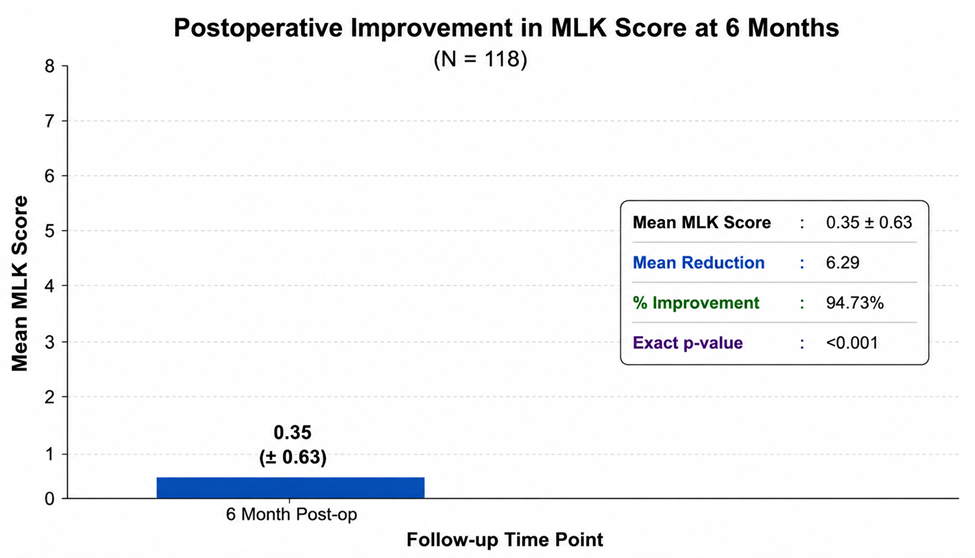
Longitudinal Analysis of Preoperative and Postoperative SNOT-22 Scores. (TABLE-3) Postoperatively, the SNOT-22 scores were reduced significantly. There was a mean reduction of 42.62 at 6 months of the postoperative period, respectively (p < 0.00). The mean value of SNOT-22 was reduced to 3.50 in 6 months, respectively. Longitudinal Analysis of Preoperative and Postoperative MLK Scores. (Table 4) The baseline preoperative severity of mucosal disease was moderate to high, with a mean preoperative MLK score of 8.12±1.73 and mean reductions of 0.35 at 6 months, respectively. (p < 0.001)
Table 1: Age Distribution of Patients (N = 118)
|
Age Group (Years) |
Frequency (n) |
Percentage (%) |
|
≤ 20 |
18 |
15.25% |
|
21–30 |
22 |
18.64% |
|
31–40 |
28 |
23.73% |
|
41–50 |
20 |
16.95% |
|
51–60 |
18 |
15.25% |
|
61–70 |
8 |
6.78% |
|
> 70 |
4 |
3.39% |
|
Total |
118 |
100.00% |
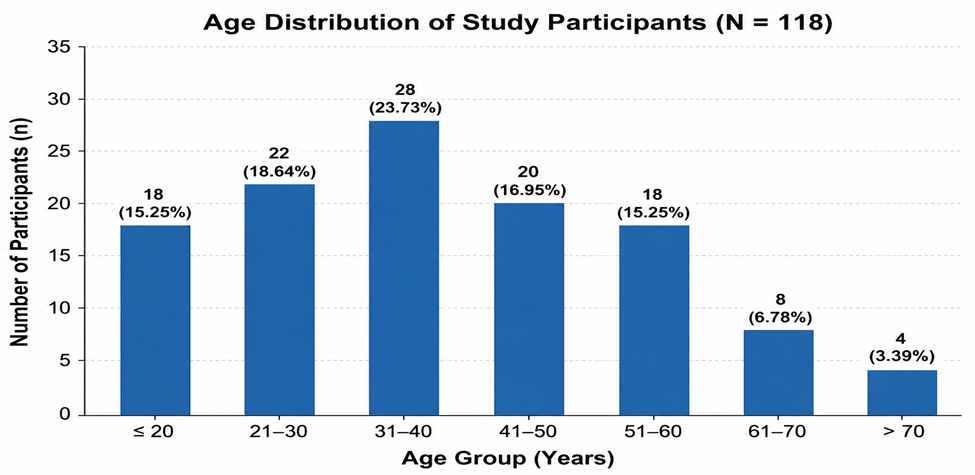
Table 2:Gender-wise Distribution of Study Participants
|
Gender |
Frequency (n) |
Percentage (%) |
|
Male |
82 |
69.49% |
|
Female |
36 |
30.51% |
|
Total |
118 |
100.00% |
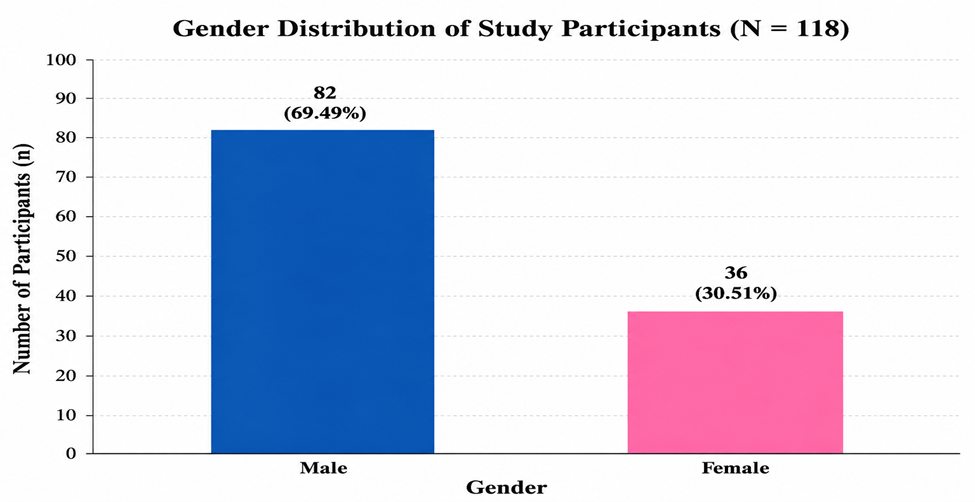
Table 3: Analysis of Preop and Postoperative SNOT-22 Scores
|
Follow-up Time Point |
Mean SNOT-22 |
Std. Deviation (± SD) |
Mean Reduction |
% Improvement |
p-value |
|
Preoperative |
46.44 |
9.69 |
— |
— |
|
|
6months Post-op |
3.50 |
3.36 |
42.62 |
92.41% |
< 0.001 |
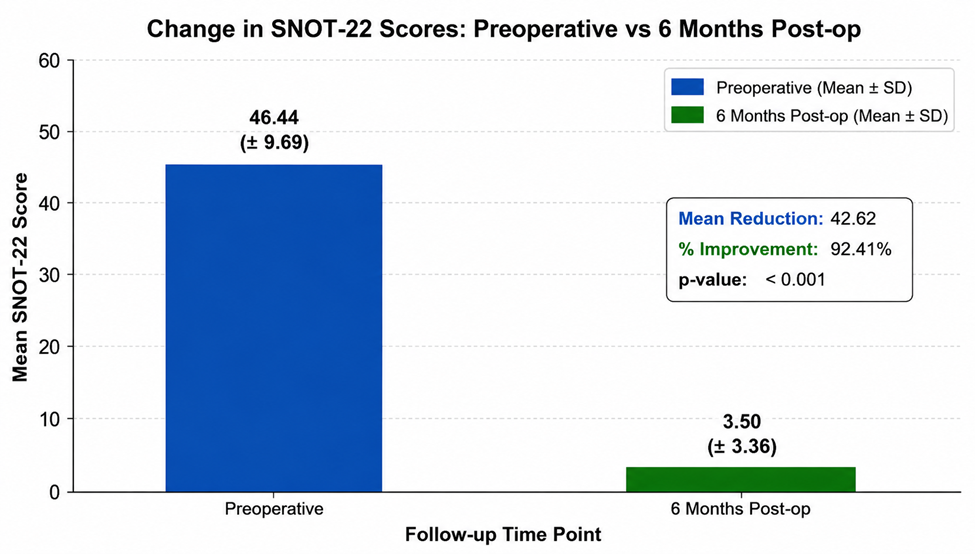
Table 4: Analysis of Preoperative and Postoperative MLK Scores
|
Follow-up Time Point |
Mean MLK Score |
Std. Deviation (± SD) |
Mean Reduction |
% Improvement |
Exact p-value |
|
6month Post-op |
0.35 |
0.63 |
6.29 |
94.73% |
<0.001 |
DISCUSSION:
The present cohort study evaluated the effectiveness of functional endoscopic sinus surgery (FESS) in patients with chronic rhinosinusitis (CRS) using both patient-reported outcomes (SNOT-22) and objective endoscopic assessment (Modified Lund–Kennedy [MLK] score). In addition, postoperative outcomes were compared between patients with and without nasal polyposis, and longitudinal changes in both scoring systems were analysed.
Most patients belonged to the 21–50-year age group, with a mean age of 39.5 years, indicating that CRS predominantly affects individuals during their economically productive years. This observation is consistent with previous epidemiological studies reporting the highest prevalence of CRS among middle-aged adults and highlighting its substantial impact on quality of life, work productivity, and healthcare utilization.¹⁷˒¹⁸ A male predominance was observed in the present cohort. Although CRS affects both sexes, similar findings have been reported from several Indian studies and may reflect regional demographic characteristics or differences in healthcare-seeking behaviour. Importantly, postoperative improvement did not differ significantly between males and females, suggesting that surgical outcomes following FESS are independent of gender.¹⁹
Patients with higher baseline SNOT-22 scores experienced greater postoperative improvement, supporting the utility of SNOT-22 as a sensitive tool for assessing symptom severity and predicting treatment response.²⁰˒²¹ Likewise, the preoperative MLK scores indicated moderate-to-severe mucosal disease, and the significant postoperative reduction reflected marked endoscopic healing following surgery. The positive association between SNOT-22 and MLK scores further demonstrates that subjective symptom burden and objective endoscopic findings are complementary measures for evaluating disease severity and monitoring surgical outcomes in CRS.²²˒²³
Longitudinal assessment showed that subjective symptom relief occurred earlier than complete objective mucosal recovery. Patients reported substantial improvement in SNOT-22 scores during the early postoperative period, whereas endoscopic healing continued to progress over subsequent follow-up visits. By the six-month follow-up, both SNOT-22 and MLK scores had reached near-optimal values, indicating concordance between symptomatic improvement and mucosal healing. These findings emphasise that patient-perceived recovery may precede complete endoscopic resolution and support the importance of continued postoperative surveillance even after clinical symptoms have improved.
Future research incorporating longer follow-up periods, multicentre cohorts, and biomarker-based phenotyping may further improve prognostic stratification and facilitate personalised treatment strategies for CRS. Overall, the present study confirms that FESS is a highly effective treatment for CRS, resulting in significant improvements in both patient-reported symptoms and objective endoscopic findings. The combined use of SNOT-22 and Modified Lund–Kennedy scoring systems provides a comprehensive and reliable framework for evaluating postoperative outcomes and guiding clinical decision-making.
CONCLUSION:
Functional endoscopic sinus surgery remains a highly effective treatment modality for chronic rhinosinusitis in appropriately selected patients. Significant improvements in both SNOT-22 and Modified Lund–Kennedy scores following surgery demonstrate meaningful relief of symptoms together with objective mucosal healing. The combined assessment of subjective and objective outcome measures offers a comprehensive evaluation of surgical success and facilitates better patient counselling, postoperative follow-up, and long-term disease management. Future studies with larger sample sizes and longer follow-up are warranted to further validate these findings and optimise personalised treatment strategies.
REFERENCES:
1. Fokkens WJ, Lund VJ, Hopkins C, Hellings PW, Kern R, Reitsma S, et al. European Position Paper on Rhinosinusitis and Nasal Polyps 2020. Rhinology Suppl. 2020;29:1–464.
2. Van Crombruggen K, Zhang N, Gevaert P, Tomassen P, Bachert C. Pathogenesis of chronic rhinosinusitis: inflammation. J Allergy Clin Immunol. 2011;128(4):728–732.
3. Lund VJ, Mackay IS. Staging in rhinosinusitis. Rhinology. 1993;31(4):183–184.
4. Hastan D, Fokkens WJ, Bachert C, Newson RB, Bislimovska J, Bockelbrink A, et al. Chronic rhinosinusitis in Europe—an underestimated disease. Allergy. 2011;66(9):1216–1223.
5. Smith KA, Orlandi RR, Rudmik L. Cost of adult chronic rhinosinusitis. Otolaryngol Head Neck Surg. 2015;152(2):273–280.
6. Bhattacharyya N. Incremental health care utilization and expenditures for chronic rhinosinusitis. Ann Otol Rhinol Laryngol. 2011;120(7):423–427.
7. Anand VK. Epidemiology and economic impact of rhinosinusitis. Ann Otol Rhinol Laryngol Suppl. 2004;193:3–5.
8. Chakrabarti A, Denning DW, Ferguson BJ, Ponikau J, Buzina W, Kita H, et al. Fungal rhinosinusitis: a categorization and definitional schema. Laryngoscope. 2009;119(9):1809–1818.
9. Dasaraju PV, Liu C. Infections of the respiratory system. In: Baron S, editor. Medical Microbiology. 4th ed. Galveston: University of Texas Medical Branch; 1996.
10. Bachert C, Zhang N, Holtappels G, De Lobel L, van Cauwenberge P, Liu S, et al. Role of IL-5 and IgE in nasal polyps. J Allergy Clin Immunol. 2001;108(4):607–614.
11. Lund VJ, Kennedy DW. Quantification for staging sinusitis. Ann Otol Rhinol Laryngol Suppl. 1995;167:17–21.
12. Psaltis AJ, Li G, Vaezeafshar R, Cho KS, Hwang PH. Modification of the Lund–Kennedy endoscopic scoring system improves reliability and correlation with patient outcomes. Laryngoscope. 2014;124(10):2218–2223.
13. Piccirillo JF, Merritt MG Jr, Richards ML. Psychometric and clinimetric validity of the 20-item Sino-Nasal Outcome Test (SNOT-20). Otolaryngol Head Neck Surg. 2002;126(1):41–47.
14. Hopkins C, Gillett S, Slack R, Lund VJ, Browne JP. Psychometric validity of the 22-item Sinonasal Outcome Test (SNOT-22). Clin Otolaryngol. 2009;34(5):447–454.
15. Lal D, Rounds AB, Divekar RD. Gender differences in chronic rhinosinusitis. Int Forum Allergy Rhinol. 2016;6(10):1052–1057.
16. Kennedy JL, Hubbard MA, Huyett P, Patrie JT, Borish L, Payne SC. Predictive value of SNOT-22 outcomes after endoscopic sinus surgery. Int Forum Allergy Rhinol. 2013;3(7):557–562.
17. Rudmik L, Smith TL. Outcomes in chronic rhinosinusitis. Otolaryngol Clin North Am. 2015;48(5):719–733.
18. Zhang Z, Adappa ND, Lautenbach E, Chiu AG, Doghramji L, Cohen NA, et al. Correlation between SNOT-22 scores and endoscopic findings in chronic rhinosinusitis. Laryngoscope. 2017;127(3):510–515.
19. DeConde AS, Bodner TE, Mace JC, Smith TL. SNOT-22 domains and their relationship with disease severity and treatment outcomes. Int Forum Allergy Rhinol. 2016;6(4):409–416.
20. Soler ZM, Rudmik L, Hwang PH, Mace JC, Smith TL. Outcomes of endoscopic sinus surgery for chronic rhinosinusitis. Laryngoscope. 2018;128(1):27–32.
21. Elesawy BH, et al. Outcomes of functional endoscopic sinus surgery in chronic rhinosinusitis. Egypt J Otolaryngol. 2023;39(1):1–8.