ASSOCIATION OF BIOLOGICAL FACTORS (PERCEIVED PHYSICAL HEALTH, BODY MASS INDEX, DIETARY PATTERN, ELIMINATION HABITS, SLEEP PATTERN, PHYSICAL ACTIVITY AND EXERCISE, AND HYDRATION) WITH WELL-BEING AMONG SCHOOL ADOLESCENTS IN SOUTH 24 PARGANAS, WEST BENGAL.
- MADHUSRI MANNA , PHD SCHOLAR, LNCT UNIVERSITY, VICE PRINCIPAL, COLLEGE AND SCHOOL OF NURSING, R.N.TAGORE HOSPITAL, A UNIT OF ASIA HEART FOUNDATION, UKILA2, PAIKPARA, NARENDRAPUR, KOLKATA 700103.
- T JAYAKUMAR , M.SC N PH.D PRINCIPAL LN NURSING SCHOOL, LNCT UNIVERSITY JK HOSPITAL CAMPUS, SARVADHARMA C SECTOR, KOLAR ROAD, BHOPAL .
Article Information:
Abstract:
Introduction: Adolescence is a critical developmental period characterized by rapid biological, psychological, and social changes. Well-being during this stage is influenced by multiple biological and lifestyle-related factors, including perceived physical health, nutritional status, dietary patterns, sleep quality, physical activity, elimination habits, and hydration status. Understanding the association between these factors and adolescent well-being can help in developing effective health promotion strategies among school-going adolescents. Aim: To assess the association of biological factors (perceived physical health, body mass index, dietary pattern, elimination habits, sleep pattern, physical activity and exercise, and hydration) with well-being among school adolescents. Materials and Methods: A school-based observational analytical cross-sectional study will be conducted among school adolescents aged 10–19 years studying in selected schools. The study will be carried out over a period of 24 months, with a total sample size of 430 adolescents included for assessment of biological factors and their association with overall well-being. Results : In our study, the total score of adolescent well-being according to perceived physical health (Q3) showed that adolescents who reported their health as “Alright” had a mean score of 59.98 ± 10.155, “Bad” had 61.00 ± 16.511, “Good” had 62.64 ± 10.726, “Not good” had 51.00 ± 0.00, “Very bad” had 58.50 ± 15.241, and “Very good” had 59.77 ± 10.522. The difference in adolescent well-being scores across perceived physical health (Q3) categories was not statistically significant (p = 0.129). Conclusion: Biological and lifestyle-related factors play an important role in determining well-being among school adolescents. Promotion of healthy dietary practices, adequate sleep, and regular physical activity may contribute to improving overall adolescent health and well-being.
Keywords:
Article :
INTRODUCTION:
Adolescence is a transitional phase of life between childhood and adulthood, characterized by rapid physical growth, biological maturation, cognitive development, and significant emotional and social changes. According to the World Health Organization (WHO), adolescence encompasses the age group of 10–19 years and represents a critical period during which lifelong health behaviours and habits are established. The physical and psychological changes occurring during this period influence overall health, quality of life, and well-being in later years. Therefore, assessing factors affecting adolescent well-being is essential for developing effective preventive and health promotion strategies [1].
Well-being among adolescents is a multidimensional concept that includes physical, emotional, psychological, and social aspects of health. It reflects not only the absence of disease but also the ability of individuals to function effectively, maintain positive relationships, cope with challenges, and achieve personal growth. School adolescents experience various challenges, including academic pressure, peer influence, lifestyle changes, and increasing independence, which may affect their overall well-being. Biological and behavioural factors such as nutrition, physical activity, sleep, hydration, and body composition have been recognized as important determinants of adolescent health outcomes [2].
Perceived physical health is an important component of adolescent well-being, as it represents an individual’s subjective assessment of their own health status. Adolescents with better perceived physical health often demonstrate higher self-esteem, improved psychological functioning, and better quality of life. Conversely, poor perception of physical health may be associated with reduced participation in physical activities, emotional distress, and impaired social functioning. Evaluation of perceived physical health provides valuable information regarding the overall health status and health-related behaviours of adolescents [3].
Body mass index (BMI) is a commonly used indicator for assessing nutritional status and identifying underweight, overweight, and obesity among adolescents. Abnormal BMI during adolescence can have significant consequences, including increased risk of metabolic disorders, reduced physical fitness, poor self-image, and psychological difficulties. Both undernutrition and excessive weight gain may negatively influence adolescent well-being. Maintaining an appropriate BMI through balanced nutrition and healthy lifestyle practices is therefore essential for optimal growth and development [4].
Dietary pattern is another important biological and behavioural determinant of adolescent health. Adequate intake of essential nutrients supports physical growth, cognitive development, immune function, and emotional stability. Adolescents frequently develop unhealthy eating habits such as skipping meals, increased consumption of processed foods, and inadequate intake of fruits and vegetables due to changing lifestyles and social influences. Poor dietary patterns have been associated with reduced energy levels, impaired concentration, and poorer overall health status. Encouraging healthy eating practices during adolescence can contribute significantly to improved well-being [5].
Sleep is a fundamental physiological process required for physical restoration, cognitive functioning, emotional regulation, and overall health. Adolescents commonly experience inadequate sleep duration due to academic workload, electronic device use, and social activities. Insufficient or poor-quality sleep has been associated with fatigue, mood disturbances, impaired academic performance, and reduced quality of life. Adequate sleep duration and healthy sleep patterns are therefore essential components of adolescent well-being [6].
Physical activity and exercise play a vital role in maintaining physical fitness and promoting psychological health among adolescents. Regular physical activity improves cardiovascular fitness, muscular strength, body composition, and metabolic health. In addition, exercise contributes to improved mood, reduced stress, enhanced self-confidence, and better social interaction. However, sedentary behaviour among adolescents has increased due to academic demands and increased screen time. Promoting regular physical activity is considered an important strategy for improving adolescent health and well-being [7].
Hydration status and elimination habits are also important but often overlooked components of adolescent health. Adequate hydration is necessary for maintaining physiological functions, cognitive performance, temperature regulation, and physical capacity. Similarly, healthy elimination habits reflect proper gastrointestinal and urinary function and may influence comfort, daily activities, and quality of life. Poor hydration and unhealthy elimination patterns may contribute to discomfort, reduced concentration, and impaired well-being among adolescents.[8]
. The aim of this study is to assess the association of biological factors, including perceived physical health, body mass index, dietary pattern, elimination habits, sleep pattern, physical activity and exercise, and hydration status, with overall well-being among school adolescents. The objectives are to evaluate the level of well-being among adolescents, assess the distribution of various biological health-related factors, and determine the relationship between these factors and adolescent well-being.
MATERIALS AND METHODS:
Study Design: A school-based observational analytical cross-sectional study.
Study Place: Selected schools among school-going adolescents.
Study Duration: The study was conducted over a period of 24 months.
Study Population: School adolescents aged 10–19 years studying in selected schools.
Sample Size: A total of 430 school adolescents
Study variable:
• Sociodemographic Characteristics of Study Participants
• Distribution of Mean Total score of Adolescent Well-being * Perceived physical health Q3
• Distribution of Mean Total score of Adolescent Well-being * BMI (kg/m2
• Distribution of Mean Total score of Adolescent Well-being * Elimination Habit
• Correlation of Total Score of Adolescent Well-being with Selected Behavioral and Psychosocial Variables
Inclusion Criteria:
• School-going adolescents aged between 10 and 19 years.
• Students who are willing to participate in the study.
• Students whose parents/guardians provide informed consent and who provide assent for participation.
• Students available during the period of data collection.
Exclusion Criteria:
• Adolescents with known chronic medical illnesses or severe physical disabilities affecting daily activities.
• Students with diagnosed psychiatric disorders or cognitive impairment.
• Adolescents who are unwilling to participate or withdraw consent during the study period.
• Incomplete questionnaires or missing essential study information.
Statistical Analysis:
For statistical analysis data were entered into a Microsoft excel spreadsheet and then analyzed by SPSS (version 27.0; SPSS Inc., Chicago, IL, USA) and GraphPad Prism version 5. Data had been summarized as mean and standard deviation for numerical variables and count and percentages for categorical variables. Two-sample t-tests for a difference in mean involved independent samples or unpaired samples. Paired t-tests were a form of blocking and had greater power than unpaired tests. A chi-squared test (χ2 test) was any statistical hypothesis test wherein the sampling distribution of the test statistic is a chi-squared distribution when the null hypothesis is true. Without other qualification, 'chi-squared test' often is used as short for Pearson's chi-squared test. Unpaired proportions were compared by Chi-square test or Fischer’s exact test, as appropriate. Explicit expressions that can be used to carry out various t-tests are given below. In each case, the formula for a test statistic that either exactly follows or closely approximates a t-distribution under the null hypothesis is given. Also, the appropriate degrees of freedom are given in each case. Each of these statistics can be used to carry out either a one-tailed test or a two-tailed test. Once a t value is determined, a p-value can be found using a table of values from Student's t-distribution .If the calculated p-value is below the threshold chosen for statistical significance (usually the 0.10, the 0.05, or 0.01 level), then the null hypothesis is rejected in favour of the alternative hypothesis.
P-value ≤ 0.05 was considered for statistically significant.
RESULTS:
Table 1: Sociodemographic Characteristics of Study Participants (N = 430)
|
Variable |
Category |
Frequency (n) |
Percent (%) |
|
Age Group |
<15 years |
89 |
20.7 |
|
≥15 years |
341 |
79.3 |
|
|
Sex |
Female |
229 |
53.3 |
|
Male |
201 |
46.7 |
|
|
Education |
IX |
151 |
35.1 |
|
Madhyamik |
151 |
35.1 |
|
|
XI |
128 |
29.8 |
|
|
Total |
|
430 |
100 |
Table 2 : Distribution of Mean Total score of Adolescent Well-being * Perceived physical health Q3
|
Total score of Adolescent Well-being |
||||||
|
Perceived physical health Q3 |
N |
Mean |
Std. Deviation |
Minimum |
Maximum |
Median |
|
Alright |
192 |
59.98 |
10.155 |
33 |
97 |
61.00 |
|
Bad |
11 |
61.00 |
16.511 |
33 |
81 |
59.00 |
|
Good |
128 |
62.64 |
10.726 |
35 |
87 |
65.00 |
|
Not good |
3 |
51.00 |
.000 |
51 |
51 |
51.00 |
|
Very bad |
8 |
58.50 |
15.241 |
48 |
83 |
51.50 |
|
Very good |
88 |
59.77 |
10.522 |
36 |
77 |
63.00 |
|
P-Value |
.129 |
|||||
Table 3 : Distribution of Mean Total score of Adolescent Well-being * BMI (kg/m2)
|
Total score of Adolescent Well-being |
||||||
|
BMI (kg/m2) |
N |
Mean |
Std. Deviation |
Minimum |
Maximum |
Median |
|
Under Weight |
141 |
59.61 |
9.317 |
36 |
73 |
61.00 |
|
Normal Weight |
122 |
61.29 |
9.799 |
36 |
81 |
64.00 |
|
Over Weight |
152 |
60.00 |
11.703 |
33 |
97 |
61.00 |
|
Obese |
15 |
72.27 |
13.435 |
35 |
87 |
72.00 |
|
P-Value |
<0.0001 |
|||||
Table 4 : Distribution of Mean Total score of Adolescent Well-being * Elimination Habit
|
Total score of Adolescent Well-being |
||||||
|
Elimination Habit |
N |
Mean |
Std. Deviation |
Minimum |
Maximum |
Median |
|
Everyday |
350 |
60.69 |
10.107 |
33 |
87 |
61.00 |
|
Irregular |
80 |
60.55 |
13.131 |
36 |
97 |
63.00 |
|
P-Value |
.915 |
|||||
Table 5 : Correlation of Total Score of Adolescent Well-being with Selected Behavioral and Psychosocial Variables
|
|
Total score of Adolescent Well-being |
Remarks |
|
|
AGE |
Pearson Correlation |
-.088 |
Negative |
|
Sig. (2-tailed) |
.068 |
Not Significant |
|
|
N |
430 |
|
|
|
Total score of Food habit |
Pearson Correlation |
.367** |
Positive |
|
Sig. (2-tailed) |
<0.0001 |
Significant |
|
|
N |
430 |
|
|
|
Sleeping pattern (Hr) |
Pearson Correlation |
.274** |
Positive |
|
Sig. (2-tailed) |
<0.0001 |
Significant |
|
|
N |
430 |
|
|
|
Total score of Physical activity |
Pearson Correlation |
.121* |
Positive |
|
Sig. (2-tailed) |
.012 |
Significant |
|
|
N |
430 |
|
|
|
Hydration |
Pearson Correlation |
.088 |
Positive |
|
Sig. (2-tailed) |
.068 |
Significant |
|
|
N |
430 |
|
|
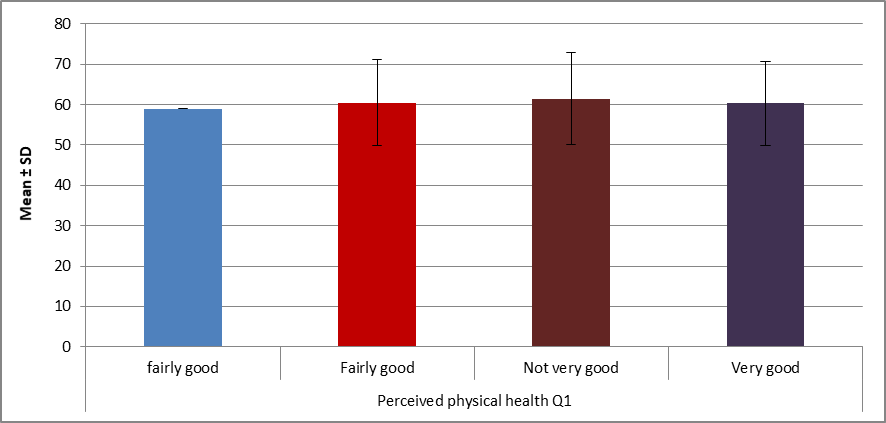
Figure 1 : Distribution of Mean Total score of Adolescent Well-being * Perceived physical health Q1
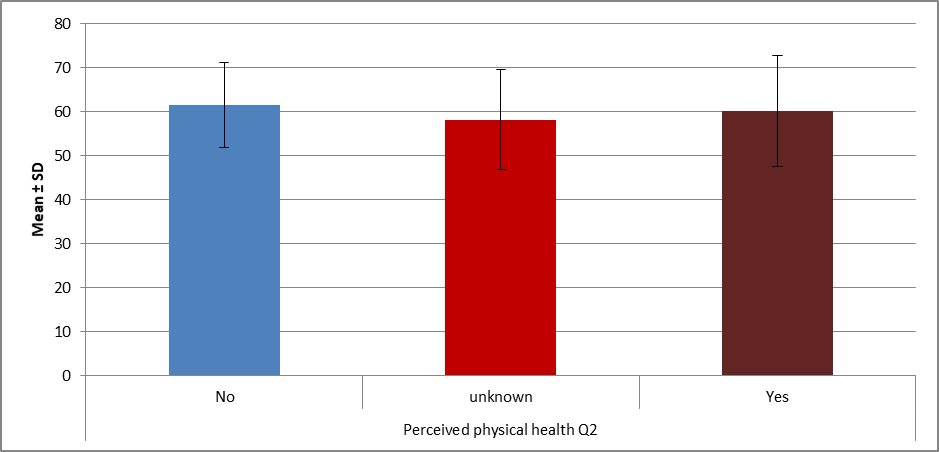
Figure 2 : Distribution of Mean Total score of Adolescent Well-being*Perceived physical health Q2
In our study, 89 students (20.7%) were lesser than 15 years in age and 341 students (79.3%) were greater than equal 15 years in age. The difference between the two proportions is statistically significant (p < 0.001).In our study, 229 students (53.3%) were female, while 201 students (46.7%) were male. The difference between the two proportions is not statistically significant (p = 0.056).In our study, regarding educational status, 151 students (35.1%) had completed IX standard, 151 students (35.1%) had completed Madhyamik level, while 128 students (29.8%) had completed XI standard. It is not statistically significant (p = 0.094).
In our study, the total score of adolescent well-being according to perceived physical health (Q1) showed that adolescents who reported fairly good health had a mean score of 59.00 ± 0.00, those reporting fairly good health had 60.51 ± 10.638, those reporting not very good health had 61.47 ± 11.435, and those reporting very good health had 60.34 ± 10.378. The difference in adolescent well-being scores across perceived physical health categories was not statistically significant (p = 0.881).In our study, the total score of adolescent well-being according to perceived physical health (Q1) showed that adolescents who reported fairly good health had a mean score of 59.00 ± 0.00, those reporting fairly good health had 60.51 ± 10.638, those reporting not very good health had 61.47 ± 11.435, and those reporting very good health had 60.34 ± 10.378. The difference in adolescent well-being scores across perceived physical health categories was not statistically significant (p = 0.881).
In our study, the total score of adolescent well-being according to perceived physical health (Q2) showed that adolescents who responded “No” had a mean score of 61.60 ± 9.702, those with “Unknown” had 58.21 ± 11.345, and those who responded “Yes” had 60.19 ± 12.676. The difference in adolescent well-being scores across perceived physical health (Q2) categories was statistically significant (p = 0.038).
In our study, the total score of adolescent well-being according to perceived physical health (Q3) showed that adolescents who reported their health as “Alright” had a mean score of 59.98 ± 10.155, “Bad” had 61.00 ± 16.511, “Good” had 62.64 ± 10.726, “Not good” had 51.00 ± 0.00, “Very bad” had 58.50 ± 15.241, and “Very good” had 59.77 ± 10.522. The difference in adolescent well-being scores across perceived physical health (Q3) categories was not statistically significant (p = 0.129).
In our study, the total score of adolescent well-being according to BMI (kg/m²) showed that adolescents who were underweight had a mean score of 59.61 ± 9.317, those with normal weight had 61.29 ± 9.799, those who were overweight had 60.00 ± 11.703, and obese adolescents had 72.27 ± 13.435. The difference in adolescent well-being scores across BMI categories was statistically significant (p < 0.0001).
In our study, the total score of adolescent well-being according to elimination habit showed that adolescents with everyday elimination habit had a mean score of 60.69 ± 10.107, while those with irregular elimination habit had a mean score of 60.55 ± 13.131. The difference in adolescent well-being scores between the two groups was not statistically significant (p = 0.915).
The correlation analysis showed that age had a weak negative correlation with the total adolescent well-being score (r = -0.088), which was not statistically significant (p = 0.068).A significant positive correlation was observed between food habit score and adolescent well-being score (r = 0.367, p < 0.0001), indicating that better food habits were associated with higher adolescent well-being.Similarly, sleeping pattern (hours) showed a significant positive correlation with adolescent well-being score (r = 0.274, p < 0.0001), suggesting that adequate sleep duration was associated with improved well-being.Physical activity score also demonstrated a weak but significant positive correlation with adolescent well-being score (r = 0.121, p = 0.012), indicating that increased physical activity was associated with better well-being.Hydration status showed a weak positive correlation with adolescent well-being score (r = 0.088); however, the association was not statistically significant (p = 0.068).
DISCUSSION:
The present study evaluated the association of biological and lifestyle-related factors including perceived physical health, body mass index (BMI), dietary pattern, elimination habits, sleep pattern, physical activity, exercise, and hydration status with well-being among 430 school-going adolescents. Adolescence represents a critical period where physical growth, nutritional status, lifestyle behaviours, and psychological adaptation influence overall health and quality of life. The findings of the present study provide important insights into the relationship between modifiable biological factors and adolescent well-being.
In the present study, the majority of participants were aged ≥15 years (79.3%), while 20.7% were below 15 years. Female students constituted 53.3% of the study population compared to 46.7% males. The distribution of educational status showed that 35.1% students were studying in IX standard, 35.1% had completed Madhyamik level, and 29.8% were in XI standard. Similar demographic variation among school adolescents has been reported by Sawyer SM et al [9] who emphasized that adolescence is a diverse developmental stage with significant variations in physical, emotional, and social characteristics influencing health outcomes. In our study, perceived physical health status showed no significant association with adolescent well-being scores for most categories. Adolescents reporting different levels of perceived health had comparable mean well-being scores, suggesting that subjective perception of physical health alone may not completely determine overall well-being. However, Fernandes GN et al. [10] highlighted that self-perceived health is an important component of health-related quality of life among children and adolescents, affecting physical, emotional, and social functioning. The difference between studies may be due to variations in assessment tools, cultural factors, and the age distribution of participants.
The present study demonstrated a significant association between BMI categories and adolescent well-being scores (p < 0.0001). Obese adolescents showed a higher mean well-being score (72.27 ± 13.435) compared with underweight, normal weight, and overweight groups. BMI is considered an important marker of nutritional and physical status during adolescence. Contrary to some previous studies reporting reduced quality of life among overweight and obese adolescents, the present finding may reflect differences in social environment, self-perception, or sample characteristics. According to the study by Buttitta M et al., [11].obesity during adolescence can influence physical functioning, emotional health, and quality of life, although the impact varies according to psychosocial factors and individual adaptation. Regarding elimination habits, the present study found no significant difference in adolescent well-being scores between adolescents with regular and irregular elimination habits (p = 0.915). Although elimination habits are indicators of gastrointestinal health, their direct influence on overall well-being may be less prominent compared with major lifestyle factors such as diet, sleep, and physical activity. Previous research Rajindrajith S et al [12].has suggested that gastrointestinal symptoms and bowel habits may affect quality of life among adolescents, particularly when associated with chronic gastrointestinal disorders
The correlation analysis in our study revealed that dietary pattern had a significant positive correlation with adolescent well-being (r = 0.367, p < 0.0001). Adolescents with healthier food habits demonstrated better well-being scores. Nutrition plays a crucial role in adolescent growth, cognitive performance, emotional regulation, and physical functioning. Similar findings were reported by Wu XY et al. [13] who emphasized that healthy dietary behaviours during adolescence are associated with improved health outcomes and overall quality of life Sleep duration showed a significant positive correlation with adolescent well-being (r = 0.274, p < 0.0001) in the present study. Adolescents with adequate sleep demonstrated better well-being, highlighting the importance of sleep as a biological determinant of health. Uccella S et al. [14]. reported that insufficient sleep among adolescents is associated with impaired emotional regulation, reduced academic performance, mood disturbances, and poorer overall health status Adequate sleep hygiene should therefore be considered an essential component of adolescent health promotion programs.
Physical activity also showed a significant positive correlation with adolescent well-being (r = 0.121, p = 0.012). Increased physical activity levels were associated with improved well-being among school adolescents. This finding is consistent with Archer T et al [15].who demonstrated that regular physical activity improves physical fitness, psychological health, self-esteem, and quality of life among children and adolescents Encouraging regular exercise and reducing sedentary behaviour may contribute significantly to improving adolescent health outcomes. Hydration status showed a weak positive correlation with adolescent well-being (r = 0.088), although the association was not statistically significant (p = 0.068). Adequate hydration is essential for maintaining physiological functions, cognitive performance, and physical capacity. Rhue SJ et al. [16] reported that water intake and hydration status influence several aspects of health, including cognitive function and physical performance; however, the impact on overall well-being may depend on multiple interacting factors.
CONCLUSION:
The present study concluded that biological and lifestyle-related factors play an important role in determining the overall well-being of school-going adolescents. Among the assessed factors, dietary pattern, sleep duration, physical activity, and body mass index showed significant associations with adolescent well-being, highlighting the importance of healthy lifestyle behaviours during adolescence. Better food habits, adequate sleep, and regular physical activity were positively associated with improved well-being, whereas age, hydration status, perceived physical health, and elimination habits did not demonstrate consistent significant associations.The findings emphasize the need for comprehensive school-based health promotion strategies focusing on balanced nutrition, adequate sleep hygiene, regular physical activity, and maintenance of healthy body weight. Early identification and modification of unhealthy biological and behavioural factors may contribute to improved physical, psychological, and social well-being among adolescents.
REFERENCES:
1. World Health Organization. Global accelerated action for the health of adolescents (AA-HA!): Guidance to support country implementation. World Health Organization; 2023 Oct 11.
2. Patton GC, Sawyer SM, Santelli JS, Ross DA, Afifi R, Allen NB, Arora M, Azzopardi P, Baldwin W, Bonell C, Kakuma R. Our future: a Lancet commission on adolescent health and wellbeing. The Lancet. 2016 Jun 11;387(10036):2423-78.
3. Ravens-Sieberer U, Erhart M, Wille N, Wetzel R, Nickel J, Bullinger M. Generic health-related quality-of-life assessment in children and adolescents: methodological considerations. Pharmacoeconomics. 2006 Dec;24(12):1199-220.
4. World Health Organization. Guideline: assessing and managing children at primary health-care facilities to prevent overweight and obesity in the context of the double burden of malnutrition. World Health Organization; 2017.
5. Story M, Neumark-Sztainer D, French S. Individual and environmental influences on adolescent eating behaviors. Journal of the American Dietetic association. 2002 Mar 1;102(3):S40-51..
6. Owens J, Adolescent Sleep Working Group, Committee on Adolescence, Au R, Carskadon M, Millman R, Wolfson A, Braverman PK, Adelman WP, Breuner CC, Levine DA. Insufficient sleep in adolescents and young adults: an update on causes and consequences. Pediatrics. 2014 Sep 1;134(3):e921-32.
7. Janssen I, LeBlanc AG. Systematic review of the health benefits of physical activity and fitness in school-aged children and youth. International journal of behavioral nutrition and physical activity. 2010 May 11;7(1):40.
8. Popkin BM, D'Anci KE, Rosenberg IH. Water, hydration, and health. Nutrition reviews. 2010 Aug 1;68(8):439-58.
9. Sawyer SM, Afifi RA, Bearinger LH, Blakemore SJ, Dick B, Ezeh AC, Patton GC. Adolescence: a foundation for future health. The lancet. 2012 Apr 28;379(9826):1630-40.
10. Fernandes GN, Lemos SM. Quality of life and self-perceived health of adolescents in Middle School. InCoDAS 2022 Mar 18 (Vol. 34, No. 6, p. e20210046). Sociedade Brasileira de Fonoaudiologia.
11. Buttitta M, Iliescu C, Rousseau A, Guerrien A. Quality of life in overweight and obese children and adolescents: a literature review. Quality of life research. 2014 May;23(4):1117-39.
12. Rajindrajith S, Devanarayana NM, Weerasooriya L, Hathagoda W, Benninga MA. Quality of life and somatic symptoms in children with constipation: a school-based study. The Journal of pediatrics. 2013 Oct 1;163(4):1069-72.
13. Wu XY, Zhuang LH, Li W, Guo HW, Zhang JH, Zhao YK, Hu JW, Gao QQ, Luo S, Ohinmaa A, Veugelers PJ. The influence of diet quality and dietary behavior on health-related quality of life in the general population of children and adolescents: a systematic review and meta-analysis. Quality of life research. 2019 Aug 15;28(8):1989-2015.
14. Uccella S, Cordani R, Salfi F, Gorgoni M, Scarpelli S, Gemignani A, Geoffroy PA, De Gennaro L, Palagini L, Ferrara M, Nobili L. Sleep deprivation and insomnia in adolescence: implications for mental health. Brain sciences. 2023 Mar 28;13(4):569.
15. Archer T. Health benefits of physical exercise for children and adolescents. Journal of Novel Physiotherapies. 2014;4(2):203.
16. Rhue SJ, Torrico G, Amuzie C, Collins SM, Lemaitre A, Workman CL, Rosinger AY, Pearson AL, Piperata BA, Wutich A, Brewis A. The effects of household water insecurity on child health and well‐being. Wiley Interdisciplinary Reviews: Water. 2023 Nov;10(6):e1666.