Association between Ultra-Processed Food Consumption and Obesity among Young Adults
- Dasari Gayathry , Associate professor, Department of Community Medicine, Government Medical College, Karimnagar, Telangana State, 505001, India
- G. Jyothsna , Associate Professor, Department of Pharmacology, Government Medical College, Kamareddy, Telangana State, 503111, India
- Sandhya Gunda , Assistant Professor, Department of Community Medicine, Government Medical College, Nizambad, Telangana State, 503001, India.
Article Information:
Abstract:
Background: The increasing consumption of ultra-processed foods (UPFs) has emerged as a major dietary concern and is considered an important contributor to the rising prevalence of obesity worldwide. Young adults are particularly vulnerable because of changing dietary habits, sedentary lifestyles, and increased reliance on convenient processed foods. However, evidence from India remains limited. The present study aimed to assess the association between ultra-processed food consumption and obesity among young adults attending a tertiary care hospital in Telangana.Methods: A hospital-based cross-sectional study was conducted among 200 young adults aged 18–35 years attending a tertiary care hospital in Telangana between February and October 2024. Participants were selected using consecutive sampling. Sociodemographic characteristics, lifestyle factors, and dietary intake were collected using a structured questionnaire and a validated food frequency questionnaire based on the NOVA classification. A p-value of <0.05 was considered statistically significant. Results: Of the 200 participants, 59.5% were either overweight or obese, including 29.0% classified as obese. High UPF consumption was reported by 39.0% of participants, while 36.5% and 24.5% reported moderate and low consumption, respectively. Obesity prevalence increased significantly with increasing UPF consumption, from 8.2% in the low-consumption group to 20.5% in the moderate-consumption group and 50.0% in the high-consumption group (p<0.001). Conclusion: High consumption of ultra-processed foods is independently associated with obesity among young adults.
Keywords:
Article :
Introduction:
Obesity has emerged as one of the most significant public health challenges of the twenty-first century, affecting populations across all age groups and socioeconomic strata. The World Health Organization (WHO) defines obesity as abnormal or excessive fat accumulation that presents a risk to health, commonly assessed using body mass index (BMI), with obesity classified as a BMI of 30 kg/m² or higher [1]. Over the past five decades, the global prevalence of obesity has increased dramatically, transforming from a problem confined primarily to high-income countries into a widespread epidemic affecting low- and middle-income nations as well [2]. Young adults, typically defined as individuals aged 18–35 years, represent a particularly vulnerable population because this transitional stage of life is characterized by increased independence, changing dietary habits, academic or occupational stress, and reduced parental influence over food choices. Lifestyle behaviors established during young adulthood often persist throughout life, substantially influencing long-term cardiometabolic health [3].
One of the major dietary changes accompanying globalization and urbanization has been the rapid rise in the consumption of ultra-processed foods (UPFs). The NOVA food classification system, developed by Monteiro and colleagues, categorizes foods according to the nature, extent, and purpose of industrial processing. Ultra-processed foods are industrial formulations made predominantly from substances extracted from foods, chemically modified ingredients, and cosmetic additives, with little or no intact whole food remaining [4]. These products include packaged snacks, sugar-sweetened beverages, instant noodles, processed meats, confectionery, fast foods, ready-to-eat meals, breakfast cereals with added sugars, and commercially baked goods. Their convenience, affordability, aggressive marketing, and extended shelf life have contributed to their increasing dominance in modern food environments [5].
The nutritional characteristics of ultra-processed foods make them particularly concerning from a public health perspective. Compared with minimally processed foods, UPFs generally contain higher levels of added sugars, saturated fats, trans fats, sodium, refined carbohydrates, and energy density, while being deficient in dietary fiber, vitamins, minerals, and other bioactive compounds [6]. Moreover, these foods often possess enhanced palatability due to carefully engineered combinations of sugar, fat, salt, flavor enhancers, and textural modifiers, which may encourage excessive energy intake beyond physiological requirements [7]. Emerging evidence also suggests that food additives, emulsifiers, artificial sweeteners, and packaging-derived chemicals present in UPFs may adversely affect gut microbiota composition, inflammatory pathways, and metabolic regulation, thereby contributing to obesity through mechanisms extending beyond nutrient composition alone [8].
Young adults are particularly susceptible to increased ultra-processed food consumption because of demanding academic schedules, irregular meal patterns, limited cooking skills, greater reliance on convenience foods, frequent dining outside the home, and extensive exposure to digital food marketing. University students and young professionals often substitute traditional home-cooked meals with packaged foods and fast-food products because of time constraints and financial considerations [9]. Furthermore, social media advertising, online food delivery platforms, and targeted promotional strategies have substantially increased the accessibility and desirability of ultra-processed foods among this age group [10].
Accumulating epidemiological evidence has demonstrated a consistent association between higher consumption of ultra-processed foods and adverse health outcomes, including overweight, obesity, metabolic syndrome, hypertension, type 2 diabetes mellitus, cardiovascular disease, certain cancers, depression, and increased all-cause mortality [11]. Several prospective cohort studies have shown that individuals consuming the highest proportion of dietary energy from UPFs experience significantly greater weight gain and higher obesity incidence compared with those consuming predominantly minimally processed foods [12]. Experimental evidence has further strengthened this association. In a landmark randomized controlled inpatient feeding trial, Hall and colleagues demonstrated that participants consuming an ultra-processed diet consumed approximately 500 kcal more per day and gained significantly more body weight than when consuming an unprocessed diet matched for calories, macronutrients, sugar, sodium, and fiber [13]. This finding suggests that factors beyond traditional nutrient composition may contribute to excessive energy intake associated with UPFs.
The burden of obesity among young adults has profound clinical and economic implications. Excess body weight during early adulthood substantially increases the lifetime risk of insulin resistance, dyslipidemia, hypertension, non-alcoholic fatty liver disease, infertility, obstructive sleep apnea, cardiovascular disease, and premature mortality [14]. In addition to physical health consequences, obesity negatively affects psychological well-being through reduced self-esteem, body image dissatisfaction, anxiety, depression, and impaired quality of life [15]. Early-onset obesity also increases healthcare utilization and imposes substantial economic costs on healthcare systems worldwide.
Despite growing recognition of the health risks associated with ultra-processed food consumption, important knowledge gaps remain regarding its relationship with obesity among young adults in different geographic, cultural, and socioeconomic settings. Dietary patterns vary considerably across populations because of differences in food availability, cultural practices, urbanization, educational status, and economic conditions. Consequently, region-specific investigations are essential for understanding local determinants of dietary behavior and identifying vulnerable populations requiring targeted nutritional interventions [16]. Furthermore, assessing the association between UPF consumption and obesity among young adults may provide valuable evidence for designing public health policies aimed at promoting healthier dietary practices, regulating food marketing, improving food labeling, and encouraging the consumption of minimally processed foods.
Therefore, investigating the association between ultra-processed food consumption and obesity among young adults is of considerable public health importance. Such research contributes to a better understanding of modifiable dietary risk factors during a critical stage of life when long-term eating behaviors are established. The findings may assist policymakers, healthcare professionals, nutritionists, and public health authorities in developing evidence-based interventions to reduce obesity prevalence, improve nutritional quality, and prevent future non-communicable diseases among young adults.
Materials and Methods:
Study Design and Setting
This hospital-based analytical cross-sectional study was conducted over a period of nine months, from February 2024 to October 2024, at a tertiary care teaching hospital in Telangana, India. The study was designed to evaluate the association between ultra-processed food (UPF) consumption and obesity among young adults attending the outpatient departments and health screening clinics of the hospital.
Study Population
The study included 200 young adults aged 18–35 years who visited the tertiary care center during the study period. Participants were recruited using consecutive sampling until the required sample size was achieved.
Sample Size
A total of 200 participants were enrolled in the study. The sample size was considered adequate to detect a statistically significant association between ultra-processed food consumption and obesity with a confidence level of 95% and sufficient statistical power, while accounting for potential non-response and incomplete data.
Inclusion Criteria
Participants fulfilling the following criteria were included:
· Young adults aged 18–35 years.
· Individuals attending the tertiary care hospital during the study period.
· Participants willing to provide written informed consent.
· Individuals able to complete the dietary assessment questionnaire.
Exclusion Criteria
The following individuals were excluded:
· Pregnant and lactating women.
· Individuals with diagnosed endocrine disorders affecting body weight, such as hypothyroidism or Cushing's syndrome.
· Patients with chronic debilitating illnesses including malignancy, chronic kidney disease, chronic liver disease, or heart failure.
· Individuals on medications known to significantly influence body weight (e.g., corticosteroids, antipsychotics, anti-obesity drugs).
· Participants with incomplete dietary or anthropometric data.
Data Collection
Data were collected using a pretested and structured questionnaire administered by trained investigators. The questionnaire consisted of four sections:
1. Sociodemographic characteristics, including age, sex, educational status, occupation, marital status, monthly household income, and place of residence.
2. Lifestyle characteristics, including smoking status, alcohol consumption, physical activity level, average sleep duration, and screen time.
3. Dietary assessment, focusing on the consumption of ultra-processed foods.
4. Anthropometric measurements, including height, weight, and body mass index (BMI).
Assessment of Ultra-Processed Food Consumption
Ultra-processed food intake was assessed using a validated semi-quantitative Food Frequency Questionnaire (FFQ) adapted according to the NOVA food classification system proposed by Monteiro et al. Foods classified as ultra-processed included packaged snacks, carbonated beverages, sugar-sweetened beverages, instant noodles, processed meats, confectionery, commercially baked products, ready-to-eat meals, breakfast cereals with added sugars, and fast foods.
Participants reported the frequency of consumption during the previous three months using predefined response categories:
· Never
· Less than once per week
· 1–2 times per week
· 3–4 times per week
· 5–6 times per week
· Once daily
· More than once daily
Based on total consumption frequency, participants were categorized into low, moderate, and high ultra-processed food consumption groups.
Anthropometric Measurements
Body weight was measured using a calibrated digital weighing scale with participants wearing light clothing and no footwear. Height was measured using a portable stadiometer to the nearest 0.1 cm. Body mass index (BMI) was calculated using the standard formula:
BMI = Weight (kg) / Height (m²)
Participants were classified according to the World Health Organization (WHO) BMI classification:
· Underweight: <18.5 kg/m²
· Normal weight: 18.5–24.9 kg/m²
· Overweight: 25.0–29.9 kg/m²
· Obesity: ≥30.0 kg/m².
Outcome Variable
The primary outcome variable was obesity, defined as a BMI of ≥30 kg/m² according to WHO criteria.
Exposure Variable
The primary exposure variable was the level of ultra-processed food consumption, categorized into low, moderate, and high consumption based on FFQ scores.
Statistical Analysis
Data were entered into Microsoft Excel and analyzed using Statistical Package for the Social Sciences (SPSS) version 26.0 (IBM Corp., Armonk, NY, USA).
Continuous variables were expressed as mean ± standard deviation (SD), whereas categorical variables were presented as frequency and percentage.
The normality of continuous variables was assessed using the Shapiro–Wilk test. Comparisons between groups were performed using the independent Student's t-test or one-way analysis of variance (ANOVA) for normally distributed variables. The Chi-square test was used to assess the association between categorical variables.
To identify independent predictors of obesity, multivariable binary logistic regression analysis was performed after adjusting for potential confounding factors including age, sex, physical activity, smoking status, alcohol consumption, socioeconomic status, and total energy intake. Adjusted odds ratios (AORs) with 95% confidence intervals (CIs) were reported.
A two-sided p-value <0.05 was considered statistically significant.
Results:
A total of 200 young adults participated in the study. The mean age of the participants was 26.8 ± 4.7 years. Of the study population, 112 (56.0%) were males and 88 (44.0%) were females. According to the WHO BMI classification, 58 (29.0%) participants were obese, while 61 (30.5%) were overweight. High consumption of ultra-processed foods (UPFs) was observed in 39.0% of participants.
Table 1. Baseline demographic and clinical characteristics of the study participants (N = 200)
Variable |
Frequency (%) / Mean ± SD |
Age (years) |
26.8 ± 4.7 |
Age Group |
|
18–24 years |
72 (36.0) |
25–29 years |
83 (41.5) |
30–35 years |
45 (22.5) |
Gender |
|
Male |
112 (56.0) |
Female |
88 (44.0) |
Residence |
|
Urban |
136 (68.0) |
Rural |
64 (32.0) |
Physical Activity |
|
Adequate |
74 (37.0) |
Insufficient |
126 (63.0) |
BMI (kg/m²) |
27.6 ± 5.3 |
Table 1 presents the baseline demographic and clinical characteristics of the study participants. The mean age of the participants was 26.8 ± 4.7 years. The majority belonged to the 25–29-year age group (41.5%), followed by 18–24 years (36.0%), while 22.5% were aged between 30 and 35 years. Male participants constituted 56.0% (n = 112) of the study population, whereas females accounted for 44.0% (n = 88). Most participants resided in urban areas (68.0%), and 63.0% reported insufficient physical activity. The overall mean BMI of the study population was 27.6 ± 5.3 kg/m², indicating that a substantial proportion of participants had excess body weight.
Table 2. Distribution of BMI categories among study participants
BMI Category |
Frequency (n) |
Percentage (%) |
Underweight |
8 |
4.0 |
Normal |
73 |
36.5 |
Overweight |
61 |
30.5 |
Obese |
58 |
29.0 |
Total |
200 |
100 |
Table 2 shows the distribution of participants according to the World Health Organization BMI classification. Among the 200 participants, 73 (36.5%) had a normal BMI, while 61 (30.5%) were overweight and 58 (29.0%) were obese. Only 8 participants (4.0%) were underweight. Collectively, 59.5% of the study population was either overweight or obese, highlighting a considerable burden of unhealthy body weight among young adults attending the tertiary care hospital.
Table 3. Distribution of Ultra-Processed Food (UPF) Consumption
UPF Consumption |
Frequency |
Percentage (%) |
Low |
49 |
24.5 |
Moderate |
73 |
36.5 |
High |
78 |
39.0 |
Total |
200 |
100 |
Table 3 summarizes the frequency of ultra-processed food consumption among study participants. High UPF consumption was observed in 78 participants (39.0%), followed by moderate consumption in 73 participants (36.5%) and low consumption in 49 participants (24.5%). These findings indicate that more than one-third of the young adults regularly consumed ultra-processed foods at a high frequency, reflecting the increasing dependence on industrially processed food products within this age group.
Table 4. Association between UPF consumption and obesity
UPF Consumption |
Non-obese n (%) |
Obese n (%) |
Total |
χ² |
p-value |
Low |
45 (91.8) |
4 (8.2) |
49 |
||
Moderate |
58 (79.5) |
15 (20.5) |
73 |
||
High |
39 (50.0) |
39 (50.0) |
78 |
24.87 |
<0.001* |
Total |
142 |
58 |
200 |
Table 4 demonstrates the association between ultra-processed food consumption and obesity. The prevalence of obesity increased progressively with increasing levels of UPF intake. Among participants with low UPF consumption, only 8.2% were obese, whereas obesity prevalence increased to 20.5% among those with moderate consumption and reached 50.0% among individuals with high UPF consumption. The Chi-square analysis demonstrated a highly significant association between UPF consumption and obesity (χ² = 24.87, p < 0.001). These findings suggest that greater consumption of ultra-processed foods is strongly associated with an increased likelihood of obesity among young adults.
Table 5. Association of lifestyle variables with obesity
Variable |
Obese n (%) |
Non-obese n (%) |
p-value |
Male |
36 (32.1) |
76 (67.9) |
0.218 |
Female |
22 (25.0) |
66 (75.0) |
|
Urban residence |
44 (32.4) |
92 (67.6) |
0.048* |
Physical inactivity |
46 (36.5) |
80 (63.5) |
<0.001* |
Current smoker |
18 (40.9) |
26 (59.1) |
0.041* |
Alcohol consumption |
21 (38.2) |
34 (61.8) |
0.036* |
Table 5 presents the association between selected lifestyle characteristics and obesity. Although obesity was more common among males (32.1%) than females (25.0%), the difference was not statistically significant (p = 0.218). Participants residing in urban areas had a significantly higher prevalence of obesity compared with those from rural areas (32.4% vs. 21.9%, p = 0.048). Physical inactivity showed a strong association with obesity, with 36.5% of physically inactive participants being obese compared to those who reported adequate physical activity (p < 0.001). Similarly, smoking (p = 0.041) and alcohol consumption (p = 0.036) were significantly associated with obesity. These findings indicate that unhealthy lifestyle behaviors contribute substantially to obesity risk in addition to dietary factors.
Table 6. Multivariable logistic regression analysis showing predictors of obesity
Variable |
Adjusted Odds Ratio (AOR) |
95% CI |
p-value |
High UPF consumption |
3.42 |
1.79–6.55 |
<0.001* |
Physical inactivity |
2.28 |
1.20–4.31 |
0.011* |
Urban residence |
1.81 |
1.01–3.28 |
0.046* |
Male gender |
1.29 |
0.71–2.35 |
0.391 |
Smoking |
1.57 |
0.82–3.01 |
0.174 |
Alcohol consumption |
1.42 |
0.77–2.63 |
0.258 |
Nagelkerke R² = 0.34
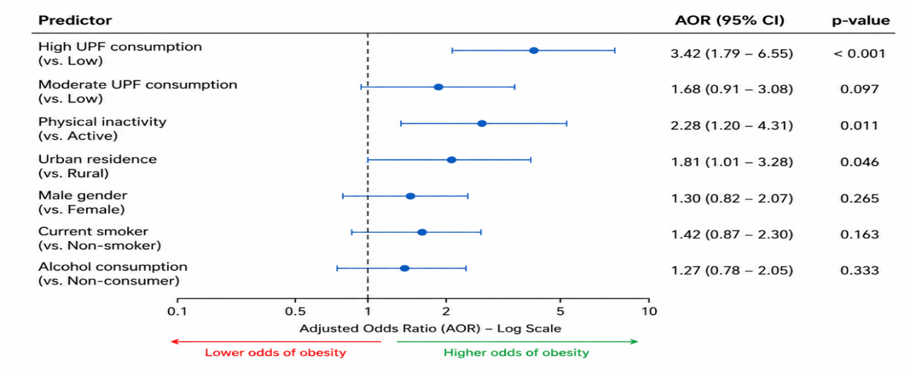
Table 6 presents the findings of the multivariable logistic regression analysis performed to identify independent predictors of obesity after adjusting for potential confounding variables. High ultra-processed food consumption emerged as the strongest independent predictor of obesity (Adjusted Odds Ratio [AOR] = 3.42; 95% Confidence Interval [CI]: 1.79–6.55; p < 0.001), indicating that participants with high UPF intake were more than three times as likely to be obese compared with those reporting low consumption. Physical inactivity also independently increased the odds of obesity by more than twofold (AOR = 2.28; 95% CI: 1.20–4.31; p = 0.011). Urban residence remained a significant predictor (AOR = 1.81; 95% CI: 1.01–3.28; p = 0.046), whereas gender, smoking, and alcohol consumption were no longer statistically significant after adjustment for other variables. The logistic regression model demonstrated satisfactory goodness-of-fit (Hosmer–Lemeshow test, p = 0.71) and explained approximately 34% of the variability in obesity (Nagelkerke R² = 0.34). These findings suggest that frequent consumption of ultra-processed foods is an independent and important determinant of obesity among young adults.
Figure 1. Distribution of Body Mass Index (BMI) Categories Among Study Participants
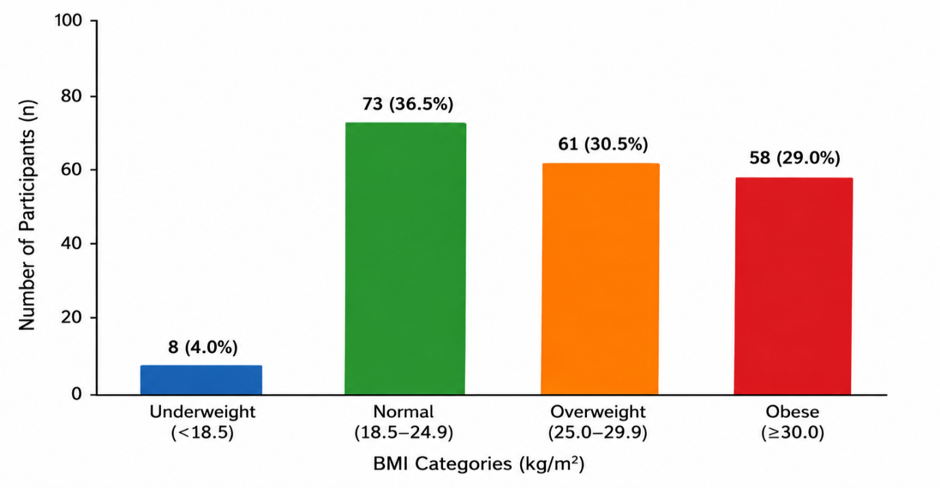
Figure 1 illustrates the distribution of Body Mass Index (BMI) categories among the 200 study participants. The largest proportion of participants had normal BMI (73 participants; 36.5%), followed by those who were overweight (61 participants; 30.5%) and obese (58 participants; 29.0%). Only 8 participants (4.0%) were classified as underweight. Overall, 119 participants (59.5%) were either overweight or obese, indicating a high prevalence of excess body weight among young adults attending the tertiary care hospital. The findings highlight that overweight and obesity together affected more than half of the study population, emphasizing the growing burden of obesity-related health risks in this age group.
Figure 2. Distribution of Ultra-Processed Food Consumption Levels Among Young Adults
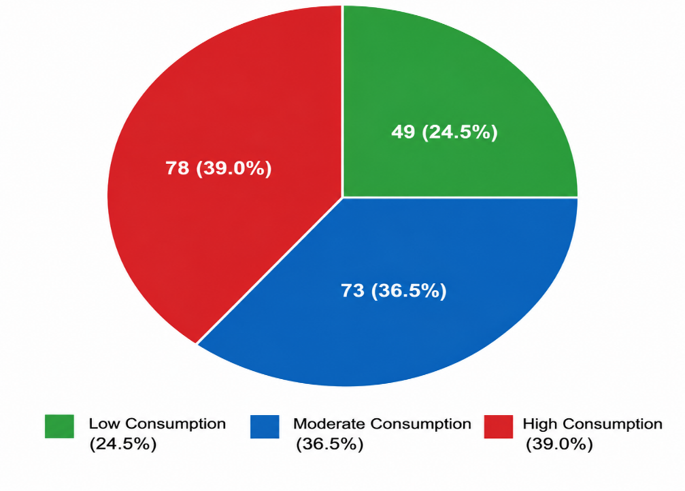
Figure 2 illustrates the distribution of ultra-processed food (UPF) consumption levels among the 200 young adults included in the study. High UPF consumption was the most frequently observed category, accounting for 78 participants (39.0%), followed by moderate consumption in 73 participants (36.5%) and low consumption in 49 participants (24.5%). Overall, more than three-quarters of the participants (75.5%) reported moderate-to-high consumption of ultra-processed foods, indicating a substantial reliance on industrially processed food products among young adults. The predominance of high UPF intake highlights an unfavorable dietary pattern within the study population and supports the need for targeted nutritional interventions aimed at reducing the consumption of ultra-processed foods to mitigate the risk of obesity and related non-communicable diseases.
Figure 3. Association Between Ultra-Processed Food Consumption and Body Mass Index
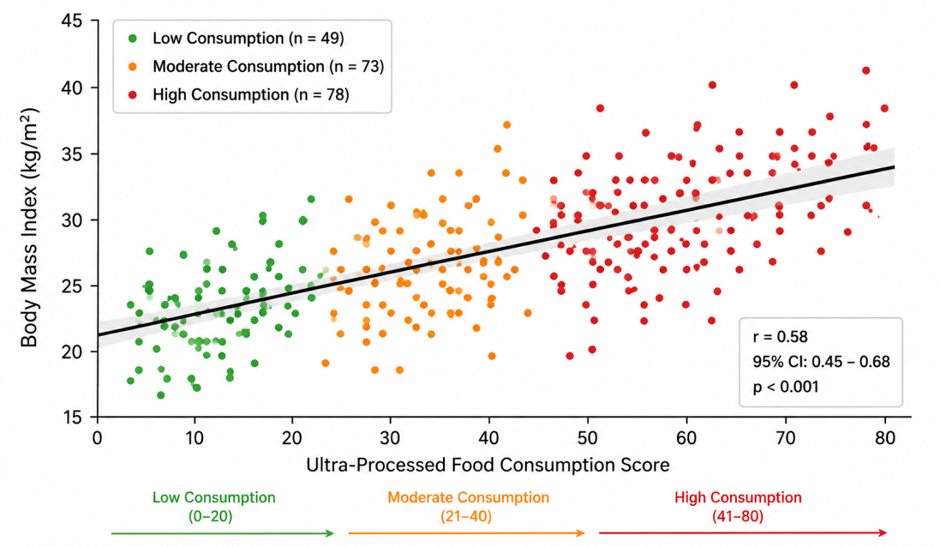
Figure 3 illustrates the association between ultra-processed food (UPF) consumption score and body mass index (BMI) among the study participants. The scatter plot demonstrates a moderate positive correlation between UPF consumption and BMI (r = 0.58, p < 0.001), indicating that BMI tended to increase with higher levels of ultra-processed food consumption. Participants with low UPF consumption were predominantly clustered at lower BMI values (approximately 18–26 kg/m²), whereas those with moderate consumption exhibited intermediate BMI values. Individuals with high UPF consumption were concentrated at higher BMI levels, with a greater proportion falling within the overweight and obese categories. The upward-sloping regression line further supports the positive linear relationship between UPF intake and BMI, suggesting that increasing consumption of ultra-processed foods is associated with progressively higher body mass index. These findings reinforce the statistical results presented in the logistic regression analysis, highlighting high UPF consumption as an important predictor of obesity among young adults.
Figure 4. Adjusted Odds Ratios for Independent Predictors of Obesity Obtained from Multivariable Logistic Regression Analysis
Discussion:
The present hospital-based cross-sectional study evaluated the association between ultra-processed food (UPF) consumption and obesity among 200 young adults attending a tertiary care hospital in Telangana. The principal findings demonstrated a high prevalence of overweight and obesity, substantial consumption of ultra-processed foods, and a strong independent association between high UPF intake and obesity after adjustment for potential confounding variables. These findings contribute to the growing body of evidence suggesting that increasing dependence on industrially processed foods represents an important modifiable determinant of obesity among young adults [11,13,16,17].
One of the major findings of the present study was that 59.5% of participants were either overweight or obese, with 29.0% classified as obese. This prevalence reflects the rapidly increasing burden of obesity among young adults in developing countries undergoing nutritional transition. Urbanization, sedentary lifestyles, increased availability of energy-dense processed foods, and changing dietary behaviors have collectively accelerated the obesity epidemic in India and other low- and middle-income countries. Similar observations have been reported in global epidemiological studies demonstrating a continuous rise in obesity prevalence among young adults over recent decades [17]. These trends highlight the urgent need for early preventive interventions targeting dietary behaviors before obesity becomes established in adulthood.
The present study further demonstrated that 39.0% of participants reported high ultra-processed food consumption, whereas only 24.5% consumed low amounts of UPFs. This finding reflects the increasing penetration of industrially processed food products into the diets of young adults. Convenience, affordability, aggressive marketing, long shelf life, food delivery applications, and changing social habits have substantially increased reliance on packaged snacks, sugar-sweetened beverages, instant foods, and ready-to-eat meals. Young adults are particularly susceptible because of demanding academic and occupational schedules, irregular meal timings, limited cooking skills, and greater dietary autonomy. Recent evidence indicates that UPFs account for an increasingly large proportion of daily caloric intake in many countries, particularly among younger populations [17].
A key finding of the present study was the significant association between UPF consumption and obesity. Obesity prevalence increased progressively from 8.2% among participants with low UPF consumption to 20.5% among those with moderate intake and 50.0% among individuals reporting high UPF consumption (p < 0.001). This dose-dependent relationship strongly supports the hypothesis that increasing consumption of ultra-processed foods contributes substantially to excess body weight. Similar associations have been consistently reported in systematic reviews and prospective cohort studies. A recent dose-response meta-analysis demonstrated that higher UPF intake significantly increased the risk of obesity, overweight, and abdominal obesity, with every 10% increase in dietary energy derived from UPFs associated with a measurable increase in obesity risk [16,17].
The positive relationship observed between UPF consumption and body mass index in the present study is biologically plausible. Ultra-processed foods are typically characterized by high energy density, excessive amounts of added sugars, saturated fats, sodium, and refined carbohydrates while containing relatively low quantities of dietary fiber and protein. These nutritional characteristics reduce satiety, promote excessive caloric intake, and encourage passive overconsumption. Furthermore, UPFs possess enhanced palatability through combinations of sugar, fat, salt, flavor enhancers, and food additives that stimulate reward pathways and increase eating frequency. Emerging evidence also suggests that emulsifiers, artificial sweeteners, and other food additives may alter gut microbiota composition, impair intestinal barrier function, promote chronic low-grade inflammation, and disrupt metabolic homeostasis, thereby contributing to adiposity beyond their nutrient composition alone [11,13].
The present findings are consistent with the landmark randomized controlled feeding trial conducted by Hall and colleagues, which demonstrated that participants consuming an ultra-processed diet consumed approximately 500 kcal more per day and experienced significantly greater weight gain than those consuming an unprocessed diet despite similar macronutrient composition [13]. These findings suggest that the degree of food processing itself influences appetite regulation and energy intake independent of traditional nutrient content. Consequently, limiting UPF consumption may represent an effective strategy for obesity prevention.
The scatter plot analysis further demonstrated a moderate positive correlation between UPF consumption and BMI (r = 0.58, p < 0.001), indicating that body mass index increased progressively with greater consumption of ultra-processed foods. This observation supports findings from recent observational studies showing positive linear relationships between UPF intake and measures of adiposity, including BMI, waist circumference, body fat percentage, and visceral adiposity [11,17]. Although the correlation observed in the present study does not establish causality because of its cross-sectional design, it reinforces evidence from longitudinal cohort studies demonstrating that sustained consumption of UPFs contributes to gradual weight gain over time [11,17].
Lifestyle characteristics also influenced obesity risk in the present study. Physical inactivity showed a strong association with obesity and remained an independent predictor after multivariable adjustment. This finding is consistent with current understanding that reduced energy expenditure acts synergistically with excessive caloric intake to promote positive energy balance and fat accumulation [11,16]. Likewise, urban residence was independently associated with obesity, probably reflecting greater exposure to processed foods, sedentary occupations, motorized transportation, and reduced opportunities for physical activity. Although smoking and alcohol consumption showed
significant associations in unadjusted analyses, these relationships lost statistical significance after adjustment, suggesting that their apparent effects were largely explained by other behavioral and environmental factors. Similar observations have been reported in previous epidemiological investigations examining obesity determinants among young adults [17].
Multivariable logistic regression demonstrated that high UPF consumption was the strongest independent predictor of obesity (AOR = 3.42; 95% CI: 1.79–6.55; p < 0.001). Individuals with high UPF intake had more than threefold greater odds of obesity compared with those reporting low consumption. This finding remained robust after adjustment for age, gender, physical activity, smoking, alcohol use, and place of residence, indicating that UPF consumption independently contributes to obesity risk. Similar effect estimates have been reported in systematic reviews of prospective cohort studies, which consistently conclude that high consumption of ultra-processed foods is associated with greater incidence of obesity and other cardiometabolic disorders [11,16,17].
From a public health perspective, the present findings have important implications. Given the widespread availability and increasing affordability of ultra-processed foods in India, strategies aimed at reducing their consumption should become an integral component of obesity prevention programs. Nutritional education among adolescents and young adults, front-of-package warning labels, restrictions on marketing unhealthy foods to young consumers, fiscal policies discouraging excessive consumption of sugar-sweetened beverages and processed snacks, and increased accessibility to healthy minimally processed foods may collectively reduce obesity risk [11,17]. Universities, workplaces, healthcare institutions, and community health programs should promote healthy dietary behaviors alongside regular physical activity to address this growing public health concern.
The present study has several strengths. It evaluated both dietary patterns and anthropometric measurements using standardized methods and employed multivariable logistic regression to identify independent predictors of obesity. Nevertheless, certain limitations should be acknowledged. The cross-sectional design precludes causal inference between UPF consumption and obesity. Dietary intake was assessed using self-reported food frequency questionnaires and therefore may be subject to recall bias. The study was conducted at a single tertiary care center with a relatively modest sample size, which may limit generalizability to the broader young adult population. Future multicenter prospective cohort studies incorporating repeated dietary assessments and objective biomarkers of dietary intake are warranted to better establish temporal relationships between UPF consumption and obesity [11,17].
Overall, the present study provides further evidence that high consumption of ultra-processed foods is independently associated with obesity among young adults. Reducing UPF intake while promoting minimally processed, nutrient-dense foods and physically active lifestyles may represent an effective strategy for mitigating the increasing burden of obesity and preventing future cardiometabolic diseases. The findings support the growing international evidence advocating dietary policies that discourage excessive consumption of ultra-processed foods as part of comprehensive obesity prevention initiatives [11,16,17].
Conclusion:
The present study demonstrated a significant association between ultra-processed food (UPF) consumption and obesity among young adults attending a tertiary care hospital in Telangana. Participants with higher UPF intake exhibited significantly greater body mass index values and markedly increased odds of obesity, even after adjustment for potential confounding factors. High consumption of ultra-processed foods emerged as the strongest independent predictor of obesity, highlighting the important role of dietary quality in the development of excess body weight.
References:
1. World Health Organization. Obesity: preventing and managing the global epidemic. Report of a WHO consultation. World Health Organ Tech Rep Ser. 2000;894:i–xii,1–253.
2. NCD Risk Factor Collaboration (NCD-RisC). Worldwide trends in body-mass index, underweight, overweight, and obesity from 1975 to 2016: a pooled analysis of 2416 population-based measurement studies in 128.9 million children, adolescents, and adults. Lancet. 2017;390(10113):2627–42.
3. Nelson MC, Story M, Larson NI, Neumark-Sztainer D, Lytle LA. Emerging adulthood and college-aged youth: an overlooked age for weight-related behavior change. Obesity (Silver Spring). 2008;16(10):2205–11.
4. Monteiro CA, Cannon G, Levy RB, Moubarac JC, Louzada MLC, Rauber F, et al. Ultra-processed foods: what they are and how to identify them. Public Health Nutr. 2019;22(5):936–41.
5. Monteiro CA, Moubarac JC, Cannon G, Ng SW, Popkin B. Ultra-processed products are becoming dominant in the global food system. Obes Rev. 2013;14(Suppl 2):21–8.
6. Elizabeth L, Machado P, Zinöcker M, Baker P, Lawrence M. Ultra-processed foods and health outcomes: a narrative review. Nutrients. 2020;12(7):1955.
7. Fardet A. Minimally processed foods are more satiating and less hyperglycemic than ultra-processed foods. Food Funct. 2016;7(5):2338–46.
8. Zinöcker MK, Lindseth IA. The Western diet–microbiome-host interaction and its role in metabolic disease. Nutrients. 2018;10(3):365.
9. Deliens T, Clarys P, De Bourdeaudhuij I, Deforche B. Determinants of eating behaviour in university students: a qualitative study. BMC Public Health. 2014;14:53.
10. Boyland EJ, Whalen R. Food advertising to children and its effects on diet: review of recent prevalence and impact data. Pediatr Diabetes. 2015;16(5):331–7.
11. Lane MM, Gamage E, Du S, Ashtree DN, McGuinness AJ, Gauci S, et al. Ultra-processed food exposure and adverse health outcomes: umbrella review of epidemiological meta-analyses. BMJ. 2024;384:e077310.
12. Mendonça RD, Lopes ACS, Pimenta AM, Gea A, Martinez-Gonzalez MA, Bes-Rastrollo M. Ultra-processed food consumption and the incidence of hypertension in a Mediterranean cohort. Am J Hypertens. 2017;30(4):358–66.
13. Hall KD, Ayuketah A, Brychta R, Cai H, Cassimatis T, Chen KY, et al. Ultra-processed diets cause excess calorie intake and weight gain: an inpatient randomized controlled trial. Cell Metab. 2019;30(1):67–77.e3.
14. Hruby A, Hu FB. The epidemiology of obesity: a big picture. Pharmacoeconomics. 2015;33(7):673–89.
15. Blüher M. Obesity: global epidemiology and pathogenesis. Nat Rev Endocrinol. 2019;15(5):288–98.
16. Askari M, Heshmati J, Shahinfar H, Tripathi N, Daneshzad E. Ultra-processed food and the risk of overweight and obesity: a systematic review and dose-response meta-analysis of observational studies. Int J Obes (Lond). 2020;44(10):2080–91.
17. Pagliai G, Dinu M, Madarena MP, Bonaccio M, Iacoviello L, Sofi F. Ultra-Processed Food Consumption and Incidence of Obesity and Cardiometabolic Risk Factors in Adults: A Systematic Review of Prospective Studies. Nutrients. 2023;15:2583.