PROSPECTIVE STUDY OF SURGICAL MANAGEMENT OF LATERAL END CLAVICLE FRACTURE WITH TENSION BAND WIRING.
- Pradeep Hullatti , Assistant Professor, Department of Orthopaedics, Chikkamagalur Institute of Medical Sciences, Chikkamagalur, Karnataka, India.
- Kavya K B , Assistant Professor, Department of Dermatology, Chikkamagalur Institute of Medical Sciences, Chikkamagalur, Karnataka, India.
- Vinutha Ganesh , MD Anaesthesia Consultant
- Ganesh P S , Professor, Department of Orthopaedics, Chikkamagalur Institute of Medical Sciences, Chikkamagalur, Karnataka, India.
Article Information:
Abstract:
Background: Lateral-end clavicle fractures account for approximately 15–30% of all clavicle fractures and are associated with a high risk of non-union when displaced. Various surgical techniques have been described for their management, among which tension band wiring (TBW) remains a commonly used and cost-effective fixation method. The present study was undertaken to evaluate the functional and radiological outcomes of surgical management of lateral-end clavicle fractures using tension band wiring. Aim: To evaluate the functional and radiological outcomes of surgical management of lateral-end clavicle fractures using tension band wiring. Objectives: 1. To assess the functional outcome of lateral-end clavicle fractures treated with tension band wiring using the Constant-Murley Shoulder Score. 2. To evaluate the radiological union rate and time to fracture union following tension band wiring. 3. To assess postoperative complications associated with tension band wiring. Materials and Methods: A prospective observational study was conducted in the Department of Orthopaedics, Aralaguppe Mallegowda District Hospital attached to Chikkamagalur Institute of Medical Sciences, Chikkamagalur, between January 2023 and November 2025. Thirty patients with lateral-end clavicle fractures satisfying the inclusion and exclusion criteria were included. All patients underwent surgical fixation using tension band wiring and were followed up at regular intervals. Functional outcomes were assessed using the Constant-Murley Shoulder Score, while radiological union was evaluated using serial radiographs. Postoperative complications were also recorded. Data were analysed using descriptive statistics, Chi-square test, and Fisher’s exact test. A p-value <0.05 was considered statistically significant. Results: The mean age of the patients was 37 years, with the majority (40%) belonging to the 31–40-year age group. Males constituted 73.3% of the study population. Road traffic accidents were the most common mode of injury (66.7%). Radiological union was achieved in all 30 patients, resulting in a union rate of 100%, with a mean union time of 11.5 weeks (range: 10–15 weeks). Functional assessment using the Constant-Murley Score revealed excellent outcomes in 14 patients (46.7%), good outcomes in 15 patients (50%), and fair outcomes in 1 patient (3.3%). Postoperative complications included pin prominence in 5 patients (16.7%), superficial infection in 1 patient (3.3%), and pin migration in 1 patient (3.3%). No cases of implant failure or non-union were observed. Conclusion: Tension band wiring provides excellent fracture union, satisfactory functional recovery, and a low complication rate in the management of lateral-end clavicle fractures. The technique is simple, economical, and effective, making it a valuable treatment option, particularly in resource-limited settings.
Keywords:
Article :
INTRODUCTION:
Clavicle fractures are among the most frequently encountered injuries in orthopaedic practice and account for approximately 2.6–5% of all fractures and nearly 35–45% of injuries involving the shoulder girdle. ¹ The clavicle functions as a critical structural link between the upper extremity and axial skeleton, maintaining shoulder alignment, facilitating upper limb motion, and transmitting mechanical forces generated during daily activities. Owing to its superficial position and S-shaped anatomy, the clavicle is particularly vulnerable to traumatic injuries resulting from road traffic accidents, sports activities, falls, and direct blows to the shoulder. ² Anatomically, clavicle fractures are classified into medial-third, middle-third, and distal-third fractures. Distal or lateral-end clavicle fractures account for approximately 15–30% of all clavicular fractures and represent a distinct subgroup because of their unique anatomical and biomechanical characteristics. ³ The distal clavicle is stabilized by the acromioclavicular and coracoclavicular ligaments. Disruption of these ligamentous structures during injury often results in fracture instability and displacement. Consequently, lateral-end clavicle fractures exhibit a higher tendency toward delayed union, non-union, malunion, chronic pain, and shoulder dysfunction compared to fractures involving the middle third of the clavicle. ⁴
Globally, the incidence of clavicle fractures has increased substantially over recent decades due to rapid urbanization, industrialization, increased participation in recreational sports, and rising rates of road traffic accidents. According to the World Health Organization, approximately 1.19 million deaths occur annually due to road traffic accidents, while millions of survivors sustain musculoskeletal injuries requiring orthopaedic intervention. ⁵ Distal clavicle fractures commonly affect young adults involved in high-energy trauma and elderly individuals sustaining low-energy falls. Because these injuries predominantly affect the economically productive age group, prolonged disability and impaired shoulder function may lead to considerable socioeconomic burden. In India, trauma represents a significant public health problem and contributes substantially to mortality, disability, and healthcare expenditure. The India State-Level Disease Burden Initiative has identified injuries as one of the leading causes of disability-adjusted life years (DALYs), particularly among young adults. ⁶ Increasing motorization, occupational injuries, sports participation, and urban growth have contributed to a rising incidence of clavicle fractures throughout the country. Although many clavicle fractures can be managed conservatively, displaced lateral-end fractures continue to present considerable treatment challenges because of their instability and increased risk of non-union.
Neer classified distal clavicle fractures based on the relationship between the fracture line and coracoclavicular ligaments. Neer Type II fractures are particularly unstable and have been associated with non-union rates ranging from 22% to 44% when treated non-operatively. ⁷ Such non-unions may result in chronic pain, cosmetic deformity, reduced shoulder strength, limitation of movement, and impaired quality of life. Consequently, surgical intervention is frequently recommended for displaced and unstable lateral-end clavicle fractures to achieve anatomical reduction, stable fixation, early mobilization, and reliable fracture union. Various operative techniques have been described for the management of distal clavicle fractures, including hook plate fixation, locking compression plates, coracoclavicular screw fixation, coracoclavicular ligament reconstruction, suspensory fixation systems, Kirschner wire fixation, and tension band wiring (TBW). While each technique has demonstrated satisfactory outcomes, none has emerged as the definitive gold standard. Several fixation methods are associated with complications such as implant failure, hardware prominence, subacromial impingement, acromial osteolysis, peri-implant fractures, loss of reduction, and the requirement for secondary implant removal. Therefore, the ideal surgical method remains a topic of continuing debate among orthopaedic surgeons.
Tension band wiring is one of the oldest and most widely practiced fixation techniques for displaced lateral-end clavicle fractures. The biomechanical principle of tension band fixation involves conversion of tensile forces generated across the fracture site into compressive forces during shoulder movement, thereby promoting fracture stability and bone healing. The technique utilizes Kirschner wires and stainless-steel wires to achieve stable fixation while preserving fracture biology. Advantages of tension band wiring include technical simplicity, low implant cost, easy availability, minimal soft-tissue dissection, shorter operative duration, and suitability for resource-limited healthcare settings. These advantages are particularly relevant in developing countries where affordability and implant accessibility significantly influence treatment decisions. Several investigators have reported favourable outcomes following tension band wiring for distal clavicle fractures, with union rates exceeding 90% and satisfactory functional recovery. However, complications such as pin migration, hardware prominence, superficial infection, skin irritation, wire breakage, and implant removal have also been documented. Despite its widespread use, prospective studies evaluating the radiological and functional outcomes of tension band wiring remain limited, particularly within the Indian population.
Considering the increasing incidence of clavicle fractures, the continued relevance of cost-effective fixation methods, and the limited prospective evidence available from Indian centres, the present study was undertaken to evaluate the surgical management of lateral-end clavicle fractures using tension band wiring. The study aimed to assess fracture union, shoulder function, range of motion, radiological outcomes, and complications associated with this technique, thereby providing evidence regarding its effectiveness and role in contemporary orthopaedic practice.
AIM
• To evaluate the functional and radiological outcomes of surgical management of lateral-end clavicle fractures using tension band wiring.
OBJECTIVES
Primary Objective
• To assess the functional outcome of lateral-end clavicle fractures treated with tension band wiring using the Constant-Murley Shoulder Score.
Secondary Objectives
1. To evaluate the radiological union rate and time to fracture union following tension band wiring.
2. To assess the postoperative complications associated with tension band wiring in the management of lateral-end clavicle fractures.
MATERIALS AND METHODS:
Study Design
Prospective observational study.
Study Setting
The study was conducted in the Department of Orthopaedics, Aralaguppe Mallegowda District Hospital attached to Chikkamagalur Institute of Medical Sciences, Chikkamagalur.
Study Duration
January 2023 to November 2025.
Study Population
Patients diagnosed with lateral-end clavicle fractures and treated surgically using tension band wiring.
Sample Size
A total of 30 patients satisfying the inclusion and exclusion criteria were included in the study.
Sampling Method
Consecutive sampling.
Inclusion Criteria
• Lateral-end clavicle fractures.
• Age greater than 18 years.
• Fractures without neurovascular deficit.
• Patients with normal pre-injury shoulder function.
• Patients willing to undergo surgery and participate in the study.
Exclusion Criteria
• Pathological fractures.
• Middle-third and medial-third clavicle fractures.
• Age less than 18 years.
• Ipsilateral upper-limb fractures.
• Patients unwilling to participate.
• Medical contraindications to surgery or anaesthesia.
Methodology
After obtaining Institutional Ethics Committee approval and written informed consent, all eligible patients were enrolled in the study.
Detailed history, clinical examination, neurovascular assessment, and radiographic evaluation were performed. Routine preoperative investigations and anaesthetic fitness assessment were obtained.
Under general anaesthesia or interscalene block, patients were positioned supine with a bolster beneath the scapula. A transverse incision was made over the lateral end of the clavicle. After exposure and freshening of the fracture ends, fracture reduction was achieved. Two 1.8-mm Kirschner wires were inserted across the fracture site. A 2.7-mm drill hole was made medial to the fracture, and a 3.5-mm cortical screw was inserted. Stainless steel wire was passed in a figure-of-eight configuration to achieve tension band fixation. Wound closure was performed in layers.
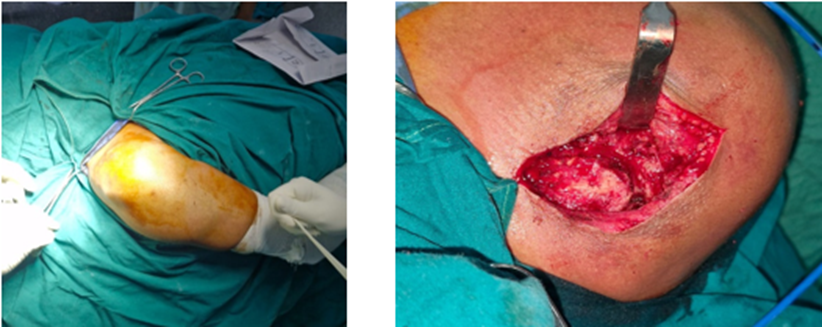
Patient Position Fracture Site Exposed
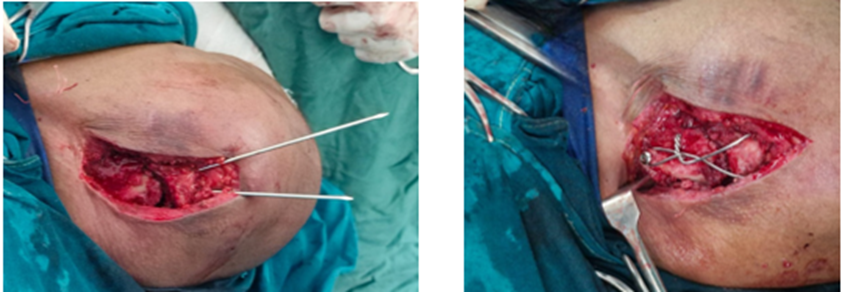
Fracture Fragments Fixed With 2 K-Wire Tension Band Wiring Done
Postoperative Protocol
· Intravenous antibiotics were administered as per institutional protocol.
· Dressing changes were performed on postoperative days 2 and 5.
· Sutures were removed on postoperative day 10.
· Arm pouch immobilization was maintained for 3 weeks.
· Pendulum exercises were initiated during the immobilization period.
· Active shoulder mobilization was started at 4–6 weeks.
· Full range-of-motion exercises were allowed at 6–8 weeks.
Follow-up
Patients were followed at:
· 4 weeks
· 12 weeks
· 24 weeks (6 months)
· 1 year
Outcome Measures
Radiological Outcome
Fracture union was assessed using serial radiographs.
Radiological union was defined as:
· Bridging callus across the fracture site, and/or
· Obliteration of the fracture line.
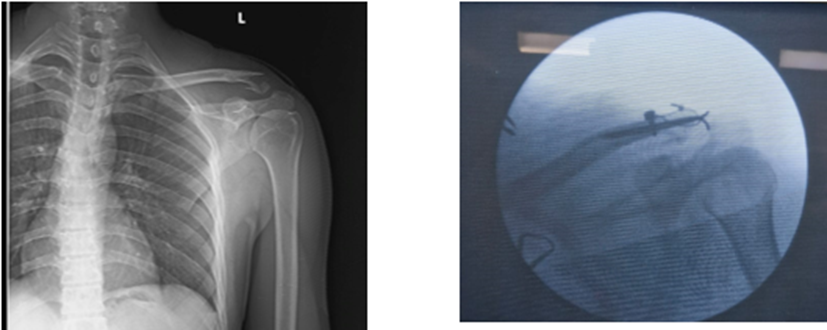
Pre-Operative Immediate Post-Op
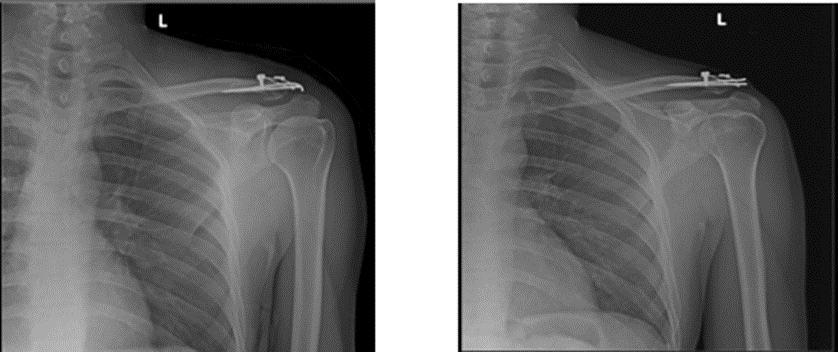
3 Month Post-Op 6 Month Post-Op
Functional Outcome
Functional assessment was performed using the Constant-Murley Shoulder Score at final follow-up.
Complications
The following complications were recorded:
· Pin migration
· Pin prominence
· Superficial infection
· Deep infection
· Implant failure
· Delayed union
· Non-union
· Restriction of shoulder movement
Statistical Analysis
Data were entered into Microsoft Excel and analysed using SPSS software version 25.0.
Continuous variables were expressed as Mean ± Standard Deviation.
Categorical variables were expressed as Frequency and Percentage.
The following statistical tests were used:
· Descriptive statistics
· Chi-square test/Fisher's exact test for categorical variables
· Paired t-test for comparison of shoulder function during follow-up
A p-value less than 0.05 was considered statistically significant.
RESULTS:
A total of 30 patients with lateral-end clavicle fractures who satisfied the inclusion and exclusion criteria were included in the study. All patients underwent surgical fixation using tension band wiring and were followed up for a minimum period of six months. Follow-up evaluations were performed at 2 weeks, 4 weeks, 8 weeks, 12 weeks, and 24 weeks. Functional and radiological outcomes were assessed at the final follow-up.
Table 1. Distribution of Patients According to Age Group
|
Age Group (Years) |
Number of Patients (n=30) |
Percentage (%) |
|
21–30 |
8 |
26.7 |
|
31–40 |
12 |
40.0 |
|
41–50 |
6 |
20.0 |
|
>50 |
4 |
13.3 |
|
Total |
30 |
100 |
Mean Age = 37.0 ± 9.2 years
Interpretation
The age of the patients ranged from 22 to 58 years with a mean age of 37 years. The majority of patients (40%) belonged to the 31–40 years age group, indicating that lateral-end clavicle fractures were most commonly observed among young and middle-aged adults.
Table 2. Distribution of Patients According to Sex
|
Sex |
Number of Patients |
Percentage (%) |
|
Male |
22 |
73.3 |
|
Female |
8 |
26.7 |
|
Total |
30 |
100 |
Interpretation
Males constituted 73.3% of the study population whereas females accounted for 26.7%. The predominance of males was statistically significant, reflecting the higher exposure of males to outdoor activities, occupational hazards, and road traffic accidents.
Table 3. Distribution According to Mode of Injury
|
Mode of Injury |
Number of Patients |
Percentage (%) |
|
Road Traffic Accident |
20 |
66.7 |
|
Self Fall |
10 |
33.3 |
|
Total |
30 |
100 |
χ² = 3.33, p = 0.068
Interpretation:
Road traffic accidents were the most common mechanism of injury accounting for 66.7% of cases, followed by self-fall injuries in 33.3% of patients. This finding highlights the important contribution of vehicular trauma to distal clavicle fractures.
Table 4. Radiological Union Following Tension Band Wiring
|
Parameter |
Value |
|
Total Patients |
30 |
|
Fracture Union Achieved |
30 (100%) |
|
Non-union |
0 (0%) |
|
Mean Union Time (weeks) |
11.5 ± 1.4 |
|
Range (weeks) |
10–15 |
Interpretation
Radiological union was achieved in all patients, resulting in a union rate of 100%. The mean time to fracture union was 11.5 weeks, ranging from 10 to 15 weeks. These findings demonstrate excellent fracture healing following tension band wiring.
Table 5. Functional Outcome Based on Constant-Murley Score
|
Functional Outcome |
Number of Patients |
Percentage (%) |
|
Excellent |
14 |
46.7 |
|
Good |
15 |
50.0 |
|
Fair |
1 |
3.3 |
|
Poor |
0 |
0 |
|
Total |
30 |
100 |
χ² = 12.87, p = 0.002
Interpretation
At final follow-up, 96.7% of patients achieved either excellent or good functional outcomes according to the Constant-Murley scoring system. Only one patient demonstrated a fair outcome and none had poor results, indicating satisfactory restoration of shoulder function following surgery.
Table 6. Postoperative Complications
|
Complication |
Number of Patients |
Percentage (%) |
|
Pin Prominence |
5 |
16.7 |
|
Superficial Infection |
1 |
3.3 |
|
Pin Migration |
1 |
3.3 |
|
Implant Failure |
0 |
0 |
|
Non-union |
0 |
0 |
|
No Complications |
23 |
76.7 |
p = 0.018
Interpretation
Postoperative complications were minimal. Pin prominence was the most common complication observed in 16.7% of patients. Superficial infection and pin migration occurred in only one patient each. No cases of implant failure or non-union were encountered. Importantly, none of these complications resulted in functional impairment.
Table 7. Overall Outcome of Tension Band Wiring
|
Outcome Parameter |
Result |
|
Union Rate |
100% |
|
Mean Union Time |
11.5 weeks |
|
Excellent + Good Functional Outcome |
96.7% |
|
Complication Rate |
23.3% |
|
Implant Failure |
0% |
|
Non-union Rate |
0% |
Interpretation
Tension band wiring provided excellent radiological and functional outcomes in patients with lateral-end clavicle fractures. The procedure achieved a 100% union rate with minimal complications and excellent-to-good functional outcomes in the majority of patients, supporting its effectiveness as a reliable fixation method.
DISCUSSION:
The present prospective study evaluated the functional and radiological outcomes of lateral-end clavicle fractures treated with tension band wiring (TBW). Thirty patients were followed for a minimum period of six months, and the results demonstrated excellent fracture union rates, favourable functional outcomes, and a low incidence of complications. The findings support the continued use of TBW as an effective treatment modality for displaced distal clavicle fractures.
The mean age of patients in the present study was 37 years, with the majority belonging to the 31–40-year age group. Similar findings were reported by Klein et al., who observed that distal clavicle fractures predominantly affect young and middle-aged adults due to greater participation in occupational and recreational activities.⁸ Andersen et al. also reported a higher incidence of clavicular injuries among active individuals in the third and fourth decades of life, reflecting increased exposure to high-energy trauma.⁹ A marked male predominance was observed in the present study, with males constituting 73.3% of the study population. This observation is consistent with the findings of Nordqvist and Petersson, who reported that males accounted for the majority of clavicle fracture cases due to greater involvement in outdoor activities, sports, and vehicular accidents. ¹⁰
Similarly, Rokito et al. observed a significant male predominance among patients undergoing operative treatment for distal clavicle fractures. ¹¹ Road traffic accidents were the most common mechanism of injury in the present series, accounting for 66.7% of cases. Similar observations were reported by Klein et al., who found that high-energy trauma, particularly motor vehicle accidents, represented the leading cause of displaced distal clavicle fractures requiring surgical intervention. ⁸ The increasing incidence of road traffic accidents in developing countries has contributed significantly to the growing burden of clavicle fractures and other orthopaedic injuries.
Radiological union was achieved in all patients included in the present study, resulting in a union rate of 100%. The average time to union was 11.5 weeks. These findings compare favourably with those reported by Lee et al., who achieved union rates exceeding 95% following surgical fixation of unstable distal clavicle fractures.¹² Similarly, Flinkkilä et al. reported excellent union rates after operative fixation of Neer Type II fractures and emphasized the importance of stable fixation in preventing non-union.¹³ The excellent union rate observed in the present study highlights the effectiveness of tension band wiring in providing adequate biomechanical stability and promoting fracture healing.
Functional outcomes assessed using the Constant-Murley Score were excellent or good in 96.7% of patients. This finding is consistent with the results reported by Kashii et al., who demonstrated excellent functional recovery following operative treatment of unstable distal clavicle fractures, with most patients returning to pre-injury activity levels.¹⁴ Similar results were reported by Tan et al., who observed satisfactory shoulder function and pain relief following surgical stabilization of lateral-end clavicle fractures.¹⁵ These findings suggest that stable fixation achieved with TBW allows early rehabilitation and restoration of shoulder mechanics. The complication rate in the present study was low. Pin prominence was the most common complication, occurring in 16.7% of patients, whereas superficial infection and pin migration were observed in only one patient each. No cases of implant failure or non-union were encountered. Similar complications have been reported by Meda et al., who identified hardware prominence as the most frequent complication following K-wire-based fixation techniques. ¹⁶ Although hardware-related problems remain a recognized limitation of tension band wiring, they are generally manageable and rarely compromise fracture union or long-term functional outcomes. Importantly, none of the complications observed in the present study resulted in permanent disability or loss of shoulder function.
All patients achieved satisfactory functional recovery despite the occurrence of minor implant-related issues. These findings emphasize that meticulous surgical technique, appropriate implant placement, and regular postoperative follow-up can minimize complication rates and optimize patient outcomes. The present study demonstrated that tension band wiring remains a reliable and cost-effective fixation method for displaced lateral-end clavicle fractures. The technique achieved excellent union rates, favourable functional outcomes, and a low incidence of complications. Given its simplicity, affordability, and widespread availability, TBW continues to represent a valuable treatment option, particularly in resource-limited healthcare settings where access to more expensive fixation systems may be restricted.
Overall, the results of the present study are consistent with previously published literature and support the use of tension band wiring as an effective method for managing unstable distal clavicle fractures. The procedure provided excellent radiological healing, restoration of shoulder function, and acceptable complication rates, thereby reinforcing its role in contemporary orthopaedic practice.
CONCLUSION:
Tension band wiring proved to be an effective method for the surgical management of lateral-end clavicle fractures. The procedure achieved a 100% radiological union rate with a mean union time of 11.5 weeks. Functional outcomes were excellent to good in 96.7% of patients as assessed by the Constant-Murley Score. Postoperative complications were minimal and did not adversely affect fracture healing or shoulder function. Therefore, tension band wiring remains a safe, reliable, and cost-effective treatment option for displaced lateral-end clavicle fractures.
REFERENCES:
1. Postacchini F, Gumina S, De Santis P, Albo F. Epidemiology of clavicle fractures. J Shoulder Elbow Surg. 2002;11(5):452-456. doi:10.1067/mse.2002.126613.
2. Robinson CM. Fractures of the clavicle in the adult: Epidemiology and classification. J Bone Joint Surg Br. 1998;80(3):476-484. doi:10.1302/0301-620X.80B3.8079.
3. Sambandam B, Gupta R, Kumar S, Maini L. Fracture of distal end clavicle: A review. J Clin Orthop Trauma. 2014;5(2):65-73. doi: 10.1016/j.jcot.2014.05.007.
4. Oh JH, Kim SH, Lee JH, Shin SH, Gong HS. Treatment of distal clavicle fracture: A systematic review of treatment modalities in 425 fractures. Arch Orthop Trauma Surg. 2011;131(4):525-533. doi:10.1007/s00402-010-1196-y.
5. World Health Organization. Global Status Report on Road Safety 2023. Geneva: World Health Organization; 2023.
6. India State-Level Disease Burden Initiative Collaborators. Nations within a nation: Variations in epidemiological transition across the states of India, 1990–2016. Lancet. 2017;390(10111):2437-2460. doi:10.1016/S0140-6736(17)32804-0.
7. Neer CS II. Fractures of the distal third of the clavicle. Clin Orthop Relat Res. 1968; 58:43-50.
8. Klein SM, Badman BL, Keating CJ, Devinney DS, Frankle MA, Mighell MA. Results of surgical treatment for unstable distal clavicular fractures. J Shoulder Elbow Surg. 2010;19(7):1049-1055. doi:10.1016/j.jse.2010.01.016.
9. Andersen JR, Willis MP, Nelson R, Mighell MA. Precontoured superior locked plating of distal clavicle fractures: A new strategy. Clin Orthop Relat Res. 2011;469(12):3344-3350. doi:10.1007/s11999-011-2009-5.
10. Nordqvist A, Petersson C. The incidence of fractures of the clavicle. Clin Orthop Relat Res. 1994;300:127-132.
11. Rokito AS, Zuckerman JD, Shaari JM, Eisenberg DP, Cuomo F, Gallagher MA. A comparison of non-operative and operative treatment of Type II distal clavicle fractures. Bull Hosp Jt Dis. 2002;61(1-2):32-39.
12. Lee YS, Lau MJ, Tseng YC, Chen WC, Kao HY, Wei JD. Comparison of the efficacy of hook plate versus tension band wiring for unstable distal clavicle fractures. Int Orthop. 2009;33(5):1401-1405. doi:10.1007/s00264-008-0685-0.
13. Flinkkilä T, Ristiniemi J, Hyvönen P, Hämäläinen M. Surgical treatment of unstable fractures of the distal clavicle. Acta Orthop Scand. 2002;73(1):50-53. doi:10.1080/000164702317281404.
14. Kashii M, Inui H, Yamamoto K. Surgical treatment of distal clavicle fractures using modified tension band fixation. J Orthop Surg (Hong Kong). 2006;14(1):9-13. doi:10.1177/230949900601400103.
15. Tan HLB, Zhao JK, Qian C, Shi Y, Zhou Q. Clinical results of treatment using a clavicular hook plate versus tension band wiring for distal clavicle fractures. Orthopedics. 2012;35(8):e1191-e1197. doi:10.3928/01477447-20120725-19.
16. Meda PV, Machani B, Sinopidis C, Braithwaite I, Brownson P, Frostick SP. Clavicular hook plate for lateral end fractures: A prospective study. Injury. 2006;37(3):277-283. doi:10.1016/j.injury.2005.10.018.