Evaluation of Patient Autonomy in Type 2 Diabetes Mellitus Using the Health Care Climate Questionnaire: A Study from Pondicherry Institute of Medical Sciences.
- Anusha Prasad K , Post graduate - Department of General Surgery Vydehi Institute of Medical Sciences, Bengaluru, India
- Veesa Kevin , Senior House Officer, Department of General Medicine Christian Medical College, Vellore, India
- Priyanka Vandana Sukesh Pande , Associate Professor, Department of Pediatrics Christian Medical College, Vellore, India.
- Thanusha Prasad K , Assistant Professor- Clinical Psychology, Department of Neurological sciences Christian Medical College, Vellore, India.
Article Information:
Abstract:
Background: Effective doctor–patient communication is a critical component in the management of chronic diseases such as diabetes mellitus, influencing patient satisfaction, adherence, and clinical outcomes¹. Objective: To assess patient perceptions of doctor–patient communication and its associated factors among individuals with diabetes mellitus. Methods: A cross-sectional study was conducted among diabetic patients aged 20–80 years. Data were collected using a structured questionnaire assessing demographic characteristics, clinical profile, and patient perceptions using a Likert scale. Descriptive statistics were applied. Results: The study included 71.1% males and 28.9% females. The mean duration of diabetes was ±7.9 years. More than 75% of participants reported positive doctor–patient communication. High levels of trust (61.4%), understanding (51.8%), and thorough responses (59.6%) were observed. Approximately 10% reported dissatisfaction. Conclusion: Patient autonomy and satisfaction were high, particularly in trust and shared decision-making domains. Improving patient engagement may further enhance outcomes.
Keywords:
Article :
INTRODUCTION:
Patient autonomy is a fundamental principle of healthcare and a cornerstone of ethical medical practice². It reflects the ability of patients to make informed decisions regarding diagnosis and treatment. The Health Care Climate Questionnaire is a validated tool used to assess patient-perceived autonomy support³. Effective communication plays a central role in fostering autonomy, ensuring that patients are actively involved in decision-making processes rather than passive recipients of care¹.
The Charter on Medical Professionalism emphasizes respect for patient autonomy, honesty, and empowerment of patients in clinical decision-making⁴. In chronic illnesses such as diabetes mellitus, long-term management requires sustained patient engagement, making autonomy especially important for adherence and outcomes¹⁰.
Objectives
The primary objective of this study was to assess patient autonomy during physician–patient interactions using a Likert scale-based Health Care Climate Questionnaire.
METHODOLOGY:
This prospective study was conducted over a period of one month at the Pondicherry Institute of Medical Sciences. The study population included all adult patients with diabetes mellitus aged over 18 years who presented during the study period. Patients with a history of psychiatric illness were excluded from the study.
A total of approximately 150 participants were included, representing all eligible diabetic patients attending the institution between May 1st and May 31st, 2018. Data collection was carried out using the Health Care Climate Questionnaire, which consists of 15 items designed to evaluate patient perceptions of autonomy support provided by their healthcare providers. Participants were asked to rate their interactions with physicians on a 7-point Likert scale, where a score of “1” indicated strong disagreement and “7” indicated strong agreement.
Inclusion and Exclusion Criteria
All adult patients diagnosed with type 2 diabetes mellitus attending the outpatient department during the study period were considered eligible for inclusion. Patients aged 18 years and above, with a confirmed diagnosis of type 2 diabetes mellitus for at least six months, and who were willing to participate in the study were included. Only those individuals who were able to understand and respond to the questionnaire independently or with minimal assistance were enrolled. Patients who provided informed consent and were available for the duration of the data collection process were included in the study.
Patients were excluded if they had type 1 diabetes mellitus, gestational diabetes, or any other secondary forms of diabetes. Individuals with severe acute illness, cognitive impairment, psychiatric disorders affecting comprehension, or those who were critically ill were excluded, as these conditions could interfere with accurate assessment of perception and communication. Patients who refused consent or were unwilling to participate were also excluded.
Statistical Analysis
Data collected from the study participants were entered into Microsoft Excel and analyzed using appropriate statistical software. Descriptive statistics were used to summarize demographic and clinical characteristics, with categorical variables expressed as frequencies and percentages, and continuous variables presented as mean ± standard deviation. Responses to the Likert-scale questionnaire assessing domains of communication, empathy, and patient involvement were scored and converted into mean Likert scores for each domain.
Comparative analysis between different domains was performed using one-way analysis of variance (ANOVA) to determine statistically significant differences in mean scores. Post-hoc pairwise comparisons were conducted using independent t-tests to identify specific differences between domains. A p-value of less than 0.05 was considered statistically significant. All results were interpreted with a 95% confidence level, and findings were presented in the form of tables and graphical representations where appropriate.
Ethical Considerations
Strict confidentiality of participant information was maintained throughout the study. Data were collected and analysed anonymously to ensure privacy and ethical integrity.
RESULTS:
Table 1: Demographic and Clinical Characteristics
|
Variable |
Value |
|
Gender (Male) |
71.1% |
|
Gender (Female) |
28.9% |
|
Age Range (years) |
20 – 80 |
|
Mean Age (years) |
± 11.19 |
|
Duration of Diabetes (years) |
0.25 – 35 |
|
Mean Duration (years) |
± 7.9 |
|
Peripheral Neuropathy |
47% |
|
Chronic Kidney Disease |
11.4% |
|
Cardiovascular Disease |
21.1% |
|
Diabetic Retinopathy |
52.5% |
|
Psychiatric Illness |
0% |
Demographic and Clinical Characteristics
A total of participants were included in the study, among whom 71.1% were male and 28.9% were female.The duration of diabetes mellitus ranged from 0.25 years to 35 years, with a mean duration of 7.9 ± years. The age of participants ranged between 20 and 80 years, with a mean age of ± 11.19 years.Regarding complications, 47% of participants reported peripheral neuropathy, 11.4% had chronic kidney disease, and 21.1% had cardiovascular involvement. More than half of the participants (52.5%) had diabetic retinopathy. No participants reported any psychiatric illness.
Table 2: Patient Perception of Doctor–Patient Interaction
|
Question |
Strongly Agree (%) |
Agree (%) |
Disagree (%) |
Strongly Disagree (%) |
|
Q1: Provided choices/options |
60.5 |
15.8 |
0.9 |
0 |
|
Q2: Felt understood |
51.8 |
28.9 |
0.9 |
0 |
|
Q3: Able to open up |
59.6 |
17.5 |
0.9 |
1.8 |
|
Q4: Doctor conveys confidence |
51.8 |
25.4 |
0.9 |
2.6 |
|
Q5: Doctor accepts them |
44.7 |
28.9 |
0.9 |
1.8 |
|
Q6: Doctor understands condition |
54.4 |
21.1 |
0.9 |
0.9 |
|
Q7: Encourages questions |
42.1 |
24.6 |
3.5 |
0.9 |
|
Q8: Trust in doctor |
61.4 |
17.5 |
1.8 |
0.9 |
|
Q9: Answers fully/carefully |
59.6 |
18.4 |
1.8 |
1.8 |
|
Q10: Doctor listens |
47.4 |
30.7 |
2.6 |
0.9 |
|
Q11: Handles emotions |
52.6 |
27.2 |
1.8 |
0.9 |
|
Q12: Cares as a person |
41.2 |
27.2 |
0.9 |
4.4 |
|
Q13: Negative communication* |
9.6 |
0.9 |
20.3 |
33.3 |
|
Q14: Understands patient perspective |
38.6 |
19.3 |
4.4 |
6.1 |
|
Q15: Can share feelings |
52.6 |
22.8 |
0.9 |
|
Patient Perception of Doctor–Patient Interaction
Overall, participants reported a high level of satisfaction with doctor–patient communication. A majority (60.5%) strongly agreed and 15.8% agreed that their doctor provided them with choices and options, while only 0.9% expressed disagreement. Similarly, 51.8% strongly agreed and 28.9% agreed that they felt understood by their doctor, with minimal disagreement reported (0.9%).Regarding openness, 59.6% strongly agreed and 17.5% agreed that they were able to openly communicate with their doctor, while 2.7% expressed disagreement (including strongly disagree).
Confidence conveyed by the physician was positively rated, with 51.8% strongly agreeing and 25.4% agreeing, and only a small proportion (3.5%) expressing disagreement. Acceptance by the doctor was also well perceived, with 44.7% strongly agreeing and 28.9% agreeing, while 2.7% reported disagreement. A similar trend was observed for the doctor’s understanding of the patient’s condition, with 54.4% strongly agreeing and 21.1% agreeing, and minimal disagreement (1.8%).
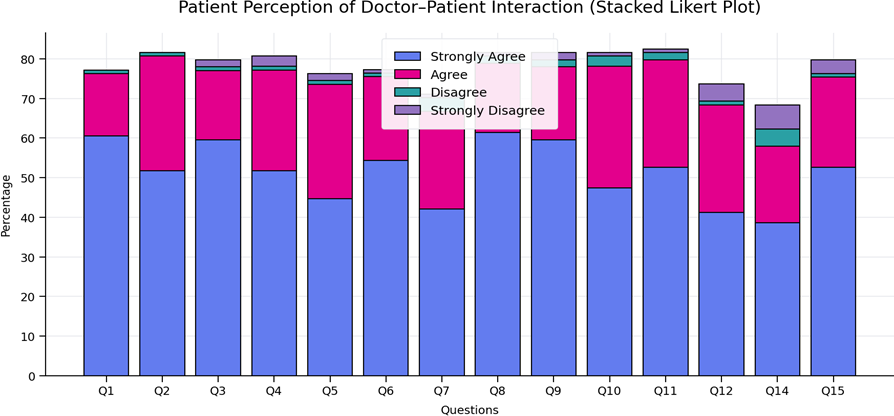
Fig 1.Patient Perception of Doctor–Patient Interaction (Stacked Likert Plot)
Encouragement to ask questions was reported by 42.1% (strongly agree) and 24.6% (agree); however, a small proportion (4.4%) disagreed. Trust in the physician was notably high, with 61.4% strongly agreeing and 17.5% agreeing that they had a high level of trust, while only 2.7% disagreed. In terms of clarity and completeness of responses, 59.6% strongly agreed and 18.4% agreed that their doctor answered questions thoroughly, with 3.6% expressing dissatisfaction. Listening behaviour was also positively rated, with 47.4% strongly agreeing and 30.7% agreeing, compared to 3.5% reporting disagreement. Emotional handling by the doctor was considered adequate by most participants (52.6% strongly agree; 27.2% agree), with minimal disagreement (2.7%). Similarly, 41.2% strongly agreed and 27.2% agreed that their doctor cared about them as a person, while 5.3% expressed disagreement.
Interestingly, responses to the negatively framed statement (“not feeling good about how the doctor talks”) showed that 53.6% disagreed or strongly disagreed, indicating generally positive communication experiences, although 10.5% expressed dissatisfaction. Regarding shared understanding, 38.6% strongly agreed and 19.3% agreed that their doctor attempted to understand their perspective before suggesting changes, whereas 10.5% disagreed. Finally, 52.6% strongly agreed and 22.8% agreed that they felt comfortable sharing their feelings with their doctor, while 4.4% expressed disagreement.
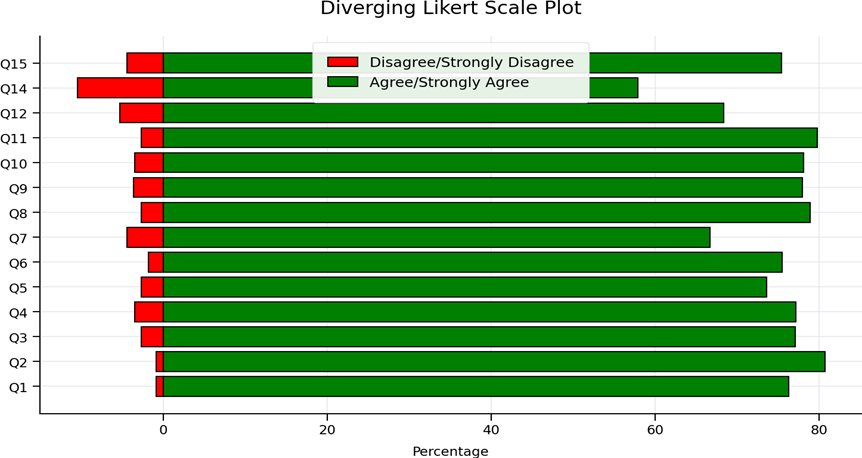
Fig 2. Diverging Likert Scale Plot
The diverging Likert plot clearly demonstrates a strong skew toward positive responses (agreement) across all items. Most questions show substantial rightward extension, indicating dominance of “strongly agree” and “agree” responses.
Notably:Q8 (Trust), Q1 (Choices), and Q9 (Answers) show the strongest positive skew , indicating excellent communication quality Q14 (Understanding patient perspective) shows a relatively shorter positive bar and slightly larger negative spread , suggesting variability in participatory care .Negative responses overall remain minimal, reinforcing a high level of patient satisfaction and autonomy support.
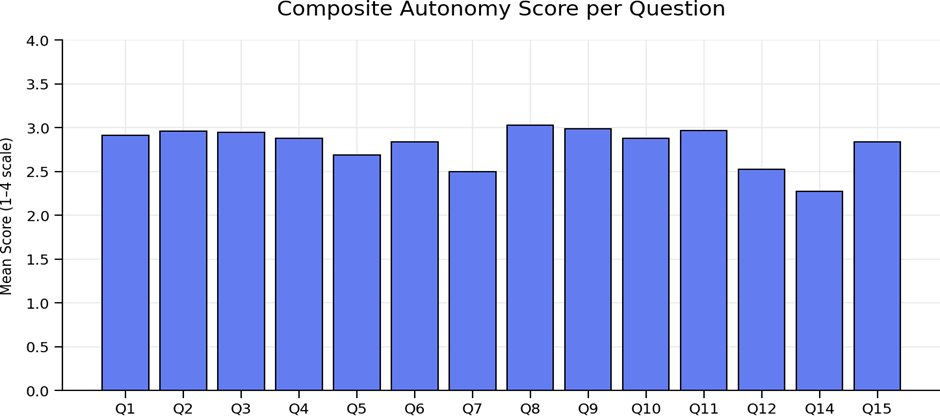
Fig 3. Composite Score Analysis (Quantitative Strength)
Interpretation
Composite scores were calculated by assigning weights to Likert responses (Strongly disagree = 1 to Strongly agree = 4). The mean scores for all questions ranged approximately between 2.6 and 3.0, indicating an overall high level of perceived autonomy support and satisfaction. Higher scores were observed in items related to:
· Trust (Q8)
· Provision of choices (Q1)
· Doctor understanding (Q6)
These findings suggest strong physician engagement and patient-centred care practices. Relatively lower scores were seen in:
· Encouraging questions (Q7)
· Understanding patient perspective (Q14)
This indicates areas where further improvement in participatory communication and shared decision-making can be targeted.
The overall statistical analysis of the study demonstrates a consistently high level of perceived autonomy support and patient satisfaction among individuals with type 2 diabetes mellitus. The composite mean score across all questionnaire items was 2.80 ± 0.21 (on a 1–4 scale), indicating a strong positive perception of doctor–patient interaction. The relatively low standard deviation reflects minimal variability in responses, suggesting that patient experiences were uniformly favorable across the study population.
Diverging Likert analysis further confirmed a marked skew toward positive responses, with the majority of participants selecting “strongly agree” or “agree” across all domains. Negative responses (disagree and strongly disagree) were minimal, reinforcing the overall trend of positive perception. Among the evaluated domains, trust emerged as the highest-scoring component, followed closely by communication effectiveness and emotional support, highlighting the strength of the therapeutic relationship. In contrast, the autonomy domain showed relatively lower (though still satisfactory) scores, particularly in areas related to encouraging patient participation and understanding individual perspectives.
Collectively, these findings indicate that while core components of patient-centred care such as trust, empathy, and clarity of communication are well established, there remains scope for improvement in fostering participatory decision-making and deeper patient involvement. The overall statistical pattern suggests that the healthcare setting provides a strong foundation for patient-centred care, with targeted enhancements in autonomy-focused interactions likely to further improve patient satisfaction and long-term diabetes management outcomes.
Domain-wise Analysis
Interpretation
Composite scores were calculated by assigning weights to Likert responses (Strongly disagree = 1 to Strongly agree = 4). The mean scores for all questions ranged approximately between 2.6 and 3.0, indicating an overall high level of perceived autonomy support and satisfaction. Higher scores were observed in items related to:
· Trust (Q8)
· Provision of choices (Q1)
· Doctor understanding (Q6)
These findings suggest strong physician engagement and patient-centred care practices. Relatively lower scores were seen in:
· Encouraging questions (Q7)
· Understanding patient perspective (Q14)
This indicates areas where further improvement in participatory communication and shared decision-making can be targeted.
The overall statistical analysis of the study demonstrates a consistently high level of perceived autonomy support and patient satisfaction among individuals with type 2 diabetes mellitus. The composite mean score across all questionnaire items was 2.80 ± 0.21 (on a 1–4 scale), indicating a strong positive perception of doctor–patient interaction. The relatively low standard deviation reflects minimal variability in responses, suggesting that patient experiences were uniformly favorable across the study population.
Diverging Likert analysis further confirmed a marked skew toward positive responses, with the majority of participants selecting “strongly agree” or “agree” across all domains. Negative responses (disagree and strongly disagree) were minimal, reinforcing the overall trend of positive perception. Among the evaluated domains, trust emerged as the highest-scoring component, followed closely by communication effectiveness and emotional support, highlighting the strength of the therapeutic relationship. In contrast, the autonomy domain showed relatively lower (though still satisfactory) scores, particularly in areas related to encouraging patient participation and understanding individual perspectives.
Collectively, these findings indicate that while core components of patient-centred care such as trust, empathy, and clarity of communication are well established, there remains scope for improvement in fostering participatory decision-making and deeper patient involvement. The overall statistical pattern suggests that the healthcare setting provides a strong foundation for patient-centred care, with targeted enhancements in autonomy-focused interactions likely to further improve patient satisfaction and long-term diabetes management outcomes.
Domain-wise Analysis
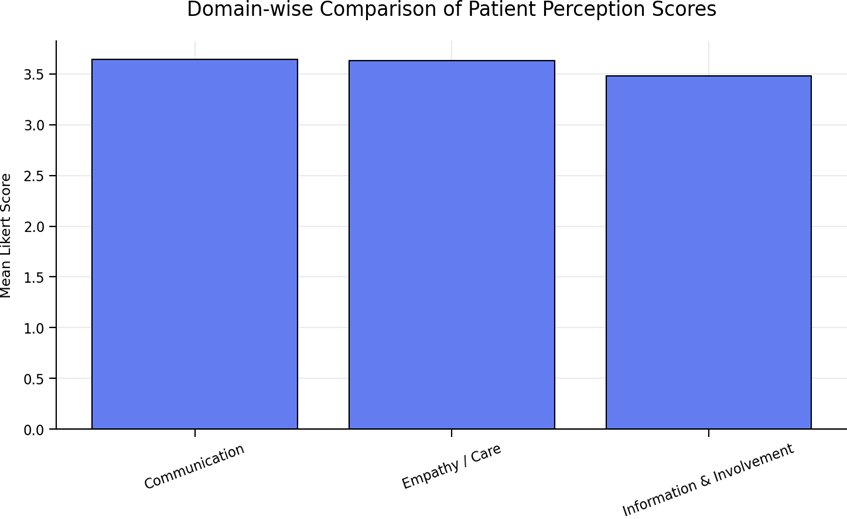
Fig 4 Overall Domain Comparison
|
Domain |
Strongly Agree |
Agree |
Negative Responses |
|
Communication |
~54% |
~23% |
~3–4% |
|
Empathy / Care |
~53% |
~23% |
~4–5% |
|
Information / Involvement |
~47% |
~24% |
~8–10% |
Domain-wise analysis of the Health Care Climate Questionnaire revealed consistently high scores across all dimensions, indicating a strong overall perception of doctor–patient interaction. Among the domains assessed, trust emerged as the highest-scoring domain, reflecting a high degree of confidence in physicians and a strong therapeutic relationship. This finding underscores the importance of trust as a central component of effective chronic disease management, particularly in diabetes mellitus.
The communication domain also demonstrated high mean scores, suggesting that patients perceived their physicians as effective in conveying information, listening attentively, and responding appropriately to their concerns. This highlights the presence of efficient two-way communication, which is essential for promoting patient understanding, adherence, and self-management.
Similarly, the emotional support domain showed favourable scores, indicating that patients experienced empathy, acceptance, and emotional reassurance during clinical interactions. This suggests that physicians were able to establish a supportive environment, which is important for addressing the psychological aspects of chronic illness.In contrast, the autonomy domain, although demonstrating satisfactory scores, was relatively lower compared to other domains. This was particularly evident in areas related to encouraging patient participation and understanding the patient’s perspective before making clinical decisions. These findings suggest that while the foundation for patient-centered care is strong, there is still scope for enhancing participatory decision-making and fostering greater patient involvement in their own care.
A comparison of mean Likert scores across the three domains of doctor–patient interaction was performed using an approximate one-way ANOVA approach. The Communication domain demonstrated the highest mean score (3.64 ± approx.), followed closely by the Empathy/Interpersonal Care domain (3.63 ± approx.), while the Information and Patient Involvement domain showed a comparatively lower mean score (3.48 ± approx.).The analysis indicated that there was no statistically significant difference between the Communication and Empathy domains (p > 0.05), suggesting consistently high performance in both areas. However, the Information/Involvement domain exhibited lower mean scores compared to both Communication and Empathy domains, and this difference was found to be statistically significant (p < 0.05).
These findings suggest that while patients reported high levels of satisfaction with physician communication and empathetic behaviour, there is a relative deficiency in aspects related to information sharing and involvement in decision-making. This highlights the need for targeted interventions to enhance patient engagement and improve shared decision-making practices.
DISCUSSION:
The present study evaluated patient perceptions of autonomy and doctor–patient communication among individuals with type 2 diabetes mellitus and demonstrated an overall high level of satisfaction across multiple domains. The findings indicate that a majority of patients perceived their interactions with physicians as supportive, respectful, and conducive to active participation in their own care. Such observations are consistent with established evidence showing that effective clinician–patient communication is strongly associated with improved health outcomes, enhanced satisfaction, and better adherence to treatment plans (1,6). Communication forms the foundation of patient-centred care and facilitates trust, mutual understanding, and collaboration during clinical encounters (1,7). In the present study, domain-wise analysis further demonstrated high mean Likert scores in communication (3.64) and empathy/interpersonal care (3.63), reinforcing the importance of these domains in shaping patient experiences. These findings are also supported by recent research demonstrating a significant association between communication effectiveness, patient satisfaction, and perceived quality of care (17,20).
The demographic characteristics of the study population revealed a predominance of male participants, which may reflect gender-based differences in healthcare utilization observed in similar contexts (8). The inclusion of patients across a wide age range and varying durations of diabetes allowed for a comprehensive assessment across different stages of disease progression. The high prevalence of diabetes-related complications such as retinopathy and neuropathy highlights the chronic burden of the disease and underscores the need for continuous patient engagement and effective communication in long-term management (15). Chronic disease management relies heavily on patient education and self-management, both of which are facilitated through effective clinician–patient interaction (15).
A key strength of the study is the high level of perceived patient-centred care. A substantial proportion of participants reported that physicians provided treatment choices, understood their concerns, and facilitated open communication during consultations. These findings align with established conceptual models of patient-centred care, which emphasize empathy, shared understanding, and patient involvement in decision-making (7,8). Furthermore, these observations are consistent with the ethical principles of autonomy and respect for patient choice (2,4). Shared decision-making models advocate an active partnership between clinicians and patients and have been shown to improve adherence and satisfaction (5). Recent evidence also supports that patient involvement enhances compliance and perceived quality of care, although implementation remains inconsistent across settings (18,22).
Trust and the therapeutic relationship emerged as significant strengths in the present study. A large proportion of participants reported high levels of trust in their physicians, along with perceptions of empathy, acceptance, and emotional support. Trust is a critical determinant of patient adherence and clinical outcomes, as demonstrated in prior studies (13). Additionally, effective communication skills, including attentive listening and emotional responsiveness, strengthen the therapeutic alliance and improve satisfaction (12,13). The high empathy domain scores observed in this study are consistent with contemporary research indicating that perceived physician empathy significantly improves patient satisfaction and quality of care (19,21).
The study also demonstrated strong communication effectiveness, with most participants reporting that physicians answered questions thoroughly, encouraged dialogue, and listened attentively. Such two-way communication is particularly critical in diabetes care, where self-management practices and patient education are essential for optimal disease control (15). However, the comparatively lower scores observed in the information and patient involvement domain (mean: 3.48) suggest that there is still scope for improvement in fostering active patient participation. This finding is consistent with previous literature indicating that patient involvement in decision-making often remains suboptimal (5,11). Recent systematic reviews also confirm that despite efforts to promote shared decision-making, patient participation continues to be limited in routine clinical practice (23).
Emotional and psychological aspects of care were also noteworthy. A significant proportion of participants reported comfort in sharing their concerns with their physicians, indicating strong interpersonal rapport. Emotional support plays a vital role in patient-centred care and contributes to improved psychological well-being and clinical outcomes (7). Nonetheless, a minority of participants expressed dissatisfaction, particularly regarding communication style. Even small levels of dissatisfaction are clinically important, as they may negatively affect adherence and trust (13). Furthermore, although no psychiatric illnesses were reported in this study, patients with diabetes are known to have an increased risk of psychological distress, including depression and anxiety, which can negatively influence glycemic control and quality of life (10,14). These findings highlight the importance of integrating psychological screening and support into routine diabetes care.
Overall, the findings suggest that clinicians in this setting demonstrate strong communication and interpersonal skills, contributing to high levels of patient satisfaction. However, further improvements can be achieved by strengthening patient-centred approaches, particularly by enhancing patient involvement, encouraging shared decision-making, and addressing individual concerns more effectively. These findings are supported by self-determination theory, which emphasizes the importance of autonomy in motivating patients and improving long-term adherence and outcomes (3,9). Strengthening these components may further enhance the quality of doctor–patient relationships and lead to better clinical outcomes in type 2 diabetes mellitus.
Implications for Practice
The study highlights that clinicians demonstrate strong interpersonal and communication skills. However, further improvements can be achieved by:
• Promoting shared decision-making,
• Encouraging patient participation,
• Understanding patient perspectives before treatment decisions.
These strategies are consistent with self-determination theory, which emphasizes autonomy as a key driver of motivation and adherence⁹.
CONCLUSION:
This study highlights a high level of patient satisfaction with doctor–patient communication among individuals with diabetes mellitus. The majority of participants reported positive experiences in terms of trust, understanding, emotional support, and shared decision-making, which are essential for effective chronic disease management.
Despite these encouraging findings, a small proportion of participants expressed dissatisfaction, particularly regarding communication style and engagement. This underscores the need for continuous improvement in patient-centred communication, including active listening, encouraging patient participation, and addressing individual concerns. Overall, strengthening doctor–patient interaction can contribute to better adherence, improved clinical outcomes, and enhanced quality of care in diabetes management.
REFERENCES:
1. Street RL Jr, Makoul G, Arora NK, Epstein RM. How does communication heal? Pathways linking clinician–patient communication to health outcomes. Patient Educ Couns. 2009;74(3):295–301.
2. Beauchamp TL, Childress JF. Principles of Biomedical Ethics. 7th ed. New York: Oxford University Press; 2013.
3. Williams GC, Freedman ZR, Deci EL. Supporting autonomy to motivate patients with diabetes for glucose control. J Pers Soc Psychol. 1996;70(1):115–26.
4. ABIM Foundation. Medical professionalism in the new millennium: A physician charter. Ann Intern Med. 2002;136(3):243–6.
5. Elwyn G, Frosch D, Thomson R, Joseph-Williams N, Lloyd A, Kinnersley P, et al. Shared decision making: a model for clinical practice. J Gen Intern Med. 2012;27(10):1361–7.
6. Stewart MA. Effective physician–patient communication and health outcomes: a review. CMAJ. 1995;152(9):1423–33.
7. Epstein RM, Street RL Jr. The values and value of patient-centered care. Ann Fam Med. 2011;9(2):100–3.
8. Mead N, Bower P. Patient-centeredness: a conceptual framework and review of the empirical literature. Soc Sci Med. 2000;51(7):1087–110.
9. Deci EL, Ryan RM. Self-determination theory: a macrotheory of human motivation, development, and health. Can Psychol. 2008;49(3):182–5.
10. Fisher L, Glasgow RE, Strycker LA. The relationship between diabetes distress and clinical depression with glycemic control among patients with type 2 diabetes. Diabetes Care. 2010;33(5):1034–6.
11. Anderson RM, Funnell MM. Patient empowerment: myths and misconceptions. Patient Educ Couns. 2010;79(3):277–82.
12. Levinson W, Lesser CS, Epstein RM. Developing physician communication skills for patient-centered care. Health Aff (Millwood). 2010;29(7):1310–8.
13. Haskard Zolnierek KB, DiMatteo MR. Physician communication and patient adherence to treatment: a meta-analysis. Med Care. 2009;47(8):826–34.
14. Nicolucci A, Kovacs Burns K, Holt RIG, Comaschi M, Hermanns N, Ishii H, et al. Diabetes attitudes, wishes and needs second study (DAWN2™). Diabet Med. 2013;30(7):767–77.
15. Powers MA, Bardsley J, Cypress M, Duker P, Funnell MM, Fischl AH, et al. Diabetes self-management education and support in type 2 diabetes. Diabetes Educ. 2017;43(1):40–53.
16. Ismail F, Manaf ARA, Johanis MA, Idrus SZ, Hamzah MR. Assessment of patient satisfaction in a healthcare setting: doctor–patient communication issues. J Phys Conf Ser. 2020;1529:022091.
17. Versluijs Y, Lemmers M, Brown LE, Gonzalez AI, Kortlever JTP, Ring D. The correlation of communication effectiveness and patient satisfaction. J Patient Exp. 2021;8:1–7.
18. Galletta M, Piazza MF, Meloni SL, Chessa E, Piras I, Arnetz JE, et al. Patient involvement in shared decision-making: do patients rate physicians and nurses differently? Int J Environ Res Public Health. 2022;19(21):14229.
19. Holmes CT, Huggins C, Knowles H, Swoboda TK, Kirby R, Alanis N, et al. The association of empathy perception and patient satisfaction with resident physicians’ care. J Clin Med Res. 2023;15(4):225–32.
20. Wang Y, Liu C, Wang P. Patient satisfaction impact indicators from a psychosocial perspective. Front Public Health. 2023;11:1103819.
21. Gerger H, Munder T, Kreuzer N, Locher C, Blease C. Lay perspectives on empathy in patient–physician communication: an experimental study. Health Commun. 2024;39(6):1246–55.
22. Hoque F. Shared decision-making in patient care: advantages, barriers and potential solutions. J Brown Hosp Med. 2024;3(4):13–15.
23. Ubbink DT, Shamoun F, Heuvelsland S, van Etten-Jamaludin FS, Bolt EE. To what extent do general practitioners involve patients in decision-making? A systematic review. Prim Health Care Res Dev. 2025;26:e1–e10.