A COMPARISON BETWEEN LeHeR MANOEUVRE DURING DIFFICULT VIDEO LARYNGOSCOPY TO AID INTUBATION AND VIDEO LARYNGOSCOPY IN SNIFFING POSITION.
- SHIKHA , PG RESIDENT, DEPARTMENT OF ANAESTHESIOLOGY, SAMC AND PGI, INDORE.
- SHRUTI T VERMA , ASSISTANT PROFESSOR, DEPARTMENT OF ANAESTHESIOLOGY, SAMC AND PGI, INDORE
- MEHER SHIKHA VERMA , ASSOCIATE PROFESSOR, DEPARTMENT OF ANAESTHESIOLOGY, SAMC AND PGI, INDORE.
- ATUL DIXIT , PROFESSOR, DEPARTMENT OF ANAESTHESIOLOGY, SAMC AND PGI, INDORE.
Article Information:
Abstract:
Background: Video laryngoscopy has become an integral tool in airway management owing to improved glottic visualization. However, difficulty in advancing the endotracheal tube may still occur despite an adequate view. The Left Head Rotation (LeHeR) manoeuvre has been proposed as a simple adjunct to improve intubation conditions during difficult video laryngoscopy. The present study aimed to compare glottic view and intubating conditions between the LeHeR manoeuvre during difficult video laryngoscopy and video laryngoscopy performed in the sniffing position. Methods: This analytical cross-sectional study was conducted in 188 adult patients (ASA I–II) undergoing surgery under general anaesthesia requiring video laryngoscopy-guided tracheal intubation. Patients were allocated into two groups: Group A (LeHeR manoeuvre) and Group B (sniffing position), with 94 patients in each group. Glottic view was assessed using the Cormack–Lehane grading system, and ease of intubation was evaluated using the Intubation Difficulty Scale (IDS). First-attempt intubation success, need for additional manoeuvres, and peri-intubation complications were also recorded. Results: Baseline demographic characteristics were comparable between the groups. The LeHeR manoeuvre resulted in a significantly better distribution of Cormack–Lehane grades, with a higher proportion of Grade I views (p = 0.02). Ease of intubation was significantly improved in the LeHeR group, with a greater number of patients achieving an IDS score of 0 and fewer experiencing moderate to major difficulty (p < 0.001). First-attempt intubation success was significantly higher in the LeHeR group compared to the sniffing position group (93.6% vs 80.9%, p = 0.01). The requirement for additional optimization manoeuvres was lower in the LeHeR group. No major airway-related complications were observed. Conclusion: The LeHeR manoeuvre significantly improves ease of intubation and first-attempt success during difficult video laryngoscopy compared to the sniffing position alone. It is a simple, safe, and effective adjunct that can be readily incorporated into routine airway management.
Keywords:
Article :
INTRODUCTION:
Tracheal intubation is a fundamental responsibility of the anaesthesiologist and a critical determinant of perioperative patient safety. Unexpected difficult intubation remains a major challenge in routine anaesthetic practice and may expose patients to serious complications such as hypoxia, aspiration, airway trauma, and cardiovascular instability [1,2]. Despite advances in airway assessment and equipment, unanticipated difficulty during intubation continues to contribute significantly to anaesthesia-related morbidity.
Traditionally, the sniffing position has been recommended to facilitate laryngoscopy by aligning the oral, pharyngeal, and laryngeal axes, thereby improving glottic visualization during direct laryngoscopy [3]. While this concept has been well established for decades, its relevance has been questioned with the widespread adoption of video laryngoscopy, which allows indirect visualization of the glottis without the need for strict anatomical axis alignment [4].
Video laryngoscopes have demonstrated superior glottic visualization and improved first-attempt intubation success compared with direct laryngoscopy, particularly in patients with anticipated or unanticipated difficult airways [5,6]. However, a well-recognized limitation of video laryngoscopy is the difficulty encountered during advancement of the endotracheal tube into the trachea, even when an optimal glottic view is obtained. This paradox is attributed to the angulated blade design and the mismatch between the visual axis and the tracheal axis, which may result in tube impingement despite adequate visualization [8,9].
Patient positioning alone may not reliably overcome this challenge. Several studies have demonstrated that the sniffing position does not consistently improve intubation conditions during video laryngoscopy when compared with neutral or alternative head positions [10]. Consequently, there has been renewed interest in adjunctive airway optimization manoeuvres to facilitate successful intubation.
External airway manoeuvres, including external laryngeal manipulation, have been shown to improve glottic exposure and intubation conditions during both direct and video laryngoscopy [11]. More recently, supine left head rotation, referred to as the Left Head Rotation (LeHeR) manoeuvre, has emerged as a simple and non-invasive technique to optimize airway anatomy. Recent evidence has demonstrated that rotating the head 45° to the left in the supine position significantly improves the Cormack–Lehane glottic view during direct laryngoscopy compared with the classic sniffing position, with additional benefits including reduced intubation difficulty, fewer attempts, and decreased need for adjuncts [15].
While earlier studies evaluated the LeHeR manoeuvre primarily during direct laryngoscopy [12-14], recent reports have highlighted its utility during difficult video laryngoscopy, particularly in situations where adequate glottic visualization does not translate into easy tube passage [15]. These findings suggest that the LeHeR manoeuvre may address one of the key limitations of video laryngoscopy.
Despite emerging evidence supporting the role of the LeHeR manoeuvre, comparative data evaluating its effectiveness against conventional video laryngoscopy performed in the sniffing position remain limited. The present study was therefore undertaken to assess and compare glottic view and intubating conditions between the LeHeR manoeuvre during difficult video laryngoscopy and video laryngoscopy performed in the sniffing position.
MATERIALS AND METHODS:
This analytical cross-sectional comparative study was conducted in the Department of Anaesthesiology, Sri Aurobindo Medical College and Postgraduate Institute, Indore (M.P.), after obtaining approval from the Institutional Ethics Committee. The study duration was 18 months, from June 2024 to November 2025. Written informed consent was obtained from all participants prior to enrolment.
Adult patients undergoing elective surgical procedures under general anaesthesia requiring tracheal intubation using video laryngoscopy were included in the study.
Inclusion criteria
Patients fulfilling the following criteria were included:
• Age between 18 and 65 years
• Body mass index (BMI) between 18.5 and 35 kg/m²
• American Society of Anesthesiologists (ASA) physical status I or II
• Patients of either sex undergoing video laryngoscopy-guided tracheal intubation
Exclusion criteria
Patients were excluded if they had:
• Sternomental distance <12 cm
• Thyromental distance <6 cm
• Mouth opening <3 fingerbreadths
• Restricted head rotation or limited neck extension
• BMI >35 kg/m²
• Refusal to provide informed consent
Sample size was calculated based on previously reported intubation success rates of 92.3% and 100% in the comparison groups, with a 95% confidence level and 80% power. The calculated sample size was 188 patients, with 94 patients in each group. Patients were allocated into two groups:
• Group A (LeHeR group): Video laryngoscopy performed with the Left Head Rotation (LeHeR) manoeuvre, achieved by rotating the head approximately 45° to the left in the supine position during intubation.
• Group B (Sniffing group): Video laryngoscopy performed in the conventional sniffing position.
Anaesthetic technique
All patients underwent a standardized pre-anaesthetic evaluation, including airway assessment. In the operating room, standard ASA monitoring comprising electrocardiography, non-invasive blood pressure, and pulse oximetry was applied.
Premedication included intravenous midazolam 0.1 mg/kg and fentanyl 2 µg/kg. Patients were preoxygenated with 100% oxygen for three minutes. Anaesthesia was induced with intravenous propofol 2–2.5 mg/kg until loss of eyelash reflex, followed by rocuronium 0.6 mg/kg to facilitate tracheal intubation.
Video laryngoscopy was performed using an EMS fibreoptic video laryngoscope with Macintosh Mega Mac blade. Device functionality was checked before each use. Laryngoscope blades were disinfected and sterilized according to institutional protocol. No external laryngeal pressure was applied while assessing the laryngeal view.
Outcome measures
Primary outcomes
• Glottic view assessed using the Cormack–Lehane grading system
• Ease of intubation assessed using the Intubation Difficulty Scale (IDS)
Secondary outcomes
• Number of intubation attempts
• First-attempt intubation success
• Requirement for additional optimisation manoeuvres or adjuncts
• Time taken for successful intubation
• Peri-intubation complications such as desaturation or airway trauma
The IDS score was interpreted as follows:IDS = 0 indicated ideal intubation, scores between 1 and 5 indicated slight difficulty, and scores >5 indicated moderate to major difficulty.
Data collection
All observations were recorded on a pre-structured proforma specifically designed for the study.
Statistical analysis
Data were entered into Microsoft Excel and analysed using appropriate statistical software. Quantitative variables were expressed as mean ± standard deviation and compared using the independent t-test. Qualitative variables were expressed as frequency and percentage and analysed using the Chi-square test. A p value <0.05 was considered statistically significant.
RESULTS:
A total of 188 patients were enrolled in the study, with 94 patients in each group. Group A consisted of patients intubated using video laryngoscopy assisted by the LeHeR manoeuvre, while Group B included patients intubated using video laryngoscopy in the sniffing position.
The demographic and baseline characteristics of the study population are shown in Table 1. The two groups were comparable in terms of age, sex distribution, BMI, and ASA physical status. No statistically significant difference was observed between the groups for any baseline parameter (p > 0.05), indicating adequate homogeneity of the study population.
Table 1. Demographic and Baseline Characteristics
|
Variable |
Group A (LeHeR) (n = 94) |
Group B (Sniffing) (n = 94) |
P value |
|
Age (years), mean ± SD |
41.8 ± 12.3 |
42.6 ± 11.9 |
0.68 |
|
Sex (M/F) |
56 / 38 |
54 / 40 |
0.77 |
|
BMI (kg/m²), mean ± SD |
26.9 ± 3.8 |
27.2 ± 3.6 |
0.59 |
|
ASA I / II |
61 / 33 |
64 / 30 |
0.64 |
The distribution of Cormack–Lehane grades during video laryngoscopy is presented in Table 2. A higher proportion of patients in Group A achieved a Grade I glottic view compared to Group B (66.0% vs 51.1%).
Grade III views were less frequent in the LeHeR group. No Grade IV view was observed in either group. The difference in glottic view distribution between the two groups was statistically significant (p = 0.02).
Table 2. Distribution of Cormack–Lehane Grades
|
Cormack–Lehane Grade |
Group A (LeHeR) n (%) |
Group B (Sniffing) n (%) |
P value |
|
Grade I |
62 (66.0) |
48 (51.1) |
|
|
Grade II |
28 (29.8) |
34 (36.2) |
|
|
Grade III |
4 (4.2) |
12 (12.7) |
|
|
Grade IV |
0 (0) |
0 (0) |
|
|
Total |
94 (100) |
94 (100) |
0.02* |
*Statistically significant
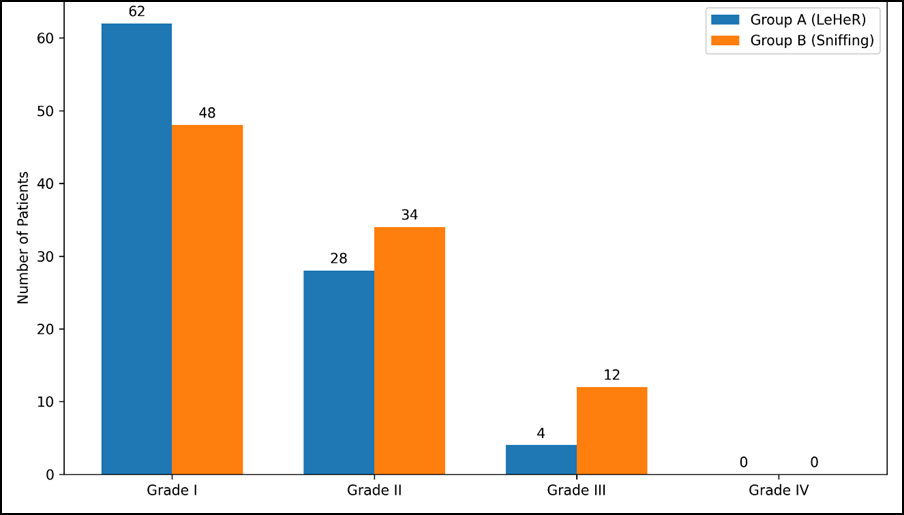
Figure 1: Distribution of Cormack–Lehane Grades
Ease of intubation assessed using the Intubation Difficulty Scale is shown in Table 3. An IDS score of 0, indicating ideal intubation conditions, was observed in a significantly higher proportion of patients in the LeHeR group compared to the sniffing position group (46.8% vs 27.7%).
Moderate to major difficulty (IDS >5) was more common in Group B. The difference in IDS score distribution between the groups was highly significant (p < 0.001).
Table 3. Intubation Difficulty Scale (IDS) Scores
|
IDS Category |
Group A (LeHeR) n (%) |
Group B (Sniffing) n (%) |
P value |
|
IDS = 0 (Ideal) |
44 (46.8) |
26 (27.7) |
|
|
IDS 1–5 (Slight difficulty) |
46 (48.9) |
52 (55.3) |
|
|
IDS >5 (Moderate–major difficulty) |
4 (4.3) |
16 (17.0) |
|
|
Total |
94 (100) |
94 (100) |
<0.001* |
*Statistically significant
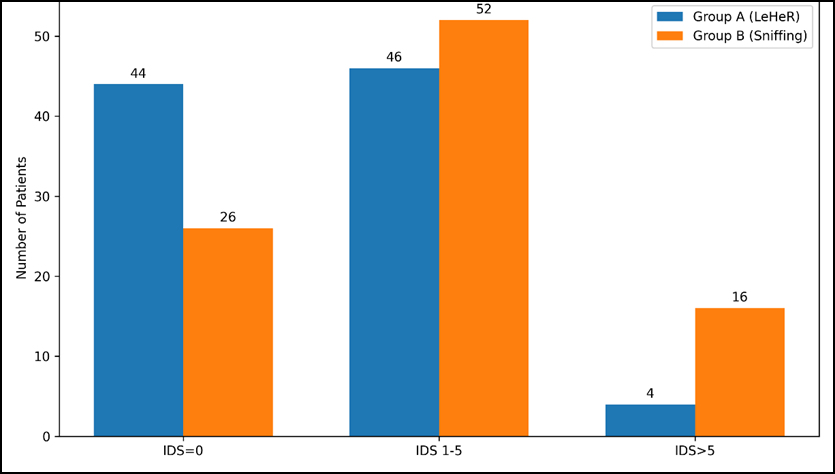
Figure 2: Intubation Difficulty Scale (IDS) Scores
The number of intubation attempts and requirement for additional manoeuvres are summarized in Table 4. First-attempt intubation success was significantly higher in the LeHeR group compared to the sniffing position group (93.6% vs 80.9%, p = 0.01). The need for additional optimization manoeuvres was also significantly lower in Group A (p = 0.004).
Table 4. Intubation Attempts and Optimization Manoeuvres
|
Parameter |
Group A (LeHeR) n (%) |
Group B (Sniffing) n (%) |
P value |
|
First-attempt success |
88 (93.6) |
76 (80.9) |
0.01* |
|
>1 intubation attempt |
6 (6.4) |
18 (19.1) |
|
|
Additional manoeuvres required |
12 (12.8) |
28 (29.8) |
0.004* |
*Statistically significant
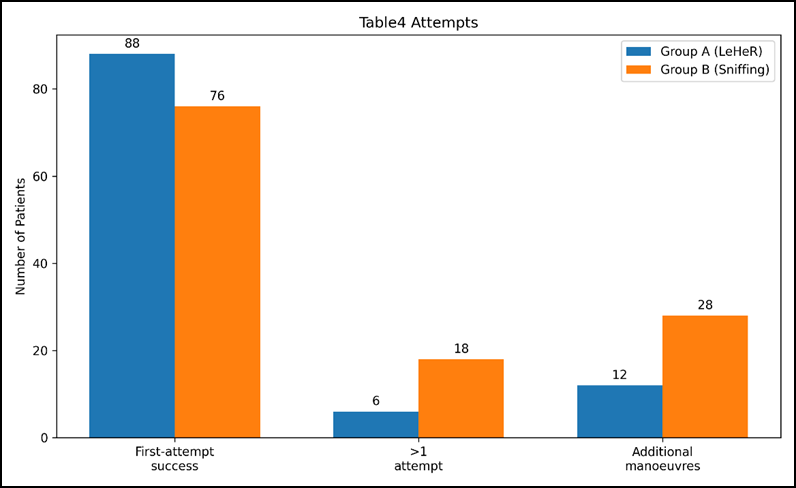
Figure 3: Intubation Attempts and Optimization Manoeuvres
Peri-intubation complications observed during the study are presented in Table 5. Minor complications such as transient oxygen desaturation and mucosal trauma were noted in both groups. Although the overall complication rate was lower in the LeHeR group, the difference was not statistically significant (p = 0.06). No major airway-related complications were recorded.
Table 5. Peri-intubation Complications
|
Complication |
Group A (LeHeR) n (%) |
Group B (Sniffing) n (%) |
P value |
|
Transient desaturation |
3 (3.2) |
7 (7.4) |
0.19 |
|
Mucosal trauma |
2 (2.1) |
6 (6.4) |
0.15 |
|
Any complication |
5 (5.3) |
13 (13.8) |
0.06 |
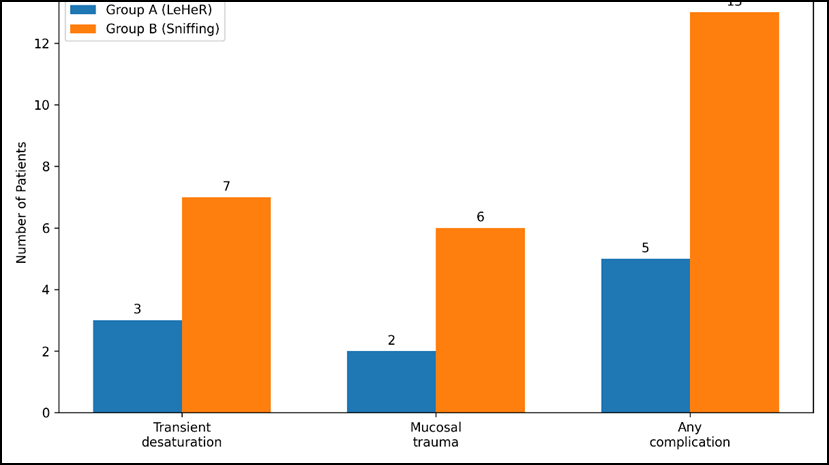
Figure 4: Peri-intubation Complications
DISCUSSION:
The present study evaluated the role of the Left Head Rotation (LeHeR) manoeuvre during difficult video laryngoscopy and demonstrated that its application significantly improved ease of intubation, reduced intubation difficulty, and increased first-attempt success when compared with video laryngoscopy performed in the conventional sniffing position. These benefits were achieved without an increase in peri-intubation complications, suggesting that the manoeuvre is both effective and safe.
The two study groups were comparable with respect to baseline demographic and clinical characteristics, ensuring that differences in intubation outcomes were attributable to the technique used rather than patient-related confounding factors. This comparability strengthens the internal validity of the study and supports the interpretation of the results.
Although video laryngoscopy is known to improve glottic visualization, difficulty in advancing the endotracheal tube remains a recognized limitation. In the present study, application of the LeHeR manoeuvre resulted in a better distribution of Cormack–Lehane grades, with a higher proportion of favourable glottic views and fewer poor views compared with the sniffing position. This finding suggests that head rotation favourably alters airway anatomy even during indirect laryngoscopy.
Similar improvements in glottic visualization with supine left head rotation have been reported by Gupta et al., who demonstrated improved Cormack–Lehane grades during difficult direct laryngoscopy using left head rotation [12,13]. More recently, Arul et al. reported that rotating the head 45° to the left significantly improved the glottic view during direct laryngoscopy, with nearly three-fourths of patients showing an improvement in Cormack–Lehane grade compared with the classic sniffing position [14]. Although their study focused on direct laryngoscopy, the present study extends these observations to video laryngoscopy, where visualization is often adequate but intubation difficulty may still persist.
In contrast, Hochman et al. demonstrated that the sniffing position did not confer a significant advantage over the neutral position during video laryngoscopy [10]. This aligns with the findings of the present study, where adequate glottic visualization in the sniffing position did not consistently translate into improved intubation conditions.
Ease of intubation, assessed using the Intubation Difficulty Scale, was significantly better with the LeHeR manoeuvre. A greater proportion of patients achieved ideal intubation conditions, while moderate to major difficulty was more frequently encountered when intubation was performed in the sniffing position. This observation is clinically important, as the Intubation Difficulty Scale provides a comprehensive assessment of intubation complexity beyond visualization alone.
Dupanovic et al. highlighted that difficulty in advancing the endotracheal tube during video laryngoscopy often occurs despite optimal glottic visualization due to misalignment between the visual axis and the tracheal axis [8]. Supine left head rotation likely improves this alignment by modifying airway geometry and the spatial relationship between the glottis and the trachea, thereby facilitating smoother tube passage. Similar improvements in ease of intubation and reduced need for adjuncts were reported by Arul et al. during direct laryngoscopy when intubation was performed in the LeHeR position [14], supporting the mechanistic plausibility of this manoeuvre.
First-attempt intubation success was higher with the LeHeR manoeuvre, with fewer patients requiring multiple attempts or additional optimisation manoeuvres. This is clinically relevant, as repeated intubation attempts are associated with increased airway trauma, hypoxaemia, and adverse outcomes. De Jong et al. emphasized the importance of first-pass success in reducing airway-related complications, even when video laryngoscopy is employed [7].
The reduced requirement for adjuncts observed with the LeHeR manoeuvre is consistent with the findings of Rajan et al., who described LeHeR as an effective rescue technique during difficult video laryngoscopy when adequate glottic visualization did not translate into easy tube passage [15]. The present study builds upon their observations by demonstrating that LeHeR is beneficial not only as a rescue manoeuvre but also as a primary comparative strategy against the sniffing position.
The incidence of peri-intubation complications was low and comparable between the two techniques. Minor complications were fewer with the LeHeR manoeuvre, although this difference was not statistically significant. These findings are in agreement with Arul et al., who reported stable heart rate and absence of clinically significant adverse haemodynamic changes during intubation in the LeHeR position [14]. Collectively, these data suggest that supine left head rotation does not adversely affect haemodynamic stability and can be safely applied.
The LeHeR manoeuvre is simple, non-invasive, and requires no additional equipment. As suggested by Rajan et al. and supported by the present study, early application of this manoeuvre during video laryngoscopy may reduce intubation difficulty, minimise repeated attempts, and improve procedural efficiency [15].
This study has certain limitations. It was conducted at a single centre, and the manoeuvre is operator-dependent, which may limit generalisability. Blinding was not feasible due to the nature of the intervention. Larger multicentre randomised controlled trials are required to further validate these findings.
CONCLUSION:
The Left Head Rotation (LeHeR) manoeuvre significantly improves intubation conditions during difficult video laryngoscopy compared with the conventional sniffing position. Its use is associated with better glottic visualization, reduced intubation difficulty, higher first-attempt success, and a lower requirement for additional optimization manoeuvres, without an increase in peri-intubation complications or adverse haemodynamic effects. Given its simplicity, safety, and lack of requirement for additional equipment, the LeHeR manoeuvre represents a practical and effective adjunct that can be readily incorporated into routine airway management, particularly in situations where video laryngoscopy provides an adequate view but endotracheal tube passage remains challenging.
REFERENCES:
1. Cook TM, Woodall N, Frerk C. Major complications of airway management in the UK: results of the Fourth National Audit Project. Br J Anaesth. 2011;106(5):617–631.
2. Apfelbaum JL, Hagberg CA, Connis RT, et al. Practice guidelines for management of the difficult airway: 2022 update. Anesthesiology. 2022;136(1):31–81.
3. Bannister FB, Macbeth RG. Direct laryngoscopy and tracheal intubation. Lancet. 1944;2:651–654.
4. Cooper RM. Use of a new videolaryngoscope (GlideScope) in the management of a difficult airway. Can J Anaesth. 2003;50(6):611–613.
5. Lewis SR, Butler AR, Parker J, Cook TM, Smith AF. Videolaryngoscopy versus direct laryngoscopy for adult tracheal intubation. Cochrane Database Syst Rev. 2016;11:CD011136.
6. Aziz MF, Dillman D, Fu R, Brambrink AM. Comparative effectiveness of the C-MAC video laryngoscope versus direct laryngoscopy in the predicted difficult airway. Anesthesiology. 2012;116(3):629–636.
7. De Jong A, Molinari N, Conseil M, et al. Video laryngoscopy improves first-pass success in ICU intubation. Crit Care Med. 2014;42(11):252–260.
8. Dupanovic M, Isaacson SA, Borovcanec M, et al. Clinical predictors of difficult tube passage during videolaryngoscopy. Anesth Analg. 2019;129(3):768–776
9. Heidegger T. Video laryngoscopy and the difficult airway. Minerva Anestesiol. 2015;81(9):1016–1023.
10. Hochman I, Gruber M, Illouz G, et al. The sniffing position is not superior to neutral position during videolaryngoscopy. J Clin Anesth. 2020;62:109703.
11. Takahata O, Kubota M, Mamiya K, et al. Efficacy of external laryngeal manipulation during laryngoscopy. Anesth Analg. 1997;84(2):419–421.
12. Gupta B, Jain G, D’Souza N. Left head rotation as a rescue manoeuvre during difficult laryngoscopy. J Clin Anesth. 2021;68:110094.
13. Gupta B, Kohli S, Farooque K, et al. Supine left head rotation improves glottic visualization during difficult laryngoscopy. Indian J Anaesth. 2023;67(5):389–395.
14. Arul L, Rajan S, SaiSandhya VK, Madhu M, Manikandan MS, Sreekumar G. Impact of left head rotation (LeHeR) maneuver on glottic view during direct laryngoscopy: an observational study. J Anaesthesiol Clin Pharmacol. 2025;41:686–691.
15. Rajan S, Sreekumar G, Arul L, Roy RA. Rescue LeHeR manoeuvre during difficult video laryngoscopy to aid endotracheal intubation. Indian J Anaesth. 2024;68(4):397–398.