STUDY OF SERUM URIC ACID LEVELS IN TYPE 2 DIABETES MELLITUS AND ITS ASSOCIATION WITH CARDIAC RISK FACTORS AND COMPLICATIONS.
- Kirana Kumar B N , Associate Professor, Department of General Medicine, Karwar Institute of Medical Sciences, Karwar, Karnataka, India, Pincode – 581301.
- Suma C P , Professor, Department of General Medicine, Karwar Institute of Medical Sciences, Karwar, Karnataka, India, Pincode – 581301
- Mahanthesh P , Associate Professor, Department of Dermatology, Karwar Institute of Medical Sciences, Karwar, Karnataka, India, Pincode – 581301.
- Raghavendra D , Assistant Professor, Department of Community Medicine, Sri Chamundeshwari Medical College, Hospital & Research Institute, Channapatna, Karnataka, India, Pincode – 562160.
Article Information:
Abstract:
Background: The prevalence of diabetes mellitus is rapidly rising all over the world. India is called as the diabetic capital of the world. DM is an important risk factor associated with increased risk of cardiovascular disease. Many studies have shown that the serum uric acid concentration in predicting the risk of cardiac complications. This has directed the research towards the potential mechanisms by which uric acid might have direct or indirect effects on the cardiovascular system. Material and Methods: This descriptive cross-sectional study was conducted at Karwar Institute of Medical Sciences, Karwar. Eighty patients aged >40 years with Type 2 Diabetes Mellitus, diagnosed as per American Diabetes Association criteria, were included. Patients with Type 1 Diabetes Mellitus and renal failure were excluded. All patients underwent clinical evaluation and investigations including serum uric acid, ECG, 2D echocardiography, routine laboratory tests, urine albumin, Troponin I, chest X-ray, and ultrasonography abdomen. Data were entered in Microsoft Excel and analyzed using SPSS version 27, with p<0.05 considered statistically significant. Results: Among 80 patients with Type 2 Diabetes Mellitus, the majority were aged 61–70 years (42.5%) and males were predominant (66.2%). Raised serum uric acid levels >5 mg/dL were observed in 66 patients (82.5%). Higher uric acid levels were significantly associated with BMI >23.0 kg/m² (96.9%), smoking (91.5%), hypertension (90.7%), diabetes duration >10 years (100.0%), and HbA1c >6.5% (84.6%). Cardiovascular complications also showed significant association, with elevated uric acid seen in acute coronary syndrome (90.5%), atrial fibrillation (50.0%), and congestive cardiac failure (100.0%). Thus, raised serum uric acid was strongly linked with cardiac risk factors and complications. Conclusion: The study showed that raised serum uric acid levels were common in Type 2 Diabetes Mellitus and were significantly associated with cardiac risk factors and cardiovascular complications, thereby supporting its clinical relevance in assessing cardiac risk among diabetic patients.
Keywords:
Article :
INTRODUCTION:
Diabetes mellitus comprises a group of common metabolic disorders characterized by hyperglycaemia. Its prevalence is increasing rapidly worldwide, making it one of the major global health emergencies of the 21st century [1]. In addition to millions currently living with diabetes, a large number of adults have impaired glucose tolerance, placing them at high risk of developing diabetes in the future [2]. India is often referred to as the diabetic capital of the world [3]. Population-based studies have shown a marked rise in type 2 diabetes prevalence in India, increasing nearly five-fold from 2.1% in 1975 to 12.1% in 2000 [4,5]. As per 2015 estimates, around 69.2 million people in India had diabetes, and this number is projected to rise to 123.5 million by 2040, second only to China [5].
Rapid urbanization, industrialization, and socioeconomic advancement in developing countries such as India have resulted in major lifestyle changes, contributing to the growing burden of lifestyle-related diseases. Early diagnosis and treatment are important not only to delay complications but also to prevent or postpone the onset of diabetes through lifestyle interventions in high-risk individuals [6,7]. The major complications of diabetes include cardiovascular disease, involving both microvascular and macrovascular pathology. Diabetes increases the risk of coronary artery disease by two to four times [8].
The association between serum uric acid and cardiovascular diseases, particularly ischemic heart disease, has been recognized since the 1950s and supported by several epidemiological studies. However, its role as an independent cardiovascular risk factor remains uncertain because hyperuricemia is often associated with obesity, dyslipidaemia, hypertension, insulin resistance, and diuretic use. Recent evidence has renewed interest in serum uric acid as a possible predictor of cardiovascular events, including myocardial infarction, through its direct or indirect effects on the cardiovascular system. The present study aims to assess serum uric acid levels in patients with Type 2 Diabetes Mellitus, evaluate their correlation with established cardiac risk factors, and determine their association with cardiac complications in this population.
MATERIALS AND METHODS:
This descriptive cross-sectional study was conducted over a period of two years, at Karwar Institute of Medical Sciences, Karwar. A total of 80 patients with Type 2 Diabetes Mellitus attending the outpatient department or admitted under the Department of Medicine were recruited for the study. Patients aged more than 40 years who satisfied the diagnostic criteria for Type 2 Diabetes Mellitus as per the American Diabetes Association were included. Both male and female patients were considered eligible. Patients with Type 1 Diabetes Mellitus and renal failure were excluded from the study.
After enrolment, each patient underwent detailed clinical evaluation, including relevant history taking and examination. All patients were further subjected to investigations such as serum uric acid estimation, electrocardiography, 2D echocardiography, and other routine laboratory investigations. Additional evaluations including urine albumin levels, Troponin I, chest X-ray, and ultrasonography of the abdomen were also performed wherever required as part of the assessment. The collected clinical, biochemical, and cardiac evaluation findings were used to study serum uric acid levels among patients with Type 2 Diabetes Mellitus and to assess their correlation with cardiac risk factors and cardiac complications.
The details compiled from the selected cases were documented in Microsoft Excel and analyzed using SPSS software version 27. Categorical variables such as age group, gender, serum uric acid categories, cardiac risk factors, and cardiovascular complications were expressed as frequencies and percentages. Associations between serum uric acid levels and risk factors or complications were assessed using Chi-square test or Fisher’s exact test, as appropriate. A p-value of <0.05 was considered statistically significant.
RESULTS:
The majority of participants belonged to the 61–70 years age group, accounting for 34 patients (42.5%), followed by 51–60 years with 21 patients (26.3%). Fewer subjects were aged 41–50 years (16.2%) and >70 years (15.0%). Males were predominant, comprising 53 patients (66.2%), while females constituted 27 patients (33.8%). (Table 1)
Table 1: Distribution of study subjects according to demographic characteristics
|
Characteristics |
Frequency (N) |
Percentage (%) |
|
|
Age group |
41 to 50 years |
13 |
16.2% |
|
51 to 60 years |
21 |
26.3% |
|
|
61 to 70 years |
34 |
42.5% |
|
|
>70 years |
12 |
15.0% |
|
|
Gender |
Male |
53 |
66.2% |
|
Female |
27 |
33.8% |
|
Most patients had raised serum uric acid levels, with 66 subjects (82.5%) having values >5 mg/dL. Only 14 patients (17.5%) had serum uric acid levels ≤5 mg/dL, indicating that elevated uric acid levels were common among the study subjects. (Figure 1)
The majority of participants belonged to the 61–70 years age group, accounting for 34 patients (42.5%), followed by 51–60 years with 21 patients (26.3%). Fewer subjects were aged 41–50 years (16.2%) and >70 years (15.0%). Males were predominant, comprising 53 patients (66.2%), while females constituted 27 patients (33.8%). (Table 1)
Table 1: Distribution of study subjects according to demographic characteristics
|
Characteristics |
Frequency (N) |
Percentage (%) |
|
|
Age group |
41 to 50 years |
13 |
16.2% |
|
51 to 60 years |
21 |
26.3% |
|
|
61 to 70 years |
34 |
42.5% |
|
|
>70 years |
12 |
15.0% |
|
|
Gender |
Male |
53 |
66.2% |
|
Female |
27 |
33.8% |
|
Most patients had raised serum uric acid levels, with 66 subjects (82.5%) having values >5 mg/dL. Only 14 patients (17.5%) had serum uric acid levels ≤5 mg/dL, indicating that elevated uric acid levels were common among the study subjects. (Figure 1)
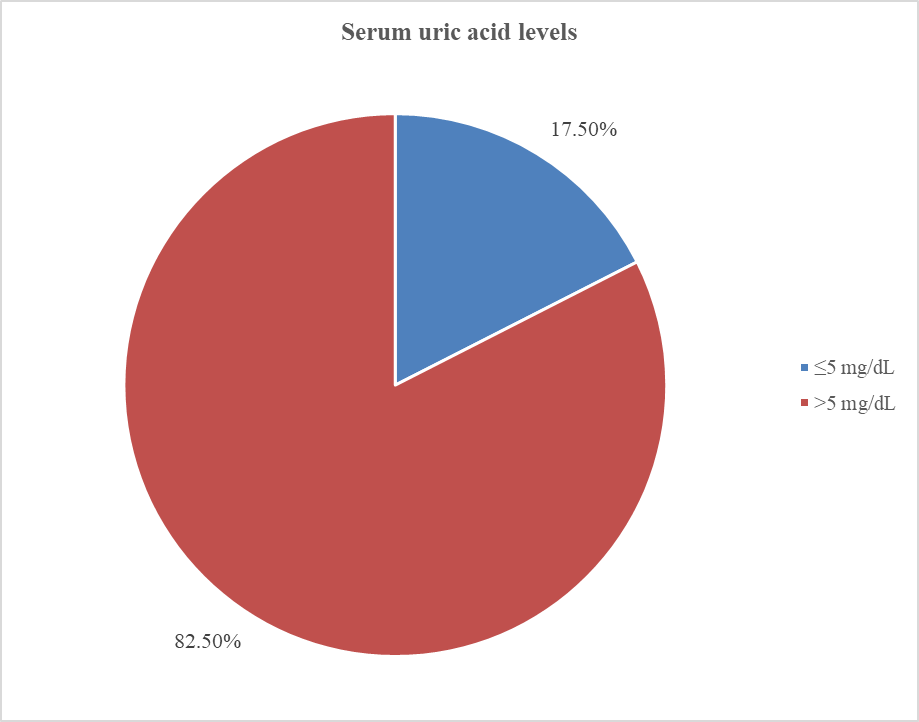
Figure 1: Distribution of study subjects according to serum uric acid levels
Raised serum uric acid levels were more frequent among patients with BMI >23.0 kg/m² (96.9%), smokers (91.5%), known hypertensives (90.7%), diabetes duration >10 years (100.0%), and HbA1c >6.5% (84.6%). All these associations were statistically significant, with p-values of 0.005, 0.012, <0.001, 0.008, and 0.002, respectively. (Table 2)
Table 2: Association between serum uric acid levels and cardiac risk factors among study subjects
|
Risk Factors |
Serum uric acid levels |
p-value |
||||
|
≤5 mg/dL (N=14) |
>5 mg/dL (N=66) |
|||||
|
Body Mass Index |
≤22.9 kg/m2 |
13 |
27.1% |
35 |
72.9% |
0.005a* |
|
>23.0 kg/m2 |
1 |
3.1% |
31 |
96.9% |
||
|
Smoking |
Yes |
4 |
8.5% |
43 |
91.5% |
0.012b* |
|
No |
10 |
30.3% |
23 |
69.7% |
||
|
K/C/o Hypertension |
Yes |
6 |
9.3% |
58 |
90.7% |
<0.001b* |
|
No |
8 |
50.0% |
8 |
50.0% |
||
|
Duration of DM |
≤10 years |
14 |
24.6% |
43 |
75.4% |
0.008a* |
|
>10 years |
0 |
0.0% |
23 |
100.0% |
||
|
HbA1c |
≤6.5% |
2 |
100.0% |
0 |
0.0% |
0.002a* |
|
>6.5% |
12 |
15.4% |
66 |
84.6% |
||
a – Fisher exact test; b – Chi-square test
* Statistically significant
Raised serum uric acid levels were commonly observed among patients with cardiovascular complications. It was present in 38 patients with acute coronary syndrome (90.5%), 3 patients with atrial fibrillation (50.0%), and all 15 patients with congestive cardiac failure (100.0%). These associations were statistically significant, with p-values of 0.048, 0.029, and 0.048, respectively. (Table 3)
Table 3: Association between serum uric acid levels and cardiovascular complications among study subjects
|
Cardiovascular complications |
Serum uric acid levels |
p-value# |
||||
|
≤5 mg/dL (N=14) |
>5 mg/dL (N=66) |
|||||
|
Acute Coronary Syndrome |
Yes |
4 |
9.5% |
38 |
90.5% |
0.048a* |
|
No |
10 |
26.3% |
28 |
73.7% |
||
|
Atrial Fibrillation |
Yes |
3 |
50.0% |
3 |
50.0% |
0.029a* |
|
No |
11 |
14.9% |
63 |
85.1% |
||
|
Congestive Cardiac Failure |
Yes |
0 |
0.0% |
15 |
100.0% |
0.048b* |
|
No |
14 |
21.5% |
51 |
78.5% |
||
a – Chi-square test; b – Fisher exact test
* Statistically significant
DISCUSSION:
This descriptive cross-sectional study was conducted at Karwar Institute of Medical Sciences, Karwar. Eighty patients aged >40 years with Type 2 Diabetes Mellitus, diagnosed as per American Diabetes Association criteria, were included. Patients with Type 1 Diabetes Mellitus and renal failure were excluded. All participants underwent clinical evaluation and investigations including serum uric acid, ECG, 2D echocardiography, routine laboratory tests, urine albumin, Troponin I, chest X-ray, and ultrasonography abdomen. This study helped address the lacuna regarding the association of serum uric acid with cardiac risk factors and complications in Type 2 Diabetes Mellitus. In the present study, hyperuricemia was highly prevalent among patients with Type 2 Diabetes Mellitus, as 66 patients (82.5%) had serum uric acid levels >5 mg/dL, while only 14 patients (17.5%) had levels ≤5 mg/dL. This indicates a considerable burden of raised serum uric acid in the study population. Bhole V et al. (2010) similarly reported an increasing risk of diabetes with rising serum uric acid levels, with diabetes incidence reaching 15.9 per 1000 person-years among individuals with serum uric acid ≥8.0 mg/dL [9]. In contrast, Rao TMV et al. (2016) reported a much lower prevalence of hyperuricemia, with only 8 out of 70 diabetic subjects (11.43%) being affected. This variation may be partly explained by differences in diagnostic cut-offs, as the present study used >5 mg/dL, while Rao TMV et al. used higher sex-specific thresholds [10].
The present study showed a strong association between elevated serum uric acid and higher body mass index. Among patients with BMI >23.0 kg/m², 96.9% had raised serum uric acid levels, and the association was statistically significant (p=0.005). This finding is supported by Li Y et al. (2015), who reported a significant positive correlation between serum uric acid and BMI (r=0.512, p=0.003), with high BMI identified as an independent risk factor (OR 4.81, p=0.031) [11]. Hu Y et al. (2021) also observed positive correlations between serum uric acid and BMI in both males (r=0.24, p<0.0001) and females (r=0.20, p<0.0001) [12]. Rao TMV et al. (2016) further supported this relationship by reporting higher mean BMI among diabetic cases (24.38 ± 2.80) than controls (22.07 ± 2.23) [10]. Thus, the present study is consistent with previous evidence that increased BMI is closely linked with elevated serum uric acid. Hypertension also showed a significant relationship with serum uric acid levels in the present study. Among known hypertensive patients, 90.7% had raised serum uric acid levels, with a highly significant association (p<0.001). Rao TMV et al. (2016) reported similar findings, with mean serum uric acid being significantly higher in hypertensive diabetics (6.60 ± 1.105 mg/dL) than in non-hypertensive diabetics (4.79 ± 1.18 mg/dL; p=0.0001) [10]. Li Y et al. (2015) also demonstrated positive correlations of serum uric acid with systolic blood pressure (r=0.210) and diastolic blood pressure (r=0.234) [11]. Hu Y et al. (2021) identified serum uric acid as a positive risk factor for diabetic nephropathy along with elevated systolic blood pressure. However, Hu Y et al. found no significant correlation with systolic blood pressure in females (r=0.03, p=0.33) or diastolic blood pressure overall, suggesting possible gender-related variation [12].
Longer duration of diabetes was another important factor associated with elevated serum uric acid. In the present study, all patients with diabetes duration >10 years had raised serum uric acid levels (100.0%), and this association was statistically significant (p=0.008). Rao TMV et al. (2016) similarly reported a progressive rise in mean serum uric acid with increasing diabetes duration, from 4.30 ± 0.77 mg/dL in patients with 2–4 years duration to 6.47 ± 1.07 mg/dL in those with 9–12 years duration (p=0.001) [10]. Hu Y et al. (2021) also found diabetes duration to be an independent risk factor for diabetic retinopathy in males (OR=1.062, p<0.001) and females (OR=1.045, p=0.006), as well as neuropathy. However, they observed no significant difference in diabetes duration across serum uric acid quartiles among males (p=0.84), indicating that the association may vary across subgroups [12]. Poor glycaemic control was significantly associated with elevated serum uric acid in the present study. Among patients with HbA1c >6.5%, 84.6% had raised serum uric acid levels, with a statistically significant association (p=0.002). Li Y et al. (2015) supported this finding by reporting higher fasting plasma glucose, fasting insulin, and HOMA-IR among individuals with higher serum uric acid, with HOMA-IR values of 1.52 ± 0.36 versus 1.06 ± 0.29 (p=0.000), and a positive correlation between serum uric acid and fasting plasma glucose (r=0.549, p=0.006) [11]. In contrast, Hu Y et al. (2021) reported negative correlations between serum uric acid and HbA1c in males (r=-0.14, p<0.0001) and females (r=-0.17, p<0.0001), as well as fasting blood glucose [12]. Therefore, the relationship between serum uric acid and glycaemic control remains inconsistent across studies.
Smoking showed a significant association with raised serum uric acid levels in the present study, where 91.5% of smokers had serum uric acid levels >5 mg/dL (p=0.012). Bhole V et al. (2010) included smoking as a covariate in multivariable analysis and showed that serum uric acid predicted diabetes risk independently of smoking status [9]. However, Rao TMV et al. (2016) did not observe a statistically significant difference in smoking prevalence between diabetic cases and controls (42.86% versus 25.00%; p=0.3421) [10]. Hence, while the present study suggests a strong association between smoking and elevated serum uric acid, previous literature appears to treat smoking more as a confounding variable than as a direct determinant of hyperuricemia. Cardiovascular complications were significantly associated with raised serum uric acid in the present study. Elevated serum uric acid was observed in 90.5% of patients with acute coronary syndrome (p=0.048), 50.0% of patients with atrial fibrillation (p=0.029), and 100.0% of patients with congestive cardiac failure (p=0.048). Rao TMV et al. (2016) reported higher mean serum uric acid levels among patients with ischemia (6.75 ± 1.203 mg/dL) and infarction (7.3 ± 0.96 mg/dL), supporting the association between uric acid and ischemic cardiac events [10]. Shao Y et al. (2019) further reported that every 59 µmol/L increase in serum uric acid significantly increased the hazard ratio for stroke to 1.19 (95% CI: 1.08–1.31) and all-cause mortality to 1.06 (95% CI: 1.03–1.09). However, Shao Y et al. found no significant association with coronary heart disease (HR=1.09, 95% CI: 0.94–1.26), indicating that the predictive role of serum uric acid may differ across cardiovascular outcomes [13].
CONCLUSION:
The study concluded that raised serum uric acid levels were common among patients with Type 2 Diabetes Mellitus, observed in 82.5% of subjects. Higher levels were significantly associated with cardiac risk factors such as increased BMI, smoking, hypertension, longer duration of diabetes, and poor glycaemic control. Serum uric acid also showed significant association with cardiovascular complications, including acute coronary syndrome, atrial fibrillation, and congestive cardiac failure, thereby supporting the study objectives.
REFERENCES:
1. Huizinga MM, Rothman RL. Addressing the diabetes pandemic: a comprehensive approach. Indian J Med Res. 2006;124:481-4.
2. International Diabetes Federation. IDF Diabetes Atlas. 7th ed. Brussels: International Diabetes Federation; 2015. p. 67-93.
3. International Diabetes Federation. IDF Diabetes Atlas. 6th ed. Brussels: International Diabetes Federation; 2013. p. 34-68.
4. Ramachandran A, Jali MV, Mohan V, Snehalatha C, Viswanathan M. High prevalence of diabetes in an urban population in south India. BMJ. 1988;297:587-90.
5. Pan XR, Li GW, Hu YH, Wang JX, Yang WY, An ZX, et al. Effect of diet and exercise in preventing NIDDM in population with impaired glucose tolerance: the Da Qing IGT and Diabetes Study. Diabetes Care. 1997;20:537-44.
6. Diabetes Prevention Program Research Group. Within-trial cost-effectiveness of lifestyle intervention or metformin for the primary prevention of type 2 diabetes. Diabetes Care. 2003;26:2518-23.
7. Diagnosis and classification of diabetes mellitus. Diabetes Care. 2006;29 Suppl 1:S43-8.
8. Chaturvedi N, Fuller JH, Taskinen MR. Differing associations of lipid and lipoprotein disturbances with the macrovascular and microvascular complications of type 1 diabetes. Diabetes Care. 2001;24(12):2071-6.
9. Bhole V, Choi JW, Kim SW, de Vera M, Choi H. Serum uric acid levels and the risk of type 2 diabetes: prospective study. Am J Med. 2010;123(10):957-61.
10. Rao TMV, Vanukuri NK. A study on serum uric acid levels in type 2 diabetes mellitus and its association with cardiovascular risk factors. Int Arch Integr Med (IAIM). 2016;3(12):148-55.
11. Li YL, Xie H, Musha H, Xing Y, Mei CX, Wang HJ, et al. The risk factor analysis for type 2 diabetes mellitus patients with nonalcoholic fatty liver disease and positive correlation with serum uric acid. Cell Biochemistry and Biophysics. 2015 Jul;72(3):643-7.
12. Hu Y, Li Q, Min R, Deng Y, Xu Y, Gao L. The association between serum uric acid and diabetic complications in patients with type 2 diabetes mellitus by gender: a cross-sectional study. PeerJ. 2021;9:e10691.
13. Shao Y, Shao H, Sawhney MS, Shi L. Serum uric acid as a risk factor of all-cause mortality and cardiovascular events among type 2 diabetes population: meta-analysis of correlational evidence. Journal of Diabetes and its Complications. 2019 Oct 1;33(10):107409.