CASE SERIES PRESENTATION SCRUB TYPHUS
- DEBDEEP DAS , Senior Resident , MBBS, MD (General Medicine), Department of General Medicine , Calcutta National Medical College & Hospital, 32, Gorachand Road, Beniapukur, Kolkata, West Bengal 700014.
- ADIL AHMED , Post-Doctoral trainee, MBBS, MD (General Medicine), Department of Cardiology , R.G Kar Medical College and Hospital ,Khudiram Bose Sarani, Bidhan Sarani, Kolkata, West Bengal 700004.
- SUJOY SARKAR , Professor , MBBS, MD (General Medicine), Department of General Medicine, North Bengal Medical College and Hospital , D-5 Quarter Sushruta Nagar, Siliguri, West Bengal 734012.
- OISHEE SAHA , Senior Resident, MBBS, MD (General Medicine), Department of General Medicine, Calcutta National Medical College & Hospital, 32, Gorachand Road, Beniapukur, Kolkata, West Bengal 700014.
Article Information:
Abstract:
Background: Scrub typhus is an acute febrile illness caused by Orientia tsutsugamushi, transmitted through the bite of infected chigger mites, and remains an important cause of undifferentiated fever in endemic regions. This study was conducted to evaluate the clinical profile, laboratory findings, and outcomes of patients diagnosed with scrub typhus in a tertiary care setting. Patients presenting with acute fever and serologically confirmed scrub typhus were included and assessed for demographic characteristics, clinical manifestations such as fever, headache, myalgia, eschar, lymphadenopathy, and organ involvement. Routine hematological and biochemical investigations were analyzed to assess disease severity and complications. Most patients presented with nonspecific febrile illness, while a subset developed complications including hepatitis, thrombocytopenia, acute kidney injury, and respiratory involvement. Early diagnosis using IgM ELISA and prompt initiation of doxycycline therapy resulted in favorable outcomes in the majority of cases, with reduced morbidity and mortality. The study highlights the importance of maintaining a high index of suspicion for scrub typhus in patients with acute undifferentiated fever, especially in endemic areas, to ensure early treatment and prevent complications.
Keywords:
Article :
INTRODUCTION:
Scrub typhus is an acute, potentially life-threatening zoonotic infectious disease caused by the obligate intracellular bacterium Orientia tsutsugamushi, which is transmitted to humans through the bite of infected larval trombiculid mites (chiggers). It is an important cause of acute undifferentiated febrile illness, particularly in the Asia-Pacific region, forming part of the so-called “tsutsugamushi triangle,” which extends from northern Japan and far-eastern Russia in the north, to northern Australia in the south, and to Pakistan and Afghanistan in the west. Despite being a well-known entity for decades, scrub typhus continues to be underdiagnosed and underreported, largely due to its nonspecific clinical presentation and limited awareness among clinicians in endemic regions [1].
The clinical spectrum of scrub typhus ranges from mild febrile illness to severe multi-organ dysfunction. Common presenting features include high-grade fever, headache, myalgia, malaise, cough, and gastrointestinal symptoms. A characteristic eschar at the site of chigger bite, although considered pathognomonic, is not present in all patients and its detection varies widely depending on geographic and ethnic factors. If left untreated, the infection can progress to serious complications such as acute respiratory distress syndrome (ARDS), meningoencephalitis, acute kidney injury, myocarditis, and disseminated intravascular coagulation, contributing significantly to morbidity and mortality [2].
The pathogenesis of scrub typhus involves systemic vasculitis and perivasculitis affecting small blood vessels, resulting in endothelial injury and widespread organ involvement. Laboratory findings are often nonspecific and may include thrombocytopenia, elevated liver enzymes, leukocytosis or leukopenia, and hypoalbuminemia. Due to its clinical overlap with other febrile illnesses such as dengue, malaria, leptospirosis, and enteric fever, laboratory confirmation plays a crucial role in diagnosis. Serological tests like IgM ELISA are widely used in routine practice, while more advanced techniques such as immunofluorescence assay (IFA) and polymerase chain reaction (PCR) offer higher specificity but are not always readily available in resource-limited settings [3].
Early diagnosis and prompt initiation of appropriate antibiotic therapy, particularly doxycycline or azithromycin, significantly reduce complications and improve outcomes. Delay in treatment is strongly associated with increased disease severity and mortality. Therefore, a high index of clinical suspicion is essential, especially in patients presenting with acute febrile illness in endemic regions during monsoon and post-monsoon seasons when mite activity is high [4].
In recent years, scrub typhus has emerged as a re-emerging infectious disease in India and other parts of South Asia, with increasing number of outbreaks being reported from both rural and urban settings. Environmental changes, agricultural practices, and increased human exposure to mite habitats have been implicated in its rising incidence. Strengthening surveillance systems, improving diagnostic facilities, and increasing clinician awareness are crucial steps in reducing the burden of this neglected tropical disease [5].
Case presentation:
CASE - 1
Scrub typhus presenting with HLH
A, 22 year old healthy woman presented with Complaints of high grade fever with Progressive Shortness of breathe for last 10 days. This was also associated with generalized with body ache and the patient also had one episode of melena 2 days Prior to admission, on admission the patient was conscious , alert , cooperative and her temperature was 101 0 F and her spo2 was 92% in room air, her heart rate was 122 / min , regular and blood pressure was 110/70 mmHg, bilateral coarse crepitations with decreased vocal resonance was found in respiratory examination . Moderate splenomegaly was found in abdominal examination. There were no other abnormal clinical findings .
Investigation
Day 1 admission
· Haemoglobin – 8.2 gm %
· TLC – 2900 / mm3, Neutrophil – 1500 /mm3
· Platelet count - 62,000 / mm³.
· Total Bilirubin-7.2
· Conjugated-4.8
· SGOT-212
· SGPT-192
· ALP-278
· Total Protein - 5.6
· Alb- 2.1
· Serum Urea-52
· Creatinine- 1. 4
· CRP- 192.4
· Day 3 of admission
· Haemoglobin – 7.1 gm %
· TLC - 2,400/mm³, Neutrophil-1330/mm3
· Platelet Count- 55,000/ mm³,
· Total Bilirubin- 10.1
· Conjugated Bilirubin-6.2
· SGOT- 312
· SGPT-278
· ALP-310
· Total Protein- 5.5
· Alb- 1.9
· Urea - 78, Creatinine-1.9
· CRP- 228. 2
· USG whole abdomen showing 18 mm Spleen with B/L Renal Parenchymal Cortical echogenicity mildly raised.
· Scrub Typhus IgM (ELISA) - Positive
· Dengue IgM - Negative
· Hepatitis A IgM-Negative
· Hepatitis E IgM- Negative
· Leptospiral IgM - Negative
· There no evidence of Coagulopathy.
· Suspicion of HLH was made because of ongoing bicytopenia, persisting ferver.
· Further Reports Showed
· Serum Ferritin -12020 ng/ml
· Plasma Fibrinogen - 72 mg/dl
· Serum Triglyceride - 482 mg/dl
· D-Dimer- 12239 ng/ml.
· The Patient was Started on Inj Doxycycline 100 mg twice daily on Day 3 and Inj. Dexamethasone 8mg thrice daily on Day 4 of admission. Subsequent Bone Marrow biopsy reveleaed increased histocytes and hemophagocytes.
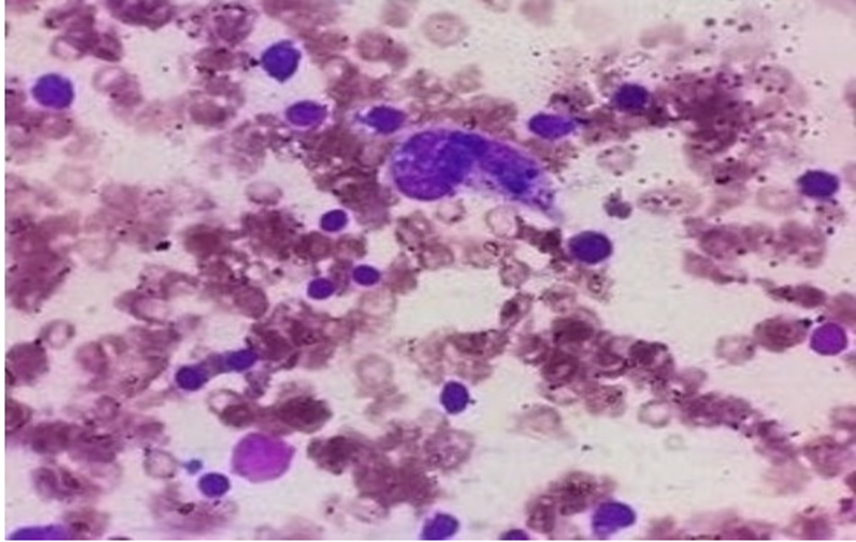
Figure1: Bone marrow biopsy showing Hemophagocytes
CASE – 2
SCRUB TYPHUS presenting as Subacute Intestinal Obstruction
34 years old female Presented with history of fever and abdominal pain for 5 days. The patient did not pass stool for last 3 days. The Patient also complained progressive shortness of breathe for last 3 days.
Investigation
· The patient was alert, Conscious, Co-operative,
· BP-106/ 70 mmhg
· PR-110/min , R
· RR -24 / min, R
· SPO₂- 93% in room air and mild pallor present, Icterus (++)
· No Cyanosis, edema, clubbing-Present, JVP was not raised.
· Black eschar mark was present in left upper quadrant of abdomen
· Abdominal examinations revealed diffuse tenderness with rigidity, IPS was Sluggish.
Respiratory examinatio revealed Bilateral Coarse Crepitations with diminished vocal resonance bilaterally.
Cardiovascular examinations revealed normal first & second heart Sound with no third or fourth heart Sounds and no murmur.
Hb -9.6 gm
TLC-19,600 with 68 % Neutrophils
Platelet count 1, 18000/cu.mm.
Serum Urea-52
Creatinine - 1.6
Total Bilirubin- 7.1
Conjugated Bilirubin - 4.2
Unconjugated Bilirubin - 2.9
SGOT- 128
SGPT - 116
ALP-170
Total Protein-5.6
Alb-2.8
Dengue IgM - Negative
Hepatitis A IgM - Negative
Hepatitis E IgM - Negative
Serum Sodium. -138
Serum Potassium - 3.9
USG of whole abdomen-
· showing B/ L Renal Cortical echogenicity mildly raised with bilateral Normal kidney Size .
· showing features of Subacute Intestinal obstruction
· Scrub typhus IgM (ELISA) - positive
· The patient was treated with IV Ini. Doxycycline (100mg) twice daily for 7 days.
CASE– 3
SCRUB TYPHUS presenting as a case of inflammatory oligoarthritis
A, 20 year old male, presented with a three weeks history of progressive bilateral knee, elbow, ankle Joint pain, swelling and fever.
On Admission
Pt was alert, concious , co-operative
BP-118/72 mmhg
PR-108 / min, Regular
RR- 16 /min, Temp-101°F
No Cyanosis, Clubbing, Icterus, pallor, lymphadenopathy, JVP - Not raised
Respiratory, Cardiovascular, Neurological examinations were within normal limit.
B / L Elbow, knee, ankle joints were swollen with restriction of movements & tender.
Investigations
CBC, LFT, KFT were within normal limit
Dengue IgM- Negative.
Synovial fluid analysis Showed Cells- 12,000 with 60 % Neutrophils
Synovial fluid for AFB was negative, synovial fluid culture shows no growth.
Imaging revealed normal joint architectures.
Scrub Typhus IgM was sent on Day 5 of admission as the patient was not responding to treatment.
Scrub Typhus IgM (ELISA) - Positive
The patient was Started on IV Inj. Doxycycline & The patient recovered without any joint deformity.
CASE – 4
SCRUB TYPHUS presenting as Myocarditis
A 43-year-old female with no known comorbidity presented to the hospital with symptoms of fever for 10 days, dyspnea and bipedal edema for 5 days. Fever was high grade in nature and associated with chills and rigor.
Patient also started having respiratory distress with bipedal edema after 5 days. There was no history of rashes, cough, chest pain, palpitations, syncope, decreased urine output, abdominal distension, jaundice, orthopnea or paroxysmal nocturnal dyspnea, abnormal bowel habits, or altered sensorium. No addictions or allergies were reported. Menstrual history was unremarkable.
Her blood pressure was 110/70 mm Hg, pulse rate was 120/min, respiratory rate (RR) was 32 breaths/min, oxygen saturation 81% at room air. Pallor and pitting edema in all four limbs and facial puffiness were observed by physical examination. Jugular venous pressure was 5 cm above the sternal angle. There was icterus but no cyanosis or clubbing.
Respiratory examination revealed fine crepitations present over the bilateral basal areas on the chest with diminished vocal resonance bilaterally.
Cardiovascular examination revealed normal intensity of first and second heart sounds with no third or fourth heart sound or murmurs.
Investigation
Serum scrub typhus IgM titre was POSITIVE (62.9)
CBC
Haemoglobin 7.6
TLC- 11400/mm3
Platelet 160000/mm3
Liver Function Test.
Total bilirubin 5.6.
Indirect 2.1
AST 231
ALT 245
ALP 101
Total protein 6.3
Albumin 3.6
RFT
Urea 82
Creatinine 1.1
Urine R/E M/E -No abnormality seen
Echocardiogram (ECG) report showed sinus tachycardia.
Two-dimensional (2D) echocardiography which showed hypokinetic middle and apical segment of anterior wall with ejection fraction of 48%.
CT angiography showed no evidence of ischaemic heart disease.
Myocardial injury was evident from a rise in cardiac troponin I level (93.2).
A diagnosis of Scrub Typhus with an acute onset myocarditis was made.
Treatment
Inj.Doxycycline 100 mg 12 hourly was given intravenously with the ongoing treatment. The patient was treated with carvedilol 3.125 mg twice daily, ramipril 2.5 mg once daily, eplerenone 25 mg once daily. After five days, the cardiorespiratory and hemodynamic conditions improved and patient was discharged.Patient was continued on carvedilol, ramipril and eplerenone after discharge.
After 2 months on follow up, 2D echocardiography revealed no regional wall motion abnormality and an ejection fraction of 60%.
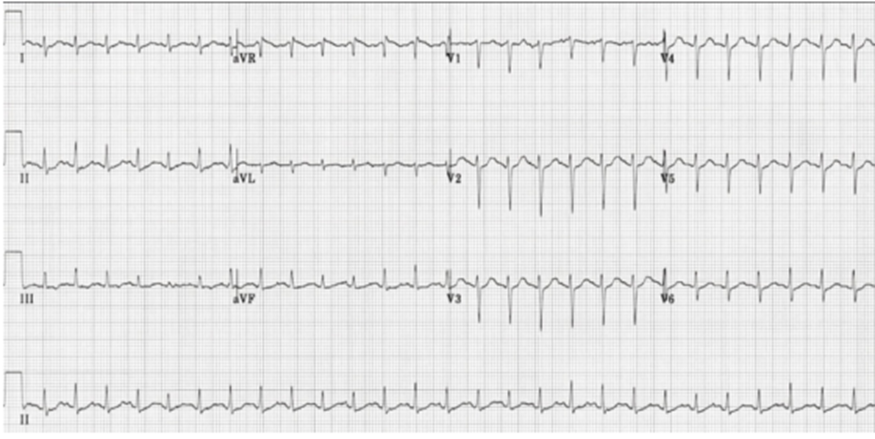
Figure 2:Myocarditis EGC Report
CASE – 5
SCRUB TYPHUS presenting as Acute Encephalitis Syndrome
A, 26 year old male presented with high grade fever for last 1 week associated with disorientation & focal Seizure for last 2 days.
On Admission
Patient was disoriented to time, place & person.
Respiratory Rate- 20/min, R
BP-110/70 mmHg, PR-104/min, Regular
Temp-1020 F, no cyanosis, icterus, clubbing, JVP- not raised,
No lymph nodes. SPO2- 96 % Room air
Respiratory & cardiovascular System examinations were within normal Limit
Neurological examination revealed
B/ L Plantar -Extensor
No Cranial Nerve palsy
The Patient was disoriented to time, place, Person.
Investigation
Complete Blood Count, LFT, kidney function test were within normal limit.
NCCT Brain showed effacement of sulci with loss of grey and white matter differentiation.
CSF -
Total Cells-250/mm3 (90 % lymphcytes)
Protein - 72 mg / dl
Sugar - 62 mg / dl, ADA -3.1
CSF PCR for Herpes simplex - Negative
CSF gram Stain, ZN Stain & culture did not reveal any abnormality.
Scrub Typhus IgM (ELISA) - Positive
The Patient recovered after IV Doxycycline.
|
Case No. |
History examination |
Investigations |
Diagnosis |
|
Case 1 |
Conscious, oriented, cooperative. Temp 101°F, HR 122/min, BP 110/70 mmHg, SpO₂ 92% on room air. Bilateral coarse crepitations with decreased vocal resonance. Moderate splenomegaly present. |
Hb 8.2 g%, TLC 2900/mm³, Platelet 62,000/mm³, bilirubin 7.2 mg/dl, SGOT/SGPT elevated, CRP 192.4. Scrub typhus IgM positive. Ferritin 12020 ng/ml, TG 482 mg/dl, fibrinogen 72 mg/dl, D-dimer 12239 ng/ml. Bone marrow biopsy showed histiocytosis with hemophagocytes. |
Scrub typhus presenting with secondary Hemophagocytic Lymphohistiocytosis (HLH) |
|
Case 2 |
Alert, conscious, cooperative. BP 106/70 mmHg, PR 110/min, RR 24/min. Pallor and icterus present. Black eschar mark over left upper abdomen. Diffuse abdominal tenderness with rigidity and sluggish bowel sounds. Bilateral coarse crepitations. |
Hb 9.6 g%, TLC 19,600/mm³, Platelet 1,18,000/mm³, bilirubin 7.1 mg/dl, SGOT 128, SGPT 116. USG abdomen showed subacute intestinal obstruction. Scrub typhus IgM positive. |
Scrub typhus presenting as subacute intestinal obstruction |
|
Case 3 |
Alert, conscious, cooperative. BP 118/72 mmHg, PR 108/min, Temp 101°F. Bilateral knee, elbow, and ankle swelling with tenderness and restricted movements. Other systemic examinations normal. |
CBC, LFT, KFT normal. Synovial fluid: 12,000 cells with 60% neutrophils. AFB negative, culture no growth. Joint imaging normal. Scrub typhus IgM positive. |
Scrub typhus presenting as inflammatory oligoarthritis |
|
Case 4 |
BP 110/70 mmHg, PR 120/min, RR 32/min, SpO₂ 81% on room air. Pallor, icterus, generalized edema, raised JVP. Bilateral basal crepitations with diminished vocal resonance. |
Scrub typhus IgM positive. Hb 7.6 g%, TLC 11,400/mm³, bilirubin 5.6 mg/dl, AST 231, ALT 245. Troponin I elevated (93.2). ECG showed sinus tachycardia. 2D Echo: hypokinesia with EF 48%. CT angiography ruled out ischemic heart disease. |
Scrub typhus presenting with acute myocarditis |
|
Case 5 |
Disoriented to time, place, and person. BP 110/70 mmHg, PR 104/min, Temp 102°F. Bilateral plantar extensor response. No cranial nerve palsy. Other systemic examination normal. |
CBC, LFT, KFT normal. NCCT brain normal. CSF: 250 cells/mm³ (90% lymphocytes), protein 72 mg/dl, sugar 62 mg/dl. HSV PCR, CSF culture, Gram stain, ZN stain negative. Scrub typhus IgM positive. |
Scrub typhus presenting as Acute Encephalitis Syndrome (AES) |
DISCUSSION:
Scrub typhus is an acute febrile illness caused by Orientia tsutsugamushi and is an important emerging rickettsial infection in tropical and endemic regions. It presents with a broad clinical spectrum ranging from mild undifferentiated fever to severe multiorgan dysfunction involving hematological, hepatic, renal, respiratory, cardiac, neurological, and gastrointestinal systems. Mahajan sk et al. [6] described the wide clinical spectrum of scrub typhus ranging from uncomplicated fever to severe organ dysfunction requiring intensive care support. In the present series of cases, patients presented with varied atypical manifestations including severe systemic inflammatory response with secondary hemophagocytic lymphohistiocytosis (HLH), subacute intestinal obstruction, polyarthritis, myocarditis, and encephalitis, highlighting the diverse clinical presentation of scrub typhus. The diagnosis was confirmed by positive scrub typhus IgM ELISA, while other common tropical infections such as dengue, leptospirosis, viral hepatitis, tuberculosis, and other infectious etiologies were excluded through appropriate investigations. Watt G et al. [7] emphasized that early diagnosis of scrub typhus is challenging due to its overlapping presentation with other febrile illnesses, especially in endemic areas.
Severe scrub typhus infection may result from systemic vasculitis, endothelial injury, and excessive immune activation leading to capillary leak syndrome and multiorgan involvement. Rapsang AG et al. [8] reported that severe scrub typhus is associated with pulmonary, renal, hepatic, and hematological complications due to widespread endothelial dysfunction and inflammatory response. In the case associated with HLH, progressive bicytopenia, severe thrombocytopenia, hepatic dysfunction, acute kidney injury, hyperferritinemia, hypofibrinogenemia, hypertriglyceridemia, and elevated D-dimer levels suggested cytokine-mediated hyperinflammation, which was further confirmed by bone marrow evidence of hemophagocytosis. Infection-associated HLH secondary to scrub typhus is a potentially fatal complication, and early recognition with prompt initiation of doxycycline and immunomodulatory therapy such as dexamethasone is essential for improving outcomes.
Gastrointestinal involvement in scrub typhus is uncommon but may occur due to vasculitic changes, intestinal edema, and altered gastrointestinal motility. Kim DM et al. [9] reported gastrointestinal manifestations including abdominal pain, hepatitis, and intestinal complications in scrub typhus patients due to systemic inflammatory involvement. The presence of abdominal pain, constipation, black eschar, and imaging-confirmed subacute intestinal obstruction in one patient represents an unusual manifestation and emphasizes the need to consider scrub typhus even in patients presenting with acute abdominal symptoms. Similarly, musculoskeletal involvement with polyarthritis may mimic autoimmune or inflammatory arthropathies. Varghese GM et al. [10] described atypical presentations of scrub typhus including arthritis-like manifestations, which may delay diagnosis if infectious causes are not considered. In the absence of classical features such as eschar or organ dysfunction, diagnosis can be challenging; however, positive serology and rapid response to doxycycline support an infectious etiology.
Cardiac involvement, although rare, is a serious complication of scrub typhus and may manifest as myocarditis due to direct inflammatory myocardial injury and systemic vasculitis. Sivasubramanian BP et al. [11] reported myocarditis as an uncommon but severe complication of scrub typhus, associated with myocardial injury and reversible cardiac dysfunction after appropriate antimicrobial therapy. The patient with myocarditis demonstrated clinical features of heart failure, elevated cardiac biomarkers, reduced ejection fraction, and regional wall motion abnormalities, with improvement following doxycycline and supportive cardiac therapy, suggesting reversible myocardial involvement when treated early. Neurological complications such as encephalitis may occur due to inflammatory involvement of cerebral microvasculature, presenting with altered sensorium, seizures, and meningoencephalitic features. Basu S et al. [12] described neurological manifestations of scrub typhus including encephalitis and meningoencephalitis with favorable outcomes after doxycycline therapy. Cerebrospinal fluid findings of lymphocytic pleocytosis with elevated protein and exclusion of other infectious causes supported scrub typhus-associated encephalitis, which improved significantly after appropriate antimicrobial therapy.
Rajapakse S et al. [13] emphasized that early recognition of severe and atypical scrub typhus presentations is essential to prevent complications and mortality, particularly in endemic regions. Taylor AJ et al. [14] further highlighted the need for increased awareness and surveillance of scrub typhus as a neglected tropical disease due to its significant morbidity and diverse clinical manifestations.
CONCLUSION:
Scrub typhus can present with diverse, atypical, and severe complications including secondary HLH, subacute intestinal obstruction, inflammatory oligoarthritis, acute myocarditis, and encephalitis, beyond its classical systemic manifestations. In endemic regions, clinicians should maintain a high index of suspicion in patients presenting with unexplained fever, multiorgan involvement, abdominal symptoms, neurological manifestations, cardiac dysfunction, or inflammatory features. Early diagnosis through appropriate serological testing and prompt initiation of doxycycline therapy, along with supportive management when required, are essential for reducing morbidity, preventing complications, and achieving favorable outcomes.
REFERENCES:
1. Rajapakse S, Weeratunga P, Sivayoganathan S, Fernando SD. Clinical manifestations of scrub typhus. Transactions of the Royal Society of Tropical Medicine and Hygiene. 2017 Feb 1;111(2):43-54.
2. Paris DH, Shelite TR, Day NP, Walker DH. Unresolved problems related to scrub typhus: a seriously neglected life-threatening disease. The American journal of tropical medicine and hygiene. 2013 Aug 7;89(2):301.
3. Traub R, Wisseman Jr CL. The ecology of chigger-borne rickettsiosis (scrub typhus). Journal of medical entomology. 1974 Jul 15;11(3):237-303.
4. Luce-Fedrow A, Lehman ML, Kelly DJ, Mullins K, Maina AN, Stewart RL, Ge H, John HS, Jiang J, Richards AL. A review of scrub typhus (Orientia tsutsugamushi and related organisms): then, now, and tomorrow. Tropical medicine and infectious disease. 2018 Jan 17;3(1):8.
5. Rathi N, Rathi A. Rickettsial infections: Indian perspective. Indian pediatrics. 2010 Feb;47(2):157-64.
6. Mahajan SK, Kashyap R, Kanga A, Sharma V, Prasher BS, Pal LS. Relevance of Weil-Felix test in diagnosis of scrub typhus in India. JAPI. 2006 Aug;54(8):619-21.
7. Watt G, Parola P. Scrub typhus and tropical rickettsioses. Current Opinion in Infectious Diseases.
8. Rapsang AG, Bhattacharyya P. Scrub typhus. Indian journal of anaesthesia. 2013 Mar 1;57(2):127-34.
9. Kim DM, Kim SW, Choi SH, Yun NR. Clinical and laboratory findings associated with severe scrub typhus. BMC infectious diseases. 2010 Apr 30;10(1):108.
10. Varghese GM, Janardhanan J, Trowbridge P, Peter JV, Prakash JA, Sathyendra S, Thomas K, David TS, Kavitha ML, Abraham OC, Mathai D. Scrub typhus in South India: clinical and laboratory manifestations, genetic variability, and outcome. International Journal of Infectious Diseases. 2013 Nov 1;17(11):e981-7.
11. Sivasubramanian BP, Abdul Khader AH, Ravikumar DB, Dominic Savio FV, Thirupathy U, Thiruvadi V, Prasad R, Thokala H, Qadeer H, Venkataperumal DP, Gupta A. Comprehensive review on cardiac manifestation of scrub typhus. Frontiers in Tropical Diseases. 2024 Sep 20;5:1375087.
12. Basu S, Chakravarty A. Neurological manifestations of scrub typhus. Current neurology and neuroscience reports. 2022 Aug;22(8):491-8.
13. Rajapakse S, Rodrigo C, Fernando D. Scrub typhus: pathophysiology, clinical manifestations and prognosis. Asian Pacific journal of tropical medicine. 2012 Apr 1;5(4):261-4.
14. Taylor AJ, Paris DH, Newton PN. A systematic review of mortality from untreated scrub typhus (Orientia tsutsugamushi). PLoS neglected tropical diseases. 2015 Aug 14;9(8):e0003971.