Delayed Sigmoid Colon Perforation Following Trauma-Associated Macklin Effect Presenting as Massive Pneumoperitoneum Without Initial Hollow Viscus Injury: A Rare Case Report.
- Ameya Tanaji Wagh , Associate Professor, Department of General Surgery Dr. Vasantrao Pawar Medical College, Hospital and Research Centre, Nashik-422003 Maharashtra,
- Aakash Sudhir Bhamre , Associate Professor, Department of General Surgery Dr. Vasantrao Pawar Medical College, Hospital and Research Centre, Nashik-422003 Maharashtra,
- Sanil Sadashiv Shinde , Associate Professor, Department of General Surgery Dr. Vasantrao Pawar Medical College, Hospital and Research Centre, Nashik-422003 Maharashtra,
- Nisha Kalyanrao Kanke , Junior Resident, Department of General Surgery Dr. Vasantrao Pawar Medical College, Hospital and Research Centre, Nashik-422003 Maharashtra,
- Ashwin Dipak Gattani , Junior Resident, Department of General Surgery Dr. Vasantrao Pawar Medical College, Hospital and Research Centre, Nashik-422003 Maharashtra,
- Sanket Sanjay Palikondawar , Junior Resident, Department of General Surgery Dr. Vasantrao Pawar Medical College, Hospital and Research Centre, Nashik-422003 Maharashtra,
- Radhika Dhananjay Wattamwar , Junior Resident, Department of General Surgery Dr. Vasantrao Pawar Medical College, Hospital and Research Centre, Nashik-422003 Maharashtra,
- Hemant Bhimrao Falak , Junior Resident, Department of General Surgery Dr. Vasantrao Pawar Medical College, Hospital and Research Centre, Nashik-422003 Maharashtra,
- Amruthavalli Kalapala , Junior Resident, Department of General Surgery Dr. Vasantrao Pawar Medical College, Hospital and Research Centre, Nashik-422003 Maharashtra,
Article Information:
Abstract:
Introduction: The Macklin effect refers to alveolar rupture with dissection of air along the broncho vascular sheaths into the mediastinum, producing pneumomediastinum and potentially extensive extra-thoracic air collections. Pneumoperitoneum following blunt trauma is usually considered evidence of hollow viscus perforation and often mandates exploratory laparotomy. However, rare cases of non-surgical pneumoperitoneum secondary to the Macklin effect have been described. We report a unique case of trauma-associated Macklin effect with extensive subcutaneous emphysema, pneumoperitoneum, and mesenteric pneumatosis in which no bowel perforation was identified during initial exploration, followed by delayed sigmoid colon perforation requiring re-exploration. Case Presentation: A 36-year-old male sustained blunt polytrauma following an alleged road traffic accident or assault. He suffered head injury, facial trauma, and abdominal trauma. Four days after injury, he underwent open reduction and internal fixation of a left zygomatic arch fracture. During the postoperative period, he developed progressive abdominal pain and distension while continuing to pass stools and flatus. Examination revealed extensive subcutaneous emphysema involving the chest wall, anterior abdominal wall, and scrotum. Abdominal radiography demonstrated massive pneumoperitoneum. Emergency exploratory laparotomy revealed no evidence of hollow viscus perforation. Multiple air pockets were noted within the mesentery suggestive of pneumatosis intestinalis. The pneumoperitoneum was attributed to trauma-associated Macklin effect. On postoperative day 5, feculent discharge was observed from the pelvic drain. Re-exploration demonstrated sigmoid colon perforation with localized contamination. A transverse loop colostomy was performed. The patient subsequently improved. Discussion: This case highlights the diagnostic challenge posed by massive pneumoperitoneum without demonstrable bowel injury. The coexistence of extensive subcutaneous emphysema, scrotal emphysema, and mesenteric air strongly supports air tracking secondary to the Macklin effect. Delayed perforation may have resulted from progressive ischemic bowel injury, pneumatosis intestinalis-related mural compromise which led to colonic injury. To our knowledge, reports describing delayed sigmoid perforation following Macklin-effect-associated pneumoperitoneum are exceedingly rare. Conclusion: Trauma surgeons should recognize that massive pneumoperitoneum may occasionally occur without immediate hollow viscus perforation. However, the presence of pneumatosis intestinalis warrants close surveillance because delayed bowel ischemia and perforation may occur despite an initially negative laparotomy.
Keywords:
Article :
INTRODUCTION:
The Macklin effect was first described as a pathophysiological process in which alveolar rupture results in air dissection along peri bronchial and perivascular sheaths toward the mediastinum. This phenomenon is increasingly recognized following blunt thoracic trauma and may manifest as pneumomediastinum, subcutaneous emphysema, pneumopericardium, retroperitoneal air, and, rarely, pneumoperitoneum. [1 - 3]. In trauma patients, pneumoperitoneum is traditionally regarded as a hallmark of hollow viscus perforation requiring urgent surgical intervention. Nevertheless, several non-surgical causes of pneumoperitoneum have been reported, including thoracic barotrauma, mechanical ventilation, pneumomediastinum, and the Macklin effect. [4 - 7]. The present case is noteworthy because the patient developed massive pneumoperitoneum with extensive subcutaneous emphysema and mesenteric pneumatosis without evidence of bowel perforation during initial laparotomy, followed by delayed sigmoid colon perforation requiring re-operation. This unusual sequence provides important insights into the diagnostic dilemmas associated with traumatic pneumoperitoneum.
CASE PRESENTATION :
A 36-year-old male with no known comorbidities came with complaints of abdominal pain and distension since 2 days
The patient sustained polytrauma 6 days prior (road traffic accident or assault; history unreliable), involving head, face, chest and abdomen
Diagnosed with left zygomatic arch fracture and underwent ORIF for the same under general anaesthesia 3 days after injury.
In the postoperative period, he developed:
· Progressive abdominal pain and distension
· Continued passage of stools and flatus
He subsequently developed:
· Subcutaneous emphysema over chest wall
· Subcutaneous crepitus over anterior abdominal wall and scrotum
· Family and past history was not significant
On Clinical Examination
· Abdomen: Distended
· Subcutaneous crepitus over chest, abdomen, and scrotum
· No clear signs of generalized peritonitis
Investigations:
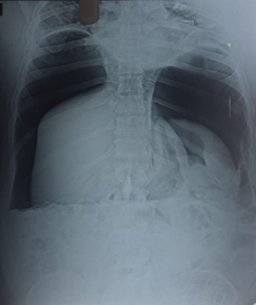
Fig 1: X-ray abdomen erect: pneumoperitoneum
· HRCT thorax: Pneumomediastinum without pneumothorax
· Emergency exploratory laparotomy was performed.
Intraoperative findings:
· No bowel perforation, no stool contamination
· liver laceration with no active bleeding with moderate Hemoperitoneum
· Multiple air pockets within mesentery
· Peritoneal wash given, abdominal drain placed
The patient initially recovered following laparotomy.
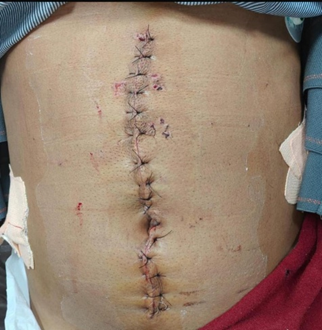
Fig 2: Post-operative clinical photo of the patient:
However, on postoperative day 5, feculent material was noted in the pelvic drain. Clinical suspicion of delayed bowel perforation was suspected, patient taken for emergency laparotomy. At re-laparotomy, a perforation involving the sigmoid colon was identified with localized contamination.
The affected segment was managed by diversion with a transverse loop colostomy. Thorough peritoneal lavage and drainage were performed.
The patient’s subsequent postoperative course was satisfactory.
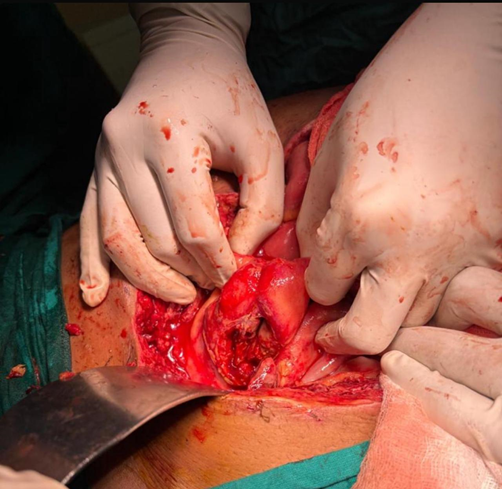
Fig 3: Intra-operative photo showing sigmoid colon perforation:
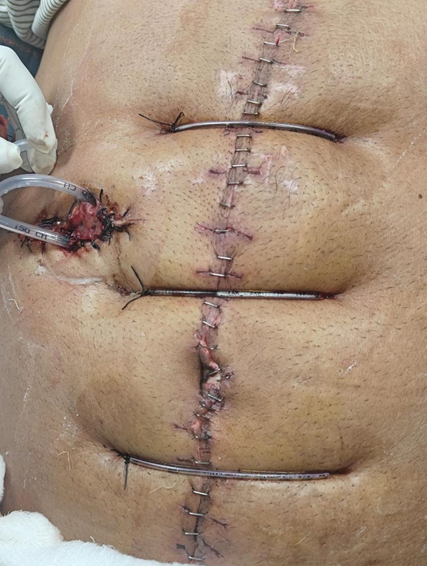
Fig 4: Post-Operative photo after re -exploration :
Post-operative follow up:
Patient was discharged on post op day 15 after suture removal .
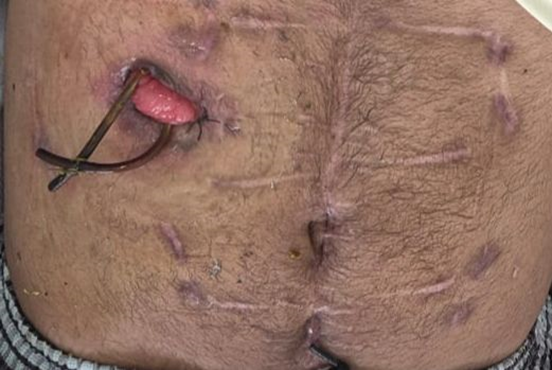
Fig 5: Follow up after discharge on post op day 30
Incision site was healthy and Stoma was functioning.
DISCUSSION:
The Macklin effect is increasingly recognized in trauma imaging and results from alveolar rupture secondary to a sudden increase in intrathoracic pressure. Escaped air dissects through broncho vascular planes into the mediastinum and may subsequently extend into the neck, chest wall, retroperitoneum, and peritoneal cavity. [8]
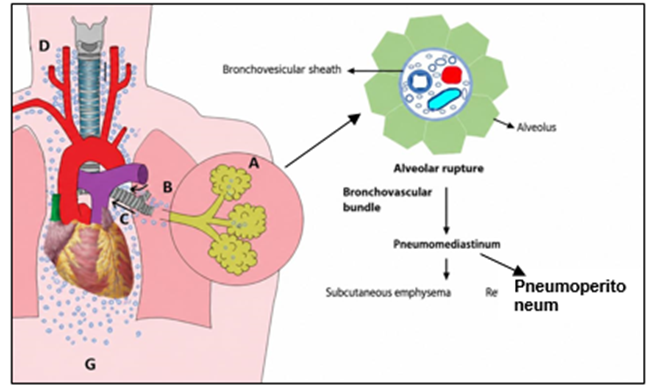
Fig 6: Illustration of Pneumoperitoneum
The presence of extensive subcutaneous emphysema involving the chest wall, abdominal wall, and scrotum in our patient strongly supports the possibility of widespread air dissection. The absence of bowel perforation during the first laparotomy despite massive pneumoperitoneum is consistent with a non-surgical source of free intraperitoneal air. [9]
An intriguing feature of this case was the presence of multiple mesenteric air pockets suggestive of pneumatosis intestinalis. Pneumatosis intestinalis represents gas within the bowel wall and may result from mucosal disruption, ischemia, increased intraluminal pressure, bacterial gas production, or air dissection from extra-intestinal sources. [10]
Exact Mechanism of Macklin Effect is discussed below :
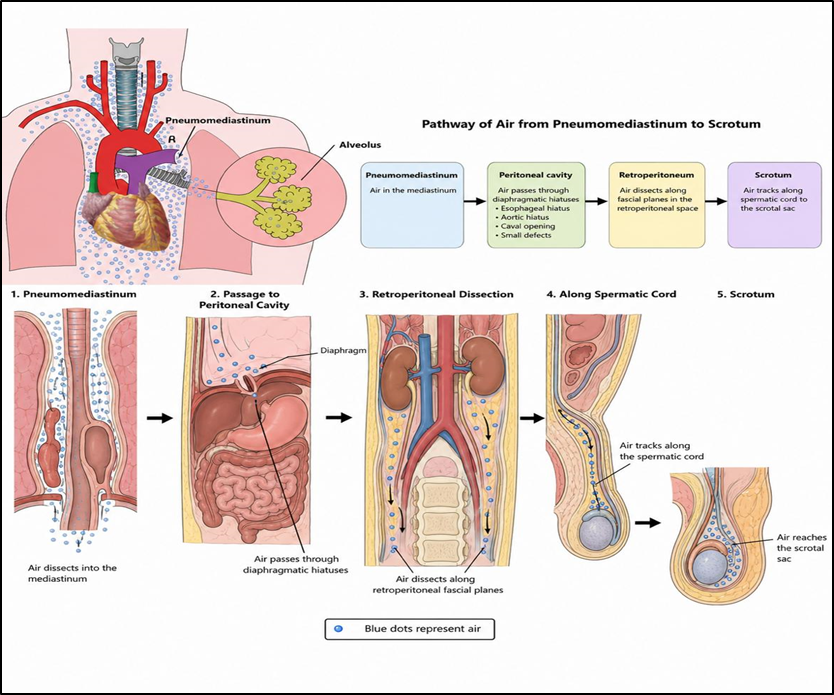
Fig 7: Macklin Effect
1. Alveolar rupture
· Increased intra-alveolar pressure causes rupture of alveoli.
· Air escapes into the pulmonary interstitium
2. Air tracks along broncho vascular sheaths (Macklin effect)
· Air moves centripetally along perivascular and peri bronchial connective tissues.
· Reaches the mediastinum.
3. Pneumomediastinum develops
* Free air accumulates around:
· Heart
· Great vessels
· Trachea
· Esophagus
From here air can spread in multiple directions.
Route A: Pneumomediastinum → Peritoneal cavity
4. Air passes through diaphragmatic openings
Air travels through:
· Esophageal hiatus
· Aortic hiatus
· Caval opening
· Small congenital or acquired diaphragmatic defects
5. Pneumoperitoneum
· Air enters the peritoneal cavity.
· Free intraperitoneal gas accumulates beneath the diaphragm.
Route B: Pneumomediastinum → Retroperitoneum
6. Air dissects downward through fascial planes
· Air follows:
· Periesophageal tissue
· Periaortic tissue
· Great vessel sheaths through the diaphragmatic hiatuses.
·
7. Air dissects in retroperitoneum
· Air reaches the retroperitoneal space around:
· Kidneys
· Pancreas
· Duodenum
· Ascending and descending colon
· Major vessels
Route C: Retroperitoneum → Mesentery
8. Air spreads into mesenteric root
· Retroperitoneal fascial planes communicate with the mesenteric root.
· Air tracks along:
· Mesenteric vessels
· Connective tissue of mesentery
9. Mesenteric emphysema
· Air accumulates within mesenteric tissues.
10. Pneumatosis intestinalis
· Air enters:
· Subserosal layer of bowel wall
· Submucosal layer of bowel wall
Result:
· Multiple gas cysts appear in the intestinal wall.
· This is called pneumatosis intestinalis.
Route D: Retroperitoneum → Scrotum
11. Air follows fascial planes to pelvis
· Air descends through:
· Retroperitoneal tissues
· Pelvic extraperitoneal spaces
12. Air enters inguinal canal
· Tracks along:
· Spermatic cord
· Vas deferens
· Testicular vessels
13. Pneumoscrotum
· Air reaches the scrotal sac.
· Scrotum becomes:
· Swollen
· Crepitant on palpation
Several explanations may account for the delayed sigmoid perforation: [11]
1. Delayed ischemic injury secondary to bowel wall compromise associated with pneumatosis intestinalis.
2. Progressive transmural necrosis of an initially viable bowel segment.
3. Missed occult seromuscular injury following blunt trauma that evolved into full-thickness perforation.
4. Mesenteric vascular injury causing delayed ischemic perforation.
Among these possibilities, delayed ischemic injury associated with pneumatosis intestinalis appears plausible because no perforation was demonstrable during the initial laparotomy despite careful examination. [12] Many abdominal trauma cases can lead to such surgical dilemmas; a high level of suspicion and prompt management is required. [13,14]
This case underscores an important surgical lesson. A negative exploratory laparotomy in the setting of traumatic pneumoperitoneum does not completely eliminate the possibility of subsequent bowel perforation, particularly when pneumatosis intestinalis is present. Such patients require vigilant postoperative monitoring and a low threshold for re-imaging or re-exploration.
CONCLUSION:
Massive pneumoperitoneum after blunt trauma is generally considered indicative of hollow viscus injury. However, rare cases may occur secondary to the Macklin effect without immediate gastrointestinal perforation. The coexistence of extensive subcutaneous emphysema and mesenteric pneumatosis should alert clinicians to the possibility of air dissection from thoracic sources. Nevertheless, delayed bowel ischemia and perforation may occur despite an initially negative laparotomy. Close postoperative surveillance is therefore essential in such patients.
REFERENCES:
1. Macklin MT, Macklin CC. Malignant interstitial emphysema of the lungs and mediastinum as an important occult complication. Medicine. 1944;23:281–358.
2. Wintermark M, Schnyder P. The Macklin effect: a frequent etiology for pneumomediastinum in severe blunt chest trauma. Chest. 2001;120:543–547.
3. Kouritas VK, Papagiannopoulos K, Lazaridis G, et al. Pneumomediastinum. Journal of Thoracic Disease. 2015;7(Suppl 1):S44-S49.
4. Ho LM, Paulson EK, Thompson WM. Pneumatosis intestinalis in the adult: benign to life-threatening causes. American Journal of Roentgenology. 2007;188:1604-1613.
5. St Peter SD, Abbas MA, Kelly KA. The spectrum of pneumatosis intestinalis. Archives of Surgery. 2003;138:68-75.
6. Mularski RA, Ciccolo ML, Rappaport WD. Nonsurgical causes of pneumoperitoneum. Western Journal of Medicine. 1999 Jan;170(1):41.
7. Williams NM, Watkin DF. Spontaneous pneumoperitoneum and other nonsurgical causes of intraperitoneal free gas. Postgraduate medical journal. 1997 Sep;73(863):531-7.
8. Eslava BA, Mares JE, Baeza GA, Arzate AS, Baesza GA. The Macklin effect: An underestimated cause of pneumomediastinum. Cureus. 2024 Sep 13;16(9).
9. Borofsky S, Taffel M, Khati N, Zeman R, Hill M. The emergency room diagnosis of gastrointestinal tract perforation: the role of CT. Emergency Radiology. 2015 Jun;22(3):315-27.
10. Deng F, Lin ZB, Sun QS, Min Y, Zhang Y, Chen Y, Chen WT, Hu JJ, Liu KX. The role of intestinal microbiota and its metabolites in intestinal and extraintestinal organ injury induced by intestinal ischemia reperfusion injury. International journal of biological sciences. 2022 Jun 13;18(10):3981.
11. Singh M, Dalal S, Amandeep VS, Sattibabu V. Delayed presentation of an isolated sigmoid colon injury following blunt abdominal trauma: a case report & review of literature. OGH Rep. 2017;6:75-6.
12. Noh D, Cho HM, Lee CK, Kim SH, Yeo KH. Delayed Pneumatosis Intestinalis Induced by Blunt Trauma in a Strangulated Small Intestine. Journal of Acute Care Surgery. 2017 Oct 30;7(2):83-6.
13. Shinde AM, Barase A, Kashide R, Swami AA. Evaluation of Clinical Profile of Blunt Abdominal Trauma Cases Admitted in a Tertiary Care Hospital in Western Maharashtra. Res. J. Med. Sci. 2024 Apr 19;18:172-6.
14. Srivastava A, kesh Yadav H, Katiyar V, Yadav HK, Katiyar VK. Isolated sigmoid Colon perforation in the setting of blunt abdominal trauma: A case series. Cureus. 2022 Nov 16;14(11).