Clinical And Radiological Outcomes Of Percutaneous K-Wire Fixation For Proximal Humerus Fractures In Older Adults: A Prospective Cohort Study.
- Mohammed Anas , Senior Resident, Department of Orthopaedics, Bangalore Medical College and Research Institute, Bangalore.
- Abhishek Reddy , Senior Resident, Department of Orthopaedics, Koppal Institute of Medical Sciences, Koppal.
- Praveen Kumar , Senior Specialist,Department of Orthopaedics District hospital, GIMS kalaburagi.
- Sharath Kumar P V , Professor, Department of Orthopaedics, Bangalore Medical College and Research Institute, Bangalore.
Article Information:
Abstract:
Background: Objective: To describe short-term clinical and radiological outcomes after closed reduction and percutaneous K-wire fixation of unstable proximal humerus fractures in adults older than 60 years. Methods: This prospective single-centre cohort included 25 adults treated between May 2023 and October 2024 at Victoria Hospital and affiliated hospitals of Bangalore Medical College and Research Institute. Two-, three- and four-part fractures selected for percutaneous fixation were stabilised with threaded K-wires under fluoroscopy. Participants underwent clinical and radiographic follow-up through 24 weeks. The principal outcomes were Constant-Murley score, shoulder range of motion, radiographic union, radiological outcome and complications. Results: Mean age was 68.8 ± 5.4 years and 13 participants (52%) were women. The cohort comprised nine two-part, 14 three-part and two four-part fractures. All fractures united by 21 weeks; mean time to union was 15.6 ± 2.1 weeks. Mean Constant-Murley score increased from 65.75 ± 10.62 at 12 weeks to 72.78 ± 10.55 at 24 weeks. At 24 weeks, 15 participants (60%) had good or excellent Constant-Murley categories, eight (32%) had moderate and two (8%) had poor outcomes. Mean forward flexion and abduction at 24 weeks were 125.31° and 117.78°, respectively. Twenty-two participants (88%) had a good final radiological outcome. One participant developed pin loosening followed by varus collapse; no infection or avascular necrosis was recorded during follow-up. Conclusion: In this small uncontrolled cohort, percutaneous K-wire fixation was followed by union in all participants and progressive functional recovery over 24 weeks. The findings support feasibility in selected older adults but do not establish comparative effectiveness; larger controlled studies with longer follow-up are required.
Keywords:
Article :
INTRODUCTION:
Proximal humerus fractures account for approximately 5–6% of adult fractures and occur disproportionately in older adults, in whom osteoporosis, frailty, pre-existing shoulder disease and medical comorbidity complicate treatment. Most minimally displaced fractures can be treated non-operatively, but displaced and unstable patterns may compromise alignment, function and independence. Treatment therefore requires integration of fracture morphology with physiological age, bone quality, functional demand and the patient’s ability to participate in rehabilitation [1].
The best treatment for displaced fractures in older adults remains uncertain. A systematic review of controlled studies found no consistent functional advantage for locking-plate fixation over non-operative care and reported appreciable operative complication rates [2]. More recently, the NITEP randomised trial found no clinically important benefit of locking-plate fixation or hemiarthroplasty over non-operative treatment for displaced three- and four-part fractures at two years, while complications were more frequent after locking-plate fixation [3]. These data do not imply that surgery has no role; rather, they emphasise careful selection and the need to evaluate each operative strategy on its own indications, burdens and risks.
Closed reduction and percutaneous pinning is a tissue-sparing option for selected two-part, three-part and valgus-impacted four-part fractures when an acceptable closed reduction can be achieved. Threaded wires placed in multiple planes can provide provisional stability while limiting surgical exposure, blood loss and soft-tissue disruption. Its disadvantages include technical dependence, loss of reduction, pin loosening or migration, pin-tract infection and the possibility of neurovascular injury. Reduction quality and secure wire configuration are therefore central to outcome [1,4].
Evidence for percutaneous K-wire fixation is derived mainly from small case series, with heterogeneous fracture patterns, implants and outcome definitions. Data from Indian public-sector settings are particularly limited. This study prospectively followed older adults with unstable proximal humerus fractures treated by closed reduction and percutaneous threaded K-wire fixation. The primary objective was to assess functional recovery using the Constant-Murley score and radiographic healing through 24 weeks. Secondary objectives were to describe shoulder range of motion, radiological outcome and procedure-related complications.
MATERIALS AND METHODS:
Study design and setting
This was a prospective, single-arm cohort study conducted in the Department of Orthopaedics, Bangalore Medical College and Research Institute, Bengaluru, and Victoria Hospital and its affiliated hospitals. Recruitment and follow-up occurred from May 2023 to October 2024. The planned sample was 25 participants, based on the maintained-reduction proportion in an earlier percutaneous-fixation series [5]. Reporting was structured in accordance with the STROBE recommendations for observational studies [6].
The Institutional Ethics Committee of Bangalore Medical College and Research Institute approved the project on 25 April 2023 (BMCRI/PG/48/2023-24). Written informed consent was obtained before enrolment. The study flow is shown in Figure 1. The thesis did not record the number screened or the reasons for pre-enrolment exclusion; the flow therefore begins with the 25 enrolled participants.
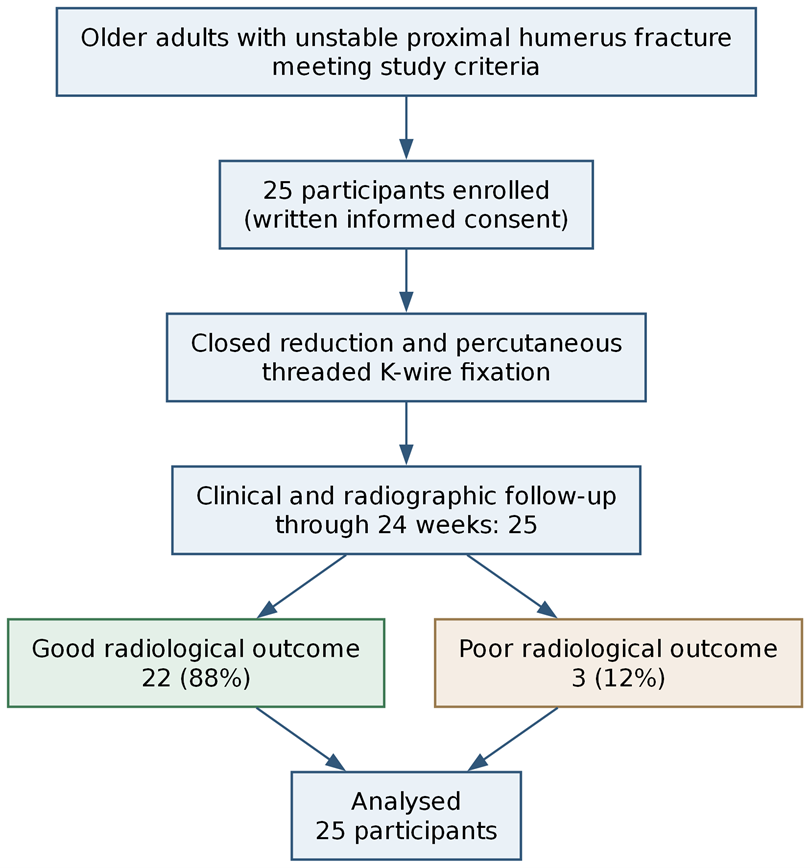 Figure 1. Participant flow through treatment and 24-week analysis. Screening and exclusion counts before enrolment were not available in the source thesis.
Participants
Patients of either sex older than 60 years were eligible if they had an unstable proximal humerus fracture considered suitable for closed reduction and percutaneous fixation. The recorded inclusion criteria allowed Neer two-, three- and four-part fractures and AO/OTA 11C3.1–11C3.3 injuries. Participants had to provide informed consent.
Exclusion criteria were active infection; ipsilateral humeral shaft, clavicle or scapular fracture; brachial plexus injury; previous surgery of the proximal humerus; cognitive disorder; steroid or immunosuppressant use; head-split fracture; impacted undisplaced fracture; fracture-dislocation not reducible by a closed method; presentation more than three weeks after injury; pathological or open fracture; and neurovascular injury.
Operative technique and rehabilitation
After pre-anaesthetic assessment, the patient was positioned in a beach-chair position with a bolster under the axilla. Closed reduction was performed under fluoroscopic guidance using traction and manipulation. Threaded K-wires were introduced from the lateral or anterolateral cortex and directed towards the medial calcar and humeral head. A typical construct used multiple wires in two planes; an additional wire was placed from the greater tuberosity towards the medial shaft cortex when required. Stability, reduction and avoidance of intra-articular penetration were checked fluoroscopically through shoulder movement.
Postoperative care comprised analgesia, antibiotics as clinically indicated and supervised physiotherapy. Range-of-motion exercises were begun from the second postoperative day within pain tolerance. The proximal wires were generally removed at four weeks, after which abduction exercises were advanced. Participants were reviewed regularly during the first four weeks and subsequently at six, 12 and 24 weeks. Serial anteroposterior and lateral shoulder radiographs were obtained to assess alignment and union.
Outcomes
Functional outcome was measured with the Constant-Murley shoulder score. The total score ranges from 0 to 100 and incorporates pain, activities of daily living, range of motion and strength, with higher values indicating better function. The thesis classified total scores as poor (0–55), moderate (56–70), good (71–85) and excellent (86–100). Total scores were available at 12 and 24 weeks. Component measures and shoulder range of motion were recorded at four, six, 12 and 24 weeks.
Radiographic union was the time at which union was documented on serial radiographs. The thesis also recorded a final dichotomous radiological outcome using a modified RUST-based assessment, although the threshold separating “good” from “poor” was not specified. Complications of interest included pin loosening, pin-tract infection, loss of reduction or varus collapse, nonunion and avascular necrosis.
Sample size
The thesis based its sample-size calculation on a 91% proportion of maintained reduction in the Humerusblock series reported by Brunner and colleagues [5]. A calculated sample of 19.42 was increased by 10% for anticipated attrition and rounded to a target of 25 participants. All 25 enrolled participants were available for the recorded 24-week outcomes.
Statistical analysis and data verification
The thesis analysed data in IBM SPSS and presented categorical variables as counts and percentages and continuous variables as means with standard deviations, medians and ranges. It reported paired t tests for serial range-of-motion and component scores and a Wilcoxon signed-rank test for the change in total Constant-Murley score. Statistical significance was defined as P < 0.05.
For manuscript preparation, a de-identified row-level table was reconstructed from the master chart embedded in the completed thesis. Age, sex, hypertension, Neer pattern, union time, pin loosening, varus collapse and radiological outcome were independently recomputed from those 25 rows. When the row-level master chart conflicted with a summary table, the row-level values were treated as canonical. Serial Constant-Murley and range-of-motion data were available only as aggregate tables and were transcribed without reanalysis. Consequently, the manuscript emphasises estimates and trajectories rather than inferential claims.
RESULTS:
Cohort characteristics
All 25 enrolled participants completed the recorded 24-week assessment. Mean age was 68.8 ± 5.37 years (range 60–77); 13 (52%) were aged 70–79 years, and 13 (52%) were women. Hypertension was recorded in 15 participants (60%). Based on the reconstructed master chart, nine fractures (36%) were Neer two-part, 14 (56%) were three-part and two (8%) were four-part. Mean operative duration reported in the thesis was 31.11 ± 7.9 minutes (range 20–45). Baseline characteristics are summarised in Table 1 and Figure 2.
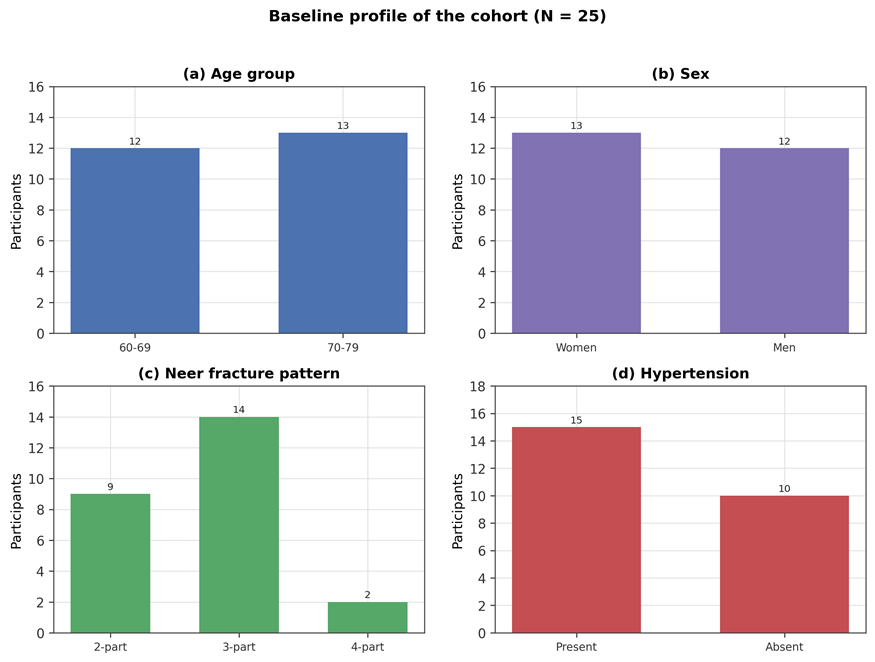
Figure 2. Baseline profile of the 25-participant cohort. Counts were recomputed from the de-identified master chart embedded in the thesis.
Functional recovery
Mean Constant-Murley score increased by 7.03 points, from 65.75 ± 10.624 at 12 weeks to 72.78 ± 10.551 at 24 weeks; the thesis reported P < 0.001 for this paired change. At 12 weeks, 13 participants (52%) were classified as good, 10 (40%) as moderate and two (8%) as poor. At 24 weeks, four (16%) were excellent, 11 (44%) good, eight (32%) moderate and two (8%) poor. Thus, 15 of 25 participants (60%) had a good or excellent category at final follow-up.
Range of motion improved throughout follow-up. Mean forward flexion increased from 37.63° at four weeks to 125.31° at 24 weeks; mean abduction increased from 27.21° to 117.78°; and mean external rotation increased from 16.05° to 55.42°. The Constant-Murley pain component, in which a higher score reflects less pain, increased from 4.37 at four weeks to 14.14 at 24 weeks. The activities-of-daily-living component increased from 6.00 to 16.06, and the strength component increased from 0 at four weeks to 18.89 at 24 weeks. Detailed values are presented in Table 2 and Figure 3.
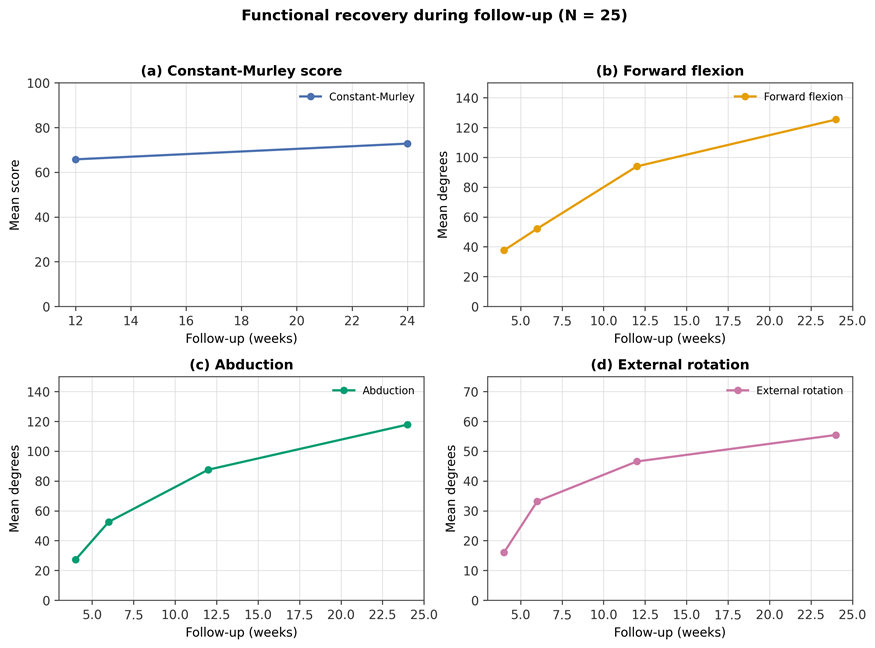
Figure 3. Functional recovery during follow-up. Lines show aggregate means reported in the thesis; participant-level serial scores were unavailable for independent reanalysis.
Table 1. Baseline And Operative Characteristics (N = 25)
|
Characteristic |
Value |
|
Age, years, mean ± SD |
68.8 ± 5.37 |
|
Age 60–69 years |
12 (48%) |
|
Age 70–79 years |
13 (52%) |
|
Women |
13 (52%) |
|
Men |
12 (48%) |
|
Hypertension |
15 (60%) |
|
Neer two-part fracture |
9 (36%) |
|
Neer three-part fracture |
14 (56%) |
|
Neer four-part fracture |
2 (8%) |
|
Operative duration, minutes, mean ± SD |
31.11 ± 7.9 |
Table 2. Functional outcomes during follow-up (N = 25)
|
Outcome |
4 weeks |
6 weeks |
12 weeks |
24 weeks |
|
Constant-Murley total score |
— |
— |
65.75 ± 10.624 |
72.78 ± 10.551 |
|
Forward flexion, degrees |
37.63 ± 7.235 |
52.13 ± 5.901 |
93.89 ± 6.878 |
125.31 ± 17.561 |
|
Abduction, degrees |
27.21 ± 9.053 |
52.58 ± 9.093 |
87.56 ± 8.361 |
117.78 ± 21.090 |
|
External rotation, degrees |
16.05 ± 5.945 |
33.16 ± 8.885 |
46.53 ± 8.604 |
55.42 ± 13.489 |
|
Internal rotation, degrees |
83.16 ± 5.123 |
88.16 ± 2.444 |
88.06 ± 2.472 |
89.72 ± 1.162 |
|
Constant pain component |
4.37 ± 1.101 |
8.16 ± 0.754 |
13.73 ± 1.045 |
14.14 ± 2.771 |
|
Constant activities-of-daily-living component |
6.00 ± 1.139 |
8.05 ± 0.928 |
13.08 ± 2.156 |
16.06 ± 2.164 |
|
Constant strength component |
0 |
0 |
10.89 ± 3.655 |
18.89 ± 3.838 |
Values are mean ± SD. Higher Constant-Murley component scores indicate better status. Serial values were available only in aggregate form.
Table 3. Radiological And Final Clinical Outcomes (N = 25)
|
Outcome |
n (%) |
|
Union by 12 weeks |
2 (8%) |
|
Union by 14 weeks |
6 (24%) |
|
Union by 16 weeks |
15 (60%) |
|
Union by 21 weeks |
2 (8%) |
|
Good final radiological outcome |
22 (88%) |
|
Poor final radiological outcome |
3 (12%) |
|
Constant score poor at 24 weeks |
2 (8%) |
|
Constant score moderate at 24 weeks |
8 (32%) |
|
Constant score good at 24 weeks |
11 (44%) |
|
Constant score excellent at 24 weeks |
4 (16%) |
|
Pin loosening |
1 (4%) |
|
Varus collapse |
1 (4%) |
Pin loosening and varus collapse occurred sequentially in the same participant.
Radiographic union, radiological outcome and complications
All fractures were recorded as united by 21 weeks. Mean time to union was 15.6 ± 2.06 weeks (median 16; range 12–21). Two participants (8%) united by 12 weeks, six (24%) by 14 weeks, 15 (60%) by 16 weeks and two (8%) by 21 weeks. At final follow-up, 22 participants (88%) were classified as having a good radiological outcome and three (12%) as poor.
One participant (4%) developed pin loosening at 12 weeks and subsequent varus collapse at 21 weeks; these represent two events in the same participant, not two affected participants. No pin-tract infection, neurovascular injury, nonunion or avascular necrosis was recorded during the available 24-week follow-up. Endpoint distributions are shown in Table 3 and Figure 4.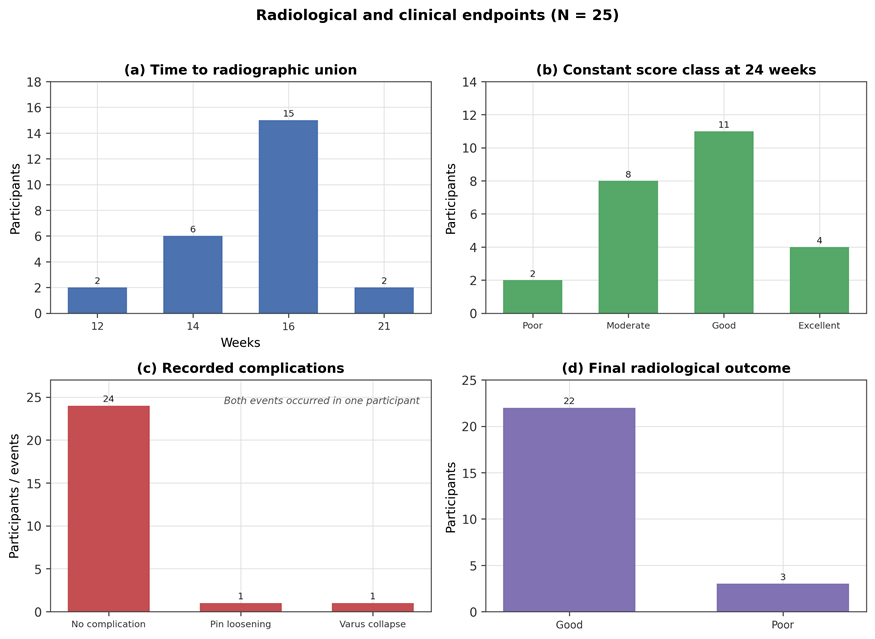
Figure 4. Radiological and clinical endpoints. The complication panel displays event types; pin loosening and varus collapse occurred in the same participant.
DISCUSSION:
In this prospective cohort of 25 adults older than 60 years, closed reduction and percutaneous threaded K-wire fixation was followed by radiographic union in every participant by 21 weeks and by progressive improvement in shoulder function through 24 weeks. The mean Constant-Murley score at 24 weeks was 72.78, with 60% of participants in good or excellent categories. Forward flexion, abduction and external rotation improved steadily. One participant experienced pin loosening followed by varus collapse, while no infection, nonunion or avascular necrosis was documented. These findings describe feasibility and short-term recovery in selected patients; the absence of a comparator prevents attribution of outcome to the procedure itself.
The functional result is broadly within the range reported in other percutaneous-fixation series, although comparisons must account for different ages, fracture patterns, devices and follow-up periods. Muncibì and colleagues reported a mean Constant-Murley score of 87.6 after at least two years among 35 evaluated patients, with mean radiographic healing at 8.2 weeks [4]. Their cohort was younger on average and included selected two- and three-part fractures, which may partly explain the higher score and earlier union. In an elderly comparative series, Jaura and colleagues reported a mean final Constant-Murley score of 76.4 after percutaneous K-wire fixation, close to the present 24-week estimate, while patients treated with a PHILOS plate had a higher mean score of 84.6 [7]. That non-randomised comparison remains vulnerable to selection and treatment-allocation bias.
Fracture complexity appears important. In patients older than 70 years treated with a Humerusblock device, Bogner and colleagues reported mean Constant-Murley scores of 67.7 for two-part, 67.9 for three-part and 43.0 for four-part fractures, alongside loss of reduction, nonunion and avascular necrosis requiring careful surveillance [8]. The present cohort contained only two four-part fractures, so it cannot meaningfully define outcomes for that subgroup. Its overall mean of 72.78 should not be extrapolated to all complex fractures or to patients in whom closed reduction is unsatisfactory.
The reconstructed master chart showed union in all participants, but two required 21 weeks. The thesis summary table had grouped those cases with earlier union; retaining the row-level 21-week observations gives a more conservative estimate of healing time. The 88% “good” radiological outcome also requires caution because the source did not specify the modified RUST threshold used to dichotomise results. Radiographic union is necessary but not sufficient for a successful outcome: alignment, tuberosity position, humeral-head viability, pain, independence and patient satisfaction remain relevant.
The observed complication pattern is consistent with the mechanical vulnerabilities of percutaneous constructs. Threaded, multiplanar wires may reduce migration and improve purchase, but osteoporotic bone, inadequate medial support and loss of reduction can still permit backing out or varus collapse [1,8]. Importantly, the source tables initially counted pin loosening and varus collapse as two complications, whereas row-level review showed that both occurred in one participant. Reporting one affected participant with two sequential events avoids an inflated patient-level complication proportion. The 24-week window is too short to exclude later avascular necrosis, post-traumatic arthritis or persistent functional limitation.
The present study should also be interpreted within the wider treatment evidence. Controlled studies and the NITEP trial show that operative treatment with locking plates or hemiarthroplasty is not routinely superior to non-operative care for many displaced fractures in older adults and can increase complications [2,3]. The current single-arm series does not challenge those findings. It instead supplies descriptive evidence for a narrower question: what short-term outcomes were observed when selected unstable fractures were reducible and treated with a minimally invasive wire construct in this setting? Decisions should remain individualised, including non-operative care, fixation or arthroplasty according to fracture pattern, bone quality, patient goals, comorbidity and local expertise.
The functional trajectory is encouraging but does not establish a minimal clinically important difference because baseline pre-injury and pretreatment Constant-Murley scores were not available. In addition, the apparent improvement may reflect natural fracture healing, rehabilitation, regression to the mean and selective enrolment, as well as fixation. Future work should prospectively register screening, use explicit radiological definitions, collect patient-reported outcomes and age- and sex-adjusted Constant scores, retain complete row-level data, and compare percutaneous fixation with contemporary non-operative and operative alternatives using adequate follow-up.
STRENGTHS AND LIMITATIONS
Strengths include prospective follow-up, complete recorded 24-week outcome ascertainment, serial functional assessment, and reconciliation of selected outcomes against the embedded participant-level master chart. The manuscript distinguishes patient-level complications from event counts and preserves late union observations that were obscured in the thesis summary.
The principal limitations are the small single-centre sample, absence of a control group, selection by treating surgeons, involvement of more than one surgeon, and follow-up limited to 24 weeks. The number screened was not recorded. Radiological outcome thresholds were incompletely defined, pre-injury function was unavailable, and serial row-level Constant-Murley and range-of-motion measurements were not retained for independent statistical verification. Several aggregate thesis tables conflicted with the master chart; only variables recoverable from the master chart could be corrected. These limitations restrict precision, causal interpretation and generalisability.
CONCLUSION:
Among 25 selected older adults with unstable proximal humerus fractures, percutaneous threaded K-wire fixation was followed by union in all participants by 21 weeks, improvement in mean shoulder function through 24 weeks and one participant with sequential pin loosening and varus collapse. The technique appears feasible in carefully selected reducible fractures, but comparative effectiveness and long-term safety remain uncertain. Larger controlled studies with explicit radiological criteria and complete participant-level data are needed.
REFERENCES:
1. Baker HP, Gutbrod J, Cahill M, Shi L. Optimal treatment of proximal humeral fractures in the elderly: risks and management challenges. Orthop Res Rev. 2023;15:129-137. doi:10.2147/ORR.S340536.
2. Launonen AP, Lepola V, Flinkkilä T, Laitinen M, Paavola M, Malmivaara A. Treatment of proximal humerus fractures in the elderly: a systematic review of 409 patients. Acta Orthop. 2015;86(3):280-285. doi:10.3109/17453674.2014.999299.
3. Launonen AP, Sumrein BO, Reito A, Lepola V, Paloneva J, Berg HE, et al. Surgery with locking plate or hemiarthroplasty versus nonoperative treatment of 3-4-part proximal humerus fractures in older patients (NITEP): an open-label randomized trial. PLoS Med. 2023;20(11):e1004308. doi:10.1371/journal.pmed.1004308.
4. Muncibì F, Paez DC, Matassi F, Carulli C, Nistri L, Innocenti M. Long-term results of percutaneous fixation of proximal humerus fractures. Indian J Orthop. 2012;46(6):664-667. doi:10.4103/0019-5413.104203.
5. Brunner A, Weller K, Thormann S, Jöckel JA, Babst R. Closed reduction and minimally invasive percutaneous fixation of proximal humerus fractures using the Humerusblock. J Orthop Trauma. 2010;24(7):407-413. doi:10.1097/BOT.0b013e3181c81b1c.
6. von Elm E, Altman DG, Egger M, Pocock SJ, Gøtzsche PC, Vandenbroucke JP, et al. The Strengthening the Reporting of Observational Studies in Epidemiology (STROBE) statement: guidelines for reporting observational studies. PLoS Med. 2007;4(10):e296. doi:10.1371/journal.pmed.0040296.
7. Jaura G, Sikdar J, Singh S. Long-term results of PHILOS plating and percutaneous K-wire fixation in proximal humerus fractures in the elderly. Malays Orthop J. 2014;8(1):4-7. doi:10.5704/MOJ.1403.010.
8. Bogner R, Ortmaier R, Moroder P, Karpik S, Wutte C, Lederer S, et al. Minimally invasive treatment of displaced proximal humeral fractures in patients older than 70 years using the Humerusblock. Biomed Res Int. 2016;2016:6451849. doi:10.1155/2016/6451849.