Nasal Staphylococcus Carriage and Mupirocin–Methicillin Resistance Among Healthcare Workers in a Tertiary Care Hospital.
- Shamim R , Associate Professor, BGS Global Institute of Medical Sciences, Bangalore
Article Information:
Abstract:
Background: Healthcare workers (HCWs) colonized with methicillin-resistant Staphylococcus aureus (MRSA) act as an important reservoir for nosocomial transmission. Mupirocin is widely used for nasal decolonization, but emerging resistance threatens its long-term value. Objectives: To determine the prevalence of nasal carriage of MRSA and of high-level (MuH) and low-level (MuL) mupirocin resistance among HCWs in a tertiary care hospital. Methods: A prospective study was conducted over one year among 300 HCWs (doctors, nurses, technicians, office and housekeeping staff) at BGS GIMS, Bangalore. Anterior nasal swabs were cultured on mannitol salt agar, blood agar, and nutrient agar, and S. aureus was identified by standard methods. Antibiotic susceptibility was tested by Kirby–Bauer disc diffusion per CLSI guidelines. MRSA was detected using cefoxitin disc diffusion and oxacillin MIC. Mupirocin resistance was determined using 5 µg and 200 µg discs to distinguish MuL from MuH resistance. Results: Coagulase-negative staphylococci (CoNS) predominated (75%), followed by S. aureus (15%); 9% showed no growth and 1% micrococci. Of 44 S. aureus isolates, 10 were MRSA, giving a nasal MRSA carriage rate of 3.33%, with carriage higher among nurses and doctors. S. aureus showed the greatest resistance to penicillin (75%) and amoxicillin–clavulanate (70.4%), and the least to linezolid (9%). Among the 10 MRSA isolates, 2 showed low-level mupirocin resistance and none showed high-level resistance; all 34 MSSA isolates were mupirocin-susceptible. Among 122 methicillin-resistant CoNS (MRCONS), 18 were MuH and 4 were MuL. Conclusion: Nasal MRSA carriage among HCWs was relatively low (3.33%) but concentrated among nurses and doctors. Mupirocin resistance in MRSA remained low; however, the substantial high-level resistance seen in MRCONS represents an expanding reservoir that could threaten future mupirocin efficacy. Judicious mupirocin use alongside robust infection-control measures is recommended.
Keywords:
Article :
Introduction:
MRSA is a major nosocomial pathogen that causes morbidity and mortality worldwide(1).It has emerged as one of the commonest causes of hospital acquired infection and continues to remain an important factor contributing to failure of management(2) .Screening for and eradication of MRSA from colonized HCW have been recognised and recommended as an important part of a comprehensive infection control policy(3) .Several studies have identified anterior nares as the etiological niche of Staphylococcal aureus(4,5,6,7)
Staphylococcus resistance to methicillin demonstrated by MRSA strains implies resistance to all antibiotics belonging to the beta lactam group(8).The main concerns of MRSA is the limited number of therapeutic options to treat this infection. The major sources of MRSA in the hospital environment are asymptomatically colonized patients and healthcare workers.Healthcare workers act as links in the transmission of MRSA between patients(9).
In 1940s penicillin was the drug of choice for staphylococcal infections. Very soon resistance to penicillin was reported from various countries. Methicillin was introduced in 1959 to treat infections due to penicillin resistant staphylococcal aureus. Unfortunately in 1960 there was first report of methicillin resistance in Staphylococcus aureus(MRSA) from Europe(10)
Infections caused by mrsa are associated with worse outcomes, in addition to prolonged hospital stays, higher costs of treatment and increased mortality(11).Nasal colonization with S. aureus has been linked to surgical-site infection [12], bloodstream infection [13], and ventilator-associated pneumonia [14]
Knowledge of prevalence of MRSA and its antimicrobial profile is necessary for selection of the appropriate empirical antimicrobial treatment for S.aureus infections(15) In particular, screening for and eradication of MRSA from colonized HCWs have been recognized and recommended as an important part of a comprehensive infection control policy for this organism.(16)
Mupirocin was introduced in clinical practise in 1985 in UK and the use of mupirocin ointment has been progressively increasing worldwide(17)Prolonged, widespread, uncontrolled use and multiple courses of mupirocin are all associated with the development of mupirocin resistance(11,18).
Mupirocin resistance is also common in MRSA and CONS than MSSA and CONS(.19).The first report on staph resistance to mupirocin came 2years after its introduction(20) .The increasing prevalence of MuH in CONS is an important threat to the future use of mupirocin against MRSA. There are no formally defined breakpoints for mupirocin susceptibility. Since mupirocin became available in the 1980s, 2 distinct forms of resistance have been described in association with S. aureus [21]. Low-level resistance is mediated by point mutations in the chromosomal ileS gene. High-level resistance to mupirocin is conferred by a novel gene, mupA, which encodes for an isoleucyl tRNA sythetase enzyme that is not susceptible to mupirocin and can be acquired through plasmid exchange [22].
MuH can be transferred from CONS to SA species. The emergence of MuH in CONS isolates indicates an expanding reservoir of plasmids encoding mupirocin resistance.(23) MuL nasal isolates can still be controlled with mupirocin therapy, as the ointment contains a much higher mupirocin concentration(200micro/ml) than the MuL MIC’s, but MuH strains cannot be controlled with mupirocin ointment(24).The emergence of resistance to mupirocin has threatened its value as a nasal decolonizer and therapeutic agent(25,26)
A recent randomized trial of mupirocin use for MRSA decolonization reported a high rate (24%) of mupirocin resistance, emphasizing the need to test for mupirocin resistance before implementing routine mupirocin use.(27)
The present study is to determine MRSA and the prevalence of MUH and MUL among the healthcare workers in our hospital.
Materials and Methods:
A prospective study was conducted among healthcare workers at Department of Microbiology, BGS GIMS, Bangalore, Karnataka over a period of 1 Year. The 300 healthcare workers in the study included were doctors, nursing staffs, technicians and class 4 workers .The procedures were explained to their satisfaction and a written consent was taken from all the healthcare workers included in the study. A proforma with age, sex ,department, health status and relevant data was prepared.
Healthcare workers with a history of upper respiratory tract infection, allergies, fever, recent nasal surgery, use of nasal medications and antimicrobial therapy, immunocompromised patients and those with diabetes were excluded from this study. The study was cleared by the institutional ethical committee.
Two samples were collected from the anterior nares using pre-moistened swabs. The swab was inserted into each nostril in turn to a depth of approximately 1cm and rotated 4-5 times both clockwise and counter clock wise. The swabs were immediately transported to microbiology laboratory for further processing. Specimens were inoculated onto Mannitol salt agar(selective media for Staphylococcus aureus),10% sheep Blood agar ,Nutrient agar and incubated for 24 hours at 37 c. Colonies of Staphylococcus aures were identified as per standard microbiological procedures. Isolates which were Beta haemolytic on blood agar, yellow colonies on mannitol salt agar, golden yellow pigment producing colonies on nutrient agar, gram positive cocci in clusters on gram stain, catalase positive, tube coagulase positive, mannitol fermenting were subjected to further processing.
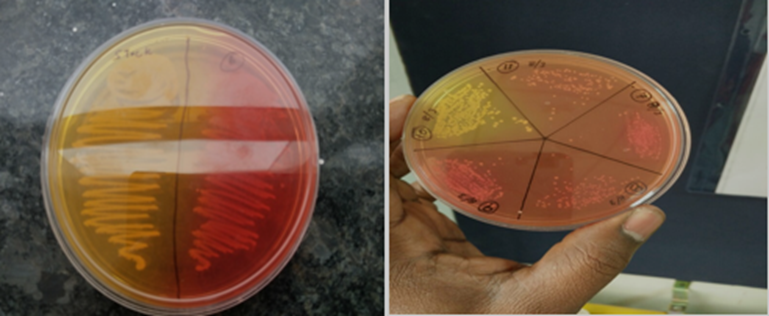
Fig-1: Yellow colonies on mannitol salt agar. Fig-2: Golden yellow colonies on nutrient agar
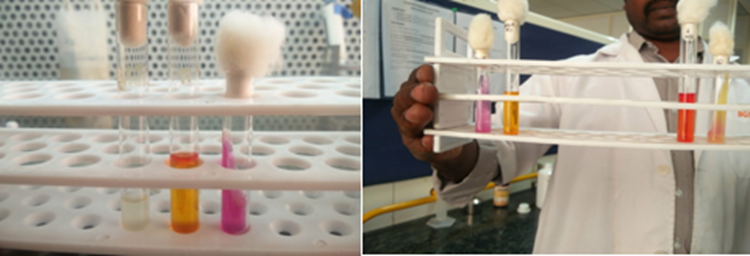
Fig-3: Coagulase positive, Mannitol fermented, Urease positive
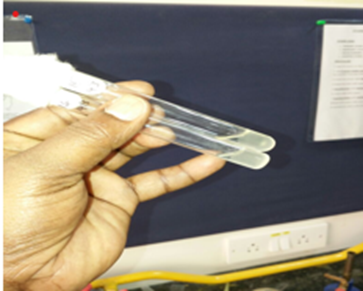
Fig-4: Cogulase positive staphylococcus aureus.
All the Staphylococcus aureus isolates were subjected to in vitro antibiotic susceptibility testing by Kirby Bauer disc diffusion method as per CLSI guidelines on Mueller-Hinton agar. The antibiotic discs used were penicillin (10units), cefoxitin (30mg), chloramphenicol (30mg), ciprofloxacin(5mg), clindamycin(2mg), amoxicillinclavulinicacid(30mg),doxycycline(30mg), erythromycin(15mg),gentamicin(10mg),linezolid(30mg) and vancomycin(30mg),teicoplanin(30mg).Zone diameters were interpreted a sensitive,intermediate and resistant as per CLSI guidelines(27).CLSI has recommended cefoxitin disc diffusion method for detection of MRSA.A 0.5 Mac Farland standard suspension of the isolate was prepared and lawn culture was done on Mueller Hinton agar plate.A cefoxitin disc(30mg) was placed on this plate and incubated at 37c for 18 hours.The zone diameter was measured.An inhibition zone of</=21mm is considered as methicillin resistant and an inhibition zone of >/=22mm is considered as methicillin sensitive(27).
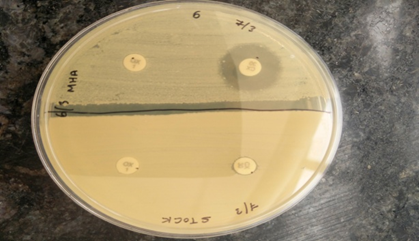
MIC for oxacillin was tested using Hi Comb MIC strip(Himedia,Mumbai) as shown in fig( ).The interpretive criteria for oxacillin MIC are MIC 2 <-mg is sensitive and MIC >-4mg is resistant(27).
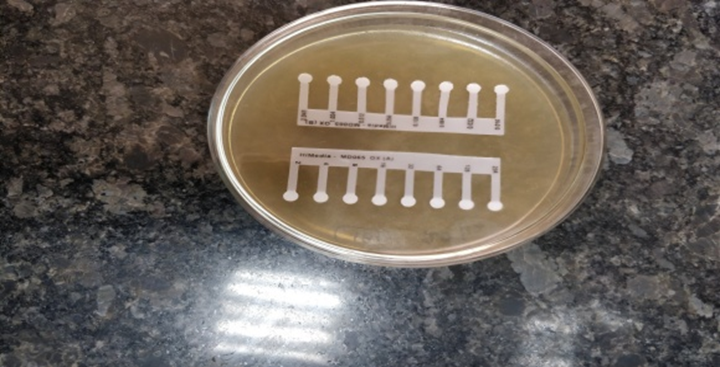
Resistance to mupirocin was detected by Kirby Bauer using 5mg mupirocin discs(Himeda,Mumbai) and 200mg mupirocin discs.A zone diameter of >14mm for 5mg was considered to be susceptible to mupirocin.Isolates that showed a zone diameter of <14mm in 5mg disc and any zone with 200mg disc were considered to be mupirocin low-level resistant(MuL).Isolates with zone diameter <14mm with 5mg and no zone with 200mg disc were considered to be mupirocin high-level resistant(26,27).
Results:
A total of 300 healthcare workers nasal smears were sampled for the study .
|
Table 1: Sex distribution among the health care workers who were sampled. |
||
|
Sex |
Number (n=300) |
Percentage (%) |
|
Male |
90 |
30 |
|
Female |
210 |
70 |
|
Total |
300 |
100 |
The above table shows the sex distribution among the health care workers who were sampled of which males were 90/300 ie30% and females were 210/300 ie 70% with a male to female ratio of 3:7.
|
Table 2: Age distribution among the health care workers who were sampled. |
||
|
Age Group |
Total Number (n=300) |
Percentage (%) |
|
11 - 20 years |
12 |
4.0 |
|
21 - 30 years |
126 |
42.0 |
|
31 - 40 years |
97 |
32.3 |
|
41 - 50 years |
45 |
15.0 |
|
> 50 years |
20 |
6.6 |
|
Total |
300 |
100 |
The highest number of healthcare workers were in the age group of 21-30 years( 126,42%) followed by 31-40 years age group(97,32.3%).41-50years age group was 45,15% and 11-20 and >50years age group were 12,4% and 20,6.6% respectively.
|
Table 3: Distribution of health care workers who were sampled. |
||
|
ategory |
Total Number (n=300) |
Percentage (%) |
|
Doctors |
105 |
35.0 |
|
Nurses |
59 |
19.6 |
|
Technicians |
21 |
7.0 |
|
Office staff |
19 |
6.3 |
|
House keeping |
96 |
32.0 |
|
Total |
300 |
100 |
Among the health care workers who were sampled 105,35% were doctors followed by housekeeping staff who were 96,32%.Nurses formed 59,19.6% followed by technicians21,7% and office staff were 19,6.3%.
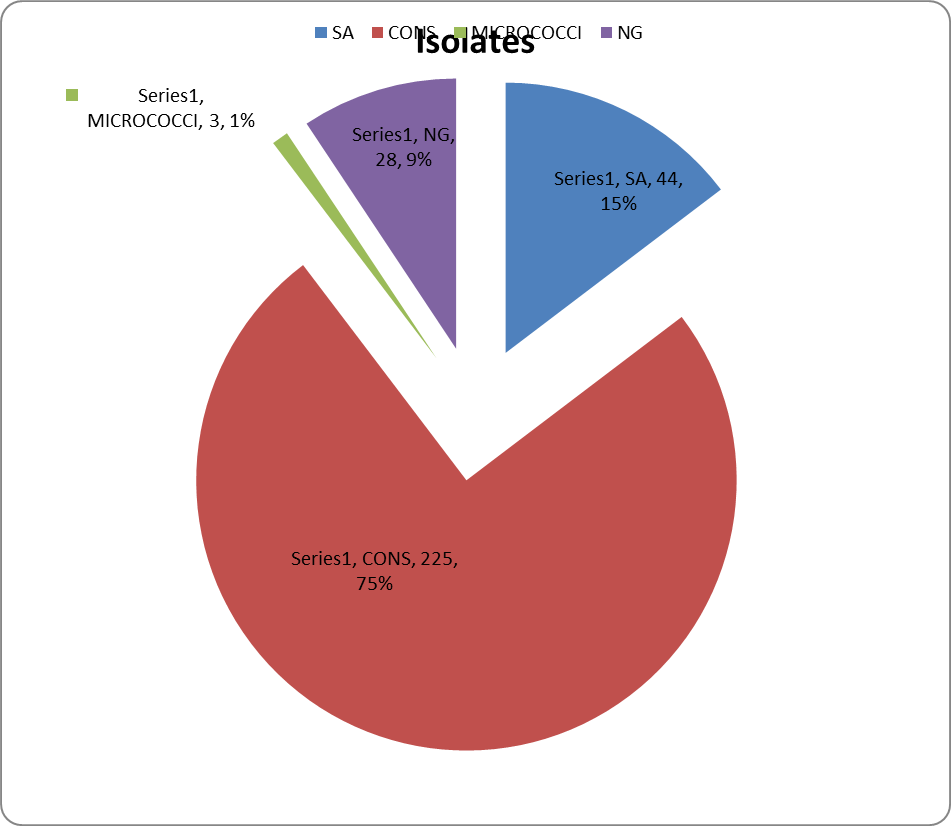
Fig-3:The figure represents coagulase negative staphylococcus isolates were75%,staphylococcus aureus were 15%,no growth were 9% and micrococci was 1%
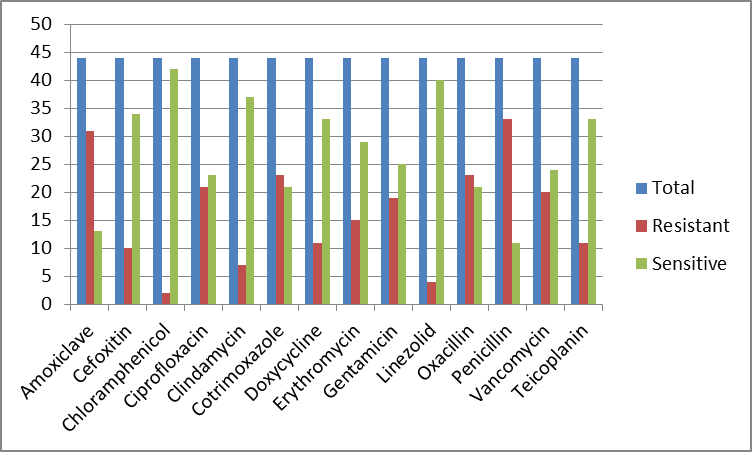
Fig-4:Antibiotic sensitivity pattern of the 44 staphylococcus aureus isolates showed 75%resistance to penicillin,70.4% were resistant to amoxiclav,52.4% to cotrimoxazole and oxacillin,47.7% were resistant to ciprofloxacin,45.4% were resistant to vancomycin,43.1% were resistant to gentamicin,34%were resistant to erythromycin,25% were resistant to doxycycline,22.7 were resistant to cefoxitin,25% were resistant to teicoplanin,15.9% were resistant to clindamicin and 9% to linezolid.
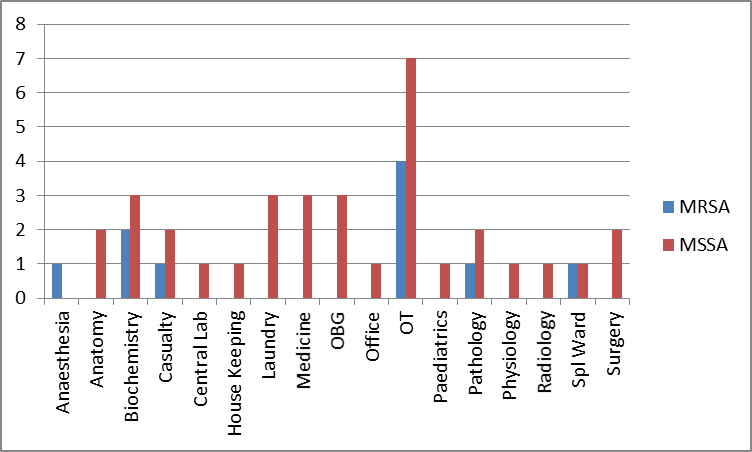
Fig-5: The various wards from departments from which MSSA and MRSA were isolated is shown in Fig-5.4MRSA carriers were from labour ot,2 were from biochemistry and 1 each from anesthesia,pathology,casuality and special ward.
|
Table 6: High and Low level Mupirocin resistance among Methicillin resistant Staphylococcus aureus |
|||
|
Total No. Of MRSA |
Mupirocin resistant |
Mupirocin sensitive |
|
|
|
High level resistance |
Low level resistance |
|
|
10 |
0 |
2 |
8 |
Among the 10 MRSA isolates 8were mupirocin sensitive and 2 showed low level mupirocin resistance. There were no high level mupirocin resistant MRSA isolates.
|
Table 7: High and Low level Mupirocin resistance among Methicillin sensitive Staphylococcus aureus |
|||
|
Total No. Of MSSA |
Mupirocin resistant |
Mupirocin sensitive |
|
|
|
High level resistance |
Low level resistance |
|
|
34 |
0 |
0 |
34 |
Out of 34 MSSA isolates, all were mupirocin sensitive.
|
Table 8: High and Low level Mupirocin resistance among Methicillin resistant coagulase negative Staphylococcus species |
|||
|
Total No. Of MRCONS |
Mupirocin resistant |
Mupirocin sensitive |
|
|
|
High level resistance |
Low level resistance |
|
|
122 |
18 |
4 |
100 |
Among 122 MRCONS,18 were Mup-H and 4 were Mup-L and 100 isolates were Mup-Sensitive.
Discussion:
Present study was conducted on 300 healthcare workers to know the prevalence of nasal carriage of MRSA and Mupirocin resistant MRSA isolates in a tertiary care hospital. According to Mathenraj et al,the rate of colonization of MRSA was 1.8% among healthcare workers(9).This is in correlation with the study by Kausalya et al the rate of colonization was 1.33%.In our present study the rate was 3.33%.But in a study done by Bala et al, the rate of colonization was found to be 37.5%.this is high compared to the above studies.
Among the 3.33% of MRSA carriers,4.2% were females and 1.1% were males,but according to Mathanraj et al,male carriers were more common than female carriers.This is in accordance with the study by Kausalya et al where male carrier was 3.37% and female carriers were0.47%.(29).This disparity could be due to the fact that female employees were more in comparison to male employees in our institute.
Among the professional category, according to the study by Radhakrishna M et al(30),the Staphylococcus aureus nasal carriage was particularly high among doctors(32.5%) and housekeeping personnel(26.7%),followed by nursing staff(13.6%). In our study 4 doctors ,5 nurses and 1 housekeeping were MRSA carriers.Our study showed that nasal carriage of MRSA among nurses were higher compared to doctors which is in accordance to the study by Nabi Abdulla el aila et al where the MRSA carriage among the nurses were high(30.4%) followed by doctors(16%) This finding could be explained by the increased physical contact of nurses and doctors with patients(3).
Among the total 10 MRSA isolates,8 were mupirocin sensitive and 2 were mupirocin lowlevel resistant and there were no mupirocin high level resistant isolate.IN a study by Schmitz et al mupirocin low level resistant MRSA isolates were 2 and high level MRSA isolates were 1(31).in Oomen et al (32)and Jaykumar et al(33) the incidence of MUPLR was 0 and MUPHR were 1 and 1 respectively.
It has been suggested that MuL nasal isolates can still be controlled with mupirocin therapy,as the ointment contains a much higher mupirocin concentration(200micrgram/ml) than MuL MIC’s,but MuH strains cannot be controlled with mupirocin ointment(34).
Conclusion:
Nasal carriage of MRSA is relatively low in our hospital but high among nurses and doctors in comparison to other HCW.This shows that with appropriate implementation of HIC programmes this threat of MRSA among HCW can be brought under control.Overall mupirocin resitance in MRSA species is still low,still a judicious use of mupirocin is recommended to keep the resistance at a bare minimum.
References:
1. Haddadin AH, Fappiano SA, Lipset PA. Methicillin-resistant 4 (MRSA) in the intensive care unit. Postgrad Med J. 2002;78:385–92.
2. Mehta AP, Rodrigues C, Sheth K, Jani S, Hakimiyan A. N. F. Control ofmethicillin resistant Staphylococcus aureus in a tertiary care centre-a fiveyear study. Indian J Med Microbiol. 1998;16:31–4.
3. Nasal carriage of methicillin resistant Staphylococcus aureus among health careworkers at Al Shifa hospital in Gaza Strip.Nabil Abdullah El Aila1*, Nahed Ali Al Laham2 and Basim Mohammad Ayesh1.
4. Leman R, Alvarado-Ramy F, Pocock S, Barg N, Kellum M, McAllister S et al.; Nasal carriage of Methicillin resistant Staphylococcus aureus in
5. an American Indian population. Infect Control HospEpidemiol, 2004; 25(2): 121-125.
6. Shrestha B, Pokhrel BM, Mahopatra TM; Staphylococcus aureus
7. nasal carriage among health care workers in a Nepal hospital.
8. Braz J Infect Dis, 2009; 13(5): 322.
9. Pathak A, Marothi Y, Iyer RV, Singh B, Sharma A, Eriksson B et al.; Nasal carriage and antimicrobial susceptibility of Staphylococcus aureus in healthy preschool children in Ujjain, India. BMC Pediatr, 2010; 10: 100.
10. Vinodhkumaradithya A, Uma A, Srinivasan M, Ananthalakshmi I, Nallasivam P, Thirumalaikolundusubramanian P; Nasal carriage of Methicillin resistant Staphylococcus aureus among surgical unit staff.
11. Jpn J Infect Dis, 2009; 62: 228-289)
12. Velasco D, del Mar Tomas M, Cartelle M, Beceiro A, Perez A, Molina F et al.;Evaluation of different methods for detecting Methicillin ( oxacillin) resistance in Staphylococcus aureus. J Antimicrob Chemother, 2005; 55 (3): 379-382.
13. Mathanraj S, Sujatha S, Sivasangeetha K, Parija SC; Screening for
14. Methicillin resistant Staphylococcus aureus carriers among patients
15. and health care workers of a tertiary care hospital in South India.
16. Indian J Med Microbiol, 2009; 27(1): 62-64).
17. Molecular typing of Methicillin resistant Staphylococcus aureus strains
18. by PCR-RFLP of SPA gene –A reference laboratory perspective PL Mehndiratta,
19. P. Bhalla, A. Ahmed, YD Sharma, Indian Journal ofMedical Microbiology (2009) 27(2): 116-22
20. Cookson BD. The emergence of mupirocin resistance: a challenge to infection control antibiotic prescribing practice, J Antimicrob Chemother , 1998, vol. 41 (pg. 11-8) Google ScholarCrossrefPubMed)
21. Mulqueen J, Cafferty F, Cormican M, Keane JD, Rossney A. Nasal carriage of ethicillin-resistant Staphylococcus aureus in GPs in the West of Ireland. Brit J General Practice. 2007;57:811-13 .
22. Wenzel RP, Perl TM. The significance of nasal carriage of Staphylococcus aureus the incidence of postoperative wound infection, J Hosp Infect ,1995, vol. 31 (pg. 13-24)Google ScholarCrossrefPubMed
23. von Eiff C, Becker K, Machka K, StammerH, Peters G. Nasal carriage as a source of Staphylococcus aureus bacteremia, N Engl J Med , 2001, vol. 344 (pg. 11-6) Google ScholarCrossrefPubMed
24. Corne P, Marchandin H, Jonquet O, Campos J, Banuls AL. Molecular evidence that nasal carriage of Staphylococcus aureus plays a role in respiratory tract infections of critically ill patients,
25. J Clin Microbiol , 2005, vol. 43 (pg. 3491-3)Google ScholarCrossrefPubMed
26. Herwaldt LA. Control of ethicillin-resistant Staphylococcus aureus in the
27. hospital setting. Am.J. Med. 1999;106: 11S-18S.
28. Nasal carriage of methicillin resistant Staphylococcus aureus among
29. health care workers at Al Shifa hospital in Gaza Strip
30. Nabil Abdullah El Aila, 1 Nahed Ali Al Laham,2 and Basim Mohammad Ayesh).
31. SAR I Infection control subcommittee. The control and prevention of MRSA in Hospitals and in the community HPSC, 2005.Available from: http://www.ndsc.ie/hpse/A-Z/microbiology/antimicrobial resistance
32. /European Antimicrobial Resistance sarveillance system EARSS/Reference and
33. Education Resource material/S aureus MRSA/ Guidance.
34. Miller MA, Daseal A, Portnoy J, Mendelson J. Development of mupirocin resistance among methicillin-resistant Staphylococcus aureus after widespread use of nasal mupirocin ointment. Infect Control Hosp Epidemiol! 1996;17:811-3.
35. Rehaman M, Noble WC, Cookson B. Mupirocin resistant Staphylococcus aureus. Lancet 1987;330:387-8.
36. Hodgson JE, Curnock SP, Dyke KG, MorrisR, Sylvester DR, Gross MS. Molecular characterization of the gene encoding high-level mupirocin resistance
37. in Staphylococcus aureus J2870, Antimicrob Agents Chemother ,
38. 1994, vol. 38 (pg. 1205-8)Google ScholarCrossrefPubMed.
39. Duckworth GJ. Diagnosis and management of methicillin resistant
40. Staphylococcus aureus infection. BMJ 1993 23;307:1049-52.
41. Palepou MF, Johnson AP, CooKsea BIR Geetie H, Charlett A, Woodford N. Evaluation of disc diffusion and Etest for determining the susceptibility of Staphylococcus to mupirocin. J Antimicrob Chemother 1998:42:577-83.
42. Simor AE, Phillips E, McGeer A, et al. Randomized controlled trial
43. of chlorhexidine gluconate for washing, intranasal mupirocin, rifampin doxycycline versus no treatment for the eradication of methicillin-resistant Staphylococcus aureus colonization, Clin Infect Dis , 2007, vol. 44 (pg. 178-85)Google ScholarCrossrefPubMed.
44. Kausalya,Ragini Ananth Kashid,Sangeetha S.Nasal carriage and antimicrobial susceptibility of Staphylococcus aureus,with special reference to methicillin resistance,in health care workers in a tertiary care hospital in south India.Sch Acad. J Biosci.,2015;3(8):720-724.
45. Radhakrishna M,Monalisa D’souza,Subbannayya K.Prevalence of Methicillin Resitant Staplococcus aureus carriage amongst Health care workers of Critical care units in Kasturba Medical College Hospital,Mangalore,India.J Clin Diagn Res.2013 Dec;7(12):2697-2700.
46. Clinical and Laboratory Standards Institue.Performance Standards for Antimicrobial Susceptibility Testing,Wayne,PA.23RD informational supplement;2013.p.M100-S23.
47. de oliveira NE,CardozoAP,Marques Ede A,dos Santos KR,Giambiagi-dMarval M.Interpretive criteria to differentiate low and high level mupirocin resistance in Staphylococcus aureus.J Med Microbiol 2007,56:937-9.
48. Schmitz FJ, Lindenlauf E, Hofmann B, Fluit AC, Verhoef J, Heinz HP, et al. The prevalence of low- and high-level mupirocin resistance in staphylococci from 19 European hospitals. J Antimicrob Chemother 1998:42:489-95.
49. Oommen SK, Appalaraju B, Jinsha K. Mupirocin resistance in clinical 3. Petinaki E, Spiliopoulou I, Kontos F, Maniati M, Bersos Z, Stakias N, isolates of staphylococci in a tertiary care centre in south India. Indian et al. Clonal dissemination of mupirocin-resistant staphylococci in J Med Microbiol 2010;28:372-5.
50. Jaykumar S, Meerabai M, Shameem Banu AS, Mathew R, Kalyani M, Lal YB. Prevalence of high and low level mupirocin resistance among staphylococcal isolates from skin infection in a Tertiary Care Hospital. J Clin Diagn Res 2013:7:238-42
51. Hudson IR. The efficacy of intranasal mupirocin in the prevention of staphylococcal infections: a review of recent experience. J Hosp Infect 1994;:27:81-98.