COMPARISON OF DISCHARGE OUTCOME PREDICTIONS USING THE FULL OUTLINE OF UNRESPONSIVENESS SCORE AND THE GLASGOW COMA SCORE IN PATIENTS WITH TRAUMATIC BRAIN INJURY.
- Dhruba Jyoti Kurmi , M.S.(General Surgery), MCh (Neurosurgery), Associate Professor, Department of Neurosurgery, Assam Medical College & Hospital, Dibrugarh, Assam, India
- Raju Prasad Tayung , M.D.(Anaesthesiology), Associate Professor, Department of anaesthesiology, Assam Medical College & Hospital, Dibrugarh, Assam, India
- Akoijam Herojit Singh , M.D. (Anaesthesiology), Senior Resident, Department of anaesthesiology, JSB Civil Hospital Kajalgaon, Chirang, Assam, Indian.
Article Information:
Abstract:
Background: Traumatic brain injury (TBI) is a major cause of mortality and disability. The Glasgow Coma Scale (GCS) is widely used for neurological assessment but has limitations, particularly in intubated patients. The Full Outline of UnResponsiveness (FOUR) score provides additional neurological information and may improve outcome prediction. Methods: A prospective observational study was conducted in the intensive care units of Assam Medical College and Hospital, Assam, India over one year. Seventy adult patients with TBI admitted for more than 24 hours were included. FOUR score and GCS were assessed within the first 24 hours of ICU admission with a 15-minute interval between assessments. Patients were followed until ICU discharge and categorized as survivors or non-survivors. Results: The FOUR score showed better predictive ability for hospital mortality compared with GCS. The area under the receiver operating characteristic curve (AUC) was 0.905 (95% CI: 0.83–0.98; P<0.001) for FOUR score and 0.842 (95% CI: 0.735–0.94; P<0.001) for GCS. Conclusion: The FOUR score is a reliable predictor of outcome in patients with traumatic brain injury and demonstrates advantages over GCS, especially in intubated patients, by assessing brainstem reflexes and respiratory pattern in addition to consciousness level.
Keywords:
Article :
INTRODUCTION:
Traumatic brain injury (TBI) is a significant global health problem and remains one of the leading causes of death and disability, particularly among young adults. The severity of neurological impairment following TBI varies widely, making early assessment and accurate outcome prediction essential for clinical decision-making, resource allocation, and rehabilitation planning.
The Glasgow Coma Scale (GCS), introduced by Teasdale and Jennett in 1974, is the most commonly used clinical tool for assessing consciousness in patients with brain injury. It evaluates eye opening, verbal response, and motor response, with scores ranging from 3 to 15. Despite its widespread acceptance and simplicity, GCS has limitations, including inability to assess verbal response in intubated patients, inter-observer variability, and lack of evaluation of brainstem reflexes.
The Full Outline of UnResponsiveness (FOUR) score was developed by Wijdicks et al. in 2005 to overcome these limitations. It assesses four components: eye response, motor response, brainstem reflexes, and respiratory pattern, with a total score ranging from 0 to 16. Unlike GCS, the FOUR score can be applied in intubated patients and provides additional neurological information, including recognition of brainstem dysfunction, locked-in syndrome, and different stages of herniation.
Several studies have compared the prognostic value of FOUR score and GCS, with varying results regarding superiority. However, limited data are available from this region regarding their usefulness in predicting outcomes among TBI patients. Therefore, this study was conducted to compare the effectiveness of FOUR score and GCS in predicting outcomes of traumatic brain injury patients admitted to the intensive care unit.
AIM
To determine the accuracy of the Full Outline of UnResponsiveness (FOUR) score as predictor for assessing the discharge outcome among patients with traumatic brain injury admitted to the intensive care unit.
OBJECTIVES
To assess the FOUR score as an accurate predictor of discharge outcome as compare to GCS score in TBI patients.
MATERIALS AND METHODS:
Study Design and Setting
This prospective observational study was conducted in the Intensive Care Units of Assam Medical College and Hospital after approval from the Institutional Ethics Committee. The study period was one year.
Study Population
A total of 70 adult patients with traumatic brain injury admitted to the ICU for more than 24 hours were included. Patients of both genders aged above 18 years were enrolled.
Assessment of Neurological Status: The GCS and FOUR scores were assessed for each patient within the first 24 hours of ICU admission. Both scoring systems were performed separately with a 15-minute interval between assessments. Individual components of each scale were recorded. The GCS assessed: Eye response, Verbal response, Motor response. The FOUR score assessed: Eye response, Motor response, Brainstem reflexes, Respiration pattern.
Outcome Assessment
Patients were followed throughout their ICU stay. Final outcomes were categorized as survivors and non-survivors. The predictive ability of both scores for hospital mortality was evaluated using receiver operating characteristic (ROC) curve analysis.
RESULTS:
The mean scores of both assessment tools were lower among non-survivors compared with survivors, indicating greater neurological impairment among patients with poor outcomes (table 1 and 2). The FOUR score demonstrated better discrimination for predicting hospital mortality compared with GCS.
Table-1. Mean FOUR Score among the Survivors and Non-Survivors
| Outcome | FOUR Score | p value* | |
| Mean | ±S.D. | ||
| Survivor | 11.43 | 2.08 | <0.001 |
| Non-Survivor | 7.33 | 2.37 | |
| TOTAL | 10.20 | 2.87 | |
| *Student t Test; The p-value is significant at 5% level of significance | |||
Table-2. Mean Glasgow Coma Score among the Survivors and Non-Survivors
| Outcome | Mean Glasgow Coma Score | Standard Deviation (SD) | p-value* |
| Survivor | 8.73 | 2.04 | <0.001 |
| Non-Survivor | 6.00 | 1.82 | |
| Total | 7.91 | 2.33 |
Table–3. Correlation between FOUR Score and Glasgow Coma Scale (GCS)
(By Spearman rho Correlation Coefficient)
| Variable | Correlation Coefficient (r) | p-value* |
| Glasgow Coma Score (GCS) | 0.886 | <0.001 |
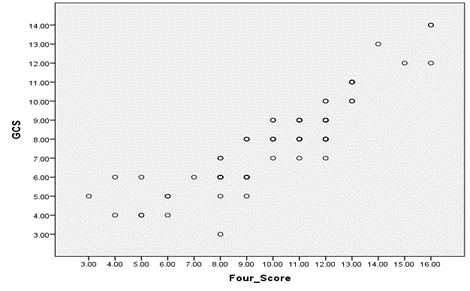
Fig. 1 Correlation between FOUR Score and Glasgow Coma Scale (GCS)
(By Spearman rho Correlation Coefficient)
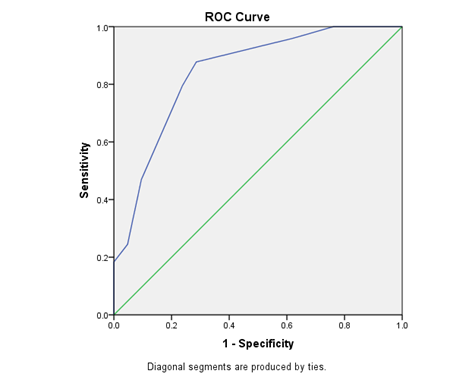
Fig. 2 Receiver operating characteristic curve (ROC) of FOUR Score to test the discrimination of the model with Area Under Curve of 0.905.
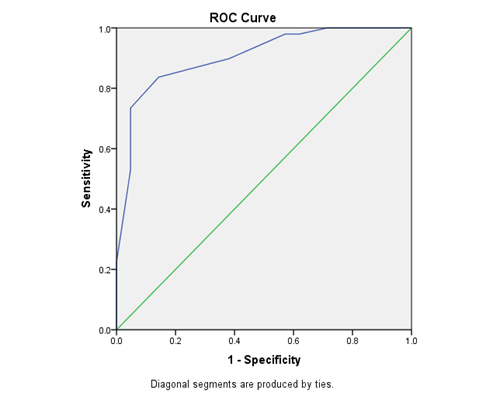
Fig. 3 Receiver operating characteristic curve (ROC) of Glasgow Coma Scale to test the discrimination of the model with Area under curve of 0.842.
Receiver operating characteristic (ROC) curve analysis showed that the area under the curve (AUC) for predicting hospital mortality was:
| Scoring system | AUC | 95% Confidence Interval | P value |
| FOUR score | 0.905 | 0.83–0.98 | <0.001 |
| Glasgow Coma Scale | 0.842 | 0.735–0.94 | <0.001 |
The FOUR score showed a higher prognostic accuracy than GCS for predicting mortality in patients with traumatic brain injury. Overall, the findings suggest that FOUR score provides additional neurological information and may be a useful tool for early outcome prediction in ICU patients with TBI, particularly in situations where GCS assessment is limited, such as intubated patients.
DISCUSSION:
The present study compared the prognostic ability of the FOUR score and GCS in predicting hospital mortality among TBI patients. The FOUR score demonstrated better predictive performance with a higher area under the ROC curve (0.905) compared with GCS (0.842), suggesting improved discrimination for mortality prediction.
These findings are consistent with previous studies showing that the FOUR score provides additional neurological information and performs similarly or better than GCS in critically ill and TBI patients. Studies by Wijdicks et al. and Sadaka et al. demonstrated that FOUR score has good inter-rater reliability and may provide superior prognostic information, particularly because it incorporates brainstem reflexes and respiratory pattern.
The advantage of FOUR score is its ability to assess all components even in intubated patients, unlike GCS where verbal response cannot be evaluated. Additionally, assessment of pupil reflexes, brainstem function, and respiration allows a more comprehensive evaluation of coma severity and neurological deterioration.
Although GCS remains a simple and widely accepted tool, the findings of this study suggest that FOUR score can serve as a valuable complementary assessment method in ICU patients with traumatic brain injury and may improve early prognostic evaluation.
CONCLUSION:
The present study demonstrates that the Full Outline of UnResponsiveness (FOUR) score is a reliable predictor of outcome in patients with traumatic brain injury. The FOUR score showed better performance than the Glasgow Coma Scale (GCS) in predicting hospital mortality. The major advantages of the FOUR score include assessment of all components in intubated patients, evaluation of brainstem reflexes and respiratory pattern, and better neurological characterization of patients with impaired consciousness. Therefore, the FOUR score can be considered a useful complementary tool to GCS in the intensive care setting for early prognostic assessment of TBI patients.
REFERENCES:
1. Teasdale G, Jennett B. Assessment of coma and impaired consciousness. A practical scale. Lancet. 1974;2:81–84.
2. Wijdicks EFM, Bamlet WR, Maramattom BV, et al. Validation of a new coma scale: The FOUR score. Ann Neurol. 2005;58:585–593.
3. Sadaka F, Patel D, Lakshmanan R. The FOUR score predicts outcome in patients after traumatic brain injury. Neurocrit Care. 2012.
4. Iyer VN, Mandrekar JN, Danielson RD, et al. Validity of the FOUR score coma scale in the medical intensive care unit. Mayo Clin Proc. 2009;84:694–701.
5. Okasha AS, et al. Prediction of mortality, endotracheal intubation and ICU length of stay after traumatic brain injury using FOUR score and GCS. 2014.