A Cross sectional study on Prevalence of Diabetes and associated factors among young adults in urban area of Hyderabad, Telangana.
- Katravath Suresh , Assistant Professor, Neurology, Nijam Institute of Medical Sciences, Hyderabad, TELANGANA
- M.Bhagavath saicharan , Assistant Professor, General Medicine, Osmania Medical college, Hyderabad, TELANGANA
- Gadepale Nikil , Assistant Professor, Paediatrics, GMC-Rajanna sircilla. TELANGANA
- Venkatesh , Community-Medicine, Assistant Professor, OSMANIA MEDICAL COLLEGE, HYDERABAD, TELANGANA.
Article Information:
Abstract:
Background: Diabetes mellitus is an escalating global health concern. The IDF estimates about 11.1% of adults (20–79) worldwide have diabetes (589 million people). This number is projected to reach 853 million by 2050. In India, the adult prevalence is roughly 11–12%. Notably, Type2-Diabetes mostly in middle-aged adults, is increasingly seen in younger populations. Diabetes prevalence in 18–30 year-olds in semi- urban field area, using standard diagnostic criteria, and evaluated links to factors like BMI and physical activity. This study was carried out in Ghanpur, Chitkul, and Ismailkhanpet of Medak district, Telangana, India, which serve as semi-urban field practice areas under Osmania-Medical College, Hyderabad. The area represents a transitional population with mixed rural and urban lifestyle characteristics, including evolving dietary habits, reduced physical activity levels, and rising obesity prevalence. The study results as follows, out of 340 participants (mean age 24.8±3.4 years; 174 females), 50 had diabetes (14.7%). Thirty-five cases were known diabetics and 15 were newly identified. The 21–25 year group had the highest rate (19.8%), versus 13.8% (18–20 yrs) and 11.4% (26–30 yrs), but this difference was not statistically significant (p = 0.177). Females showed a higher prevalence (16.7%) than males (12.7%), p = 0.286. Obesity was strongly associated with diabetes: only 9.0% of normal-BMI youth had diabetes, compared to 18.6% of overweight and 22.2% of obese (p=0.013). Similarly, sedentary individuals had a much higher diabetes rate (21.7%) than active individuals (6.4%) (p < 0.001). Family history did not reach significance (17.5% vs 14.1%, p = 0.338). Approximately 1 in 7 young adults in this community had diabetes. Overweight/obesity and physical-inactivity were key correlates. We recommend lowering the age for diabetes screening and emphasizing lifestyle interventions for younger populations. Public health programs should also address mental health and body image as part of diabetes prevention. Screening for diabetes should be made more comprehensive, compulsory and effectively implemented under the National Program for Prevention and Control of Non- Communicable Diseases (NP-NCD). Young adults (greater than 25 years), especially those with risk factors such as obesity and family history, should be actively included in routine screening at Health and Wellness-Centers
Keywords:
Article :
INTRODUCTION:
Diabetes mellitus is an escalating global health concern. The IDF estimates about 11.1% of adults (20–79) worldwide have diabetes ( 589 million people) [1]. This number is projected to reach 853 million by 2050 [1]. In India, the adult prevalence is roughly 11–12% [2]. Notably, type 2 diabetes, once mostly in middle-aged adults, is increasingly seen in younger populations [3]. For example, a review reported rising T2DM among 20–39 year-olds globally, especially in urban settings (10.4% vs. 7.2% rural) [4]. Indian data reflect this trend: NFHS-5 found 5.1% prevalence in ages 15–29 [5], and a large screening reported 6.0% in under-35s [6]. Smaller studies show even higher rates: 7.8% in ages 20–39 [3] and 17.2% in 18–40 year-olds [4]. Given India’s large youth population, early-onset diabetes has significant public health implications. We therefore assessed diabetes prevalence in 18–30 year-olds in a semi- urban field area, using standard diagnostic criteria, and evaluated links to factors like BMI and activity.
Aim and Objectives
Aim
To estimate the prevalence of Diabetes in young adults (18–30 years) within the Urban-community and determine associated risk factors and Socio demographic factors associated with diabetes.
Objectives
1. To estimate the prevalence of Diabetes among young adults in Urban-community.
2. To determine the risk factors and Socio-demographic factors associated with Diabetes among young adults in Urban-community.
MATERIALS AND METHODS:
Study Design
Cross-sectional study.
Study Area
This study was carried out in Ghanpur, Chitkul, and Ismailkhan-pet of Medak district, Telangana, India, which serve as semi-urban field practice ar- eas under Osmania Medical College, Hyderabad. The area represents a transitional population with mixed rural and urban lifestyle characteristics, including evolving dietary habits, reduced physical activity levels, and rising obesity prevalence. Given these epidemiological shifts, the region was considered suitable for assessing the bur- den of diabetes among young adults.
A total of 340 participants were included in the study, distributed as follows: 58 participants from Ghanpur, 108 from Chitkul, and 178 from Ismailkhanpet.
Study Population: Permanent residents aged 18–30 years.
Inclusion Criteria: Adults 18–30 years consenting to participate.
Exclusion Criteria: Known psychiatric illness under treatment, pregnancy, or inability to consent.
Sample Size Calculation:
We used N = Z2PQ/d2 for prevalence. Q=1-P
Z= 1.96,CI-95% With P = 0.08 (anticipated prevalence),Q=0.92 and
d = 0.03, N ≈ 314. Adding 8% for non- response, we aimed for 340 participants.
Sampling Method
Multi-stage random sampling: 5 blocks in Ghanpur and Chitkul
villages were randomly selected; within each block, consecutive households were vis- ited to recruit 68 eligible individuals per block (total 340). At each selected house- hold, one eligible youth was randomly chosen.
Data Collection and Scales
Trained investigators conducted structured interviews and clinical examina- tions.
Anthropometric Measurements
• Body weight (kg) measured using a calibrated digital weighing scale.
• Height (cm) measured using a stadiometer.
• Body Mass Index (BMI) calculated as weight (kg) / height (m2).
• Waist and hip circumferences measured using a non-stretchable measuring tape.
Central Obesity Assessment
• Defined according to ATP-III criteria: waist circumference > 102 cm in men and > 88 cm in women [11].
• For comparison, WHO criteria define obesity as waist-hip ratio > 0.90 in men and > 0.85 in women [11].
• Pittsburgh Sleep Quality Index (PSQI): A 19-item instrument comprising 7 components; global score ranges from 0–21. A score > 5 indicates poor sleep quality [9].
Data Collection
After written consent, trained staff collected data using a structured questionnaire (socio-demographics, medical and family history, diet, and physical activity).
Anthropometric measurements included weight (digital scale) and height (sta- diometer) to compute BMI (Asia-Pacific cutoffs: normal < 23, overweight 23–27.4, obese >=27.5 kg/m2). Waist and hip circumferences were measured for central obe- sity assessment [11].
Assessment Instruments
Sleep quality was assessed by the Pittsburgh Sleep Quality Index (PSQI), a 19-item questionnaire; PSQI global score $¿5$ indicates poor sleep [9]. Body image perception was evaluated using the Stunkard Figure Rating.
Scale (9-silhouette model) [10]. Central obesity was defined by waist circumference according to ATP-III: >102 cm for men or >88 cm for women [11].
Diabetes Diagnosis
Fasting blood glucose (FBG) was measured by glucome- ter. Diabetes was defined as FBG ≥ 126 mg/dL or random BG ≥ 200 mg/dL with symptoms [11]. Known diabetics on treatment were also counted.
Statistical Analysis
Data were entered in Excel and analyzed using SPSS
v.25. We computed prevalence with 95% CIs. Means±SD described continuous data. Categorical comparisons used chi-square tests; p < 0.05 was significant. We planned logistic regression for adjusted analysis, but primary results focus on prevalence and chi-square.
RESULTS:
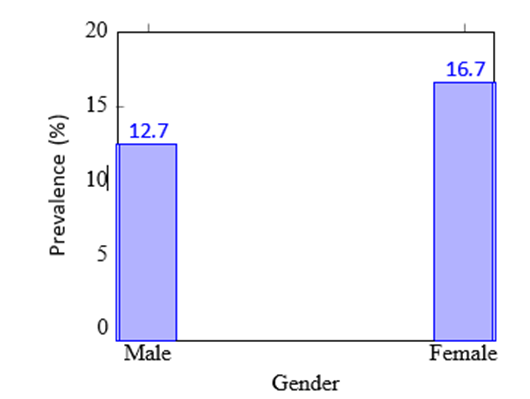
Of 340 participants (mean age 24.8±3.4 years; 174 females), 50 had diabetes (14.7%). Thirty-five cases were known diabetics and 15 were newly identified. Table 1 summa- rizes diabetes prevalence by subgroup. The 21–25 year group had the highest rate (19.8%), versus 13.8% (18–20 yrs) and 11.4% (26–30 yrs), but this difference was not statistically significant (p = 0.177). Females showed a higher prevalence (16.7%) than males (12.7%), p = 0.286. Obesity was strongly associated with diabetes: only 9.0% of normal-BMI youth had diabetes, compared to 18.6% of overweight and 22.2% of obese (p=0.013). Similarly, sedentary individuals had a much higher diabetes rate (21.7%) than active individuals (6.4%) (p < 0.001). Family history did not reach significance (17.5% vs 14.1%, p = 0.338).
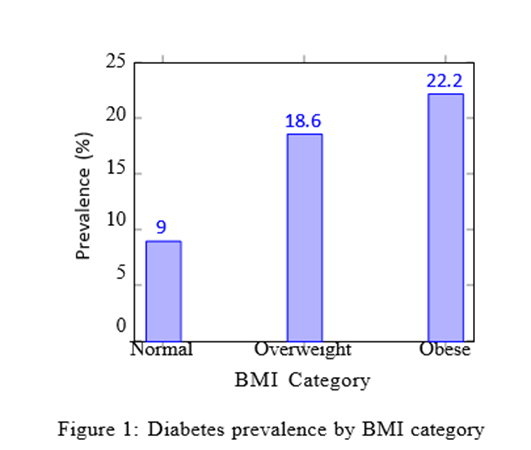
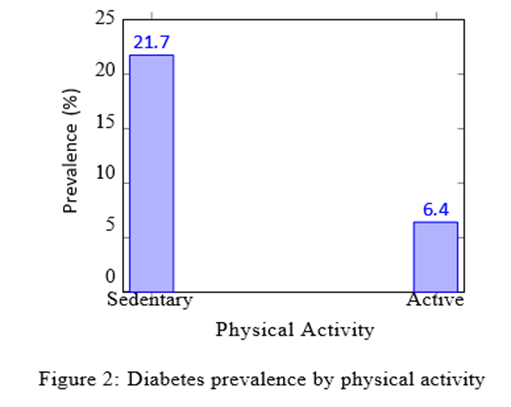
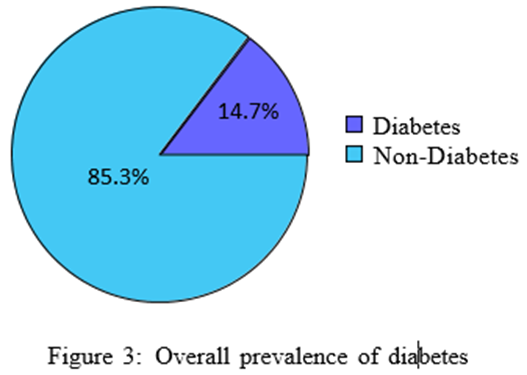
Table 1: Diabetes prevalence by demographic and risk factors (N=340)
|
Factor |
Diabetes (+) |
Diabetes (–) |
p-value |
|
Age 18–20 |
13/94 (13.8%) |
81/94 (86.2%) |
0.177 |
|
Age 21–25 |
21/106 (19.8%) |
85/106 (80.2%) |
|
|
Age 26–30 |
16/140 (11.4%) |
124/140 (88.6%) |
|
|
Gender: Male |
21/166 (12.7%) |
145/166 (87.3%) |
0.286 |
|
Gender: Female |
29/174 (16.7%) |
145/174 (83.3%) |
|
|
BMI Normal |
15/166 (9.0%) |
151/166 (91.0%) |
0.013 |
|
BMI Overweight |
19/102 (18.6%) |
83/102 (81.4%) |
|
|
BMI Obese |
16/72 (22.2%) |
56/72 (77.8%) |
|
|
Family History: Yes |
10/57 (17.5%) |
47/57 (82.5%) |
0.338 |
|
Family History: No |
40/283 (14.1%) |
243/283 (85.9%) |
|
|
Sedentary |
40/184 (21.7%) |
144/184 (78.3%) |
<0.001 |
|
Active |
10/156 (6.4%) |
146/156 (93.6%) |
|
Key risk factors were as expected. Obesity and inactivity were strongly linked to diabetes, consistent with global data [2]. For example, overweight and obese young adults in our study had double the diabetes prevalence of normal-weight peers. Similarly, sedentary lifestyle tripled the risk (21.7% vs 6.4%). These align with recognized risk profiles in youth [2]. Though family history showed a higher diabetes proportion, it was not significant in our sample, possibly due to modest power.Globally, young-onset T2DM is rising. Worldwide prevalence in 20–39 year-olds was 9.3% in 2019 (up from 2.8% in 2000) [10], and projections suggest 1 in 8 adults will have diabetes by 2050 [11]. Our findings reinforce the need for early detection: waiting until traditional screening age (45+) would miss many cases in India’s youth.
Strengths and Limitations
Strengths of our study include randomized community sampling and standardized measurements. We used validated questionnaires (DASS-21, PSQI, silhouette scale) and WHO-recommended glucose testing [1]. Limitations include the cross-sectional design (no causality), urban focus (rural rates may differ), and reliance on capillary glucose without OGTT confirmation. Self-reported data (activity, diet) may have biases. Despite these, the high observed prevalence is concerning and likely not a sampling artifact.
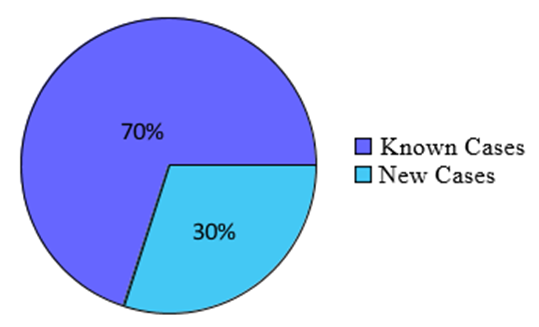
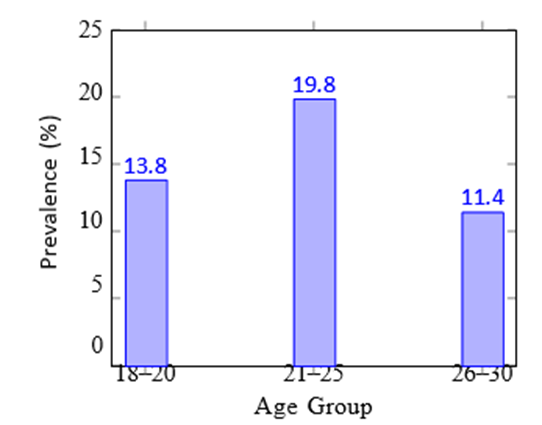
Figure 6: Age-wise distribution of diabetes prevalence
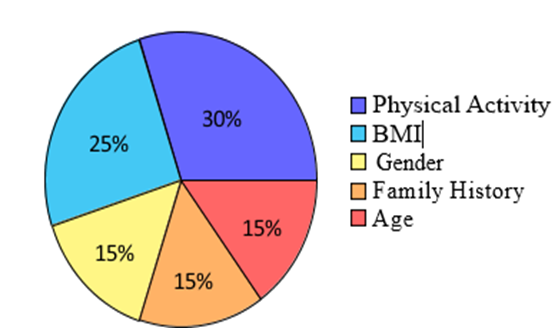
Figure 7: Relative contribution of risk factors for diabetes
DISCUSSION:
The 14.7% diabetes prevalence among 18–30 year-olds is substantially higher than earlier community estimates. For comparison, national surveys show an adult preva- lence around 11–12% [7]. Factors such as urban lifestyle and obesity may explain this elevated rate. Our prevalence exceeds NFHS-5 (5.1% in ages 15–29) [8] and the nationwide screening (6.0% in ¡35) [6]. Clinic-based studies show similar high rates: Anupama et al. found 17.2% in 18–40 year-olds [9], and the Tamil Nadu STRiDE study reported 7.8% in 20–39 year-olds [3]. Our figure likely combines known and undiagnosed cases in a high-risk urban sample.
CONCLUSION:
Approximately 1 in 7 young adults in this community had diabetes. Overweight/obesity and inactivity were key correlates. We recommend lowering the age for diabetes screening and emphasizing lifestyle interventions for younger populations. Public health programs should also address mental health and body image as part of dia- betes prevention.
Recommendations
• Early Screening: Begin diabetes screening at around 25 years of age, espe- cially for those with obesity or family history.
• Strengthening National Screening Programs: Screening for diabetes should be made more comprehensive, compulsory and effectively implemented under the National Programme for Prevention and Control of Non- Communicable Diseases (NP-NCD). Young adults (greater than 25 years), especially those with risk factors such as obesity and family history, should be actively included in routine screening at Health and Wellness Centres.
• Lifestyle Modification: Implement programs promoting physical activity and healthy eating in schools and colleges.
• Awareness: Educate healthcare providers and the public that diabetes can onset early; encourage symptom screening in young adults.
• Further Research: Conduct longitudinal studies on young-onset diabetes in diverse Indian populations to refine screening guidelines.
REFERENCES:
1. International Diabetes Federation. IDF Diabetes Atlas, 11th edn, 2024.
2. G. Murtaza et al., “Prevalence of diabetes in young adults,” Medicine Interna- tional, 2024.
3. A.Nanditha et al., “Rising prevalence of type 2 diabetes in Indian youth (STRiDE-I),” J. Diabetes, 2024.
4. Harihar et al., “Young-onset diabetes prevalence and activity in South India,”
5. Clin. Epidemiol. Glob. Health, 2025.
6. J.P. Khadar et al., “Screening strategies for dysglycemia in Indian youth,” Indian
7. J. Endocrinol. Metab., 2025.
8. R.M. Parikh et al., “Diabetes burden in Indians ¡35 years,” Int J. Diabetes Dev. Ctries., 2024.
9. N. Elangovan et al., “Urban–rural diabetes prevalence differences in India,” Di- abetes Ther., 2024.
10. M. Nelson and K. Dungan, “Diagnostic tests for diabetes mellitus,” in Endotext
11. (Feingold et al., eds.), 2025.
12. Khamassi M, Bouguerra R, Ben Slama C, et al. Sleep quality assessment using the Pittsburgh Sleep Quality Index (PSQI) and its association with metabolic disorders. Sleep Med Rev. 2024;75:101893.
13. Parzer P, Brunner R, Resch F. Body image perception and the Stunkard Fig- ure Rating Scale: reliability and validity in adolescents and young adults. Body Image. 2021;37:52–60.
14. Elangovan N, Aggarwal S, Kakkar R, et al. Urban–rural differences in the preva- lence of diabetes among adults in India (ICMR-INDIAB study). Diabetes Ther. 2024;15(3):845–860.