AWARENESS ABOUT RHEUMATOID ARTHRITIS AMONG GENERAL POPULATION ATTENDING A TERTIARY CARE HOSPITAL, MANDYA.
- Shamanth KS , Assistant Professor, Department of Orthopaedics, Mandya Institute of Medical Sciences (MIMS), Mandya, Karnataka, India.
- Mohith Rajeek K , Assistant Professor, Department of Orthopaedics, Mandya Institute of Medical Sciences (MIMS), Mandya, Karnataka, India.
- Ajay C J , Post Graduate, Department of Orthopaedics, Mandya Institute of Medical Sciences (MIMS), Mandya, Karnataka, India.
- Mahendra Kumar K L , Associate Professor, Department of Orthopaedics, Mandya Institute of Medical Sciences (MIMS), Mandya, Karnataka, India.
- Manjappa C N , Professor Department of Orthopaedics, Mandya Institute of Medical Sciences (MIMS), Mandya, Karnataka, India.
Article Information:
Abstract:
Introduction: Rheumatoid arthritis (RA) is a chronic autoimmune disease that, if not recognised and treated early, leads to irreversible joint damage and disability. Awareness about RA among the general population in India remains poorly described. Methods: This hospital-based descriptive cross-sectional study was conducted over three months among the general population and accompanying attendants aged 18 years and above attending the Orthopaedic Outpatient Department of MIMS, Mandya. A structured, interviewer-administered proforma covering socio-demographic details (age, sex, residence, education and occupation) and a 9-item awareness questionnaire (Sections B–E: awareness of RA, knowledge of symptoms, risk factors and treatment) was used; each correct/aware response scored 1 point (maximum score 9). Results: A total of 111 responses were collected and all 111 were from general-population participants; all 111 were therefore included in the analysis, exceeding the pre-calculated target sample size of 110. Mean age was 49.6 ± 19.0 years (range 20–85); 84 (75.7%) were male and 27 (24.3%) female. By residence, 91/111 (82.0%) lived in rural areas and 20/111 (18.0%) in Mandya or Mysore town (urban); 88/111 (79.3%) were illiterate/farmers and 23/111 (20.7%) were educated/in office-based occupations. The mean total awareness score was 3.27 ± 1.96 out of 9 (36.3%); 7.2% (8/111) had good awareness (7/9), 35.1% (39/111) moderate, and 57.7% (64/111) poor awareness. Awareness was highest for knowledge of symptoms (46.5%) and awareness of RA itself (42.8%), and markedly lower for knowledge of risk factors (30.2%) and knowledge of treatment (20.7%). While 83.8% had heard of RA, only 1.8% (2/111) correctly identified it as an autoimmune disease and only 8.1% (9/111) correctly identified a rheumatologist as the specialist to consult. Awareness declined sharply with increasing age (mean score 4.59 in 18–39 years vs. 2.05 in 60 years; ²=39.00, p<0.001) and was significantly higher among urban than rural residents (mean 4.05 vs. 3.10; ²=17.31, p=0.0002) and among educated/office-working than illiterate/farming participants (mean 4.17 vs. 3.03; ²=15.13, p=0.0005); no significant association was found with sex (²=1.70, p=0.43). Television (70.3%), family (64.0%) and friends (55.9%) were the leading sources of information; doctors (27.9%) and internet/social media (9.9%) were used far less. Conclusion: Awareness of rheumatoid arthritis was inadequate in the large majority of participants, with a striking gap in recognising RA as an autoimmune disease and in knowing that a rheumatologist is the appropriate specialist. Awareness was lowest among older, rural, and less-educated/non-office-working participants. These findings support targeted, mass-media and family-oriented community education, particularly for older, rural and less-educated adults, to enable earlier recognition and timely treatment-seeking.
Keywords:
Article :
INTRODUCTION:
Rheumatoid arthritis (RA) is a chronic systemic autoimmune disease characterised by persistent synovial inflammation, progressive joint destruction, and disability.[1] The disease commonly affects the small joints of the hands and feet and may also involve extra-articular organs.[2] Globally, RA affects approximately 0.5–1% of the population and is more common in women than men.[1] If not diagnosed
and treated early, it can lead to irreversible joint damage, deformity, and significant functional impairment.[2] Early diagnosis and timely initiation of disease-modifying antirheumatic drugs (DMARDs) can significantly reduce disease progression and improve long-term outcomes.[3,4]
However, in many developing countries, including India, a lack of public awareness regarding RA results in delayed diagnosis, inappropriate treatment, increased disability, and poor quality of life.[5] Humphreys et al. reported that delayed recognition of RA symptoms among the public contributes significantly to delayed diagnosis and treatment,[3] and Stack et al. found that many people fail to recognise early symptoms such as joint swelling and morning stiffness as signs of RA.[4] Raza demonstrated that public awareness of early inflammatory arthritis is generally poor, leading to delay in seeking medical attention,[5] and research from developing countries shows that misconceptions regarding joint pain and reliance on alternative therapies contribute to late presentation.[8]
Notably, Alqahtani et al. reported that only 51.9% of 441 general-population participants in Saudi Arabia had overall good knowledge/awareness of RA, closely corroborated by a regional systematic review and meta-analysis estimating that 54.5% of the general population had ever heard of the disease — together indicating that roughly half of the general population has adequate awareness of RA.[14] These findings informed the sample-size estimate used for the present study and highlight that inadequate RA awareness is a recurring, internationally documented problem rather than one confined to a single setting.
At a tertiary care hospital such as MIMS, Mandya, a large general population attends the Orthopaedic Outpatient Department for a variety of musculoskeletal complaints, and their accompanying attendants represent a comparable cross-section of the local community. No study has previously evaluated the level of RA awareness among the general population attending this centre.
This study therefore aimed to describe the level of awareness about rheumatoid arthritis among this population, to evaluate knowledge of symptoms and complications, to identify sources of health information, and to explore the association between demographic characteristics — including age, sex, residence, education and occupation — and awareness, in order to inform targeted community education strategies.[6,7,11].
MATERIALS AND METHODS:
Study design: Hospital-based descriptive cross-sectional study.
Study period: Three months.
Study set-up: Orthopaedic Outpatient Department, Mandya Institute of Medical Sciences (MIMS), Mandya — a tertiary care hospital.
Sampling technique: Consecutive sampling of eligible participants.
Sample size: Calculated as n = Z² × p × q / d², using p = 50% (the midpoint of the 51.9% and 54.5% literature-derived estimates of adequate RA awareness/recognition[14]), Z = 1.96, and d = 10% absolute allowable error, giving n = 96, inflated to 110 after adjustment for an anticipated 10% non-response rate. All 111 individuals approached during the study period consented and completed the questionnaire; since every entry was verified, all 111 were retained for analysis, exceeding this minimum requirement.
Selection criteria: Individuals aged 18 years and above attending the Orthopaedic OPD of MIMS, Mandya, or accompanying attendants, willing to give informed consent, were included. Those unable to comprehend or respond to the questionnaire due to cognitive impairment, severe systemic illness, or communication barriers, and any respondent identified as a healthcare professional, were pre-specified for exclusion; no participant met any exclusion criterion in this dataset.
Data collection instrument: A structured, interviewer-administered proforma was used, in the participant's preferred language (Kannada/English), covering socio-demographic details — age, sex, residential address, education (classified as educated or illiterate) and occupation (classified as office-based work or farming) — and a 9-item awareness questionnaire across four sections: Section B — awareness of RA (2 items: ever heard of RA; correct identification of RA as an autoimmune disease);
Section C — knowledge of symptoms (3 scoreable items: joint pain, joint swelling, morning stiffness); Section D — knowledge of risk factors (2 items: RA can affect young people; RA is more common in women); and Section E — knowledge of treatment (2 items: RA can be treated effectively; a rheumatologist is the appropriate specialist to consult).
A correct/aware response scored 1 point and an incorrect or “do not know” response scored 0, giving a maximum possible total score of 9. Based on a modified Bloom's cut-off, participants were graded as Good awareness (score 7–9, 75% correct), Moderate awareness (score 4–6, 45–66%), or Poor awareness (score 0–3, <45%). A separate, non-scored item recorded each participant's source(s) of information about RA. Residence was classified as urban if the participant's recorded address was the town of Mandya or Mysore itself, and rural if the address was any other town, village, or locality within the district.
Statistical analysis: Responses were entered electronically and analysed descriptively (frequencies and percentages for categorical variables; mean ± SD for the total awareness score and for age). The chi-square test was used to assess the association between awareness category (Good/Moderate/Poor) and each of age group, sex, residence, and education/occupation. A p-value <0.05 was considered statistically significant.
RESULTS:
A total of 111 responses were collected during the study period. All 111 entries were reviewed and verified as genuine responses provided by general-population participants and accompanying attendants; and no participant met any other pre-specified exclusion criterion. All 111 responses were therefore included in the analysis, exceeding the pre-calculated target sample size of 110.
Age was recorded for all 111 participants (100%; mean age 49.6 ± 19.0 years, range 20–85 years). Sex was recorded for all 111 participants (84 male, 75.7%; 27 female, 24.3%). Residence, education and occupation were derived from each participant's recorded address and proforma entries and were available for all 111 participants.
Table 1: Socio-demographic Profile of Study Participants (N = 111)
|
Variable |
Category |
n |
% |
|
Total responses collected and analysed |
— |
111 |
100% |
|
Age (yrs) |
Mean ± SD |
49.6 ± 19.0 |
— |
|
Age group |
18–39 yrs |
39 |
35.1% |
|
|
40–59 yrs |
30 |
27.0% |
|
|
60 yrs |
42 |
37.8% |
|
Sex |
Male |
84 |
75.7% |
|
|
Female |
27 |
24.3% |
|
Residence |
Rural |
91 |
82.0% |
|
|
Urban (Mandya/Mysore town) |
20 |
18.0% |
|
Education |
Illiterate |
88 |
79.3% |
|
|
Educated |
23 |
20.7% |
|
Occupation |
Farmer |
88 |
79.3% |
|
|
Office worker |
23 |
20.7% |
Overall awareness of rheumatoid arthritis is summarised in Table 2. The mean total awareness score was 3.27 ± 1.96 out of 9 (36.3%). Only 7.2% (8/111) of participants had good awareness (7/9), 35.1% (39/111) had moderate awareness, and the remaining 57.7% (64/111) had poor awareness (<4/9).
Table 2: Overall Rheumatoid Arthritis Awareness Score (N = 111)
|
Parameter |
Value |
|
Mean total awareness score (/9) |
3.27 ± 1.96 |
|
Mean awareness score (%) |
36.3% |
|
Good awareness (7/9, 75%) |
8 (7.2%) |
|
Moderate awareness (4–6/9, 45–66%) |
39 (35.1%) |
|
Poor awareness (0–3/9, <45%) |
64 (57.7%) |
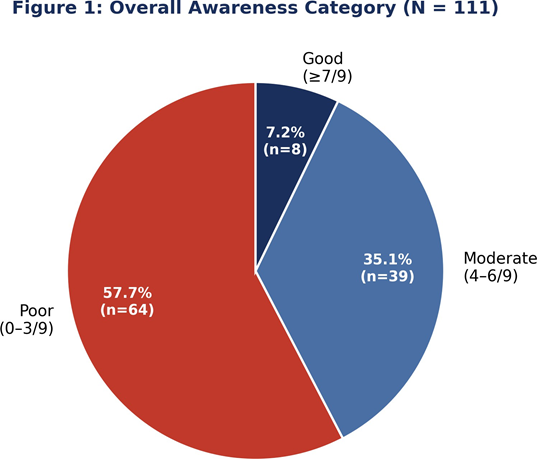
Figure 1. Distribution of overall rheumatoid arthritis awareness category among study participants (N = 111).
Domain-wise scores are shown in Table 3. Awareness was highest for knowledge of symptoms (46.5%), closely followed by awareness of RA itself (42.8%), and markedly lower for knowledge of risk factors (30.2%) and, especially, knowledge of treatment (20.7%).
Table 3: Domain-wise Rheumatoid Arthritis Awareness Scores (N = 111)
|
Domain |
Mean ± SD |
% Score |
|
Section B: Awareness of RA (/2) |
0.86 ± 0.40 |
42.8% |
|
Section C: Knowledge of symptoms (/3) |
1.40 ± 0.79 |
46.5% |
|
Section D: Knowledge of risk factors (/2) |
0.60 ± 0.78 |
30.2% |
|
Section E: Knowledge of treatment (/2) |
0.41 ± 0.59 |
20.7% |
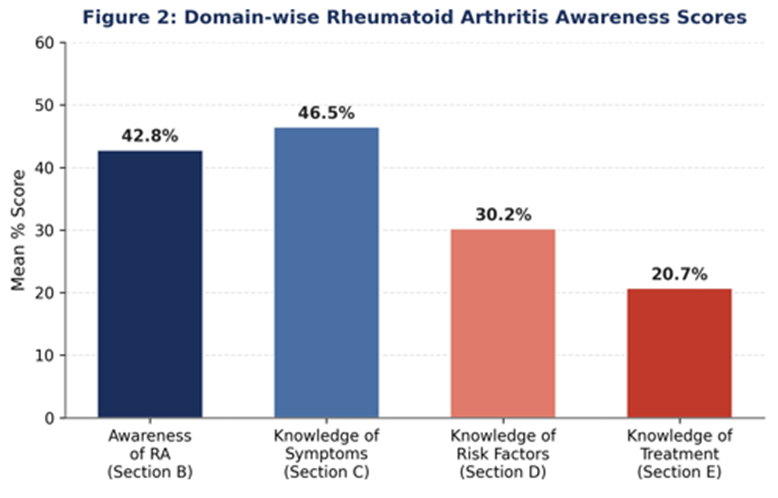
Figure 2. Domain-wise rheumatoid arthritis awareness scores,expressed as mean percentage scorefor each questionnaire section (N = 111).
At the individual-item level (Table 4), 83.8% of participants had heard of RA, but only 1.8% (2/111) could correctly identify it as an autoimmune disease — 83.8% instead described it, at least in part, as a general “joint disease,” and a further 15.3% described it as an “age-related disease.” Among the scoreable symptoms, joint pain was widely recognised (90.1%), but joint swelling (38.7%) and, in particular, morning stiffness (10.8%) were poorly recognised as RA symptoms. Only 25.2% correctly knew that RA can affect young people and 35.1% knew it is more common in women. While 33.3% believed RA can be treated effectively, only 8.1% correctly identified a rheumatologist as the specialist to consult — most participants instead named an orthopaedic doctor (64.9%) or a general practitioner (27.0%).
Table 4: Individual Awareness Item Responses (N = 111)
|
Awareness item |
Domain |
% correct/aware |
|
Has heard of rheumatoid arthritis |
B |
83.8% (93) |
|
Correctly identifies RA as an autoimmune disease |
B |
1.8% (2) |
|
Recognises joint pain as a symptom |
C |
90.1% (100) |
|
Recognises joint swelling as a symptom |
C |
38.7% (43) |
|
Recognises morning stiffness as a symptom |
C |
10.8% (12) |
|
Knows RA can affect young people |
D |
25.2% (28) |
|
Knows RA is more common in women |
D |
35.1% (39) |
|
Believes RA can be treated effectively |
E |
33.3% (37) |
|
Correctly identifies a rheumatologist as the specialist to consult |
E |
8.1% (9) |
Chi-square testing was used to assess the association between awareness category and each of age group, sex, residence, and education/occupation (Tables 5–8). Awareness declined sharply and significantly with increasing age (² = 39.00, df = 4, p < 0.001). Mean awareness score fell from 4.59 ±
2.05 in participants aged 18–39 years, to 3.27 ± 1.39 in those aged 40–59 years, to 2.05 ± 1.36 in those aged 60 years and above.
Table 5: Association Between Age Group and Rheumatoid Arthritis Awareness (N = 111)
|
Age group |
n |
Mean total score (/9) |
Good |
Moderate |
Poor |
|
18–39 yrs |
39 |
4.59 ± 2.05 |
8 (20.5%) |
22 (56.4%) |
9 (23.1%) |
|
40–59 yrs |
30 |
3.27 ± 1.39 |
0 (0.0%) |
11 (36.7%) |
19 (63.3%) |
|
60 yrs |
42 |
2.05 ± 1.36 |
0 (0.0%) |
6 (14.3%) |
36 (85.7%) |
² = 39.00, df = 4, p < 0.001
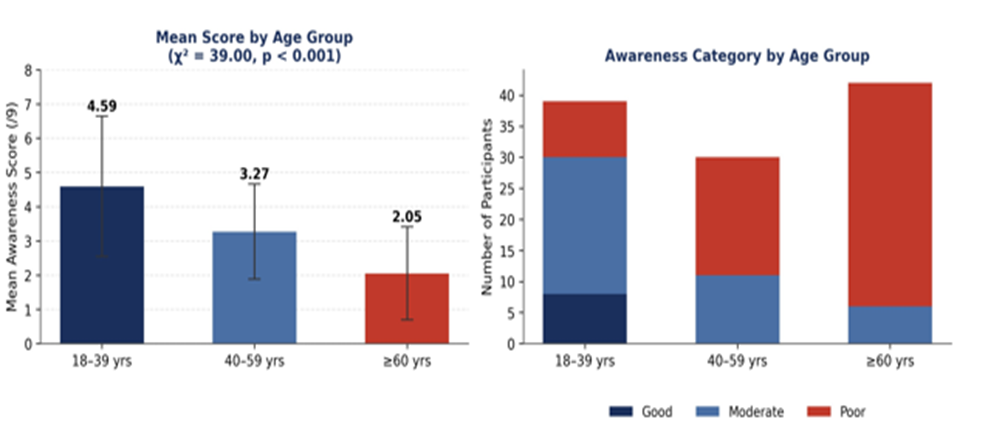
Figure 3. Mean rheumatoid arthritis awareness score(left) and distribution of awareness category(right) by age group (N =111).
No statistically significant association was found between sex and awareness category (Table 6; ² = 1.70, df = 2, p = 0.43), although the mean score was marginally higher among males (3.30 ± 2.01) than females (3.19 ± 1.82).
Table 6: Association Between Sex and Rheumatoid Arthritis Awareness (N = 111)
|
Sex |
n |
Mean total score (/9) |
Good |
Moderate |
Poor |
|
Male |
84 |
3.30 ± 2.01 |
7 (8.3%) |
27 (32.1%) |
50 (59.5%) |
|
Female |
27 |
3.19 ± 1.82 |
1 (3.7%) |
12 (44.4%) |
14 (51.9%) |
² = 1.70, df = 2, p = 0.43 (not significant)
Residence showed a strong and statistically significant association with awareness (Table 7; ² = 17.31, df = 2, p = 0.0002). Participants residing in Mandya or Mysore town (urban) had a substantially higher mean awareness score (4.05 ± 1.57) than those residing elsewhere (rural, 3.10 ± 2.00); the majority of urban participants achieved moderate awareness.
Table 7: Association Between Residence and Rheumatoid Arthritis Awareness (N = 111)
|
Residence |
n |
Mean total score (/9) |
Good |
Moderate |
Poor |
|
Rural |
91 |
3.10 ± 2.00 |
8 (8.8%) |
24 (26.4%) |
59 (64.8%) |
|
Urban |
20 |
4.05 ± 1.57 |
0 (0.0%) |
15 (75.0%) |
5 (25.0%) |
² = 17.31, df = 2, p = 0.0002.
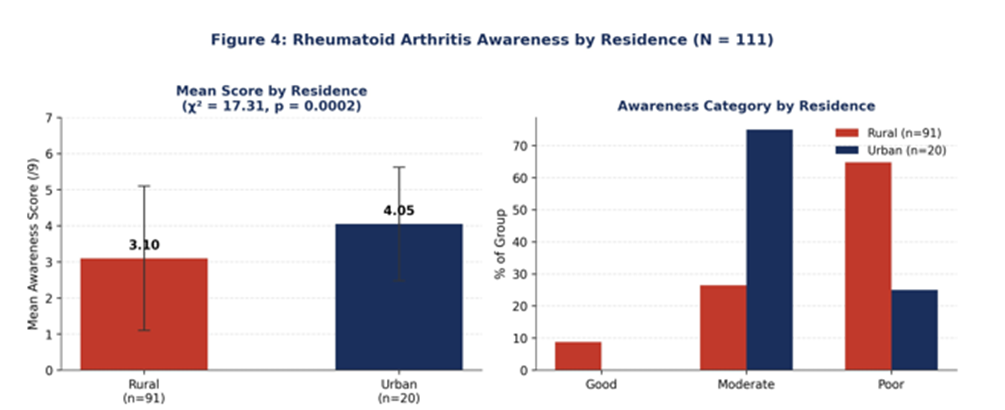
Figure 4. Mean rheumatoid arthritis awareness score(left) and distribution of awareness category(right) by residence (N =111).
Education and occupation — which followed an identical 88/23 split in this sample — also showed a strong, statistically significant association with awareness (Table 8; ² = 15.13, df = 2, p = 0.0005). Educated participants in office-based occupations had a substantially higher mean awareness score (4.17 ± 1.61) than illiterate participants engaged in farming (3.03 ± 1.98); over two-thirds of the educated/office-working subgroup achieved moderate awareness, compared with just over a quarter of the illiterate/farming subgroup.
Table 8: Association Between Education/Occupation and Rheumatoid Arthritis Awareness (N = 111)
|
Education / Occupation |
n |
Mean total score (/9) |
Good |
Moderate |
Poor |
|
Illiterate / Farmer |
88 |
3.03 ± 1.98 |
7 (8.0%) |
23 (26.1%) |
58 (65.9%) |
|
Educated / Office worker |
23 |
4.17 ± 1.61 |
1 (4.3%) |
16 (69.6%) |
6 (26.1%) |
² = 15.13, df = 2, p = 0.0005.
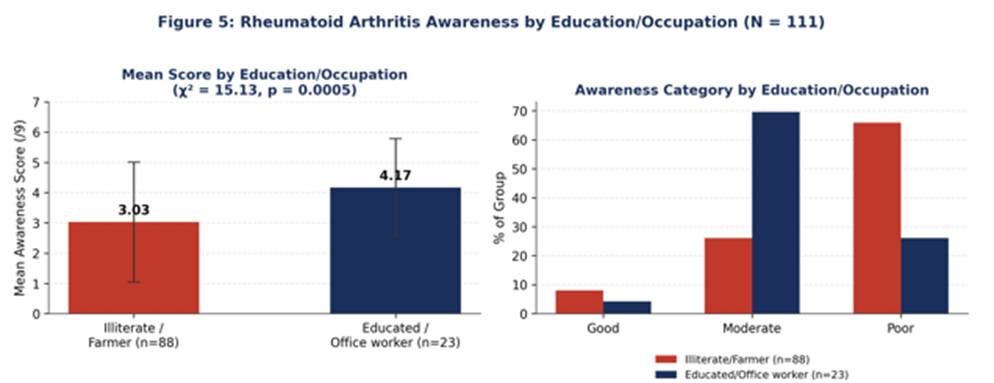
Figure 5. Mean rheumatoid arthritis awareness score(left) and distribution of awareness category(right) by education/occupation (N = 111).
Regarding sources of health information (a non-scored, multiple-response item), television was the most frequently cited source (70.3%), followed by family (64.0%), friends (55.9%), newspapers (35.1%), doctors (27.9%), and internet/social media (9.9%).
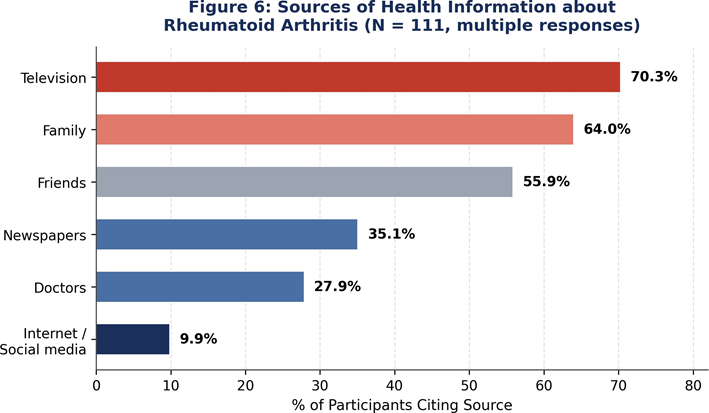
Figure 6. Sources of health information about rheumatoid arthritiscited by study participants (N = 111; multiple responses permitted).
DISCUSSION:
This study aimed to describe the level of awareness about rheumatoid arthritis, and to identify domain-specific knowledge gaps, among the general population attending a tertiary care orthopaedic department in Mandya. All 111 responses collected during the study period were verified as genuine and were analysed, exceeding the pre-calculated target sample size of 110. The mean total awareness score was 3.27 ± 1.96 out of 9 (36.3%), and only 7.2% of participants met the pre-defined threshold for good awareness. This is markedly lower than the 51.9% good-awareness figure reported by Alqahtani et al. among the general population in Saudi Arabia, and lower than the 54.5% “ever heard of RA” estimate from a regional systematic review used to derive the sample size for this study.[14] Notably, our participants' rate of simply having heard of RA (83.8%) was in fact higher than these comparator figures
— the striking finding in this study is not that people have never heard of rheumatoid arthritis, but that very few (1.8%) understand what it actually is, an autoimmune disease, rather than a general age-related “joint problem.” This distinction between superficial name-recognition and substantive understanding is consistent with the broader literature showing that public awareness of early inflammatory arthritis is poor and that many people fail to recognise cardinal symptoms such as morning stiffness.[3,4,5]
The domain-wise breakdown revealed an uneven knowledge profile similar in character, though more pronounced, to that described in comparable awareness studies: knowledge of symptoms (46.5%) and awareness of RA itself (42.8%) were moderate, but knowledge of risk factors (30.2%) and, most strikingly, knowledge of treatment (20.7%) were poor. Only 8.1% of participants correctly identified a rheumatologist as the specialist to consult, with the large majority instead naming an orthopaedic doctor or general practitioner. This pattern suggests the principal deficit is not merely failing to recognise RA as a health problem, but not knowing which specialist manages it — a gap with direct implications for delayed, misdirected care-seeking, consistent with Raza's observation that poor public awareness of inflammatory arthritis delays presentation for appropriate treatment.[5] Poor recognition of morning stiffness (10.8%) as a symptom, despite good recognition of non-specific joint pain (90.1%), mirrors Stack et al.'s finding that early, specific RA symptoms are often not connected to the disease by the lay public.[4]
Awareness declined sharply and significantly with increasing age (² = 39.00, p < 0.001) — a considerably stronger association than the borderline trends typically reported in similar awareness studies. Younger participants (18–39 years) had more than double the mean awareness score of participants aged 60 years and above. Residence showed a similarly strong association: participants living in Mandya or Mysore town had a markedly higher mean awareness score than those living in surrounding rural areas (² = 17.31, p = 0.0002), consistent with generally greater access to television, print media, and health services in urban settings. Education and occupation, which were fully overlapping in this sample (educated participants were uniformly in office-based work, and illiterate participants were uniformly farmers), were also strongly and significantly associated with awareness (² = 15.13, p = 0.0005): educated/office-working participants scored, on average, almost 40% higher than illiterate/farming participants. Sex, by contrast, was not significantly associated with awareness (² = 1.70, p = 0.43) in this sample. Because education and occupation were perfectly collinear here, their independent contributions could not be separated statistically, and both associations may partly reflect the same underlying socio-economic gradient; age and residence may likewise be correlated with this gradient, so the associations reported for age, residence, and education/occupation should be interpreted as overlapping rather than fully independent effects. This represents an important limitation relative to the original protocol, which had planned to examine these four variables together in a multivariable model; the descriptive and bivariate analyses reported here could not fully disentangle their independent contributions. Given that older, rural, and less-educated adults are also a group at meaningful risk of the joint symptoms that might herald RA, this awareness gradient is a particularly actionable finding.
The pattern of information sources — dominated by television, family, and friends, with doctors and the internet cited far less often — suggests that most participants' understanding of RA is shaped by informal, non-clinical channels rather than by direct engagement with the healthcare system. This is consistent with calls in the literature for structured community awareness programmes, since informal channels alone appear insufficient to convey an accurate understanding of RA as an autoimmune disease requiring specialist care.[6,7]
This study has several limitations. Education and occupation were fully collinear in this sample, so their effects could not be examined independently of one another, and a genuinely multivariable analysis adjusting simultaneously for age, sex, residence, and education/occupation was not performed; the associations reported here are therefore bivariate and may be confounded by one another. The study was conducted at a single tertiary care centre among an orthopaedic-OPD-attending population and their attendants, which may not be representative of the wider general population, particularly those who do not access healthcare facilities; the urban subgroup in particular was small (n = 20) and the educated/office-working subgroup was similarly small (n = 23), so these associations should be interpreted with some caution and confirmed in a larger, more balanced sample. The cross-sectional design also precludes any causal inference regarding the direction of the observed age-, residence-, and education-awareness associations.
CONCLUSION:
Among 111 members of the general population attending a tertiary care orthopaedic department in Mandya, all 111 responses analysed, and awareness of rheumatoid arthritis was inadequate in the large majority of participants, with fewer than 1 in 13 achieving good awareness. While most participants had heard of the disease, understanding of its autoimmune nature and of the appropriate specialist (rheumatologist) to consult was strikingly poor — identifying these as the single most actionable knowledge gaps. Awareness declined sharply with increasing age and was significantly lower among rural, illiterate, and farming participants than among their urban, educated, and office-working counterparts, while sex showed no significant association. Because education and occupation were fully overlapping in this sample, they should be regarded as markers of a single underlying socio-economic gradient in awareness rather than two independent risk factors. Given the reliance of most participants on informal sources such as television, family, and friends for health information, these findings support the development of targeted, mass-media and family-oriented community education programmes — with a particular focus on older, rural, and less-educated adults — emphasising that RA is an autoimmune disease best managed by a rheumatologist, to enable earlier recognition and timely treatment-seeking.
REFERENCES:
1. Smolen JS, Aletaha D, McInnes IB. Rheumatoid arthritis. The Lancet. 2016;388(10055):2023-2038.
2. McInnes IB, Schett G. The pathogenesis of rheumatoid arthritis. New England Journal of Medicine. 2011;365(23):2205-2219.
3. Humphreys JH, Verstappen SMM, Hyrich KL. Patients' knowledge and awareness of rheumatoid arthritis symptoms and their impact on early diagnosis. Rheumatology. 2013.
4. Stack RJ, Shaw K, Mallen C, et al. Delays in help seeking at the onset of rheumatoid arthritis: systematic synthesis of qualitative literature. Annals of the Rheumatic Diseases. 2012;71:493-497.
5. Raza K, Stack R, Kumar K, et al. Delays in assessment of patients with rheumatoid arthritis: variations across Europe. Annals of the Rheumatic Diseases. 2011.
6. Zafar S, Badsha H, Mofti A, et al. Efforts to increase public awareness may result in more timely diagnosis of rheumatoid arthritis. Journal of Clinical Rheumatology. 2012.
7. Hewitt J. Rheumatoid arthritis and public awareness. Rheumatology. 2014.
8. Korla S, Puri A, Thakur PK. Joint pains and everyday life: assessing rheumatoid arthritis awareness among the people of Kangra. Scientific Research Journal of Clinical and Medical Sciences. 2024.
9. Albiss L, Muflih S, Hijazi B, et al. Disease knowledge and quality of life among rheumatoid arthritis patients: a cross-sectional study. BMC Rheumatology. 2025.
10. Ghosh-Swaby OR, Kuriya B. Awareness and perceived risk of cardiovascular disease among individuals living with rheumatoid arthritis: a systematic review. Arthritis Research & Therapy. 2019.
11. Kirik A, et al. Low vaccination rates and awareness status in patients with rheumatoid arthritis: a nationwide cross-sectional survey. Rheumatology International. 2025.
12. Aksoy OT, Kutluk O, Sezer I. Osteoporosis knowledge and awareness among rheumatoid arthritis patients: a cross-sectional controlled study. Archives of Rheumatology. 2024.
13. Karamanlioglu DS. Awareness of osteoporosis and associated factors in individuals with rheumatoid arthritis. Dicle Medical Journal. 2025.
14. Alqahtani M, et al. Awareness of rheumatoid arthritis among the Saudi Arabian population: a cross-sectional study. Medical Science. 2024.