COMPARISON OF NEUROMUSCULAR BLOCKING EFFECTS AND RECOVERY CHARACTERISTICS OF ROCURONIUM BETWEEN STEADY STATE ISOFLURANE OR PROPOFOLANAESTHESIA IN SPINAL FIXATION SURGERY.
- Anindita Saha , MD (Anaesthesia), Department of Anaesthesiology, IPGME&R and SSKM Hospital, Kolkata, West Bengal, India.
- Saurendra Nath Mitra , Associate Professor, MD (Anaesthesiology), Department of Anaesthesiology, KPC Medical College and Hospital, 20 Raja Subodh Mullick Road, Jadavpur, Kolkata 700032, West Bengal, India.
- Saikat Niyogi, Professor , MD (Anaesthesia), PDCC (Neuroanaesthesiology), Department of Anaesthesia, RG Kar Medical College and Hospital, 1 Khudiram Bose Sarani, Bidhan Sarani, Kolkata, West Bengal 700004, India.
- Amita Acharjee , Professor, MD (Anaesthesia), Neuro Anaesthesia, Bangur Institute of Neurosciences, Annex 1, IPGME&R, 52/1 Sambhunath Pandit Street, Kolkata 700025, West Bengal, India.
Article Information:
Abstract:
Introduction: Rocuronium is a widely used non-depolarizing neuromuscular blocking agent in general anesthesia. Volatile anesthetics such as isoflurane and intravenous agents like propofol are commonly used during anesthesia maintenance. However, comparative data regarding rocuronium-induced neuromuscular blockade and recovery characteristics during spinal fixation surgery remains limited Aims: The aim of the study is to measure the total amount of rocuronium required, its duration of action and to evaluate the recovery characteristics of rocuronium under propofol- based and isoflurane-based anaesthesia in spinal instrumentation surgery along with assessing the incidence of any adverse effects associated with the procedure. The specific objective is to compare the neuromuscular blocking effects and recovery profiles of rocuronium between propofol and isoflurane anaesthesia in patients undergoing spinal instrumentation surgery. Materials and Methods: This prospective comparative study was conducted on patients undergoing elective spinal fixation surgery under general anesthesia. Patients were randomly allocated into two groups: Group I received maintenance anesthesia with isoflurane and Group P received propofol infusion. All patients received a standard intubating dose of rocuronium. Neuromuscular function was monitored using a Train of four monitor (train-of-four stimulation). Onset time, duration of action, recovery index and time to TOF ratio of 0.9 were recorded and compared between the two groups. Results: Baseline SBP in was comparable in both groups. Immediately after intubation SBP was increased 7% in Gr P and 3% in Gr I compared to baseline value (p < 0.05). In post intubation period, 5 min after 1st Inc , 2nd inc , 5 min after 2nd inc of rocuronium injection there was .3- 1.66 mm increase of SBP in Gr P whereas in Gr I there was 2.12 - 4 mm Hg decrease in SBP. (p < 0.05) . After extubation SBP was increased 2.7 % in Gr P and 1.8% in Gr I. (p< 0.05). Conclusion: Isoflurane potentiates the neuromuscular blocking effects of rocuronium and prolongs recovery compared to propofol-based anesthesia. Propofol provides faster and more predictable neuromuscular recovery, which may be advantageous in spinal fixation surgeries requiring early extubation and neurological assessment.
Keywords:
Article :
INTRODUCTION:
In chronic spinal degenerative disease, when the degree of instability is excessive, structural integrity of the spine is compromised, mechanical low back pain develops. If a significant degree of instability exists and conservative measures fail, the structural integrity of the spine is restored through a spinal stabilization surgery [1]. In selected patients lumbar fusion and stabilization of the unstable vertebra through placement of metal screws and rods is the best option for relief of symptoms and prevention of complications [2] Anaesthetic challenges of spinal fixation include prone positioning, large intraoperative blood loss, long surgical times, maintaining adequate depth of anesthesia in the setting of neuro-monitoring and adequate recovery for postoperative neurological assessment [3].
Maintaining adequate depth to prevent awareness and balanced anesthesia with adequate muscle relaxation, supplemented with either proper inhalational or intravenous agent along with prompt recovery for postoperative neurological assessment are essential for anaesthesia in spinal fixation surgery. Rocuronium which causes rapid control of airway, is almost free of unwanted side effects, allows the anaesthesiologists to substitute them for succinylcholine [4]. Short onset time, an intermediate duration of action and rapid recovery in view of sugammadex, coupled with cardiovascular stability without histamine release – makes rocuronium preferable muscle relaxant in neurosurgery. Awareness during anesthesia is a serious complication of spinal instrumentation surgery with potential long-term psychological consequences [5,6] and so are feared by patients presenting for surgery [7] . As such, a reliable method of detecting or preventing awareness would be an important clinical advance. Although there are a number of candidate ‘awareness monitors’ based mainly on processed electroencephalograms (EEGs) or on evoked potentials, there has been considerable study and controversy regarding one particular processed EEG i.e Bispectral index (BIS) monitor.
Intraoperative awareness is prevented effectively either by TIVA or by supplementation with inhalational agent. Most of the research into awareness has focused on episodic consciousness during general anesthesia with subsequent explicit recall. Even at low sub-anaesthetic concentrations, both inhalational and intravenous anaesthetic agents have been shown to block emotional and episodic memory before endangering loss of consciousnessInhalational anesthesia may carry less risk for awareness than TIVA since the practitioner can routinely monitor exhaled anaesthetic gas and alarms can be set for low concentrations; this hypothesis warrants further examination [8] Use of the bispectral index (BIS), has been reported to decrease the incidence of anesthesia awareness when the BIS value is maintained below 60 either by inhalational therapy or by total intravenous anaesthesia (TIVA) [9]. Halogenated ether isoflurane is commonly used inhalational anaesthetic in neuroanesthesia due to its minimal cardiac depressant properties and low potential for organ toxicity [10]. It maintains a steady state of general anesthesia with lower incidence of intraoperative awareness. The neuromuscular blocking effects of muscle relaxants are potentiaed by volatile anaesthetics. The extent depends on the particular relaxant and inhalational agent used .Underestimation of the enhancement of neuromuscular block by volatile anaesthetics may result in inadvertent prolonged duration of relaxation.
TIVA is a natural extension of balanced anesthesia. IV drugs like propofol, now allow reliable anesthesia and rapid recovery even after long infusions due to its short elimination half-life and non-cumulative properties [11]. Additionally, hardware and software also now exist that permit delivery of these agents in a manner superior to manual injection [12] The complexity of delivering TIVA with one, two and even three simultaneous infusion pumps and programs remains a technical burden compared with the simplicity of modern inhalation agent vaporizers. Most experts agree that continuous infusions are a necessary part of TIVA if benefits are to be maximized and disadvantages minimized [11, 12]. In this background we aim to study neuromuscular blocking effect and recovery characteristics of rocuronium during propofol and isoflurane based anaesthesia in spinal instrumentation surgery and also to find out the incidence of any adverse effect associated with this procedure.
Aims:
1. To measure the total amount of rocuronium needed, the duration of action and evaluate the recovery characteristics of rocuronium under propofol or isoflurane anaesthesia in spinal instrumentation surgery.
2. To find out the incidence of any adverse effect associated with this procedure.
Specific objectives:
Comparison of neuromuscular blocking effect and recovery characteristics of rocuronium during propofol and isoflurane based anaesthesia in spinal instrumentation surgery.
MATERIALS AND METHODS:
Study Techniques
After the approval of the Institutional Ethics Committee of I.P.G.M.E & R, S.S.K.M Hospital, Kolkata and permission of the West Bengal University of Health Sciences (WBUHS), the work was carried out in Bangur Institute of Neurosciences, in March 2013 to February 2014 For the purpose of sample size calculation the recovery time index (i.e the time interval between the recovery of TI from 25%-75%) was considered as the primary outcome measure in the study. It was calculated that 63 subjects were required in each group in order to detect the difference of 10 minutes in parameter between groups with 80% power and 5% probability of type I error. This calculation assumed a Standard Deviation 20 for the recovery time index parameter and two sided analysis. Sample size calculation was done with n.Master2.0 (Department of Biostatistics: Christian Medical College Vellore ,2012).
Since it was anticipated that recruitment of relatively large number of patients would not be possible for the available time span, we kept the recruitment target at 30 subjects per groups and treat the result of the study as preliminary result. They randomly allocated in two equal groups (n=30) random number generators in Microsoft Excel 2003. Prior informed consent was obtained from all the patients taking part in the study. Group P: Patients receiving intravenous propofol and Group I: Patients receiving isoflurane inhalation as the maintainance of anaesthesia .
Study variables:
• Independent variables – Age , sex , weight(kg) , height , duration of surgery (mins) and ASA
• Dependent variables - HR, SpO2, SBP, DBP, MAP, EtCO2, BIS, TOF,Clinical duration, recovery index ,dose of rocuronium needed.
Inclusion Criteria
1. Patients with physical status ASA I or II.
2. Patients with age group between 25 and 65 years.
3. Patients who have given written consent for taking part in the study.
4. Patients scheduled for spinal instrumentation surgery.
Exclusion Criteria
1. ASA physical status III or IV with compromised renal or liver function or respiratory disease.
2. Patients with major comorbidities like diabetes or hypertension.
3. Patients whose body weight is 30% more or less their ideal body weight.
4. Patients with moderate to severe cardiovascular diseases.
5. Patients those receiving medication known to interact with neuromuscular blocking drugs.
6. Patients having coagulopathies.
7. Patients younger than 18 years.
8. Patients with allergic diathesis.
9. Patients with pregnancy or breast feeding.
Patients were observed for changes in pulse rate and blood pressure just before induction, before intubation, immediately and 5 min after intubation. By the use of TOF guard Time taken after administration of rocuronium for intubation to reach TOF 0, Time taken for appearance of T1, Time after injection of last cumulative dose of muscle relaxant until 25% recovery of TI and Recovery index i.e Time interval during which TI recovered from 25%-75% of control were observed.
The patients who fulfilled the inclusion criteria and none of the exclusion criteria were provided with a patient information sheet , were explained about the procedure and consent form in which details of the study and the procedures were written in their language.
After proper pre-anaesthetic checkup and formal airway assessment, all the patients were explained the objectives and methods of this study.The patients fasted for over 6 hrs . Venous cannulation was done in a large peripheral vein of hand using an 18 gauge intravenous cannula and started intravenous fluid Ringer lactate in maintainance dose overnight. On arrival at the operating room: pulse oxymeter, electrocardiogram (ECG), temperature probe, noninvasive blood pressure (SBP,DBP, MAP), BIS monitor, TOF monitor were attached to the patient. In the operating room after adequate preoxygenation , premedication was given with inj Glycopyrrolate .2 mg , midazolam 2 mg and patient was induced with inj Fentanyl 2 microgram/ kg and inj Thiopentone 4-5 microgram/kg in both groups. After induction (i.e BIS<60) , Group I patients were allowed to sustain spontaneous ventilation with face mask in a magill circuit with gradually increasing concentration of isoflurane and Group P patients received infusion propofol @ 50-150 microgram/kg/minute maintaining the BIS <60. In both groups Rocuronium 0.6 mg/kg was administered intravenously, followed by endotracheal intubation with adequate size cuffed endotracheal tube when TOF count became 0. Time interval from administration of rocuronium to reach TOF 0 was noted. Then Patients were turned to prone position and pressure points were secured with soft gauge pieces. NIBP, continuous ECG, pulse rate, SpO2, BIS, TOF values were measured before induction and throughout the operative period. When adductor response reached to T25% (time to recovery/ appearance of T1 wave) clinical relaxation is maintained by bolus doses of Rocuronium (0.1mg/kg).
No incremental rocuronium were given 30 min before end of operation. Isoflurane or propofol infusion was stopped at skin closure. BIS was maintained within a range of 40-60 throughout the operation. If signs of inadequate analgesia like increase in heart rate and BP mm Hg were noted, supplemental doses of inj fentanyl 0.5µg kg-1 were given. Clinical duration and recovery index total dose of rocuronium in each cases were noted before the end of surgery. After that all the patients were reversed from muscle relaxation (when TI recovered from 25%-75% TOF) with standard doses of inj glycopyrolate .01mg/kg and neostigmine .05mg/kg .Time taken for extubation (when TOF 95%) was noted and the study was ended.
RESULT:
Both groups were comparable in respects to demographic characteristics (p>0.05)
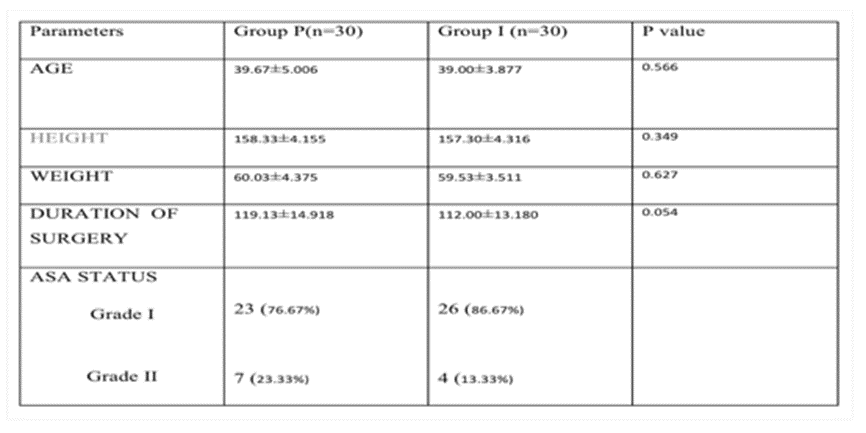
P value - age, weight, height, duration of surgery by student’s unpaired t test - ASA status by fisher exact two tailed test.
Intergroup Comparison of SBP
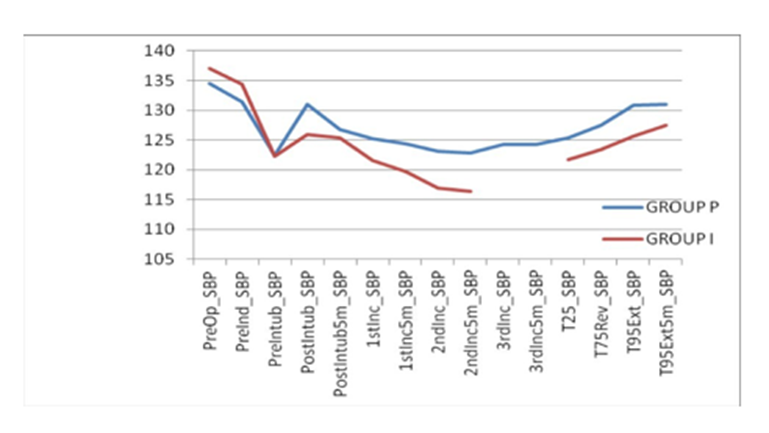
Baseline SBP in both groups were comparable in both groups. Immediately after intubation SBP was increased 7% in Gr P and 3% in Gr I compared to baseline value (p< 0.05). In post intubation period,5 min after 1st Inc , 2nd inc , 5 min after 2nd inc of rocuronium injection there was.3- 1.66 mm increase of SBP in Gr P whereas in Gr I there was 2.12-4.U mm decrease in SBP. (p< 0.05) After extubation SBP was increased 2.7 % in Gr P and 1.8% in Gr I. (p < 0.05)
P value in the last column was from intergroup comparison by student’s unpaired t test.
Intergroup Comparison of DBP
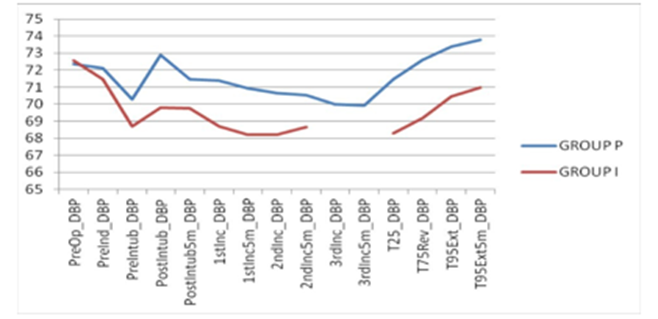
Baseline DBP in both groups were comparable in both groups. Immediately after intubation DBP was increased 3.66% in Gr P and 1.6% in Gr I compared to baseline value (p < 0.05). In 5 min after intubation, 1st Inc, 5 min after 1st Inc, 2nd inc of rocuronium injection,T25 there was .5-3.67 %increase of DBP in Gr P whereas in Gr I there was 1.56 %increase in DBP. (p < 0.05 ) . After extubation DBP was increased 1.04 % in Gr P and .78% in Gr I. (p < 0.05). The gap portion in the Gr I curve is because the later increments of Rocuronium is not needed in Gr I.
Intergroup comparison of MAP
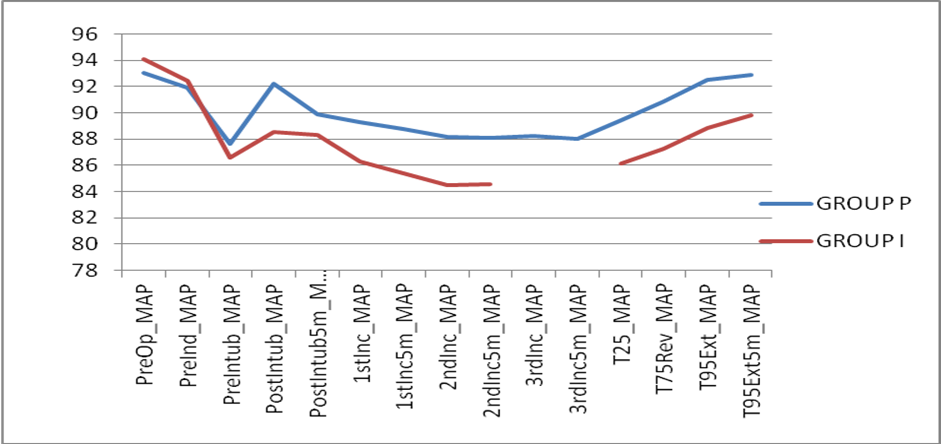
Baseline MAP in both groups were comparable in both groups.
Immediately after intubation MAP was increased 6% in Gr P and 2% in Gr I compared to baseline value (p < 0.05 ).
In post intubation period, 1st Inc , 5 min after 1st Inc , 2nd inc , 5 min after 2nd inc of rocuronium injection there was 2-3 mm increase of MAP in Gr P whereas in Gr I there was .5 -2 mm decrease in MAP. (p < 0.05).
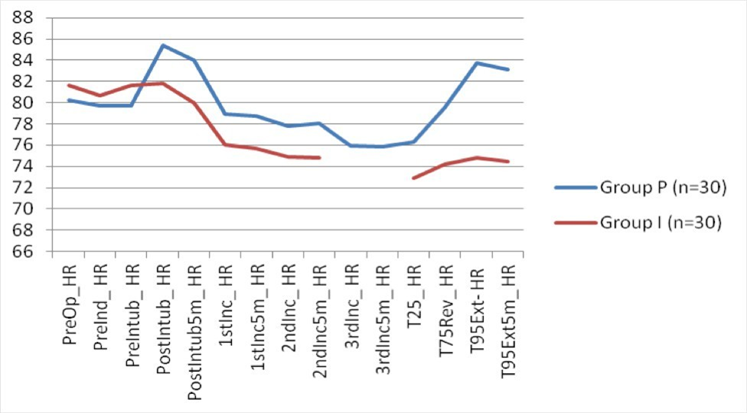
Intergroup comparison of HR
The gap portion in the Gr I curve is because the later increments of Rocuronium is not needed in Gr I.
Baseline HR in both groups were comparable in both groups. Immediately after intubation HR was increased 7% in Gr P and .2% in Gr I compared to baseline value (p < 0.05) .
In T25, T75 there was .2 %increase of HR in Gr P whereas in Gr I there was 9% decrease in HR
(p < 0.05). After extubation HRwas increased 5.20% in Gr P and 0.7% in Gr I. (p < 0.05 ).
Time taken after administration of rocuronium for intubation to reach TOF 0

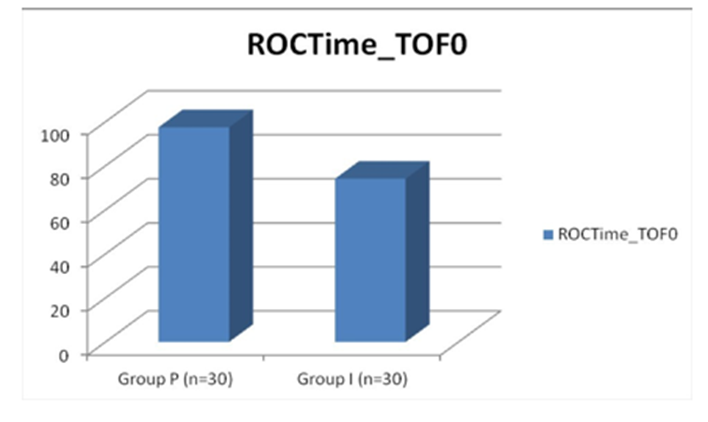
Time taken after administration of rocuronium for intubation to reach TOF 0 is less in Gr I compared to Gr P (p value =0.000).
Duration of action of Rocuronium
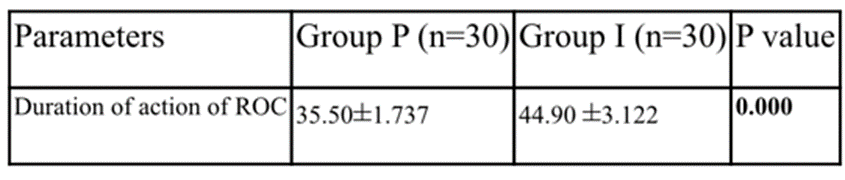
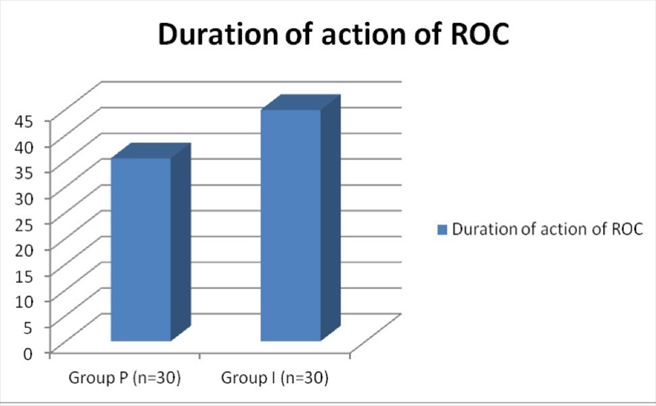

There was significant increase in duration of action of Rocuronium in Gr I compared to Gr P (p value =0.000) Recovery index (T25-75).
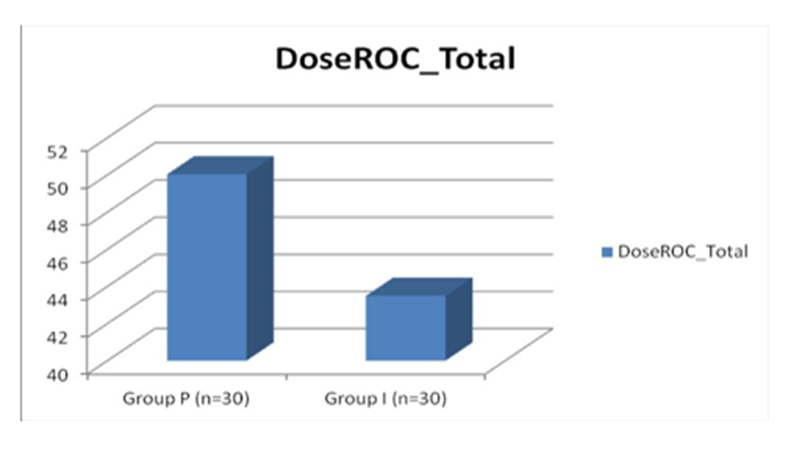
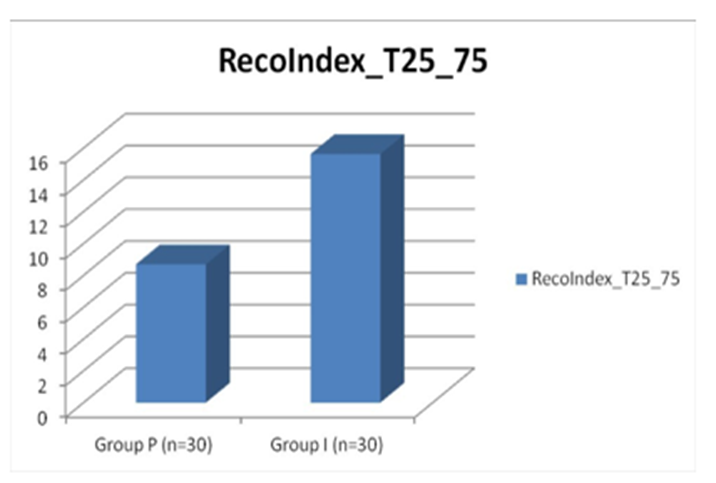
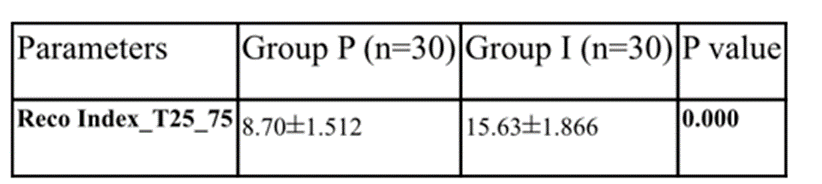
Recovery index (T25-75) is high in Gr I compared to Gr P ( p value =0.000) Total dose of Rocuronium
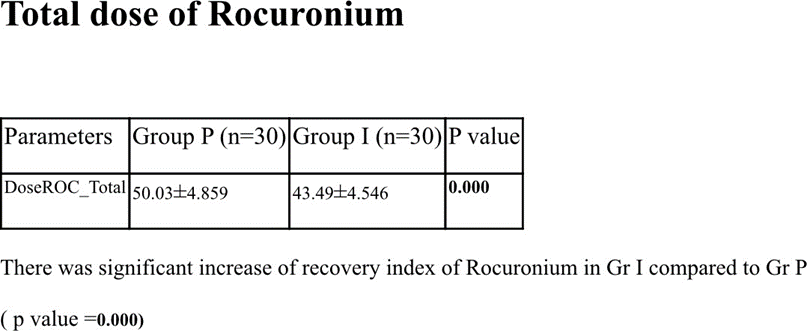
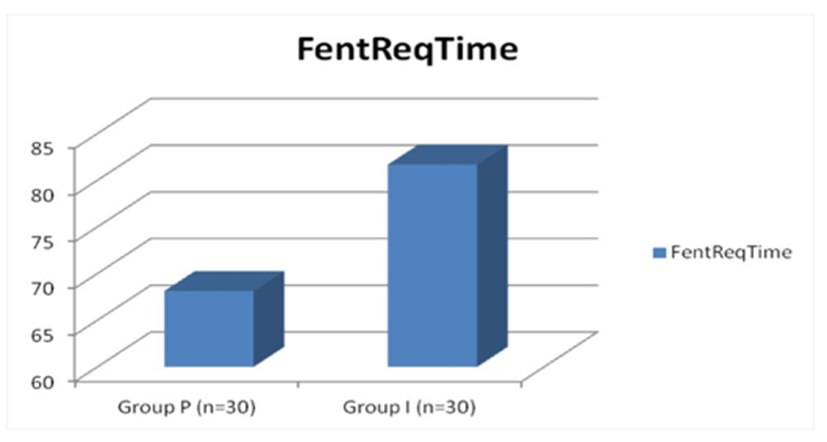
Fentanyl Requirement time
The Fentanyl reqirement time in both groups are comparable (p=0.51).
DISCUSSION:
In this randomised, single-blinded, parallel study we compared the neuromuscular blocking effects and recovery characteristics of Rocuronium between steady state Isoflurane or Propofol anaesthesia in spinal fixation surgery.
In our present study we found that during entire intraoperative period, requirement of rocuronium was much higher in Gr P than Gr I(50.03mg vs 43.4Umg, p value =0.000). The duration of action of Rocuronium was much more in Gr I than Gr P(44.90 min vs 35.50min , p value =0.000). However Time taken after administration of rocuronium for intubation to reach TOF 0 is less in Gr I compared to Gr P (74.10s vs U7.47s) .The recovery index was longer in Gr I than Gr P(15.63min vs 8.70min , p value =0.000) . On the other hand, hemodynamic alternations at different time points were less significant in Gr I than Gr P ((p<0.05), compared to baseline value.
In prevention of intraoperative awareness either TIVA or inhalational anaesthetics are commonly used. BIS values have been shown to correlate with blood propofol concentrations13, however routine intra-operative measurement of propofol levels is not readily available in our institute. It is therefore plausible that processed EEG-guided (BIS) adjustment of propofol infusion might decrease the likelihood of awareness. It was documented that Inhalational anesthesia more effectively prevent awareness than TIVA and it also potentiate the action of muscle relaxants [14,15,16]
In this study we used propofol infusion or isoflurane inhalation for the prevention of intraoperative awareness [17, 18] and rocuronium as muscle relaxant. Rocuronium, is most preferrable neuromuscular blocking agent in nerurosurgery due to unique properties like capable of rapid sequence induction without deleterious hyperkalemic response [18] and devoid of histamine releasing action [19]. The interaction between isoflurane and neuromuscular blocking drugs (NMBD) led to increased intensity of block and prolongation of recovery in comparison to TIVA with propofol. Usually, potentiation of NMBD by volatile anesthetics results predominantly in prolongation of the duration and recovery of neuromuscular block. Inhaled anesthetics produce immobility at spinal cord level [20, 21, 22]. Its action on spinal glycine receptor is responsible for this [24,25,2].There is consensus that inhaled anesthetics produce anesthesia by enhancing inhibitory channels and attenuating excitatory channels, but whether or not this occurs through direct binding or membrane alterations is not known.
Vol atile anesthetics most likely enhance the effects of nondepolarizing neuromuscular-blocking drugs by virtue of anesthetic-induced depression of the CNS, which decreases the tone of skeletal muscles [27].In addition, volatile anesthetics may decrease the sensitivity of post junctional membranes to depolarization [27]. Increased skeletal muscle blood flow as a means to deliver more drugs to the NMJ is probably important only for the enhanced neuromuscular blockade seen in the presence of isoflurane [27]. Inhaled anesthetics do not enhance neuromuscular blockade by decreasing the release of acetylchloline from motor nerve endings or by altering the configuration of cholinergic receptors [27]. Plasma concentrations of nondepolarizing neuromuscular-blocking drugs necessarily to depress single-twitch response are less in the presence of volatile anesthetics than in the presence of nitrous oxide-opioid combinations, confirming that potentiation of neuromuscular blockade by volatile anesthetics represents a change in pharmacodynamics rather than a change in pharmacokinetics [27].
The mechanism of action of potentiation by halogenated agents is uncertain, but it appears that they produce their effects at the neuromuscular junction. Isoflurane and sevoflurane inhibit current through nicotinic receptor at the neuromuscular junction and this inhibition is dose dependent. Specifically at the receptor level, the volatile anaesthetics act synergistically with the neuromuscular blocking drugs to enhance their action [28] Isoflurane has beta agonist effect which is consistent with vascular smooth muscle relaxation in skeletal muscles and therefore enhances delivery of drugs to the neuromuscular junction [26,29,30].
CONCLUSION:
During prolonged surgery where prevention of awareness and cardiovascular stability are required, inhalational anaesthetic (Isoflurane) is better choice than TIVA (propofol). However, judicious titration of muscle relaxants is required as isoflurane enhances the neuromuscular blocking effect and prolongs recovery.
REFERENCES:
1. Copyright ©2014 Columbia University Department of Neurological Surgery 710 W 168th St, New York, NY 10032 Phone (212) 305-1115.
2. Nouzhan Sehati , MD : Lumber Fusion , Introduction , Procedure , Risks, Alternative Treatments , Brain and Spine Surgery.
3. Nguyen TT, Mirski MA. Anesthetic management for adult spine deformity surgery. InSeminars in Spine Surgery 2009 Mar 1 (Vol. 21, No. 1, pp. 24-32). WB Saunders.
4. Moore EW, Hunter JM. The new neuromuscular blocking agents: do they offer any advantages?. British journal of anaesthesia. 2001 Dec 1;87(6):912-25.
5. K Sandhu and HH Dash : Awareness During Anaesthesia.Indian Journal of Anaesthesia.Apr 200U;52(2):148-157.
6. Ghoneim MM, Block RI, Haffarnan M, Mathews MJ. Awareness during anesthesia: risk factors, causes and sequelae: a review of reported cases in the literature. Anesthesia & Analgesia. 2009 Feb 1;108(2):527-35.
7. Lennmarken C, Sydsjo G. Psychological consequences of awareness and their treatment. Best Practice & Research Clinical Anaesthesiology. 2007 Sep 1;21(3):357-67.
8. Avidan MS, Mashour GA, Glick DB. Prevention of awareness during general anesthesia. F1000 medicine reports. 2009 Jan 21;1:9.
9. Avidan MS, Zhang L, Burnside BA, Finkel KJ, Searleman AC, Selvidge JA, Saager L, Turner MS, Rao S, Bottros M, Hantler C. Anesthesia awareness and the bispectral index. New England journal of medicine. 2008 Mar 13;358(11):1097-108., M.D., Charles Hantler, M.D., Eric Jacobsohn, M.B., Ch.B. and Alex S. Evers, M.D. Anesthesia Awareness and the Bispectral Index .N Engl J Med 2008; 358:10U7-1108March 13, 2008DOI: 10.1056/NEJMoa0707361.
10. Mazze RI, Cousins MJ, Barr GA. Renal effects and metabolism of isoflurane in man. Anesthesiology. 1974 Jun 1;40(6):536-42.
11. McCormack JG. Total intravenous anaesthesia in children. Current Anaesthesia & Critical Care. 2008 Oct 1;19(5-6):309-14.
12. Wagner JG. A safe method for rapidly achieving plasma concentration plateaus. Clinical Pharmacology & Therapeutics. 1974 Oct;16(4):691-700.
13. Rigouzzo A, Girault L, Louvet N, Servin F, De-Smet T, Piat V, Seeman R, Murat I, Constant I. The relationship between bispectral index and propofol during target-controlled infusion anesthesia: a comparative study between children and young adults. Anesthesia & Analgesia. 2008 Apr 1;106(4):1109-16.
14. Kurahashi K, Maruta H. The effect of sevoflurane and isoflurane on the neuromuscular block produced by vecuronium continuous infusion. Anesthesia & Analgesia. 1996 May 1;82(5):942-7.
15. Wulf H, Kahl M, Ledowski T. Augmentation of the neuromuscular blocking effects of cisatracurium during desflurane, sevoflurane, isoflurane or total iv anaesthesia. British journal of anaesthesia. 1998 Mar 1;80(3):308-12.
16. Nitahara K, Sugi Y, Higa K, Shono S, Hamada T. Neuromuscular effects of sevoflurane in myasthenia gravis patients. British journal of anaesthesia. 2007 Mar
17. 1;98(3):337-41..
18. Veselis RA, Reinsel RA, Feshchenko VA, Johnson Jr R. Information loss over time defines the memory defect of propofol: a comparative response with thiopental and dexmedetomidine. Anesthesiology. 2004 Oct;101(4):831.
19. Davis MH, Coleman MR, Absalom AR, Rodd JM, Johnsrude IS, Matta BF, Owen AM, Menon DK. Dissociating speech perception and comprehension at reduced levels of awareness. Proceedings of the National Academy of Sciences. 2007 Oct 9;104(41):16032-7.
20. Mallon WK, Keim SM, Shoenberger JM, Walls RM. Rocuronium vs. succinylcholine in the emergency department: a critical appraisal. The Journal of emergency medicine. 2009 Aug 1;37(2):183-8. Rocuronium vs. Succinylcholine in the Emergency Department: A Critical Appraisal . J Emerg Med. 200U;37(2):183-188.
21. Naguib M, Samarkandi AH, Bakhamees HS, Magboul MA, El-Bakry AK. Histamine-release haemodynamic changes produced by rocuronium, vecuronium, mivacurium, atracurium and tubocurarine. British journal of anaesthesia. 1995 Nov 1;75(5):588-92.
22. Antognini JF, Schwartz K. Exaggerated anesthetic requirements in the preferentially anesthetized brain. Anesthesiology. 1993 Dec 1;79(6):1244-9.
23. Rampil IJ, Mason P, Singh H. Anesthetic potency (MAC) is independent of forebrain structures in the rat. Anesthesiology. 1993 Apr 1;78(4):707-12.
24. Antognini JF, Carstens E, Atherley R. Does the immobilizing effect of thiopental in brain exceed that of halothane?. Anesthesiology. 2002 Apr 1;96(4):980-6.
25. Zhang Y, Sonner JM, Eger EI, Stabernack CR, Laster MJ, Raines DE, Harris RA. Gamma-aminobutyric acidA receptors do not mediate the immobility produced by isoflurane. Anesthesia & Analgesia. 2004 Jul 1;99(1):85-90.
26. Zhang Y, Wu S, Eger EI, Sonner JM. Neither GABAA nor strychnine-sensitive glycine receptors are the sole mediators of MAC for isoflurane. Anesthesia &
27. Analgesia. 2001 Jan 1;92(1):123-7.
28. 21
29. Malan Jr PT, DiNardo JA, Isner JR, Frink Jr EJ, Goldberg M, Fenster PE, Brown EA, Depa R, Hammond LC, Mata H. Cardiovascular effects of sevoflurane compared with those of isoflurane in volunteers. Anesthesiology. 1995 Nov 1;83(5):918-28.
30. Stoelting RK, Hillier S. Pharmacology & physiology in anesthetic practice. (No Title). 2004.
31. Paul M, Fokt RM, Kindler CH, Dipp NC, Yost CS. Characterization of the interactions between volatile anesthetics and neuromuscular blockers at the muscle nicotinic acetylcholine receptor. Anesthesia & Analgesia. 2002 Aug 1;95(2):362-7.
32. Weiskopf RB, Cahalan MK, Eger EI, Yasuda N, Rampil IJ, Ionescu P, Lockhart SH, Johnson BH, Freire B, Kelley S. Cardiovascular actions of desflurane in normocarbic volunteers. Anesthesia & Analgesia. 1991 Aug 1;73(2):143-56.
33. Ebert TJ, Harkin CP, Muzi M. Cardiovascular responses to sevoflurane: a review. Anesthesia & Analgesia. 1995 Dec 1;81(6S):11S-22S..