COMPARING 0.25% BUPIVACAINE AND 0.25% LEVOBUPIVACAINE THROUGH USG-GUIDED SUPRACLAVICULAR BRACHIAL PLEXUS BLOCK FOR ELECTIVE UPPER LIMB SURGERY: A PARALLEL GROUP RANDOMIZED CLINICAL TRIAL.
- Madhabi Roy , Senior Resident, M.B.B.S., M.D. (Anaesthesiology), Department of Anaesthesiology and Critical Care Medicine, Nil Ratan Sircar Medical College and Hospital, 138, AJC Bose Road, Sealdah, Raja Bazar, Kolkata, West Bengal – 700014.
- Krishanu Majumdar , Senior Resident, M.B.B.S., M.D. (Anaesthesiology), Department of Anaesthesiology and Critical Care Medicine, Murshidabad Medical College and Hospital, 73, Station Road, Raninagar, Gora Bazar, Berhampore, West Bengal – 742101.
- Uma Mandal , Associate Professor, M.B.B.S., M.D. (Anaesthesiology), Department of Anaesthesiology and Critical Care Medicine, College of Medicine and JNM Hospital, Block A2, Kalyani, West Bengal – 741235.
- Dhrubajyoti Sarkar , Professor, M.B.B.S., M.D. (Anaesthesiology), Department of Anaesthesiology and Critical Care Medicine, College of Medicine and JNM Hospital, Block A2, Kalyani, West Bengal – 741235..
Article Information:
Abstract:
Introduction: The history of pain is one of the concepts that have divided Cartesian thinkers and mystical philosophers in the Western civilization over centuries. The attitude towards pain evolved with the evolution of mentalities in the broad sense but also by relying on scientific discoveries in the field. Aims &objectives: The study aims to compare the onset and duration of complete motor and sensory block, along with the duration of perioperative analgesia between the two study drugs. It also evaluates hemodynamic changes, patient satisfaction, and any associated side effects or complications. Materials & Methods: This study was designed as a parallel group randomized clinical trial conducted in the Department of Anaesthesiology, College of Medicine and JNM Hospital, Kalyani. The study was carried out over a period of one year, and a total of 74 patients undergoing elective upper limb surgery were enrolled and evaluated. Result: The comparison of block-related and surgical time parameters showed that the mean OTSB duration was significantly higher in Group-L compared to Group-B (3.89 ± 1.94 vs 3.14 ± 1.92 min, p=0.039). Similarly, TCSB duration was significantly higher in Group-L (8.05 ± 3.84 min) compared to Group-B (5.95 ± 2.03 min) (p=0.02). Conclusion: We concluded that ultrasound-guided supraclavicular brachial plexus block using both 0.25% bupivacaine and 0.25% levobupivacaine provided effective anesthesia for elective upper limb surgeries with comparable baseline characteristics and clinical outcomes.
Keywords:
Article :
INTRODUCTION:
One of the ideas that has caused centuries of conflict between mystical philosophers and Cartesian intellectuals in Western civilization is the history of pain. In addition to relying on scientific advancements in the field, attitudes around pain changed as mentalities in general evolved. Pain management is now a patient's fundamental right and a practitioner's duty [1]. In an effort to alleviate their patients' suffering, European doctors frequently used opium sparingly. After 1680, Thomas Sydenham produced Laudanum, a combination of opium and sherry. Sertürner named it Morphine, after the Greek deity of dreams Morpheus, after he found a potent analgesic agent in isolated crystals of crude opium in 1803 [2].
In the end, one of the most significant developments in contemporary medicine was the development of surgical anesthesia. In addition to facilitating painless and seamless operation, surgical anesthesia—which can be administered in a variety of ways, such as general anesthesia or regional blocks—also reduces post-operative pain, improving patient outcomes and reducing hospital stays. Plexus nerve block, a type of regional anesthesia, has developed into a great substitute for all other types of anesthesia, particularly for limb surgeries. It is also always a better choice in terms of lower systemic medication exposure.
The proper placement of the local anesthetic solution close to the targeted nerves is essential for the success of plexus nerve block. Eliciting paraesthesia has been a traditional technique for locating nerves throughout the history of regional anesthesia. However, mechanical aids, such as radioscopy and peripheral nerve stimulation (PNS) [3], have been promoted to enable close approximation of needle and nerve, potentially increasing the corresponding success rate. The first supraclavicular brachial plexus block was used in clinical practice by Kulenkampff in Germany in 1911. It was subsequently renamed the "Winnie block" [4]. For upper limb procedures, brachial plexus block is a helpful technique with no serious systemic adverse effects [5]. The study aims to compare the onset and duration of complete motor and sensory block, along with the duration of perioperative analgesia between the two study drugs. It also evaluates hemodynamic changes, patient satisfaction, and any associated side effects or complications.
MATERIALS AND METHODS:
Type of Study: A parallel group randomized clinical trial
Place of Study: Dept. of Anaesthesiology, College of Medicine and JNM hospital, Kalyani.
Study Duration: One year
Sample Size: 74 patients
Inclusion Criteria:
• Patients who gave written informed consent.
• Patients with ASA grade I-III physical status.
• Aged between 18-70yrs.
• Body weight > 50kg.
• Patients of all gender.
• Patients who underwent elective upper limb surgeries.
Exclusion Criteria:
• Patient who required intraoperative General Anaesthesia supplementation due to any reason.
• Allergy to any of the study drugs.
• Any contraindication to study drugs.
• Any contraindication to Peripheral Nerve Block.
• Patient who could not communicate or understand and follow commands due to any reason.
• Patients with history of drug abuse.
• Any Neurological deficit of the limb to be operated.
• Infection / Swelling at proposed site of injection.
• Patient with coagulopathy due to any reason.
Study Variables:
• 0.25% Bupivacaine
• 0.25% Levobupivacaine
• Onset time of sensory block
• Onset time of motor block
• Duration of sensory block
• Duration of motor block
• Duration of perioperative analgesia
• Nausea and vomiting
• Hypotension
• Bradycardia
Statistical Analysis:
Data were entered into Excel and subsequently analyzed using SPSS and GraphPad Prism. Continuous variables were summarized as means with standard deviations, while categorical variables were presented as counts and percentages. Comparisons between independent groups were performed using two-sample t-tests, and paired t-tests were applied for correlated (paired) data. Categorical data were compared using chi-square tests, with Fisher’s exact test applied when expected cell counts were small. A p-value of ≤ 0.05 was considered statistically significant.
RESULTS:
Table 1: Distribution of ASA grading in Groups
|
ASA Grading |
Group-B |
Group-L |
Total |
p -value |
Significance |
|
I |
27 (72.97) |
24 (64.86) |
51 (68.92) |
0.451 |
Not Significant |
|
II |
10 (27.03) |
13 (35.14) |
23 (31.08) |
||
|
Total |
37 (100) |
37 (100) |
74 (100) |
Table 2: Distribution of Proposed surgery in Groups
|
|
GROUP |
Total
|
|
|
|
||
|
Group-B
|
Group-L
|
|
p Value |
Significance |
|
||
|
PROPOSED SURGERY |
BB R FOREARM |
2(5.41) |
1(2.7) |
3(4.05) |
0.989 |
Not Significant |
|
|
BOTH BONE L |
1(2.7) |
2(5.41) |
3(4.05) |
||||
|
CAPITULUM REVISION |
1(2.7) |
2(5.41) |
3(4.05) |
||||
|
COMPOUND BB |
2(5.41) |
1(2.7) |
3(4.05) |
||||
|
DER RIGHT SIDE |
2(5.41) |
1(2.7) |
3(4.05) |
||||
|
L AC DISLOCATION |
2(5.41) |
1(2.7) |
3(4.05) |
||||
|
L CAPITULUM |
2(5.41) |
2(5.41) |
4(5.41) |
||||
|
L DER |
3(8.11) |
2(5.41) |
5(6.76) |
||||
|
L INTERCONDYLAR |
2(5.41) |
1(2.7) |
3(4.05) |
||||
|
L OLECRANON TBW |
2(5.41) |
1(2.7) |
3(4.05) |
||||
|
L SUPRACONDYLAR |
2(5.41) |
2(5.41) |
4(5.41) |
||||
|
L ULNA |
1(2.7) |
2(5.41) |
3(4.05) |
||||
|
L WRIST MASS |
2(5.41) |
1(2.7) |
3(4.05) |
||||
|
LEFT DISTAL RADIUS |
1(2.7) |
2(5.41) |
3(4.05) |
||||
|
MASS IN R ELBOW |
1(2.7) |
2(5.41) |
3(4.05) |
||||
|
R CLAVICLE IMPLANT |
1(2.7) |
2(5.41) |
3(4.05) |
||||
|
R DER |
1(2.7) |
1(2.7) |
2(2.7) |
||||
|
R DISTAL RADIUS |
3(8.11) |
3(8.11) |
6(8.11) |
||||
|
R RADIAL HEAD |
1(2.7) |
2(5.41) |
3(4.05) |
||||
|
R SHAFT HUMERUS |
3(8.11) |
2(5.41) |
5(6.76) |
||||
|
R SUPRACONDYLAR |
1(2.7) |
2(5.41) |
3(4.05) |
||||
|
L SHAFT HUMERUS |
1(2.7) |
2(5.41) |
3(4.05) |
||||
|
Total |
37(100) |
37(100) |
74(100) |
|
|
|
|
Table 3: Comparison of mean LA Volume (ml) in Groups
|
|
GROUP |
|
|
|||||
|
Group-B |
Group-L |
|
|
|||||
|
Mean |
Median |
Std. Deviation |
Mean |
Median |
Std. Deviation |
p Value |
Significance |
|
|
LA VOL (ml) |
34.76 |
38.00 |
6.02 |
28.41 |
30.00 |
7.37 |
0.061 |
Not Significant |
Table 4: Comparison of Average OTSB, TCSB, TDSB, OTMB, TCMB and TDMB (min) between Groups
|
Group-B |
Group-L |
p -value |
Significance |
|||||
|
Mean |
Median |
Std. Deviation |
Mean |
Median |
Std. Deviation |
|||
|
OTSB |
3.14 |
2 |
1.92 |
3.89 |
4 |
1.94 |
0.039 |
Significant |
|
TCSB |
5.95 |
6 |
2.03 |
8.05 |
8 |
3.84 |
0.02 |
Significant |
|
TDSB |
267.11 |
277 |
26.1 |
287.08 |
282 |
54.76 |
0.426 |
Not Significant |
|
OTMB |
3.68 |
4 |
1.11 |
6 |
6 |
2.58 |
<0.001 |
Significant |
|
TCMB |
7.78 |
6 |
2.25 |
10.43 |
10 |
6.08 |
0.052 |
Not Significant |
|
TDMB |
273.86 |
268 |
25.34 |
279.54 |
280 |
45.28 |
0.765 |
Not Significant |
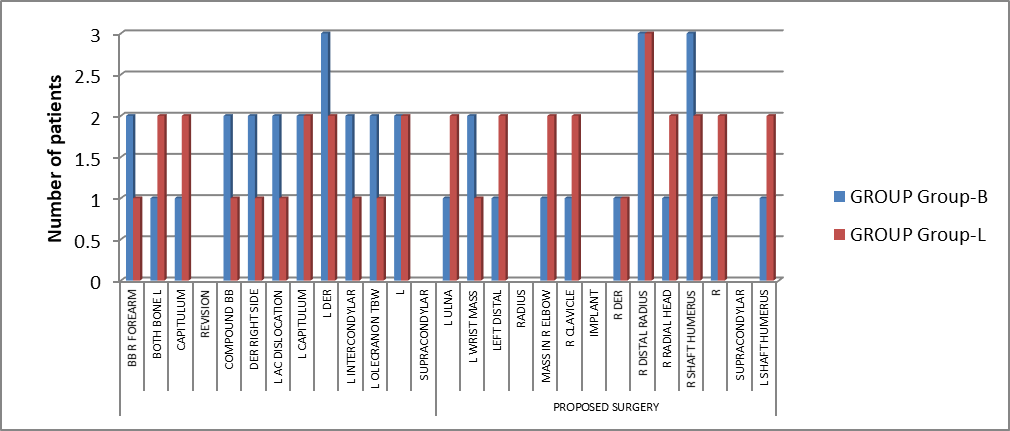
Figure 1: Distribution of Proposed surgery in Groups
The present study was conducted among 74 patients who were equally divided into Group-B and Group-L (37 patients in each group). The demographic and clinical characteristics were assessed between the two groups. The distribution of ASA grading showed that the majority of patients were classified as ASA Grade I in both groups, with 72.97% (27 patients) in Group-B and 64.86% (24 patients) in Group-L, while ASA Grade II was observed in 27.03% (10 patients) and 35.14% (13 patients) respectively. The difference in ASA grading between the groups was statistically not significant (p=0.451), indicating comparable baseline health status. The pattern of proposed surgical procedures was also similar between both groups, with procedures such as right distal radius, right shaft humerus, left DER, and other upper limb surgeries being performed in both groups.
No significant association was observed between the type of proposed surgery and group allocation (p=0.989). The comparison of mean LA volume revealed a higher mean value in Group-B (34.76 ± 6.02 ml) compared to Group-L (28.41 ± 7.37 ml); however, this difference did not reach statistical significance (p=0.061). Evaluation of block and surgical time parameters demonstrated that the mean onset time of sensory block (OTSB) was significantly shorter in Group-B compared to Group-L (3.14 ± 1.92 min vs 3.89 ± 1.94 min, p=0.039). Similarly, time for complete sensory block (TCSB) was significantly lower in Group-B (5.95 ± 2.03 min) than Group-L (8.05 ± 3.84 min) with a statistically significant difference (p=0.02). The mean onset time of motor block (OTMB) was also significantly lower in Group-B (3.68 ± 1.11 min) compared to Group-L (6.00 ± 2.58 min) (p<0.001). However, the duration of sensory block (TDSB), time for complete motor block (TCMB), and duration of motor block (TDMB) were comparable between the two groups and showed no statistically significant difference (p>0.05). Overall, Group-B demonstrated faster onset of sensory and motor block compared to Group-L, while other baseline and duration-related parameters remained comparable.
DISCUSSION:
The present randomized clinical trial was conducted among 74 patients undergoing elective upper limb surgery under ultrasound-guided supraclavicular brachial plexus block. Patients were equally allocated into two groups receiving either 0.25% bupivacaine (Group-B) or 0.25% levobupivacaine (Group-L). Baseline demographic and clinical parameters were comparable between groups, indicating proper randomization and homogeneity of the study population. ASA grading showed no statistically significant difference between the groups (p=0.451), suggesting similar preoperative physical status and comparable surgical risk profiles. Similar findings were reported by Krishan G et al. (2018), who observed comparable demographic characteristics and ASA distribution in patients receiving bupivacaine and levobupivacaine for brachial plexus block during upper limb procedures [6].
The present study observed that the mean local anesthetic volume used was higher in Group-B (34.76 ± 6.02 ml) compared to Group-L (28.41 ± 7.37 ml), although the difference was statistically insignificant (p=0.061). This indicates that both drugs provided effective surgical anesthesia with comparable requirements. Similar observations were reported by Kumari A et al. (2019), who found no significant difference in anesthetic requirement between bupivacaine and levobupivacaine when used for ultrasound-guided supraclavicular brachial plexus block [7]. In the current study, the onset time of sensory block was significantly faster with 0.25% bupivacaine compared to 0.25% levobupivacaine (3.14 ± 1.92 min vs 3.89 ± 1.94 min, p=0.039). The time required for complete sensory block was also significantly shorter in Group-B (5.95 ± 2.03 min) compared with Group-L (8.05 ± 3.84 min, p=0.02). This faster onset with bupivacaine may be attributed to its slightly greater potency and rapid penetration into nerve tissues. Similar results were documented by SAHU DK et al. (2020), who reported earlier onset of sensory blockade with bupivacaine compared with levobupivacaine in patients undergoing upper limb surgeries under ultrasound-guided brachial plexus block [8].
The onset time of motor block was significantly shorter in the bupivacaine group (3.68 ± 1.11 min) compared to the levobupivacaine group (6.00 ± 2.58 min) (p<0.001). This finding is consistent with the study by MEMORIAL KC et al. (2017), who observed that bupivacaine produced a faster onset of motor blockade compared with levobupivacaine, although both agents provided adequate surgical anesthesia [9]. The faster motor onset observed with bupivacaine may be beneficial in situations where rapid achievement of surgical anesthesia is required. However, the duration of sensory block, complete motor block time, and duration of motor block were comparable between the two groups, with no statistically significant difference (p>0.05). This suggests that despite the difference in onset characteristics, both local anesthetics provide similar duration of postoperative analgesia and motor blockade. Similar findings were reported by Gupta et al. (2021), who demonstrated comparable duration of analgesia and motor blockade between bupivacaine and levobupivacaine in supraclavicular brachial plexus block [10].
Levobupivacaine, being the pure S-enantiomer of bupivacaine, has been associated with reduced cardiotoxicity and neurotoxicity while maintaining similar clinical efficacy. Although the present study showed a relatively slower onset with levobupivacaine, its safety profile makes it a useful alternative, particularly in patients with increased risk of local anesthetic-related adverse effects. Similar conclusions were reported by Jagan G et al. (2023), who highlighted the comparable anesthetic efficacy and improved safety margin of levobupivacaine compared with bupivacaine in regional anesthesia techniques [11].The present study demonstrates that 0.25% bupivacaine provides a significantly faster onset of sensory and motor blockade compared with 0.25% levobupivacaine during ultrasound-guided supraclavicular brachial plexus block. However, both drugs provide comparable block duration and effective surgical anaesthesia, making levobupivacaine a clinically acceptable alternative with potential safety advantages.
CONCLUSION:
We concluded that ultrasound-guided supraclavicular brachial plexus block using both 0.25% bupivacaine and 0.25% levobupivacaine provided effective anesthesia for elective upper limb surgeries with comparable baseline characteristics and clinical outcomes. The ASA grading and distribution of surgical procedures were similar between the groups, ensuring proper comparability. Although the mean local anesthetic volume was higher in the bupivacaine group, the difference was statistically insignificant. Group-B demonstrated a significantly faster onset of sensory and motor blockade, with shorter onset time of sensory block, time to achieve complete sensory block, and onset time of motor block compared to Group-L. However, the duration of sensory block, complete motor block time, and duration of motor block were comparable between both groups. Therefore, 0.25% bupivacaine provided a quicker onset of block, while 0.25% levobupivacaine showed similar efficacy and duration of action. Both drugs were effective and safe options for supraclavicular brachial plexus block, with bupivacaine offering the advantage of faster block initiation in upper limb surgeries.
REFERENCES:
1. Ayoub E, et al. History of pain: from Greek antiquity to the 21st century. J Med Liban. 2013 Oct-Dec;61(4):216-21.
2. Santoro D et al. Development of the concept of pain in history. J Nephrol. 2011 May-Jun;24 Suppl 17:S133-6. Erratum in: J Nephrol. 2012 Jul-Aug;25(4):588.
3. De Andrés J, et al. Peripheral nerve stimulation in the practice of brachial plexus anesthesia: a review. Regional anesthesia and pain medicine. 2001 Sep 1;26(5):478-83.
4. Steinfeldt T, Volk T, Kessler P, Vicent O, Wulf H, Gottschalk A, Lange M, Schwartzkopf P, Hüttemann E, Tessmann R, Marx A. Peripheral nerve blocks on the upper extremity: technique of landmark-based and ultrasound-guided approaches. Der Anaesthesist. 2015 Nov;64:846-54.
5. Zadrazil M, Opfermann P et al. Brachial plexus block with ultrasound guidance for upper-limb trauma surgery in children: a retrospective cohort study of 565 cases. Br J Anaesth. 2020 Jul;125(1):104-9.
6. Krishan G, Mitra S, Verma AP, Agrawal M, Singh RP, Ahmad S. A comparative study between levobupivacaine with dexmedetomidine versus levobupivacaine with clonidine in ultrasound guided supraclavicular brachial plexus block for upper limb surgeries: a randomized double blind placebo controlled study. Int J Contemp Med Res. 2018;5(1):6-11.
7. Kumari A, Chhabra H, Gupta R, Kaur H. Comparative study of effectiveness of tramadol and butorphanol as adjuvants to levobupivacaine for supraclavicular brachial plexus block. Anesthesia Essays and Researches. 2019 Jul 1;13(3):446-51.
8. SAHU DK, AKSHAY K, SONAWANE AS, SHARMA A, PARAMPILL R. Comparison of Levobupivacaine 0.5% versus Ropivacaine 0.75% with Dexmedetomidine as an Adjuvant in Ultrasound-guided Supraclavicular Brachial Plexus Block: A Randomised Clinical Study. Journal of Clinical & Diagnostic Research. 2025 Aug 1;19(8).
9. MEMORIAL KC. DR. TN JHA AND DR. KP CHANSORIYA MEMORIAL NATIONAL MEDAL AND TRAVELLING GRANTS. Indian Journal of Anaesthesia. 2026 Apr;70:2.
10. Gupta A, Mehta M, Kumar S. Comparative assessment of postoperative analgesia following supraclavicular block with bupivacaine and levobupivacaine. Indian Journal of Pain. 2021.
11. Jagan G, Priyadharshini P, Divya S, Dhinesh Kumar C, Krishna Prasad T. Efficacy of levobupivacaine in regional anaesthesia-a narrative review. Frontiers in Medical Case Reports. 2024 Sep;5:01-12.