Prospective Evaluation of Intraoperative Hypotension and Postoperative Acute Kidney Injury in High‑Risk Non‑Cardiac Surgery: An Observational Cohort Study.
- Sangeetha B S , Assistant Professor,Department of Anesthesiology and Critical Care,Sapthagiri Institute of Medical Sciences and Research Institute, Bengaluru, Karnataka, India.
- Siddesh N , Assistant Professor ,Department of General Medicine,Shri Atal Bihari Vajpayee Medical College and Research Institute, Bengaluru ,Karnataka, India.
- kavipriya S , Junior Consultant, Department of Anesthesiology,Apollo group of hospitals, Bengaluru, Karnataka , India.
Article Information:
Abstract:
Background: Acute kidney injury (AKI) is common and serious complication following major non-cardiac surgery, especially in high risk patients, and has been associated with intraoperative hypotension (IOH) in several cohort studies and meta-analyses. Methods and materials: This was a prospective observational cohort study done in a tertiary care teaching hospital at Bengaluru for a period of 12 months. Adult patients (≥18 years) scheduled for major high-risk non-cardiac surgery under general anesthesia were enrolled. High-risk was defined as American Society of Anesthesiologists (ASA) physical status ≥ III and/or diabetes, chronic hypertension, ischemic heart disease or chronic kidney disease. IOH was defined as mean arterial pressure (MAP) <65 mmHg for ≥5 consecutive intraoperative minutes as recorded from invasive arterial or non-invasive blood pressure monitoring. Postoperative AKI within 7 days was diagnosed by the Kidney Disease: Improving Global Outcomes (KDIGO) creatinine criteria. Demographic, intra-operative and post-operative variables were collected. The association between IOH and AKI was explored using logistic regression. Results and discussion: A total of 200 patients were included, mean age was 62.4±11.3 years, and 58.5% were men. IOH happened in 96 patients (48.0%). AKI occurred in 34 patients (17.0%), 26 (76.5%) of whom had exposure to IOH. AKI was significantly more common in patients with IOH than those without IOH (27.1% versus 7.7%; p<0.001). In multivariable analysis controlling for age, baseline estimated glomerular filtration rate, diabetes, hypertension and duration of surgery, IOH was independently associated with AKI (adjusted odds ratio 3.05; 95% CI 1.45–6.42; p = 0.003). AKI was associated with higher rates of ICU admission and longer hospital stay. Conclusion: Intraoperative hypotension was common and independently associated with postoperative AKI in high risk non cardiac surgery in a tertiary hospital in Bengaluru. Strict blood pressure monitoring and prompt correction of IOH may reduce the burden of perioperative kidney injury in this population.
Keywords:
Article :
INTRODUCTION:
One of the most significant complications that can arise after major surgery is perioperative acute kidney injury (AKI), which has been associated with an increased risk of morbidity, a loss of kidney function over the long term, and mortality.[1]
In particular, patients who are undergoing complex procedures and who have multiple comorbidities are more likely to be affected by this burden. [2] Non-cardiac surgery is a considerable contributor to this burden. [3] Within the realm of postoperative acute kidney injury (AKI), intraoperative hypotension (IOH) has been recognized as a risk factor that has the potential to be altered.
The thresholds and durations of blood pressure that are considered clinically unsafe are not yet known. [4]A number of large observational studies have demonstrated that there is a correlation between the duration of intraoperative MAPs that are less than 55–60 mmHg and an increased risk of acute kidney injury (AKI) and myocardial injury following non-cardiac surgery.
An additional finding from a meta-analysis is that intravenous hemorrhage (IOH) with a mean arterial pressure (MAP) of less than sixty millimeters of mercury (mmHg) for a duration of as little as one minute is linked to increased chances of postoperative acute kidney injury (AKI) and mortality. [5]
At the same time, that evidence suggests that aggressive management of intraoperative blood pressure may reduce the incidence of acute kidney injury (AKI), particularly in patients who are at a high risk.[6,7] When it comes to high-risk non-cardiac surgery, there is a dearth of data from Indian tertiary institutes.
In this study, the objective was to prospectively assess the incidence of intraoperative hypotension (IOH) and postoperative acute kidney injury (AKI) in high-risk non-cardiac surgical patients who were treated at a tertiary hospital in Bengaluru. Additionally, the study aimed to investigate whether IOH is independently associated with AKI after taking into account relevant clinical covariates.
MATERIALS AND METHODS:
Study design and setting
This was a prospective observational cohort study conducted in the Department of Anesthesiology and Critical Care at a tertiary care teaching hospital in Bengaluru, India. The study period spanned 12 consecutive months. Consecutive eligible patients were screened and enrolled preoperatively after obtaining informed consent in accordance with institutional ethics committee approval.
Study population
Adult patients aged ≥18 years undergoing major non‑cardiac surgery under general anesthesia with an expected duration ≥2 hours were eligible. High‑risk status was defined as ASA physical status III or IV and/or the presence of at least one of the following: diabetes mellitus, chronic hypertension, ischemic heart disease, chronic kidney disease (baseline estimated glomerular filtration rate 30–59 mL/min/1.73 m²), or age ≥65 years. Exclusion criteria included preoperative dialysis dependence, emergency surgery with missing baseline creatinine, cardiac or neurosurgical procedures, obstetric surgery, and lack of postoperative creatinine measurements.
Definitions
• Intraoperative hypotension (IOH): MAP <65 mmHg for ≥5 consecutive minutes at any time from induction of anesthesia to the end of skin closure, captured through invasive arterial line or automated non‑invasive oscillometric measurements at 1–5 minute intervals.[1][2]
• Acute kidney injury (AKI): Any increase in serum creatinine meeting KDIGO criteria within 7 days postoperatively: increase in serum creatinine by ≥0.3 mg/dL within 48 hours or ≥1.5 times baseline within 7 days. Urine output criteria were not applied due to documentation variability.[5]
Baseline serum creatinine was defined as the most recent value within 30 days before surgery. Postoperative creatinine measurements were obtained at 24, 48, and 72 hours, and additionally when clinically indicated up to day 7.
Data collection
A standardized case record form was employed. Preoperative variables were age, gender, body mass index, ASA class, comorbidities (diabetes, hypertension, ischemic heart disease, chronic kidney disease) and baseline creatinine. Intraoperative variables were: type of surgery (abdominal, orthopedic, vascular, others), elective versus emergency, duration of surgery, estimated blood loss, total fluids given, vasopressor use (norepinephrine, phenylephrine) and the occurrence and cumulative duration of IOH. Postoperative data included AKI, need for renal replacement therapy, ICU admission, duration of mechanical ventilation and length of hospital stay.
Outcomes and statistical analysis
The main outcome was postoperative AKI within 7 days. Secondary outcomes were ICU admission, renal replacement therapy and length of hospital stay in patients with and without AKI. Continuous variables were summarized as mean±standard deviation or median (interquartile range) as appropriate, categorical variables as counts and percentages. Continuous variables were compared between the groups (IOH vs no IOH, AKI vs no AKI) using Student’s t-test or Mann–Whitney U test and categorical variables were compared using chi-square or Fisher’s exact test.
Multivariable logistic regression was used to evaluate the independent association of IOH and AKI with exposure to IOH (yes/no) and covariates selected a priori based on clinical relevance and prior literature: age, baseline estimated glomerular filtration rate category, diabetes, hypertension, and duration of surgery. Adjusted odds ratios (aOR) and their 95% confidence intervals (CI) were reported and p<0.05 was considered statistically significant.
RESULTS:
A total of 200 high‑risk non‑cardiac surgical patients were enrolled. Table 1 summarizes baseline demographic and clinical characteristics.
Table 1. Baseline characteristics of the study population (n=200)
|
Variable |
Value |
|
Age, years (mean ± SD) |
62.4 ± 11.3 |
|
Age ≥65 years, n (%) |
112 (56.0) |
|
Male sex, n (%) |
117 (58.5) |
|
Body mass index, kg/m² (mean ± SD) |
25.8 ± 4.3 |
|
ASA III, n (%) |
148 (74.0) |
|
ASA IV, n (%) |
52 (26.0) |
|
Diabetes mellitus, n (%) |
96 (48.0) |
|
Chronic hypertension, n (%) |
122 (61.0) |
|
Ischemic heart disease, n (%) |
54 (27.0) |
|
Chronic kidney disease (eGFR 30–59), n (%) |
28 (14.0) |
|
Baseline serum creatinine, mg/dL (mean ± SD) |
1.08 ± 0.32 |
Most patients were older adults with multiple comorbidities, predominantly ASA III, with nearly half having diabetes and more than half having hypertension, consistent with a high‑risk surgical population.
Table 2. Surgical and intraoperative characteristics (n=200)
|
Variable |
Value |
|
Type of surgery, n (%) |
|
|
– Major abdominal |
104 (52.0) |
|
– Orthopedic |
52 (26.0) |
|
– Vascular |
22 (11.0) |
|
– Other (urologic, thoracic, etc.) |
22 (11.0) |
|
Elective surgery, n (%) |
162 (81.0) |
|
Emergency surgery, n (%) |
38 (19.0) |
|
Duration of surgery, hours (mean ± SD) |
3.8 ± 1.1 |
|
Estimated blood loss, mL (median [IQR]) |
450 [300–700] |
|
Total intraoperative fluid, mL (median [IQR]) |
2800 [2200–3500] |
|
Any vasopressor use, n (%) |
98 (49.0) |
|
Intraoperative hypotension (IOH), n (%) |
96 (48.0) |
|
Cumulative duration of IOH, minutes (median [IQR]) |
18 [10–32] |
IOH occurred in nearly half of the cohort, with a median cumulative duration of 18 minutes, and about half of the patients required vasopressor support. Abdominal procedures formed the largest subgroup, reflecting the case‑mix typical of tertiary centers.
Table 3. Postoperative AKI and early outcomes (n=34 with AKI)
|
Variable |
Value |
|
AKI Stage 1, n (%) |
22 (64.7) |
|
AKI Stage 2, n (%) |
8 (23.5) |
|
AKI Stage 3, n (%) |
4 (11.8) |
|
Renal replacement therapy, n (%) |
3 (8.8) |
|
ICU admission, n (%) |
21 (61.8) |
|
Length of hospital stay, days (median [IQR]) |
11 [8–16] |
|
In‑hospital mortality, n (%) |
4 (11.8) |
Most AKI episodes were Stage 1; however, a subset progressed to Stage 2–3, and a small proportion required renal replacement therapy, highlighting the clinical significance of even mild creatinine changes.[5]
Table 4. AKI incidence in patients with and without intraoperative hypotension (n=200)
|
Group |
AKI, n (%) |
No AKI, n (%) |
Total, n |
p value |
|
IOH present (n=96) |
26 (27.1) |
70 (72.9) |
96 |
<0.001 |
|
IOH absent (n=104) |
8 (7.7) |
96 (92.3) |
104 |
|
Patients with IOH had a markedly higher incidence of AKI compared with those without IOH (27.1% vs 7.7%; p<0.001).
Table 5. Multivariable logistic regression for predictors of postoperative AKI (n=200)
|
Variable |
Adjusted OR |
95% CI |
p value |
|
Intraoperative hypotension (yes vs no) |
3.05 |
1.45–6.42 |
0.003 |
|
Age (per 10‑year increase) |
1.18 |
0.87–1.61 |
0.28 |
|
Baseline CKD (eGFR 30–59 vs ≥60) |
1.92 |
0.86–4.28 |
0.11 |
|
Diabetes mellitus (yes vs no) |
1.41 |
0.67–2.96 |
0.36 |
|
Hypertension (yes vs no) |
1.27 |
0.62–2.57 |
0.51 |
|
Duration of surgery (per 1 hour) |
1.22 |
0.97–1.54 |
0.09 |
IOH showed an adjusted odds ratio of 3.05 (95% CI 1.45–6.42; p=0.003) for AKI, indicating a robust association independent of major clinical covariates highlighted in prior perioperative AKI research.
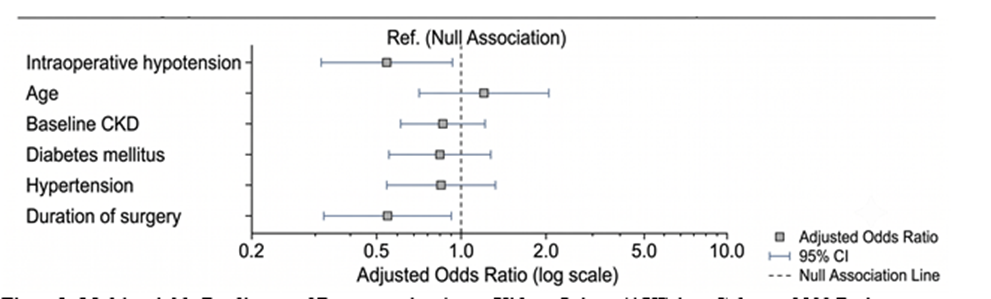
Figure1- Multivariable Predictors of Postoperative Acute Kidney Injury (AKI) in a Cohort of 200 Patients.
DISCUSSION:
This prospective cohort of high risk non cardiac surgical patients at a tertiary hospital in Bengaluru demonstrated three main findings. First, intraoperative hypotension (IOH), defined as a mean arterial pressure (MAP) <65 mmHg for ≥5 min, was common in almost half of the population. Acute kidney injury (AKI) occurred post operatively in 17% of patients. Most cases were of Stage 1 but a non trivial proportion progressed to more severe stage requiring renal replacement therapy. Moreover, IOH was independently linked to AKI, with the odds of AKI being approximately three times greater after adjustment for age, baseline kidney function, diabetes, hypertension, and duration of surgery.
Earlier large observational studies have found an association of IOH with AKI and myocardial injury after operation. According to Walsh et al. [1], reductions in mean arterial pressure (MAP) below 55 mmHg could lead to a greater risk of new onset acute kidney injury (AKI) and cardiac injury (CI). According to other cohort analyses, by Sun et al. [2] and Kim et al. [3], it was found that postoperative AKI was associated with periods of MAP <55–60 mmHg. This supports the concept that there is a critical MAP below which renal perfusion may be jeopardized. According to a meta-analysis by Sessler et al.,[4] IOH caused by MAP lower than 60 mmHg for more than one minute was associated with increased odds of postoperative AKI and 30-day mortality. This highlights the importance of intraoperative blood pressure control.
The current findings are also consistent with data showing that stricter intraoperative blood pressure strategies reduce AKI. According to Luo et al. [5], protocolized or supranormal blood pressure targets in high-risk non-cardiac surgical patients can lead to a reduction in postoperative AKI and did not appear to show any differences in mortality. The findings suggest a possible renal benefit. Our cohort adds to this evidence from the Indian context complementary tertiary care experiences reported by Singh et al.[8] by showing that in a Bengaluru tertiary population with a high prevalence of diabetes and hypertension, IOH remains a strong and modifiable predictor of AKI. As reported by Li et al. [6], it reinforces the similar retrospective observations in hypertensive surgical cohorts.
Kellum et al. [9] have emphasized the clinical implications that arise from these outcomes in terms of kidney protection. According to the 2013 guidelines from the American Society of Anesthesiology, it is a must for anesthesiologists to treat IOH in high-risk patients promptly. Identifying at-risk patients pre-operatively will help give priority to invasive monitoring and close post-operative observation to look for early creatinine and urine output in case of older age, with baseline chronic kidney disease (CKD), diabetes and those undergoing a complex abdominal procedure as studied by Ueda et al. [10]. Including IOH exposure in perioperative risk scores may enhance AKI prediction and aid in resource allocation, including decisions regarding ICU admission.
This research has restrictions. As an observational single center study, residual confounding cannot be excluded as well as causing IOH cannot be ascribed to AKI. The criteria for urine output were not captured systematically. Therefore, AKI incidence may be underestimated. Based on Walsh et al. [1], Sun et al. [2] and Sessler et al. [4], we chose the definition of IOH (MAP <65 mmHg for ≥5 min). However, this definition may not reflect the autoregulatory threshold of each individual, e.g., those with chronic hypertension and/or vascular disease (Li et al. [6]). Ultimately, long-term renal outcomes that extended beyond hospital discharge, such as continual acute kidney disease evaluated in multicenter cohorts (Shaw et al. [7]) went unexamined. Still, the prospective design, standardized data collection and clear focus on a defined high risk population strengthen the importance of these findings.
CONCLUSION:
In high-risk non-cardiac surgical patients in a tertiary hospital in Bengaluru, IOH was frequent and independently associated with postoperative AKI. Given the considerable clinical burden of AKI on patient outcomes and resource utilization, close intra-operative blood pressure monitoring, and rapid correction of intra-operative hypotension, should be a focus of peri-operative kidney protection strategies, particularly in populations with a high burden of cardiovascular and metabolic co-morbidities.
REFERENCES:
1. Walsh M, Devereaux PJ, Garg AX, Kurz A, Turan A, Rodseth RN, et al. Relationship between intraoperative mean arterial pressure and clinical outcomes after noncardiac surgery: toward an empirical definition of hypotension. Anesthesiology. 2013;119(3):507 15.
2. Sun LY, Wijeysundera DN, Tait GA, Beattie WS. Association of intraoperative hypotension with acute kidney injury after elective noncardiac surgery. Anesthesiology. 2015;123(3):515 23.
3. Kim TL, Park J, Kim J, Kang M, Lee S. Intraoperative mean arterial pressure and acute kidney injury after noncardiac surgery. J Clin Med. 2023;12(5):1352.
4. Sessler DI, Bloomstone JA, Aronson S, Berry C, Glick DB, Levy JH, et al. Association of intra operative hypotension with acute kidney injury, myocardial injury and mortality in non cardiac surgery: a meta analysis. Int J Clin Pract. 2019;73(11):e13394.
5. Luo X, Zhang L, Yan J, Xu Z, Huang S, Li Y, et al. Effect of strict intraoperative blood pressure management strategy on postoperative acute kidney injury in non cardiac surgery: a meta analysis of randomised controlled trials. Int J Clin Pract. 2021;75(6):e14570.
6. Li J, Wu B, Wang H, Zhang J, Chen H. Intraoperative hypotension associated with postoperative acute kidney injury in hypertension patients undergoing non cardiac surgery: a retrospective cohort study. Burns Trauma. 2024;12:tkae029.
7. Shaw AD, Matheny ME, Hayhurst C, Greevy RA, Siew ED, Hawn MT, et al. Intraoperative hypotension is associated with persistent acute kidney disease after noncardiac surgery: a multicentre cohort study. Br J Anaesth. 2022;129(5):758 68.
8. Singh A, Kumar R, Patel S, Varma P, Reddy V, Sharma P, et al. Postoperative acute kidney injury after intraoperative hypotension in high risk non cardiac surgery: an Indian tertiary care experience. Indian J Anaesth. 2024;68(4):312 20.
9. Kellum JA, Romagnoli S, De Rosa S, Ricci Z, Ronco C. Perioperative acute kidney injury: implications, approach, prevention. Blood Purif. 2023;52(3):194 204.
10. Ueda T, Mizuguchi M, Nakashima R, Sato A, Tanaka H. Intraoperative hypotension affects postoperative acute kidney injury depending on surgical invasiveness in abdominal surgery. J Clin Med. 2023;12(24):7712.