Primary cesarean section in multiparous women - Retrospective study.
- Ashwini M R , MBBS MS ( OBG) , DNB Senior resident Dept of OBG Koppal institute of medical sciences(KIMS).
- Ramya T N , Assistant professor Obg department Koppal institute of medical sciences, Koppal
- Sushma Nadekar , MS OBG Senior resident Koppal institute of medical sciences (KIMS).
Article Information:
Abstract:
Background: Primary cesarean section in multiparous women is an important obstetric event, as previous vaginal delivery does not always ensure subsequent vaginal birth. This study evaluated the indications and neonatal outcomes of primary cesarean section in multiparous women. Materials and Methods: This retrospective observational study included 96 multiparous women who underwent their first cesarean section at a tertiary care hospital. Demographic, obstetric, and neonatal data were collected from hospital records. Logistic regression analysis was performed to identify predictors of prematurity. Results: The mean maternal age was 28.10 ± 5.13 years, with most women aged 24–29 years (41.7%). All participants underwent emergency cesarean section. The most common indication was malpresentation (25.0%), followed by fetal compromise (21.9%) and PROM/PPROM (14.6%). All pregnancies resulted in live births, with 92.7% delivered at term. Prematurity (16.7%), meconium aspiration syndrome (14.6%), birth asphyxia (7.3%), and intrauterine growth restriction (6.3%) were the major neonatal complications. PROM/PPROM was the only independent predictor of prematurity (adjusted OR 7.51; 95% CI: 1.89–29.86; p=0.004). Conclusion: Malpresentation and fetal compromise were the leading indications for primary cesarean section in multiparous women. Although neonatal outcomes were generally favorable, PROM/PPROM significantly increased the risk of prematurity, emphasizing the importance of early identification and timely obstetric intervention.
Keywords:
Article :
INTRODUCTION:
Cesarean section (CS) is one of the most commonly performed obstetric surgical procedures worldwide and is an essential intervention for reducing maternal and perinatal morbidity and mortality when medically indicated. [1] Over the past few decades, the rate of cesarean delivery has increased considerably across both developed and developing countries. Although cesarean section is a life-saving procedure in appropriately selected cases, unnecessary operative deliveries are associated with increased maternal morbidity, prolonged hospital stay, higher healthcare costs, and complications in subsequent pregnancies. Therefore, identifying the factors contributing to the increasing cesarean section rate has become an important priority in modern obstetric practice. [2,3]Primarycesarean section in multiparous women refers to the first cesarean delivery performed in women who have previously delivered one or more infants vaginally. [4]
Traditionally, previous vaginal birth has been regarded as a strong predictor of successful subsequent vaginal delivery because it reflects proven pelvic adequacy and favorablelabor dynamics. Consequently, multiparous women are generally considered a low-risk obstetric group. However, unforeseen maternal or fetal complications may arise during subsequent pregnancies or labor, making cesarean section necessary despite a previous history of uncomplicated vaginal deliveries. This unpredictability has led to the recognition of the concepts of the "dangerous multipara" and the "unpredictable multipara." [5,6]Recent years have witnessed a gradual increase in the incidence of primary cesarean section among multiparous women. This trend has been attributed to changing maternal demographics, delayed childbearing, increasing prevalence of maternal medical disorders, improved antenatal surveillance, widespread use of electronic fetal monitoring, and evolving obstetric practices.[7,8] Most primary cesarean sections in multiparous women are performed as emergency procedures because of acute obstetric complications developing during labor. [9]
The indications for primary cesarean section in multiparous women differ from those in nulliparous women as previous vaginal birth excludes several causes of labor failure. [10] Common indications include fetal compromise, malpresentation, labor abnormalities, cephalopelvic disproportion, premature rupture of membranes, hypertensive disorders of pregnancy, placental abnormalities, fetal growth restriction, multiple pregnancy, and maternal medical disorders. Prompt recognition and timely surgical intervention are essential to prevent adverse maternal and neonatal outcomes. [11]Primarycesarean section in multiparous women is associated with increased maternal and neonatal morbidity, particularly when performed on an emergency basis.
Maternal complications include postpartum hemorrhage, surgical site infection, blood transfusion, prolonged hospitalization, and complications affecting future pregnancies. Neonatal complications such as birth asphyxia, respiratory distress, neonatal intensive care unit (NICU) admission, neonatal sepsis, and perinatal mortality may also occur depending on the underlying obstetric condition. Early identification of women at risk and appropriate intrapartum management are therefore crucial for improving fetomaternal outcomes. [9,10]
Despite the increasing incidence of primary cesarean section among multiparous women, studies specifically evaluating this unique group remain limited. Most available literature focuses on overall cesarean section rates or repeatcesarean deliveries, with relatively little emphasis on women undergoing their first cesarean section after previous vaginal births. Moreover, regional differences in maternal characteristics, referral patterns, and obstetric practices necessitate institution-specific evaluation to better understand the indications and outcomes of primary cesarean section in multiparous women. [11]Therefore, the present retrospective study was designed to evaluate the indications for primary cesarean section in multiparous women and to assess the associated maternal and fetal outcomes at a tertiary care hospital.
MATERIALS AND METHODS:
This retrospective observational study was conducted in the Department of Obstetrics and Gynaecology at a tertiary care teaching hospital. The study included 96 multiparous women who underwent a primary cesarean section, defined as the first cesarean delivery in women with one or more previous vaginal births.
Inclusion Criteria
• Multiparous women with at least one previous vaginal delivery.
• Women undergoing their first cesarean section during the index pregnancy.
• Gestational age ≥28 weeks.
• Complete medical records available.
Exclusion Criteria
• Previous cesarean section.
• Primigravida women.
• Gestational age <28 weeks.
• Incomplete or missing medical records.
Data Collection
Data were collected from case records, labour room registers, operation theatre registers, and discharge summaries using a structured data collection form. Information recorded included maternal demographic and obstetric characteristics, indications for cesarean section, type of cesarean section (elective/emergency), maternal outcomes (postpartum hemorrhage, wound infection, blood transfusion, ICU admission, hospital stay, and mortality), and neonatal outcomes (birth weight, Apgar score, NICU admission, respiratory distress, neonatal sepsis, birth asphyxia, and perinatal mortality).
Outcome Measures
The primary outcome was the indications for primary cesarean section in multiparous women. Secondary outcomes included maternal and neonatal outcomes following cesarean delivery.
Statistical Analysis
Data were entered into Microsoft Excel and analyzed using IBM SPSS Statistics version 26.0. Continuous variables were expressed as mean ± standard deviation, while categorical variables were presented as frequencies and percentages. The Chi-square test or Fisher's exact test was used for comparison of categorical variables. A p-value <0.05 was considered statistically significant.
RESULTS:
A total of 96 multiparous women who underwent primary cesarean section were included in the study. The mean maternal age was 28.10 ± 5.13 years, with a median age of 27 years (IQR: 24–32 years) and an age range of 18–47 years. The majority of women belonged to the 24–29 years age group (41.7%), followed by 30–35 years (29.2%) and 18–23 years (19.8%). All participants were multiparous, all were booked antenatal cases, and all underwent emergency cesarean section (Table 1).The most common indication for primary cesarean section was malpresentation (25.0%), followed by fetal compromise (21.9%) and premature rupture of membranes/preterm premature rupture of membranes (PROM/PPROM) (14.6%). Other indications included amniotic fluid/fetal growth disorders (11.5%), labour abnormalities (9.4%), meconium-stained liquor (8.3%), hypertensive disorders of pregnancy (7.3%), maternal medical disorders (7.3%), high-risk obstetric conditions (4.2%), placental disorders (3.1%), cord abnormalities (2.1%), fetal size abnormalities (macrosomia) (2.1%), and multiple pregnancy (1.0%) (Table 2, Figure 1).
All pregnancies resulted in live births (100%), with no stillbirths recorded. Most deliveries were term births (92.7%), while 7.3% were preterm. No post-term pregnancies were observed. Among neonatal outcomes, prematurity was the most common complication, occurring in 16.7% of neonates, followed by meconium aspiration syndrome (MAS) (14.6%), birth asphyxia (7.3%), and intrauterine growth restriction (IUGR) (6.3%). No cases of neonatal sepsis, pyrexia, or convulsions were reported (Table 3).Univariate logistic regression analysis demonstrated that PROM/PPROM was a significant predictor of prematurity (OR = 5.40, 95% CI: 1.55–18.81; p = 0.008). Maternal age, gravidity ≥4, hypertensive disorders, and fetal compromise were not significantly associated with prematurity (Table 4, Figure 2).
On multivariable logistic regression analysis, PROM/PPROM remained the only independent predictor of prematurity, increasing the odds of preterm birth by more than seven-fold (adjusted OR = 7.51, 95% CI: 1.89–29.86; p = 0.004). Maternal age, hypertensive disorders, and fetal compromise did not demonstrate statistically significant independent associations (Table 5, Figure 3).Analysis of neonatal outcomes according to the indication for cesarean section showed that meconium aspiration syndrome occurred predominantly among neonates delivered for meconium-stained liquor (91.7%). Birth asphyxia was most frequently observed in cases of fetal compromise (23.8%), whereas prematurity was most common among pregnancies complicated by PROM/PPROM (37.5%) and fetal size abnormalities (50.0%, based on two cases). IUGR was most frequently associated with fetal compromise (23.8%) and amniotic fluid/fetal growth disorders (25.0%) (Table 6).
Table 1. Baseline Maternal Characteristics of the Study Population (N = 96)
|
Variable |
Value |
|
Age (years) |
|
|
18–23 |
19 (19.8) |
|
24–29 |
40 (41.7) |
|
30–35 |
28 (29.2) |
|
36–41 |
8 (8.3) |
|
42–47 |
1 (1.0) |
|
Mean ± SD |
28.10 ± 5.13 |
|
Median (IQR) |
27 (24–32) |
|
Range |
18–47 |
|
Multiparous |
96 (100.0) |
|
Booked cases |
96 (100.0) |
|
Emergency CS |
96 (100.0) |
Table 2. Indications for Primary Cesarean Section (N = 96)
|
Indication |
n (%) |
|
Malpresentation |
24 (25.0) |
|
Fetal compromise |
21 (21.9) |
|
PROM/PPROM |
14 (14.6) |
|
Amniotic fluid/Fetal growth disorders |
11 (11.5) |
|
Labour abnormalities |
9 (9.4) |
|
Meconium-stained liquor |
8 (8.3) |
|
Hypertensive disorders of pregnancy |
7 (7.3) |
|
Maternal medical disorders |
7 (7.3) |
|
High-risk obstetric conditions |
4 (4.2) |
|
Placental disorders |
3 (3.1) |
|
Cord abnormalities |
2 (2.1) |
|
Fetal size abnormalities (Macrosomia) |
2 (2.1) |
|
Multiple pregnancy |
1 (1.0) |
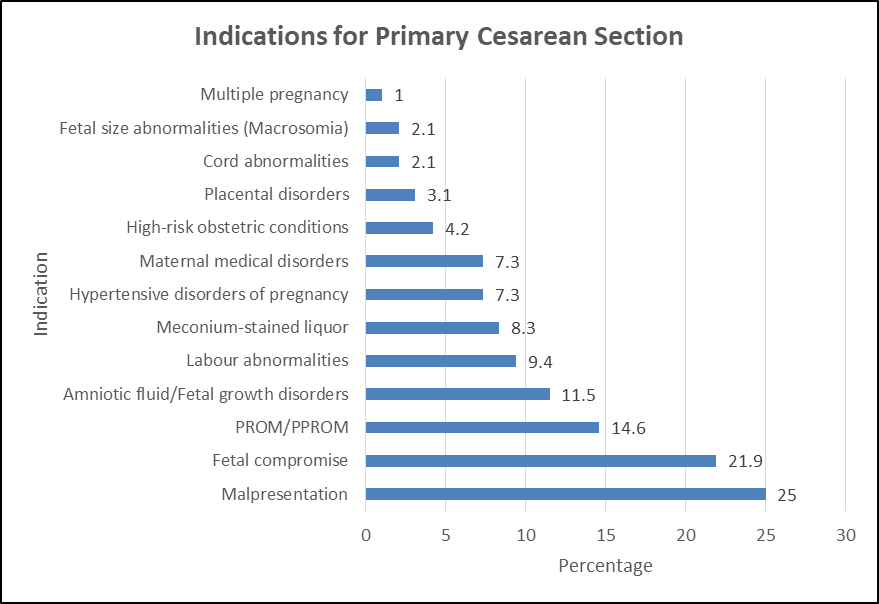
Figure 1. Indications for Primary Cesarean Section (N = 96)
Table 3. Neonatal Outcomes Following Primary Cesarean Section (N = 96)
|
Outcome |
n (%) |
|
Live birth |
96 (100.0) |
|
Term birth |
89 (92.7) |
|
Preterm birth |
7 (7.3) |
|
Meconium aspiration syndrome |
14 (14.6) |
|
Birth asphyxia |
7 (7.3) |
|
Prematurity |
16 (16.7) |
|
IUGR |
6 (6.3) |
Table 4. Univariate Logistic Regression Analysis for Predictors of Prematurity
|
Variable |
OR |
95% CI |
p-value |
|
Age (per year) |
1.08 |
0.98–1.20 |
0.124 |
|
Gravidity ≥4 |
1.72 |
0.48–6.17 |
0.407 |
|
Hypertensive disorders |
0.70 |
0.08–6.08 |
0.742 |
|
PROM/PPROM |
5.40 |
1.55–18.81 |
0.008 |
|
Fetal compromise |
0.82 |
0.09–7.34 |
0.861 |
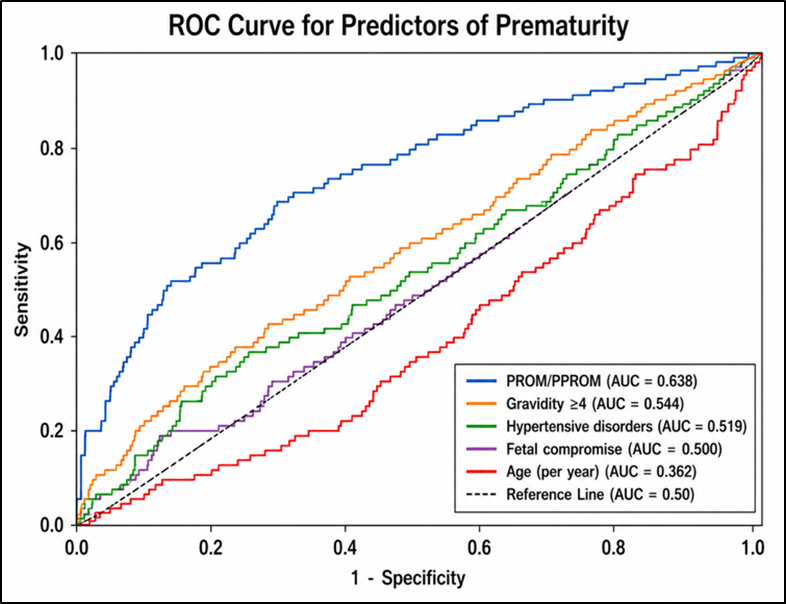
Figure 2. Univariate Logistic Regression Analysis for Predictors of Prematurity
Table 5. Multivariable Logistic Regression Analysis for Independent Predictors of Prematurity
|
Variable |
Adjusted OR |
95% CI |
p-value |
|
Age (per year) |
1.10 |
0.99–1.23 |
0.070 |
|
Hypertensive disorders |
1.15 |
0.12–11.19 |
0.905 |
|
PROM/PPROM |
7.51 |
1.89–29.86 |
0.004 |
|
Fetal compromise |
0.46 |
0.04–4.94 |
0.519 |
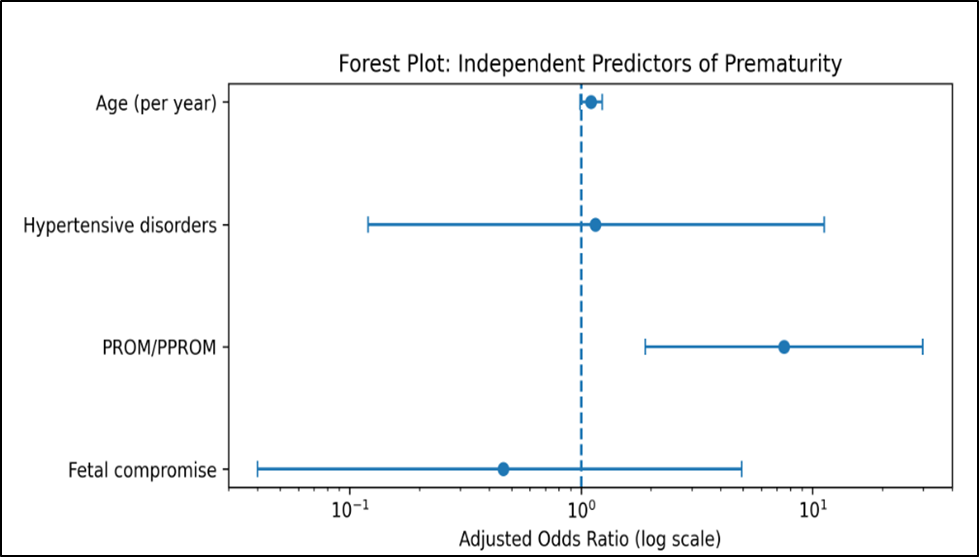
Figure 3. Multivariable Logistic Regression Analysis for Independent Predictors of Prematurity
Table 6. Association Between Indications for Primary Cesarean Section and Neonatal Outcomes
|
Indication |
Total (n) |
MAS n (%) |
Birth Asphyxia n (%) |
Prematurity n (%) |
IUGR n (%) |
|
Malpresentation |
22 |
1 (4.5) |
1 (4.5) |
3 (13.6) |
0 |
|
Fetal compromise |
21 |
2 (9.5) |
5 (23.8) |
4 (19.0) |
5 (23.8) |
|
PROM/PPROM |
8 |
0 |
0 |
3 (37.5) |
0 |
|
Amniotic fluid/Fetal growth disorders |
4 |
0 |
0 |
1 (25.0) |
1 (25.0) |
|
Labour abnormalities |
11 |
0 |
0 |
0 |
0 |
|
Meconium-stained liquor |
12 |
11 (91.7) |
1 (8.3) |
2 (16.7) |
0 |
|
Hypertensive disorders |
4 |
0 |
0 |
0 |
0 |
|
Maternal medical disorders |
3 |
0 |
0 |
1 (33.3) |
0 |
|
Placental disorders |
4 |
0 |
0 |
1 (25.0) |
0 |
|
High-risk obstetric conditions |
2 |
0 |
0 |
0 |
0 |
|
Fetal size abnormalities |
2 |
0 |
0 |
1 (50.0) |
0 |
|
Multiple pregnancy |
1 |
0 |
0 |
0 |
0 |
DISCUSSION:
In the present study, the mean maternal age was 28.10 ± 5.13 years, with the majority of women (41.7%) belonging to the 24–29 years age group. All participants were multiparous, booked antenatal cases, and underwent emergency cesarean section. These findings are comparable to those reported by Meena et al. [12], who observed that the majority of women (57.7%) were aged 25–30 years. Similarly, Himabindu and Tripurasundari [13] and Hangarga and Yattinamani [14] also found that primary cesarean section was most frequently performed in women in the third decade of life, reflecting the peak reproductive age.The most common indication for primary cesarean section in our study was malpresentation (25.0%), followed by fetal compromise (21.9%) and PROM/PPROM (14.6%).
These findings are in agreement with those of Rajput et al. [8], who reported malpresentation (29.8%) as the leading indication, followed by fetal distress (18.4%). Meena et al. [12] similarly observed malpresentation (26.9%) as the most common indication, whereas Aftab et al. [15] identified fetal distress as the predominant indication for primary cesarean section. Somalwar and Bansal [16] and Hangarga and Yattinamani [14] also reported malpresentation and fetal distress among the leading indications. The variation in indications across studies may be attributed to differences in referral patterns, obstetric practices, and patient characteristics.In the present study, all pregnancies resulted in live births, with 92.7% delivered at term and 7.3% delivered preterm. Prematurity (16.7%) was the most frequent neonatal complication, followed by meconium aspiration syndrome (14.6%), birth asphyxia (7.3%), and intrauterine growth restriction (6.3%). No stillbirths, neonatal sepsis, or convulsions were observed. Similar favorable neonatal outcomes have been reported by Hangarga and Yattinamani [14], who documented high live-birth rates with relatively low neonatal morbidity.
Meena et al. [12] also reported that most neonates had satisfactory outcomes, although prematurity and respiratory complications were more frequent in emergency cesareandeliveries.A noteworthy finding of the present study was that PROM/PPROM was the only independent predictor of prematurity. On multivariable analysis, PROM/PPROM increased the likelihood of prematurity by more than seven-fold (adjusted OR = 7.51, 95% CI: 1.89–29.86; p = 0.004). Maternal age, hypertensive disorders, and fetal compromise were not independently associated with prematurity. Although previous studies by Aftab et al. (2019) and Meena et al. [12primarily focused on indications rather than predictors, they similarly recognized PROM/PPROM as an important obstetric condition associated with adverse neonatal outcomes and preterm birth.The present study demonstrates that previous successful vaginal delivery does not eliminate the risk of cesarean section in subsequent pregnancies. Malpresentation and fetal compromise remain the leading indications for primary cesarean section, while PROM/PPROM is a significant predictor of prematurity. These findings emphasize the importance of careful antenatal surveillance, timely referral, and vigilant intrapartum monitoring of multiparous women to improve maternal and neonatal outcomes.
CONCLUSION:
Primary cesarean section in multiparous women was most commonly performed for malpresentation and fetal compromise, with favorable overall maternal and neonatal outcomes. PROM/PPROM was identified as the only independent predictor of prematurity, emphasizing the importance of timely antenatal surveillance and appropriate intrapartum management in this traditionally low-risk group.
Limitations
This was a single-center retrospective study with a relatively small sample size, which may limit the generalizability of the findings. In addition, the retrospective design relied on the completeness and accuracy of hospital records, limiting the evaluation of certain clinical variables and long-term maternal and neonatal outcomes.
REFERENCES:
1. Berghella V, Baxter JK, Chauhan SP. Evidence-based surgery for cesarean delivery. Am J Obstet Gynecol. 2005;193(5):1607-17.
2. World Health Organization. WHO statement on caesarean section rates. Geneva: World Health Organization; 2015.
3. Laxmi T, Goma DNS, Kumariniraula H, Roshnitui T, Binod A. Rising cesarean section rates in Nepal: question of safety and integrity on obstetric emergency practice. J GynecolWomens Health. 2017;7(4):555716.
4. Desai E, Leuva H, Leuva B, Kanani M. A study of primary caesarean section in multipara. Int J Reprod Contracept Obstet Gynecol. 2013;2(3):320-4.
5. Solomons B. The dangerous multipara. Lancet. 1934;224(5784):8-11.
6. Feeney JK. Complications associated with high multiparity: A clinical study of 518 cases. J Ir Med Assoc. 1953;32(188):36-55.
7. Rao HJ, Rampure N. Study of primary caesarean section in multiparous women. J Evol Med Dent Sci. 2013;2(24):4414-8.
8. Rajput N, Singh P, Verma YS. Study of primary caesarean section in multigravida patients. Int J Reprod Contracept Obstet Gynecol. 2018;7(1):185-91.
9. Nene DK, Baheti TC, Bangal VB. Indications of primary caesarean section in multiparous women in patients of rural area of Western Maharashtra, India. Int J Reprod Contracept Obstet Gynecol. 2020;9(5):1950-3.
10. Sams S, Cicily TJ, Balachandran A. Institutional study of primary cesarean section among multigravida. J Med Sci Clin Res. 2017;5(4):20713-20.
11. Shah RK, Ansari S, Mushtaq R, Shah P, Shrestha R, Deep JP. Primary caesarean section among multiparous pregnant women visiting a tertiary care centre: A descriptive cross-sectional study. J Nepal Med Assoc. 2022;60(254):848-52.
12. Meena N, Parveen S, Nagar T, Meena NK. Study of indications of primary cesarean section in multigravida patients: A retrospective study. Asian J Med Sci. 2022;13(7):145-8.
13. Himabindu P, Tripurasundari M. Primary caesarean section in multipara. IOSR J Dent Med Sci. 2015;14(5):22-5.
14. Hangarga US, Yattinamani B. Clinical study of primary cesarean section in multiparous women. Int J Clin ObstetGynaecol. 2020;4(2):32-4.
15. Aftab S, Ali N, Saleh F, Ghafoor SG, Mahesh A, Memon S. Indications of primary cesarean section in multipara. J Bahria Univ Med Dent Coll. 2019;9(2):105-8.
16. Somalwar S, Bansal R. Study of primary cesarean section in multiparous women in central India. J Krishna Inst Med Sci Univ. 2020;9(4):1-10.