Intravenous butorphanol versus intravenous tramadol for postoperative analgesia after elective surgery under general anaesthesia: a randomised comparative study
- Rini R Dsouza , Assistant Professor, Department of Anaesthesiology and Critical Care Medicine, Subbaiah Institute of Medical Sciences, Purale, Shivamogga – 577222, Karnataka, India.
- Rouhi Kauser , Assistant Professor, Department of Anaesthesiology and Critical Care Medicine, Subbaiah Institute of Medical Sciences, Purale, Shivamogga – 577222, Karnataka, India.
- Thrupthi B P , Assistant Professor, Department of Anaesthesiology and Critical Care Medicine, Subbaiah Institute of Medical Sciences, Purale, Shivamogga – 577222, Karnataka, India.
Article Information:
Abstract:
Background: Untreated pain after surgery slows recovery, unsettles haemodynamics and distresses patients, yet the ideal single-agent analgesic remains a matter of preference. Tramadol is widely used but frequently causes nausea and vomiting; butorphanol, an agonist–antagonist opioid with a favourable regulatory status, is a plausible alternative. We compared the two given intravenously as single doses for early postoperative analgesia. Materials and Methods: Sixty adults aged 18–60 years of American Society of Anesthesiologists (ASA) physical status I or II undergoing elective surgery under general anaesthesia were randomly allocated to receive intravenous butorphanol 2 mg (Group B, n = 30) or tramadol 50 mg (Group T, n = 30) ten minutes before extubation. Anaesthesia was standardised. Pain was scored on a 10 cm visual analogue scale (VAS) at fixed intervals for eight hours; onset and duration of analgesia, heart rate, blood pressure, oxygen saturation, adverse effects and the need for rescue diclofenac were recorded by an assessor unaware of allocation. Groups were compared with the unpaired t test and the chi-square (or Fisher's exact) test. Results: The groups were comparable in age and sex. Analgesia began sooner with butorphanol (11.56 ± 2.40 versus 13.87 ± 3.40 min; mean difference 2.31 min, 95% CI 0.79–3.83; p = 0.004) and lasted far longer (343.50 ± 23.60 versus 233.80 ± 24.30 min; mean difference 109.7 min, 95% CI 97.3–122.1; p < 0.001). VAS scores were significantly lower with butorphanol from the second postoperative hour to the eighth. Nausea (6.7% versus 56.7%) and vomiting (0% versus 36.7%) were far less common with butorphanol (both p < 0.001), a difference equivalent to one episode of nausea prevented for every two patients treated. Pruritus (30.0% versus 13.3%; p = 0.21) and the need for rescue analgesia (10.0% versus 30.0%; p = 0.10) did not differ significantly. Systolic pressure, heart rate and oxygen saturation were similar between groups; diastolic pressure ran a few millimetres of mercury higher in the tramadol group. Conclusion: A single intravenous dose of butorphanol 2 mg gave faster, longer and smoother postoperative analgesia than tramadol 50 mg, with markedly less nausea and vomiting and no adverse effect on haemodynamics or oxygenation. Its main drawback was a non-significant excess of pruritus. For early single-dose analgesia after general anaesthesia, butorphanol is an effective and well-tolerated alternative to tramadol.
Keywords:
Article :
Introduction:
Pain after surgery is not merely an unpleasant sensation to be endured until it passes. It begins with the incision and persists until tissue heals, and while it lasts it drives tachycardia and hypertension, limits deep breathing and coughing, delays mobilisation and colours the patient's memory of the whole operation [1,2]. Controlling it well is therefore part of good anaesthetic care rather than an optional courtesy, and the search for a simple, reliable analgesic with few side effects is an old one that has not entirely ended.
Opioids remain central to that task, but the drug that relieves pain best is not always the drug patients tolerate best. Tramadol, a centrally acting analgesic with weak µ-opioid agonism and additional inhibition of noradrenaline and serotonin reuptake, has become one of the most widely used postoperative analgesics in this setting because it causes little respiratory depression and has modest haemodynamic effects [3,4]. Its weakness is well known: nausea and vomiting are common and often distressing, and they can undo much of the comfort the analgesia provides [5].
Butorphanol offers a different profile. It is an agonist at κ-opioid receptors and a partial antagonist at µ-receptors, a combination that produces effective analgesia with a ceiling on respiratory depression and, in principle, less of the nausea associated with pure µ-agonists [6,7]. It has a further practical advantage in the Indian context: it is not bound by the same restrictive narcotic regulations as conventional opioids, which makes it easier to stock and use in smaller hospitals and primary centres where controlled-drug logistics are a genuine barrier [8].
Most of the comparison between these two drugs has been made by the epidural or regional route, or with the drugs used as adjuvants to local anaesthetics, where butorphanol has generally provided longer analgesia and greater patient satisfaction than tramadol [9,10,11]. Far less has been published on the simplest and most widely applicable comparison: the two drugs given as single intravenous doses for early analgesia after general anaesthesia, which is how they are most often used in day-to-day practice. We therefore compared intravenous butorphanol 2 mg with intravenous tramadol 50 mg in adults undergoing elective surgery under general anaesthesia, with respect to the onset and duration of analgesia, the quality of pain relief, haemodynamic stability and adverse effects.
Materials and Methods:
Design, setting and ethics
This prospective, randomised, comparative study was carried out in the Department of Anaesthesiology and Critical Care Medicine of the tertiary care teaching hospital, over a period of 18 months. The protocol was approved by the Institutional Ethics Committee and written informed consent was obtained from every participant during the pre-anaesthetic visit.
Participants
Adults of either sex aged 18–60 years, of ASA physical status I or II and modified Mallampati class I or II, scheduled for elective surgery under general anaesthesia, were eligible. Patients were excluded if they were outside this age range or ASA class, had a Mallampati class of III or IV, had a known allergy to butorphanol or tramadol, had a history of opioid or other substance misuse, had impaired renal, hepatic or biliary function, were taking hypnotics, sedatives or other central nervous system depressants, or declined to participate. Routine haemoglobin, blood sugar, blood urea and serum creatinine were checked in all patients, with electrocardiography and chest radiography where indicated.
Randomisation and blinding
Sixty patients were allocated in equal numbers to the two groups using a random sequence: Group B received intravenous butorphanol 2 mg and Group T received intravenous tramadol 50 mg. The study drug was prepared and given by an anaesthesiologist not otherwise involved in the assessment; all postoperative pain scores, haemodynamic readings and adverse-effect data were recorded by a separate observer who was unaware of which drug had been given.
Anaesthetic technique
One hour before surgery patients received intravenous ondansetron 4 mg. In theatre, electrocardiography, non-invasive blood pressure and pulse oximetry were established and baseline values recorded. After preoxygenation, patients were premedicated with glycopyrrolate 0.01 mg/kg and pentazocine 0.5 mg/kg, induced with propofol 2 mg/kg and intubated after succinylcholine. Anaesthesia was maintained according to the department's standard practice. Ten minutes before extubation the allocated study drug was given: butorphanol 2 mg in Group B or tramadol 50 mg in Group T.
Outcome measures
The primary outcomes were the onset and duration of analgesia. Onset was defined as the interval from intravenous administration to the drug's peak analgesic effect, and duration as the interval from administration until the patient next complained of pain. Pain was assessed on a 10 cm visual analogue scale (VAS), anchored at “no pain” and “worst pain”, at 0, 5, 10 and 30 minutes and at 1, 2, 3, 4, 5, 6, 7 and 8 hours after the drug was given. A VAS score above 4 triggered rescue analgesia with intravenous diclofenac 75 mg. Heart rate, systolic and diastolic blood pressure and peripheral oxygen saturation were recorded at the same time points. Nausea, vomiting and pruritus were noted, present or absent, over the first eight hours, together with the need for rescue analgesia.
Sample size and statistical analysis
The sample size of 30 patients per group was based on the expected difference in the mean duration of analgesia between the two drugs, using the conventional formula for comparing two means at a two-sided significance level of 0.05 with 80% power. Data were analysed with SPSS version 25 (IBM Corp., Armonk, NY, USA). Categorical variables are expressed as frequencies and percentages and compared with the chi-square test, with Fisher's exact test where expected cell counts were small; continuous variables are expressed as mean ± standard deviation and compared with the unpaired t test. Mean differences for the primary outcomes are reported with 95% confidence intervals. A two-sided p value below 0.05 was considered significant.
Results:
All 60 randomised patients completed the study and were analysed in their allocated groups.
Baseline characteristics
The groups were well matched. The mean age was 39.13 ± 13.59 years in Group B and 42.40 ± 11.30 years in Group T (p = 0.316), and each group contained 10 men and 20 women (p = 1.0) (Table 1).
Table 1. Baseline characteristics of the two groups
|
Characteristic |
Group B (n = 30) |
Group T (n = 30) |
p |
|
Age, years (mean ± SD) |
39.13 ± 13.59 |
42.40 ± 11.30 |
0.316 |
|
Male, n (%) |
10 (33.3) |
10 (33.3) |
1.0 |
|
Female, n (%) |
20 (66.7) |
20 (66.7) |
|
Group B, butorphanol 2 mg; Group T, tramadol 50 mg. Age compared by unpaired t test; sex by chi-square test
Onset and duration of analgesia
Butorphanol acted faster and lasted substantially longer. The mean onset of analgesia was 11.56 ± 2.40 minutes with butorphanol against 13.87 ± 3.40 minutes with tramadol, a difference of 2.31 minutes (95% CI 0.79–3.83; p = 0.004). The mean duration of analgesia was 343.50 ± 23.60 minutes with butorphanol against 233.80 ± 24.30 minutes with tramadol — a difference of 109.7 minutes, or nearly two extra hours of pain relief (95% CI 97.3–122.1; p < 0.001) (Table 2, Figure 1).
Table 2. Onset and duration of analgesia
|
Variable |
Group B (n = 30) |
Group T (n = 30) |
p value |
|
Onset of analgesia (min) |
11.56 ± 2.40 |
13.87 ± 3.40 |
0.004* |
|
Duration of analgesia (min) |
343.50 ± 23.60 |
233.80 ± 24.30 |
< 0.001* |
Values are mean ± SD. Unpaired t test. Mean difference: onset 2.31 min (95% CI 0.79–3.83); duration 109.7 min (95% CI 97.3–122.1). *Statistically significant.
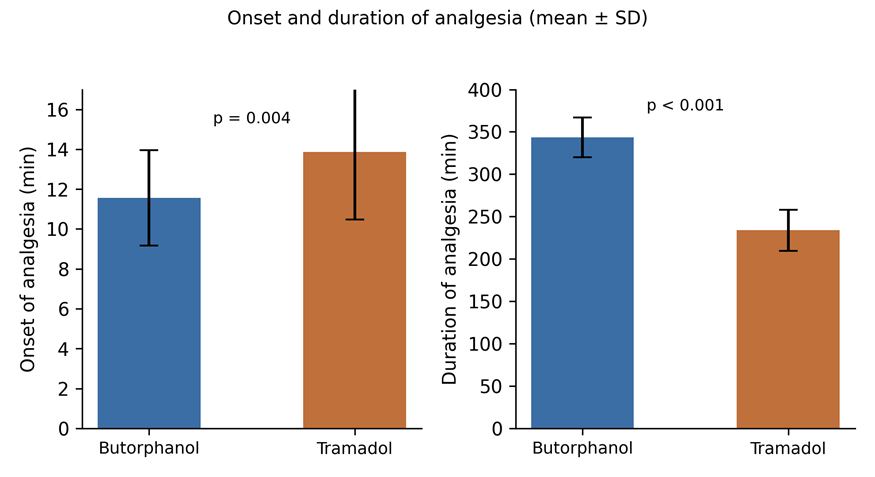
Figure 1. Onset and duration of analgesia (mean ± SD). Butorphanol acted about two minutes sooner (p = 0.004)
Pain scores
Baseline VAS scores immediately after drug administration were similar (2.23 ± 0.43 in Group B, 2.20 ± 0.71 in Group T). Scores were significantly lower with butorphanol at 10 minutes and again from the second postoperative hour onward: at 2, 3, 4, 5, 6, 7 and 8 hours the differences were all significant (p ≤ 0.004), reflecting the longer duration of action. By eight hours the mean VAS was 3.04 ± 0.87 with butorphanol and 3.90 ± 0.45 with tramadol. Scores at baseline, 30 minutes and one hour did not differ; at 30 minutes and one hour both groups were essentially pain-free, so no meaningful comparison was possible (Table 3, Figure 2).
Table 3. Visual analogue scale scores over time
|
Time |
Group B (mean ± SD) |
Group T (mean ± SD) |
p value |
|
0 min |
2.23 ± 0.43 |
2.20 ± 0.71 |
NS |
|
5 min |
0.20 ± 0.41 |
1.20 ± 0.48 |
NS |
|
10 min |
0.00 ± 0.00 |
0.40 ± 0.50 |
0.001* |
|
30 min |
0.00 ± 0.00 |
0.00 ± 0.00 |
— |
|
1 h |
0.00 ± 0.00 |
0.07 ± 0.37 |
NS |
|
2 h |
0.00 ± 0.00 |
0.47 ± 0.82 |
0.004* |
|
3 h |
0.07 ± 0.25 |
1.27 ± 1.14 |
0.001* |
|
4 h |
0.37 ± 0.61 |
2.17 ± 1.18 |
0.001* |
|
5 h |
1.20 ± 1.10 |
2.97 ± 1.21 |
0.001* |
|
6 h |
2.03 ± 1.27 |
3.33 ± 0.82 |
0.001* |
|
7 h |
2.71 ± 1.12 |
3.52 ± 0.60 |
0.002* |
|
8 h |
3.04 ± 0.87 |
3.90 ± 0.45 |
0.001* |
Values are mean ± SD. Unpaired t test. At 30 min both means were zero, so no test was possible. NS, not significant. *Statistically significant.
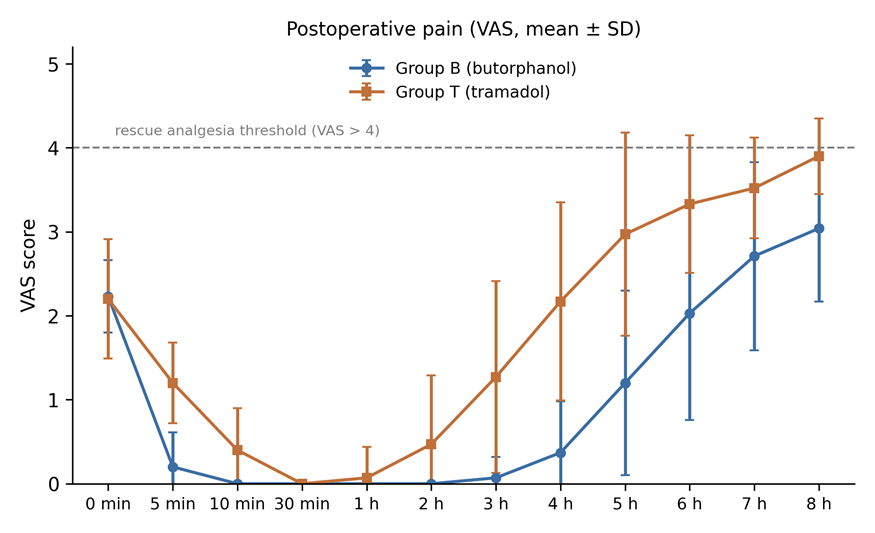
Figure 2. Visual analogue scale scores (mean ± SD) over eight hours. Scores were significantly lower with butorphanol from the second postoperative hour onward, mirroring its longer duration of action. The dashed line marks the VAS > 4 threshold for rescue analgesia.
Haemodynamics and oxygenation
Systolic blood pressure did not differ between the groups for most of the study, becoming marginally higher in the tramadol group only from the fifth hour onward (Table 4). Diastolic blood pressure was consistently a few millimetres of mercury higher in the tramadol group across most time points (Table 5, Figure 3). Heart rate was comparable throughout, differing only at one hour (p = 0.047), and oxygen saturation remained above 98% in both groups at every time point with no significant difference (Table 6). No patient in either group developed respiratory depression, hypotension or any haemodynamic disturbance requiring treatment.
Table 4. Systolic blood pressure (mmHg) over time
|
Time |
Group B |
Group T |
p value |
|
0 min |
118.10 ± 10.11 |
123.43 ± 12.58 |
0.075 |
|
30 min |
120.93 ± 7.77 |
123.73 ± 10.40 |
0.242 |
|
1 h |
120.60 ± 7.70 |
124.20 ± 10.44 |
0.134 |
|
2 h |
120.47 ± 6.86 |
124.37 ± 9.48 |
0.073 |
|
4 h |
121.33 ± 6.42 |
124.30 ± 9.67 |
0.167 |
|
5 h |
120.87 ± 6.23 |
125.07 ± 9.08 |
0.041* |
|
6 h |
119.97 ± 6.12 |
126.27 ± 8.37 |
0.002* |
|
7 h |
120.70 ± 5.44 |
126.33 ± 7.90 |
0.002* |
|
8 h |
120.37 ± 5.70 |
126.27 ± 8.18 |
0.002* |
Values are mean ± SD. Unpaired t test. Selected time points shown; intermediate readings were non-significant. *Statistically significant.
Table 5. Diastolic blood pressure (mmHg) over time
|
Time |
Group B |
Group T |
p value |
|
0 min |
71.10 ± 10.00 |
78.40 ± 9.46 |
0.005* |
|
10 min |
72.13 ± 8.42 |
79.20 ± 8.18 |
0.002* |
|
30 min |
73.67 ± 7.93 |
78.83 ± 8.29 |
0.017* |
|
1 h |
73.00 ± 7.67 |
79.47 ± 7.20 |
0.001* |
|
2 h |
74.10 ± 6.55 |
79.47 ± 7.05 |
0.003* |
|
4 h |
73.50 ± 5.24 |
79.10 ± 8.55 |
0.004* |
|
6 h |
73.33 ± 4.80 |
80.20 ± 6.65 |
< 0.001* |
|
8 h |
74.23 ± 5.68 |
79.70 ± 6.04 |
0.001* |
Values are mean ± SD. Unpaired t test. Selected time points shown. *Statistically significant.
Table 6. Heart rate and oxygen saturation (representative time points)
|
Variable / time |
Group B |
Group T |
p value |
|
Heart rate, 0 min (beats/min) |
78.10 ± 8.97 |
81.23 ± 11.09 |
0.234 |
|
Heart rate, 1 h (beats/min) |
78.17 ± 8.08 |
83.87 ± 13.12 |
0.047* |
|
Heart rate, 8 h (beats/min) |
79.17 ± 7.32 |
82.03 ± 9.66 |
0.200 |
|
SpO₂, 0 min (%) |
98.37 ± 0.81 |
98.17 ± 0.91 |
0.373 |
|
SpO₂, 8 h (%) |
98.40 ± 0.72 |
98.23 ± 0.94 |
0.443 |
Values are mean ± SD. Unpaired t test. Heart rate differed significantly only at 1 h; SpO₂ did not differ at any time point. *Statistically significant.
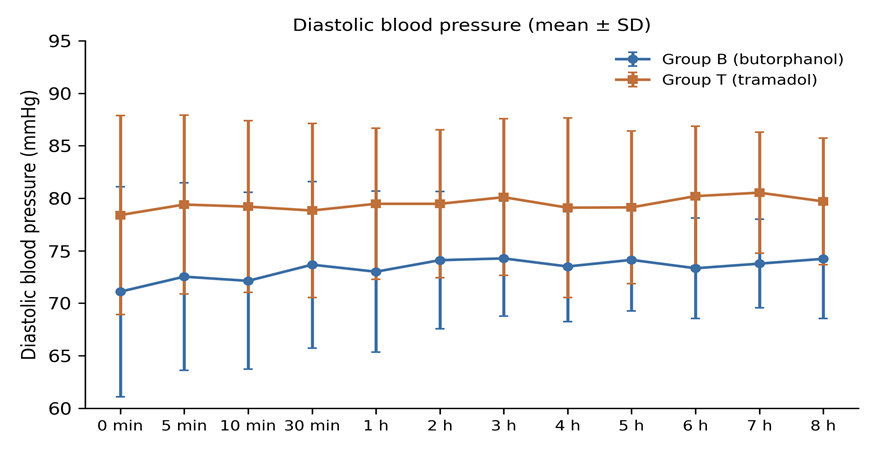
Figure 3. Diastolic blood pressure (mean ± SD) over time. Values ran a few millimetres of mercury higher in the tramadol group at most time points; the differences were statistically significant but of limited clinical importance.
Adverse effects and rescue analgesia
The tolerability difference was the clearest result of the study. Nausea occurred in 17 of 30 tramadol patients (56.7%) but only 2 of 30 butorphanol patients (6.7%), and vomiting in 11 tramadol patients (36.7%) against none in the butorphanol group; both differences were highly significant (p < 0.001). In absolute terms this is one episode of nausea prevented for every two patients given butorphanol rather than tramadol. Pruritus went the other way, occurring in 9 butorphanol patients (30.0%) versus 4 tramadol patients (13.3%), but this difference was not significant (p = 0.21). Rescue analgesia was needed by 3 butorphanol patients (10.0%) and 9 tramadol patients (30.0%); the difference, though clinically appreciable, did not reach significance in this sample (p = 0.10) (Tables 7 and 8, Figure 4).
Table 7. Adverse effects within 8 hours
|
Adverse effect |
Group B, n (%) |
Group T, n (%) |
p value |
|
Nausea |
2 (6.7) |
17 (56.7) |
< 0.001* |
|
Vomiting |
0 (0.0) |
11 (36.7) |
< 0.001* |
|
Pruritus |
9 (30.0) |
4 (13.3) |
0.209 |
Chi-square test, with Fisher's exact test where expected counts were small. Number needed to treat with butorphanol to prevent one episode of nausea, 2.0; vomiting, 2.7. *Statistically significant.
Table 8. Need for rescue analgesia within 8 hours
|
Rescue analgesia |
Group B, n (%) |
Group T, n (%) |
p value |
|
Required |
3 (10.0) |
9 (30.0) |
0.184 |
|
Not required |
27 (90.0) |
21 (70.0) |
|
Chi-square test. Rescue analgesia was intravenous diclofenac 75 mg, given for VAS > 4.
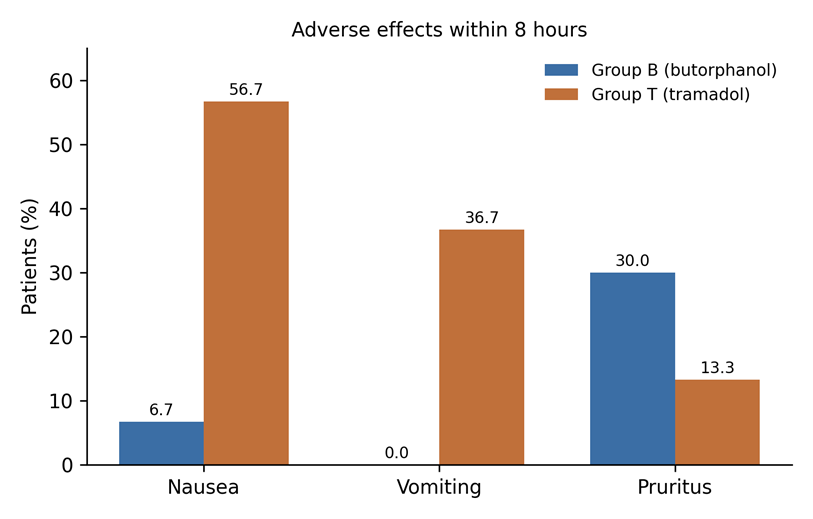
Figure 4. Adverse effects within eight hours. Nausea and vomiting were far less frequent with butorphanol (both p < 0.001); pruritus was more common with butorphanol but the difference was not significant (p = 0.21).
Discussion:
In this trial a single intravenous dose of butorphanol 2 mg outperformed tramadol 50 mg on every measure of analgesia that mattered: it began working sooner, it lasted almost two hours longer, it held pain scores lower through the second half of the observation period, and it did so while causing far less nausea and vomiting. The only respect in which tramadol had the advantage was pruritus, and that difference was not statistically significant. For the common clinical task of providing early single-dose analgesia after general anaesthesia, these results make a straightforward case for butorphanol.
The direction of the findings agrees with the wider literature, most of which has studied the two drugs by the epidural or regional route. Gupta and colleagues, comparing epidural butorphanol and tramadol, found better quality of analgesia and greater patient satisfaction with butorphanol despite a broadly similar duration [9], and studies using the drugs as adjuvants to local anaesthetics have generally reported longer analgesia with butorphanol [10,11]. Our contribution is to show that the same advantage holds for the simpler and more widely used intravenous route, where head-to-head data have been sparser. The magnitude of the duration difference we observed — close to 110 minutes — is larger than that reported in several regional studies, which is plausible given that a single intravenous bolus produces a cleaner pharmacological comparison than two drugs mixed with a local anaesthetic.
The pharmacology explains the pattern. Butorphanol's κ-agonist action provides potent analgesia, and its long elimination relative to a 50 mg dose of tramadol accounts for the extended duration [6,7]. Tramadol's propensity to cause nausea and vomiting is well documented and is the most common reason patients dislike it [5]; our incidence of 56.7% nausea and 36.7% vomiting is at the higher end of published figures but not out of keeping with them, and the near-absence of both with butorphanol is the study's most clinically useful observation. Postoperative nausea and vomiting is not a trivial endpoint: it delays discharge, risks aspiration and wound dehiscence, and is consistently rated by patients as among the most unpleasant parts of their perioperative experience. A number needed to treat of two to prevent one episode of nausea is a large effect by any standard.
The excess of pruritus with butorphanol, though not significant here, is consistent with its opioid receptor activity and deserves mention rather than dismissal; in a larger sample it might well reach significance, and it is a recognised trade-off of κ-agonist analgesia. The haemodynamic findings were reassuringly unremarkable. The slightly higher diastolic pressures in the tramadol group are of doubtful clinical importance and may reflect its known noradrenergic activity, and oxygen saturation was well maintained in both groups, consistent with the ceiling effect butorphanol has on respiratory depression.
The trend towards a lower rescue-analgesia requirement with butorphanol (10% versus 30%) points in the same direction as the primary outcomes but did not reach significance, almost certainly because the study was powered for the difference in duration of analgesia rather than for a binary outcome as infrequent as rescue use. A study designed around that endpoint would need to be considerably larger. This is a useful reminder that the absence of statistical significance for the rescue and pruritus comparisons reflects limited power, not evidence of no difference.
LIMITATIONS
Several limitations qualify these conclusions. The study was conducted at a single centre in 60 patients, so the secondary comparisons — pruritus and rescue analgesia in particular — were underpowered, and the wide confidence intervals around those estimates should be read with that in mind. Although outcome assessment was blinded, the method of randomisation and allocation concealment is not described in detail in the source protocol and should be specified precisely at submission, since editors and reviewers scrutinise this closely. A heterogeneous mix of elective surgical procedures was included without stratification by operation, and the intensity and site of surgical pain differ between operations; this broadens applicability but adds variability. Observation ended at eight hours, so nothing can be said about analgesia or adverse effects beyond that window, and sedation — a relevant effect of both drugs, and one emphasised in earlier butorphanol studies — was not formally scored. Finally, a single fixed dose of each drug was compared, so the results cannot be extrapolated to other doses or to repeated or infusion regimens.
Implications
For early postoperative analgesia after general anaesthesia, a single intravenous dose of butorphanol 2 mg is an effective and well-tolerated alternative to tramadol 50 mg, offering longer pain relief and substantially less nausea and vomiting at the cost of a little more pruritus. Its regulatory accessibility makes it particularly attractive for smaller hospitals and primary care settings. Larger multicentre trials, with explicit allocation concealment, formal sedation scoring, stratification by surgical procedure and longer follow-up, would strengthen the case and clarify the smaller differences that this study could only suggest.
Conclusion:
A single intravenous dose of butorphanol 2 mg provided faster onset, longer duration and better-sustained postoperative analgesia than tramadol 50 mg after elective surgery under general anaesthesia, with markedly less nausea and vomiting and no adverse effect on haemodynamics or oxygenation. Butorphanol, which is also easier to obtain than conventional opioids, is a clinically preferable choice for early single-dose postoperative analgesia in this setting, with pruritus its only notable disadvantage.
ABBREVIATIONS
ASA – American Society of Anesthesiologists; CI – confidence interval; DBP – diastolic blood pressure; HR – heart rate; NNT – number needed to treat; SBP – systolic blood pressure; SD – standard deviation; SpO₂ – peripheral oxygen saturation; VAS – visual analogue scale.
References:
1. Kehlet H, Dahl JB. The value of "multimodal" or "balanced analgesia" in postoperative pain treatment. Anesth Analg. 1993;77(5):1048-56.
2. Gan TJ. Poorly controlled postoperative pain: prevalence, consequences, and prevention. J Pain Res. 2017;10:2287-98.
3. Scott LJ, Perry CM. Tramadol: a review of its use in perioperative pain. Drugs. 2000;60(1):139-76.
4. Grond S, Sablotzki A. Clinical pharmacology of tramadol. Clin Pharmacokinet. 2004;43(13):879-923.
5. Bravo L, Mico JA, Berrocoso E. Discovery and development of tramadol for the treatment of pain. Expert Opin Drug Discov. 2017;12(12):1281-91.
6. Commiskey S, Fan LW, Ho IK, Rockhold RW. Butorphanol: effects of a prototypical agonist-antagonist analgesic on kappa-opioid receptors. J Pharmacol Sci. 2005;98(2):109-16.
7. Gillis JC, Benfield P, Goa KL. Transnasal butorphanol: a review of its pharmacodynamic and pharmacokinetic properties, and therapeutic potential in acute pain management. Drugs. 1995;50(1):157-75.
8. Vogelsang J, Hayes SR. Butorphanol tartrate (Stadol): a review. J Post Anesth Nurs. 1991;6(2):129-35.
9. Gupta R, Kaur S, Singh S, Aujla KS. A comparison of epidural butorphanol and tramadol for postoperative analgesia using CSEA technique. J Anaesthesiol Clin Pharmacol. 2011;27(1):35-8.
10. Nedunchezhian I, Manikandan S. Comparative study of effectiveness of tramadol and butorphanol as adjuvants to levobupivacaine for supraclavicular brachial plexus block. Anesth Essays Res. 2019;13(3):536-41.
11. Chatrath V, Attri JP, Bala A, Khetarpal R, Ahuja D, Kaur S. Epidural ropivacaine with butorphanol versus tramadol for postoperative analgesia. J Anaesthesiol Clin Pharmacol. 2015;31(3):352-7.
12. Schulz KF, Altman DG, Moher D; CONSORT Group. CONSORT 2010 statement: updated guidelines for reporting parallel group randomised trials. BMJ. 2010;340:c332.
13. Revill SI, Robinson JO, Rosen M, Hogg MI. The reliability of a linear analogue for evaluating pain. Anaesthesia. 1976;31(9):1191-8.
14. Apfel CC, Läärä E, Koivuranta M, Greim CA, Roewer N. A simplified risk score for predicting postoperative nausea and vomiting. Anesthesiology. 1999;91(3):693-700.
15. Rawal N. Current issues in postoperative pain management. Eur J Anaesthesiol. 2016;33(3):160-71.