Bougie-guided versus conventional digital insertion of the BlockBuster™ laryngeal mask airway in adults: a randomised comparative study.
- Raveesh J R , Junior Resident, Department of Anaesthesiology and Critical Care Medicine, Subbaiah Institute of Medical Sciences, Purale, Shivamogga – 577222, Karnataka, India.
- Swetha Purohit , Professor, Department of Anaesthesiology and Critical Care Medicine, Subbaiah Institute of Medical Sciences, Purale, Shivamogga – 577222, Karnataka, India.
- Rouhi Kauser , Assistant Professor, Department of Anaesthesiology and Critical Care Medicine, Subbaiah Institute of Medical Sciences, Purale, Shivamogga – 577222, Karnataka, India.
- Srihari S S , Associate Professor, Department of Anaesthesiology and Critical Care Medicine, Subbaiah Institute of Medical Sciences, Purale, Shivamogga – 577222, Karnataka, India.
Article Information:
Abstract:
Background: The BlockBuster™ laryngeal mask airway (LMA) is a second-generation supraglottic airway device with a 95° angulated airway tube and a dedicated gastric drain channel. When the device is placed blindly by the digital route, the drain tube may come to lie away from the oesophageal inlet, which undermines the very feature that makes a second-generation device useful. Railroading the mask over a bougie already seated in the oesophagus corrects this alignment in other devices, but the technique has not been tested with the BlockBuster LMA. Materials and Methods: Eighty adults of either sex, aged 18–60 years, American Society of Anesthesiologists (ASA) physical status I or II and modified Mallampati class I or II, scheduled for elective surgery under general anaesthesia, were allocated in a 1:1 ratio to bougie-guided insertion (Group B) or conventional digital insertion (Group C) using a computer-generated sequence concealed in sequentially numbered opaque sealed envelopes. The primary outcome was success at the first insertion attempt. Secondary outcomes were the time taken to obtain an effective airway, the haemodynamic response, subjective ease of placement, ease of passing a Ryle’s tube through the drain channel, intraoperative airway events, and airway morbidity during the first 24 postoperative hours. All outcomes were recorded by an observer unaware of group allocation. Results: The device was placed at the first attempt in 38 of 40 patients (95.0%) in Group B and in 30 of 40 (75.0%) in Group C, a risk difference of 20.0% (95% CI 5.0–35.0); the distribution of attempts differed significantly between groups (p = 0.038). A Ryle’s tube passed easily through the drain channel in 95.0% of Group B against 50.0% of Group C (p<0.001). Gastric distension was seen in no patient in Group B and in 7 patients (17.5%) in Group C (p = 0.012), and sore throat at 24 hours in 7.5% versus 45.0% (p<0.001). The bougie-guided technique took longer at the first attempt (44.6 ± 5.7 s versus 36.4 ± 4.8 s, p<0.001) and produced higher heart rate and arterial pressure for the first three to five minutes, all of which settled by ten minutes. Oxygen saturation stayed above 98% in both groups at every time point, and no patient needed rescue tracheal intubation. Conclusion: Bougie guidance made first-attempt placement of the BlockBuster LMA more reliable, restored the drainage function of the device, and roughly halved airway trauma and postoperative sore throat. The price is about eight seconds of additional insertion time and a brief, self-limiting pressor response — a trade-off that seems worthwhile whenever gastric drainage matters or when a failed first attempt would be costly. Trial registration: The trail was prospectively registered in public trial registry (CTRI/2025/07/091221). The study was approved by the institutional ethics committee before enrolment.
Keywords:
Article :
INTRODUCTION:
Failure to secure the airway remains a leading cause of anaesthesia related morbidity. National audits and closed-claims reviews continue to place difficult or failed airway management among the leading causes of hypoxic brain injury and perioperative death, and they repeatedly show that the damage is done early — during the first few attempts, before help arrives [1,2]. Guidelines have responded by emphasising that the first attempt should also be the best attempt, whichever device is chosen [3].
Since Brain described the laryngeal mask in 1983, supraglottic airway devices have moved from a curiosity to the default airway for a large share of elective work [4,5]. Second-generation devices went a step further by adding a drain tube that separates the respiratory and alimentary tracts, allowing gastric contents to vent and a gastric tube to be passed [6,7]. That single design change is the reason many departments now use these devices where a tracheal tube would once have been mandatory [8,9].
The BlockBuster™ LMA (Tuoren Medical, China) belongs to this generation. Its airway tube is angulated at about 95° to follow the oropharyngeal curve, the cuff is designed to seal at relatively low intracuff volumes, and a separate channel drains the hypopharynx and accepts a gastric tube. Published work with the device has concentrated on its role as a conduit for tracheal intubation and on its sealing pressures, and it performs well in both roles [10,11,12].
What that literature does not settle is how the device should be introduced. The manufacturer’s digital technique is quick and needs no extra equipment, but it is a blind manoeuvre: the operator infers correct seating from resistance, chest movement and capnography, and cannot know whether the tip of the drain tube has actually reached the oesophageal inlet or has folded, rotated, or come to rest over the glottis. Malposition of this kind is easy to miss because ventilation may still be adequate; the loss is silent and only becomes apparent when a gastric tube will not pass or when the stomach inflates.
Bougie guidance was devised to remove that uncertainty. A bougie is passed through the drain tube into the oesophagus under direct vision, the mask is then railroaded over it, and the drain tube necessarily ends where the bougie is. In ProSeal devices the technique has consistently produced higher first-attempt success and better drain-tube alignment than digital or introducer-tool insertion, including under conditions of simulated difficult laryngoscopy [13–16]. Kerai et al. reported the same advantage for the LMA Protector™, with better oesophageal patency and less trauma than conventional placement [17].
Whether these results carry over to the BlockBuster LMA cannot simply be assumed. Its pronounced angulation, its shorter and stiffer drain channel and its distinct cuff profile all alter the way the device negotiates the palatopharyngeal curve, so insertion dynamics established for softer, less angulated masks may not apply. To our knowledge no randomised study has compared bougie-guided with conventional insertion of this device. We therefore designed this trial to test whether bougie guidance improves first-attempt success with the BlockBuster LMA, and to quantify what that gain costs in insertion time, haemodynamic disturbance and airway trauma.
MATERIALS AND METHODS:
Study design, setting and ethics
This prospective, randomised, comparative study was carried out in the Department of Anaesthesiology and Critical Care Medicine of the tertiary care teaching hospital, over a period of 18 months. The protocol was approved by the Institutional Ethics Committee and written informed consent was obtained from every participant during the pre-anaesthetic visit.
Participants
Adults of either sex aged 18–60 years, of ASA physical status I or II, with a modified Mallampati class of I or II and scheduled for elective surgery under general anaesthesia, were eligible. Patients were excluded if the body mass index exceeded 30 kg/m², if pregnant, if the airway was predicted to be difficult (modified Mallampati class III or IV), if there was any increased risk of aspiration (a full stomach, gastro-oesophageal reflux disease, reflux oesophagitis or hiatus hernia), if there was pre-existing pulmonary disease, or if the ASA status was III or IV.
Randomisation, allocation concealment and blinding
A computer-generated randomisation sequence in a 1:1 ratio assigned patients to Group B (bougie-guided insertion) or Group C (conventional digital insertion). Allocation was concealed in sequentially numbered, opaque, sealed envelopes, which were opened on the morning of surgery by a member of staff who had no part in performing the procedure or in assessing outcomes. The anaesthesiologist performing the insertion could not be blinded, for obvious reasons. The observer who recorded insertion times, haemodynamic values and complications was not present during insertion and was unaware of group assignment, as were the recovery-room and ward staff who assessed airway morbidity at 24 hours.
Anaesthetic technique
Standard fasting rules were applied — six hours for solids, four hours for non-clear liquids and two hours for clear fluids. On arrival in theatre an 18-gauge cannula was sited and routine monitoring established with electrocardiography, non-invasive blood pressure and pulse oximetry; baseline values were recorded before any drug was given. All patients received intravenous ondansetron 0.1 mg/kg, midazolam 0.05 mg/kg, glycopyrrolate 0.01 mg/kg and fentanyl 2 µg/kg. After preoxygenation with 100% oxygen at 8 L/min for three to five minutes, anaesthesia was induced with propofol 2 mg/kg and vecuronium 0.1 mg/kg, and the lungs were ventilated by facemask for three minutes with oxygen and nitrous oxide (50:50) and isoflurane titrated to a minimum alveolar concentration of 1.2. The BlockBuster LMA was sized according to the manufacturer’s weight-based recommendation, the cuff was fully deflated, and the posterior surface was lubricated with water-soluble jelly.
Insertion techniques
Group C (conventional digital technique). The device was held like a pen with the index finger seated in the introducer strap. The cuff tip was pressed against the hard palate and advanced along the palatopharyngeal curve, keeping contact with the palate, using flexion of the wrist and extension of the index finger until definite resistance was felt. The non-dominant hand steadied the airway tube while the index finger was withdrawn, and the cuff was then inflated to the volume recommended by the manufacturer.
Group B (bougie-guided technique). A well-lubricated 10 F bougie was threaded through the drain tube of the device so that its straight end protruded about 30 cm beyond the distal opening. Under direct laryngoscopic vision the straight end was advanced along the posterior pharyngeal wall roughly 5 cm into the oesophagus. The laryngoscope was withdrawn, and the device was then railroaded over the bougie into position using the same digital manoeuvre as in Group C while an assistant held the proximal end of the bougie steady. Once the mask was seated, the bougie was removed and the cuff inflated.
In both groups, placement was accepted as effective when bilateral chest movement and equal air entry were confirmed, a square-wave capnograph trace appeared, and there was no audible leak at the mouth. Up to three attempts were allowed; failure of the third attempt was defined as insertion failure, after which the airway was to be secured with a tracheal tube and the patient withdrawn from analysis. All insertions were performed by anaesthesiologists who had previously used the BlockBuster LMA and had been trained in the bougie-guided technique before the study began.
Outcome measures and definitions
The primary outcome was successful placement at the first attempt. Secondary outcomes were: the time taken to achieve an effective airway, measured from the moment the prepared device was picked up until the first square-wave capnograph trace appeared (in Group B this interval necessarily included laryngoscopy and bougie placement); heart rate, systolic and diastolic blood pressure, mean arterial pressure and peripheral oxygen saturation recorded at baseline and at 1, 2, 3, 5 and 10 minutes after insertion and at the end of surgery; the operator’s subjective assessment of ease of placement graded as easy (0), fair (1) or difficult (2); the ease with which a Ryle’s tube passed through the drain channel, graded as easy, mild difficulty or moderate difficulty; the reason for any failed attempt, recorded as oropharyngeal, gastric or drain-tube leak; intraoperative events including gastric distension, visible blood on the bougie, laryngoscope blade or LMA cuff, and injury to the lip, tongue or oral mucosa; and sore throat, dysphagia and dysphonia assessed at 24 hours by direct questioning.
At the end of surgery neuromuscular blockade was antagonised with neostigmine 0.05 mg/kg and glycopyrrolate 0.01 mg/kg, and the device was removed once standard recovery criteria were met. Patients were then followed for 24 hours.
Sample size
The sample size was based on the first-attempt success rates reported by Kerai et al., who found 100% success with bougie-guided placement of a second-generation device against 84.8% with conventional insertion [17]. Using the standard formula for comparing two proportions with α=0.05 (two-sided) and 80% power, the minimum requirement was six patients per group; to accommodate dropouts and strengthen robustness, we enrolled 80 patients (40 per group).
Statistical analysis
Data were entered in Microsoft Excel and analysed with SPSS version 26 (IBM Corp., Armonk, NY, USA). Categorical variables are presented as frequencies and percentages, and continuous variables as mean ± standard deviation after normality was confirmed with the Kolmogorov–Smirnov and Shapiro–Wilk tests. Proportions were compared using the chi-square test, with Fisher’s exact test or Yates’ correction applied to 2 × 2 tables where expected cell counts were small. Continuous variables were compared with the independent-samples t test, and the Mann–Whitney U test was used where the distribution was skewed. For the primary outcome the absolute risk difference and its 95% confidence interval were also calculated. A two-sided p value below 0.05 was taken as significant.
RESULTS:
Eighty patients were randomised and all 80 completed the study; no patient required more than three attempts, and none needed rescue tracheal intubation, so all were analysed in the group to which they were allocated.
Baseline characteristics
The two groups were well matched (Table 1). Just under half the patients in each group were aged 46–60 years (47.5% in Group B, 42.5% in Group C), men slightly outnumbered women in both groups, and the split between normal-weight and overweight patients was almost even. ASA grade II predominated (60.0% and 55.0%), most patients had an interincisor distance of 4.0–4.5 cm, and loose teeth were uncommon (7.5% and 10.0%). None of these comparisons approached significance (p = 0.651–0.961).
Table 1. Baseline demographic and airway characteristics of the two groups
|
Characteristic |
Group B (n = 40) |
Group C (n = 40) |
p value |
|
Age 18–30 years, n (%) |
6 (15.0) |
7 (17.5) |
0.895 |
|
Age 31–45 years, n (%) |
15 (37.5) |
16 (40.0) |
|
|
Age 46–60 years, n (%) |
19 (47.5) |
17 (42.5) |
|
|
Male, n (%) |
22 (55.0) |
23 (57.5) |
0.822 |
|
Female, n (%) |
18 (45.0) |
17 (42.5) |
|
|
BMI 18.5–24.9 kg/m², n (%) |
21 (52.5) |
20 (50.0) |
0.823 |
|
BMI 25.0–29.9 kg/m², n (%) |
19 (47.5) |
20 (50.0) |
|
|
ASA grade I, n (%) |
16 (40.0) |
18 (45.0) |
0.651 |
|
ASA grade II, n (%) |
24 (60.0) |
22 (55.0) |
|
|
Mouth opening 3.5–4.0 cm, n (%) |
10 (25.0) |
9 (22.5) |
0.961 |
|
Mouth opening 4.0–4.5 cm, n (%) |
18 (45.0) |
19 (47.5) |
|
|
Mouth opening 4.5–5.0 cm, n (%) |
12 (30.0) |
12 (30.0) |
|
|
Loose tooth present, n (%) |
3 (7.5) |
4 (10.0) |
0.692 |
Group B, bougie-guided insertion; Group C, conventional digital insertion. Chi-square test. ASA, American Society of Anesthesiologists; BMI, body mass index.
First-attempt success and insertion attempts
The device was seated at the first attempt in 38 of 40 patients (95.0%) in Group B compared with 30 of 40 (75.0%) in Group C — an absolute difference of 20.0% (95% CI 5.0–35.0), corresponding to one additional first-attempt success for every five patients managed with the bougie. The remaining two patients in Group B were secured at the second attempt. In Group C, eight patients (20.0%) needed a second attempt and two (5.0%) a third. The distribution of attempts differed significantly between the groups (p = 0.038) (Table 2, Figure 1).
Table 2. Number of insertion attempts and time taken to achieve an effective airway
|
Variable |
Group B (n = 40) |
Group C (n = 40) |
p value |
|
Success at first attempt, n (%) |
38 (95.0) |
30 (75.0) |
0.038* |
|
Success at second attempt, n (%) |
2 (5.0) |
8 (20.0) |
|
|
Success at third attempt, n (%) |
0 (0.0) |
2 (5.0) |
|
|
Time, first attempt (s) |
44.6 ± 5.7 |
36.4 ± 4.8 |
<0.001* |
|
Time, second attempt (s) |
102.4 ± 7.3 |
82.1 ± 6.9 |
<0.001* |
|
Time, third attempt (s) |
— |
109.3 ± 7.8 |
— |
Values are n (%) or mean ± SD. Distribution of attempts compared by chi-square test; times compared by independent-samples t test. Risk difference for first-attempt success 20.0% (95% CI 5.0–35.0). *Statistically significant.
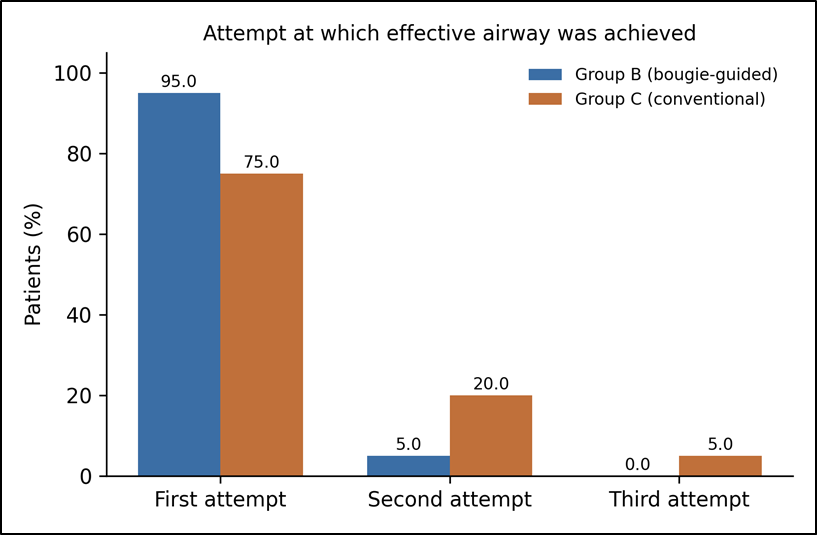
Figure 1: Attempt at which an effective airway was achieved. Values are percentages of patients within each group. The distribution differed significantly between groups (p = 0.038); first-attempt success was 95.0% with bougie guidance versus 75.0% with the conventional technique.
The reasons recorded for a failed first attempt also differed (p = 0.025). An oropharyngeal leak accounted for the two failures in Group B and three of the failures in Group C. The remaining Group C failures were of a kind not seen at all in Group B: gastric leak in three patients (7.5%) and drain-tube leak in two (5.0%). Drain-tube leak was again the reason for both second-attempt failures in Group C (Table 3).
Table 3. Reasons recorded for failed insertion attempts
|
Attempt |
Reason |
Group B |
Group C |
p value |
|
First attempt |
Oropharyngeal leak, n (%) |
2 (5.0) |
3 (7.5) |
0.025* |
|
|
Gastric leak, n (%) |
0 (0.0) |
3 (7.5) |
|
|
|
Drain-tube leak, n (%) |
0 (0.0) |
2 (5.0) |
|
|
Second attempt |
Drain-tube leak, n (%) |
0 (0.0) |
2 (5.0) |
0.493 |
Chi-square test. *Statistically significant.
Time to an effective airway
Insertion took longer in the bougie group at every attempt. At the first attempt the mean time was 44.6 ± 5.7 s in Group B against 36.4 ± 4.8 s in Group C (p < 0.001), a difference of about eight seconds. Second attempts took 102.4 ± 7.3 s and 82.1 ± 6.9 s respectively (p<0.001). Third attempts occurred only in Group C and took 109.3 ± 7.8 s (Table 2).
Haemodynamic response and oxygenation
Baseline values were comparable (Table 4). After insertion, Group B showed a clear but short-lived pressor response. Heart rate was higher at one, two and three minutes (98.2 ± 8.1, 95.6 ± 7.5 and 91.8 ± 7.0 beats/min versus 89.6 ± 7.4, 87.9 ± 6.8 and 85.4 ± 6.2 beats/min; p<0.001) and was no longer different by five minutes. Systolic, diastolic and mean arterial pressures were higher in Group B from one to five minutes (all p<0.001); mean arterial pressure peaked at 100.4 ± 8.5 mmHg in Group B against 88.6 ± 7.2 mmHg in Group C. A small residual difference in mean arterial pressure persisted at ten minutes (80.3 ± 5.8 versus 77.4 ± 5.2 mmHg, p = 0.021) but had disappeared by the end of surgery (Figure 2). No patient in either group required vasoactive drugs or additional bolus opioid for these changes.
Oxygen saturation was maintained above 98% at every time point in both groups, with no significant difference at any measurement (p = 0.078–0.554), confirming that ventilation was adequate with either technique.
Table 4. Haemodynamic variables and oxygen saturation at each time point
|
Variable / time point |
Group B (n = 40) |
Group C (n = 40) |
p value |
|
Heart rate (beats/min) |
|
|
|
|
Baseline |
73.8 ± 5.8 |
75.2 ± 6.1 |
0.296 |
|
1 min |
98.2 ± 8.1 |
89.6 ± 7.4 |
<0.001* |
|
2 min |
95.6 ± 7.5 |
87.9 ± 6.8 |
<0.001* |
|
3 min |
91.8 ± 7.0 |
85.4 ± 6.2 |
<0.001* |
|
5 min |
85.1 ± 6.4 |
82.6 ± 5.9 |
0.073 |
|
10 min |
81.2 ± 5.7 |
79.8 ± 5.3 |
0.259 |
|
End of surgery |
79.3 ± 5.4 |
77.9 ± 5.1 |
0.237 |
|
Systolic blood pressure (mmHg) |
|
|
|
|
Baseline |
120.4 ± 9.1 |
118.6 ± 8.5 |
0.363 |
|
1 min |
148.6 ± 11.2 |
132.8 ± 9.4 |
<0.001* |
|
2 min |
145.1 ± 10.6 |
130.2 ± 8.9 |
<0.001* |
|
3 min |
140.8 ± 9.8 |
126.7 ± 8.3 |
<0.001* |
|
5 min |
132.9 ± 8.7 |
121.4 ± 7.6 |
<0.001* |
|
10 min |
120.5 ± 7.2 |
117.8 ± 6.9 |
0.091 |
|
End of surgery |
116.9 ± 6.8 |
115.6 ± 6.3 |
0.378 |
|
Diastolic blood pressure (mmHg) |
|
|
|
|
Baseline |
68.2 ± 6.1 |
66.4 ± 5.7 |
0.177 |
|
1 min |
88.4 ± 7.9 |
78.5 ± 6.8 |
<0.001* |
|
2 min |
86.2 ± 7.3 |
76.8 ± 6.4 |
<0.001* |
|
3 min |
83.1 ± 6.8 |
74.6 ± 6.1 |
<0.001* |
|
5 min |
78.4 ± 6.2 |
71.9 ± 5.6 |
<0.001* |
|
10 min |
70.5 ± 5.6 |
68.7 ± 5.2 |
0.140 |
|
End of surgery |
67.2 ± 5.1 |
66.8 ± 4.9 |
0.722 |
|
Mean arterial pressure (mmHg) |
|
|
|
|
Baseline |
72.1 ± 5.9 |
70.8 ± 6.4 |
0.348 |
|
1 min |
100.4 ± 8.5 |
88.6 ± 7.2 |
<0.001* |
|
2 min |
98.3 ± 7.6 |
86.9 ± 6.8 |
<0.001* |
|
3 min |
94.8 ± 7.2 |
84.5 ± 6.1 |
<0.001* |
|
5 min |
89.6 ± 6.3 |
80.9 ± 5.7 |
<0.001* |
|
10 min |
80.3 ± 5.8 |
77.4 ± 5.2 |
0.021* |
|
End of surgery |
75.6 ± 5.1 |
75.2 ± 4.9 |
0.722 |
|
Oxygen saturation (%) |
|
|
|
|
Baseline |
98.5 ± 0.8 |
98.6 ± 0.7 |
0.554 |
|
1 min |
99.2 ± 0.5 |
99.3 ± 0.5 |
0.374 |
|
2 min |
99.1 ± 0.5 |
99.2 ± 0.5 |
0.319 |
|
3 min |
99.3 ± 0.5 |
99.1 ± 0.5 |
0.078 |
|
5 min |
99.4 ± 0.4 |
99.1 ± 0.4 |
0.081 |
|
10 min |
99.2 ± 0.4 |
99.1 ± 0.4 |
0.267 |
|
End of surgery |
98.7 ± 0.8 |
98.9 ± 0.7 |
0.238 |
Values are mean ± SD. Independent-samples t test. *Statistically significant.
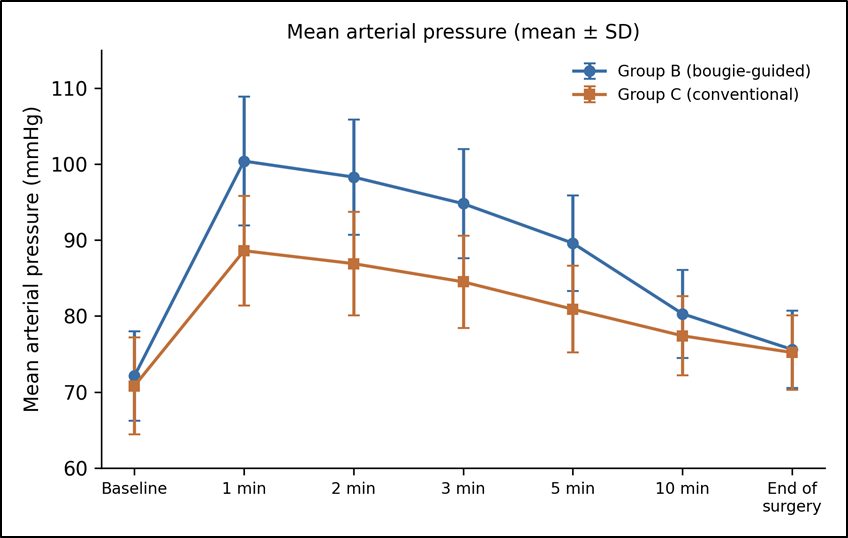
Figure 2: Mean arterial pressure (mean ± SD) at each time point. Values were significantly higher in the bougie-guided group from 1 to 5 minutes after insertion (p<0.001) and had returned to comparable levels by the end of surgery
Ease of placement and gastric tube passage
The operator graded placement as easy in 80.0% of Group B and 70.0% of Group C and as difficult in no patient in Group B against two patients (5.0%) in Group C, but the overall distribution did not differ significantly (p = 0.344) (Table 5).
The contrast in drain-channel function was far greater. A Ryle’s tube passed easily in 38 patients (95.0%) in Group B but in only 20 (50.0%) in Group C; mild difficulty was encountered in 5.0% and 37.5% respectively, and moderate difficulty in five patients (12.5%) in Group C alone (p<0.001). The absolute difference in easy passage was 45.0% (95% CI 28.1–61.9) (Table 5, Figure 3).
Table 5. Subjective ease of device placement and ease of Ryle's tube passage through the drain channel
|
Variable |
Group B (n = 40) |
Group C (n = 40) |
p value |
|
Ease of placement — easy (0), n (%) |
32 (80.0) |
28 (70.0) |
0.344 |
|
Ease of placement — fair (1), n (%) |
8 (20.0) |
10 (25.0) |
|
|
Ease of placement — difficult (2), n (%) |
0 (0.0) |
2 (5.0) |
|
|
Ryle's tube — easy, n (%) |
38 (95.0) |
20 (50.0) |
<0.001* |
|
Ryle's tube — mild difficulty, n (%) |
2 (5.0) |
15 (37.5) |
|
|
Ryle's tube — moderate difficulty, n (%) |
0 (0.0) |
5 (12.5) |
|
Chi-square test. Risk difference for easy Ryle's tube passage 45.0% (95% CI 28.1–61.9). *Statistically significant.
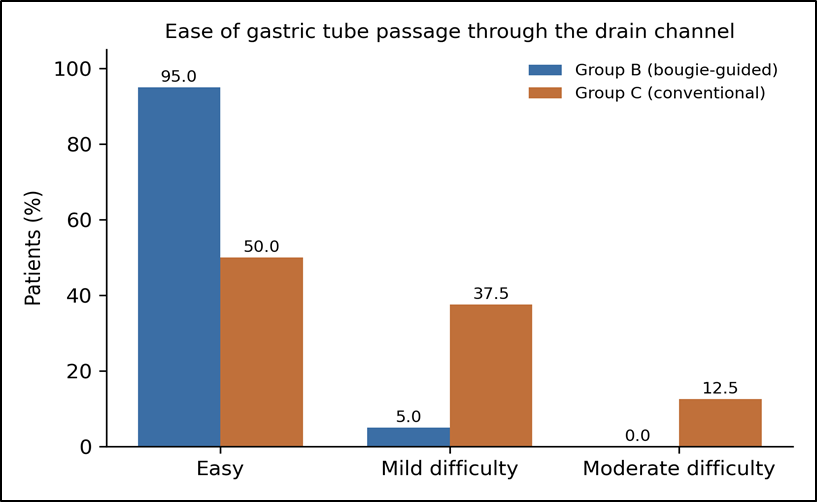
Figure 3. Ease of Ryle's tube passage through the drain channel. Passage was graded easy in 95.0% of the bougie-guided group compared with 50.0% of the conventional group (p<0.001).
Intraoperative events
Gastric distension developed in seven patients (17.5%) in Group C and in none in Group B (p = 0.012). Blood was visible on the LMA cuff in 5.0% of Group B and 17.5% of Group C, and oral mucosal injury occurred in 5.0% and 20.0% respectively; neither difference reached significance (p = 0.154 and 0.087). Blood was never seen on the bougie. Two patients in Group B had blood staining of the laryngoscope blade and one sustained a minor lip injury — events attributable to the additional laryngoscopy and not seen in Group C. No patient in either group had tongue injury, and there was no episode of regurgitation, aspiration or laryngospasm (Table 6, Figure 4).
Table 6. Intraoperative airway events
|
Event |
Group B (n = 40) |
Group C (n = 40) |
p value |
|
Gastric distension, n (%) |
0 (0.0) |
7 (17.5) |
0.012* |
|
Blood on bougie, n (%) |
0 (0.0) |
— |
— |
|
Blood on laryngoscope blade, n (%) |
2 (5.0) |
0 (0.0) |
0.494 |
|
Blood on LMA cuff, n (%) |
2 (5.0) |
7 (17.5) |
0.154 |
|
Lip injury, n (%) |
1 (2.5) |
0 (0.0) |
0.995 |
|
Tongue injury, n (%) |
0 (0.0) |
0 (0.0) |
— |
|
Oral mucosal injury, n (%) |
2 (5.0) |
8 (20.0) |
0.087 |
Chi-square test, with Fisher's exact test where expected counts were small. LMA, laryngeal mask airway. *Statistically significant.
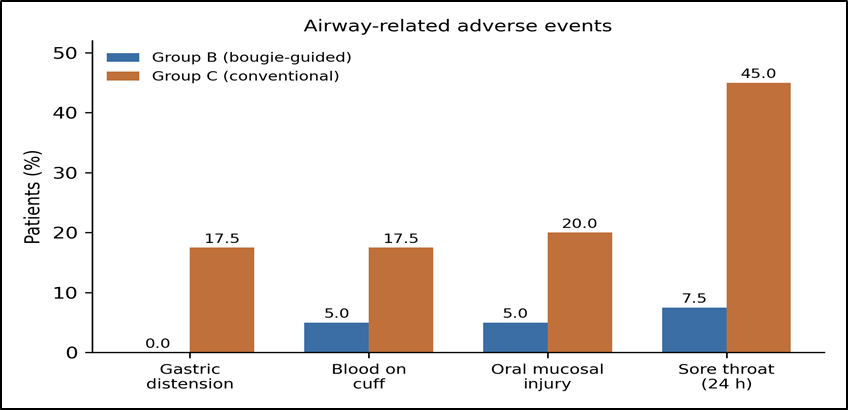
Figure 4. Airway-related adverse events. Gastric distension occurred only after conventional insertion (17.5% versus 0%, p = 0.012) and sore throat at 24 hours was substantially less frequent after bougie-guided insertion (7.5% versus 45.0%, p<0.001).
Postoperative airway morbidity
At 24 hours, sore throat had been reported by 3 patients (7.5%) in Group B and 18 (45.0%) in Group C, an absolute reduction of 37.5% (95% CI 20.1–54.9; p<0.001), equivalent to one sore throat avoided for approximately every three patients managed with the bougie. Dysphagia occurred in one patient (2.5%) in Group B and none in Group C (p = 0.995), and dysphonia was not recorded in either group (Table 7, Figure 4).
Table 7. Airway morbidity within 24 hours of surgery
|
Complication |
Group B (n = 40) |
Group C (n = 40) |
p value |
|
Sore throat, n (%) |
3 (7.5) |
18 (45.0) |
<0.001* |
|
Dysphagia, n (%) |
1 (2.5) |
0 (0.0) |
0.995 |
|
Dysphonia, n (%) |
0 (0.0) |
0 (0.0) |
— |
Chi-square test. Risk difference for sore throat 37.5% (95% CI 20.1–54.9). *Statistically significant
DISCUSSION:
Three findings stand out from this trial. Bougie guidance made first-attempt placement of the BlockBuster LMA substantially more reliable, it almost doubled the proportion of patients in whom a gastric tube could be passed without difficulty, and it reduced postoperative sore throat from nearly half of patients to fewer than one in ten. Against this, it added roughly eight seconds to insertion and produced a pressor response lasting three to five minutes. The improvement in first-attempt success is consistent with the ProSeal literature, where the same technique has repeatedly outperformed digital and introducer-tool insertion [13–16], and with Kerai et al.’s findings for the LMA Protector™ [17]. The mechanism is straightforward. A bougie seated in the oesophagus converts a blind manoeuvre into a guided one: the mask can only follow a path that ends with the drain-tube tip at the oesophageal inlet, so the classic failure modes of blind insertion — tip folding, rotation of the cuff, and impaction in the pyriform fossa — are largely designed out. The pattern of failures we recorded supports this reading. Oropharyngeal leak, which reflects an imperfect pharyngeal seal, occurred at similar rates in both groups; the failures that disappeared with bougie guidance were specifically those attributable to tip malposition, namely gastric and drain-tube leaks. In other words, the bougie did not make the cuff seal better — it made the tip end up in the right place.
That distinction explains our most clinically meaningful result. Passing a gastric tube was easy in 95% of the bougie group but in only half of the conventional group, and gastric distension occurred exclusively where the device had been placed blindly. A second-generation supraglottic device is chosen precisely because it can vent the stomach; if the drain tube is not aligned with the oesophageal inlet, that protection is notional. Our data suggest that after blind digital insertion of the BlockBuster LMA, drainage is unreliable in a substantial minority of patients even when ventilation appears entirely satisfactory — a discrepancy that clinicians cannot detect at the bedside without attempting to pass a tube. This mirrors the fibreoptic evidence from ProSeal studies, in which bougie guidance produced correct drain-tube alignment far more often than the introducer tool despite similar ventilatory performance [15,16]. The reduction in sore throat, from 45.0% to 7.5%, is larger than we anticipated and deserves careful interpretation. The likely explanation is cumulative pharyngeal trauma: patients in the conventional group underwent more insertion attempts, and repeated passage of a deflated cuff along the posterior pharyngeal wall is a well-recognised cause of mucosal injury and postoperative pharyngolaryngeal symptoms [19,20]. The higher rates of blood staining and oral mucosal injury in that group, though individually non-significant, point in the same direction. It is worth noting that we did not measure intracuff pressure with a manometer; since excessive cuff pressure is itself an important and modifiable cause of sore throat [21], part of the observed morbidity in both groups may relate to inflation practice rather than to insertion technique alone.
The two costs of the technique deserve equal emphasis, because a study that reports only benefits invites scepticism. First, the bougie group took about eight seconds longer at the first attempt. This is a real but modest penalty, and it is arithmetically offset once failure is taken into account: a second attempt cost more than 100 seconds in either group, so the eight seconds spent on bougie placement is recovered several times over by avoiding the additional attempts that occurred in a quarter of the conventional group. Second, heart rate and arterial pressure rose more steeply in the bougie group during the first three to five minutes. This is unsurprising, since the technique requires direct laryngoscopy, which is a more potent sympathetic stimulus than supraglottic device insertion alone. The response resolved without intervention in every patient and had settled by ten minutes. In the ASA I–II population studied here that is of little consequence; in patients with ischaemic heart disease, cerebrovascular disease or uncontrolled hypertension, the same response would need to be anticipated and blunted, and our findings should not be extrapolated to such patients. Subjective ease of insertion did not differ significantly between the groups. Taken together with the objective outcomes, this is reassuring rather than contradictory: it suggests that the operator does not experience the guided technique as harder, even though it involves more steps. Earlier work with the BlockBuster LMA has focused on its performance as an intubating conduit and on its sealing characteristics [10–12,22,23], and has generally found the device easy to place; our results are compatible with that and simply add that ease of placement and correctness of placement are not the same thing.
Strengths and limitations
The strengths of this study are its randomised design with concealed allocation, a blinded outcome assessor, a standardised anaesthetic protocol applied to every patient, and the inclusion of outcomes that matter to patients rather than to devices alone. Several limitations should temper the conclusions. It is a single-centre trial of 80 patients; while the primary outcome was clearly significant, the confidence interval around the difference (5.0–35.0%) is wide, and the secondary comparisons of rare events such as mucosal injury are underpowered. The anaesthesiologist performing insertion could not be blinded, which may have influenced subjective grading of ease of insertion and, to a lesser extent, the recorded times. We did not measure oropharyngeal leak pressure or confirm device position fibreoptically, so alignment was inferred from the ease of gastric tube passage rather than observed directly; a fibreoptic study would place our mechanistic explanation on firmer ground. Intracuff pressure was not monitored. Only patients with predicted normal airways and ASA I–II status were studied, which excludes precisely the group — the difficult or unanticipated difficult airway — in which guided insertion might matter most. Finally, follow-up ended at 24 hours, and the operators were experienced with both techniques, so the learning curve for the bougie-guided method was not captured.
Implications for practice and research
For routine elective anaesthesia in patients with normal airways, conventional digital insertion of the BlockBuster LMA remains quick and usually effective. Where the gastric drainage function is actually being relied upon — laparoscopic or prolonged procedures, patients in whom gastric decompression is planned, or any situation in which a repeated attempt would be poorly tolerated — our data support routine use of the bougie. Multicentre trials with larger samples, fibreoptic confirmation of drain-tube position, manometric cuff pressure control, and inclusion of patients with predicted difficult airways and higher ASA grades are the logical next step, as is an assessment of how quickly trainees acquire the technique.
CONCLUSION:
In adults undergoing elective surgery under general anaesthesia, guiding the BlockBuster™ laryngeal mask airway over a bougie placed in the oesophagus improved first-attempt success from 75% to 95%, made passage of a gastric tube easy in almost every patient, abolished gastric distension, and reduced 24-hour sore throat from 45% to 7.5%. These gains cost about eight seconds of extra insertion time and a transient rise in heart rate and blood pressure that resolved within ten minutes without treatment. In patients who tolerate a brief sympathetic response, bougie-guided insertion is a simple modification that makes the device do what it was designed to do.
ABBREVIATIONS
ASA – American Society of Anesthesiologists; BMI – body mass index; CI – confidence interval; LMA – laryngeal mask airway; MAC – minimum alveolar concentration; MAP – mean arterial pressure; SAD – supraglottic airway device; SD – standard deviation; SpO₂ – peripheral oxygen saturation.
REFERENCES:
1. Cook TM, Woodall N, Frerk C; Fourth National Audit Project. Major complications of airway management in the UK: results of the Fourth National Audit Project of the Royal College of Anaesthetists and the Difficult Airway Society. Part 1: anaesthesia. Br J Anaesth. 2011;106(5):617-31.
2. Peterson GN, Domino KB, Caplan RA, Posner KL, Lee LA, Cheney FW. Management of the difficult airway: a closed claims analysis. Anesthesiology. 2005;103(1):33-9.
3. Apfelbaum JL, Hagberg CA, Connis RT, Abdelmalak BB, Agarkar M, Dutton RP, et al. 2022 American Society of Anesthesiologists practice guidelines for management of the difficult airway. Anesthesiology. 2022;136(1):31-81.
4. Brain AIJ. The laryngeal mask — a new concept in airway management. Br J Anaesth. 1983;55(8):801-5.
5. Brimacombe J. Analysis of 1500 laryngeal mask uses by one anaesthetist in adults undergoing routine anaesthesia. Anaesthesia. 1996;51(1):76-80.
6. Cook TM, Kelly FE. Time to abandon the 'vintage' laryngeal mask airway and adopt second-generation supraglottic airway devices as first choice. Br J Anaesth. 2015;115(4):497-9.
7. Brain AIJ, Verghese C, Strube PJ. The LMA 'ProSeal' — a laryngeal mask with an oesophageal vent. Br J Anaesth. 2000;84(5):650-4.
8. Cook T, Howes B. Supraglottic airway devices: recent advances. Contin Educ Anaesth Crit Care Pain. 2011;11(2):56-61.
9. Ramachandran SK, Mathis MR, Tremper KK, Shanks AM, Kheterpal S. Predictors and clinical outcomes from failed laryngeal mask airway Unique™: a study of 15,795 patients. Anesthesiology. 2012;116(6):1217-26.
10. Li J, Xiong Y, Wang Y, Tian M. Comparison of the BlockBuster laryngeal mask airway with the Fastrach and air-Q intubating laryngeal mask airways for tracheal intubation. BMC Anesthesiol. 2019;19(1):102.
11. Gao X, Liu JH, Chen CM, Wang Y, Wang ZY, Yan CL, et al. Comparison of the supraglottic airway device BlockBuster™ and laryngeal mask airway Supreme in anaesthetised, paralysed adult patients: a multicentre randomised controlled trial. Expert Rev Med Devices. 2022;19(8):649-56.
12. Selvin CC, Singariya G, Bihani P, Kamal M, Paliwal N, Ujwal S. Comparison of oropharyngeal leak pressure of i-gel™ and BlockBuster™ laryngeal mask airway in anaesthetized paediatric patients. Anesth Pain Med (Seoul). 2023;18(1):51-6.
13. Howath A, Brimacombe J, Keller C. Gum-elastic bougie-guided insertion of the ProSeal laryngeal mask airway: a new technique. Anaesth Intensive Care. 2002;30(5):624-7.
14. Brimacombe J, Keller C, Judd DV. Gum elastic bougie-guided insertion of the ProSeal laryngeal mask airway is superior to the digital and introducer tool techniques. Anesthesiology. 2004;100(1):25-9.
15. Eschertzhuber S, Brimacombe J, Hohlrieder M, Stadlbauer KH, Keller C. Gum elastic bougie-guided insertion of the ProSeal laryngeal mask airway is superior to the digital and introducer tool techniques in patients with simulated difficult laryngoscopy using a rigid neck collar. Anesth Analg. 2008;107(4):1253-6.
16. Taneja S, Agarwal M, Dali JS, Agrawal G. Ease of ProSeal laryngeal mask airway insertion and its fibreoptic view after placement using gum elastic bougie: a comparison with conventional techniques. Anaesth Intensive Care. 2009;37(3):435-40.
17. Kerai S, Prathap TH, Bhatt G, Gaba P, Gupta L, Saxena KN. Comparison of gum elastic bougie-guided insertion of LMA Protector™ versus the conventional method in achieving oesophageal patency — a randomised comparative study. Indian J Anaesth. 2023;67(Suppl 4):S238-44.
18. Schulz KF, Altman DG, Moher D; CONSORT Group. CONSORT 2010 statement: updated guidelines for reporting parallel group randomised trials. BMJ. 2010;340:c332.
19. Michalek P, Donaldson W, Vobrubova E, Hakl M. Complications associated with the use of supraglottic airway devices in perioperative medicine. Biomed Res Int. 2015;2015:746560.
20. Brimacombe J, Berry A. The laryngeal mask airway — a review and practical guide. Br J Anaesth. 1993;71(5):699-710.
21. Seet E, Yousaf F, Gupta S, Subramanyam R, Wong DT, Chung F. Use of manometry for laryngeal mask airway reduces postoperative pharyngolaryngeal adverse events: a prospective, randomized trial. Anesthesiology. 2010;112(3):652-7.
22. Soni L, Kumar KR, Sinha R, Ayub A, Patel N. Comparison of BlockBuster laryngeal mask with Air-Q intubating laryngeal airway as a conduit for fibreoptic-guided intubation in children: a prospective randomized controlled study. Paediatr Anaesth. 2024;34(7):671-7.
23. Chauhan K, Kerai S, Saxena KN, Gupta L, Prathap TH, Wadhawan S. Comparison of BlockBuster® laryngeal mask airway and Air-Q® intubating laryngeal airway as a conduit for fibreoptic bronchoscopy-guided tracheal intubation in paediatric patients: a randomised comparative study. Indian J Anaesth. 2025;69(7):687-92.