Prevalence of Dengue among patient with Acute febrile illness in Udaipur district of Rajasthan.
- Neelam Chauhan , Assistant Professor, Department of Microbiology, American International Institute of Medical Science & GBH Udaipur, Rajasthan, India
- Neha Choudhary , Assistant Professor, Department of Microbiology, American International Institute of Medical Science & GBH; Udaipur, Rajasthan, India
- Geetavani B , Professor, Department of Microbiology, American International Institute of Medical Science & GBH Udaipur, Rajasthan, India.
Article Information:
Abstract:
Background: Dengue is one of the most rapidly spreading mosquito-borne viral infection in tropical and subtropical regions of the world. Dengue fever and its more serious forms, dengue hemorrahagic fever and dengue shock syndrome are becoming important public health problems. The prevalence of dengue has increased significantly in India due to climatic and environmental factors, making continuous surveillance essential. Aim: To determine seroprevalence of dengue fever among patient with Acute febrile illness. Material & Methods: A cross sectional analytical study carried out in the Department of Microbiology at American International Institute of Medical science (AIIMS) as a tertiary care hospital in Udaipur, Rajasthan from October 2024 to October 2025. The study population consisted of all recorded blood samples of suspected cases of Acute febrile illness, Antiviral Hepatitis (AVH ) and Pyrexia of unknown origin (PUO) referred from various OPDs, IPDs and Emergency service in our hospital. Blood samples were tested for dengue NS1 antigen and Dengue-specific IgM antibodies using standard ELISA kits. Demographic, seasonal data were analyzed statistically using frequency and percentage distribution. Result: Out of total 7447 cases; 644 cases were dengue positive. The seroprevalence was 8.65%. Only Ns1 Ag positivity was observed in 50.93% cases, Only IgM positive in 34.16% and both NS1 and IgM positivity in 14.90% of cases .The majority of cases were belong to young generation 21 to 40 years. Males 10.47% were affected more than females 6.53%. The peak prevalence were observed between August to October & post monsoon and. Conclusion: The study highlights a high prevalence of dengue infection among young adults, with post monsoon months showing the highest positivity. Timely detection of NS1 Ag and IgM Ab ELISA can be very useful in early diagnosis of patients, identification of patients at risk of haemorrhage, dengue management and control of dengue viral infection. Strengthening surveillance systems, community awareness, vector control and early diagnosis are essential to reduce disease burden.
Keywords:
Article :
INTRODUCTION:
Dengue is a mosquito-borne infection with major public health consequences throughout tropical and subtropical regions of the world. The incidence of dengue has grown dramatically worldwide in recent decades, with the number of cases reported to WHO increasing from 505430 cases in 2000 to 14.6 million in 2024. During 2024, ongoing transmission, combined with an unexpected spike in dengue cases, resulted in a historic high of over 14.6 million cases and more than 12 000 dengue-related deaths reported. [1]
The first evidence about the occurrence of dengue fever from India was reported in 1956 from Vellore district in Tamil Nadu and the first outbreak of Dengue Hemorrhagic fever (DHF) occurred in Calcutta in 1963.During 1996, country experienced its first outbreak, thereafter increased number of cases and deaths were reported in subsequent years due to various epidemiological factors like rapid urbanization with unplanned construction activities, increased population movement associated with travel & trade, suboptimal solid waste management, inadequate water supply ,increased socio-developmental activities and climate change responsible for spread of Dengue.[2]
The Dengue virus is a ss RNA virus that is encapsulated and has an 11 kb genome that includes core and membrane proteins. The dengue virus is classified into four different serotypes, which are known as serotypes -1 (DENV-1), -2 (DENV-2), -3 (DENV-3), and -4 (DENV-4) [3,4].In 2013, the fifth serotype (DENV-5) was found in Bangkok, although it hasn't yet been reported in India. [5]
A flaviviral disease spread by mosquitoes, dengue is also referred to as break bone fever due to its painful symptoms, which include body, back, and joint problems. In patients infected with Dengue Fever (DF) symptom varies from asymptomatic or a mild undifferentiated fever to a more severe form like Dengue Haemorrhagic Fever (DHF) and/or Dengue Shock Syndrome (DSS) [5]. An infection with a single serotype confers lifetime immunity, but concurrent or subsequent infections with a second serotype offer either no protection or only partial protection and can result in antibody-dependent immune enhancement, which can lead to severe outcomes like DHF or DSS [6]
Aim
· To determine seroprevalence of dengue among patient with Acute febrile illness.
Objectives
· To determine prevalence of dengue infection in patient presenting with symptoms of Acute febrile illness and PUO.
· To estimate the seasonal prevalence of dengue.
MATERIALS AND METHODS:
A cross sectional record based analytical study was carried out in the Department of Microbiology, at American International Institute of Medical Science (AIIMS) as a tertiary care hospital in Udaipur, Rajasthan from October 2024 to October 2025 after ethical approval from the Institutional Ethical Committee. The Study population included all recorded blood samples of suspected cases of Acute febrile illness Antiviral hepatitis (AVH) and Pyrexia of unknown origin (PUO) referred from various OPDs, IPDs and Emergency services in our hospital .A detailed history was obtained of all the suspected cases in a written format.
Inclusion Criteria- Blood samples from all suspected cases of Acute febrile illness and PUO patients of all ages and both sexes; received in the department of microbiology at American International Institute of Medical Sciences [AIIMS] as a tertiary care hospital, Udaipur will be included in the study.
Exclusion Criteria –
Blood sample of patient not requested for Acute febrile illness (AFI) and dengue fever. Blood sample of Patient with AFI/PUO sent for malaria, chikungunya, scrub typhus were not included in this study. Unlabelled, haemolysed, and lipemic and insufficient blood samples were excluded.
Sample Collection: Following collection, blood samples were centrifuged at 1000 rpm for 5 min to separate serum, which was then analyzed for Dengue NS 1 antigen, Dengue IgG & IgM antibody. NS1 antigen was performed using kit “Dengue NS1 Ag TRUST well ELISA kit. IgM and IgG antibody were detected using “Dengue IgM and IgG Ag TRUST Well ELISA kit ” Manufactured in India by Athenese –Dx Pvt. Ltd Chennai. The tests were conducted according to the manufacturer’s guidelines provided with the ELISA kits. Positive and negative controls provided with the kits were run for test validation as per instructions. Internal quality control was established by testing known positive samples.
• Data Management & Data Analysis: All collected Data was tabulated in Microsoft Excel and Epi Info & SPSS version 21 were used to analyze the data into meaningful outcome. Chi-square test was used to analyze the data & p value <0.05 will be used for statistical significant.
RESULTS:
Table 1: Comparison of results of samples tested by NS1 antigen ELISA, IgM & IgG antibody detection test
|
Type of Test |
Total |
Positive |
Negative |
|
NS1 Antigen ELISA |
7374 |
418 (5.66 %) |
3353 |
|
IgM Capture ELISA |
6959 |
336 (4.82 %) |
3152 |
|
IgG Capture ELISA |
6560 |
447 (6.81 %) |
3070 |
|
Total |
20,893 |
1201 (5.74%) |
19,692 |
The total 20,893 tests from suspected dengue cases were performed. Out of the total test ; 418 (5.66%) NS1 Ag ELISA, 336 (4.82%) IgM Ab ELISA and 447 (6.81%) IgG Ab ELISA tests were positive. The total positive tests of dengue were 1201 (5.74 %) (Table 1).
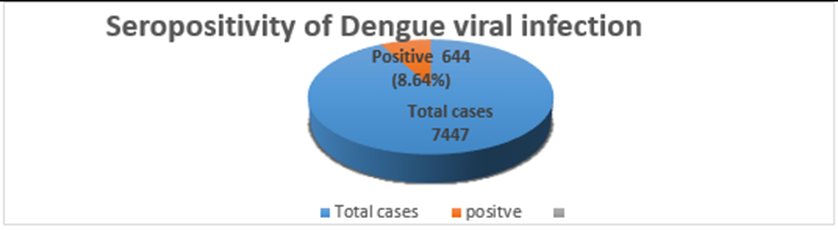
Graph 1: Seropositivity of Dengue viral infection
Overall, a total of 7447 suspected cases and 644 confirmed cases were positive with a dengue prevalence of 8.65 %. (Graph 1).
Table 2 shows Out of 644 positive cases, 328 cases were only NS1 positive and 220 cases were IgM positive. Only 96 were both NS1 and IgM positive.
Table 2 : Distribution of Diagnostic markers
|
ELISA Test Type |
No. of Positive cases |
Percentage (%) |
|
Only NS1 positive |
328 |
(50.93%) |
|
Only IgM positive |
220 |
(34.16%) |
|
Both Ns1 + IgM positive |
96 |
(14.90%) |
|
TOTAL (n) |
644 |
|
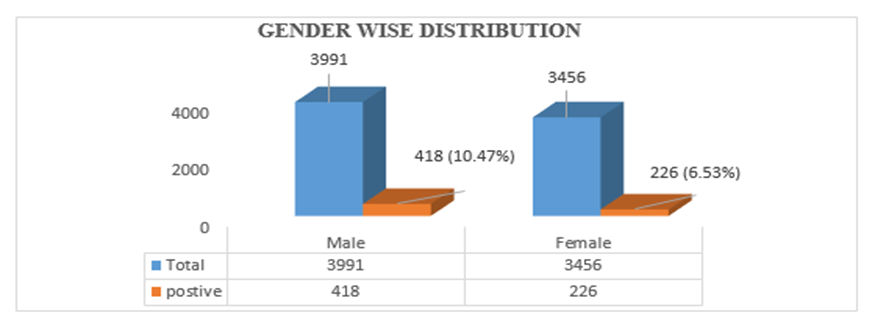
Graph 2: Gender wise distribution of patients (n=644)
Out of the 3991 male and 3456 female cases, 418 (10.47 %) males and 226 (6.53%) females were positive as shown in Graph 2
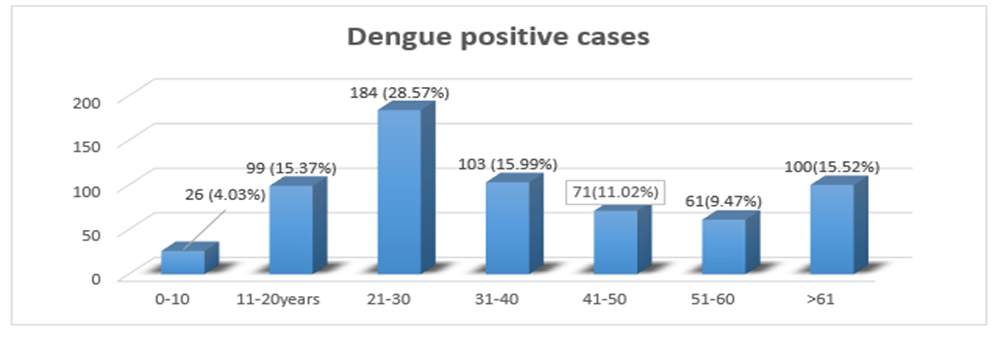
Graph 3 : Agewise distribution of dengue positive cases (n=644)
Age-wise distribution of dengue positive patients of varying age group is shown in Graph 3. It was observed that the maximum dengue case was seen in 21-30 year of age (28.57%) followed by 31 to 40 years (15.99 %) and >60 years (15.52 %) of age group.
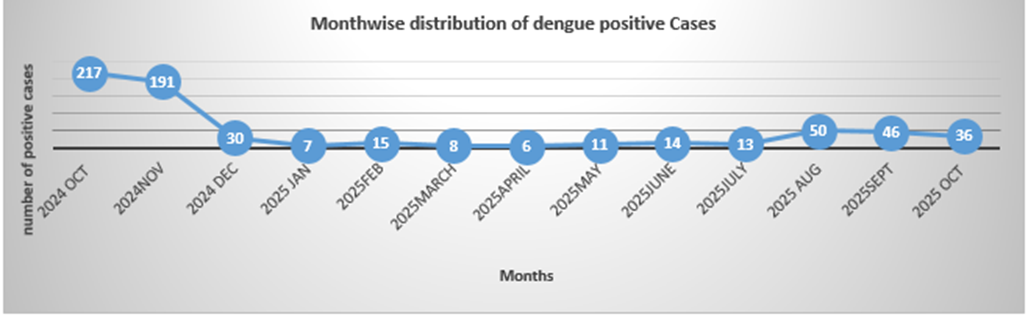
Graph 4 : Monthwise distribution of dengue positive Cases (n=644)
The above graph 4 showed Highest positivity cases of dengue virus reported in rainy season and post mansoon.
DISCUSSION:
Dengue has re-emerged worldwide in recent decades as a major public health concern, particularly in tropical and subtropical regions. To prevent the outbreaks, it is necessary to diagnose the DENV infection as early as possible. [7] A total of 7447 patients visited to the AIIMS /GBH hospital with the complaint of fever and other dengue like symptoms. Out of these patients, 644 patients’s blood samples tested serologically positive. The prevalence was 8.65%. This study is similar to Sharma P et al (8.59%) and Rao MS et al (17.7%). [8, 9]. The total 20,893 tests from suspected dengue cases were performed. Out of the total test; 418 (5.66%) NS1 Ag ELISA, 336 (4.82%) IgM Ab ELISA and 447 (6.81%) IgG Ab ELISA tests were positive as shown in Table 1. The total positive tests of dengue were 1201 (5.74 %) in the udaipur district. This study similar to Sharma P et al [10] which showed 2.05% NS1 and 6.06% IgM positive tests This variation could be attributed to seasonal changes, vector density, rainfall, and other ecological factors.
In terms of diagnostic markers, the study revealed that 50.93 % were NS1 positive cases alone, 34.16 % IgM antigen positive cases alone, and 14.90 % positive for both NS1 and IgM positive cases. This trend highlights the complementary diagnostic value of NS1 antigen detection is most useful during the early febrile phase (days 1–5), whereas IgM appears after the fifth day of illness which is similar to Sharma P et al [8] ( NS1 61.89%,IgM 28.32% and both NS1+IgM 9.79%) where as other Studies by Dutta et al. [11] and Jain et al.[12] have emphasized that combining NS1 and IgM ELISA improves diagnostic yield and helps in identifying cases across different phases of infection. Total 7447 suspected cases; 3991 were male and 3456 were females. out of these 418 (10.4%) male and 226 (6.53%) females were positive. The ratio of male to female in ELISA positive cases was found to be 1.8:1. Pande A et al [13] reported 22.90 % male patients and 15.95 % females. Many studies have observed higher prevalence of dengue infection among males than females. This might be because of difference in sociocultural behaviour where males are involved in more outdoor activity and their body is covered less as compared to females.
When we looked at Agewise distribution, It was observed that the maximum positive dengue case was seen in 21-30 year of age (28.57%) followed by 31-40 age group (15.99%).This study similar to Madkey M et al [14] observed that maximum cases, 39.59% were in the age group of 21-30 years and Dr. Keerti et al [15] showed a predominance in the 21–30 years (29.8%) and 31–40 years(34.7%)),these studies reported that young adults constitute the most affected population segment. This may be explained by greater outdoor activity, occupational exposure, and mobility in this age group, increasing contact with infected mosquitoes. Lower infection rates among children and elderly individuals might reflect reduced outdoor exposure or partial immunity from prior subclinical infections. In our study we observed maximum number ELISA positive cases in the month of October 2024 followed by November 2024 then August 2025 to October 2025. Recent analysis of the past two decades highlighted that, in India, transmission pattern of dengue has changed and widened with shift in peak post-monsoon. During post monsoon period, stagnant water pool collected during rainy season acts as favourable breeding sites for Aedes Aegypti and along with lower temperature during this period, there is an increase in transmission of dengue infection.
CONCLUSION:
The study highlights the evolving epidemiology of dengue virus infection in Udaipur district, Southern Rajasthan with fluctuating positivity rates.NS1 antigen, IgM and IgG ELISA techniques were used to determine the seropositivity of dengue virus infection. The results demonstrated that the majority of the infected people were young adults (21-30years age group).There was an inclination towards males than females. Post monsoon months showing the highest positivity. This study concludes timely detection of NS1 Ag and IgM Ab ELISA can be very useful in early diagnosis of patients, identification of patients at risk of haemorrhage, dengue management and control of dengue viral infection. Strengthening surveillance systems, community awareness, vector control and early diagnosis are essential to reduce disease burden.
REFERENCES:
1. World Health Organization Report.Fact sheet: August 2025
2. National Guidelines for clinical management of Dengue fever 2023.Ministry of Health & Family welfare ,Government of India.
3. Lindenbach BD, Thiel HJ, Charles CM. Flaviviridae: The Viruses and Their Replication in : Knipe DM, Howley PM, Griffin DE, Martin MA, Lamb RA, Roizman B et al, editors. Fields virology. Fifth edition. Philadelphia: Wolters Kluwer Health/Lippincott Williams & Wilkins;2007.
4. Parida M. Horioke K, Ishida H, Dash P, Saxena P, Jana A et al. Rapid Detection and Differentiation of Dengue Virus Serotypes by a Real-Time Reverse Transcription- Loop-Mediated Isothermal Amplification Assay. J Clin Microbiol. 2005 Jun;43(6):2895-2903.
5. Sastry, Apurba S., and Sandhya Bhat. Essentials of Medical Microbiology. 3rd ed., Jaypee Brothers Medical Publishers, 2021, p. 338.
6. Martina B, Koraka P. Ossterhaus A. Dengue Virus Pathogenesis; an Integrated View. Clin Microbiol Rev. 2009 Oct;22(4):564-581.
7. Rana J, Tiwari YK, Dashora D. Prevalence and changing trend of dengue in a tertiary care hospital in southeastern Rajasthan. Eastern J Med Sci. 2025; Epub ahead of print
8. Sharma P, Pavithra K, Shettigar S. Trends in dengue virus infection with seasonal variation at a tertiary care centre, Mangaluru: A retrospective study. IP Int J Med Microbiol Trop Dis 2022;8(4):294-298.
9. Rao MS, Pavani K, Dass M, Kareem MA, Vinayaraj EV. Seroprevalence of dengue virus in a tertiary care hospital, Andhra Pradesh, South India. 2013.
10. Sharma P, Malhotra B, Sharma H ,Bhomia N et al,Trends in dengue virus positivity & serotyping in Rajasthan. Indian J Med Res 160, November 2024, pp 479-488 .DOI: 10.25259/ijmr_1343_23
11. Dutta P, et al. Utility of combined NS1 antigen and IgM detection in early diagnosis of dengue. J Vector Borne Dis. 2020;57(2):121–127.
12. Jain M, et al. Comparative evaluation of NS1 antigen and IgM ELISA in dengue diagnosis. Indian J Med Microbiol. 2022;40(3):321–326.
13. Avinash Pande, Neeraj Kumar, Sunita Pande et al . Seroprevalence of Dengue cases detected by ELISA technique in Bharatpur District of Rajasthan. Scholars Journal of Applied Medical Sciences (SJAMS) Jan 2018; 6(1F): 433-438.
14. Madkey MV, Gedam DS, Meshram VM, Gajbhiye SB. Seroprevalence of dengue in the tribal district of central India. Indian J Microbiol Res 2021;8(1):45-48.
15. Dr. Keerti,et al. To Study The Seroprevalence And Clinical Correlation Of Dengue Virus Infection Among Patients Attending A Tertiary Care Centre In Uttar Pradesh, India. Int. J Med. Pharm. Res., 6 (6): 922‐926, 2025.