Comparison of Pre-emptive Oral Gabapentin and Pregabalin on Acute Postoperative Pain and Hemodynamic Parameters After Surgery Under Spinal Anaesthesia.
- Rachit Hore , PG Resident, Department of Anaesthesiology and Critical Care, Sri Aurobindo Medical College & PG Institute, Indore, Madhya Pradesh, India
- Shruti T Verma , Assistant Professor, Department of Anaesthesiology and Critical Care, Sri Aurobindo Medical College & PG Institute, Indore, Madhya Pradesh, India
- Atul Dixit , Professor, Department of Anaesthesiology and Critical Care, Sri Aurobindo Medical College & PG Institute, Indore, Madhya Pradesh, India.
Article Information:
Abstract:
Background: Effective postoperative pain management is essential for early recovery following surgery. Gabapentinoids, particularly gabapentin and pregabalin, are widely used as pre-emptive analgesics because of their opioid-sparing effects. This study compared the efficacy and safety of oral gabapentin and pregabalin in patients undergoing elective surgery under spinal anaesthesia. Materials and Methods: This analytical cross-sectional comparative study was conducted in the Department of Anaesthesiology and Critical Care, Sri Aurobindo Medical College and Postgraduate Institute, Indore, over one year. A total of 108 ASA I–II patients aged 18–70 years undergoing elective surgery under spinal anaesthesia were randomly allocated into two groups (n=54 each). Group A received oral gabapentin 300 mg, while Group B received oral pregabalin 150 mg, administered three hours before surgery. Postoperative pain was assessed using the Visual Analogue Scale (VAS) at 6, 24, and 48 hours. Rescue analgesic requirement, intraoperative hemodynamic parameters, and adverse effects were also compared. Statistical analysis was performed using IBM SPSS version 26.0, with p<0.05 considered significant. Results: Baseline demographic characteristics were comparable between the groups (p>0.05). Patients receiving pregabalin had significantly lower VAS scores at 6 hours (2.48±0.75 vs. 3.21±0.82; p=0.001), 24 hours (1.98±0.64 vs. 2.74±0.69; p<0.001), and 48 hours (1.32±0.51 vs. 1.89±0.58; p<0.001). Rescue analgesic consumption was significantly lower with pregabalin (75.4±18.6 mg) than gabapentin (102.8±21.3 mg; p<0.001). Heart rate, systolic and diastolic blood pressure remained comparable between groups (p>0.05). Mild sedation, dizziness, and nausea occurred infrequently, with no significant differences in adverse effects. Conclusion: Both gabapentin and pregabalin were safe and effective as pre-emptive analgesics; however, pregabalin 150 mg provided superior postoperative pain relief and greater opioid-sparing effects while maintaining comparable hemodynamic stability and safety. These findings support the preferential use of pregabalin as part of multimodal postoperative analgesia in patients undergoing surgery under spinal anaesthesia.
Keywords:
Article :
INTRODUCTION:
Postoperative pain remains a major challenge in perioperative care, significantly influencing patient recovery, satisfaction, and overall surgical outcomes. Inadequately controlled postoperative pain is associated with delayed mobilization, prolonged hospital stay, increased postoperative morbidity, and a higher risk of developing persistent chronic postsurgical pain. Consequently, effective postoperative pain management has become an integral component of enhanced recovery after surgery (ERAS) protocols, aiming to improve patient comfort, facilitate early rehabilitation, and reduce healthcare burden. [1–3]
Pre-emptive analgesia is a well-established strategy that involves the administration of analgesic agents before the onset of surgical noxious stimuli to prevent or attenuate central sensitization. By inhibiting the amplification of pain pathways before tissue injury occurs, pre-emptive analgesia reduces postoperative pain intensity, decreases analgesic requirements, facilitates early ambulation, and improves overall postoperative recovery. Surgery provides an ideal setting for pre-emptive analgesia because the timing of nociceptive stimulation is predictable, allowing preventive analgesic interventions to be administered before surgical incision. [1–4]
Gabapentinoids, particularly gabapentin and pregabalin, have emerged as valuable components of multimodal analgesia owing to their opioid-sparing properties and favorable safety profile. Although structurally related to γ-aminobutyric acid (GABA), these agents do not act directly on GABA receptors. Instead, they bind selectively to the α2δ subunit of presynaptic voltage-gated calcium channels, reducing calcium influx and inhibiting the release of excitatory neurotransmitters such as glutamate, substance P, and noradrenaline. This mechanism attenuates nociceptive transmission and limits central sensitization following surgical trauma.[5]
Despite sharing a common mechanism of action, pregabalin possesses several pharmacokinetic advantages over gabapentin, including higher oral bioavailability, faster absorption, linear pharmacokinetics, and more predictable plasma concentrations. [6,7] These characteristics contribute to more consistent analgesia and reduced postoperative analgesic consumption. Previous randomized controlled trials and systematic reviews have demonstrated that pregabalin provides superior postoperative pain relief with lower rescue analgesic requirements compared with gabapentin. [6–8] However, direct comparative evidence in patients undergoing surgery under spinal anaesthesia remains limited.[9]
Therefore, the present study was undertaken to compare the efficacy of pre-emptive oral gabapentin and pregabalin in patients undergoing surgery under spinal anaesthesia by evaluating postoperative pain scores, rescue analgesic requirement, hemodynamic parameters, and adverse effects to determine the more effective agent for incorporation into multimodal postoperative analgesia protocols.
MATERIALS AND METHODS:
This analytical cross-sectional comparative study was conducted in the Department of Anaesthesiology and Critical Care, Sri Aurobindo Medical College and Postgraduate Institute, Indore (Madhya Pradesh), after obtaining approval from the Institutional Ethics Committee. The study was conducted over a period of one year. Written informed consent was obtained from all participants before enrolment.
A total of 180 adult patients aged 18 to 70 years, irrespective of gender, undergoing elective surgical procedures under spinal anaesthesia were included in the study.
Inclusion criteria:
· Age between 18 and 70 years; irrespective of gender
· American Society of Anesthesiologists (ASA) physical status I or II
· Patients undergoing elective surgery under spinal anaesthesia
· Patients willing to provide written informed consent
Exclusion criteria:
· Known allergy or hypersensitivity to gabapentin or pregabalin
· Renal impairment
· Hepatic impairment
· Chronic pain disorders or long-term analgesic therapy
· Psychiatric illness
· Pregnancy or lactation
· Refusal to participate in the study
A total of 108 patients were enrolled in the study and randomly allocated into two equal groups of 54 patients each.
· Group A (Gabapentin group): Patients received oral gabapentin 300 mg administered 3 hours before surgery.
· Group B (Pregabalin group): Patients received oral pregabalin 150 mg administered 3 hours before surgery.
Anaesthetic technique
All patients underwent a standardized pre-anaesthetic evaluation, including detailed history, physical examination, and routine laboratory investigations. In the operating room, standard ASA monitoring comprising electrocardiography (ECG), non-invasive blood pressure (NIBP), pulse oximetry (SpO₂), and heart rate monitoring was instituted.
Patients were kept nil per oral for 6 hours before surgery. After baseline recording of heart rate, systolic blood pressure, diastolic blood pressure, and oxygen saturation, spinal anaesthesia was administered under strict aseptic precautions using the standard institutional protocol. Following confirmation of adequate sensory and motor block, surgery was commenced.
Hemodynamic parameters including heart rate (HR), systolic blood pressure (SBP), and diastolic blood pressure (DBP) were recorded at baseline and at predetermined intraoperative intervals. All patients received standard intraoperative and postoperative care according to institutional protocols.
Outcome measures
Primary outcomes
· Postoperative pain intensity assessed using the Visual Analogue Scale (VAS) at 6, 24, and 48 hours after surgery.
· Comparison of postoperative pain scores between the gabapentin and pregabalin groups.
Secondary outcomes
· Total postoperative rescue analgesic requirement.
· Comparison of intraoperative hemodynamic parameters (HR, SBP, and DBP).
· Incidence of adverse effects including sedation, dizziness, nausea, vomiting, and other drug-related complications.
Data collection
All demographic details, perioperative observations, postoperative pain scores, rescue analgesic consumption, hemodynamic parameters, and adverse events were recorded on a pre-designed structured case record proforma.
Statistical analysis
Data were entered into Microsoft Excel and analysed using IBM SPSS Statistics version 26.0. Quantitative variables were expressed as mean ± standard deviation (SD) and compared using the independent Student's t-test. Qualitative variables were expressed as frequencies and percentages and analysed using the Chi-square test or Fisher's exact test, wherever appropriate. A p value <0.05 was considered statistically significant.
RESULTS:
A total of 108 patients were enrolled in the study, with 54 patients in each group. Group A consisted of patients who received oral gabapentin 300 mg, while Group B consisted of patients who received oral pregabalin 150 mg as pre-emptive analgesia three hours before surgery under spinal anaesthesia. The demographic and baseline characteristics of the study population are shown in Table 1. The two groups were comparable in terms of age, gender distribution, and ASA physical status. No statistically significant differences were observed between the groups for any baseline parameter (p > 0.05), indicating adequate homogeneity of the study population.
Table 1. Demographic and Baseline Characteristics
|
Variable |
Group A (Gabapentin) (n = 54) |
Group B (Pregabalin) (n = 54) |
P value |
|
Age (years), mean ± SD |
42.6 ± 10.8 |
41.9 ± 11.2 |
0.74 |
|
Sex (M/F) |
32 / 22 |
30 / 24 |
0.68 |
|
ASA I / II |
28 / 26 |
27 / 27 |
0.85 |
Postoperative pain scores assessed using the Visual Analogue Scale (VAS) at 6, 24, and 48 hours are presented in Table 2. Patients receiving pregabalin demonstrated significantly lower pain scores at all postoperative time intervals compared with those receiving gabapentin. The differences were statistically significant at 6 hours (p = 0.001), 24 hours (p < 0.001), and 48 hours (p < 0.001), indicating superior and sustained postoperative analgesia with pregabalin.
Table 2. Comparison of Postoperative Pain Scores
|
Parameter |
Group A (Gabapentin) Mean ± SD |
Group B (Pregabalin) Mean ± SD |
Mean Difference |
P value |
|
VAS at 6 hours |
3.21 ± 0.82 |
2.48 ± 0.75 |
0.73 |
0.001* |
|
VAS at 24 hours |
2.74 ± 0.69 |
1.98 ± 0.64 |
0.76 |
<0.001* |
|
VAS at 48 hours |
1.89 ± 0.58 |
1.32 ± 0.51 |
0.57 |
<0.001* |
*Statistically significant
The total postoperative rescue analgesic requirement is summarized in Table 3. Patients in the pregabalin group required significantly less rescue analgesic medication than those in the gabapentin group (75.4 ± 18.6 mg vs 102.8 ± 21.3 mg). The difference was highly statistically significant (p < 0.001), indicating a superior opioid-sparing effect of pregabalin.
Table 3. Comparison of Rescue Analgesic Requirement
|
Parameter |
Group A (Gabapentin) |
Group B (Pregabalin) |
P value |
|
Mean rescue analgesic requirement (mg), Mean ± SD |
102.8 ± 21.3 |
75.4 ± 18.6 |
<0.001* |
*Statistically significant
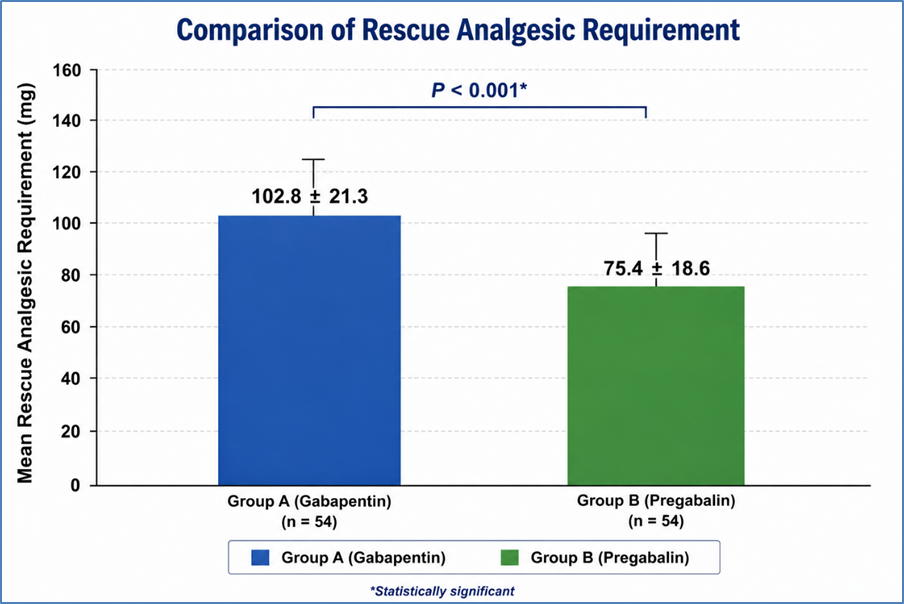
Figure 1. Comparison of Rescue Analgesic Requirement.
The comparison of intraoperative hemodynamic parameters is presented in Table 4. Mean heart rate, systolic blood pressure, and diastolic blood pressure were comparable between the two groups throughout the study. No statistically significant differences were observed in heart rate (p = 0.72), systolic blood pressure (p = 0.58), or diastolic blood pressure (p = 0.69), demonstrating that both drugs maintained similar hemodynamic stability.
Table 4. Comparison of Hemodynamic Parameters
|
Parameter |
Group A (Gabapentin) Mean ± SD |
Group B (Pregabalin) Mean ± SD |
P value |
|
Heart rate (beats/min) |
78.4 ± 8.6 |
77.9 ± 8.2 |
0.72 |
|
Systolic blood pressure (mmHg) |
124.6 ± 10.5 |
123.2 ± 9.8 |
0.58 |
|
Diastolic blood pressure (mmHg) |
78.2 ± 7.4 |
77.6 ± 7.1 |
0.69 |
The incidence of adverse effects observed during the study is shown in Table 5. Mild sedation, dizziness, and nausea were the most commonly reported adverse effects in both groups. Although mild sedation and dizziness were observed slightly more frequently in the pregabalin group, and nausea was marginally higher in the gabapentin group, none of these differences were statistically significant (p > 0.05). Overall, both medications exhibited comparable safety profiles.
Table 5. Comparison of Adverse Effects
|
Adverse Effect |
Group A (Gabapentin) n (%) |
Group B (Pregabalin) n (%) |
P value |
|
Mild sedation |
6 (11.1) |
8 (14.8) |
>0.05 |
|
Dizziness |
5 (9.3) |
7 (12.9) |
>0.05 |
|
Nausea |
4 (7.4) |
3 (5.6) |
>0.05 |
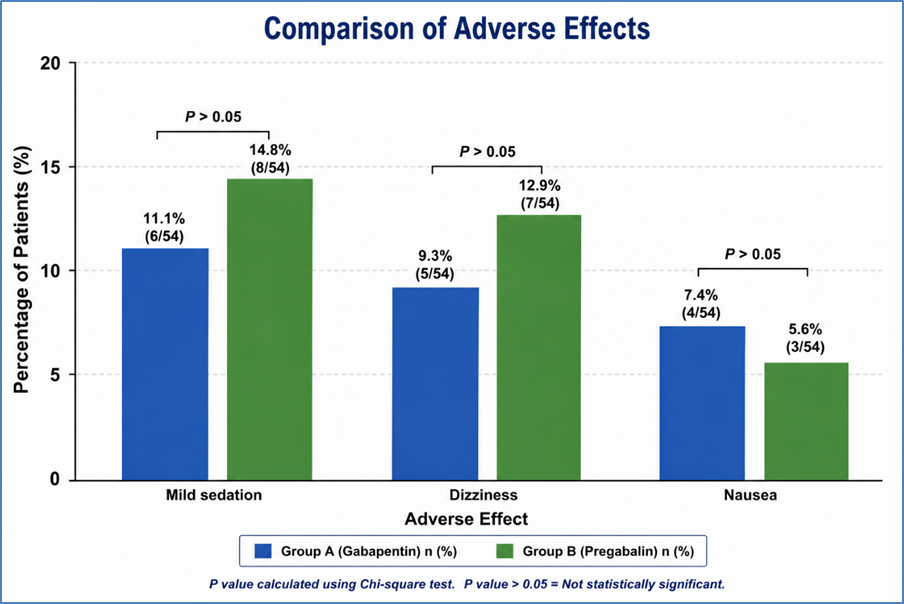
Figure 5. Comparison of Adverse Effects
DISCUSSION:
The present study evaluated the comparative efficacy and safety of oral gabapentin 300 mg and pregabalin 150 mg administered as pre-emptive analgesics in patients undergoing elective surgery under spinal anaesthesia. The findings demonstrated that pregabalin provided significantly better postoperative pain control, lower rescue analgesic requirements, and comparable hemodynamic stability and safety profile when compared with gabapentin.
Postoperative pain scores assessed using the Visual Analogue Scale (VAS) at 6, 24, and 48 hours were significantly lower in the pregabalin group than in the gabapentin group, indicating superior and sustained postoperative analgesia. These findings are consistent with those reported by Nouri L et al. [7] and Sharma V et al. [8], who observed significantly better postoperative pain control with pregabalin than gabapentin in patients undergoing surgery under spinal anaesthesia. Similarly, Bafna U et al. [2] reported that perioperative administration of gabapentinoids significantly prolongs postoperative analgesia and reduces postoperative opioid or rescue analgesic requirements, with pregabalin demonstrating greater analgesic efficacy than gabapentin because of its higher bioavailability and more predictable pharmacokinetic profile. The findings of the present study closely parallel these observations, confirming the superior analgesic efficacy of pregabalin.
The improved analgesic profile of pregabalin can be explained by its pharmacological characteristics. Although both gabapentin and pregabalin are structural analogues of gamma-aminobutyric acid (GABA), they exert their analgesic effect by binding to the α2δ subunit of presynaptic voltage-gated calcium channels, thereby reducing calcium influx and inhibiting the release of excitatory neurotransmitters such as glutamate. Luo et al. [10] demonstrated that upregulation of the α2δ-1 calcium channel subunit is closely associated with the analgesic effect of gabapentin, while Coderre et al. [11] showed that gabapentin reduces neuropathic pain by inhibiting spinal glutamate release. Pregabalin possesses higher oral bioavailability, dose-independent absorption, and more predictable pharmacokinetics than gabapentin, resulting in greater suppression of central sensitization and improved postoperative analgesia. These pharmacological advantages have also been highlighted by Almuqad FA et al. [6], Dahl et al. [12], and Bafna U et al. [2], explaining the superior analgesic efficacy observed in the present study.
A significant reduction in postoperative rescue analgesic requirement was observed in the pregabalin group compared with the gabapentin group, demonstrating a stronger opioid-sparing effect. This finding is in agreement with Bekawi MS et al. [3], who reported significantly lower postoperative analgesic consumption following preoperative pregabalin administration. Similar observations have also been reported in systematic reviews by Dauri et al. [13], Tiippana et al. [14], Hurley et al. [15], and Zhang et al. [16], all of whom concluded that perioperative gabapentinoids significantly reduce postoperative opioid requirements. Likewise, Bafna U et al. [2] demonstrated that pregabalin consistently decreases postoperative rescue analgesic requirements more effectively than gabapentin, further supporting the opioid-sparing effect observed in the present study.
The superiority of pregabalin over gabapentin has also been demonstrated in direct comparative studies. Saraswat et al. [17] compared preoperative gabapentin (1200 mg) with pregabalin (300 mg) in patients undergoing surgery under spinal anaesthesia and reported a significantly longer duration of postoperative analgesia with pregabalin (14.17 hours) compared with gabapentin (8.9 hours). Although the present study employed lower doses of gabapentin (300 mg) and pregabalin (150 mg), pregabalin still produced significantly lower postoperative pain scores and reduced rescue analgesic requirements, indicating that even lower doses of pregabalin provide superior postoperative analgesia. Similar conclusions were drawn by Bafna U et al., who recommended pregabalin as the preferred gabapentinoid because of its superior pharmacokinetic characteristics and consistent analgesic efficacy.
The efficacy of gabapentin in postoperative pain management has also been demonstrated in several randomized clinical trials. Rorarius et al. [18] reported reduced postoperative pain and opioid requirements following vaginal hysterectomy with perioperative gabapentin. Turan et al. [19] demonstrated reduced epidural analgesic consumption after lower-limb surgery, while Verma et al. [20] observed reduced postoperative pain and analgesic requirements following abdominal hysterectomy. Furthermore, Christophe et al. [21] found that preoperative gabapentin improved postoperative analgesia, reduced perioperative anxiety, and facilitated early functional recovery following arthroscopic knee surgery. These studies confirm that gabapentin is an effective pre-emptive analgesic; however, the findings of the present study indicate that pregabalin provides superior analgesic efficacy.
Both study groups maintained stable intraoperative hemodynamic parameters throughout the perioperative period. No significant differences were observed in heart rate, systolic blood pressure, or diastolic blood pressure between the two groups, suggesting that both medications preserve cardiovascular stability. These findings are consistent with those reported by Saraswat et al. [17] and further supported by Bafna U et al. [2], who observed that perioperative administration of gabapentinoids does not produce clinically significant hemodynamic instability.
Both gabapentin and pregabalin were well tolerated in the present study. Mild sedation, dizziness, and nausea were the most commonly reported adverse effects, with no statistically significant difference between the two groups. These findings are comparable with those reported by Tiippana et al. [14] and Engelman et al. [22], who concluded that gabapentinoids are associated mainly with mild, transient adverse effects that are generally clinically acceptable. Similarly, Ghai et al. [23] reported a higher incidence of somnolence and dizziness with pregabalin and gabapentin than with placebo, although these adverse effects were self-limiting and did not compromise overall patient recovery. Bafna U et al. [2] also concluded that while gabapentinoids may increase the incidence of mild sedation and dizziness, they do not significantly increase serious postoperative complications, supporting their overall safety in perioperative practice.
The beneficial effects of gabapentinoids extend beyond acute pain control. Clarke et al. [24] suggested that perioperative gabapentin and pregabalin may reduce the incidence of chronic postsurgical pain by attenuating central sensitization. Although long-term outcomes were not evaluated in the present study, the superior postoperative pain control achieved with pregabalin may contribute to improved recovery and potentially reduce the risk of persistent postoperative pain.
Overall, the findings of the present study consistently demonstrate that both gabapentin and pregabalin are effective pre-emptive analgesics for postoperative pain management. However, pregabalin provides superior postoperative pain relief, significantly reduces rescue analgesic requirements, maintains stable hemodynamic parameters, and exhibits a safety profile comparable to gabapentin. These findings support the preferential use of pregabalin as part of multimodal analgesic protocols for patients undergoing surgery under spinal anaesthesia.
REFERENCES:
1. Kant R, Husain A, Jingar H, Gupta G, Mishal M, Rajarajan B. Comparison of gabapentin versus pregabalin for preemptive analgesia for acute postoperative pain after surgery under spinal anaesthesia. Int J Health Clin Res. 2021;4(3):78-80
2. Bafna U, Rajarajeshwaran K, Khandelwal M, Verma AP. A comparison of effect of preemptive use of oral gabapentin and pregabalin for acute post-operative pain after surgery under spinal anesthesia. J Anaesthesiol Clin Pharmacol. 2014 Jul;30(3):373-7.
3. Bekawi MS, El Wakeel LM, Al Taher WM, Mageed WM. Preoperative pregabalin reduces postoperative pain and opioid consumption: a systematic review. Clin J Pain. 2014;30(7):605–14.
4. Saraswat V, Arora V. Preemptive gabapentin vs pregabalin for acute postoperative pain after surgery under spinal anaesthesia. Indian J Anaesth. 2008;52(6):829–34.
5. Woolf CJ, Chong MS. Pre-emptive analgesia: treating postoperative pain by preventing the establishment of central sensitization. AnesthAnalg 1993;77: 362–79
6. Almuqad FA, Alshammari AF, Alenezi KA, Alharbi RM, Almutairi RS. Comparative efficacy of pregabalin and gabapentin in postoperative pain control: a randomized clinical study. BMC Anesthesiol. 2025;25:112.
7. Nouri L, Ahmadi A, Rahimi M, Hosseini SM. Pregabalin versus gabapentin for acute postoperative pain: a comparative study. Pain Res Manag. 2024;2024:5567892.
8. Sharma V, Gupta R, Singh S, Verma A, Patel M. Evaluation of pre-emptive pregabalin versus gabapentin for postoperative analgesia: a randomized controlled trial. J Clin Anesth. 2024;78:110567.
9. Madhanagopal R, Balasubramanian AK, Gowda PS, Rathnasabapathy B, Shankar R. Comparison of post-operative analgesic effect between Pregabalin and Gabapentin given as premedication drugs for patients undergoing laproscopic cholecystectomy [Internet]. Indian J Clin Anaesth. 2021;8(2):179-184.
10. Luo ZD, Calcutt NA, Higuera ES, Valder CR, Song YH, Svensson CI, et al. Injury type-specific calcium channel alpha 2 delta-1 subunit up-regulation in rat neuropathic pain models correlates with antiallodynic effects of gabapentin. J Pharmacol Exp Ther. 2002;303:1199–205.
11. Coderre TJ, Kumar N, Lefebvre CD, Yu JSC. Evidence that gabapentin reduces neuropathic pain by inhibiting the spinal release of glutamate. J Neurochem. 2005;94:1131–9.
12. Dahl JB, Mathiesen O, Møiniche S. ‘Protective premedication’: An option with gabapentin and related drugs? A review of gabapentin and pregabalin in in the treatment of post-operative pain. Acta Anaesthesiol Scand. 2004;48:1130–6
13. Dauri M, Faria S, Gatti A, Celidonio L, Carpenedo R, Sabato AF. Gabapentin and pregabalin for the acute post-operative pain management. A systematic-narrative review of the recent clinical evidences. Curr Drug Targets. 2009;10:716–33.
14. Tiippana EM, Hamunen K, Kontinen VK, Kalso E. Do surgical patients benefit from perioperative gabapentin/pregabalin? A systematic review of efficacy and safety. Anesth Analg. 2007;104:1545–56.
15. Hurley RW, Cohen SP, Williams KA, Rowlingson AJ, Wu CL. The analgesic effects of perioperative gabapentin on postoperative pain: A meta-analysis. Reg Anesth Pain Med. 2006;31:237–47.
16. Zhang J, Ho KY, Wang Y. Efficacy of pregabalin in acute postoperative pain: A meta-analysis. Br J Anaesth. 2011;106:454–62.
17. Saraswat V, Arora V. Pre emptive use of gabapentine vs. pregabalin for acute postoperative pain after surgery under spinal anaesthesia. Indian J Anaesth. 2008;52:829–34
18. Rorarius MG, Mennander S, Suominen P, Rintala S, Puura A, Pirhonen R, et al. Gabapentin for the prevention of postoperative pain after vaginal hysterectomy. Pain. 2004;110:175–81.
19. Tarun A, Kaya G, Karamanlioglu B, Pamukcu Z, Apfel CC. Perioperative use of gabapentine to reduce consumption of epidural analgesics after lower extremity surgery. Br J Anaesth. 2006;96:242–6.
20. Verma A, Arya S, Sahu S, Lata I, Pandey HD, Harpreet S. To evaluate the role of gabapentin as preemptive analgesic in patients undergoing total abdominal hysterectomy in epidural anaesthesia. Indian J Anaesth. 2008;52:428.
21. Christophe M, Frédéric A, Bruno G, Daniel SI, Marcel C. Preoperative Gabapentin Decreases Anxiety and Improves Early Functional Recovery From Knee Surgery Anaesthesia and analgesia. 2005;100(5):1394–1399.
22. Ghai A, Gupta M, Hooda S, Singla D, Wadhera R. A randomized controlled trial to compare pregabalin with gabapentin for postoperative pain in abdominal hysterectomy. Saudi J Anaesth. 2011;5:252–7.
23. Engelman E, Cateloy F. Efficacy and safety of perioperative pregabalin for post-operative pain: A meta-analysis of randomized-controlled trials. Acta Anaesthesiol Scand. 2011;55:927–43.
24. Clarke H, Bonin RP, Orser BA, Englesakis M, Wijeysundera DN, Katz J. The prevention of chronic postsurgical pain using gabapentin and pregabalin: A combined systematic review and meta-analysis. Anesth Analg. 2012;115:428–42.