Study of results of biodegradable calcium sulphate dihydrate antibiotics beads in musculoskeletal infections.
- Darshit Shah , Senior Resident, Department of Orthopaedics, Dr M K Shah medical college and research centre, Ahmedabad, Gujarat, India
- Bruhad Patel , Senior Resident, Department of Orthopaedics, SVP Medical College, Ahmedabad, Gujarat, India
- Dhairya Shah , Senior Resident, Department of Orthopaedic, GMERS medical college, Sola, Ahmedabad, Gujarat, India.
Article Information:
Abstract:
Background: Musculoskeletal injuries, especially open fractures can result in soft tissue defects, leading to complications such as fracture related infections. Soft tissue defects arising from trauma and musculoskeletal infections pose challenges in surgical management. The debris that remains in the wound includes small biofilm fragments and a few organisms that are usually unresponsive to antimicrobial agents in the given concentrations. Periprosthetic infection (PI) causes significant morbidity and mortality after fixation and joint arthroplasty and has been extensively linked to the formation of bacterial biofilms. The adequacy of surgical debridement is still key to successful clearance of infection but local antibiotic carriers such as use of an antibiotic bead pouch is a viable option for temporary soft tissue coverage and drug delivery. Case history: We have used biodegradable calcium sulphate dihydrate antibiotic beads in musculoskeletal infections to evaluate the safety and effectiveness of these beads in terms of - Reduction in amount of discharge, inflammation and complication rate. Methodology: In this article, we have narrated the pre-operative investigations, details of preparation of beads, beads implantation , post-operative care and our observation and result with respect to inflammatory markers in musculoskeletal infections.
Keywords:
Article :
INTRODUCTION:
Musculoskeletal infections, including osteomyelitis, infected fractures, soft tissue infections, and periprosthetic joint infections, remain a major challenge in orthopaedic practice because they are associated with significant morbidity, prolonged treatment, and increased healthcare costs[1]. Surgical debridement, although essential for eradicating infection, frequently results in residual dead space that can fill with hematoma and provide a favourable environment for bacterial proliferation and biofilm formation[2,3], thereby increasing the risk of persistent or recurrent infection. Effective management therefore requires not only adequate debridement but also appropriate dead-space management and targeted antimicrobial therapy.
Local antibiotic delivery has been used successfully for decades in the management of chronic osteomyelitis and infected fractures[4] as it achieves high local antibiotic concentrations while minimizing systemic toxicity[5]. Antibiotic-loaded bead systems have emerged as an effective means of delivering sustained local antibiotics and simultaneously filling dead space created after debridement. Among these, biodegradable calcium sulphate dihydrate has gained increasing attention because of its biocompatibility, osteoconductive properties, and complete resorption, thereby eliminating the need for a second surgical procedure for bead removal[5,6]. In addition, calcium sulphate releases its entire antibiotic load over time, maintaining therapeutic local concentrations that enhance infection control and facilitate bone and soft tissue healing[6].
Given these advantages, biodegradable calcium sulphate dihydrate antibiotic beads represent a promising adjunct in the treatment of musculoskeletal infections. The present study was undertaken to evaluate their safety and effectiveness in patients with musculoskeletal infections managed with surgical debridement and local antibiotic bead implantation.
Aims & Objectives
Aim
The aim of this study is to evaluate the safety and effectiveness of biodegradable calcium sulphate dihydrate antibiotic beads in musculoskeletal infections.
Objectives
• Reduction in amount of discharge
• Reduction in inflammation
• Reduction in complication rate.
MATERIALS AND METHODS:
Study Design and Population
This was a prospective observational study that was conducted on diagnosed cases of musculoskeletal infections visiting the Orthopaedic Outpatient Department or admitted to the Department of Orthopaedics, S.M.S. Multispeciality Hospital.
A total of 30 patients were studied during the study period.
Inclusion Criteria
• Any musculoskeletal infections like osteomyelitis of bone, infected non-union, infected fractures (post-operative infections with or without implants in situ), soft tissue infections, and periprosthetic joint infection (PJI).
• Age more than 1 year.
Exclusion Criteria
• Pregnancy
• Age less than 1 year (infants)
• Patient allergic to calcium sulphate dihydrate and related substances
• Immunocompromised patients
• Lost to follow-up cases
• Patients not willing to give consent
Method of Data Collection
All patients underwent a standardized preoperative evaluation, including detailed clinical history, physical examination, radiographic assessment of the affected region in two orthogonal views, complete blood count (CBC), inflammatory markers (ESR and C-reactive protein), and wound swab/pus culture with antibiotic sensitivity testing. Culture reports were used to guide pathogen-specific antibiotic therapy.
Written informed consent was obtained from all patients after explaining the surgical procedure. Standard preoperative preparation was carried out, including fasting for at least 6 hours and administration of intravenous prophylactic antibiotics 30 minutes before surgery.
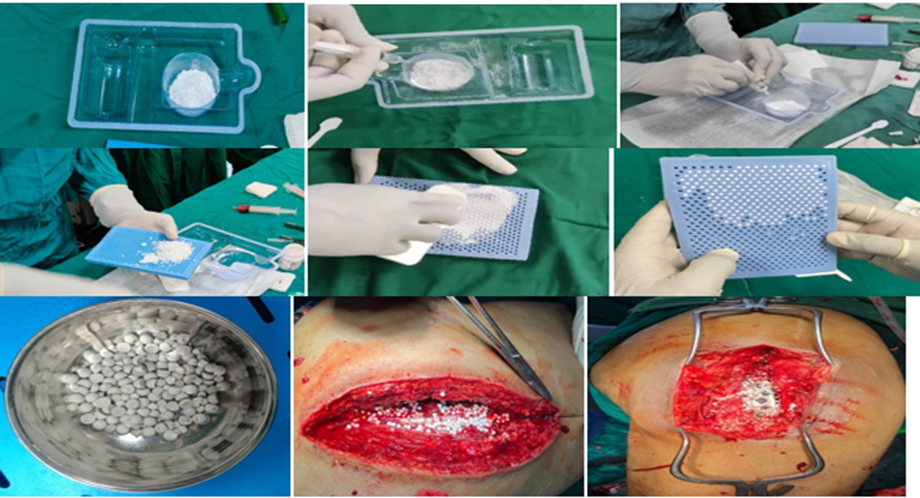
All patients underwent appropriate surgical debridement according to the underlying pathology. In cases of chronic osteomyelitis, sequestrectomy with external fixation, where indicated, was performed, followed by implantation of antibiotic-loaded biodegradable calcium sulphate dihydrate beads. In patients with periprosthetic joint infection, thorough irrigation with normal saline and povidone-iodine was performed, followed by meticulous debridement of infected and necrotic tissues before bead implantation into the residual bone cavity.
Calcium sulphate dihydrate (Stimulan®, Biocomposites Ltd., Keele, United Kingdom) was mixed intraoperatively with culture-sensitive antibiotics according to microbiological findings. Beads of appropriate size (small, medium, or large) were prepared and implanted based on the size of the bone or soft tissue defect to achieve local antibiotic delivery and effective dead-space management. Procedure-specific data, including the type and volume of calcium sulphate used, were recorded for all patients.
PREPARATION OF BEADS:
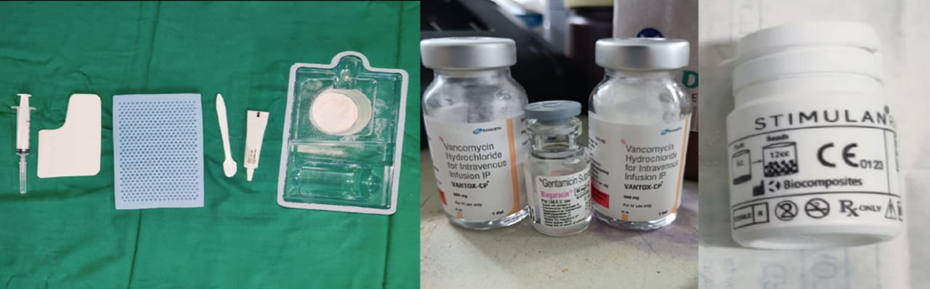
Figure showing (from right side)calcium sulphate powder, antibiotics (in powder and liquid form), kit water, mould with spatula( silicone rubber sheet having small,medium and large sizes) as shown above
RESULTS:
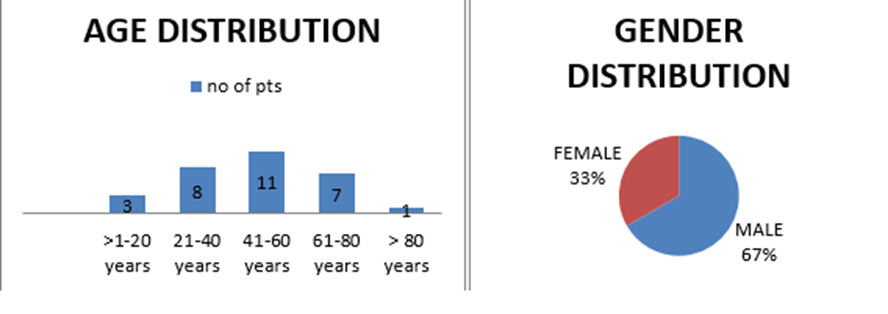
A total of 30 patients with musculoskeletal infections treated with antibiotic-loaded calcium sulphate dihydrate beads were included. The mean age was 46.1 years (range 14–81 years). Patients aged 41–60 years constituted the largest group (36.67%), followed by 21–40 years (26.67%), 61–80 years (23.33%), 1–20 years (10%) and >80 years (3.33%). There were 20 males (66.7%) and 10 females (33.3%), giving a male:female ratio of 2.03:1.
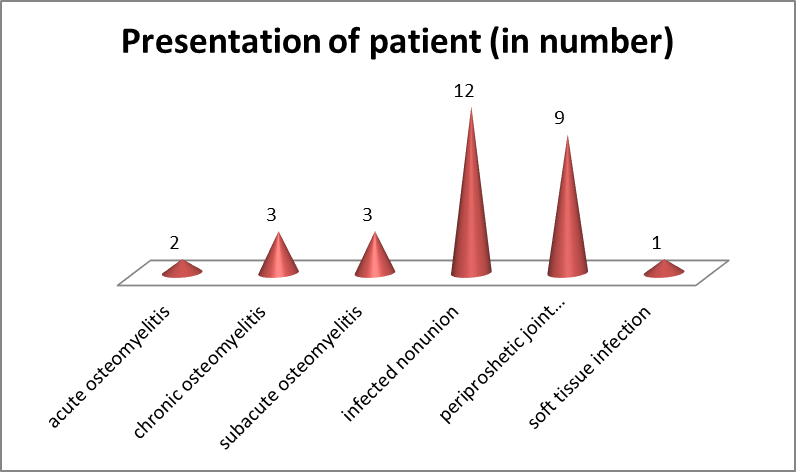
The most frequent clinical presentation was infected non-union (40%), followed by periprosthetic joint infection (30%). Chronic and subacute osteomyelitis each accounted for 10%, acute osteomyelitis for 6.67%, and soft tissue infection for 3.33%. The left side was affected in 50% of patients, the right side in 46.7%, while one patient had spinal surgical site infection.
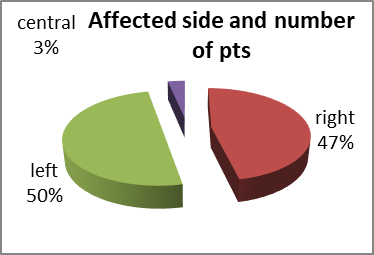
The knee joint was the commonest site involved (23.33%), followed by shaft of femur (16.67%), proximal femur (13.33%), distal femur (10%), hip joint (10%) and tibia (10%). Vertebra, shaft of humerus, radius, ulna and combined proximal/distal femur involvement were each observed in one patient.
|
% (number of patients) |
||
|
Shaft of femur |
16.67%(5) |
||
|
Proximal femur |
13.33% (4) |
||
|
Proximal and distal femur |
3.33% (1) |
||
|
Distal femur |
10% (3) |
||
|
Knee joint |
23.33%(7) |
||
|
Hip joint |
10%(3) |
||
|
Vertebrae |
3.33%(1) |
||
|
Shaft of humerus |
3.33%(1) |
||
|
Radius |
3.33%(1) |
||
|
Tibia |
10%(3) |
||
|
Ulna |
3.33%(1) |
MRSA was the predominant isolate (36.67%), followed by MSSA (20%). Klebsiella was isolated in 10% of cases, while E. coli, Pseudomonas and polymicrobial infections each accounted for 6.67%. Enterobacter was isolated in one case and cultures were sterile in 10% of patients.
|
CULTURE ORGANISM |
% (no of patient) |
|
MRSA |
36.67% (11) |
|
MSSA |
20% (6) |
|
KLABSIELLA |
10% (3) |
|
E.COLI |
6.67% (2) |
|
PSEUDOMONAS |
6.67% (2) |
|
ENTEROBACTER |
3.33% (1) |
|
MULTIORGANISM |
6.67% (2) |
|
NO ORGANISM ISOLATED |
10% (3) |
Vancomycin alone was incorporated into calcium sulphate beads in 66.67% of patients, whereas vancomycin plus colistin was used in 26.67%. Vancomycin plus gentamicin and colistin plus tigecycline were each used in one patient.
DISTRIBUTION OF ANTIBIOTICS
|
Antibiotics given |
% (Number of patients) |
|
Vancomycin only |
66.67% (20) |
|
Vancomycin + Colistin |
26.67% (8) |
|
Vancomycin + Gentamycin |
3.33% (1) |
|
Colistin + Tigecycline |
3.33% (1) |
Mean ESR decreased from 56 preoperatively to 40.43 at 1 week, 29.7 at 4 weeks and 20.13 at 6 weeks. Mean CRP declined from 23.16 preoperatively to 11.45 at 1 week, 4.06 at 4 weeks and became <0.6 by 6 weeks, indicating progressive resolution of infection.
|
INFLAMMATORY MARKERS |
Pre-op |
Post-op 1 week |
Post-op 4 weeks |
Post-op 6 weeks |
|
ESR |
56 |
40.43 |
29.7 |
20.13 |
|
CRP |
23.16 |
11.45 |
4.06 |
<0.6 |
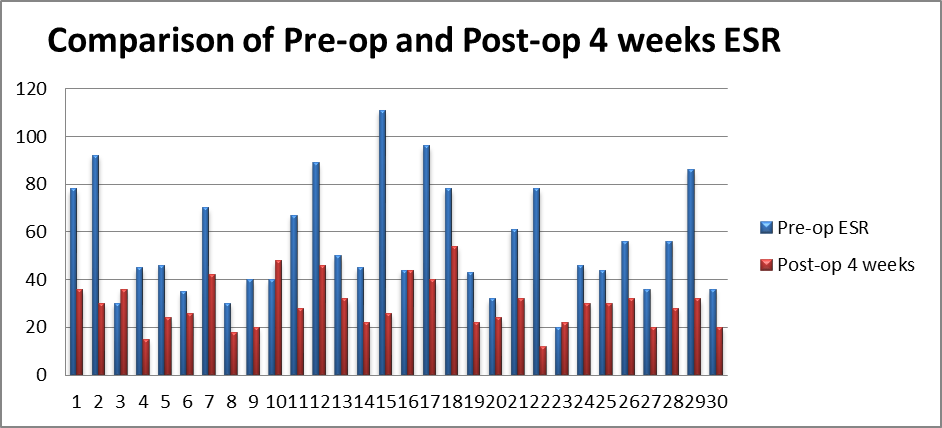
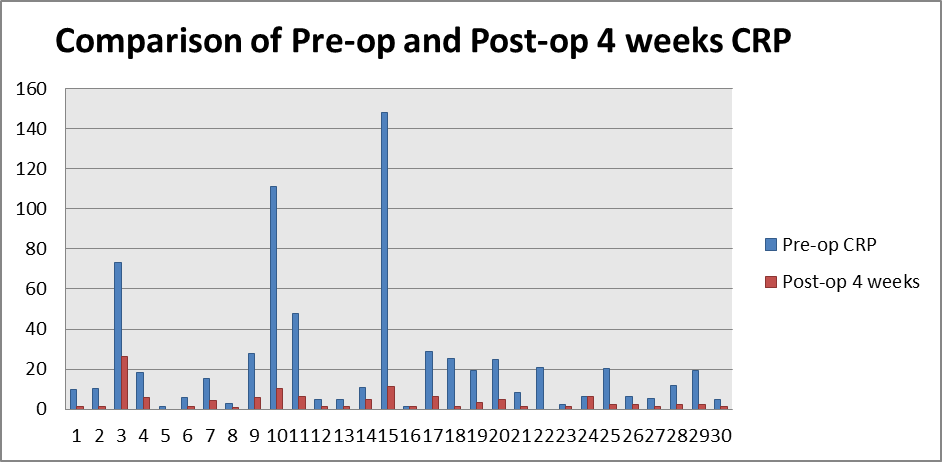
Paired t-test demonstrated statistically significant reductions in ESR and CRP. ESR reduction was significant at 1 week (p<0.0031) and highly significant at 4 weeks (p<0.0001). CRP reduction was also significant at 1 week (p<0.0027) and normalized in nearly all patients by 6 weeks.
Only two patients (6.67%) developed persistent wound discharge due to bead dislodgement and required repeat debridement. All remaining patients showed satisfactory wound healing with radiographic bead dissolution over 30–35 days and no heterotopic ossification.
DISCUSSION:
This prospective observational study was conducted in the Department of Orthopaedics, Dr. M. K. Shah Medical College & Research Centre, Ahmedabad, between April 2022 and June 2024 to evaluate the effectiveness of antibiotic-loaded calcium sulphate dihydrate beads in the management of musculoskeletal and periprosthetic infections. A total of 30 patients fulfilling the inclusion criteria were enrolled. The mean age of the study population was 46.1 years (range: 14–81 years), with the highest incidence observed in the 41–60-year age group. Males predominated the cohort, accounting for 67% of cases (male:female ratio 2.03:1).
Infected non-union constituted the most common indication for intervention, followed by peri-prosthetic joint infection followed by chronic osteomyelitis and subacute osteomyelitis and then acute osteomyelitis and soft tissue infections. Microbiological analysis identified Staphylococcus aureus as the predominant pathogen, with MRSA being the most frequently isolated organism, followed by MSSA, Klebsiella, Escherichia coli, Pseudomonas, Enterobacter, polymicrobial infections, and culture-negative cases.
Both inflammatory markers demonstrated a marked and statistically significant reduction following treatment. Mean ESR decreased from 56 preoperatively to 40.43, 29.7, and 20.13 at 1, 4, and 6 weeks, respectively (p < 0.0001). Similarly, mean CRP declined from 23.16 preoperatively to 11.45, 4.06, and <0.6 at corresponding follow-up intervals (p < 0.0001), indicating rapid resolution of infection and inflammation. Serial radiographs demonstrated progressive dead-space obliteration with new bone and soft tissue formation. At 12 weeks, all patients showed satisfactory radiological healing without evidence of persistent inflammation or non-union.
Postoperative outcomes were favorable in the majority of patients. Only two patients experienced persistent wound discharge with bead displacement. All remaining patients achieved satisfactory wound healing without significant complications. Overall, antibiotic-loaded calcium sulphate dihydrate beads proved to be an effective local antibiotic delivery system, providing excellent infection control, significant reduction in inflammatory markers, satisfactory radiological healing, and favorable clinical outcomes in the management of musculoskeletal and periprosthetic infections.
CONCLUSION:
The combination of meticulous debridement and antibiotic-loaded calcium sulphate dihydrate beads offers an effective single-stage treatment strategy for musculoskeletal infections. In addition to achieving high local antibiotic concentrations with minimal systemic toxicity, the biodegradable carrier facilitates dead-space obliteration and eliminates the need for implant removal. With a low complication rate and favorable clinical outcomes, this technique represents a practical and reliable option for infection management.
REFERENCES:
1. Rupp M, Walter N, Szymski D, Taeger C, Langer MF, Alt V. The antibiotic bead pouch–a useful technique for temporary soft tissue coverage, infection prevention and therapy in trauma surgery. Journal of Bone and Joint Infection. 2023 Jun 21;8(3):165-73.
2. Mereddy P, Nallamilli SR, Gowda VP, Kasha S, Godey SK, Nallamilli RR, et al. The use of Stimulan in bone and joint infections. Bone Jt Open. 2023 Jul 10;4(7):516-522.
3. Howlin RP, Brayford MJ, Webb JS, Cooper JJ, Aiken SS, Stoodley P. Antibiotic-loaded synthetic calcium sulfate beads for prevention of bacterial colonization and biofilm formation in periprosthetic infections. Antimicrobial agents and chemotherapy. 2015 Jan;59(1):111-20.
4. Gogia JS, Meehan JP, Di Cesare PE, Jamali AA. Local antibiotic therapy in osteomyelitis. InSeminars in plastic surgery 2009 May (Vol. 23, No. 02, pp. 100-107). © Thieme Medical Publishers.
5. Ferguson J, Diefenbeck M, McNally M. Ceramic biocomposites as biodegradable antibiotic carriers in the treatment of bone infections. Journal of bone and joint infection. 2017 Jan 1;2(1):38-51.
6. Kallala R, Harris WE, Ibrahim M, Dipane M, McPherson E. Use of Stimulan absorbable calcium sulphate beads in revision lower limb arthroplasty: safety profile and complication rates. Bone & joint research. 2018 Oct 1;7(10):570-9.