Utility of CD10 Expression as a Prognostic Marker in Breast Carcinoma.
- Anusha Mahajanshetti , Senior Resident, Department of Pathology, Navodaya Medical College, Raichur, India
- Poojashree C , Assistant Professor, Department of Pathology, Sri Siddhartha Academy of Higher Education, Tumkur, India.
- Sushmitha N , Senior Resident, Department of Pathology, Bangalore Medical College and Research Institute, Karnataka, India.
- Shulbha V Sejekan , Professor, Department of Pathology, Bangalore Medical College and Research Institute, Karnataka, India.
- Siddiq M Ahmed , Professor and Head of Department, Department of Pathology, Bangalore Medical college and Research Institute, Karnataka, India.
Article Information:
Abstract:
Background: Breast cancer is one of the most common malignancies among women worldwide. Although breast carcinoma is primarily an epithelial malignancy, the tumour microenvironment, particularly the stromal component, plays a significant role in tumour progression, invasion, and metastasis. CD10, a zinc-dependent matrix metalloproteinase, is involved in extracellular matrix degradation, cell adhesion, and migration. Stromal CD10 expression has been proposed as a potential prognostic marker in invasive breast carcinoma. Objectives: To assess the frequency of stromal CD10 expression in invasive breast carcinoma and evaluate its prognostic significance by correlating it with established clinicopathological parameters. Materials and Methods: A descriptive cross-sectional study was conducted in the Department of Pathology, Bangalore Medical College and Research Institute, Bengaluru, from July 2024 to September 2024. Thirty cases of primary invasive breast carcinoma diagnosed on histopathology were included. Cases following neoadjuvant therapy, recurrent carcinoma, poorly fixed specimens, and core biopsy specimens were excluded. H&E-stained sections were evaluated for tumour type and grade. Immunohistochemical staining for ER, PR, HER2/neu, and CD10 was performed on representative paraffin-embedded tissue blocks. CD10 expression was assessed based on the intensity and extent of cytoplasmic and membranous staining and correlated with prognostic parameters. Results: Among the 30 cases, 10 were Grade 3, 13 were Grade 2, and 7 were Grade 1 invasive breast carcinomas. Stromal CD10 expression was observed in a proportion of cases. A statistically significant association was found between stromal CD10 expression and tumour size (p < 0.05), with higher expression in larger tumours. No significant correlation was observed between CD10 expression and histological grade, lymphovascular invasion, ER, PR, or HER2/neu status. Conclusion: Stromal CD10 expression shows a significant association with tumour size and may contribute to tumour progression in invasive breast carcinoma. However, further studies with larger sample sizes are required to establish its role as an independent prognostic marker.
Keywords:
Article :
INTRODUCTION:
Breast cancer is one of the most prevalent cancers in women globally. Breast cancer contributes to 18.5% of all the new cancer cases diagnosed in India [1]. Breast cancer is an epithelial malignancy but the importance of the stroma lies in the fact that it stimulates and inhibits factors that influence tumor invasion and metastasis. CD10 is a matrix metalloproteinase that has been shown to regulate cell adhesion and migration and to be involved in the determination of tumor progression [2,3]. Breast cancer is an epithelial malignancy and many epithelial cell related prognostic factors have been widely studied. In every case of breast cancer prognostic factors such as tumour stage, histological grade, lymph node involvement, ER & PR status and HER2/neu status are routinely evaluated.
Cancer cells communicate with stromal cells and use a variety of stimulatory and inhibitory factors to control processes such as cell adhesion and migration . Stromal markers are emerging as novel markers for assessing prognosis of invasive breast cancer and have not been studied extensively. This provides a basis for assessing the prognostic value of the novel stromal marker CD10 in invasive breast cancer. CD10, also known as the common acute lymphoblastic leukemia antigen (CALLA), is a zinc-dependent metalloprotease. It is expressed in normal tissues including myoepithelial cells of the breast and salivary glands and pulmonary alveolar epithelial cells but is not expressed in the stroma of normal breast tissue [4]. Knowing the function of CD10 in breast cancer will help us to identify specific signals that promote growth, dedifferentiation, invasion, angiogenesis, metastasis and could be a target for better therapeutic planning and management.
METHODOLOGY:
The specimens were received in appropriately labelled containers containing 10% neutral buffered formalin. After adequate fixation, representative sections were taken from each specimen and processed for paraffin embedding. Haematoxylin and Eosin (H&E)-stained sections were examined for assessment of histological type and tumour grade.
Immunohistochemical staining for Estrogen Receptor (ER), Progesterone Receptor (PR), Human Epidermal Growth Factor Receptor 2 (HER2), and CD10 was subsequently performed on representative paraffin-embedded tissue blocks of each case. CD10 IHC expression was evaluated based on the intensity and extent of cytoplasmic and membranous staining, and appropriate scoring was assigned. The CD10 expression scores were then correlated with established prognostic factors of breast carcinoma.
CD10 IHC SCORING CRITERIA
|
IMMUNOREACTIVITY |
SCORE |
INTERPRETATION |
|
No staining |
0 |
Negative |
|
Diffuse light brown or strong dark brown staining in less than 30% of the stromal cells |
1 |
Weakly positive |
|
Strong staining in more than 30% of the stromal cells |
2 |
Strongly positive |
RESULTS:
A total of 30 cases of breast carcinoma diagnosed as invasive breast carcinoma were included in the study. The cases were studied during the period from July 2024 to September 2024. Histopathological evaluation was performed on H&E-stained sections, followed by IHC analysis for ER, PR, HER2/neu and CD10 on representative paraffin-embedded tissue blocks.
Histopathological Findings
Among the 30 cases studied, 10 cases were classified as histological Grade 3, 13 cases as Grade 2, and 7 cases as Grade 1 invasive breast carcinoma.
Immunohistochemical Findings
Hormone receptor status (ER/PR):
Variable expression of ER and PR was observed among the studied cases.
HER2/neu status:
HER2/neu IHC showed overexpression in a subset of cases.
CD10 expression:
Stromal CD10 immunoreactivity was observed in a proportion of breast carcinoma cases. CD10 expression was evaluated based on the intensity and extent of cytoplasmic and membranous staining, and the cases were scored accordingly.
Table 1: Association of Tumor Size with Stromal CD10 Expression
|
Tumor Size |
Total Patients (n, %) |
CD10 Expression - Negative |
CD10 Expression - Weakly Positive |
CD10 Expression - Strongly Positive |
|
<2 cm |
1 (3.3%) |
1 (100%) |
0 (0%) |
0 (0%) |
|
2-5 cm |
21 (70%) |
3 (14.2%) |
10 (47.6%) |
8 (38.0%) |
|
>5 cm |
8 (26.6%) |
0 (0%) |
3 (37.5%) |
5 (62.5%) |
A statistically significant association was observed between stromal CD10 expression and tumour size (p < 0.05). Higher CD10 expression was noted in tumours with larger size.
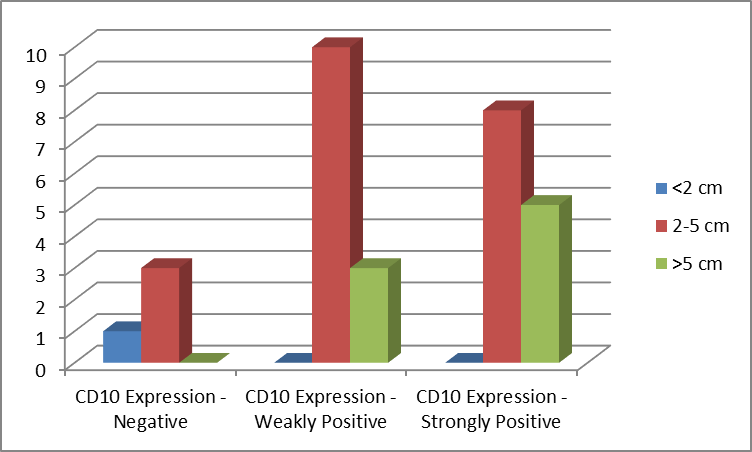
Figure 1: Comparison of tumor size with CD10
Histological grade (Figure 2): No statistically significant correlation was observed between stromal CD10 expression and histological tumour grade (p > 0.05).
Table 2: Association of Histological Grade with Stromal CD10 Expression
|
Histopathological Grade |
Total Patients (n, %) |
CD10 Expression - Negative |
CD10 Expression - Weakly Positive |
CD10 Expression - Strongly Positive |
|
Grade 1 |
7 (23.3%) |
3 (42.8%) |
2 (28.5%) |
2 (28.5%) |
|
Grade 2 |
13 (43.3%) |
1 (7.6%) |
6 (46.1%) |
6 (46.1%) |
|
Grade 3 |
10 (33.3%) |
0 (0%) |
4 (40%) |
6 (60%) |
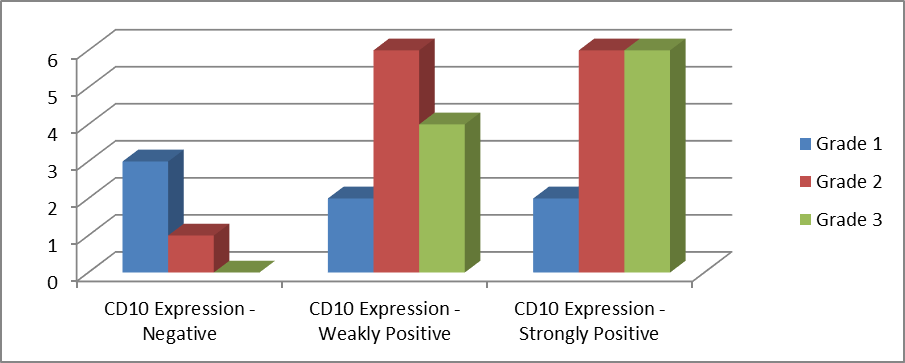
Figure 2: Comparison of histological grade with CD10
Table 3: Association of HER2/neu Status with Stromal CD10 Expression
|
HER2/neu Status |
Total Patients (n, %) |
CD10 Expression - Negative |
CD10 Expression - Weakly Positive |
CD10 Expression - Strongly Positive |
|
Positive |
15 (50%) |
3 (20%) |
7 (46.6%) |
4 (26.6%) |
|
Negative |
15 (50%) |
1 (6.6%) |
5 (33.3%) |
9 (60%) |
Lymphovascular invasion (LVI) (Figure 3): CD10 expression did not show a statistically significant association with the presence of LVI.
Hormonal receptor status (ER and PR): No significant correlation was identified between stromal CD10 expression and ER/PR status.
HER2/neu status: No statistically significant association was observed between CD10 expression and HER2/neu status.
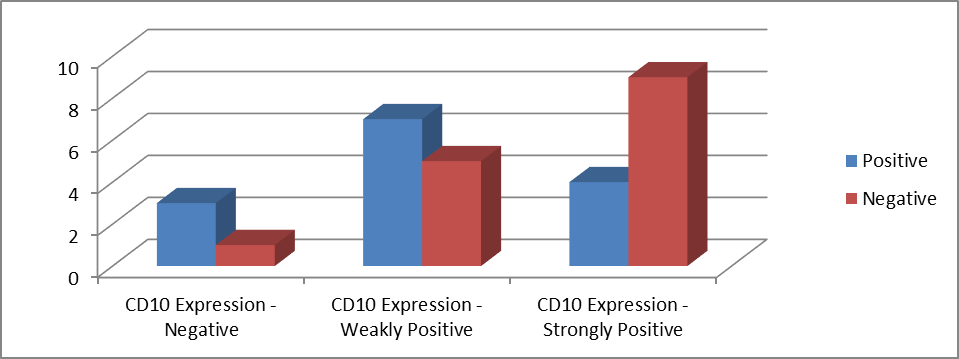
Figure 3: Comparision of Her2 status with CD10
DISCUSSION:
Breast carcinoma progression is influenced not only by epithelial tumor cells but also by the tumor microenvironment, particularly stromal components. Among emerging stromal markers, CD10 has gained attention due to its role as a zinc-dependent metalloproteinase involved in extracellular matrix degradation, facilitating tumor invasion and metastasis.
In the present study, stromal CD10 expression was evaluated in invasive breast carcinoma and correlated with established prognostic factors. The findings demonstrated a significant association between CD10 expression and tumor size, suggesting that CD10 may contribute to tumor growth and local progression.
However, no statistically significant association was found between CD10 expression and histological grade, lymphovascular invasion, or hormonal receptor status (ER, PR, HER2/neu). This observation is partially concordant with previous studies [2,3] but also highlights variability in findings across different populations.Studies by Gaffoor et al. [5] and Kermani et al. [6] have reported a strong correlation between stromal CD10 expression and adverse prognostic indicators such as higher tumor grade, lymph node metastasis, and increased invasiveness.
These studies suggest that CD10 expression reflects an aggressive tumor phenotype and may serve as an independent prognostic marker.Similarly, Makretsov et al. [7] demonstrated that stromal CD10 expression correlates with poor prognosis, estrogen receptor negativity, and higher tumor grade, reinforcing its role in tumor aggressiveness. In contrast, the present study did not find a statistically significant relationship with these parameters, which may be attributed to the relatively small sample size and short study duration.
The lack of association with ER, PR, and HER2/neu status in this study suggests that CD10 expression may act through pathways independent of conventional molecular subtypes. Its significant association with tumor size alone indicates that CD10 may primarily influence tumor expansion rather than differentiation or receptor expression.These discrepancies between studies highlight the complexity of tumor-stroma interactions and suggest that CD10 expression may be influenced by multiple biological and methodological factors, including population differences, scoring criteria, and sample size.
CONCLUSION:
CD10 expression in breast carcinoma does not show a significant correlation with traditional prognostic factors such as age, histological grade, LVI, or receptor statuses. Nevertheless, CD10's significant association with tumor size suggests that it may serve as an additional marker for assessing tumor progression. Further research is needed to explore its potential role in prognosis and treatment planning.
REFERENCES:
1. Mahajan, K. et al. (2013) ‘A study on risk factors of breast cancer among patients attending the Tertiary Care Hospital, in Udupi District’, Indian Journal of Community Medicine, 38(2), p. 95.
2. Puri, V., Jain, M. and Thomas, S. (2011c) ‘Stromal expression of CD10 in invasive breast carcinoma and its correlation with ER, PR, HER2-neu, and KI67’, International Journal of Breast Cancer, 2011, pp. 1–4. doi:10.4061/2011/437957.
3. Mohammadizadeh F, Salavati M, Afshar Moghaddam N. CD10 expression in stromal component of invasive breast carcinoma: A potential prognostic determinant. J Res Med Sci 2012; 17(Spec 2): S194-9.
4. Moritani, S. et al. (2002) ‘Availability of CD10 immunohistochemistry as a marker of breast myoepithelial cells on paraffin sections’, Modern Pathology, 15(4), pp. 397–405. doi:10.1038/modpathol.3880536.
5. Gaffoor, N. and Krishnamurthy, J. (2023) ‘Stromal expression of CD10 in breast carcinoma and its association with known prognostic factors—a tissue microarray-based study’, Journal of Laboratory Physicians, 15(03), pp. 354–360. doi:10.1055/s-0043-1761925.
6. Kermani, A.T. et al. (2012) ‘Study of stromal CD10 overexpression in invasive braest cancer and its relationship with clinicopathologic factors’, Annals of Oncology, 23, p. ix107. doi:10.1016/s0923-7534(20)32851-9.
7. Makretsov, N. A., Hayes, M., Carter, B. A., Dabiri, S., Gilks, C. B., & Huntsman, D. G. (2006). Stromal CD10 expression in invasive breast carcinoma correlates with poor prognosis, estrogen receptor negativity, and high grade. Modern Pathology, 20(1), 84–89.