Vitamin D And Its Relation to Tinnitus and Role of Vitamin D in Tinnitus Management.
- Stalin Sivagurunathan , Head of the Department of ENT, Indira Gandhi Government General Hospital and Postgraduate Institute, Puducherry.
- Dhana Malini Seran , Chief Medical Officer, Department of ENT, Indira Gandhi Government General Hospital and Postgraduate Institute, Puducherry.
- Chandaralekha Jayakumar , Senior Resident, Department of ENT, Indira Gandhi Medical College & Research Institute, Puducherry.
- Ravisankar Thamilarasan , Associate Professor, Arupadai Veedu Medical College and Hospital, Puducherry.
- Sivasankari Janarthanam , Chief Medical Officer, Department of Biochemistry, Indira Gandhi Government General Hospital and Postgraduate Institute, Puducherry.
Article Information:
Abstract:
Background: Tinnitus is a common otologic condition with an unclear pathophysiology and no established effective medical treatment. Vitamin D deficiency is a widespread global health issue, and given the presence of vitamin D receptors in the inner ear, a deficiency may plausibly affect auditory function. However, evidence linking vitamin D status specifically to tinnitus remains limited. Objective: To evaluate serum vitamin D levels in patients with tinnitus and assess the effect of vitamin D supplementation on tinnitus severity in those found to be deficient. Methods: This prospective cohort study was conducted over one year (February–December 2024) at a tertiary care centre. Adult patients with tinnitus lasting more than 3 months were enrolled following pure tone audiometry and serum vitamin D testing. Participants with vitamin D deficiency (<30 ng/ml) received oral vitamin D supplementation (60,000 IU/week) for 3 months, after which tinnitus severity (via the Tinnitus Handicap Inventory, THI) and serum vitamin D levels were reassessed. Results: Of 108 participants (mean age 43.02 ± 13.1 years; 67.6% male), 93 (86.1%) had vitamin D deficiency. No significant differences in tinnitus characteristics were found between patients with deficient versus optimal vitamin D levels. Following supplementation, both serum vitamin D levels and THI scores improved significantly (p < 0.001 for both), with fewer patients falling into severe or catastrophic handicap categories post-treatment. Conclusion: Vitamin D deficiency is highly prevalent among patients with tinnitus, and supplementation appears to significantly reduce subjective tinnitus severity. Screening for vitamin D deficiency may be a useful, low-cost consideration in the workup of chronic idiopathic tinnitus, particularly in patients with normal hearing.
Keywords:
Article :
INTRODUCTION:
Tinnitus is a common condition defined by the perception of sound or noise without any external source.1 It is one of the most widespread hearing issues, affecting 17% of the general population and 33% of older adults.2 Tinnitus can be either unilateral or bilateral and may be felt as originating from within or outside the head.3 The nature of tinnitus can vary, with people describing it as ringing, clicking, buzzing, or pulsations. It can have significant effects on a person's quality of life, including contributing to depression, anxiety, and major life changes.4 The underlying causes of subjective tinnitus are believed to involve disturbances in cochlear hair cells, the neural pathways, and the central auditory system. Hearing loss is generally considered one of the primary risk factors for developing tinnitus.5 Due to the unclear mechanisms behind the condition, treatments for tinnitus remain varied, and no effective medication has been found to date.1
While the use of supplements to treat tinnitus is widespread, there is limited scientific evidence to support their effectiveness.6,7 Vitamin D deficiency has become a growing global health issue, affecting an estimated 30% to 80% of children and adults worldwide.8 Since vitamin D receptors are present in the inner ear, it is reasonable to assume that a deficiency in vitamin D could impact both auditory and vestibular functions.9,10 Recent studies have found a high prevalence of vitamin D deficiency in individuals with inner ear disorders, including benign paroxysmal positional vertigo, Menière’s disease, vestibular neuritis, idiopathic facial paralysis, and idiopathic acute hearing loss.11-13 Despite the known link between vitamin D and ear diseases, there is limited research on the role of vitamin D in tinnitus specifically. As a result, this study seeks to further investigate the relationship between vitamin D levels and tinnitus, assess vitamin D levels in tinnitus patients, and evaluate the subjective effectiveness of vitamin D supplementation in individuals with tinnitus and vitamin D deficiency.
MATERIALS AND METHODS:
Study setting: Indira Gandhi Government General Hospital and Post Graduate Institute, Puducherry
Study Design: Prospective cohort study
Study duration: One year February 2024-December 2024
Study participants: 108 Adult patients visiting the ENT outpatient department who met the inclusion/exclusion criteria and were diagnosed with tinnitus and vitamin D deficiency were enrolled in the study.
Sample size: Using OpenEpi (Version 3.01) software, with a tinnitus prevalence of 9% in the community, a 90% confidence level, an absolute precision of 10%, and a 10% non-response rate, the provisional sample size was calculated to be 89.
Methodology
All patients who attended the ENT outpatient department of Indira Gandhi Government General Hospital and Post Graduate Institute, and met the inclusion criteria during the study period, were enrolled after receiving approval from the institute’s ethics committee. Informed written consent was obtained from all participants. A detailed history was taken, including information on hypertension, diabetes, and endocrine disorders. Audiometric evaluation was conducted in a sound-treated room, an AC 40 Audiometry cabin calibrated to ISO 9001 standards. The evaluation included Pure Tone Audiometry (PTA) using an audiometer (Interacoustics AD629), which assessed both air and bone conduction.
Blood samples were collected after overnight fasting, and the vitamin D levels in the serum were analyzed. Subjects were considered to have vitamin D deficiency if their serum level was below 30 ng/ml. Participants with normal vitamin D levels were then excluded from the study.
For Vitamin D supplementation, all participants with vitamin D deficiency received oral vitamin D capsules (60,000 IU/week) regularly for 3 months. After completing the full regimen of vitamin D supplementation, all participants with tinnitus and vitamin D deficiency were re-evaluated based on their subjective perception of tinnitus, the Tinnitus Handicap Inventory (THI), 14 and serum vitamin D levels.
Inclusion criteria
• Age >20 years
• Patients with tinnitus for more than 3 months
Exclusion criteria
• History of unilateral tinnitus
• History of hard of hearing
• History of active ear infection
• History of ear surgery
• History of exposure to loud noise
• History of usage of ototoxic drugs
Statistical analysis
The data obtained were entered into a Microsoft Excel spreadsheet. Quantitative data were summarized as means and standard deviations, while categorical data were expressed as proportions. The Chi-square test was applied to compare the proportions of categorical variables using the Statistical Package for Social Sciences (SPSS) software, version 2020.
Ethical issues: The study was conducted after obtaining clearance from the institute's research and ethics committee. Written informed consent was obtained from the patients for the procedure and their recruitment into the study. Ethical principles were adhered to throughout the study. IEC number EC/NEW/INST/2021/2200.
RESULTS:
A total of 108 study participants who had been experiencing tinnitus for more than 3 months were included in the study. The mean age of the participants was 43.02 ± 13.1 years, with 73 (67.6%) males and 35 (32.4%) females. Among the participants, 66 (61.1%) had unilateral tinnitus, while the remaining 42 (38.9%) had bilateral tinnitus. A history of noise exposure was reported by 6 (5.6%) participants, and 7 (6.5%) participants reported difficulty hearing in noisy environments.
From the 108 participants there was 93 subjects had vitamin D deficiency (86.1%). There was no statistically significant difference observed between male and female patients as regards Vitamin level (p = 0.34, chi-square = 0.498).
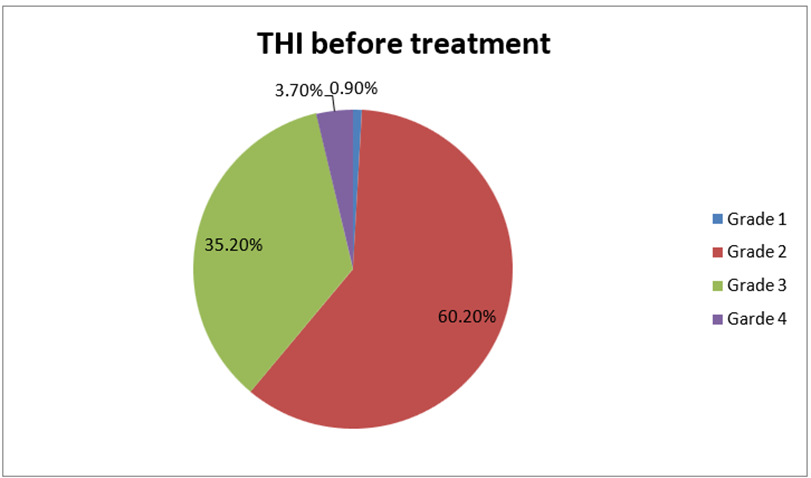
Figure 1: Tinnitus Handicap Inventory (THI) score before treatment
THI score: Grade 1: 0-16 slight handicap; Grade 2: 18-36 Mild handicap; Grade 3: 38-56 moderate handicap; Grade 4: 58-76 severe handicap and Grade 5: 78-100 catastrophic handicap
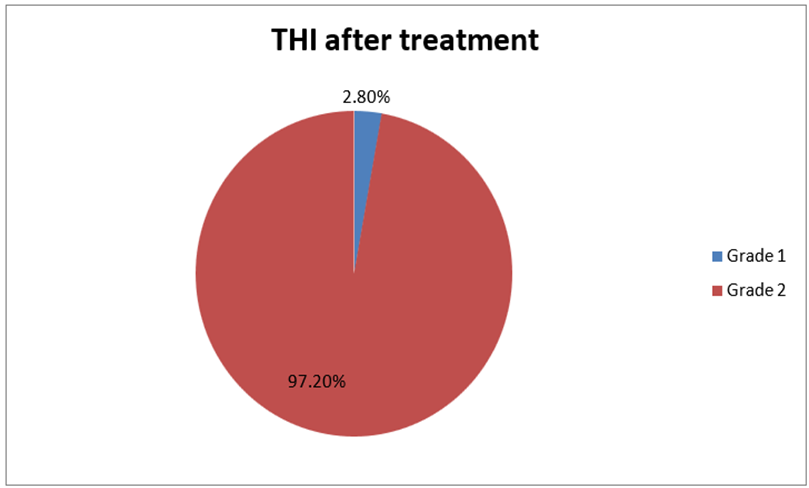
Figure 2: Tinnitus Handicap Inventory (THI) score after treatment
Table 1: Comparisons of mean of characteristics of tinnitus in patients with optimal vitamin D levels and with Vitamin D >_ 30ng/ml
|
Characteristics |
Subjects with Vitamin D <_ 30ng/ml |
Subjects with Vitamin levels>_ 30ng/ml |
P-value |
|
N |
93 |
15 |
|
|
Age (mean SD) |
43.38+_13.09 |
40.80+_14.1 |
0.643 |
|
Tinnitus loudness in Db (mean SD) |
39.73+_6.44 |
38.67+_6.3 |
0.980 |
|
Bilateral (%) |
38.7% |
40% |
0.569 |
|
Unilateral (%) |
61.3% |
60% |
0.569 |
|
THI score (mean SD) |
35.11+_11.86 |
33.13+_9.8 |
0.296 |
|
Noise exposure (%)) |
6.5% |
0 |
0.398 |
|
Difficulty Hearing in Noise (%) |
6.5% |
6.7% |
0.660 |
The comparison of the mean characteristics of tinnitus in patients with optimal Vitamin D levels and those with Vitamin D ≤ 30 ng/ml is shown in Table 1. No statistically significant differences were observed in any of the tinnitus characteristics based on Vitamin D levels.
Table 2: Paired t test for Vitamin D level and THI before and after treatment
|
|
Before treatment |
After treatment |
P value |
||
|
Mean |
SD |
Mean |
SD |
|
|
|
Vitamin D level |
27.45 |
3.695 |
21.22 |
14.082 |
0.000 |
|
THI |
34.83 |
11.59 |
24.11 |
4.713 |
0.000 |
Table 2 depicts the mean difference in Vitamin D levels and THI scores before and after treatment for tinnitus patients. There was a statistically significant difference in vitamin D level & THI before and after.
DISCUSSION:
The exact mechanisms of tinnitus remain not fully understood, ongoing research continues to explore its causes and potential treatments. For individuals affected by tinnitus, early diagnosis and a comprehensive treatment plan tailored to their specific needs can be crucial in managing the condition and improving their overall well-being.
In the current study, the mean age of the participants was 43.02 ± 13.1 years similar observation was made in a case control study conducted by Sharma D et al.5 the mean age of the cases with tinnitus was 42.11+_15.09. Though tinnitus can develop at any age, but it is more commonly reported among adults over the age of 40 years. As regards the gender distribution in the current study the male patients was more than females 67.6% versus 32.4% respectively.
This was similar to other studies that showed the higher incidence of tinnitus among males.1, 15 in the contrary various studies reported that tinnitus is more common in females than in males.16-18 Though the tinnitus is often bilateral, in our study 61.1% had complaint of unilateral tinnitus which was contrary to other studies.16, 19
In this study, the THI scores prior to vitamin D supplementation indicated that most patients experienced mild impairment, followed by moderate, slight, and severe levels, with no patients in the catastrophic category (Figure 1). However, following vitamin D treatment, a notable improvement was observed. As depicted in Figure 2, a greater number of patients improved to the slight impairment category, with no patients experiencing severe or catastrophic levels of impairment.
Similar findings were reported by Sharma D et al and Abdelmawgoud, S.5, 16 these results suggest that vitamin D supplementation can improve tinnitus perception and enhance the quality of life for affected individuals. In our study the comparison of the mean characteristics of tinnitus in patients with optimal Vitamin D levels and those with Vitamin D ≤ 30 ng/ml showed no statistically significant differences. Whereas in a study conducted by Sharma D et al, showed 62% of subjects with Vitamin D deficiency had bilateral tinnitus which was significantly higher that the group with optimal Vita min D.
THI and TSI Scores were also seen to be significantly higher in subjects with Vitamin D deficiency.5 It is also shown in few other studies that the psycoacoustic measures of tinnitus are not correlated to the THI TSI scores as they do not assess the reaction and the social impact of the tinnitus which was similar to our study.20
In the current study, a statistically significant difference was observed in both vitamin D levels and THI scores before and after treatment. There are several possible explanations for how vitamin D deficiency could impact the auditory system and contribute to the perception of tinnitus. The first explanation is that vitamin D deficiency can impair calcium metabolism and microcirculation in the cochlea.21
A second possibility is that it may affect the bone mineralization of the ossicles.22 A third explanation relates to the role of vitamin D in the body's defense mechanisms. Conditions such as the common cold, pharyngitis, and acute otitis media, which are caused by various bacterial and viral pathogens, can be influenced by vitamin D. Many of these pathogens are sensitive to antimicrobial peptides, cathelicidins, and defensins, which are released by the body in response to vitamin D.23-24.
CONCLUSION:
Our study suggests a potential link between vitamin D deficiency and tinnitus, particularly in adults with normal hearing. We recommend evaluating serum vitamin D levels in patients with chronic idiopathic tinnitus, especially when no other underlying conditions are present. Vitamin D deficiency may be a key risk factor for tinnitus in individuals with normal hearing. If a deficiency is found, vitamin D supplementation may help reduce the perception of tinnitus.
REFERENCES:
1. Nowaczewska, M., Osiński, S., Marzec, M., Wiciński, M., Bilicka, K., & Kaźmierczak, W. The role of vitamin D in subjective tinnitus—A case-control study. ONE.2021; 16(8), e0255482. https://doi.org/10.1371/journal.pone.0255482
2. Carla Salles, Chamouton, Helenice, Yemi nakamura. Profile and prevalence of people with tinnitus:a healthy servey. CoDAS. 2021; 33(6):e202000293
3. Hoffman HJ, Red GW. Epidemiology of tinnitus. In: Snow Jr JB, ed. Tinnitus Theory and Management. BC Decker Inc, London, 2004:16-41
4. Lewis JE, Stephens SDG, McKenna L. Tinnitus and suicide. Clin Otolaryngol Allied Sci. 1994; 19: 50-54)
5. Sharma, D., Gupta, V., Bhatia, S., & Thakur, P. Association of Vitamin D Deficiency Patients with Tinnitus with Normal Audiogram. Head & Neck Surger. 2023; 75(3), 1992–1999. Indian Journal of Otolaryngology and https://doi.org/10.1007/s12070-023-03751-z
6. CoelhoC.;TylerR.;Ji H.; Rojas-RoncancioE.; Witt S.; Tao P.; et al, Surveyon the Effectiveness of Die tary Supplements to Treat Tinnitus. Am J Audiol 2016, 25 (3), 184–205. https://doi.org/10.1044/2016_ AJA-16-0021 PMID:27681261
7. DawesP.;CruickshanksK.J.;MarsdenA.;MooreD.R.;MunroK.J.,Relationship BetweenDiet,Tinni tus, and Hearing Difficulties. Ear Hear 2020, 41 (2), 289–299. https://doi.org/10.1097/AUD. 0000000000000765PMID:31356390
8. AutierP.;Boniol M.; Pizot C.; Mullie P., Vitamin D status and ill health: a systematic review. Lancet Dia betes Endocrinol 2014, 2 (1), 76–89. https://doi.org/10.1016/S2213-8587(13)70165-7 PMID: 24622671
9. BrookesG.B.,VitaminDdeficiency—anewcauseofcochleardeafness.J LaryngolOtol1983, 97(5), 405–20. https://doi.org/10.1017/s0022215100094330 PMID: 6602194
10. KwonH.J.,VitaminDreceptordeficiencyimpairsinner ear development in zebrafish. Biochem Biophys ResCommun2016, 478(2),994–8.https://doi.org/10.1016/j.bbrc.2016.08.070 PMID: 27526995.
11. Bu ¨kiB.; Ju ¨nger H.; Zhang Y.; LundbergY. W., The Price of Immune ResponsesandtheRoleofVitamin DintheInner Ear. Otol Neurotol 2019, 40 (6), 701–709. https://doi.org/10.1097/MAO. 0000000000002258PMID:31194714
12. AlGarniM.A.;MirzaA.A.;Althobaiti A. A.; Al-Nemari H. H.; Bakhsh L. S., Association of benign parox ysmal positional vertigo with vitamin D deficiency: a systematic review and meta-analysis. Eur Arch Otorhinolaryngol 2018, 275 (11), 2705–2711.https://doi.org/10.1007/s00405-018-5146-6 PMID: 30302575
13. GhazaviH.;KargoshaieA.A.;Jamshidi-Koohsari M., Investigation of vitamin D levels in patients with SuddenSensory-Neural Hearing Loss and its effect on treatment. Am J Otolaryngol 2020, 41 (2), 102327. https://doi.org/10.1016/j.amjoto.2019.102327 PMID: 31735446
14. McCombe, A., Baguely, D., Coles, R., McKenna, L., McKinney, C. & Windle-Taylor, P. (2001). Guidelines for the grading of tinnitus severity: the results a working group commissioned by the British Association of Otolaryngologists, Head and Neck Surgeons, 999. Clin. Otolarynogol 26, 388-393.
15. Demeester K, van Wieringen A, Hendrickx JJ, Topsakal V, Fransen E, Van Laer L, De Ridder D, Van Camp G, Van de Heyning P. Prevalence of tinnitus and audiometric shape. B-ENT. 2007;3 Suppl 7:37-49.
16. Abdelmawgoud, S. (2020). Vitamin D level and its relation to tinnitus. Egyptian Journal of Ear Nose Throat and Allied Sciences, 0(0),0. https://doi.org/10.21608/ejentas.2020.37810.1243
17. José,b, Alexandra, D., Oswaldo, L. & Cruza, A. (2016): Antioxidant therapy in the elderly with tinnitus. Braz J Otorhinolaryngol. ; 82(3): (269-274).
18. Berkiten, G. Yildirim, I. Topaloglu and H. Ugras, Vitamin B12 levels in patients with tinnitus and effectiveness of vitamin B12 treatment on hearing threshold and tinnitus, Presented at 30th Turkish National Otorhinolaryngology and Head and Neck Surgery Congress, Antalya, October 8-12, 2008).
19. Stouffer JL, Tyler RS. Characterization of tinnitus by tinnitus patients. J Speech Hear Disord. 1990; 55(3):439-453.
20. Al-Swiahb JN, Hwang ES, Kong JS, Kim WJ, Yeo SW, Park SN (2016) Clinical and audiologic characteristics of patients with sensorineural tinnitus and its association with psychological aspects: an analytic retrospective study. Eur Arch Otorhinolaryn gol 273(12):4161–4165
21. keda, K.; Kobayashi, T.; Itoh, Z.; Kusakari, J.; Takasaka, T. Evaluation of vitamin D metabolism in patients with bilateral sensorineural hearing loss. Am. J. Otol.1989,10, 11–13. [PubMed])
22. Cammargo CA, Rifas-Shiman SL, Liuonjua AA, Burris HH, Kleinman K, Huh SY. Prospective study of maternal intake of vitamin D during pregnancy and risk of wheezing illeness in children at age 2 years. J Allergy Clin Immunol. 2006;117:721–722. doi: 10.1016/j.jaci.2006.01.024.
23. Yim S, Dhawan P, Ragunath C, Christakos S, Diamond G. Induction of cathelicidin in normal and CF bronchial epithelial cells by 1, 25–D3. J Cyst Fibros. 2007; 6:403–410. doi: 10.1016/j.jcf.2007.03.003.
24. Bikle D. Nonclassic actions of vitamin D. J Clin Endocrinol Metab. 2009;94:26–34. doi: 10.1210/jc. 2008-1454.