Comparative Assessment of Depression, Anxiety and Stress among Government and Private School Adolescents and Residential versus Day Scholars in South India: An Analytical Cross-Sectional Study.
- Koneru Kavya Sri , Assistant Professor, Department of Psychiatry, Mamata Academy of Medical Sciences, Bachupally, Hyderabad
- Chada Muni Pavan Kumar Reddy , Professor and Head, Department of Psychiatry, Mamata Academy of Medical Sciences, Bachupally, Hyderabad.
Article Information:
Abstract:
Background: Depression, anxiety and stress are common mental health concerns during adolescence and may vary according to school environment, residential status and demographic characteristics. Identifying vulnerable student groups is essential for planning targeted school-based interventions. Aim of the study was to compare depression, anxiety and stress between government and private school students and between residential students and day scholars, and to identify associated demographic and school-related factors. Methods: A school-based analytical cross-sectional study was conducted among 400 adolescents aged 13–16 years selected from four schools in Khammam District using multistage random sampling. Sociodemographic and school-related information was collected using a pretested questionnaire. Depression, anxiety and stress were assessed using the DASS-21. Group differences were analysed using the chi-square test, with p<0.05 considered statistically significant. Results: Depression, anxiety and stress were significantly higher among private-school students than government-school students: 39.0% versus 22.5%, 34.5% versus 17.5%, and 37.5% versus 20.5%, respectively. Residential students also showed higher depression, anxiety and stress than day scholars: 50.9% versus 22.9%, 42.9% versus 19.4%, and 47.3% versus 21.9%, respectively. Female gender, older age and Class X were significantly associated with greater psychological distress. Conclusion: Private-school students, residential scholars, females and older adolescents represented high-risk groups requiring targeted screening and counselling.
Keywords:
Article :
INTRODUCTION:
Adolescence is a critical stage of human development characterized by rapid physical, psychological, emotional and social changes that significantly influence mental well-being. During this transition from childhood to adulthood, adolescents are exposed to multiple stressors including academic competition, peer pressure, parental expectations, social media influence and changing family dynamics, making them particularly vulnerable to mental health disorders such as depression, anxiety and stress. These psychological conditions adversely affect academic performance, interpersonal relationships, emotional development and quality of life and, if left unidentified, may continue into adulthood, increasing the risk of substance abuse, self-harm and suicide. Consequently, the World Health Organization recognizes adolescent mental health as a major public health priority and recommends school-based mental health promotion and early screening programmes for timely identification and intervention (1,2).
Schools represent an ideal setting for evaluating adolescent mental health because educational environments substantially influence students' emotional well-being. However, the nature of these environments varies considerably between government and private schools as well as between residential and day schools. Students in private schools are often exposed to greater academic competition, higher parental expectations and performance-related pressure, whereas government school students may experience socioeconomic disadvantages and limited educational resources. Similarly, adolescents residing in residential schools face additional challenges such as separation from parents, hostel adjustment, restricted family support and institutional living, while day scholars generally benefit from continuous family interaction. These environmental and psychosocial differences may contribute to variations in depression, anxiety and stress among adolescents (3–5).
Recent studies have demonstrated that school environment and demographic characteristics are important determinants of adolescent mental health. A comparative study among adolescent girls reported significantly higher levels of depression in private school students than government school students, with academic stress and family-related factors acting as major contributors (3). Similarly, studies conducted in different parts of India have shown that anxiety and stress vary according to school characteristics, gender, socioeconomic status and educational environment (4–7). Nevertheless, most available studies have primarily estimated the prevalence of depression, anxiety and stress without comprehensively comparing psychological distress between government and private schools or between residential and day scholars using standardized instruments such as the Depression Anxiety Stress Scale-21 (DASS-21). Furthermore, published evidence from Telangana, particularly Khammam District, remains limited, creating an important regional research gap (3–8).
Considering the paucity of comparative evidence, the present study was undertaken to compare depression, anxiety and stress among different categories of school-going adolescents. Specifically, the study aimed to compare depression, anxiety and stress between government and private school students, compare these psychological conditions between residential and day scholars, and identify demographic and school-related factors associated with depression, anxiety and stress. The findings are expected to generate region-specific evidence that may assist educational authorities, healthcare professionals and policymakers in developing targeted school-based mental health screening, counselling and preventive intervention programmes for adolescents.
MATERIALS AND METHODS:
A school-based analytical cross-sectional study was conducted among adolescents attending selected government and private high schools in Khammam District, Telangana. The study was carried out over 18 months, from 1 January 2019 to 30 June 2020. Of the 41 schools located in the study area, four schools comprising two government and two private schools were selected. The study population included adolescents aged 13–16 years studying in Classes VII to X. For the present publication, participants were categorized according to school management as government- or private-school students and according to schooling arrangement as residential students or day scholars.
Sample Size and Sampling Technique
The sample size was calculated using an anticipated prevalence of depression, anxiety or stress of 20%, based on an earlier school-based study. At a 95% confidence level and relative precision of 20% of the expected prevalence, the minimum required sample size was 384. The final sample size was rounded to 400 students. A multistage random sampling technique was used. Four schools were selected by simple random sampling, and 100 students were subsequently selected from each school. Students from Classes VII to X were included proportionately and chosen through simple random sampling.
Inclusion Criteria
• School-going adolescents aged 13–16 years.
• Students enrolled in Classes VII to X in the selected government and private schools.
• Residential students and day scholars studying in the selected schools.
• Students present on the scheduled day of data collection.
• Students whose parents or guardians provided informed consent.
• Students who provided assent to participate.
Exclusion Criteria
• Students absent on the day of data collection.
• Students whose parents or guardians did not provide consent.
• Students who did not provide assent.
• Adolescents with known concurrent medical illness, psychiatric illness or disability that could interfere with participation or assessment.
Study Tool
Data were collected using the following instruments:
• Pretested semi-structured questionnaire: This questionnaire recorded the participants’ sociodemographic and school-related characteristics, including age, gender, type of school and residential status.
• Depression Anxiety Stress Scale-21: The DASS-21 consists of 21 self-reported items divided equally into three subscales assessing depression, anxiety and stress. Each subscale contains seven items scored from 0 to 3. The scores for the items in each subscale were summed and multiplied by two to obtain the final score.
• Severity classification: Depression was categorized as normal (0–9), mild (10–13), moderate (14–20), severe (21–27) or extremely severe (≥28). Anxiety was classified as normal (0–7), mild (8–9), moderate (10–14), severe (15–19) or extremely severe (≥20). Stress was categorized as normal (0–14), mild (15–18), moderate (19–25), severe (26–33) or extremely severe (≥34).
Data Collection
• Approval was obtained from the Institutional Ethics Committee of Mamata Medical College and General Hospital, Khammam.
• Administrative permission was obtained from the District Educational Officer and the heads of the selected schools.
• The objectives and procedures of the study were explained to the school authorities, parents and students.
• The age of each participant was verified using official school records.
• Written informed consent was obtained from parents or guardians, and assent was obtained from participating students.
• Data collection was conducted in two sessions.
• During the first session, participants completed the pretested semi-structured questionnaire containing sociodemographic and school-related information.
• During the second session, the DASS-21 was administered to assess depression, anxiety and stress.
• Each participant was interviewed individually, and approximately 15–30 minutes were required for completion of the assessment.
Study Variables
The principal outcome variables were the presence and severity of depression, anxiety and stress. The main explanatory variables were school type, categorized as government or private, and student residence, categorized as residential or day scholar. Other demographic and school-related variables, including age and gender, were also evaluated for their association with psychological distress.
Statistical Analysis
Data were entered into Microsoft Excel 2013 and analysed using IBM SPSS Statistics version 23. Categorical variables were summarized as frequencies and percentages, while continuous variables were expressed as mean and standard deviation. The prevalence and severity of depression, anxiety and stress were compared between government and private school students and between residential students and day scholars.
The chi-square test was used to assess associations between categorical variables. Where appropriate, odds ratios with 95% confidence intervals may be reported to indicate the strength of association. A p-value of less than 0.05 was considered statistically significant.
RESULTS:
Table 1. Baseline demographic characteristics of the study participants (N = 400)
|
Variable |
Category |
Frequency (n) |
Percentage (%) |
|
Age (years) |
13 |
120 |
30.00 |
|
14 |
91 |
22.75 |
|
|
15 |
111 |
27.75 |
|
|
16 |
78 |
19.50 |
|
|
Mean age (years) |
14.37 ± 1.10 |
— |
— |
|
Gender |
Male |
239 |
59.75 |
|
Female |
161 |
40.25 |
|
|
School type |
Government |
200 |
50.00 |
|
Private |
200 |
50.00 |
|
|
Residential status |
Day scholar |
288 |
72.00 |
|
Residential (Hosteller) |
112 |
28.00 |
|
|
Total participants |
400 |
100.00 |
A total of 400 school-going adolescents participated in the study. The mean age of the participants was 14.37 ± 1.10 years, with the largest proportion belonging to the 13-year age group (30.0%), followed by 15 years (27.75%), 14 years (22.75%) and 16 years (19.5%). Male students constituted 59.75% of the study population, while females accounted for 40.25%, resulting in a male-to-female ratio of approximately 1.48:1.
Equal numbers of students were selected from government and private schools (200 each), ensuring balanced comparison between the two school types. Regarding residential status, the majority of participants were day scholars (72.0%), whereas 28.0% were residential (hosteller) students. This balanced distribution provided an appropriate basis for comparing depression, anxiety and stress across different educational settings
Table 2. Baseline distribution of participants according to school type and residential status (N = 400)
|
Baseline characteristic |
Category |
Frequency (n) |
Percentage (%) |
|
School type |
Government school |
200 |
50.0 |
|
Private school |
200 |
50.0 |
|
|
Residential status |
Day scholar |
288 |
72.0 |
|
Hosteller/residential student |
112 |
28.0 |
|
|
Total |
400 |
100.0 |
An equal number of students was selected from government and private schools, with 200 participants in each category. According to residential status, 288 students (72.0%) were day scholars and 112 (28.0%) were hostellers. The balanced representation of government and private schools allowed a direct comparison of psychological outcomes between the two school-management groups.
Table 3. Comparison of depression between government and private school students (N = 400)
|
School type |
Depression present, n (%) |
Depression absent, n (%) |
Total |
χ² value |
p-value |
|
Government school |
45 (22.5) |
155 (77.5) |
200 |
12.785 |
<0.001 |
|
Private school |
78 (39.0) |
122 (61.0) |
200 |
||
|
Total |
123 (30.75) |
277 (69.25) |
400 |
Depression was more common among private-school students than government-school students. Nearly two-fifths of private-school students had depressive symptoms compared with less than one-fourth of government-school students. The difference was statistically significant, indicating an association between school type and depression.
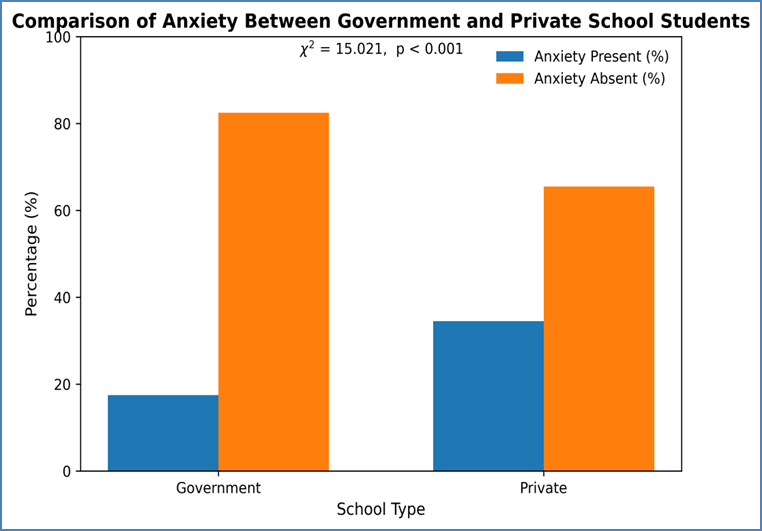
Figure 1. Comparison of anxiety between government and private school students (N = 400)
Anxiety was identified in 34.5% of private-school students compared with 17.5% of government-school students. Thus, the prevalence among private-school students was nearly twice that observed among government-school students. The association between school type and anxiety was statistically significant.
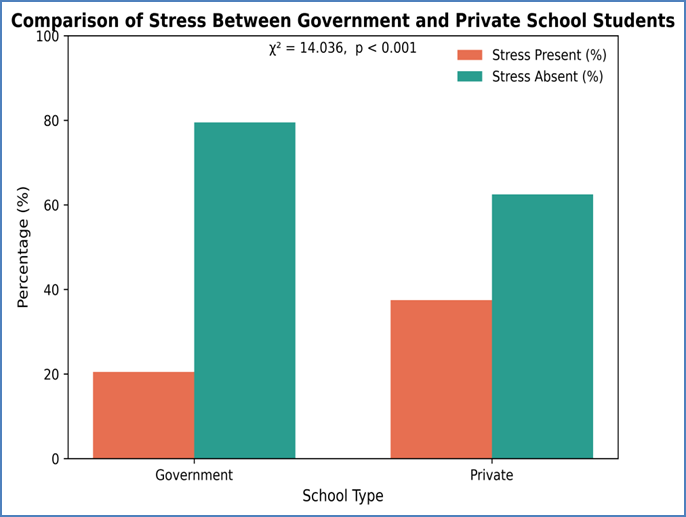
Figure 2. Comparison of stress between government and private school students (N = 400)
Stress was significantly more prevalent among private-school students, affecting 37.5%, compared with 20.5% of government-school students. This finding suggests that students in private schools experienced a greater burden of psychological stress than those in government schools.
Table 4. Comparison of depression, anxiety and stress between residential students and day scholars (N = 400)
|
Psychological outcome |
Day scholars (n = 288), present n (%) |
Hostellers (n = 112), present n (%) |
χ² value |
p-value |
|
Depression |
66 (22.9) |
57 (50.9) |
29.639 |
<0.001 |
|
Anxiety |
56 (19.4) |
48 (42.9) |
22.975 |
<0.001 |
|
Stress |
63 (21.9) |
53 (47.3) |
25.360 |
<0.001 |
All three psychological outcomes were more common among hostellers than day scholars. Depression affected approximately half of the residential students compared with 22.9% of day scholars. Anxiety and stress were also more than twice as prevalent among hostellers. Each association was statistically significant, demonstrating a substantially greater burden of psychological distress among residential students.
Table 5. Detailed comparison of depression according to residential status (N = 400)
|
Residential status |
Depression present, n (%) |
Depression absent, n (%) |
Total |
χ² value |
p-value |
|
Day scholar |
66 (22.9) |
222 (77.1) |
288 |
29.639 |
<0.001 |
|
Hosteller |
57 (50.9) |
55 (49.1) |
112 |
||
|
Total |
123 (30.75) |
277 (69.25) |
400 |
Depression was reported by 50.9% of hostellers, whereas only 22.9% of day scholars had depressive symptoms. The difference was highly significant, indicating that residential status was strongly associated with depression among the participating adolescents.
Table 6. Detailed comparison of anxiety according to residential status (N = 400)
|
Residential status |
Anxiety present, n (%) |
Anxiety absent, n (%) |
Total |
χ² value |
p-value |
|
Day scholar |
56 (19.4) |
232 (80.6) |
288 |
22.975 |
<0.001 |
|
Hosteller |
48 (42.9) |
64 (57.1) |
112 |
||
|
Total |
104 (26.0) |
296 (74.0) |
400 |
Anxiety was observed in 42.9% of residential students compared with 19.4% of day scholars. The statistically significant association suggests that adolescents residing in hostels were more vulnerable to anxiety than students living with their families.
Table 7. Detailed comparison of stress according to residential status (N = 400)
|
Residential status |
Stress present, n (%) |
Stress absent, n (%) |
Total |
χ² value |
p-value |
|
Day scholar |
63 (21.9) |
225 (78.1) |
288 |
25.360 |
<0.001 |
|
Hosteller |
53 (47.3) |
59 (52.7) |
112 |
||
|
Total |
116 (29.0) |
284 (71.0) |
400 |
Stress affected 47.3% of hostellers and 21.9% of day scholars. Residential students therefore experienced more than twice the prevalence of stress observed among day scholars. The association between residential status and stress was statistically significant.
Table 8. Chi-square analysis of demographic and school-related variables significantly associated with depression, anxiety and stress
|
Associated variable |
Outcome |
χ² value |
p-value |
Principal finding |
|
Age |
Anxiety |
40.886 |
<0.001 |
Anxiety increased from 10.0% at age 13 to 50.0% at age 16 |
|
Age |
Stress |
33.832 |
<0.001 |
Stress increased from 15.0% at age 13 to 52.6% at age 16 |
|
Gender |
Depression |
16.694 |
<0.001 |
Higher among females: 42.2% versus 23.0% |
|
Gender |
Anxiety |
17.779 |
<0.001 |
Higher among females: 37.3% versus 18.4% |
|
Gender |
Stress |
16.926 |
<0.001 |
Higher among females: 40.4% versus 21.3% |
|
School type |
Depression |
12.785 |
<0.001 |
Higher in private schools: 39.0% versus 22.5% |
|
School type |
Anxiety |
15.021 |
<0.001 |
Higher in private schools: 34.5% versus 17.5% |
|
School type |
Stress |
14.036 |
<0.001 |
Higher in private schools: 37.5% versus 20.5% |
|
Residential status |
Depression |
29.639 |
<0.001 |
Higher among hostellers: 50.9% versus 22.9% |
|
Residential status |
Anxiety |
22.975 |
<0.001 |
Higher among hostellers: 42.9% versus 19.4% |
|
Residential status |
Stress |
25.360 |
<0.001 |
Higher among hostellers: 47.3% versus 21.9% |
|
Class studying |
Depression |
30.654 |
<0.001 |
Highest among Class X students: 52.0% |
|
Class studying |
Anxiety |
43.763 |
<0.001 |
Highest among Class X students: 50.0% |
|
Class studying |
Stress |
37.203 |
<0.001 |
Highest among Class X students: 52.0% |
Age, gender, school type, residential status and class level showed significant associations with one or more psychological outcomes. Female students, private-school students, hostellers, older adolescents and students studying in Class X consistently demonstrated a greater burden of depression, anxiety or stress. These findings identify groups that may require targeted screening and school-based mental health interventions.
DISCUSSION:
The present analytical cross-sectional study compared depression, anxiety and stress among 400 school-going adolescents according to school type, residential status and selected demographic characteristics. The mean age was 14.37 ± 1.10 years; 59.75% were male, 50% attended government schools, 50% attended private schools, 72% were day scholars and 28% were residential students. Private-school students had significantly higher levels of depression, anxiety and stress than government-school students, while residential students had a substantially greater burden of all three psychological outcomes than day scholars.
Depression was present in 39.0% of private-school students compared with 22.5% of government-school students. Anxiety affected 34.5% and 17.5%, respectively, while stress was reported by 37.5% of private-school students and 20.5% of government-school students. These differences may reflect variations in academic competition, parental expectations, examination frequency, school climate and socioeconomic background. Jeelani et al. reported depression and anxiety among school-going adolescents and found that increasing age and higher educational level were associated with poorer mental-health outcomes [9]. A study from Puducherry also identified academic pressure, family factors and interpersonal difficulties as important contributors to adolescent psychological distress [10].
Residential status showed an even stronger association. Depression was observed in 50.9% of residential students compared with 22.9% of day scholars. Anxiety affected 42.9% of hostellers and 19.4% of day scholars, while stress was present in 47.3% and 21.9%, respectively. Separation from parents, reduced emotional support, strict hostel routines, peer conflict and difficulties adjusting to institutional living may explain this pattern. Shrestha et al. similarly demonstrated a considerable burden of depression, anxiety and stress among school-going adolescents, emphasizing the need for early screening within educational settings [11].
Female students also showed significantly higher psychological morbidity. Depression was present in 42.2% of females compared with 23.0% of males, anxiety in 37.3% versus 18.4%, and stress in 40.4% versus 21.3%. Gupta et al. also reported a greater burden of depression, anxiety and stress among female and late-adolescent students [12]. Biological changes, gender-related expectations, body-image concerns and greater reporting of internalizing symptoms may contribute to this difference.
Psychological distress increased with age and class level. Anxiety rose from 10.0% among 13-year-olds to 50.0% among 16-year-olds, while stress increased from 15.0% to 52.6%. Class X students had the highest levels of depression, anxiety and stress. This may be related to board examinations, academic workload and career uncertainty. Steare et al. found a consistent association between academic pressure and adolescent mental-health problems [13]. Barnawi et al. also reported that demographic and educational factors influenced depression, anxiety and stress among secondary-school students [14].
A recent systematic review of Indian schoolchildren concluded that adolescent mental-health problems are common and are influenced by school, family and social environments [15]. The present study adds to this evidence by demonstrating clear differences according to school management and residential arrangement.
The study is limited by its cross-sectional design, reliance on self-reported DASS-21 scores and inclusion of only four schools from one district. Since the analysis was mainly bivariate, residual confounding cannot be excluded.
CONCLUSION:
Private-school students, residential scholars, females, older adolescents and Class X students had significantly higher levels of depression, anxiety and stress. Schools should introduce periodic screening, confidential counselling, teacher sensitization, parental involvement and referral services, with special attention to high-risk groups. Larger multicentric and longitudinal studies are required to identify independent predictors and assess the effectiveness of school-based mental-health interventions.
REFERENCES:
1. Verma H, Verma G, Kumar P. Depression, Anxiety, and Stress During Times of COVID-19: An Analysis of Youngsters Studying in Higher Education in India. Rev Socionetw Strateg. 2021;15(2):471-488. doi:10.1007/s12626-021-00089-2
2. Hossain MM, Nesa F, Das J, et al. Global burden of mental health problems among children and adolescents during COVID-19: An umbrella review. Psychiatry Res. 2022;317:114814. doi:10.1016/j.psychres.2022.114814
3. Alex P, Cynthia DS, Kanagalakshmi V. A study on prevalence and risk factors of depression among adolescent girls studying in government and private schools: A comparative study. J Fam Med Prim Care. 2023;12(9):1972-1978. doi:10.4103/jfmpc.jfmpc_402_23
4. Saikia AM, Das H, Rajendran V. Mental health morbidities and their correlates among adolescents in Kamrup Metropolitan District, Assam: A school-based study. Indian J Community Med. 2023;48(6):835-840. doi:10.4103/ijcm.ijcm_614_21
5. Prakash GH, Kumar DS, Arun V, et al. Prevalence and correlates of depression, anxiety, and stress among adolescents in urban and rural areas of Mysuru, South India. J Fam Med Prim Care. 2024;13(8):2979-2985. doi:10.4103/jfmpc.jfmpc_1600_23
6. Zhang Y, Li X, Chen H, et al. Prevalence and determinants of depression, anxiety, and stress among secondary school students. BMC Public Health. 2024;24:2809. doi:10.1186/s12889-024-20072-0
7. Sonam, Mahapatra AK, Rajagopala S, Kumar A. Prevalence of depression and anxiety among school-going adolescents of Delhi: A cross-sectional study. J Fam Med Prim Care. 2025;14(2):592-608. doi:10.4103/jfmpc.jfmpc_786_24
8. Arulvendan H, Arumugam C, Lidiya A, et al. Prevalence and sociodemographic correlates of depression and anxiety among secondary school students in Chennai, South India. Indian J Ment Health Neurosci. 2024. doi:10.54646/ijmhns.2024.01
9. Jeelani A, Dkhar SA, Quansar R, Khan SMS. Prevalence of depression and anxiety among school-going adolescents in Indian Kashmir valley during COVID-19 pandemic. Middle East Curr Psychiatry. 2022;29:18. doi: 10.1186/s43045-022-00185-1.
10. Gunasekaran K, Vasudevan K, Srimadhi M. Assessment of mental health status among adolescents in Puducherry, India: A mixed method study. J Family Med Prim Care. 2022;11(6):3089-3094. doi: 10.4103/jfmpc.jfmpc_2420_21.
11. Shrestha S, et al. Depression, anxiety and stress among school-going adolescents of a secondary school. JNMA J Nepal Med Assoc. 2023;61(261):410-415. doi: 10.31729/jnma.8070.
12. Gupta S, et al. Prevalence and correlates of depression, anxiety, and stress among school-going adolescents in a block of Hooghly District, West Bengal. J Educ Health Promot. 2023;12:358. doi: 10.4103/jehp.jehp_139_23.
13. Steare T, Gutiérrez Muñoz C, Sullivan A, Lewis G. The association between academic pressure and adolescent mental health problems: A systematic review. J Affect Disord. 2023;339:302-317. doi: 10.1016/j.jad.2023.07.028.
14. Barnawi MM, Sonbaa AM, Barnawi MM, Alqahtani AH, Fairaq BA. Prevalence and determinants of depression, anxiety, and stress among secondary-school students. Cureus. 2023;15(8):e44182. doi: 10.7759/cureus.44182.
15. Balamurugan G, Sevak S, Gurung K, Vijayarani M. Mental health issues among school children and adolescents in India: A systematic review. Cureus. 2024;16(5):e61035. doi: 10.7759/cureus.61035.